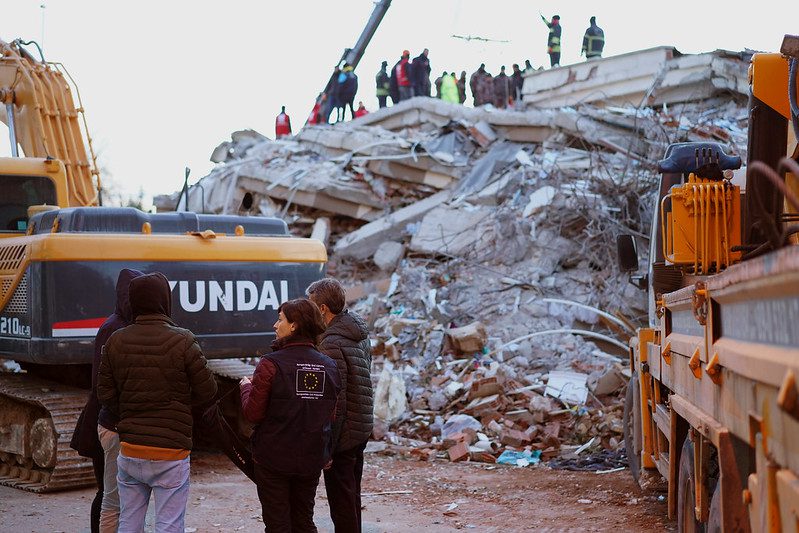
 On Feb. 6, 2023, a major earthquake struck northwestern Syria and southeastern Türkiye. It registered a magnitude of 7.8, followed by a 7.5 magnitude quake about 60 miles southwest. The region experienced hundreds of aftershocks. A total of 11 provinces were affected in Türkiye, according to World Vision. The earthquake impacted an estimated 9.1 million people in Türkiye, with more than 50,000 lives lost, 3 million people displaced and nearly 300,000 buildings destroyed. The country had not faced a similar disaster since 1999 when a 7.6 magnitude earthquake hit Istanbul, killing more than 17,000 people.
Syria lost about 6,000 people to the earthquake, primarily in Idlib and Aleppo. The earthquake destroyed more than 10,000 buildings, including many schools and displaced 265,000 people, forcing them into temporary shelters. Overall, the World Bank estimates the damages at $34 billion for Türkiye and $5 billion for Syria. This disaster has compounded the displacement crisis in Syria, where millions were already displaced due to the ongoing civil war. Furthermore, the World Bank projects that the rebuilding costs could escalate to approximately $100 billion.
Immediate Impact of the Earthquake in Syria
On Feb. 8 and 9, 2023, the World Vision Syria Response team conducted a rapid assessment in Idlib and Aleppo to quickly gauge the immediate needs of those affected by the earthquake. The assessment involved 322 randomly selected participants from 25 different villages. Key findings indicated that the most urgent personal needs were for beds, cooking supplies, blankets, food and clothing. Additionally, 87% of respondents reported safety concerns, primarily due to low lighting, injuries or hazards from collapsed buildings and distress. Regarding shelter, 82% found refuge with family, friends or in camps. In addition, the survey revealed that 94% of participants had damaged homes, with 51% reporting their homes destroyed.
Long-term Economic Impact in Türkiye
The earthquake affected poverty rates in Türkiye. The Borgen Project reached out to a World Vision representative based in Canada, who wishes to be anonymous. When asked about the impact of the earthquake on poverty, the representative confirmed it worsened the situation, explaining, “Especially as these people were already facing a situation of protracted crises, the earthquake led to displacement, which resulted in the loss of capital stock and household wealth.”
Disaster Philanthropy reports that in the earthquake-affected provinces of Türkiye, about 40% of households live below the poverty line, compared to 32% nationwide. This rate could rise to more than 50%. A year after the disaster, many affected areas in Türkiye still lie in ruins. An estimated one in three children remain homeless, living in temporary shelters. As of Feb. 2024, about 660,000 children are still displaced, residing in small tents or metal containers that offer minimal protection from the elements.
In Syria, the ongoing conflict compounds the hardships for children in the wake of the earthquake. In addition to the conflict, they struggle with an economic crisis that has further damaged schools and hospitals. This situation leaves many without access to food and shelter. The United Nations (U.N.) World Food Programme has had to suspend aid in earthquake-affected areas due to the conflict.
World Vision’s Syria Türkiye Emergency Response
World Vision’s Syria Türkiye Emergency Response (STER) has assisted nearly 2.5 million people. It implemented 15 projects in Northwest Syria, addressing needs such as health services, water, sanitation, hygiene (WASH) and rebuilding schools. The organization also implemented psychological support services to aid recovery from trauma, particularly for children. This support has reached more than 1,300 students in schools. A notable case involved a 9-year-old girl who was terrified of returning to school after her house collapsed during her studies. She expressed “I am afraid to go to school. I don’t want the building to fall down when I start studying again” With the help of World Vision adding mental health support sessions in schools, she has returned to school and is showing considerable improvement.
The anonymous source from World Vision also reports that the organization has assisted 114,064 people in Northwest Syria and 5,937 in Türkiye from the time of the initial disaster to the present. The source also highlighted the enhancement of mental health support, stating, “Following the earthquake, we also provided additional funding to World Vision Syria from private non-sponsorship donations with the goal to reach 9,846 people with psychosocial support.”
Looking Ahead
World Vision has assisted millions through the Syria Türkiye Emergency Response (STER) and other projects, helping citizens of both countries to recover. The Borgen Project inquired about the expected duration of the earthquake recovery efforts. The organization explained that while the initial emergency response has concluded, its focus is now on recovery and building resilience. It shared an excerpt from its strategy plan, which states that it will continue with STER and incorporate it into other projects running from Oct. 2023 until Sept. 2025. This timeline gives the organization an additional 13 months to continue making a difference in the lives of the people in Syria and Türkiye.
– Sabrina Betterly
Sabrina is based in Drums, PA, USA and focuses on Good News for The Borgen Project.
Photo: Flickr

Transforming Women’s Education in Sub-Saharan Africa
Recognizing this, many nongovernmental organizations (NGOs) focus on women’s education in Sub-Saharan Africa later in life and making schools more accessible for young girls. Zambia, Kenya and Ethiopia are among the countries where education systems have required additional support.
Women’s Education in Zambia
Zambia’s education system shows a clear gender disparity in school completion, from primary to college education. Many girls in rural areas face significant barriers to education, including long distances to schools, a lack of resources, early marriages and unintended pregnancies. Only 27% of girls in Zambia complete upper secondary school and among the most impoverished, just 3% do. Additionally, 29% of girls are married before turning 18, often before they have finished their education. However, NGOs have stepped in to make education more accessible for young women.
Bright Hope works with local churches in Bolivia, Kenya, Zambia, Uganda and Haiti to provide hope and aid to those living in extreme poverty. In Zambia, the organization has established a girls’ dormitory in a rural area, making education a safer and more accessible option for young women. Luke Peterson, the Director of Strategic Relationships and Ally Communications, told The Borgen Project, “These girls often traveled long distances to attend school, walking the long journey before and after dark and many of them were abused on their way to and from school.” This led to high dropout rates and trauma from the abuse.
Bright Hope created safe places for these young women to stay while pursuing their education. Peterson added, “This dorm was just completed and is one of the only buildings in the village with security, electricity and running water and the girls are very excited for the fall semester to start!” Bright Hope has helped make education more accessible for them.
Women’s Education in Kenya
Similar to Zambia, Kenya’s education system also suffers from a significant gender disparity. Contributing factors include long, unsafe distances to schools, early marriages and culturally defined gender-biased roles. Girls in Kenya are often expected to clean, cook, fetch water and sell firewood or charcoal daily. This leaves them with little time to study compared to boys. Only 18% of Kenyan women aged 25 and older have completed secondary education and just 27.8% of girls who finish primary school enroll in secondary education.
In response, Bright Hope has established a farm in Turkana, Kenya, where it has more than 225 farmers, all of whom are mostly women and they grow fruits and vegetables. Peterson spoke about the lead farmer, Elizabeth and said, “She has been growing her food for many years and with her profits from the farm, she can send her kids to university in Nairobi.” Bright Hope’s farming initiative has empowered women, providing them with opportunities for success in a country where they have traditionally been confined to specific roles.
Women’s Education in Ethiopia
In Ethiopia, women’s access to education is limited. Only 25% of girls attend secondary school, with even fewer in rural areas where schools are scarce. Those who do attend often face abuse, inadequate bathrooms and gender-biased lessons that discourage them from staying in school. Additionally, early marriage and economic hardship force many girls to drop out. However, with the help of NGOs like the Malala Fund, women’s education is seeing significant improvements.
The Malala Fund expanded its Education Champion Network to Ethiopia in March 2020. The champions—Martha Nemera Woyessa, Amsale Mulugeta and Getaalem Kassa—are working in the Amhara region, where 600,000 girls are out of school. They engage with local communities to improve school conditions. Furthermore, they advocate for policies that prevent child marriage and work to end gender-based violence. Their mission is to accelerate progress by challenging systems, policies and practices to ensure that all girls have access to 12 years of free, safe and quality education.
Final Note
Long distances to schools, abuse and gender-discriminative roles severely limit women’s education in sub-Saharan Africa. However, through the efforts of NGOs like Bright Hope and the Malala Fund, women and young girls are gaining hope for a brighter future.
– Ellie Buss
Photo: Pexels
How Womankind Worldwide Transforms Women Lives in Kenya
The Context of Women’s Lives in Kenya
Kenya is a lower-middle-income country and women’s employment rate is 60.3% compared to men’s at 70.4%. In Kenya, young women are particularly vulnerable to the threat of poverty because of their limited participation in the economy. Women are disproportionately responsible for unpaid care work therefore limiting their ability to complete paid work. Although the 2010 constitution committed to a more diverse government so that women would be able to make important decisions about their future, this promise has not been fulfilled. Key promises included women and men having the right to equal treatment and having the right to equal protection.
In 2023, The World Bank Group reported that Kenya stood above Sub-Saharan’s average of 72.6 out of 100 in the Women, Business and the Law Index. In comparison, Kenya’s index was recorded at 80.6. This score increase was a consequence of stopping gender discrimination in employment and the enforcement of domestic violence legislation. Furthermore, the report suggested that women’s lives in Kenya could be further transformed by making 14 weeks of paid maternity leave mandatory and allowing women to be business owners in the same way as men.
There have been successes in the improvement of women’s rights in Kenya. For example, the 2012 Passage of the Land Act and the Land Registration Act increased women’s rights over their marital property. Moreover, for the first time, the 2015 Passage of the Protection against Domestic Violence Act addressed domestic violence. United Nations (U.N.) Women’s Strategic Plan 2023-2026 outlines U.N. Women Kenya’s plan until 2026. This includes enhancing women’s participation in governance, creating legislative frameworks to promote the inclusion of women in leadership and advocating for accountability for gender-responsive service delivery.
Womankind Worldwide’s Aim
In July 2024, Womankind Worldwide’s two new Co-CEOs spoke about the future of the organization’s focus on pursuing equality. Writing on the organization’s website after their appointment, Co-CEO Disha Sughand described envisioning Womankind Worldwide growing ‘an aligned supporter base through our ambitious 2030 strategy’. In addition, Co-CEO Diana Njuguna explained how Womankind Worldwide’s mission is to dismantle ‘power dynamics that prevent community-based organizations from taking their rightful place in the movements’. Womankind Worldwide focuses on working in partnership with women’s rights organizations. The organization continues to take steps to establish collaboration as an important part of the fight for equality.
Partners
The Centre for Rights Education and Awareness (CREAW), one of Womankind Worldwide’s partners, was founded in 1999. This nongovernmental organization’s focus is predominantly on women’s rights. CREAW has continuously applied pressure to guarantee equal political participation of women so that the 2010 constitution could be put into action.
Another partner is Women Challenged to Challenge (WCC), who support the participation of women with disabilities in political, social and economic life. For example, WCC trained 25 service providers from Baringo County in Kenya, which included police officers and teachers. They were trained in how to assist people with hearing impairment. Therefore, women’s lives in Kenya are being transformed by Womankind Worldwide’s support for organizations such as WCC.
Federation of Women Lawyers – Kenya (FIDA Kenya) offers women and their children free legal aid. Overall, its 1400 women lawyers and advocates have helped more than 3 million women. When they are disproportionately economically disadvantaged, help in the form of legal aid makes a significant difference to women’s lives in Kenya.
Another organization that partners with Womankind Worldwide and is making a difference in women’s lives in Kenya is the Polycom Development Project (Polycom Girls). This project helps those impacted by sexual violence and exploitation. Polycom provides access to education, sanitation and sports.
2030 Strategy
In its 2030 strategy, Womankind Worldwide outlines its aims for a future where all genders enjoy equal rights. It creates spaces for learning and exchange to help improve personal and social well-being. Womankind Worldwide identifies goals that include dividing power with its partners through sharing opportunities. Its 2030 strategy also includes guiding the agenda so that its partner’s voices are heard to influence change. Also, Womankind Worldwide generates funding for women’s rights and its partner organizations.
Looking to the Future
Increasing women’s participation in political leadership is an important part of the future of Kenya. Womankind Worldwide is prioritizing putting the 2010 constitution into action through its partnership with nonprofit organizations. Womankind Worldwide works to increase the visibility of its partners and, specifically, Polycom Girls recognizes this. Its work includes emphasizing Polycom’s work to the United Kingdom (U.K.) government to help empower women. Womankind Worldwide has built partnerships across the world to help improve the rights of women. The organization is committed to opening spaces where women can have a say in what they want to change in the world. Transforming women’s lives in Kenya continues to be a focus of these ongoing partnerships in a move toward a fairer world.
– Amy Fox
Photo: Flickr
ENOUGH Campaign: Food Insecurity Among Syrian Refugees
Refugee Challenges in Host Nations
The conditions for Syrian refugees in host nations are also worsening. The UNHCR reported in March 2023 that Lebanon, the host nation with one of the most significant numbers of refugees, suffered a currency loss of 95% in value, resulting in staggering prices for basic needs. Furthermore, of the 6.8 million Syrian refugees globally, 5.5 million of them reside in neighboring countries. In Jordan, the UNHCR estimates four-fifths of refugees live below the poverty line. Additionally, refugees in Iraq and Egypt face major food insecurity issues in camps.
Personal Struggles of Syrian Refugees
The UNHCR interviewed Khandra, a 50-year-old widow and Syrian refugee with five sons, a daughter-in-law and three grandchildren. Among many harrowing realities, Khandra recounts, she described her son, 3 years old, when he fled Syria’s daily life. Adnan “wakes up every day at six in the morning to sell tissues on the highway and never returns before 10 or 11 at night. On a good day, he can make around 200,000 Lebanese lira (around $2), while on other days, he sells nothing at all.”
World Vision’s Response to the ENOUGH Campaign
To combat this issue, World Vision International launched ENOUGH in Sept. 2023 to end child hunger and malnutrition by investing $3.4 billion over three years in 67 countries. World Vision has been enacting this to assist Syrian refugees by providing food, water, shelter and education services to more than 7.5 million people. Additionally, on the heels of Feb. 2023’s catastrophic earthquake, World Vision has utilized ENOUGH to provide vital support to those in Syria and surrounding countries. World Vision has reached 2.4 million people in Syria and Turkiye with their earthquake response plan, 75 million people and one million children in Syria and the surrounding countries with regular interventions.
Ongoing Challenges and the Call for Continued Support
The Syrian refugee crisis continues to be in dire need of humanitarian aid, despite global efforts, this has fallen short. Refugees in Lebanon and Jordan are facing increasingly difficult conditions due to economic collapse and widespread poverty, with families like Khandra struggling daily. Khandra’s son’s exhausting routine reflects the harsh realities these communities endure. As food insecurity rises and debt deepens, survival is challenging.
World Vision International’s ENOUGH campaign aims to combat child malnutrition and poverty through substantial investment, but broader global cooperation is crucial. While campaigns like this provide hope, the crisis continues to receive attention. As millions lack basic resources, to protect the most vulnerable it’s vital to keep this at the forefront of humanitarian efforts. Success in meeting ENOUGH’s goals could ensure survival and safeguard future generations.
– Lydia Young
Photo: Flickr
Alleviating Poverty With Microsoft’s AI for Good Lab
Using AI to Predict and Prevent Food Insecurity
Food insecurity remains one of the most significant challenges in poverty alleviation. In collaboration with Catholic Relief Services (CRS), Microsoft’s AI For Good Lab conducted a study that applied machine learning to address food insecurity. The study utilized data from household surveys collected by CRS teams on the ground in southern Malawi. By integrating this data with advanced machine learning algorithms, the research developed a model capable of predicting food insecurity at the household level.
The model achieved an 83% accuracy rate in forecasting food security outcomes, providing accurate predictions up to four months in advance, demonstrating the potential of combining ongoing survey data with machine learning to offer near real-time predictive insights. With such technologies continuing to develop further, early warnings and AI predictions could help allow governments and nongovernmental organizations (NGOs) to take preemptive actions, such as distributing food supplies or providing financial assistance to vulnerable populations.
Enhancing Agricultural Productivity Through AI
Agriculture is a critical sector for poverty alleviation, particularly in developing countries where a significant portion of the population depends on farming for their livelihood. Microsoft’s AI for Good initiative has made substantial contributions to enhancing agricultural productivity through the use of AI-driven technologies. One prominent initiative involves the use of AI to provide precision farming solutions. Microsoft has developed AI tools that analyze a wide range of data, including soil health, crop conditions and local weather forecasts, to offer tailored advice to farmers.
For example, the AI platform FarmBeats, developed by Microsoft, collects and analyzes data from sensors placed in fields, drones and satellites. This information is then used to give farmers specific recommendations on when to plant crops, how much water and fertilizer to use and when to harvest. Moreover, Microsoft’s AI tools are designed to be accessible even in low-resource settings. The platform works with low-bandwidth connections and integrates with affordable sensors, making it a viable solution for farmers in remote areas. This democratization of technology is a key factor in its effectiveness, ensuring that even the most marginalized farmers can benefit from AI advancements.
Mapping Vulnerable Populations With AI
Understanding the geographical distribution of vulnerable populations is crucial for effective poverty alleviation efforts. Microsoft’s AI for Good Lab, in collaboration with organizations like Planet and IHME, has developed advanced AI models to map these populations with precision. These AI models can detect patterns that indicate where populations are at the greatest risk of disasters, allowing NGOs and governments to effectively prioritize regions for infrastructure development, disaster preparedness and resource allocation.
Moreover, these AI-powered maps are not only valuable for disaster response but also for long-term planning. By identifying trends in population movement and environmental changes, policymakers can develop more sustainable poverty alleviation strategies that account for future risks and changes that may have disproportionate impacts on vulnerable populations. This proactive approach is essential in ensuring that poverty reduction efforts are resilient to the impacts of rising temperatures and an ever-changing world.
The Future of AI in Poverty Alleviation
Microsoft’s AI for Good Lab is leading the charge in using AI to address some of the most significant challenges in poverty alleviation. From predicting food insecurity and enhancing agricultural productivity to mapping vulnerable populations, AI is playing a transformative role in creating a more equitable world.
– Sophia Lee
Photo: Flickr
Kalahari Resorts and Conventions’ Partnership with charity: water
Charity: Water and Kalahari’s Role
Charity: water, founded in 2006, aims to end the global water crisis by ensuring worldwide access to clean water. This nonprofit organization has funded more than 154,000 water projects in 29 countries, including Haiti, Honduras, Niger and Thailand. As of 2024, it has provided more than 18 million people with access to clean water and this number continues to rise.
Kalahari, an African-themed water park and resort, operates four locations across the United States (U.S.), with a fifth under construction. Inspired by founder Todd Nelson’s visit to Africa in the mid-1990s, the park uniquely combines water attractions with African themes. Nelson and his family opened the first location in Wisconsin Dells in May 2000 and have since expanded their operations.
Kalahari has not yet fulfilled its $50 million pledge, but the company is making significant progress toward doing so, with the assistance of charity: water and its resources. This initiative aims to provide Africans with a stable source of clean water, enabling them to focus more on creativity and education. Ultimately, Kalahari’s efforts will have successfully provided water access to one million Africans.
Empowering Rural Communities
Charity: Water reports that 703 million people globally lack access to clean drinking water, often burdening women and children in African rural areas with the daily task of water collection. This task is time-consuming and the water is frequently contaminated, posing serious health risks. To address this crisis, Kalahari Resorts and Conventions has partnered with charity: water to provide clean drinking water to one million Africans, committing $50 million to equip many rural communities with clean water sources. This initiative aims to reduce the time spent on water collection and the incidence of waterborne diseases. Scott Harrison, CEO of charity: water notes that, “Having a reliable water source close to home allows communities to focus on other imperative needs like education, food resourcing and sustainability and arts and creativity.”
Enhancing Local Economies and Education
Reliable clean water promotes proper hygiene and healthier communities. When women and children are freed from the task of collecting water, they can explore creative avenues and pursue education. For instance, Kalahari’s commitment to this cause supported the installation of a borehole at the Chitungwiza Art Center in Zimbabwe. This not only provides the community with reliable water but also enables artists to use this resource to create and sell art, generating income. Kalahari has purchased authentic African art for display in its resorts. Additionally, access to clean water allows children more time to attend school, where they learn about hygiene and benefit from facilities like clean bathrooms. This shift from laborious water collection to educational opportunities fosters a more productive learning environment.
Implementation and Community Engagement
Charity: Water collaborates with local partners, including NGOs and nonprofits, to strategically plan and implement water projects in communities. These ongoing initiatives involve drilling wells, installing sand filters, building latrines and setting up water purification systems. The organization works closely with community leaders to foster educational programs on hygiene and ensure the sustainability of water resources through ongoing data collection and community engagement. The ultimate goal of charity: water is to reduce the number of people worldwide without access to clean water. Currently, one in 10 people lacks access to safe drinking water, leading to severe health issues. By providing clean water, charity: water aims to enable more children to pursue education and improve their quality of life. This effort is transformative, especially in regions where access to clean water can be life-changing.
Looking Ahead
Kalahari Resorts and Conventions’ partnership with charity: water, is working to provide clean drinking water to one million Africans. With a $50 million pledge, Kalahari is making substantial progress in supporting water projects across several African countries, including Zimbabwe, Tanzania and Sierra Leone. This initiative is not only improving access to clean water but also empowering communities. By reducing the time spent on water collection, a greater focus can be placed on education and economic activities.
– Sabrina Betterly
Photo: Flickr
Voluntary Service Overseas Helps People in Developing Nations
Three-Point Strategy
Voluntary Service Overseas supports people in developing nations in three key ways. First, with the help of local and international volunteers, the organization collaborates with communities to design programs that identify specific needs. This approach allows volunteers to build strong relationships with community members.
The second step focuses on helping locals develop the skills and knowledge needed to improve their lives. As a result of learning new skills, community members often become volunteers themselves and carry on the organization’s work long after they have left, which is the program’s final step.
Rwanda and Bangladesh
Voluntary Service Overseas helps people in developing nations across the globe. In Bangladesh, the organization provides education for Rohingya refugees ages 3 to 5, teaching them the basics of literacy and numeracy to give them a strong start on the path to education. Older children also benefit from the program through 12 learning centers that offer education and a much-needed respite from the challenges of living in a refugee camp. The program has been tremendously successful, reaching more than 6,600 refugee children ages 3 to 14.
Voluntary Service Overseas also supports marginalized groups in Rwanda, focusing on Deaf young people. Volunteers provide lessons in Rwandan sign language and Deaf culture to 200 local health care professionals, enabling them to offer vital sexual and reproductive health information to 250 Deaf young people. As sexual and reproductive health information becomes more accessible, the overall health of both hearing and Deaf communities improves. Health care professionals also benefit from the program by better understanding how to communicate with and treat Deaf patients. This reduces miscommunication and language barriers, enhancing the quality of care they provide to members of the Deaf community.
Cambodia
Cambodia is another country where Voluntary Service Overseas helps people in need. Through its GREEN program, the organization helps protect the fishing industry in the region’s Tonle Sap Lake from adverse weather, deforestation, domestic and industrial sewage and other factors affecting water quality and the habitat of native fish. This is achieved by educating locals on more environmentally friendly ways of living through theater and outreach from local volunteers.
The organization also works in collaboration with local businesses by helping them establish alternative waste management strategies that have less of an impact on the lake’s cleanliness. Local schools and families are also educated on these strategies, allowing the future generation to continue protecting the environment when they enter the world of work. This program has had a positive impact on the ecosystem of Cambodia, with 70% of families adopting more environmentally friendly ways of living and 50 green businesses headed by women and young people being established.
Closing Remarks
Voluntary Service Overseas helps people in developing nations through various initiatives. The organization provides education for Rohingya refugees in Bangladesh, teaches Rwandan health care workers how to assist Deaf young people with sexual and reproductive health and educates Cambodian individuals and businesses on environmentally friendly practices and waste management. These strategies significantly improve the lives of people in developing nations.
– Sue-Joyce Headon
Photo: Flickr
World Vision’s Syria Türkiye Emergency Response
Syria lost about 6,000 people to the earthquake, primarily in Idlib and Aleppo. The earthquake destroyed more than 10,000 buildings, including many schools and displaced 265,000 people, forcing them into temporary shelters. Overall, the World Bank estimates the damages at $34 billion for Türkiye and $5 billion for Syria. This disaster has compounded the displacement crisis in Syria, where millions were already displaced due to the ongoing civil war. Furthermore, the World Bank projects that the rebuilding costs could escalate to approximately $100 billion.
Immediate Impact of the Earthquake in Syria
On Feb. 8 and 9, 2023, the World Vision Syria Response team conducted a rapid assessment in Idlib and Aleppo to quickly gauge the immediate needs of those affected by the earthquake. The assessment involved 322 randomly selected participants from 25 different villages. Key findings indicated that the most urgent personal needs were for beds, cooking supplies, blankets, food and clothing. Additionally, 87% of respondents reported safety concerns, primarily due to low lighting, injuries or hazards from collapsed buildings and distress. Regarding shelter, 82% found refuge with family, friends or in camps. In addition, the survey revealed that 94% of participants had damaged homes, with 51% reporting their homes destroyed.
Long-term Economic Impact in Türkiye
The earthquake affected poverty rates in Türkiye. The Borgen Project reached out to a World Vision representative based in Canada, who wishes to be anonymous. When asked about the impact of the earthquake on poverty, the representative confirmed it worsened the situation, explaining, “Especially as these people were already facing a situation of protracted crises, the earthquake led to displacement, which resulted in the loss of capital stock and household wealth.”
Disaster Philanthropy reports that in the earthquake-affected provinces of Türkiye, about 40% of households live below the poverty line, compared to 32% nationwide. This rate could rise to more than 50%. A year after the disaster, many affected areas in Türkiye still lie in ruins. An estimated one in three children remain homeless, living in temporary shelters. As of Feb. 2024, about 660,000 children are still displaced, residing in small tents or metal containers that offer minimal protection from the elements.
In Syria, the ongoing conflict compounds the hardships for children in the wake of the earthquake. In addition to the conflict, they struggle with an economic crisis that has further damaged schools and hospitals. This situation leaves many without access to food and shelter. The United Nations (U.N.) World Food Programme has had to suspend aid in earthquake-affected areas due to the conflict.
World Vision’s Syria Türkiye Emergency Response
World Vision’s Syria Türkiye Emergency Response (STER) has assisted nearly 2.5 million people. It implemented 15 projects in Northwest Syria, addressing needs such as health services, water, sanitation, hygiene (WASH) and rebuilding schools. The organization also implemented psychological support services to aid recovery from trauma, particularly for children. This support has reached more than 1,300 students in schools. A notable case involved a 9-year-old girl who was terrified of returning to school after her house collapsed during her studies. She expressed “I am afraid to go to school. I don’t want the building to fall down when I start studying again” With the help of World Vision adding mental health support sessions in schools, she has returned to school and is showing considerable improvement.
The anonymous source from World Vision also reports that the organization has assisted 114,064 people in Northwest Syria and 5,937 in Türkiye from the time of the initial disaster to the present. The source also highlighted the enhancement of mental health support, stating, “Following the earthquake, we also provided additional funding to World Vision Syria from private non-sponsorship donations with the goal to reach 9,846 people with psychosocial support.”
Looking Ahead
World Vision has assisted millions through the Syria Türkiye Emergency Response (STER) and other projects, helping citizens of both countries to recover. The Borgen Project inquired about the expected duration of the earthquake recovery efforts. The organization explained that while the initial emergency response has concluded, its focus is now on recovery and building resilience. It shared an excerpt from its strategy plan, which states that it will continue with STER and incorporate it into other projects running from Oct. 2023 until Sept. 2025. This timeline gives the organization an additional 13 months to continue making a difference in the lives of the people in Syria and Türkiye.
– Sabrina Betterly
Photo: Flickr
Haiti’s $23 Million Deficit and Crippling Gang Violence
The Impact of Gang Violence
The U.N. estimates that gang violence affects 2.7 million Haitians, including more than 600,000 children. Since the assassination of former President Jovenel Moise, gang activity has surged dramatically. In the first quarter of 2024 alone, gangs killed or injured 2,500 Haitians, a 53% increase from the previous reporting period. Gangs frequently target institutions, including schools, exacerbating poverty across the country. For example, in March, escalating violence forced the closure of the main port in Port-au-Prince, cutting off food supplies and leaving millions hungry.
A Lack of Safety in Schools
In Haiti’s school systems, many teachers are forced to pay gangs to ensure the safety of their students. In Sept. 2021, seven schools paid these armed gangs. With already scarce funding, such payments leave schools lacking essential teaching tools. By the end of Jan. 2024, 900 schools had temporarily shut down due to security concerns. On March 25, gangs set fire to 23 classrooms in a Port-au-Prince school, further destabilizing the education environment.
Amid widespread violence and targeted attacks on schools in Haiti, many families opt not to send their children to school out of fear for their safety. Gang violence has displaced thousands, forcing many to seek refuge in makeshift shelters within school buildings, prompting further school closures. Additionally, a $23 million deficit leaves schools starkly unequipped, lacking even basic furniture like benches or chairs. A 22-year-old Haitian student highlighted the dire conditions to ABC News, stating, “The hardest part of this is that there are no bathrooms.”
Nonprofit Work
The Haiti Education Foundation and Hope for Haiti are actively working to alleviate the educational debt and enhance the schooling system for children by providing scholarships, training teachers and supplying essential back-to-school items. The Haiti Education Foundation is currently matching donations from Sept. 1 through Dec. 15. Additionally, Hope for Haiti is organizing various events, including Celebrating Hope in Greenwich, Connecticut on October 3rd, featuring a silent auction to support Haitian families. Moreover, the U.N. Global Fund Education Cannot Wait has committed a $2.5 million grant aimed at assisting 75,000 children with cash transfers, school feeding programs and other vital initiatives.
Looking Ahead
The escalating gang violence in Haiti severely undermines the country’s education system, leaving schools vulnerable and underfunded. Due to Haiti’s $23 million deficit, many schools struggle to provide even the most necessities, forcing closures and compromising student safety. Nonprofits like the Haiti Education Foundation and Hope for Haiti are stepping in to offer crucial support, but the challenges remain immense as the nation grapples with both violence and a lack of resources.
– Madeline Rozmus
Photo: Flickr
A Path Forward: Addressing Disabilities and Poverty in Serbia
The Scope of Disabilities and Poverty in Serbia
Serbia, a country in Southeastern Europe with a population of around 6.6 million, has a significant portion of its population living with disabilities. According to the United Nations (U.N.), around 8% of the population has a disability. Many of these individuals face challenges that are exacerbated by poverty, limiting their access to essential services and opportunities. The combination of disability and poverty creates substantial barriers to health care, education and employment, perpetuating a cycle of disadvantage.
Barriers Faced by Disabled Individuals
The poverty rate in Serbia is a significant concern, with around 24.3% of the population living below the national poverty line. However, individuals with disabilities are disproportionately affected, facing an even higher likelihood of poverty compared to the general population. This disparity exacerbates their struggles with accessing health care, education and employment opportunities, further entrenching them in a cycle of poverty and marginalization. The gap between the overall poverty rate and that of the disabled population highlights the urgent need for targeted interventions.
Health Care Access
Disabled people in Serbia face significant challenges in accessing health care services. Approximately 8% of the population, nearly 600,000 individuals, lives with some form of disability. One in five women and adolescent girls with disabilities report difficulties accessing needed health services. Additionally, one in four women with disabilities is dissatisfied with the sexual and reproductive health services she receives and one in seven has never had a gynecological examination. These challenges are compounded by negative stereotypes and barriers that persist even among health professionals.
Solutions
Several organizations and activities aim to improve conditions for disabled persons in Serbia. For instance, the National Organization of Persons with Disabilities of Serbia (NOOIS) focuses on advocating for disability rights and providing various support services. With representation for more than 800,000 individuals with disabilities, NOOIS has implemented programs such as accessible transport services and educational workshops. In addition, Nordeus, the largest IT company in Serbia, established a corporate foundation with $2.7 million to support the education and training of young IT professionals in the country.
A Call to Action
Addressing the intersection of disability and poverty in Serbia requires continued effort and collaboration. Key areas for improvement include increasing funding for support programs. Additionally, enhancing the accessibility of public services and raising awareness to combat social stigma, will support efforts within the country.
By focusing on practical solutions and promoting positive change, Serbia can make significant strides toward reducing poverty and improving the lives of individuals with disabilities.
– Aneela Agha
Photo: Flickr
Twaweza: A Mission to Empower Citizen Voices in East Africa
We Can Make It Happen
Twaweza means “we can make it happen” in Swahili, and its name captures the charity’s commitment to putting citizens at the center of change. The organization believes in an open society where citizens are informed, engaged and organized to drive positive change in their communities and hold authorities accountable. Twaweza’s mission is centered on three key areas:
Uwezo – Revolutionizing Education Assessment
Launched in 2009, Twaweza’s Uwezo initiative, meaning “capability” in Swahili, targets the learning crisis in Kenya, Tanzania and Uganda. Uwezo assesses millions of children for basic literacy and numeracy skills through a citizen-led approach.
Volunteers conduct large-scale assessments and provide instant feedback to households, engaging communities in educational advocacy. Uwezo’s findings, revealing that many children lack foundational skills, have influenced policy and highlighted educational inequities. The program also demonstrated adaptability by assessing learning in crisis contexts, such as Uganda’s refugee settlements. UNESCO recognized Uwezo in its 2018 Global Education Monitoring Report.
Sauti za Wananchi – Giving Citizens a Voice
In a region where access to reliable data is often limited, Twaweza’s Sauti za Wananchi, meaning ‘Voices of the Citizens’ in Swahili, emerged as a groundbreaking initiative. Launched in 2013, it is Africa’s first nationally representative mobile phone survey. It gathers real-time, nationally representative data on citizens’ views in Kenya, Tanzania and Uganda.
The survey, which engages 2,000 participants, led to significant policy impacts, with more than 150 pieces of media coverage and reaching hundreds of policymakers annually. The data collected plays a crucial role in influencing government transparency, policy-making and public debate on issues like education, health and governance. By providing a representative panel and facilitating direct interactions, it amplifies citizen voices, promotes government accountability and drives informed decision-making.
Open Government Partnership
Through its Open Government Partnership (OGP) initiative, Twaweza collaborates with governments. The organization develops and implements action plans that promote transparency, fight corruption and enhance public access to information. Furthermore, it calls on members to enhance reforms in 10 key policy areas over five years to strengthen democracies. The Challenge engages multiple public institutions globally, inspiring policy changes and public debate. With high participation, OGP recognizes outstanding efforts in international forums. Additionally, it boosts global democratic practices and reinforces Twaweza’s advocacy for accountable governance.
Looking Ahead
Twaweza’s work is a powerful reminder of the importance of NGOs for citizen engagement in combating poverty and fostering accountability. Furthermore, the charity is actively helping to create a future where all East Africans can access the services and opportunities they deserve. It stands as a beacon of hope for marginalized communities, demonstrating that through collective action, real change is possible.
– Fatima Naqavi
Photo: Flickr