 Saint Lucia is known to many as a resplendent island paradise of luminous white-sand beaches and rich tropical forests that spill into the Caribbean Sea. However, this magnificent fresco belies an often precarious living reality. The country’s tourism-dependent economy and heavy reliance on imports, coupled with its susceptibility to natural disasters, render it highly vulnerable to external shocks and trap many Saint Lucians in chronic insecurity. Saint Lucia’s female farmers and women in general find their development further impeded by deeply entrenched gender roles which limit their engagement in the formal sector and manifest in a vast wage gap of 27.4% A 2020 World Bank estimate placed a woman’s lifetime productivity in Saint Lucia at just 63% of her potential.
Helen’s Daughters is a non-governmental organization (NGO) blending the empowerment of Saint Lucia’s women with its overall development. It trains and supports female farmers, viewing them as long-overlooked drivers of change.
The Roots of Helen’s Daughters
Keithlin Caroo, the organization’s founder, told the BBC that she established Helen’s Daughters to “address the systematic exclusion of rural women in the agricultural sector.” The strong concentration of women within the informal economy and the blurring of economic and non-economic activity on small-scale family farms have long shrouded their contributions to agriculture in Saint Lucia, limiting their access to support systems, resources and growth prospects.
In a podcast interview from February 2024, Caroo describes witnessing her grandmother’s contributions to the family’s agricultural business dematerialize as she listed her occupation as “housewife” on official records. She remembers thinking that, given more opportunity, she “would probably be one of the most successful farmers in the area”
Caroo recognized that Saint Lucia’s female farmers needed “an ecosystem of other women in farming and agriculture” and set out to create one. She points out that Helen’s Daughters exists “not to negate men’s roles in the field”, but to address “a developmental issue in the region” that confines women to the margins of the agricultural sector.
Training Programs for Saint Lucia’s Female Farmers
Since its inception in 2016, Helen’s Daughters has cultivated a thriving network of female farmers, reaching 1,200 women as of 2022. The NGO operates two training programs in Saint Lucia, as well as Saint Kitts and Nevis and Saint Vincent and the Grenadines, which focus on sustainable agriculture, financial literacy, business development and marketing.
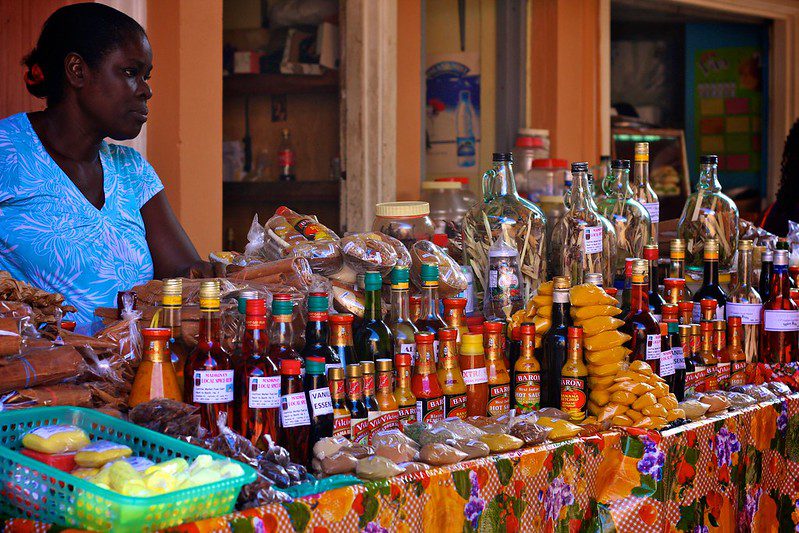
It also organizes guided commercial farm visits, where the women it serves can gain expert knowledge of sustainable and productivity-boosting farming practices. Furthermore, seeking to increase the visibility of Saint Lucia’s female farmers, Helen’s Daughters operates an agri-tourism experience, allowing visitors to learn firsthand about the women’s trials and successes through tours and markets.
In 2022, Helen’s Daughters partnered with global chocolate retailer Hotel Chocolat to establish the Agri-Apprenticeship Programme, which provides three women every year invaluable experience in managing a farm. They receive mentorship and training throughout the process and, upon completing the apprenticeship, can use start-up funds from Helen’s Daughters to establish their agricultural enterprise.
Caroo shared in a podcast that, “One of the critical and key areas of Helen’s Daughters is that seed of empowerment; of self-belief; of belief in yourself as an agricultural entrepreneur.” This focus on the nourishment of burgeoning female potential is pertinent in an economy where women engage heavily in entrepreneurship but where the vast majority of small businesses with limited growth capacity are woman-owned, according to the World Bank report.
Tilling Saint Lucia’s Socioeconomic Landscape
One of Helen’s Daughters’ major focuses is strengthening female farmers’ ability to engage in the economy. It organizes quarterly markets where women can grow their customer bases and establish firm roots within the sector through networking. In 2022, 95 of Saint Lucia’s female farmers benefited from this initiative and sales amounted to $37,415, according to Helen’s Daughters 2020 annual report. Helen’s Daughters also connects the rural women it supports to larger enterprises such as hotels and restaurants, allowing them to significantly boost their income.
This demonstrates a wider focus on Saint Lucia’s development. The Caribbean imports between 80% and 90% of its food. However, in the podcast, Caroo points out that more than half of this produce could be grown locally. She believes Saint Lucia, and the region at large, to be “stuck in a very dangerous cycle” of dependency. Still recovering from the profound wound that the collapse in tourism triggered by the COVID-19 pandemic left in its economy, the country is now keenly feeling the sharp increase in import prices precipitated by the war in Ukraine. Helen’s Daughters’ integration of small-scale farmers into Saint Lucia’s economy is therefore testimony to a vision of increased resilience and autonomy for both the women it supports and for entire communities. As Caroo puts it, “If a nation cannot feed itself, it’s not free.”
Food Sovereignty and Health
Another facet of Helen’s Daughters’ commitment to “food sovereignty and health,” as Caroo pointed out in the podcast, of Saint Lucia is its focus on nutritional marketing within its training programs and its creation of a cooking channel showcasing local recipes and products. According to Caroo, the organization is teaching farmers how to capitalize on the fact that, currently, “health is trendy”, and is encouraging consumers to “recognize that there is value in food that’s locally available.”
Helen’s Daughters also holds quarterly wellness fairs. According to its website, these clinics allow rural people to access health information, dietary advice and checkups at no cost and pay homage to the farmers who work tirelessly to support their families at the expense of their own wellbeing.
Empowering Saint Lucia’s Female Farmers
Helen’s Daughters provides Saint Lucia’s female farmers with the tools they need to transform the island’s natural abundance into increased prosperity and agency for themselves, their families and their communities. At the organization’s core is a commitment to the living realities of rural communities, long masked by an image of tropical splendour but vibrant and beautiful in their own right.
– Leila Powles
Leila is based in Cheltenham, Gloucestershire, UK and focuses on Global Health for The Borgen Project.
Photo: Flickr

Poverty Reduction in Madagascar
In 2022, 75.2% of Madagascar’s population was in poverty. There has been a steady decline in poverty within rural areas however, poverty within urban areas has ripened, seeing an increase of 31.5% over the past decade. This shocking growth in poverty within Madagascar’s urban areas is due to several factors with the COVID-19 pandemic and a large quantity of cyclones being the main causes. Fortunately, efforts for poverty reduction in Madagascar are underway and making a difference.
Food Insecurity
This level of poverty has led to a ripening level of food insecurity, seeing 204,000 of the Madagascan population in the highest level of severity (IPC phase 4) and 859,000 in the second highest level of severity (IPC phase 3) in 2020.
In response to this, the Madagascan government received $227 million credit in April 2023 from the World Bank and the French Development Agency to restructure rural infrastructure. This restructuring and development program aims to aid approximately 165,000 farmers and 150,000 homes by implementing training on forms of agriculture to cope with their climate. In addition to blockchain input vouchers and 30,000 hectares of watersheds, it aims to help reduce food insecurity and further develop the rural economy.
Roads and Transport
In addition to tackling food insecurity, the Madagascan government are also rehabilitating roads, with 40 KM of the RN44 already complete and with work on rural roads not yet finished. This may have a knock-on effect on the education sector. As the restructuring is halving the travel time, it is allowing more children to attend school, helping to increase the completion of primary school from 62% for girls and 57% for boys. This will likely allow these children to grasp more skills and attain a higher-level job later in life. It may also benefit trading, as markets would become more accessible to the public allowing more local trade to occur. UNESCO’s research proves this, which infers that world poverty could be reduced by half if all adults finished high school.
Energy Access
Another aspect of Madagascar’s poverty reduction plan is to increase accessibility to electricity as, currently more than 18 million people currently lack electricity. It is crucial to improve the accessibility to electricity to facilitate the growth of enterprises, which is necessary to provide a better job market. Atou Seck, the World Bank Country Manager for Madagascar, has addressed this issue as a crucial aspect to provide improvement as he states, “Addressing poverty in Madagascar requires bold pro-growth reform that will improve the business climate, promote competition as well as build human capital, invest in connectivity, access to energy and digital infrastructure.”
In terms of initiatives, the Madagascan government has been approved for a $400 million credit for the Digital and Energy Connectivity for Inclusion in the Madagascar Project (DECIM). This project will likely increase energy access in Madagascar from 33.7% to 67% and add 3.4 million internet users, helping further Madagascar’s connectivity as a nation and allowing businesses to develop and generate larger profits, thus aiding poverty reduction in Madagascar.
In conclusion, Madagascar is one of the most impoverished countries in the world. However, there are several initiatives helping develop and further Madagascar’s economy, while aiding poverty reduction in Madagascar.
– Max O’Shea
Photo: Flickr
The Approach of the Catalan Integral Cooperative to the Economy
Background of the Catalan Integral Cooperative
While the 2008 financial crisis was global in scope, it hit Spain particularly hard: the unemployment rate skyrocketed from 8.2% in 2007 to 26.1% by 2013, while youth unemployment was above 55% by 2013. With a declining gross domestic product (GDP) and a ballooning national debt, the Spanish government instituted austerity measures in 2010. Actions included rolling back the welfare system and making hiring and firing easier for employers. Civil unrest swept the nation and Catalonia in particular.
The CIC was born in this milieu with the aim of creating an alternative economy based on the principles of direct democracy, transparency and cooperative ownership. While CIC dissolved as an organized entity in 2015, many of its autonomous components survive to this day. Here are three of its most fascinating components.
Concluding Remarks
The CIC may have collapsed as an organization almost a decade ago, however, its legacy of furthering the public good endures by way of its numerous still-active offshoots and sub-organizations. Cooperative projects like CAC, the eco and Casx have sheltered living standards. Furthermore, they have boosted purchasing power in the region while granting valuable insight into both the promise and pitfalls of a post-capitalist economy.
– Kipling Newman
Photo: Wikimedia Commons
4 Charities Operating in Jamaica
Jamaica is a diverse and culturally rich island known for its music and natural attractions. It is the third-largest island in the Caribbean and has a population of about 2.5 million. However, COVID-19, changing weather patterns and other governmental issues have resulted in environmental, educational and economic gaps. Post-pandemic, Jamaica’s economy has taken a hit. Tourism, which is a large part of the Jamaican economy, has plummeted and Jamaica’s poverty rate increased by 4%. This article features four impactful charities operating in Jamaica that strive to help resolve these issues and improve the quality of life on the island.
Children First Agency
One of the major charities operating in Jamaica is Children’s First Agency, which is a nonprofit charity that supports children, mobilizes them to overcome poverty and gives them educational tools to improve their lives. Its mission is to allow children who may not have had equal opportunities to realize their full potential. More than 190,000 children in Jamaica live in poverty, with rural areas having higher poverty rates, while 85% of children experience violent discipline and 30% are born to mothers under 17. This charity aims to assist families that are not sufficiently supported by their environment.
The nonprofit has two main projects: the Youth Wellness Center and the Bashy Bus. The Youth Wellness Center focuses on educating children on their healthcare needs by giving them knowledge that helps them make informed decisions. The center offers education and vocational skills training, job placements and support services. The Bashy Bus is a bus that provides reproductive health information and resources to teenagers. It is the first mobile bus service for reproductive health.
Issa Trust Foundation
Couples Resorts founded the Issa Trust Foundation in 2005 with the mission to promote the well-being of Jamaican people. The organization strives to assist with the needs of children and families, advocating for improved medicine and education. Besides fostering a sense of community and support for the impoverished, the charity has a focus on pediatric care.
Issa Trust Foundation’s 10th pediatric medical initiative showed more than 1,000 children being treated with more than 41 volunteers taking part for treatments. The charity also offers free health lectures, as well as providing eye care and glasses for children in need. A pharmacist intern Shanique Powell is an example of a Jamaican-born citizen returning to Jamaica to counsel and help needy families. Powell says, “Coming back has reminded me of where I am from.” This opportunity to reconnect with her culture and improve upon her home country would not have been possible without the Issa Trust Foundation and her story is only one in many.
Food for the Poor
Food for the Poor is a global charity that strives to assist impoverished families by providing food, housing, clean water and more. In Jamaica, 17.1% of citizens live below the poverty line and 7% of children under 5 suffer from malnutrition. Although the charity is global, Jamaica was the first country in their initiative in 1982. Since then, FFTP has remained steadfast in helping relieve Jamaica’s poverty. In 2022, it implemented two income-generating projects, provided 68 computers to children in Angel of Hope’s Children Homes, provided a rainwater harvesting system in a school and more. In 2024, the charity gave more than 32.4 million meals to Jamaica and contributed to the building and expansion of more than 322 schools.
Smile a While Foundation
Smile a While Foundation is a nonprofit organization geared towards providing therapy for special needs children in Jamaica. The founder, Joanne Oates, was inspired to help children who may not be able to get the support they need. In Jamaica, 162,800 people reported having a self-identified mental illness. Children under 14 make up 21% of this group. However, developing countries often don’t have the resources or infrastructure to provide sufficient help.
Between 76% – 85% of people in these countries with serious mental illness do not receive the help they need. The Jamaican government has tried to reduce the reliance on institutional care, use more licensed professionals, and emphasize community care. Smile a While Foundation is an example of a progressive step forward. In 2023, the charity opened a splinting clinic, recruited new therapists with specializations in autism, and more.
Looking Ahead
These four charities operating in Jamaica are essential contributors to alleviating Jamaica’s economic, educational and environmental issues. With the support of donations and volunteers and the vision of these nonprofit leaders, Jamaica will continue to improve and strive for a better island for all its citizens.
– Sofia Hattiangadi
Photo: Flickr
The Chomuzangari Cooperative: Food Security in Masvingo
Women in Masvingo
In the Chivi District of Masvingo Province, where women form the majority of the population at 787,098, they traditionally play a diminished role in community decision-making. The Chomuzangari Cooperative aims to empower these women by boosting their confidence and self-esteem, ensuring their voices are heard and their participation increases. The theory is simple: with more resources and confidence, women can enhance food production in the area. A significant method for bolstering self-esteem is through education. To make education more accessible to everyone in the community, the Cooperative has introduced e-learning resources, including Raspberry Pi technology.
Mental Health
In addition to enhancing learning, water access, sanitation and hygiene, the Cooperative also focuses on destigmatizing mental health in Zimbabwe. Typically, mental health services are concentrated in hospitals in major urban centers, leaving rural areas poorly served. Rural mental health care suffers from stigma, resource constraints and staff shortages. Moreover, care for the mentally ill often falls on women, which can be traumatic and detrimental to their mental health. By boosting female self-esteem, the Cooperative hopes to not only support women through these challenges but also empower them to advocate for improvements in the mental health system.
3 Success Stories of Women in Masvingo
Looking Ahead
The Chomuzangari Cooperative has significantly enhanced the perception of women and the quality of life in entire communities throughout the Masvingo region. Before the project began, the changing climate, discrimination and limited resources severely hindered women’s ability to provide food for their families. Although these challenges persist, the Cooperative’s ongoing efforts and funding have greatly mitigated their impact.
– Bea Newington-Bridges
Photo: Flickr
Transforming Education: School Feeding Programs in Malawi
Boosting School Enrollment and Attendance
Feeding programs have a clear and immediate effect on increasing school enrollment and attendance rates. In an environment where many families face food insecurity, the guarantee of a meal when children attend school provides a strong incentive for parents to send their children to school. Data from the WFP reveals that attendance rates in schools with feeding programs have improved from 77% to 92%, which is a drastic increase. Additionally, these programs have led to a 5% decline in absenteeism and a 2.9% reduction in dropout rates.
Promoting Gender Equality
In Malawi, as in many developing countries, girls are generally disadvantaged when it comes to accessing education. Negative cultural practices, early marriages and domestic chores often make it difficult for girls to attend school. However, school feeding programs have made significant progress in bridging the gender gap in education. The implementation of the United Nations Joint Program on Girls’ Education, which includes the provision of varied school meals, has led to a notable decrease in girls’ dropout rates, from 15.6% to 5.2%. These programs help alleviate some of the economic burdens on families by ensuring that girls receive at least one meal a day, encouraging parents to support their daughters’ education.
Enhancing Academic Performance
The benefits of school feeding programs extend beyond simply getting children to school—they also play a crucial role in enhancing students’ ability to learn and perform academically. Malnutrition, which affects cognitive development, is a significant barrier to learning. By providing nutritious meals, these programs help ensure that children are better able to focus, participate in class and retain information.
Overcoming Challenges and Ensuring Sustainability
Since 1999, Malawi’s school meals programs have continued to grow but have not been able to reach all students. The home-grown school feeding strategy has been important in promoting education and increasing economic welfare by providing nutritious food to 605,000 children while supporting 35,000 smallholder farmers. Supported by Norway, the European Union (EU) and Iceland, this investment reveals an impressive 20:1 return on every dollar, demonstrating progress in education, nutrition and local economies.
These achievements have not been without challenges. In developing countries like Malawi, reliance on international grants could create instability and unpredictability in operations. Many schools also face infrastructural issues, such as inadequate cooking facilities, lack of water supply and insufficient electricity for meal preparation and serving. The use of wood as fuel contributes to deforestation and other environmental problems. Despite the benefits of these programs, food insecurity remains a major barrier to both school enrollment and completion. Addressing these issues requires a multifaceted approach, including long-term funding, improved infrastructure and the adoption of less environmentally harmful fuel sources.
Looking Forward
School feeding programs in Malawi have significantly improved education, boosting enrollment, attendance and academic performance, particularly for girls. The home-grown initiative further benefits local economies by supporting smallholder farmers. However, challenges like funding instability, poor infrastructure and environmental concerns remain. Addressing these ongoing issues can potentially sustain and expand the program’s impact, ensuring a brighter future for Malawi’s children and communities.
– Aneela Agha
Photo: Flickr
Helen’s Daughters and Saint Lucia’s Female Farmers
Helen’s Daughters is a non-governmental organization (NGO) blending the empowerment of Saint Lucia’s women with its overall development. It trains and supports female farmers, viewing them as long-overlooked drivers of change.
The Roots of Helen’s Daughters
Keithlin Caroo, the organization’s founder, told the BBC that she established Helen’s Daughters to “address the systematic exclusion of rural women in the agricultural sector.” The strong concentration of women within the informal economy and the blurring of economic and non-economic activity on small-scale family farms have long shrouded their contributions to agriculture in Saint Lucia, limiting their access to support systems, resources and growth prospects.
In a podcast interview from February 2024, Caroo describes witnessing her grandmother’s contributions to the family’s agricultural business dematerialize as she listed her occupation as “housewife” on official records. She remembers thinking that, given more opportunity, she “would probably be one of the most successful farmers in the area”
Caroo recognized that Saint Lucia’s female farmers needed “an ecosystem of other women in farming and agriculture” and set out to create one. She points out that Helen’s Daughters exists “not to negate men’s roles in the field”, but to address “a developmental issue in the region” that confines women to the margins of the agricultural sector.
Training Programs for Saint Lucia’s Female Farmers
Since its inception in 2016, Helen’s Daughters has cultivated a thriving network of female farmers, reaching 1,200 women as of 2022. The NGO operates two training programs in Saint Lucia, as well as Saint Kitts and Nevis and Saint Vincent and the Grenadines, which focus on sustainable agriculture, financial literacy, business development and marketing.
It also organizes guided commercial farm visits, where the women it serves can gain expert knowledge of sustainable and productivity-boosting farming practices. Furthermore, seeking to increase the visibility of Saint Lucia’s female farmers, Helen’s Daughters operates an agri-tourism experience, allowing visitors to learn firsthand about the women’s trials and successes through tours and markets.
In 2022, Helen’s Daughters partnered with global chocolate retailer Hotel Chocolat to establish the Agri-Apprenticeship Programme, which provides three women every year invaluable experience in managing a farm. They receive mentorship and training throughout the process and, upon completing the apprenticeship, can use start-up funds from Helen’s Daughters to establish their agricultural enterprise.
Caroo shared in a podcast that, “One of the critical and key areas of Helen’s Daughters is that seed of empowerment; of self-belief; of belief in yourself as an agricultural entrepreneur.” This focus on the nourishment of burgeoning female potential is pertinent in an economy where women engage heavily in entrepreneurship but where the vast majority of small businesses with limited growth capacity are woman-owned, according to the World Bank report.
Tilling Saint Lucia’s Socioeconomic Landscape
One of Helen’s Daughters’ major focuses is strengthening female farmers’ ability to engage in the economy. It organizes quarterly markets where women can grow their customer bases and establish firm roots within the sector through networking. In 2022, 95 of Saint Lucia’s female farmers benefited from this initiative and sales amounted to $37,415, according to Helen’s Daughters 2020 annual report. Helen’s Daughters also connects the rural women it supports to larger enterprises such as hotels and restaurants, allowing them to significantly boost their income.
This demonstrates a wider focus on Saint Lucia’s development. The Caribbean imports between 80% and 90% of its food. However, in the podcast, Caroo points out that more than half of this produce could be grown locally. She believes Saint Lucia, and the region at large, to be “stuck in a very dangerous cycle” of dependency. Still recovering from the profound wound that the collapse in tourism triggered by the COVID-19 pandemic left in its economy, the country is now keenly feeling the sharp increase in import prices precipitated by the war in Ukraine. Helen’s Daughters’ integration of small-scale farmers into Saint Lucia’s economy is therefore testimony to a vision of increased resilience and autonomy for both the women it supports and for entire communities. As Caroo puts it, “If a nation cannot feed itself, it’s not free.”
Food Sovereignty and Health
Another facet of Helen’s Daughters’ commitment to “food sovereignty and health,” as Caroo pointed out in the podcast, of Saint Lucia is its focus on nutritional marketing within its training programs and its creation of a cooking channel showcasing local recipes and products. According to Caroo, the organization is teaching farmers how to capitalize on the fact that, currently, “health is trendy”, and is encouraging consumers to “recognize that there is value in food that’s locally available.”
Helen’s Daughters also holds quarterly wellness fairs. According to its website, these clinics allow rural people to access health information, dietary advice and checkups at no cost and pay homage to the farmers who work tirelessly to support their families at the expense of their own wellbeing.
Empowering Saint Lucia’s Female Farmers
Helen’s Daughters provides Saint Lucia’s female farmers with the tools they need to transform the island’s natural abundance into increased prosperity and agency for themselves, their families and their communities. At the organization’s core is a commitment to the living realities of rural communities, long masked by an image of tropical splendour but vibrant and beautiful in their own right.
– Leila Powles
Photo: Flickr
Communities Fighting Elderly Poverty in Syria
Food that once fed families now leaves them exhausting their savings for every meal. Older persons struggle even harder to find jobs, especially as the conflict has pushed desperation to self-reliance, marginalizing older people and the traditional family structure. An elderly person from North-west Syria comments: “In the past, older people would reach retirement age, and the family would take care of them. However, currently, the responsibility they should rely on self-care […] has increased, placing the burden directly on them.”
Communities in Damascus
Fortunately, many community-led initiatives help fight elderly poverty in Syria. The Syrian Society for Social Development has a home-based care program for Seniors who have specific vulnerabilities. Collaborating with the United Nations High Commissioner for Refugees (NHHCR), a team of volunteers focuses on helping and provide safety to the older population. The program dedicates itself to helping people over the age of 60 through nursing, housekeeping, hygiene, medication organization, as well as food preparation.
Taking place in several community centers of Rural Damascus, care-giving volunteers not only provide different meals and learn to use blood pressure monitors but also socialize with older people through entertaining and engaging activities. Older people are no longer excluded from younger people, therefore improving both their mental and physical well-being. Because of this, elderly people struggle and spend less on medication and health check-ups, as well as food. These responsibilities help combat elderly poverty in Syria by including older people back into a supportive system and engaging the community.
Communities in Aleppo
People residing in Southern Aleppo were suffering from a damaged rainwater drainage network that had begun to flood the streets. There was a high risk of disease as large bodies of wastewater accumulated on the ground. Further threats would ensue if younger children and elderly people fell into the water. The cost of injury and the addition of medication prices would be detrimental to the elderly Syrian population who have a higher risk of suffering from poverty and marginalization.
Successfully, the local community came together to discuss and plan a new drainage foundation. Alongside the UNHCR, both a construction team and members of the local community contributed to the excavation and installation of a new drain filter. As a result, the filter not only improved the appearance of the town and the efficiency of the drainage system but benefited 3000 residents living in Abtein town. Because of this, the town demonstrated strong values of community and kindness. Their uniting demonstration challenges elderly poverty in Syria by preventing expensive medical prices through ensuring the health and safety of the entire community.
Fighting Elderly Poverty in Syria
In conclusion, conflict and soaring expenses have split up traditional family structures. Alienising older people from the young, the older Syrian population has lost a grounded support system and the elderly have been pushed further into isolated poverty. However, community-led projects such as fixing drainage systems, and organisations such as the Syrian Society for Social Development, help to care for the vulnerable population of elders and to protect them from further elderly poverty in Syria. Volunteers and townspeople come together to provide the elderly with entertainment and physical aid, as well as essentials such as food and medication that they might otherwise struggle to afford on their own.
– Chelsey Saya McLeod
Photo: Unsplash
Addressing Energy Poverty in India
Governmental programs aim to alleviate energy poverty in India while promoting more reliable and efficient forms of energy. The Indian government will continue to subsidize all energy forms to meet growing demand while promoting technological development and private investment.
Energy Poverty In India
Energy poverty is still widespread in India because of the challenges of affordability, capacity and reliability. According to the Household Energy Poverty Index, 65% of households experienced energy poverty in 2020, but this is improving.
Energy poverty in India declined between 2004 and 2012 in most states but increased in poorer states which account for more than 30% of India’s population. It is declining slower in rural areas — the greatest improvements being in major cities.
Energy poverty rates are higher than income poverty rates. In rural areas, 57% of households experience energy poverty while 22% experience income poverty, compared to 28% and 20% respectively for urban areas.
Energy poverty affects disadvantaged groups. It is linked to lower socio-economic status and level of education. Furthermore, lower castes and marginalized communities such as the Dalits and tribal Adivasi are particularly energy-poor or have only seen marginal rates of energy poverty decline, according to the 2019 Energy and Buildings article.
Despite nearly all Indians having access to electricity, 41% still rely on traditional biofuels like cow dung and wood for cooking because of financial insecurity. Women and girls are more likely to collect and prepare bio-fuels, detracting from time spent on education, childcare and income-generating activities, according to the 2019 Energy and Buildings article. These fuels create pollutants associated with chronic respiratory diseases, including tuberculosis and bronchitis.
India’s Energy Challenges
India has been increasing fossil fuel subsidies because of its carbon-intensive economy. Last year, 58% of energy consumption and 77% of generated energy came from coal. Crude oil accounted for 31% of energy consumption last year, but India imports approximately 87% of it, leading to vulnerability to price fluctuations and geopolitical risks that prevent lower-income households from accessing energy affordably and reliably.
Fossil fuel subsidies reinforce income inequalities by mostly benefiting higher-income individuals. They also contribute to health and environmental costs that disproportionately impact the poor.
During the global energy crisis, the Indian government instituted fuel price caps, tax cuts and budgetary transfers to help combat energy poverty. However, such measures led to overconsumption because fuel prices did not reflect their market value or social costs. This resulted in an estimated $346 billion in lost tax revenue in 2022 and less space for renewable energy and infrastructure development critical for low-income households.
Government Energy Policy in 2024
To address these issues, India is taking a hybrid approach by boosting all forms of energy. India is expected to invest more than $35 billion annually in advanced energy solutions by 2030.
Renewable energy is another focus, with a target to increase non-fossil fuel energy capacity by 2030. The 2024 budget allocated approximately $71.7 million to the Green Hydrogen Fund to promote green hydrogen production and stimulate private-sector investment.
The budget also allows the first public-private nuclear energy partnerships, inviting $26 billion in investments for small modular reactors and research and development. The government will also engage in joint ventures for thermal power plants.
To ensure more equitable access, approximately $1.2 billion was allocated to subsidize solar panel installation for 10 million households and provide 300 units of free electricity monthly for some lower-income households. Decentralized Renewable Energy (DRE) projects like private solar panels, micro-grids and other community-focused projects help reduce energy poverty in Indian marginalized communities.
In addition to diversifying its energy sources, India has also diversified the countries it imports oil from to reduce price fluctuations due to supply changes and geopolitical tensions.
Energy Poverty in India: Conclusion
India’s multi-dimensional approach aims to balance its energy needs with sustainable and equitable access. Investments in advanced energy solutions and private sector ventures, as well as investments in clean energy and infrastructure, are necessary to meet India’s growing energy demand while working toward sustainable development goals.
Energy poverty in India is difficult to alleviate because of reliance on fossil fuels, deep socio-economic inequalities and infrastructural and financing challenges. However, India has made spectacular progress in recent decades in other developmental areas like poverty alleviation and expanding access to electricity. While the path to ending energy poverty is complex and long-term, recent government plans demonstrate continuity in efforts to alleviate the issue.
– Luke Ravetto
Photo: Flickr
Brazil’s Global Alliance Against Hunger and Poverty
Why Brazil’s Global Alliance
Before the Global Alliance Against Hunger and Poverty, President Lula created a national program in 2003 to eradicate hunger. In 2014, “with an undernourishment rate below 2.5% for three years,” Brazil left the Food and Agriculture Organization’s (FAO) “hunger map,” but has been unable to maintain those levels since 2021. Levels started falling again, however, in 2023, in President Lula’s new administration.
President Lula has taken his national program and turned it into a global scale. In his announcement speech, he says: “In the middle of the 21st century, nothing is as absurd and unacceptable as the persistence of hunger and poverty, when we have so much abundance, so many scientific and technological resources and the artificial intelligence revolution at our disposal.”
The Pan American Health Organization (PAHO) director has welcomed the Global Alliance and has stated the importance of overcoming inequalities. He said that policies and public investment in health are needed, and to ensure healthy lives, eliminating hunger and poverty is necessary.
Goals of Brazil’s Global Alliance
From Wellington Dias, the Minister of Development and Social Assistance: “The Alliance’s mission is to expand the adoption of good national programs on a large scale to end hunger and poverty; and of policies to ensure the human right to dignity and to adequate, nutritious and healthy food.”
Brazil’s Global Alliance will aim to raise and mobilize resources, both funds and technological knowledge, to expand policies and programs to help combat and eradicate inequality in terms of poverty and hunger, according to Africa News.
In President Lula’s announcement speech, he expresses how the Global Alliance’s goals go beyond eradicating hunger and poverty, but rather to ultimately bolster a just world:
“As long as there are families without food on the table, children in the streets and young people without hope, there will be no peace. A just world is a world in which people have unimpeded access to food, health, housing, education and decent jobs,” Gov.br reports.
Support
Ahead of the official launch in November 2024, President Lula has sought support for the Global Alliance. As the initiator of the initiative, Brazil is covering half of the cost, according to Africa News.
After the announcement speech in New Delhi, Brazil is hopeful to gain the support of over one hundred countries. So far, the World Bank president, Ajay Banga, has declared support for the initiative. The Inter-American Development Bank and the African Development Bank (AfDB) have also said they would support the initiative. The International Monetary Fund (IMF) has approved the channeling of Special Drawing Rights for development banks, Reuters reports.
– Rachel Padden
Photo: Flickr
Gardening in Conflict: Sowing seeds of hope in war zones
Gardening in Conflict
Communities across the globe exhibit gardening in conflict as they cultivate alternative land and futures in the aftermath of war. War correspondent Lalage Snow writes of the desensitization associated with conflict, noting the wantonness of destruction in her book War Gardens: A Journey Through Conflict in Search of Calm.
Yet such desensitization is being challenged by community projects in areas once defined by war. From Burkina Faso to Afghanistan, gardeners display a belief in tomorrow by planting seeds that will outlast human conflict. Three projects particularly exemplify this sentiment and demonstrate that gardens can provide not only a means of survival but also sanctuary against a backdrop of unrest.
The RECOSA Project in Burkina Faso
Around 1.9 million people are now seeking refuge in disparate parts of Burkina Faso as armed groups have claimed entire regions of the country. The closure of 6,000 schools and rising food insecurity come alongside a sense of disconnection from personal land and heritage.
Initiated by the Red Cross and Handicap International, the RECOSA garden project is addressing such issues by creating shared spaces for growing crops and flowers. In Sebba, social cohesion is growing through communal gardens. Cross-border populations are particularly vulnerable to social dislocation, inhabiting a place characterized by the transitory movement of people. Seventy-five Sebba households learned to create shared gardens which has been transformative for those experiencing food insecurity and isolated from their communities.
Chihilsitoon Garden in Kabul
The Chihilsitoon Garden, like much of Afghanistan, suffered the civil war of the 1990s. It lay in ruins, a remnant of looting and destruction, for 25 years. However, in 2015, the Aga Khan Trust for Culture restored the 12.5-hectare Chihilsitoon garden to its former glory. By planting 5,000 new trees and populating the park with native flowers from nearby hills, a space became a sanctuary for the citizens of Kabul.
This drastic landscaping has created multifaceted opportunities for those still recovering from the turmoil of war and occupation. Waterways and paths, long lost under the rubble of conflict, have been recovered to form trails that connect various spatial experiences. Picnic and an amphitheater are linked through paths lined with flowers now tended by a team of Afghan farmers.
The rehabilitated garden provides citizens a sanctuary to socialize and form new associations with a place once tainted by war. The preservation of green spaces is restoring Afghan culture and social history; the planting of native flowers supplants former devastation.
Since its restoration, the gardens have annually attracted more than 400,000 visitors. The transformation of a former warzone into a green sanctuary has provided newfound hope for Afghanis.
Gardening in the War Zone of Kharkiv
Alla Olkhovska lives 20 miles south of the Russian-Ukraine border in Kharkiv, Ukraine. Confronted with daily air raid sirens, a reminder of the battlefield surrounding her, she seeks solace in the flowers and trees in her garden. Lacking the means to escape the country after Russia’s invasion, she has sought refuge in clematis and wild flowers. Her remarkable work has garnered international attention, allowing her to make a documentary, Gardening in a War Zone.
The documentary shows her horticultural skills and the therapy she finds in tending to her plants. At one point she admires the seedlings in her hand and the ability to hold multiple lives and future lives in one hand. This sentiment offers relief against a backdrop of conflict which threatens to destroy a generation’s future.
Alla’s work has also spawned a book, Clematis, which covers how best to cultivate the flower. In a message to the reader Alla says that writing the book during the war was particularly taxing and, faced with ‘constant missile attacks’ and a volatile psychological state, writing conditions were far from ideal. Yet a passion for gardening drowned out the wail of sirens in the distance. It has provided her with a sense of purpose, helping it grow into hope for her nation.
Whilst the reality of war can not be ignored, she refuses to accept defeat when confronted with the life found in plants every day. Her story is a testament to the power of gardens in reminding us that new life will prevail despite imminent threats to it.
Gardening in Conflict: Final Thoughts
The cultivation of seeds produces more than just plants; each seedling spawns newfound hope and autonomy. Gardening in conflict offers social cohesion. Yet it also speaks of human fortitude, and a remarkable ability to see potential in spaces once threatened by war.
– Lucy Tappin
Photo: Flickr