Addressing Energy Poverty in India
 Due to rapid population growth and economic development, India has a need to scale up its energy capacity to alleviate energy poverty and meet its energy demands. Energy poverty refers to household access to affordable, reliable and safe energy services. Although India could be the third largest economy by 2030, per capita income is below the global average, with regional infrastructure disparities affecting access to modern energy sources. The energy situation disproportionately impacts lower-income households, who spend a large portion of their income on energy or use less desirable energy forms, according to the 2023 Energy Research and Social Science article.
Governmental programs aim to alleviate energy poverty in India while promoting more reliable and efficient forms of energy. The Indian government will continue to subsidize all energy forms to meet growing demand while promoting technological development and private investment.
Energy Poverty In India
Energy poverty is still widespread in India because of the challenges of affordability, capacity and reliability. According to the Household Energy Poverty Index, 65% of households experienced energy poverty in 2020, but this is improving.
Energy poverty in India declined between 2004 and 2012 in most states but increased in poorer states which account for more than 30% of India’s population. It is declining slower in rural areas — the greatest improvements being in major cities.
Energy poverty rates are higher than income poverty rates. In rural areas, 57% of households experience energy poverty while 22% experience income poverty, compared to 28% and 20% respectively for urban areas.
Energy poverty affects disadvantaged groups. It is linked to lower socio-economic status and level of education. Furthermore, lower castes and marginalized communities such as the Dalits and tribal Adivasi are particularly energy-poor or have only seen marginal rates of energy poverty decline, according to the 2019 Energy and Buildings article.
Despite nearly all Indians having access to electricity, 41% still rely on traditional biofuels like cow dung and wood for cooking because of financial insecurity. Women and girls are more likely to collect and prepare bio-fuels, detracting from time spent on education, childcare and income-generating activities, according to the 2019 Energy and Buildings article. These fuels create pollutants associated with chronic respiratory diseases, including tuberculosis and bronchitis.
India’s Energy Challenges
India has been increasing fossil fuel subsidies because of its carbon-intensive economy. Last year, 58% of energy consumption and 77% of generated energy came from coal. Crude oil accounted for 31% of energy consumption last year, but India imports approximately 87% of it, leading to vulnerability to price fluctuations and geopolitical risks that prevent lower-income households from accessing energy affordably and reliably.
Fossil fuel subsidies reinforce income inequalities by mostly benefiting higher-income individuals. They also contribute to health and environmental costs that disproportionately impact the poor.
During the global energy crisis, the Indian government instituted fuel price caps, tax cuts and budgetary transfers to help combat energy poverty. However, such measures led to overconsumption because fuel prices did not reflect their market value or social costs. This resulted in an estimated $346 billion in lost tax revenue in 2022 and less space for renewable energy and infrastructure development critical for low-income households.
Government Energy Policy in 2024
To address these issues, India is taking a hybrid approach by boosting all forms of energy. India is expected to invest more than $35 billion annually in advanced energy solutions by 2030.
Renewable energy is another focus, with a target to increase non-fossil fuel energy capacity by 2030. The 2024 budget allocated approximately $71.7 million to the Green Hydrogen Fund to promote green hydrogen production and stimulate private-sector investment.
The budget also allows the first public-private nuclear energy partnerships, inviting $26 billion in investments for small modular reactors and research and development. The government will also engage in joint ventures for thermal power plants.
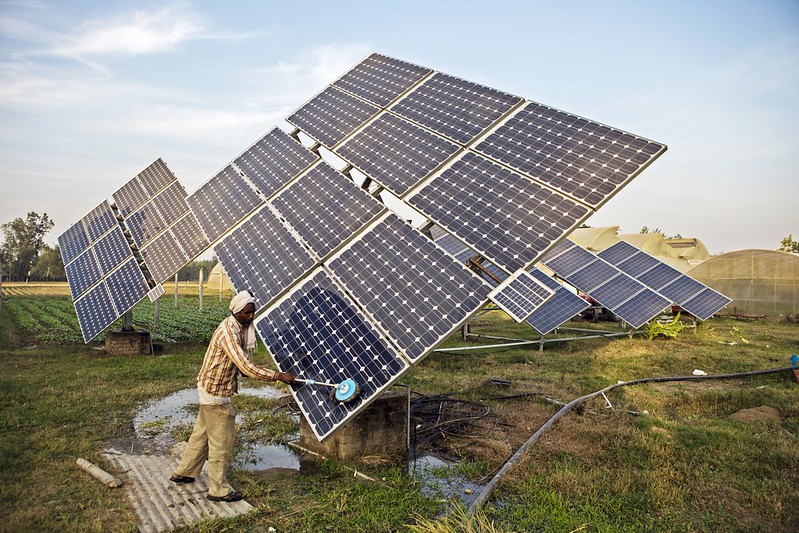
To ensure more equitable access, approximately $1.2 billion was allocated to subsidize solar panel installation for 10 million households and provide 300 units of free electricity monthly for some lower-income households. Decentralized Renewable Energy (DRE) projects like private solar panels, micro-grids and other community-focused projects help reduce energy poverty in Indian marginalized communities.
In addition to diversifying its energy sources, India has also diversified the countries it imports oil from to reduce price fluctuations due to supply changes and geopolitical tensions.
Energy Poverty in India: Conclusion
India’s multi-dimensional approach aims to balance its energy needs with sustainable and equitable access. Investments in advanced energy solutions and private sector ventures, as well as investments in clean energy and infrastructure, are necessary to meet India’s growing energy demand while working toward sustainable development goals.
Energy poverty in India is difficult to alleviate because of reliance on fossil fuels, deep socio-economic inequalities and infrastructural and financing challenges. However, India has made spectacular progress in recent decades in other developmental areas like poverty alleviation and expanding access to electricity. While the path to ending energy poverty is complex and long-term, recent government plans demonstrate continuity in efforts to alleviate the issue.
– Luke Ravetto
Luke is based in Boston, MA, USA and focuses on Politics for The Borgen Project.
Photo: Flickr
