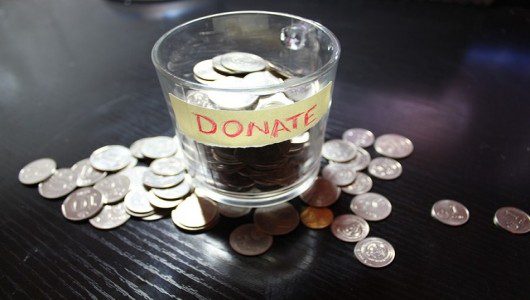
Sometimes it seems that every single non-profit and charity organization is after our money. Whether through sales calls, emails, social media campaigns, most people cannot go a single a day without a request for money or mobilization. Out of frustration and plain confusion many people may just call it quits and drop any efforts of giving to avoid creating a domino effect. However, there are six simple ways of easing the overwhelming feeling and encouraging people to give more. Peter Singer’s The Life You Can Save book and campaign discusses this very topic in hopes of creating excitement around donating time and money.
1- Identifiable Victim
With numbers of those living in poverty falling between one to three billion people, it’s hard to focus in on one victim that a donor’s money would benefit. Many organizations work in different areas and reach out to hundreds and thousands of people. To create a narrow scope, it is more effective to use case studies and personal stories of individuals that have benefited from the donations or will in the future. For example, the microloan organization kiva lists individuals, their stories, and the exact monetary aid they require.
2- Sense of Fairness
It’s the mob mentality at its finest… or worst in this case. In terms of money, people don’t want to be the only ones whose bank accounts diminish (quite dramatic of a worry, especially in the case of your average donor who stays below the 3-digit limit). Regardless, they’ll be more willing to give if they know others are as well. And when referring to others, it doesn’t mean reading headlines or watching videos of celebrities and other millionaires donating. Donors need to see people from their socio-economic levels, or below, opening up their wallets despite the economy, and giving.
3- Parochialism
“It hits close to home” is a common explanation many use as to why they donate to one cause and not another. A valid explanation but this should not limit the geographical scope of where a donor’s money goes to. Using tools such as videos or even bringing donors and donees together, if feasible, is something that will create a stronger human-to-human connection, regardless of where each of them are from.
4- Money
People love it. They want it. Songs have been written about it by Jay-Z and ABBA alike. But when it comes to actually using the word to ask for donations, it’s definitely not a fan favorite. Instead, try asking for time or support that can be given in other ways before asking for money. The key is to show that a difference can be made and that the organization isn’t just looking for financial help (although at some point it will need it).
5- Diffusion of Responsibility
Same with the idea of fairness and the ‘mob mentality,’ its important to illustrate that everyone can and should do their part in whatever way fits their lifestyle. Be careful to not guilt trip a person if a certain method or route is not their choice but be sure to touch on the more positive notion that humans have a responsibility and the privilege of helping those less fortunate.
6- Futility
Certain organizations or programs may not reach a lot of individuals but perhaps solve the problems of a group in a higher percentage. For example, while it only helps 50 people, an organization may help 48 out of those 50, a higher proportion than an organization that can only help 150 out of 12,000. Zoom in on these percentages and use them as a selling point to show how effective an organization can be. Who knows, they may give more time and money this way.
– Deena Dulgerian
Source: visual.ly
Photo: Pixabay

Religious Leaders Fight World Hunger
On May 15th, hundreds of religious leaders from 170 difference spiritual organizations will unite in combating the issue of global hunger by lobbying parliament. The Catholic Agency For Overseas Development (CAFOD) has organized the mass lobby on behalf of the “Enough Food for Everyone IF” campaign. This campaign has a strong message encompassed by four IFs.
Enough food for everyone…
IF governments keep their promises on aid, invest to stop children dying from malnutrition and help the poorest people feed themselves through investment in small farmers.
IF governments stop big companies dodging tax in poor countries, so that millions of people can free themselves from hunger.
IF we stop poor farmers being forced off their land, and use the available agricultural land to grow food for people, not biofuels for cars.
IF we force governments and investors to be honest and open about the deals they make in the poorest countries that stop people getting enough food.
These hundreds of monks, nuns, priests, and others will meet with members of Congress to discuss the reasons behind world hunger and ways to end the epidemic. Many of these religious leaders have first hand experience in third world countries working with people suffering from hunger and malnutrition.
One of the campaign’s organizers, Sister Pat Robb CJ, plans to inform members of Congress about her time in developing countries where she witnessed children dying from lack of food. She also hopes that the large scale of this lobby will put pressure on Congress to not merely listen, but to take action against world hunger.
Other groups that support the IF campaign are JPIC Links (Justice Peace and Integrity of Creation), the Africa Europe Faith and Justice Network (AEFJN), the Conference of Religious (COR), Progressio, Trocaire, Church Action on Poverty and SCIAF.
Archbishop Desmond Tutu hopes that this anti-hunger movement will be as successful as the anti-Apartheid campaign that happened several decades ago. He is confident that if people can unite over the issue of hunger, then the campaign will be a victory. One of the ways to reach this goal, he says, is for wealthy countries to commit to invest 0.7 percent of their gross national incomes in foreign aid. However, it is also important to change the systems that created extreme poverty in the first place.
These religious leaders are hoping that their influence will sway the minds of politicians to support foreign aid legislation. In the words of Sister Pat Robb, “As long as one person is still hungry, our work is not over.”
– Mary Penn
Source: INC
Photo: Theatre Goodman
African Consumers Ignored By the West
Frank Braeken, the executive VP of Unilever in Africa, believes that Western companies have long underestimated Africa’s consumers. He believes that Western companies have failed to realize Africa’s potential as a diverse, multifaceted market and that African consumers have been, “underestimated, underserved, and underserviced.” He feels the West has maintained a patronizing and generic outlook about the opportunities available in Africa.
Unilever has been working in and with African communities for more than a century. They have a presence in 15 countries, employing thousands of African workers. Yet, even Braeken acknowledges that Unilever struggled to utilize the diversity of consumers across the continent.
Unilever is just now beginning to vary their company policy and strategy, breaking Africa into several distinct chunks, such as East Africa, West Africa, and South Africa. They are working to make their products and distribution strategies relevant for the different types of consumers across the continent.
Nielsen recently released a survey about the types of consumers in African markets. The results indicate that instead of simply being viewed as a continent, Africa should be viewed as, “54 separate and distinct countries with a wide array of political, economic, geographic, cultural, and social features.” They have indicated that Western companies need to stop thinking of Africa as one single consumer.
Western markets would be smart to tap into the African market as it has been and is projected to continue growing in spending on consumer goods, telecoms, and banking. This growth sets Africa apart as an attractive new business proposition for Western companies.
While economic growth and increased knowledge of the prospect of Western companies investing in Africa is growing, there are still problems that Braeken warns need to be addressed. Africa, for the most part, lacks adequate infrastructure, good governance, and states free of corruption. However, Braeken believes that if Western states continue to talk about Africa and the real issues then not only will his company grow, but many other companies will as well.
– Caitlin Zusy
Source: CNN
Photo: Bloomberg
Philanthropy: There’s An App For That–One Today
Ever feeling philanthropic and want to donate to your favorite charity, but think it’s too difficult and time-consuming to donate through the charity’s website or via snail-mail? If so, Google (as always) has the answer to your problems.
One Today is Google’s new philanthropy app that allows users to donate $1 to their favorite charities each day. It’s simple to use because all the charities you love and want to contribute to are stored in the app, meaning you don’t have to remember any extra information about them like websites or physical addresses, and the $1 donation is easy on the wallet.
One Today also allows users to battle their friends to see who can donate the most. Through social media, the people who want to donate more than the $1 per day minimum can challenge their friends to match or exceed their donation. Not only does this method inspire more people to donate, it also spreads awareness of the different charities that are out there. Friends can find out what charities inspire their peers, and may feel more inspired themselves to give back.
As of now One Today is available by invite-only on android devices, as Google is running a test pilot of the app before making it widely available, but you can request an invite on Google’s One Today website.
– Katie Brockman
Source Nonprofit Quarterly
Photo Google One Today
Israel’s Early Childhood Development Education Program
Israel’s Agency for International Development Cooperation (MASHAV) recently completed training forty Ghanaian teachers in an early childhood development course. Thanks to the Embassy of Israel, Accra Metropolitan Assembly (AMA) and the Ghana Education Service (GES), over a hundred teachers have now been trained to teach preschool and kindergarten in Ghana.
The extensive program lasted for two weeks and focused on early childhood education. Teachers left the program with a higher knowledge of children’s learning principles, the needs of young children, what curriculum to teach, and appropriate games. By giving special attention to young students, Ghana hopes to build a better foundation for its future workforce and overall societal well being.
This partnership between Israel and Ghana will likely produce hundreds more early education teachers, something for which Ghana is desperate. Not only will more teachers be trained in Israel, but those who completed the program will go on to spread their new knowledge to other teachers in Ghana, thus creating a web of well-educated preschool and kindergarten teachers throughout the country.
The Early Childhood Development Education program is now in its fourth year in Kumasi and its second year in Accra. Both countries expect to have a long relationship as they continue to see positive results in Ghana’s early education system.
– Mary Penn
Source: GBN
Photo: Flickr
Les Misérables
The World Bank’s Director of Economic Policy and Poverty Reduction Programs for Africa, Marcelo Giugale, recently wrote about the current progress and development around the world in regards to extreme poverty. He explains that the 2013 World Development Indicators (WDI) have recently been released, evincing the status and evolution of people who live on $1.25 or less. Giugale’s detailed description of what it would be like to live on such a meager number really captures the essence of poverty and contrasts it with the expectations, advancement, and materialism of the 21st century. It allows the reader to visualize life in another light, one that is much different than what would be expected from the 21st century. Giugale writes, “If you had something that could be called a house — [it] would have no electricity, gas, running water or sewer.”
Out of the world’s human population of 7 billion, 1.2 billion live in extreme poverty. However, Giugale expresses his optimism in commenting on how it has been proven through one region’s shift away from poverty that rapid economic growth can tackle poverty. For example, in the past 20 years through 2010, China’s fast economic growth played the main and most prominent role in lifting approximately 700 million people out of poverty. Giugale also sheds light on the fallacy that the 2008-2009 global financial crisis raised extreme poverty; that is not true, according to Giugale. The financial crisis “if anything…only slowed [down] temporarily the downward trend that extreme poverty had been on.”
The Director also shares that although almost half of all Africans still live in extreme poverty, the rate of poverty declined from 60% in 1993 to 48% in 2010. Taking into account economic growth while noting that Africa is home for a third of the world’s extreme poor emphasizes that growth is not enough; that much more can be done. Finally, he comments that, according to the World Development Indicators’ predictions, 250 million people will be lifted from poverty by 2015 (mainly people in South and East Asia).
It is intriguing to note the title of Marcelo Giugale’s article, Les Misérables, because it denotes a certain theme. In Victor Hugo’s novel Les Misérables, the story’s structure is described as a “progress from evil to good, from injustice to justice, from falsehood to truth, from night to day, from appetite to consciousness, from corruption to life.” Those deep words parallel Giugale’s point that more can be done, and that it is not costly for governments of countries with plenty of natural resources to alleviate their people’s misery. It is time to progress from injustice to justice, from hell into heaven.
– Leen Abdallah
Source: Huffington Post, Liturgy
Photo: Google
Why Don’t People Give More?
Sometimes it seems that every single non-profit and charity organization is after our money. Whether through sales calls, emails, social media campaigns, most people cannot go a single a day without a request for money or mobilization. Out of frustration and plain confusion many people may just call it quits and drop any efforts of giving to avoid creating a domino effect. However, there are six simple ways of easing the overwhelming feeling and encouraging people to give more. Peter Singer’s The Life You Can Save book and campaign discusses this very topic in hopes of creating excitement around donating time and money.
1- Identifiable Victim
With numbers of those living in poverty falling between one to three billion people, it’s hard to focus in on one victim that a donor’s money would benefit. Many organizations work in different areas and reach out to hundreds and thousands of people. To create a narrow scope, it is more effective to use case studies and personal stories of individuals that have benefited from the donations or will in the future. For example, the microloan organization kiva lists individuals, their stories, and the exact monetary aid they require.
2- Sense of Fairness
It’s the mob mentality at its finest… or worst in this case. In terms of money, people don’t want to be the only ones whose bank accounts diminish (quite dramatic of a worry, especially in the case of your average donor who stays below the 3-digit limit). Regardless, they’ll be more willing to give if they know others are as well. And when referring to others, it doesn’t mean reading headlines or watching videos of celebrities and other millionaires donating. Donors need to see people from their socio-economic levels, or below, opening up their wallets despite the economy, and giving.
3- Parochialism
“It hits close to home” is a common explanation many use as to why they donate to one cause and not another. A valid explanation but this should not limit the geographical scope of where a donor’s money goes to. Using tools such as videos or even bringing donors and donees together, if feasible, is something that will create a stronger human-to-human connection, regardless of where each of them are from.
4- Money
People love it. They want it. Songs have been written about it by Jay-Z and ABBA alike. But when it comes to actually using the word to ask for donations, it’s definitely not a fan favorite. Instead, try asking for time or support that can be given in other ways before asking for money. The key is to show that a difference can be made and that the organization isn’t just looking for financial help (although at some point it will need it).
5- Diffusion of Responsibility
Same with the idea of fairness and the ‘mob mentality,’ its important to illustrate that everyone can and should do their part in whatever way fits their lifestyle. Be careful to not guilt trip a person if a certain method or route is not their choice but be sure to touch on the more positive notion that humans have a responsibility and the privilege of helping those less fortunate.
6- Futility
Certain organizations or programs may not reach a lot of individuals but perhaps solve the problems of a group in a higher percentage. For example, while it only helps 50 people, an organization may help 48 out of those 50, a higher proportion than an organization that can only help 150 out of 12,000. Zoom in on these percentages and use them as a selling point to show how effective an organization can be. Who knows, they may give more time and money this way.
– Deena Dulgerian
Source: visual.ly
Photo: Pixabay
The Search for Sustainable Materials
What do NIKE, NASA, and USAID have in common? The search for sustainable materials to be used in the production of goods. As members of LAUNCH, an initiative to raise awareness around the sustainable production of goods, NIKE, NASA, USAID, and the State Department recently gathered with 150 materials specialists, designers, manufacturers, entrepreneurs, and NGOs to ignite action around the issue.
The two-day LAUNCH 2020 Summit was opened by NIKE, INC. CEO Mark Parker. He stressed the importance of innovation and collaboration in the area of producing sustainable goods. The Summit also served to reveal the LAUNCH 2013 Challenge Statement. This is an open call for innovation in sustainable materials and good production. The challenge is to create innovation in the system of producing fabrics and is open to both individuals and teams. In August, the 10 strongest ideas will be selected and granted access to creativity, capital, and capacity.
The materials used to produce goods play a significant role in the environment. LAUNCH was created to address this growing issue and to seek innovations solutions to global issues. Three years ago, LAUNCH was able to provide the needed capital to get Astronaut Ron Garan’s clean water innovation into production. His project-Carbon for Water-used carbon credits and a filter system to clean dirty water. His filter has provided clean water for over 4.5 million Kenyans. LAUNCH was also a key player in Gram Power, a program providing thousands of people in India affordable, renewable energy.
You can learn more about Launch at their website or sign up for the 2013 challenge here.
– Amanda Kloeppel
Source: NIKE, INC.
Video: Vimeo
Bush and Bono: Pals Fighting Poverty
As stated in his 25 April 2013 press conference, George W. Bush may consider Bono “a pal,” but he is not the only one. George H.W. Bush presented the Liberty Medal to the U2 frontman at the National Constitution Center (2007) and Laura Bush joined a meeting with them to discuss AIDS (2005). They have had a decade long relationship revolving around their mutual passion for humanitarian work in Africa.
Bono started hounding politicians in 2002 when he started his non-profit Debt, AIDS, Trade, Africa (DATA). They had a meeting that year resulting in a 5 billion dollar aid package. Bono also persuaded the former Secretary of the Treasury Paul O’Neill to take a 4-country tour of Africa. This marked an “historic shift in Washington’s stance on aid after years of cuts.”
However, mutual skepticism has marked the their relationship. Bono acknowledged that as he pushed the former president on aid issues, Bush pushed back. Contentious issues included speed of delivery of the Millennium Challenge money and the Global Fund.
Their friendship, rooted in their shared concern for humanitarian work in Africa, kept Bono going back to Washington. Twice in 2005 they met in the White House to discuss pro-poor aid. In 2006 Bush invited him to speak at the National Prayer Breakfast. Bono used the opportunity to talk about the ‘Jubilee’ year in respect to the Jubilee Drop in the Debt campaign. The next year former president George H.W. Bush presented the Liberty Medal to Bono. After over a decade of arguments, discussions and commitments to aid, it is not surprising Bush considers him “a pal.”
– Katherine Zobre
Sources: Bush on Bono: ‘We became pals’ , US and Europe boost aid to poorest countries , Bono and O’Neill in Africa , Bono Visits Bush at the White House , Bono Remarks at the National Prayer Breakfast
Photo: Bush and Bono 2006
Plants Moderate Global Warming
As any camping enthusiast will tell you, nothing quite describes the scent of that first refreshing breath of air they inhale upon waking in the middle of the forest. According to a recent study showing evidence that plants moderate global warming, there might in fact be a scientific explanation for the unusual characteristics of the atmospheric air experienced by campers.
Researchers from the University of Helsinki and the IIADA recently uncovered an ingenious feedback loop that exists between plants and higher atmospheric temperatures. How does it work? Plants moderate global warming through biological aerosols that originate from plants and – via atmospheric oxidation – stick to atmospheric aerosols, forming larger droplets that reflect sunlight and form storm clouds, thus decreasing temperatures.
In regards to evidence showing that plants moderate global warming, IIASA researcher Pauli Paasonen noted that, “Plants, by reacting to changes in temperature, also moderate these changes… Everyone knows the scent of the forest, that scent is made up of these gases.”
Although this amazing mechanism is presentlyonly able to mitigate only 1% of climate warming, the implications that plants moderate global warming is huge since future research can now focus exclusively the effects that such natural aerosols have on climate change, although many of their effects are currently scientifically uncertain.
Research highlighting how plants moderate global warming helps climatologists forge ahead into previously undiscovered frontiers of global warming and climate change. By having greater insight into the specific mechanisms involved in global warming, ongoing research can be aimed at both the construction and deployment of effective countermeasures.
– Brian Turner
Source: Science Daily
Photo: Classic Road Trip
Liter of Light
Fiat lux! Let there be light! A timeless phrase that has been used since biblical times, in classrooms and even in movies has a more humanitarian and sustainable meaning since 2011. MyShelter Foundation, a ‘green-energy for all’ organization, began the Liter of Light project out of a simple idea to light up the homes of those who could not afford to do so themselves. With the help of MIT students, the technology of empty water bottles, water, bleach, and a slab of cement has taken the place of electricity and changed the lives of hundreds of thousands of people around the world.
The first installments began in Manila, Philippines. Since electricity rates are so high, families are forced to keep the lights off during the day. Due to the infrastructure of the homes in many of the poorer areas, however, light does not enter the homes during the day and families are left in darkness.
Building the makeshift light bulbs is easy and requires little to no maintenance. 1 liter plastic bottles are taken, filled with a small amount of bleach to keep the water and bottle clean and free of germs, then filled with water. When sunlight enters the bottle, enough light is produced that equals that of a 55-watt light bulb! The benefits of the water bottle bulbs are endless. Not only do they eliminate the need for electricity during the day, but they also reduce monthly electricity costs, are sustainable, help keep slums free of plastic waste, are easy to install, and add a greater sense of well being to the home environment.
Since 2011, Isang Litrong Liwanag (the translation of Liter of Light in Filipino) has spread to other countries such as Cambodia, India, Vietnam, Spain, Egypt, Peru, Kenya, the Middle East, and even Switzerland. MyShelter hopes to reach its goal of installing 1 million water bottle light bulbs by 2015.
– Deena Dulgerian
Source: A Liter of Light