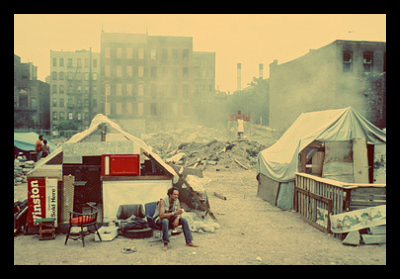
On any given night in the U.S., there are 610,042 people experiencing homelessness. What is even more shocking is that recent studies have shown that providing housing to hundreds of thousands of these homeless people could save taxpayers millions of dollars while simultaneously extending a helping hand to others. The millions of dollars saved could easily go toward reducing homelessness and poverty in other nations around the globe.
Two recent studies support the proposition that giving the homeless a place to call home is cheaper in the long run.
Results released from the Creative Housing Solution’s study of the Central Florida region found that each homeless person comes with a yearly price tag of $31,065. What could possibly drive the cost so high? Emergency room visits, hospital admissions and homeless-related crime arrests such as trespassing, public intoxication, public urination and begging are largely responsible.
According to Andrae Bailey, the CEO of the Central Florida Commission on Homelessness, most of the chronically homeless have a disability, such as veterans suffering from post-traumatic stress disorder or those with a mental illness or physical disability.
“These are not people who are just going to pull themselves up by their bootstraps and get a job,” Bailey said. “They’re never going to get off the streets on their own.”
They need help.
The University of North Carolina Charlotte’s social work department, led by assistant professor Lori Thomas, conducted a study over the past year of a nearby homeless apartment complex called Moore Place. In its first year, by decreasing the time tenants spent in emergency rooms by 447 fewer visits and admitted to the hospital by 372 fewer days, Moore Place saved a whopping $1.8 million.
Furthermore, the study revealed decreases of 78 percent in arrests and 84 percent in days spent in jail.
It costs $14,000 a year per person to house Moore Place tenants, but one of the requirements for residence is that 30 percent of the tenants income must go toward rent.
Combatting the cost are incentives from the city of Charlotte, Mecklenburg County and the Charlotte Housing Authority to encourage the development of other homeless housing projects.
For example, Charlotte’s Neighborhood & Business Services department has pledged up to $1 million for future housing developments and the county’s Community Support Services department has agreed to give up to $800,000 in supportive services. Also, a vote by the Charlotte City Council was passed to fund $1 million to go toward expansion of Moore Place.
If homeless housing projects like Moore Place are implemented nationwide, the amount of lives changed and money saved will be astounding and well worth the effort and time.
So, those struggling on American soil are being helped, but what about those in undeveloped and poverty-stricken countries? What is being done to help them?
U.N.-Habitat For a Better Urban Future is a United Nations program whose mission, according to their website, is to “promote socially and environmentally sustainable human settlements development and the achievement of adequate shelter for all.”
Due to the expectation that six out of every 10 people in the world will live in an urban area by 2030, the need for permanent and stable housing is dire. Slums are on the rise.
The characteristics of a slum, as outlined by the U.N., are inadequate access to safe water, inadequate access to sanitation and infrastructure, poor structural quality of housing, overcrowding and insecure residential status, all of which are issues associated with global poverty.
One of the initiatives of U.N.-Habitat is housing and slum upgrading, but the statistics in support of the initiative are disheartening. The following totals represent the slum population of various countries: Sub-Saharan Africa 199.5 million, South Asia 190.7 million, East Asia 189.6 million, Latin America and the Caribbean 110.7 million, Southeast Asia 88.9 million, West Asia 35 million and North Africa 11.8 million.
It is obvious from the numbers above that homelessness and poor housing conditions are problems everywhere. Now that homelessness in the U.S. is on the decline, more monies should be put toward foreign aid that addresses the housing issues.
For more information on what U.N.-Habitat is doing and how to get involved, visit their website.
Homelessness doesn’t only cost money – it also costs lives.
– Jennifer Brown
Sources: Huffington Post,Orlando Sentinel, ,End Homelessness, Charlotte Observer, UNhabitat
Photo: UN News & Media Photo

Teens Participate in 30-Hour Famine To Fight Global Poverty
Contrary to popular belief, congressional leaders are only part of the key influence in making poverty a focus of U.S. foreign policy. Even though the 535 members of Congress in Washington D.C. representing voters are directly responsible for supporting or rejecting an issue or bill based on the voters’ opinions, all citizens are just as important in this process. Not only can they make their opinions known to the three members of Congress who represent them, but everyone, regardless of age, can make a difference by raising awareness in their community of a specific issue in order to bring about change.
This is exactly what a group of seven teenagers proved when they fasted for 30 hours to raise money that would benefit the fight against world poverty. These members of the Allin Church Youth Group in Dedham, Mass. participated in the World Vision’s 30 Hour Famine from 12 p.m. on April 26 to 6 p.m. on April 27. It was during those 30 hours that these teenagers not only fasted, but also learned more about world hunger as they felt the hunger that millions experience every day.
Participating members of the Dedham community donated at least $1 to this youth group for every hour that they fasted, and all contributions were used to benefit the lives of children in the Philippines in association with World Vision. World Vision is a Christian organization working in nearly 100 countries to address the issues of poverty and injustice. According to 30 Hour Famine, hundreds of thousands of people participate in this event every year in the U.S. alone, and thousands more across the globe do the same to help feed poor children and their families in developing countries.
World Vision’s 30 Hour Famine provides people with the opportunity to understand the hunger that millions experience every day of their lives. According to World Vision, 870 million people are hungry worldwide, revealing that this injustice needs to be resolved. But the 30 Hour Famine is not the only thing World Vision does to address this issue. This organization also provides individuals the opportunity to sponsor a child to not only fight poverty, but to create a better world for that child.
This experience for the Allin Church Youth Group did not end after the 30 hours were up. These seven teenagers, along with the entire Allin Congregational Church, will have the opportunity to travel to the Philippines and personally assist the children there who benefited from their 30-hour fast. This inspirational group of teenagers proves that anyone, regardless of age or political standing, can join in the fight against poverty and hunger.
— Meghan Orner
Sources: 30 Hour Famine, World Vision, The Dedham Transcript
Photo: Delphi United Church
12 Quotes about Humanity
War. Poverty. Crime. Hunger. With all of the injustices that exist in today’s world, it can be easy to lose faith in humanity. We may ask ourselves, “Why should we care if no one else does? Nothing ever seems to change or get any better, so we might as well accept the world as it is.”
Although it is important to acknowledge the existing injustices and view them as serious issues that need to be resolved, it is equally important for us to realize our own part in seeing those solutions become part of reality. The following quotes about humanity may explain and hopefully inspire us:
As these quotes about humanity reveal, it can be difficult to explain human nature, but that does not mean we should lose faith or hope in ourselves or others. The Borgen Project promotes the idea that we each have the power within ourselves to change the world, which is one of the most beautiful abilities of humanity.
– Meghan Orner
Sources: Brainy Quote, Good Reads
Photo: Flickr
Sam Kutesa, Anti-Gay Minister, Receives High UN Position
Sam Kutesa, the Ugandan Foreign Minister under President Musevini, has been chosen to head the U.N. as President of its General Assembly next month despite his consistent homophobic attitude and history of corruption. The position, which will not be voted on, has been chosen by “elect of acclamation,” after being chosen by the African Union. In a mostly “figurative” position, Kutesa will chair meetings for the assembly, including its annual event attended by all 193 nations in New York this September, which President Obama will preside over.
Kutesa’s election has been met with widespread criticism from both rights groups as well as political leaders, including New York State senator, Kirsten Gillibrand. “It would be disturbing to see the foreign minister of a country that passed an unjust, harsh and discriminatory law based on sexual orientation preside over the U.N. general assembly,” she says.
This past February, President Museveni signed into law a bill which will toughen penalties against gay citizens in Uganda, which could enforce some “homosexual crimes” as punishable by death. Years of imprisonment would act as a minimum punishment for acts of homosexuality or for providing counsel, therapy or education regarding homosexuality to children. Kutesa stood by this legislation, claiming that most Africans “abhorred” homosexuality. Now, as he gets ready to fill a prominent position in the U.N., many are wondering of the repercussions.
Rights campaigner Peter Tatchell called on the government to intervene. “David Cameron [Prime Minister of the UK] and William Hague [First Secretary of State of the UK] should be lobbying the U.N. to block Kutesa’s appointment on the grounds that his political record is inconsistent with UK principles,” he says. Yet if government officials have yet to fight, the general population has already made its own aggressive stance.
A petition, made by Ugandan-born Milton Allimadi, has already received more than 7,000 signatures asking for Sam Kutesa’s future appointment in the U.N. to be revoked. Yet despite the criticism, Kutesa has rejected any plausible notion regarding his unfitness for the role. “I don’t believe that anybody should be blocking my presidency on those lines,” he says. “The issues they are raising have no basis.”
You can sign the petition here.
– Nick Magnanti
Sources: The Guardian, Pink News 2, Change.org, CNN
Photo: In2EastAfrica
Education and Menstruation in Uganda
Menstruation is a major reason for young girls in Uganda to miss school. Reasons for their absence stems from the stigma associated with “that time of the month,” a lack of sanitary napkins and the limited facilities available to students. Attending school while on their period forces girls to put their health at risk and chance being the subject of humiliation.
In an interview with a Guardian reporter, 16-year-old Lydia from Kampala, Uganda expressed why going to school during her period is difficult. She explained that some of the toilets did not have doors, so that if someone walked in, they would see her. Her school also has only four toilets for 2,000 students. The toilets’ inability to flush or have water complicates the issue further, making menstruation in Uganda a problem in multiple ways.
In a recent study by SNV, officials report that girls miss between 8 to 24 days of school per year while menstruating.
Some girls attempt to prevent their clothing from being ruined by trying to absorb the blood with old cloth or old t-shirts, but these methods are not particularly successful. In another interview, Auma Milly commented that disposable pads are very expensive and are often not available in the more rural regions. Consequently, she felt embarrassed when she went to school and would soil her clothes so often that she chose not to attend.
In an attempt to address the problem regarding women’s sanitary needs, organizations including Save the Children, WaterAid, the Institute of Reproductive Health and local NGO Caritas Lira have begun to raise awareness and assist the cause. Representatives from WaterAid commented on the importance of deconstructing the taboo regarding women’s health. The founder of 50 Cents. Period. described the battle as giving girls the basic right to hygiene. SNV and Caritas Lira have gone to schools in order to teach girls how to make reusable, affordable pads. Additionally, female Ugandan government officials have begun advocating for reduced taxes on sanitary napkins and improved facilities so that menstruation does not interfere with education.
– Jordyn Horowitz
Sources: The Guardian, The Guardian 2, UWASNET, 50 Cents Period, UWASNET, , SNV
Photo: A Global Village
7 Things That Make Global Poverty NGOs Successful
When it comes to what makes an aid organization truly successful, we usually think first about the numbers and the flashy website. How many children in rural areas get an education thanks to this organization? How many mosquito nets are being handed out to curb malaria? And how fancy is that all-important website?
All this is important, at least to a degree. But we often neglect to consider what is behind the scenes. We forget about the fundamental structure that makes global poverty NGOs effective or not. In order to be successful, NGOs must…
1. Work together
Collaboration is key. No organization can be entirely efficient on its own. While working together sometimes proves difficult because so many voices spout so many different opinions, cooperation allows for greater expansion of ideas and more creative solutions.
Additionally, organizations gain more influence and issues are given more weight when there is a large rallying force of NGOs and aid organizations behind the cause. This increased importance can get the public more involved, as well as proving to governments and policy makers that these topics need to be discussed. For example, the United Kingdom Food Group is the largest network in the U.K. that helps organizations working on food issues to share ideas and expertise by working together, thus creating maximum change.
2. Be narrow enough to do good work
In order to put the most into a cause, organizations must be narrowly focused. This allows them to put the maximum resources into one issue and thus enables them to make a difference that is more than a drop in the bucket. For instance, the Fistula Foundation focuses specifically on healing women who suffer unnecessarily from an injury sustained in childbirth. True, the organization could tackle prostitution and sexual health in other capacities, but because it focuses on fistula treatment, it is able to make a substantial difference for the cause.
3. But not too narrow as to only solve one narrow slice of the problem
All things related to global poverty are interconnected. Food security goes hand in hand with the local economy. Water sanitation plays a huge role in global health. Organizations need to understand that no matter what topic they choose to address, it is attached to all other aspects of global poverty. ONE combines its efforts to address reducing global poverty on top of reducing the incidence of preventable disease. In doing so, ONE accepts that disease perpetuates poverty, and remedying one helps alleviate the other.
4. Be easy to get involved with
The harsh reality is that while most of our society sympathizes with the plague of global poverty, it has no time to go out of their way all the time to do something about it. Organizations must realize that if they are to be successful, they must be easy to reach, easy to get involved with and easy to share. NGOs must have key small ways to get involved like buying a T-shirt, sharing a video or donating a few dollars. But on top of this, they must have larger scale methods that are just as easy.
Many organizations like Charity: Water and Nothing But Nets, ask people to donate their birthdays by essentially asking for donations to the cause rather than gifts. It is a simple, brag worthy and effective way to get people involved and raise money for the organization.
5. Be transparent
People want to know where their hard earned money goes when they donate, and they are more likely to be resistant when the paths their cash takes within an organization are unclear. Therefore, organizations must work twice as hard to show that the donations they receive go directly to the projects they advertise. Charity: Water has found a way to be utterly transparent.
The organization relies on private donors and sponsors to support its offices’ operations, thus allowing it to ensure with absolute certainty that the donations it receives from the general public go straight to water projects building pumps in rural villages. Charity: Water even shows you exactly what well was built by your donations and their annual reports are easily found on their website. Basically, it is key that people know directly where their money goes when they donate to encourage confidence in the NGO.
6. Work with the local population
The only way to create stable, lasting change is for NGOs to work directly with the local population in the target region. Without it, practices put in place and infrastructure built can fall victim to tradition and cultural practice, and thus become ineffective. However, by working with the local population, organizations can change the local perspective and approach to the problem. They can employ local workers to run the operations, thus helping the economy in more ways than one.
Rape prevention organizations tend to be particularly effective when they go straight to the local people. For example, Apne Aap is an organization in India that aims to change the perspective of rape in the culture and protect women through sustainable development of a new, empowered mindset. By going to local women, organizations like this are able to find the root of the problem and work toward a solution that will cause lasting change.
7. Be memorable
Finally, an organization must be memorable in order to be successful. People need to feel that itch to share the video, to tell their friends, to spread the story in order to ensure that the organization gets the publicity it needs to do effective work and the cause gets the vocalization it deserves. For all the flaws the Kony 2012 and Invisible Children campaigns had internally, they were undeniably memorable. Everyone who went to high school in 2012 had the group’s logo as their profile pictures and now knows a bit more about child soldiers in the LRA. This is knowledge that can be spread in order to get more and more people involved.
Overall, no matter what process NGOs take, their work is beneficial. However, there are certain criteria that will make their efforts more effective and provide for longer-lasting, sustainable change. Simple changes to the structure of the organization can increase the general interest in the topic as well as improving the overall success of the organization.
– Caitlin Thompson
Sources: Overseas Development Institute, The Guardian, UK Food Group, ONE, Charity Water, Apne Aap, Edna Hospital, Fistula Foundation, Nothing But Nets
Photo: Flickr
Spotlight: Refugees International
Fleeing political, racial and religious persecution, more than 15 million people worldwide have left their homes and sought safety across international borders. They are refugees; often as unwelcome in their host countries as they were in their own.
For many, it is out of the frying pan and into the fire.
International law forbids the deportation of peoples with refugee status. Still, deeply rooted ethnic and national divides can make neighboring countries reluctant to accept them.
It is estimated that half of refugees today settle in major cities. Hundreds of thousands of Somali citizens, for example, have gone not to internationally established camps, but to Nairobi, Kenya. These urban refugees, with neither shelter, funds nor connections, find themselves in situations nearly as desperate as the ones they left.
Hindered by language and social stigma, they are limited to the poorest paying jobs. Their ambiguous political standing, meanwhile, affords them none of the safeguards given to citizens of their new homes. The British organization, Hidden Lives, quotes one man, “I don’t have legal documentation. I don’t have a job. I don’t leave my house.”
Access to health care, though needed by many, is often restricted.
So why not just head for a refugee camp? Conditions there are no better. Camps are notoriously overcrowded and vulnerable to the spread of communicable disease. Violence and sexual assault goes largely unchecked. For basic needs such as food and water, refugees are reliant on international aid. Refugees also must rely on international aid for health care, education and development. Who do they rely on for security forces? International aid. International aid, unfortunately, must come in waves.
Consequently, any group that raises awareness or funds to sustain displaced peoples, in and out of country, becomes integral to their survival. None is more widely known, perhaps, than Refugees International (RI).
RI focuses on advocacy and policy reform. In addition to meeting with world leaders, it organizes 15 yearly field missions to determine the living conditions of refugees and internally displaced people across South America, Africa, the Middle East and Asia. These missions are essential to the organization: because of the information gathered, it is an influential authority. RI is consulted on not only the need for aid, but also the amount required and its distribution.
It was RI that alerted the United Nations to the lack of post-rape kits available in the Central African Republic earlier this year. It was RI that encouraged the United States to support the Nansen initiative, which protects displaced victims of climate-related disasters. The U.S. set aside more than $150 million for the deployment of peacekeepers to the CAR at the request of the organization. In response to their report of violence against women in Syria, the United Kingdom provided more than $14 million dollars in funding.
The U.N. Refugee Agency calls 10.8 million people ‘refugees of concern.’ Almost three times as many live as IDPs. While they wait for resettlement, or war and persecution to end, they have to entrust their lives to the international community at large. But the nations most capable of giving aid are often the furthest removed. It is left to Refugees International, and organizations like it, to bridge the gap.
– Olivia Kostreva
Sources: UNHCR, Health Poverty Action, Refugees International, Hidden Lives
Photo: The Global Herald
25 Years after Tiananmen Square
The spring of 1989 saw one of the most sensitive moments of Chinese history unfold. Students began leading demonstrations in Beijing’s Tiananmen Square and experienced widespread support from surrounding residents. On June 4, Chinese troops armed with assault rifles attacked student demonstrators, killing anywhere from hundreds to thousands in a bloody crackdown. But in recent years, new stories of the events of Tiananmen Square have come to the surface, and they draw a more complex picture.
By June, student demonstrations in Tiananmen Square had entered month two. Chinese leaders were unsettled, and army commanders were called to pledge loyalty and commitment to the possibility of military force to crush student protest. Maj. Gen. Xu Qinxian refused to do so, and declined to lead troops into Beijing.
The protesters, Xu believed, were a political issue that required negotiation, not military force.
Xu’s defiance is just one example of a complicated and resistant military reaction to Tiananmen Square. One soldier of the 39th Group Army held genuine fears of having to fight Xu’s 38th Group Army as rumors of the general’s actions spread. But the commander of the 39th Group Army never even made his troops enter the square, faking communication problems. Another soldier, seventeen years old at the time of the crackdown, shared experiences of bonding between his unit, stationed in Tiananmen Square for days, and the students who had brought them there. Tears were shed upon the unit’s departure prior to the events of June 4, names and addresses exchanged.
Military documents prior to the crackdown speak just as loudly. A former Communist Party researcher reported that a petition existed at the time that was aimed at withdrawing troops from Tiananmen Square. It was signed by seven senior Chinese military officers, and sported language of service to the people: “The people’s military belongs to the people and cannot oppose the people.”
These stories tell a tale of Chinese soldiers largely unwilling to fire on a Chinese civilian population. They tell a story of Chinese government pressure met with Chinese military hesitance. But they are stories only rising to common knowledge outside of China.
A lot has changed for China in the 25 years since the crackdown: diplomatic isolation ended, China hosted the Olympics and the country made great strides in its space program. 1990 saw China’s first entrance into the stock market. Where products were hard to find for Chinese consumers before, they are now in abundance, and Chinese college graduates now compete for jobs they want instead of leaving college to be assigned a workplace.
The sensitive commemoration of Tiananmen Square, though, remains largely static. This year, celebrations included playing cards, show tunes and confetti.
The events are a representation of political activism buried. Activist groups make attempts each year to pay respect to those killed in the crackdown and call attention to the real events of the Tiananmen Square protests, like the stories of Maj. Gen. Xu that find life outside, but not inside, China. These attempts have yet to succeed.
This is not stopping anyone from trying to get the voices of the past heard. One activist group created a website this year called backtotiananmen.com. It asked simply for people to come to the square, gather and sing or hum a well-known song from the musical Les Miserables: “Do You Hear the People Sing?”
Wen Yunchao, one of the organizers of backtotiananmen.com, pointed out that simply coming to join the group, even without singing, would be a powerful way to commemorate those killed 25 years earlier.
Wen organized the group from New York City, spreading publicity by editing a leaked pornographic video to spread the message to gather and sing. While censored immediately, the video, Wen reported, was still downloaded thousands of times.
Another suggestion for activism was tossing white paper from the skyscrapers of Beijing in the hope that, perhaps, these small, raining scraps would remind China of the lives lost at Tiananmen Square many years ago now. Whatever the method, attempts at remembrance and knowledge are alive and well.
– Rachel Davis
Sources: The Economist, LA Times, New York Times, Reuters
Photo: CNN World
Housing the Homeless Saves Taxpayers’ Money
On any given night in the U.S., there are 610,042 people experiencing homelessness. What is even more shocking is that recent studies have shown that providing housing to hundreds of thousands of these homeless people could save taxpayers millions of dollars while simultaneously extending a helping hand to others. The millions of dollars saved could easily go toward reducing homelessness and poverty in other nations around the globe.
Two recent studies support the proposition that giving the homeless a place to call home is cheaper in the long run.
Results released from the Creative Housing Solution’s study of the Central Florida region found that each homeless person comes with a yearly price tag of $31,065. What could possibly drive the cost so high? Emergency room visits, hospital admissions and homeless-related crime arrests such as trespassing, public intoxication, public urination and begging are largely responsible.
According to Andrae Bailey, the CEO of the Central Florida Commission on Homelessness, most of the chronically homeless have a disability, such as veterans suffering from post-traumatic stress disorder or those with a mental illness or physical disability.
“These are not people who are just going to pull themselves up by their bootstraps and get a job,” Bailey said. “They’re never going to get off the streets on their own.”
They need help.
The University of North Carolina Charlotte’s social work department, led by assistant professor Lori Thomas, conducted a study over the past year of a nearby homeless apartment complex called Moore Place. In its first year, by decreasing the time tenants spent in emergency rooms by 447 fewer visits and admitted to the hospital by 372 fewer days, Moore Place saved a whopping $1.8 million.
Furthermore, the study revealed decreases of 78 percent in arrests and 84 percent in days spent in jail.
It costs $14,000 a year per person to house Moore Place tenants, but one of the requirements for residence is that 30 percent of the tenants income must go toward rent.
Combatting the cost are incentives from the city of Charlotte, Mecklenburg County and the Charlotte Housing Authority to encourage the development of other homeless housing projects.
For example, Charlotte’s Neighborhood & Business Services department has pledged up to $1 million for future housing developments and the county’s Community Support Services department has agreed to give up to $800,000 in supportive services. Also, a vote by the Charlotte City Council was passed to fund $1 million to go toward expansion of Moore Place.
If homeless housing projects like Moore Place are implemented nationwide, the amount of lives changed and money saved will be astounding and well worth the effort and time.
So, those struggling on American soil are being helped, but what about those in undeveloped and poverty-stricken countries? What is being done to help them?
U.N.-Habitat For a Better Urban Future is a United Nations program whose mission, according to their website, is to “promote socially and environmentally sustainable human settlements development and the achievement of adequate shelter for all.”
Due to the expectation that six out of every 10 people in the world will live in an urban area by 2030, the need for permanent and stable housing is dire. Slums are on the rise.
The characteristics of a slum, as outlined by the U.N., are inadequate access to safe water, inadequate access to sanitation and infrastructure, poor structural quality of housing, overcrowding and insecure residential status, all of which are issues associated with global poverty.
One of the initiatives of U.N.-Habitat is housing and slum upgrading, but the statistics in support of the initiative are disheartening. The following totals represent the slum population of various countries: Sub-Saharan Africa 199.5 million, South Asia 190.7 million, East Asia 189.6 million, Latin America and the Caribbean 110.7 million, Southeast Asia 88.9 million, West Asia 35 million and North Africa 11.8 million.
It is obvious from the numbers above that homelessness and poor housing conditions are problems everywhere. Now that homelessness in the U.S. is on the decline, more monies should be put toward foreign aid that addresses the housing issues.
For more information on what U.N.-Habitat is doing and how to get involved, visit their website.
Homelessness doesn’t only cost money – it also costs lives.
– Jennifer Brown
Sources: Huffington Post,Orlando Sentinel, ,End Homelessness, Charlotte Observer, UNhabitat
Photo: UN News & Media Photo
New Initiatives to Combat Global Obesity
Olivier De Schutter, the U.N. Special Rapporteur on the Right to Food, recently stated that obesity has become a bigger threat to global health than tobacco use.
Believing that there should be stricter regulations on consuming unhealthy foods, De Schutter gave a speech during the World Health Organization’s (WHO) annual summit and expressed concern that the world has not been actively tackling the issue of obesity. The WHO established the Global Strategy on Diet, Physical Activity and Health 10 years ago, but the global obesity epidemic is still expanding. Diabetes, heart disease and other obesity-induced health complications have become more prevalent as a result. To counter the growing issue of global obesity, De Schutter declared, “a bold framework convention on adequate diets must now be agreed.”
Many international groups agree with De Schutter’s comments. Though the Food and Drink Federation has stated that the food industry is making clear efforts to provide healthier meal options, organizations like Consumer International and the World Obesity Federation are demanding the adoption of compulsory guidelines for the food and drink industry to follow. In 2005, the number of global deaths caused by obesity and being overweight was 2.6 million. The same figure had risen to 3.4 million by 2010.
The proposed rules include reducing the levels of sodium, saturated fat and sugar in various foods. Artificial trans-fats were recommended to be completely removed from all food and drink products in the next five years. Organizations have also asked for improved meals in hospital and schools, stricter guidelines for food advertising and increased efforts to educate the public about healthy eating. Governments could help control the global obesity issue as well by introducing taxes, changing licensing controls, funding new research projects and reviewing the prices of different food items.
If implemented, these new guidelines would be at the “highest level of global agreement.” In contrast to the current practice of “opting out” of imposed regulations on the food industry, governments would be required to enforce them. Dr. Ian Campbell, the founder of the United Kingdom’s National Obesity Forum, says that the proposed recommendations are within reason. “The inescapable fact is obesity is killing on a massive scale and only action from governments to tackle head-on the fundamental causes of obesity will lead to any meaningful decreases.”
Obesity has long been linked to poverty. The majority of overweight and obese people can be found in developing rather than developed countries. North Africa, the Middle East and Latin America have nearly the same percentage of obese people as Europe does.
Currently, people living far below the poverty line rely on cheap, processed foods that are high in fats and sugars. Compared to diets rich in fresh fruits and vegetables, these unhealthy meals have high energy content per dollar spent, making them more convenient and accessible to the poor. In South Africa, a typical healthy meal costs approximately 69 percent more than an unhealthy one. For households living in extreme poverty, pursuing a healthy diet could take away up to 30 percent of the total income.
Placing taxes on unhealthy foods could help combat the problem. Collective action is crucial. “If obesity was an infectious disease,” stated World Obesity Federation’s Dr. Tim Lobstein, “we would have seen billions of dollars being invested in bringing it under control.”
– Kristy Liao
Sources: BBC, Huffington Post, Time
Photo: Earth Times
Soybeans and Global Food Security
A recent study by NASA’s Jet Propulsion Lab in California has shown that soybeans can be re-engineered to grow in more arid environments without losing standard crop yield. If the new varieties prove durable, the cultivation of soybeans in Sub-Saharan Africa and South Asia will help address food insecurity issues in the region. Here are five reasons why soybeans are important in addressing global food security:
1. Food production must increase by 70 percent to meet the world’s food needs by 2050.
There are a number of factors that will affect global food security in the coming decades including: population increase, movement away from rural areas and toward urban centers, food production and climate change.
Today, undernourishment affects 870 million people worldwide. Between now and 2050, there will be an additional two billion people on our planet, with around 24 million children pushed into hunger due to food security issues.
2. Soybeans are one of the world’s most important protein crops.
Soybeans have a protein content of over 35 percent, as well as healthy unsaturated fats and carbohydrate fibers, making them some of the healthiest food sources around. They are also one of the least expensive sources of protein when compared to eggs, milk, beef and cow peas.
Due to the use of soybeans in both the food and animal feed industries, soybean farmers can earn a substantial amount of cash because the crop can be successfully grown at a low cost of production.
3. Modifying soybeans can address both climate challenges and food insecurity.
In a recent study led by NASA’s Jet Propulsion Lab (JPL,) computer models have been applied to look for a super soybean. The research study determined that soybean plants can be redesigned to increase crop yield by 7 percent without using more water. The study also demonstrated that soybeans can be redesigned to use either 13 percent less water, or reflect 34 percent more light back into space without reducing crop yields–good for both food security and climate change.
While other geo-engineering solutions for climate change tend to be expensive, such as spraying sulfates into the upper atmosphere in order to reduce incoming sunlight or loading the ocean with iron in order to increase plankton photosynthesis, modifying annual crops is inexpensive and can be implemented quickly.
4. Soybean cultivation is growing in Africa.
Research by the University of Agriculture Makurdi in Nigeria in collaboration with the International Institute of Agriculture (IITA), aims to help improve the lives and livelihoods of small-hold farmers in the drought-prone areas of sub-Saharan Africa and South Asia by providing more durable soybean varieties that can stand up against more arid conditions. Like the redesigned varieties in the JPL study, new varieties being promoted in Africa can help increase crop yields without using more water.
Soybean production remains relatively isolated in Africa, with Nigeria as the largest soybean producer, followed by South Africa and Uganda. However, the new, more durable varieties may allow for more countries to begin cultivating soybeans, helping improve the health of their populations as well as reducing local poverty.
5. Soybeans could have a long-term impact on poverty.
Food and water security will be a major national security focus in the coming decades as both climate change and population increases affect food production worldwide. Countries lacking basic food resources to feed their growing urban populations may become hotbeds for conflict, unrest and terrorist activities.
While many solutions for food insecurity should be addressed and considered by lawmakers, scientists and farmers alike, soybean technology is a first step in addressing the needs of poverty stricken regions by providing a modified crop that can meet multiple goals.
Re-engineered soybeans are an innovative (and healthy) way to help address local food security issues worldwide. Not only do they provide a good food source, but their wide use in products from oils to food to animal feed guarantee a lucrative market for local farmers. Reducing poverty through innovative changes in the way staple crops are traditionally grown is an economical and feasible way to bring food security, in light of climate and population challenges, to developing regions of the world.
– Andrea Blinkhorn
Sources: Daily Trust, United Nations Conference on Trade And Development, Intech, NASA, VOA News, World Food Programme, Stop Hunger Now
Photo: HD WAll IMG