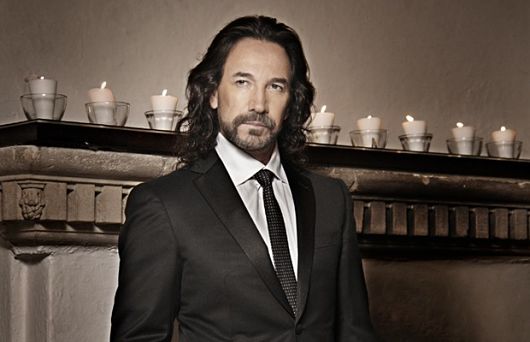
There are plenty of Latin songs from different countries such as Mexico, Puerto Rico, Cuba and Colombia that address the poverty and hunger situations that the countries are going through.
Many of these songs, more than only addressing a situation of poverty, address political disadvantages and the corruption that some of the Spanish speaking countries face.
These songs vary from sad ballads to rhythmic rap songs. Depending on the topic, some of these songs can have rude language to express frustration in regards to poverty and/or government corruption. Here are some more examples of songs in Spanish about poverty.
7 Songs in Spanish about Poverty
1. “Casas De Cartón” by Marco Antonio Solís
Que triste se oye la lluvia
en los techos de carton
que triste vive mi gente
en las casas de carton
Viene bajando el obrero
casi arrastrando sus pasos
por el peso del sufrir
mira que es mucho sufrir
mira que pesa el sufrir
The lyrics of this song portray the situation of poverty that many people live under. Phrases like “que triste vive mi gente en las casas de carton” (how sad my people live in cardboard houses) and “viene bajando el obrero casi arrastrando sus pasos por el peso del sufrir” (the laborer is coming down dragging his feet because of the weight of his suffering) give a strong meaning to this song.
2. “La Carencia” by Panteón Rococó
Por la avenida va circulando
el alma obrera de mi ciudad
gente que siempre esta trabajando
y su descanso lo ocupa pá soñar
This is a ska song by a Mexican band that talks about the working class and how hard it is to make a living with a minimum wage and long hours of work. “Gente que siempre esta trabajando y su descanso lo ocupa pá soñar” (People that is always working and use their free time to dream) is a reference to the working class and their condition.
3. “Baile De Los Pobres” by Calle 13
Tú eres clase alta, yo clase baja
Tú vistes de seda, y yo de paja
Nos complementamos como novios
Tú tomas agua destilada, yo agua con microbios
Tú la vives fácil, y yo me fajo
Tú sudas perfume, yo sudo trabajo
Tú tienes chofer, yo camino a patas
Tus comes filete, y yo carne de lata
In this song, Calle 13 compares both upper and mid-upper classes to poor and working class people. “Tú sudas perfume, y yo sudo trabajo” (you sweat perfume and I sweat work) is one of the references that the song makes to mark the differences among the social classes. He puts himself in the shoes of a working class man to find the differences with upper classes.
4. “El Pobre” by Attaque 77
Y andas perdido entre las marcas de tus manos
miras tu ropa y la que usan los demás
miras la chica que nunca podrás tener
y el chico que aspira el tren mientras viaja en Poxiran.
Tal vez pueda ser, lo que te rodea lo que quieras lo escuchas
Un poco de suerte para el pobre
“El Pobre” (The Poor) is a song from the perspective of the poor. “Miras tu ropa y la que usan los demás” (you see your clothes and the one that the others wear) gives the listeners an insight to what “El Pobre” is wearing and how his clothes are different from those of the middle class.
5. “Gimme Tha Power” by Molotov
Que nos guachan los puestos del gobierno
Hay personas que se están enriqueciendo
Gente que vive en la pobreza
Nadie hace nada
Porque a nadie le interesa
This is mainly a protest song by the Mexican band Molotov against the government corruption and the situation of poverty. “Gente que vive en la pobreza, nadie hace nada por que a nadie le interesa” (People that live in poverty, no one makes anything because nobody cares) protests the conditions in which poor people are living and how the government is doing little to resolve this problem.
6. Que Canten Los Niños” by Jose Luis Perales
Que canten los niños que viven en paz
y aquellos que sufren dolor
que canten por esos que no cantaran
porque han apagado su voz.
This is a song of hope that references children singing about hope and gives a voice to those who cannot speak. “Que canten por esos que no cantaran porque han apagado su voz” (May they sing for those who won’t sing because they have silence their voice) is a way for the song to express the desire to give a voice to those who are silenced.
7. “El Baile De Los Que Sobran” by Los Prisioneros
Bajo los zapatos
Barro más cemento
El futuro no es ninguno
De los prometidos en los 12 juegos
A otros le enseñaron
Secretos que a ti no
A otros dieron de verdad esa cosa llamada educación
Ellos pedían esfuerzo ellos pedían dedicación
Y para qué
Para terminar bailando y pateando piedras
This song has a political meaning and references social inequality topics in Chile. “A otros dieron de verdad esa cosa llamada educación” (They really gave to others that thing called education) is a phrase of the song that marks the difference of social classes and social inequality by portraying the opportunities that some people have over others.
– Diana Fernanda Leon
Sources: SinEmbargo, 5 Canciones Sobre, 20 Minutos, Proyecto 100 Canciones
Photo: Domingo

Poverty in Shenyang, China
Serving as one of the largest economic, industrial and governmental zones in Northeastern China, Shenyang demonstrates the efficacy of urban poverty alleviation programs.
Generally, within the nation of China, a large portion of the population is characterized by suffering from a large income disparity variable, as well as the insufficient provisioning of basic necessities such as food, sanitary water, and extracurricular, educational, and recreational amenities. However, the population of Shenyang attests to the ability of the Chinese government to effectively alleviate poverty within certain urban areas, as this city maintains a record of 100 percent of the population receiving access to all basic services and amenities enumerated above.
National policies and strategic programs within China have allowed the provisioning of regional authoritative decisions regarding infrastructural development initiatives, subsequently encouraging the inclusion and implementation of socioeconomic programs designed to alleviate high rates of poverty based on localized variables.
Despite the notable successes of the regional government of Shenyang, recent government actions have resulted in an increasing limitation of regional control and a decrease in state capital investment. These actions have resulted in the failure of certain state-owned businesses and subsequent increase in regional unemployment rates. Researchers are currently studying how these economic shifts will ultimately affect the rate of urban poverty within Shenyang.
-James Thornton
Sources: The Mirror, Muse,
Photo: Time
The State of Food Insecurity Report
An important aspect in the success of the Millennium Development and Sustainable Development goals is the recording of progress over time. The State of Food Insecurity Report by the Food and Agriculture Organization of the United Nations (FAO) helps look at the initiatives that have worked to sustain food security in developing nations. Focusing on hunger is the first step to ending poverty and maintaining sustainable development. By looking at economic growth, agricultural productivity and international trade, development can be improved according to what continues to work.
The State of Food Insecurity Report finds that “about 795 million people are undernourished globally, down 167 million over the last decade, and 216 million less than in 1990-92,” according to FAO. Although food insecurity has been declining, there is still a chance of stagnation if economic growth slows in Central Asia, Western Asia, and South Africa.
The Millennium Development Goals reach their deadline this year, therefore, new goals have been developed. The Sustainable Development Goals focus on innovative ways to eradicate poverty for good. One way the U.N. does this is to educate farmers on how to efficiently grow crops. This helps feed families in surrounding regions and provides income for farmers to help with economic growth. Taking a sustainable approach to food security, rather than exporting food, maintains the distribution of goods.
Although the report focuses on hunger, many aspects of development affect the result of food security in developing populations. The economic growth of a nation positively affects the nourishment of people in poor countries. However, the report also notes that “it also must include social protections, which include basic human rights and a safety net providing basic needs,” according to Deseret News.
Poverty continues to decline with the implementation of the MDGs and SDGs. Despite this, there still remain people in underdeveloped countries who experience malnutrition and a limited access to education. “The 2015 report not only estimates the progress already achieved, but also identifies remaining problems, and provides guidance on which policies should be emphasized in the future,” says the FAO. The importance of tracking the progress of development goal plans will help the U.N. come closer to completing its ultimate goal of eradicating poverty by 2030.
-Kimberly Quitzon
Sources: Food and Agriculture Organization 1, Deseret News, Food and Agricultural Organization 2,
Photo: Dr. John La Puma
How Poverty in Mexico Affects U.S. Immigration Policies
Understanding poverty in Mexico can help us further understand immigration rates into the United States and how to create more effective policies regarding immigration in the U.S.
Immigrants from Mexico typically have a higher rate of poverty than those who are native to their country, which is referring to American natives. Approximately 25 percent of Mexican born immigrants live in conditions that are considered impoverished while living in the U.S.
This means that many immigrants that migrate to the U.S. are eligible for state-funded programs, despite having immigrant status. This leads to the controversy that many hear about in the U.S. Numerous policies regarding immigration take into consideration that many immigrants are living in poverty, and would be in need of government assistance in order to sustain a normal and healthy life.
Mexican immigrants have been the largest group of immigrants to migrate to the U.S. since the 1980s and therefore, it is not surprising that many immigration policies are directed more so to that group of the population. This is particularly important because this means that policies take into consideration that many immigrations are living in impoverished conditions and will therefore be more dependent on the government.
This is a largely contributing factor to the strict policies regarding immigration and deportation over the last twenty years or so in the U.S. Becoming a U.S. citizen and immigration into the U.S. particularly from Mexico is more difficult than it has ever been and the economic pull has much to do with such strict policies.
Poverty stricken Mexican immigrants have traveled to the U.S. with hopes for more economic prosperity, however, this is often more difficult than many immigrants anticipate. Despite finding minimum wage jobs, if that, many do not make enough money to find themselves or their families living above the poverty line. Therefore, many continue living under a poverty status and are depending on the state and government funding.
Unfortunately, a great deal Mexican immigrants find themselves continuing to live in poverty after leaving their native country, on their journey to live out the American Dream. That being said, the U.S. government has created policies with these conditions and potential outcomes in mind.
– Alexandrea Jacinto
Sources: Center for Immigration Studies, Migration Policy Institute
Photo: Flickr
PowerGen’s Revolutionary Microgrid Empowers Kenya
On January 27, 2015, PowerGen, among three other innovative companies, won a global competition in which 30 total participants enter four categories: education, health, energy, and cities.
PowerGen Renewable Energy developed a microgrid that powers homes and businesses at a low cost. This environmentally sound and accessible energy source is making life easier for many residents of Kenya.
The competition was overseen by 1776, a U.S. tech incubator. Winning in equal status with PowerGen were Health E-Net, which connects patients to medical facilities, tasKwetu, a project management tracker and eKitabu, an online East African bookstore. Though, with a majority of Kenyans relying on diesel generators, kerosene lamps and charcoal as power sources, PowerGen is an important and extremely useful life-changing alternative.
Originally called WindGen Power, PowerGen is a micro-utility company working in East Africa. Their renewable energy products are dominantly solar-powered though wind is still utilized as a resource.
Solar-power products are cheap and simple to maintain. Powered by fuel cells and solar panels, micro representations of electricity grids are local. They have 1.4kW of solar panels, 9kWh of batteries and 3kW converters. These are known as a “PowerBoxes” to locals.
There are 600 million people without electricity in sub-Saharan Africa. PowerGen supplies micro-grids to people in Kenya, Uganda, Tanzania, Zambia, and Somalia. This system is utilized by lower income customers who run small businesses such as hair salons, restaurants, and guest houses. Rural villages and towns benefit the most from their micro-grids.
Take Lillian Muthoni, for example, and her transition to the micro-grid featured by TED Talks. She manages a “PowerBox” in Nkoilale, Kenya, which is 250 kilometers West of Nairobi. She replaced solar lights and a diesel generator with the “PowerBox.” She once paid $130 a month, but the “PowerBox” now only costs her $22 a month. She owns a restaurant and likes to entertain her customers with music and television. Since the switch to the cost-effective micro-grid, she has even managed to buy a refrigerator.
PowerGen’s objective is to connect customers with the outside world. Since Africans are becoming more familiar with mobile phones and online access, PowerGen has begun to train new users how to handle mobile devices powered by the micro-grid.
This further connects them to information and the outside world. Most Africans typically use their phones to access credit accounts and to prepay for their energy use online. People can keep track of payments more easily too.
In 2014, PowerGen partnered with KIVA in a seven-year-loan plan. They first tried to improve conditions in Oloolaimutia Village by installing a micro-grid. Lighting, television, refrigeration and a medical clinic were supported by its energy output. The company raised $9,780 within two days.
According to a January 2015 TED Talk, PowerGen makes $10,000 in revenue each month. To give some perspective, 10 micro-grids were powering Kenya in 2014.
Competition has sparked among other micro-grid marketers. Recently, a power connectivity project was initiated in Kenya, funded by the African Development Bank (AfDB) and the Kenyan government in order to benefit 314,200 households. An accumulation of $150 million funds this project.
The goal of the Last Mile Connectivity Project hopes to add 1.5 million Kenyans to the national grid and connect 70% of rural houses by 2017. The initiative, which begins in September 2015, would require each customer to pay $165.
SteamaCo joined grid-building innovators like PowerGen, supporting 30 grids—26 of which are in Kenya and 4 in Tanazania, Renin and Nepal—with even cheaper offers, but a similar operating system. Predicting that internet use will double in 5 years, they take pride in their over-the-phone online monitoring systems.
Though PowerGen is neck-in-neck with other competing systems, their goal remains the same. The increase in competition breaches the gap between unconnected customers and connected ones. With 1.2 billion still without energy, PowerGen and companies like it are connecting less fortunate families who can then experience a richer and easier life.
– Katie Groe
Sources: 1776, Disrupt Africa, PowerGen Renewable Energy, TED, GVEP International, African Review, The Guardian
Photo: Ted
5 Examples of Makeshift Housing
Caught up in the daily complications that life throws at them, people do not often sit back and think about how lucky they are to have a roof over their heads. Not everyone has that luxury: according to the Salvation Army, there are over 100 million homeless people in the world. Organizations like Habitat for Humanity and Greenbuilding fight to lower this statistic by building houses in underprivileged neighborhoods. Lacking access to conventional building materials, people living in impoverished areas are forced to make do with what they can find to build passable living spaces. Below are descriptions of five makeshift homes built from unusual materials. The descriptions are bittersweet, for although it is impressive that people are able to come up with such designs, it is unfortunate that they are put in such a position at all.
5 Examples of Makeshift Housing
1. Storage container homes
Widely used for shipping and storing, there is no shortage of these containers lying around out of use. Homes made from shipping containers have become a highly popularized fad and are all the rage with home décor enthusiasts, but in this context they are often used as a desperate measure rather than as a chic building material. The storage container village located in Shanghai and inhabited by poor migrants is just one example of such establishments used by the homeless in similar areas across the globe.
2. The Paul Elkins Shelter
This “mobile home” on wheels is perhaps better described as a mobile bed, as its small dimensions can hardly be described as a house. The amazingly compact, 225-lb. living space not only has a bed, however, but also a bathroom, and even has a small stove crammed inside. Although tiny, it is still useful for staying out of the elements.
3. Dai Haifei’s Egg House
It is not always in rural, historically poor areas that makeshift housing becomes a necessity. Dai Haifei was forced to create an egg-shaped dwelling when he could not afford any of the rental options available in Beijing. Built from eco-friendly materials like bamboo, wood chippings and grass seed, the six foot-high egg is also expected to grow blooms in the spring – an aesthetic bonus to a practical structure.
4. Cob homes
One of the oldest building materials known to man, cob is a mixture of sand, clay, straw, earth and water. Used for construction since prehistoric times, it is perhaps the cheapest and most readily available material in the world. Cob homes are often bolstered and adorned with wood, recycled materials found in landfills and animal fur for insulation.
5. A Hole in the Ground
With an income of just $5,000 a year, Dan Price calls an underground space, which measures eight feet around, his home. Located in the town of Joseph, Oregon, Price leases the property on which the structure is built for a meager $100 a year. The hole is equipped with a door, a small stove and pantry and electricity – but Price plans to switch to propane in the near future. He has an extremely positive attitude and could ask for nothing more, claiming that the environment is low stress.
– Katie Pickle
Sources: Home Harmonizing, Build
Photo: Financial Post
Virtual Meal Planner Could Improve Malnutrition in Ghana
Knowing this, countries such as Ghana have taken steps to improve school meals. Ghana School Feeding Programme provides free school meals to over 1.7 million children every school day. Additionally, Partnership for Child Development and Dubai Cares are working with the government to improve the nutrition of school meals.
Partnership for Child Development has created a virtual meal planner. The meal planner can be accessed both online and offline in order to be helpful to more people. This meal planner could allow school cafeteria workers to create menus with local ingredients. Also, the virtual meal planner includes local prices of ingredients. Thus, users can plan the cost of each meal.
In order to combat child malnutrition, the meal planner includes virtual gingerbread children graphics that show the amount of daily nutrients and vitamins the meal offers. The gingerbread measurements are based off of recommendations by the UN’s Food and Agriculture Organization and the World Health Organization. Additionally, the meal planner uses “handy measures.” This means that ordinary utensils, like spoons and buckets, have been calibrated to international measuring units. School cafeteria workers can accurately measure different components of meals without buying expensive kitchen utensils.
Schools can learn about healthy eating, and local farmers can learn what foods are nutritionally beneficial to grow for schools. The virtual meal planner can be used by many people in the community in order to boost the nutritional values of meals.
As a result, Ghana is leading the way in combating malnutrition. This program was trialed in Ghana in 2014, and is still in use today. Other countries around the world could also combat child malnutrition with this easy-to-use program.
More and more children are going to school, and more and more children get their one daily meal from free school lunches. By improving the nutrition of school lunches, we could greatly impact the health of a great number children.
– Ella Cady
Sources: HGSF, Impatient Optimists, ModernGhana World Food Programme
Angelina Jolie and Daughter Visit Turkey for World Refugee Day
In an effort to bring awareness to one of the largest refugee crises in history, Angelina Jolie embarked on a UN tour of the affected region. The movie star and long-time humanitarian was joined by her daughter, Shiloh, and stopped at the Midyat Refugee Camp in Turkey on June 20th to commemorate World Refugee Day. Jolie was also accompanied by UN Special Envoy Antonio Guterres. The group met with Turkish officials, including President Recep Tayyip Erdoğan to discuss the challenges that Turkey faces given an unprecedented number of refugees.
Jolie issued a statement at the camp in which she calls on the world to act. She said, “We are here for a simple reason: This region is at the epicenter of a global crisis. Nearly 60 million people are displaced from their homes. That is one in every 122 people on our planet. Our world has never been richer or healthier or more advanced. Yet never before have so many people been dispossessed and stripped of their basic human rights.”
Later in her speech Jolie stressed the impact that refugee camps have on the people that house them. While providing more security than war torn cities and villages, the camps more often than not make the poor even worse off. Jolie stated, “Families like the six young people I met yesterday, living in Lebanon without parents, on half food rations and paying US$100 a month to live in a tent because UNHCR does not have the funds or capability to take full care of everyone.” Already with limited resources and away from home, refugees have the burden of coming up with funds to keep their temporary shelter even though, as refugees, they “cannot legally work in their host-countries.”
There is hope, however. Jolie made her speech on a key day, a day dedicated to bringing light to the very issues at the core of her delivery. Her celebrity status will ensure that more people listen to her message, and in turn act to help. Jolie and other media figures have even inspired governments to act. Jolie thanked the governments of Turkey and other refugee hosting nations for taking in millions. To finish, the actress wished all the families she spoke to, and by extension the refugee families across the globe, a good Ramadan with “Ramadan Kareem.”
– Joe Kitaj
Sources: UNHCR, US Magazine
Photo: Flickr
Michelle Obama Launches Global Education Campaign
At a luncheon on June 29, Michelle Obama announced the introduction of an international global education campaign called “Let Girls Learn,” focuses on educating adolescent girls worldwide.
To begin her speech, Obama said that about 31 million young girls around the world are not in school. Many of these girls lead difficult lives because of the lack of sufficient education in their area. Girls who are not educated are more susceptible to HIV/AIDS and other life-threatening diseases. They are less likely to build successful lives for themselves without proper education.
Bendu Fafana, a young girl from Bong Country, Liberia, said that attending school was challenging for her because her father was not present in her life and her mother had passed away.
“I dropped from school because I was not getting any support,” Fafana said.
In a video presented by the White House, President Barack Obama said that there are studies that prove that educated girls are much less likely to get married early. Not only will their future children be healthier, but the family will have a better chance at a job that creates sufficient income for the children. This creates a chain of healthy living, which can generate better-functioning societies that lead to greater opportunities for economic growth for both developing and developed countries.
Michelle Obama said that “Let Girls Learn” will provide volunteers from groups like the U.S. Peace Corps to work with local leaders to bring education to girls like Fafana. She also said that “Let Girls Learn” is not only a philanthropic aspiration, but is also vital for foreign policy and international development.
Not only will this endeavor help the U.S. economically, but this opportunity can also help produce worldwide equality. Obama said that economic obstacles are not the only things that inhibit girls from receiving schooling: much of the problem is about views and cultures.
“It’s about whether societies cling to laws and traditions that oppress women,” she said.
“Let Girls Learn” will fund a program in North Africa and the Middle East that will encourage the native girls to learn about social issues in their communities and societies. The campaign will also provide a space that will encourage girls to reflect upon human rights and democracy. In addition, the initiative will contribute to organizations against gender-based violence.
With help from USAID, the U.S. Department of State, the Millennium Challenge Corporation and the U.S. Peace Corps, “Let Girls Learn” will increase efforts to produce tactical partnerships and political goals that will help adolescent girls succeed.
Alexa Ofori, a Peace Corps Volunteer in Cambodia, gave her thoughts about one of the goals of “Let Girls Learn.”
“Girl empowerment is for a girl to be able to have the self-esteem and, really, the confidence to be able to feel like they can do anything they put their minds to,” she said.
This education plan includes these programs and at least 24 others that will provide information about proper health and nutrition, prevent child, early and forced marriage, ensure safety for young children and, of course, deliver education to areas without.
Learn more about Let Girls Learn.
– Fallon Lineberger
Sources: My San Antonio, White House 1, White House 2
Photo: Share America
7 Songs in Spanish about Poverty
There are plenty of Latin songs from different countries such as Mexico, Puerto Rico, Cuba and Colombia that address the poverty and hunger situations that the countries are going through.
Many of these songs, more than only addressing a situation of poverty, address political disadvantages and the corruption that some of the Spanish speaking countries face.
These songs vary from sad ballads to rhythmic rap songs. Depending on the topic, some of these songs can have rude language to express frustration in regards to poverty and/or government corruption. Here are some more examples of songs in Spanish about poverty.
7 Songs in Spanish about Poverty
1. “Casas De Cartón” by Marco Antonio Solís
Que triste se oye la lluvia
en los techos de carton
que triste vive mi gente
en las casas de carton
Viene bajando el obrero
casi arrastrando sus pasos
por el peso del sufrir
mira que es mucho sufrir
mira que pesa el sufrir
The lyrics of this song portray the situation of poverty that many people live under. Phrases like “que triste vive mi gente en las casas de carton” (how sad my people live in cardboard houses) and “viene bajando el obrero casi arrastrando sus pasos por el peso del sufrir” (the laborer is coming down dragging his feet because of the weight of his suffering) give a strong meaning to this song.
2. “La Carencia” by Panteón Rococó
Por la avenida va circulando
el alma obrera de mi ciudad
gente que siempre esta trabajando
y su descanso lo ocupa pá soñar
This is a ska song by a Mexican band that talks about the working class and how hard it is to make a living with a minimum wage and long hours of work. “Gente que siempre esta trabajando y su descanso lo ocupa pá soñar” (People that is always working and use their free time to dream) is a reference to the working class and their condition.
3. “Baile De Los Pobres” by Calle 13
Tú eres clase alta, yo clase baja
Tú vistes de seda, y yo de paja
Nos complementamos como novios
Tú tomas agua destilada, yo agua con microbios
Tú la vives fácil, y yo me fajo
Tú sudas perfume, yo sudo trabajo
Tú tienes chofer, yo camino a patas
Tus comes filete, y yo carne de lata
In this song, Calle 13 compares both upper and mid-upper classes to poor and working class people. “Tú sudas perfume, y yo sudo trabajo” (you sweat perfume and I sweat work) is one of the references that the song makes to mark the differences among the social classes. He puts himself in the shoes of a working class man to find the differences with upper classes.
4. “El Pobre” by Attaque 77
Y andas perdido entre las marcas de tus manos
miras tu ropa y la que usan los demás
miras la chica que nunca podrás tener
y el chico que aspira el tren mientras viaja en Poxiran.
Tal vez pueda ser, lo que te rodea lo que quieras lo escuchas
Un poco de suerte para el pobre
“El Pobre” (The Poor) is a song from the perspective of the poor. “Miras tu ropa y la que usan los demás” (you see your clothes and the one that the others wear) gives the listeners an insight to what “El Pobre” is wearing and how his clothes are different from those of the middle class.
5. “Gimme Tha Power” by Molotov
Que nos guachan los puestos del gobierno
Hay personas que se están enriqueciendo
Gente que vive en la pobreza
Nadie hace nada
Porque a nadie le interesa
This is mainly a protest song by the Mexican band Molotov against the government corruption and the situation of poverty. “Gente que vive en la pobreza, nadie hace nada por que a nadie le interesa” (People that live in poverty, no one makes anything because nobody cares) protests the conditions in which poor people are living and how the government is doing little to resolve this problem.
6. Que Canten Los Niños” by Jose Luis Perales
Que canten los niños que viven en paz
y aquellos que sufren dolor
que canten por esos que no cantaran
porque han apagado su voz.
This is a song of hope that references children singing about hope and gives a voice to those who cannot speak. “Que canten por esos que no cantaran porque han apagado su voz” (May they sing for those who won’t sing because they have silence their voice) is a way for the song to express the desire to give a voice to those who are silenced.
7. “El Baile De Los Que Sobran” by Los Prisioneros
Bajo los zapatos
Barro más cemento
El futuro no es ninguno
De los prometidos en los 12 juegos
A otros le enseñaron
Secretos que a ti no
A otros dieron de verdad esa cosa llamada educación
Ellos pedían esfuerzo ellos pedían dedicación
Y para qué
Para terminar bailando y pateando piedras
This song has a political meaning and references social inequality topics in Chile. “A otros dieron de verdad esa cosa llamada educación” (They really gave to others that thing called education) is a phrase of the song that marks the difference of social classes and social inequality by portraying the opportunities that some people have over others.
– Diana Fernanda Leon
Sources: SinEmbargo, 5 Canciones Sobre, 20 Minutos, Proyecto 100 Canciones
Photo: Domingo
Should I Sign the Up for School Petition?
At the time of this posting, eight million people and counting have signed the Up for School Petition. These people want to make sure that children all over the world get an education — a good one. One that will help end the cycle of poverty.
This includes children displaced due to natural disasters or wars. This includes children living in poverty so bad that their parents cannot afford to send them to school, and the children themselves are forced to work. This includes girls who are married off as children or who are unmarried but get pregnant while still of primary or secondary school age or who have their period but no appropriate way to take care of the blood.
Up for School, a petition sponsored by A World at School, demands government leaders to fulfill their promise made at the U.N. in 2000, which guarantees all out-of-school children will be in school before the end of 2015. As Hellen Griberg, A World at School Global Youth Ambassador, reminded world leaders of the Up for School Petition at the Oslo Summit for Education Development on July 7, 2015, “We know that nothing changes without pressure. Therefore, we have been building support in every corner of the world.”
In 2000, 102 million primary school children were out of school. By 2011, the number dropped to 57 million. Progress was being made in developing countries. Primary school enrollment reached 90 percent. Literacy rates were on the rise and gender gaps were narrowing. In 2012, however, the number started rising again to 58 million children out of school. The number is still rising and has now reached 59 million.
Along with this increase in numbers is a decrease in funding. International aid to basic education started falling in 2011 for the first time since 2002. In 2014, only one percent of overall humanitarian aid went to education. Now progress is stalling, placing the 2015 target at great risk.
Yet education is crucial to overcoming poverty. The United Nations Children’s Fund considers education to be critical in achieving all the Millennium Development Goals. Education provides future generations with the tools to fight poverty, disease and gender disparity — all issues that need work in order for the world to improve the environment, the economy and our security. From the midst of today’s primary school children, our future leaders will emerge — our educators, doctors, scientists, economists, heads of state and all the others who will be needed to support a developed world. We may not know them by name now, but one day they will be making decisions about our world.
“Sometimes we wait for others and think that a Martin Luther [sic] should raise [sic] among us, a Nelson Mandela should raise [sic] among us and speak up for us. But we never realize that there are normal humans like us, and if we step forward, we can also bring change just like them,” asserted the Nobel laureate, Malala Yousafzai, on the June 18, 2015 airing of The Daily Show. Yousafzai is the survivor of the Taliban’s assassination attempt in 2012 for openly supporting girls’ right to education.
Why should I sign the Up for School Petition? I cannot think of a reason why anyone should not — or cannot. Most of us may not have had a voice at the Oslo Summit for Education Development on July 6-7, 2015 or at the International Conference on Financing for Development in Ethiopia on July 13-16, 2015. We also will not have the opportunity to speak at the U.N. Summit to adopt the post-2015 development agenda on September 25-27, 2015. What we can do, though, is visit the Up For School Petition website to sign the petition now. I just did. It took three minutes.
– Janet Quinn
Sources: United Nations 1, United Nations 2 UNICEF, UpWorthy, A World at School 1, A World at School 2
Photo: A World at School