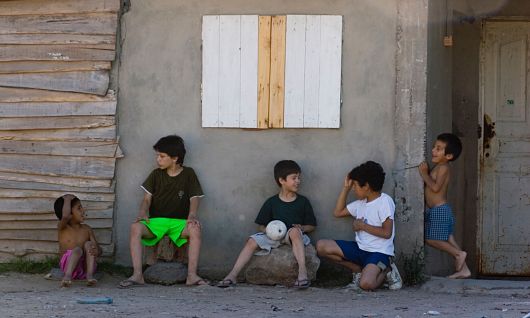
Although the exact number is unknown, officials estimate that more than 300 thousand people in Argentina are unregistered. These people now lack basic rights simply because their births went unreported.
Since the government does not recognize their existence, Argentina’s unregistered are unable to obtain identification cards. Without IDs, access to health care is severely limited, education is all but unattainable and legal employment is impossible.
Lacking IDs, the unregistered also have no inheritance rights. They are prohibited from voting and claiming retirement or social benefits. Additionally, the unregistered cannot report a crime, even when they are the victim, travel outside the country, or rent housing.
Despite governmental efforts to simplify registration paperwork, many impoverished parents still fail to register their children’s births. Officials believe that lack of awareness is a prevailing problem when it comes to birth registration. Many people do not know that they are allowed to register newborns for free at main hospitals.
Jorge Álvarez, director of The Open Institute for Development and Study of Public Policies, explains that a large number of those who do not register their children do not understand the advantages of access to identification affords.
“This is why we say this is not a red-tape issue,” Álvarez stated, “but one of poverty and entrenched cultural deprivation.”
Even those who overcome a lack of information still face challenges. In order for an unregistered individual’s existence to be recognized by the government after the age of 12, that individual must file a legal petition for late registration. The process, without proper assistance, can stretch over years and require hundreds of dollars in legal fees.
Fortunately, Microjusticia Argentina, an NGO dedicated to providing legal representation and assistance to marginalized people, is working to assist the unregistered and provide impoverished people with access to identity rights.
Although the NGO’s volunteer members provide free legal assistance, the organization strongly emphasizes the importance of endowing clients with the tools to meet registration requirements through their own work.
“We listen first, and then advise. We seek [to support] personal empowerment, so we give them the tools to deal with paperwork by themselves whenever possible,” stated Alejandra Martínez, general coordinator of Microjusticia Argentina.
Microjusticia Argentina serves communities in Buenos Aires, Lanús Oeste, Florencio Varela, Olmos and Ezeiza, Mariló, Manzanares and Lomas Zamora. The Buenos Aires slums, or villas miserias, are a particular focus with 16 mobile Microjusticia Argentina outlets serving the impoverished residents.
The “invisible ones”, as the NGO’s members often refer to slum occupants, face other challenges stemming from their impoverished condition. Along with a lack of information concerning identity rights, Argentina’s poor are also deprived of access to such necessities as proper sanitation services and clean water.
With a legacy of poverty and hardship hanging over their heads, these people desperately need welfare and the means to educate themselves and gain employment, rather than having all their rights lost due to no access to IDs. Unfortunately, there exists rift between marginalized families and the authority figures that dole out the advantages identification affords.
“They [impoverished people] feel they are not entitled to rights and that public services are not meant for them either,” stated Martinez.
Therein lies the vitality of organizations like Microjusticia Argentina that seek not only to alleviate the lack of identity rights facing the impoverished communities they serve, but to incorporate marginalized people into the fight for their own rights and give them a sense of agency in the process.
Since 2010, Microjusticia has resolved 700 legal cases in Argentina. The organization also has sister branches in Bolivia, Peru, Croatia, Serbia, Kenya and Uganda, with Microjustice programs in the United States, the Philippines and Spain in the works.
– Emma-Claire LaSaine
Sources: Microjusticia Argentina, The Guardian
Photo: The Guardian

Rights for the Unregistered in Argentina
Although the exact number is unknown, officials estimate that more than 300 thousand people in Argentina are unregistered. These people now lack basic rights simply because their births went unreported.
Since the government does not recognize their existence, Argentina’s unregistered are unable to obtain identification cards. Without IDs, access to health care is severely limited, education is all but unattainable and legal employment is impossible.
Lacking IDs, the unregistered also have no inheritance rights. They are prohibited from voting and claiming retirement or social benefits. Additionally, the unregistered cannot report a crime, even when they are the victim, travel outside the country, or rent housing.
Despite governmental efforts to simplify registration paperwork, many impoverished parents still fail to register their children’s births. Officials believe that lack of awareness is a prevailing problem when it comes to birth registration. Many people do not know that they are allowed to register newborns for free at main hospitals.
Jorge Álvarez, director of The Open Institute for Development and Study of Public Policies, explains that a large number of those who do not register their children do not understand the advantages of access to identification affords.
“This is why we say this is not a red-tape issue,” Álvarez stated, “but one of poverty and entrenched cultural deprivation.”
Even those who overcome a lack of information still face challenges. In order for an unregistered individual’s existence to be recognized by the government after the age of 12, that individual must file a legal petition for late registration. The process, without proper assistance, can stretch over years and require hundreds of dollars in legal fees.
Fortunately, Microjusticia Argentina, an NGO dedicated to providing legal representation and assistance to marginalized people, is working to assist the unregistered and provide impoverished people with access to identity rights.
Although the NGO’s volunteer members provide free legal assistance, the organization strongly emphasizes the importance of endowing clients with the tools to meet registration requirements through their own work.
“We listen first, and then advise. We seek [to support] personal empowerment, so we give them the tools to deal with paperwork by themselves whenever possible,” stated Alejandra Martínez, general coordinator of Microjusticia Argentina.
Microjusticia Argentina serves communities in Buenos Aires, Lanús Oeste, Florencio Varela, Olmos and Ezeiza, Mariló, Manzanares and Lomas Zamora. The Buenos Aires slums, or villas miserias, are a particular focus with 16 mobile Microjusticia Argentina outlets serving the impoverished residents.
The “invisible ones”, as the NGO’s members often refer to slum occupants, face other challenges stemming from their impoverished condition. Along with a lack of information concerning identity rights, Argentina’s poor are also deprived of access to such necessities as proper sanitation services and clean water.
With a legacy of poverty and hardship hanging over their heads, these people desperately need welfare and the means to educate themselves and gain employment, rather than having all their rights lost due to no access to IDs. Unfortunately, there exists rift between marginalized families and the authority figures that dole out the advantages identification affords.
“They [impoverished people] feel they are not entitled to rights and that public services are not meant for them either,” stated Martinez.
Therein lies the vitality of organizations like Microjusticia Argentina that seek not only to alleviate the lack of identity rights facing the impoverished communities they serve, but to incorporate marginalized people into the fight for their own rights and give them a sense of agency in the process.
Since 2010, Microjusticia has resolved 700 legal cases in Argentina. The organization also has sister branches in Bolivia, Peru, Croatia, Serbia, Kenya and Uganda, with Microjustice programs in the United States, the Philippines and Spain in the works.
– Emma-Claire LaSaine
Sources: Microjusticia Argentina, The Guardian
Photo: The Guardian
Preserving Tibet
For many centuries, Tibet lay peacefully on the Tibetan Plateau, its people cultivating a sense of community that lived a life of peace with their leader, the Dalai Lama. However, with increased globalization and pressure for development, their migratory way of life and secluded nature no longer seemed feasible in the grand scheme of things, and their neighbor China invaded them. This invasion forced several Tibetan people to seek refuge in the village of Dharamsala, a small part of northern India. It became home to the Dalai Lama and his followers, but several Tibetans still attempt to live on the Tibetan plateau and are constantly fighting the arrest and destruction that China has thrust upon them.
For those few remaining souls, life can be very difficult as they face increasing pressure to either join China, be arrested, or flee to Dharamsala, leaving their homes and families behind. The main reason these individuals must make a decision is because they have very limited means of supporting themselves. After living in a migratory way for the majority of their lives, adapting to the new landscape, which includes a train that goes directly to China, has become very difficult. Some Tibetans are attempting to preserve their culture by acting as tour guides and performers, but with limited access, this is becoming a job that only few can hold. Luckily, there is an NGO that is willing to help.
The Bridge Fund (TBF) is an organization that is “working to improve the lives of Tibetan communities in China through locally driven, integrated development programs and overarching initiatives. The program supports education, health care, cultural heritage preservation, environmental conservation and business development. TBF exists to literally bridge resources technical, financial and advisory for Tibetan communities so they can meet their own economic, social, cultural and environmental needs.”
TBF allows local Tibetans to produce goods that can be sold in stores throughout the world. It also strives to preserve Tibetan heritage and has recently launched a music and mural preservation initiative that has proven to be very successful. By providing business education to Tibetans young and old, The Bridge Fund is succeeding in making Tibetans more independent as they face hardships imposed by China. By providing counsel and connections, the organization is effectively creating business-savvy individuals who will be able to compete on the global market while simultaneously preserving their own culture.
Several other Tibet-based NGOs have come into effect and have been working alongside The Bridge Fund to help the Tibetan people preserve and protect what is rightfully theirs. While it is understandable that China may want to push their borders further west in order to accommodate a growing population, it is imperative to understand the importance of preserving a nation that is home to a rich cultural background. As the Dalai Lama once said, “Our prime purpose in this life is to help others. And if you cannot help them, at least do not hurt them.” This is a prime opportunity to help people who, at the present moment, are struggling to help themselves.
– Sumita Tellakat
Sources: The Bridge Fund, International Campaign for Tibet
Photo: Karmapa
Bridging the Gender Gap in Vocational Education
Vocational education is defined as a procedural process of instruction that prepares the students for skilled work. The skills taught a range from various aspects of industrial work to skilled craftsmanship to handicrafts, among other things.
Vocational education has become quite popular in developing countries because of its affordability and expedited completion. This approach also focuses on teaching workplace skills, so the education provided, therefore, gives a more immediate monetary return. The financial incentive is furthered by the fact that vocational education is usually of a shorter duration than formal education.
The market for skilled labor is made lucrative by offshore manufacturing industries in developing countries. The market for handicraft products from Asian and Latin American countries is also becoming popular in the West, opening up job avenues for skilled artisans.
The vast potential of vocational, skill-based training has become an exceedingly prevalent tool in the rehabilitation of refugees as well. The United Nations High Commissioner for Refugees has initiated many programs for vocational education in conflict areas, such as Palestine, Yemen and Myanmar, as well as in countries hosting large numbers of refugee populations.
As in many other aspects of life, vocational education is also plagued with gender inequality. A multitude of UNHCR vocational programs are aimed at women to teach them marketable, employable skills to ensure their self-reliance. However, these goals are hindered by the social stigma surrounding female education and employment.
In many regions, the widely accepted notion is that vocational education equates to hard, manual labor and should, therefore, be reserved for men. In an analysis of Yemeni vocational education, early marriage was identified as one of the main reasons for the low enrollment rate for women. Another common denominator is the traditional attitude that men are supposed to be the “breadwinners” of the household, which leads to the exclusion of women from any job training. Moreover, the training curricula for certain fields exclude women in their specificity as well.
The issues plaguing vocational education are in many ways similar to those facing female education in general. However, the former has a direct immediate financial motivation for women that is potentially more prone to be heeded by society. In an attempt to use this to the advantage of women, the World Bank is focusing on decentralizing training centers. By establishing smaller, more community-focused education centers, the needs of the labor market in the particular region can be better realized, which in turn supplies a higher likelihood of employment and income for the women.
The incentive for increased household income also needs to be supplemented with pacifying the stigma against female employment. The UNHCR has initiated programs in India specifically aimed at women that combine computer and language training with more socially acceptable trades for women, such as handicrafts. The program also focuses on setting up home production centers for the women so that they may work there as opposed to traditional workplaces. These attempts have the objective of empowering women while accommodating social norms as well.
The problems that women face in acquiring a vocational education stem from the traditions of a male-dominated society. The objective of female empowerment continues to be compromised by gender inequality. With the current economic state of the world coupled with the refugee crisis in many developing nations, the gender gap for technical training and employment for women needs to be bridged now more than ever.
– Atifah Safi
Sources: ILO, UNHCR, IADB, World Bank
Photo: The Conversation
What Global Warming Means for Food Scarcity
The number of devastating effects that global warming has on the Earth is already staggering. According to a new report, “increased food scarcity” is going to make that list a little longer.
The report, commissioned by the British government and carried out by the U.K.-U.S. Taskforce on Extreme Weather and Global Food System Resilience, warns of the effects that global climate change will have on the world’s food supply.
“The chance of having a weather-related food shock is increasing, and the size of that shock is also increasing,” said Tim Benton, a population ecology professor at Leeds University. “As these events become more frequent, the imperative for doing something about it becomes even greater.”
The report analyzed the world’s most prominent “commodity crops,” those being maize, soy, wheat and rice, and how extreme weather conditions would impact their availability. Since the majority of those crops come from a small number of countries (the U.S., China and India, primarily), extreme weather could greatly impact their production.
Perhaps the most startling statistic featured in the report is that by 2040, the severity of crop failures once estimated to only occur once a century, will start happening every three decades.
“Action is urgently needed to understand risks better, to improve the resilience of the global food system to weather-related shocks and to mitigate their impact on people,” Benton continued. “Governments and businesses need to prepare people for not being able to eat certain crops or products anymore.”
– Alexander Jones
Sources: Business Insider, BBC, Science Magazine
Photo: The Telegraph
5 Tips for Successful Fundraising
When I began my internship at The Borgen Project, I was admittedly intimidated, especially with regards to the required fundraising goal. Although I had had experience with fundraising during high school, I had never single-handedly maintained a fundraiser. I was nervous but also determined to prove my worth to the members of The Borgen Project.
Currently, on week nine of my internship, I am proud to say that I have raised $1,207.06. To do this, I wrote letters to family and friends, I spoke and visited with local restaurants and I opened a booth twice at my community’s weekly market.
My success has made me feel like a fundraising fairy. I am one of 180 Borgen Project interns across the United States. Of these 180 interns, there are only three who have raised over $1000. I am satisfied to say that I am one of them.
After speaking for our monthly conference, I learned that fundraising is a rickety and shaky boat during a storm for many interns. Interns attempt to sail forward with their goal but are often anchored to the spot, deterred by unknown conditions and direction.
To these interns: I promise that you can succeed. Below is a list of helpful fundraising tips that have made a difference for me. Hopefully, they will benefit you during your fundraising endeavors.
1. Be courageous.
Do not be afraid to go out of your comfort zone. Although writing letters to family and friends can be simple and successful, it should not be the only method of fundraising. Try writing letters to places you visit often in your community or to companies who have a history of donating to charities and nonprofits.
2. Be persuasive and understand emotions.
When writing your letters, consider how your audience will react and understand. For example, consider: “The population of people in poverty is large.” Now consider: “The number of people suffering from hunger is larger than the population of the United States, Europe and Canada combined.” The latter offers more depth and perspective; the statement is more tangible because it offers size, location and familiarity to your readers. When I wrote letters to restaurants, I focused on hungry families and food waste, two aspects that are sure to connect with restaurant owners and cooks. Remember to be specific with what you write and remember to make it relatable to your readers. Ultimately, you need to prove to them why they should care about global poverty.
3. Be sensible.
Do not forget to draw on the connections you have with others, especially because they may have connections and advice that can further your fundraising success. For example, I asked a friend about our community farmers’ market and she provided me with the information I needed to obtain a booth. Had I not sought her advice, I would have neglected a great fundraising opportunity! It is also helpful to have friends who are willing to participate in any events that you organize.
4. Be tenacious.
I know that fundraising can seem like soliciting, but if you approach each situation carefully, you will appear to be dedicated rather than annoying. Personally, I follow a three-time rule. This means I will make a phone call to my donor, a personal visit to my donor (if this is possible) and a follow-up or thank-you phone call to my donor. It is important to wait a few days between each of these. In my experience, this three-time rule proved that I am committed to my cause and encouraged donations.
5. Be respectful and grateful.
When it comes to fundraising, it is important to remember that potential donors have other expenses and daily tasks. If you plan to visit a business or organization, be aware that they have other duties to perform. In this situation, leave your contact information and check back in a few days. Even if someone is unable to donate, be sure to say thank you. This highlights both your character and that of The Borgen Project. Remember to show your appreciation with thank-you letters or phone calls.
My fundraising quest has been a valuable learning experience. I was able to educate both others and myself about important world issues; I spread awareness about The Borgen Project and made powerful allies for the fight against global poverty. Knowing that my intensive efforts will benefit those in need and contribute to changing the face of poverty is rewarding.
I hope that my five simple tips will assist others with fundraising. Fellow interns: our fundraising experience does not need to feel like a sinking ship. If you are positive, determined and creative, you can breeze past $500 and sail on into the distance.
– Kelsey Parrotte
Photo: The Fund Raiser
Kristen Bell Helps Fight Child Hunger
The childhood hunger epidemic is so severe in Liberia that one child dies of malnourishment every 12 seconds. When Todd Grinnell, Ryan Devlin and Ravi Patel visited Liberia, they were heartbroken by the poverty they encountered. Upon their return, they knew they had to take action. They created a healthy, nutritious fruit and nut bar with the “buy one, give one” mentality that has successfully provided other goods to the unfortunate across the globe.
With the purchase of this new snack, a nutritional bar by the name of “This Bar Saves Lives,” a child in need receives an identical food bar, jam-packed with all of the nutrients required to nurse them back to health. “This Bar Saves Lives” has attracted the attention of A-list celebrities like Kristen Bell. The celebrity endorsement and subsequent promotional video released by Bell has attracted mainstream attention to not only the product but also the horrible reality that is child hunger and malnutrition.
Bell is the latest investor and endorsement the company has received this year. Since its founding, Grinnell, Devlin and Patel have made a variety of appearances at highly publicized events to promote the bar, Comic-Con being one of them. They have also partnered with several companies such as Edesia Global Nutrition Solutions, Whole Foods Market, GOOD Inc., Mending Kids International, Kashi Company, The Strongheart Group and Kiss My Face.
Since 2013, 528,940 packets of bars have been sent to children in need. The co-founders of “This Bar Saves Lives” hope that by the end of this year, the company will sell one million bars, giving the helpless around the world another chance at life and nutrition.
– Alysha Biemolt
Sources: Look to the Stars, This Bar Saves Lives 1, This Bar Saves Lives 2, This Bar Saves Lives 3
Photo: CNN
Projects to Send Soap to Developing Countries
In the U.S., over two million bars of hotel soap are thrown away every year. It is not universally known that hygiene products that are so often found in landfills can be repurposed.
The Clean the World nonprofit association partnered with the Global Soap Project (GSP) has since delivered more than 25 million bars of soap to developing countries. “We don’t just drop off soap and leave,” according to the partnership. “We’re creating a positive health impact that is sustained long-term by making hand-washing and local soap purchases a lifelong habit.”
The popular phrase “Give a man a fish and he eats for a day; teach a man to fish and he eats for a lifetime” plays into this project. There’s more to it than simply giving people soap. The two organizations are advocating for global hygiene education because good hygiene education (and, by extension, good hygiene) creates healthier communities.
Hotels can register at https://www.globalsoap.org and are given instructions on how to send in their donations. The soap is grouped up and treated in a laboratory. Subsequently, bars are cut and sent to countries in need. Afterward, NGO partners send back results to GSP on distribution and hygiene education.
“To date, we’ve worked with partners in 32 countries to distribute lifesaving soap and hygiene education to vulnerable populations, including disaster victims, refugees, the homeless and mothers and children living in extreme poverty,” says GSP on its website. After these populations receive it, GSP and Clean the World makes sure that they have access to it for the rest of their lives. This creates an immediate health impact that not only supports local economies but also fosters independence on nonprofits and self-sustainability.
– Anna Brailow
Sources: Clean the World, Global Soap 1, Global Soap 2, Global Soap 3, Global Soap 4
Photo: CNN
Passports with Purpose Raises Money to Assist Communities
Passports with Purpose was created by travel bloggers Debbie Dubrow, Pam Mandal, Beth Whitman and Michelle Duffy in 2008 with the goal of using blogging to fundraise and give back to the communities they wrote about. During its first year of operation, it raised $7,400 for Heifer International, an organization dedicated to ending world hunger and poverty.
Passports with Purpose reaches its yearly goals by working with beneficiaries and bloggers to network and fundraise. It recruits bloggers through social media and promotes sponsors’ products or businesses in exchange for a donation. Bloggers and companies can promote prizes bought or created by Passports with Purpose in order to encourage donations. All money raised is donated to that year’s charity of the organization’s choice.
In 2009, Passports with Purpose came up with the goal of raising $14,000 to build a school in Cambodia. It succeeded in raising more than double its goal, raising a little over $30,000. With this money and a partnership with American Assistance for Cambodia, the school was successfully built.
Its next project was to raise $50,000 through its online travel blogging community to build a new village in India. Passports with Purpose encourages travel bloggers to join this community, which enables the blogger to place an official badge on his or her blog page and fundraise for various projects. That year, the community raised $64,128, exceeding its goal by 25 percent.
Passports with Purpose then partnered with Room to Read, a nonprofit working to increase literacy in the world, in 2011 to build and fill two libraries in Zambia. The two organizations raised over $90,000 for this project. The libraries contain titles ranging from children’s books to reference books.
For its fifth project, Passports with Purpose raised money to support water.org, a nonprofit whose goal is to provide clean water worldwide for people living in poverty. From Nov. 28 to Dec. 11, 2012, the Passports with Purpose’s blogging community, along with individual donors, was able to raise $110,000, their largest fundraising success ever. The money was used to provide clean, drinkable water to communities around the globe
In 2013, the organization built a school and created two adult literacy programs in Mali. For this project, it raised over $84,000 to help increase literacy levels in rural Mali.
Its most recent project is working to raise money to support five families through Sustainable Harvest International, which is dedicated to helping impoverished farmers and their families farm sustainably and, in turn, make a living from their work.
– Julia Hettiger
Sources: Passports With Purpose, A Dangerous Business, Wanderlust and Lipstick, Giving Tuesday
Photo: Life Hacker
How Chemical Dyes are Harmful to Workers in Developing Nations
Imagine looking out on an indigo river as the sun sets in the horizon, as beautiful and crimson as the river was the day before. You look down at your hands — they are colored a slight yellow tinge — as you reach for your water, which is brown and dirty. The sun sets and the sky resumes its greenish-yellow hue. The night begins for you and your family on yet another starless night.
For many families in the developing world, the story illustrated above has become a reality, and while the colors may differ, the reaction does not. Fabric dyes have put a new filter on the developing world, and it is not a flattering one.
When walking through a department store, the colors seem endless. You can see every hue of every color imaginable, perhaps even arranged in rainbow order; however, those colors never occur in nature and they are not something that can be grown on a tree. Most of the colors we see are a result of unnatural chemical dyes that have been added to our cloth in developing nations throughout the world.
While these dyes may produce beautiful colors, they can bring great harm to the societies in which they are produced. Many factories that use these dyes do not follow safety regulations and workers can find their skin dyed a certain hue depending on what is in style. Eventually, after prolonged exposure, their skin will begin to flake off, leading to a much higher rate of skin cancer. Aside from ignoring workers’ safety, many factories allow their run-off to flood into the local water supply, turning rivers various different colors. This high concentration of pollutants leads to the contamination, and ultimately the death, of all the organisms in the waters. Local citizens are forced to rummage through a selection of mercury-laden fish, which have a myriad of other contaminants within them. This water issue also spreads further, affecting all locally grown crops. Imagine living in a world where you cannot eat anything out of fear of the damage it would do to your body, but having to deal with it because there is no way to stop it.
Synthetic dyes used to create the beautiful array of colors also contain dioxin — a carcinogen and possible hormone disruptor — toxic heavy metals and often formaldehyde. Prolonged exposure to these toxins can be detrimental and even fatal, and when entire communities are affected by this, it is a wonder that more has not been done about it.
By looking at the labels of products we buy and avoiding overly dyed substances as well as those that are primarily synthetic, consumers may be able to make a small dent in the issues facing workers in the third world. These individuals need these jobs to keep themselves out of poverty, but they should also be kept in good health while doing them.
– Sumita Tellakat
Sources: Green Cotton, Hesperian
Photo: Sean Gallagher Visuals
Giving Directly to the Poor, No Strings Attached
What if we could give directly to the poor and let them decide what they most need to spend the money on? GiveDirectly does just that. It is the only nonprofit that gives cash transfer directly to the poor.
The New York-based nonprofit was created in 2008 by President and Co-founder, Paul Niehaus with the belief that people should spend their money how they wish. Niehaus says, “no one person has the same goal or aspiration.”
How does it work? People donate money through the organization’s website and extremely poor people in Kenya and Uganda receive cash transfer through their mobile phones. The recipient does not even need a mobile phone, just a SIM card so that they can use it on someone else’s mobile phone and receive the money.
The results of this method have been the distribution of $1,000, roughly a year’s income, to thousands of extremely poor families in Kenya and Uganda. GiveDirectly’s method not only cuts costs but also gets rid of opportunities for corruption by eliminating the middleman.
GiveDirectly is leading the way in transparency and data-driven decision making by streaming in realtime, key performance metrics on its website. The organization has also done randomized controlled trials on their programs, just like pharmaceutical companies to evaluate drugs. These tests are not usually done by charities because of their cost, difficulty and time consumption, despite being the best method for determining if programs are actually working.
The results of GiveDirectly’s methodology speak for themselves. After one year of receiving transfers, families had increased their earnings by 34 percent and increase their assets by 52 percent. There was also a decrease in those going to bed hungry by 36 percent and a decrease in the number of days kids went without food by 42 percent.
People improved their living situations by investing in their homes, their livelihoods and their savings, not on more alcohol or tobacco.
As a result, more organizations are following suit. The U.N.’s World Food Program with annual funding of $4 billion was only spending $10 million of it on cash and voucher programs, in 2009. In 2014, the cash and voucher programs expense increased to $1.25 billion across 87 programs in 56 countries.
GiveDirectly can serve as a test lab for the improvement of large institutional cash programs. It is running tests that will give the recipients more control of when they receive their money and another test on possible suggestions of how recipients can best spend their money. It is also giving advice on using cash relief after natural disasters.
As a result of its incredible effectiveness, GiveDirectly is receiving a major donation from Facebook co-founder, Dustin Moskovitz and his wife Cari Tuna. They are donating a bulk of their wealth, $25 million through their foundation Good Ventures, which is more than GiveDirectly’s 2014 budget.
Moskovitz and Tuna want to do the most good possible and have supported exhaustive research to conclude which organizations are the most effective and cost-efficient. Tuna believes if GiveDirectly could have some influence on changing institutional spending from not so cost-effective programs to cash transfers, it would be a great feat.
– Paula Acevedo
Sources: GiveDirectly, Huffington Post, Reason.com
Locker Dome