How Chemical Dyes are Harmful to Workers in Developing Nations
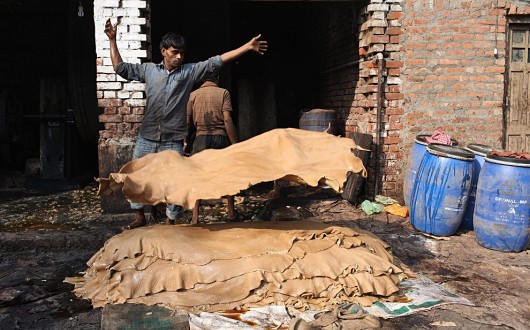
Imagine looking out on an indigo river as the sun sets in the horizon, as beautiful and crimson as the river was the day before. You look down at your hands — they are colored a slight yellow tinge — as you reach for your water, which is brown and dirty. The sun sets and the sky resumes its greenish-yellow hue. The night begins for you and your family on yet another starless night.
For many families in the developing world, the story illustrated above has become a reality, and while the colors may differ, the reaction does not. Fabric dyes have put a new filter on the developing world, and it is not a flattering one.
When walking through a department store, the colors seem endless. You can see every hue of every color imaginable, perhaps even arranged in rainbow order; however, those colors never occur in nature and they are not something that can be grown on a tree. Most of the colors we see are a result of unnatural chemical dyes that have been added to our cloth in developing nations throughout the world.
While these dyes may produce beautiful colors, they can bring great harm to the societies in which they are produced. Many factories that use these dyes do not follow safety regulations and workers can find their skin dyed a certain hue depending on what is in style. Eventually, after prolonged exposure, their skin will begin to flake off, leading to a much higher rate of skin cancer. Aside from ignoring workers’ safety, many factories allow their run-off to flood into the local water supply, turning rivers various different colors. This high concentration of pollutants leads to the contamination, and ultimately the death, of all the organisms in the waters. Local citizens are forced to rummage through a selection of mercury-laden fish, which have a myriad of other contaminants within them. This water issue also spreads further, affecting all locally grown crops. Imagine living in a world where you cannot eat anything out of fear of the damage it would do to your body, but having to deal with it because there is no way to stop it.
Synthetic dyes used to create the beautiful array of colors also contain dioxin — a carcinogen and possible hormone disruptor — toxic heavy metals and often formaldehyde. Prolonged exposure to these toxins can be detrimental and even fatal, and when entire communities are affected by this, it is a wonder that more has not been done about it.
By looking at the labels of products we buy and avoiding overly dyed substances as well as those that are primarily synthetic, consumers may be able to make a small dent in the issues facing workers in the third world. These individuals need these jobs to keep themselves out of poverty, but they should also be kept in good health while doing them.
– Sumita Tellakat
Sources: Green Cotton, Hesperian
Photo: Sean Gallagher Visuals
