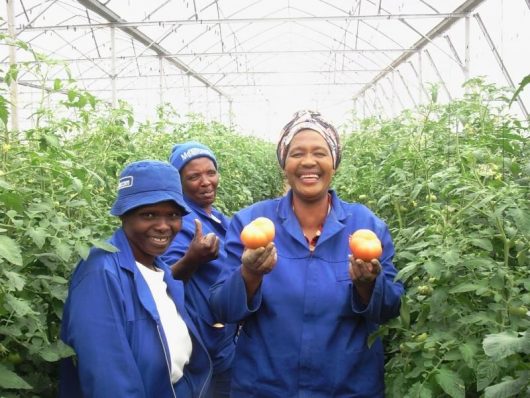
 Have you ever purchased a product from a cooperative business? Chances are you have, although you may not have been aware.
Cooperative businesses are owned and run by their members — either employees, customers, or the local community as a whole. These members divide all profits earned by the organization and have an equal say in how it is run.
Many people tend to think that the cooperative structure is most commonly used in niche industries such as farmer’s markets or beer brewers.
However, cooperatives exist all across the world in a variety of industries and scales. In addition, research has shown cooperatives to be a successful method of promoting inclusive development and eradicating poverty in countries of all income levels.
The issue of extreme poverty is most prevalent in Sub-Saharan Africa, where 414 million people still lived on less than $1.25 a day in 2015, according to Cooperatives Europe.
The United Nations and other development-oriented organizations have stressed that in order to successfully end extreme poverty in Africa and globally, solutions must promote self-help and country-owned development.
As members of both the private sector and civil society, cooperative businesses are uniquely positioned to promote inclusive, sustainable development that benefits the entire community.
Cooperatives can act as vehicles for promoting values such as democratic decision making, youth and women’s empowerment, practical education, cooperation across firms as well as civil awareness and participation.
Starting in 2013, the Cooperatives Europe Development Policy program has worked with the African Region of the International Cooperative Alliance to promote cooperative enterprises as a vehicle for development across the continent.
In its last report on cooperatives and community development, Cooperatives Europe highlighted several case studies across the continent in order to represent how the cooperative model might be further utilized in promoting inclusive development in Africa and worldwide.
One example provided is the Rise and Shine Student Cooperative (RSSC) in the kingdom of Lesotho. The RSSC is a savings and credit union organized by the students and teachers of Mohales Hoek High School and provides interest-free loans for students who need money for school fees and uniforms.
Rather than profiting from the loans themselves, the cooperative generates capital through fundraising activities like dance parties at the school itself. The cooperative has been such a success that the students are now planning to expand by constructing a chicken coop at the school so that students can learn about livestock cultivation and generate income.
Another example is the Eudafano Women’s Cooperative in Namibia. In Namibia, 80 percent of cooperative members are women. The EWC was originally formed by workers harvesting Marula fruits, traditionally a woman’s job. In 1999, women in this industry formed the EWC in order to create the necessary infrastructure to sell their harvest to the international market.
Today, the EWC has grown to represent four associations of producers totaling 1,300 employees as well as a factory that processes their products prior to international export in order to command higher prices and ensure that members are paid a living wage.
For both of the examples listed above, the cooperative structure has allowed their members to not only form a viable and sustainable business, but also to contribute to development goals in their communities through their operation.
By educating entrepreneurs and their communities about the cooperative enterprise structure and by supporting efforts to create new cooperative businesses, stakeholders such as the United States can promote sustainable, inclusive, and democratic development in Africa and elsewhere.
– Hayden Smith
Photo: South African LED Network

Mulago Foundation Funds Anti-Poverty Organizations
In order to qualify for funding, the organizations must be equipped with scalable solutions and demonstrate the ability to deliver, reflecting Mulago as a successful foundation that continues to improve the lives of the impoverished.
Henry Arnhold created the Mulago Foundation to carry out his brother’s life work, Rainer Arnhold, after his death in 1993. Rainer Arnhold was an inveterate traveler as well as a physician and philanthropist committed to improving the well-being of vulnerable individuals.
His philosophy has been carried throughout each of Mulago’s endeavors. The foundation is entirely funded by the Arnhold family and seeks no return on investments from the organizations it supports.
The Mulago Foundation has assisted organizations like the BOMA Project, located primarily in Northern Kenya. BOMA focuses on assisting impoverished women living in low-productivity lands that are isolated from the modern economy.
By funding this organization, Mulago and BOMA have worked to double the incomes of women in this area, helping them to build their resiliency against the economic issues that accompany droughts and poverty. The hope is that these successes will continue and increase drastically in the coming years.
The main focus of Mulago is impact. The Mulago Foundation succeeds in its mission to greatly impact impoverished citizens around the world by seeking out organizations with the similar missions.
While the Foundation would like to support all organizations trying to make a difference, the funding is meant for those who have well-defined plans for the future. Impact must be real and clearly measurable. By supporting successful organizations, Mulago is able to further the impact that they have on fighting poverty.
One Acre Funds is an organization in Eastern Africa that has received funding from Mulago and the impact it has reached is certainly measurable. This organization provides significantly poor farmers with the training, materials and access to markets that they need to create a sustainable living.
In less than five years, One Acre Funds went from zero farmers to 30,000. That is the type of impact that the Mulago Foundation seeks from the organizations it supports. One Acre Funds now functions like a high-performance business thanks to Mulago’s assistance.
– Amanda Panella
Photo: Flickr
The Recovery of Mogadishu
The once beautiful city, filled with wide boulevards and Italianate colonial architecture had become divided among rival warlords. Government-built schools and hospitals became prime targets for looters bent on destroying all remaining vestiges of Siad Barre’s 22-year rule. For a long period of time, chaos and crime thrived in one of Africa’s most cherished cities.
However, when the militants were pulled out of the city in 2011, the reconstruction of Mogadishu began. According to the New York Times, the hammering sound of machine guns has now been replaced with the sound of construction demonstrating that the recovery of Mogadishu is well underway. New hospitals, homes, shops, hotels and bars are being built and life has emerged from the once decrepit city.
BBC acknowledges a wave of reconstruction, which is being led by Somali expats who have come back to invest in their homeland. Foreign investors are also providing capital toward the recovery of Mogadishu.
Mohamed Yusuf, director of Madina Hospital told How We Made it in Africa that the city is like “a patient who was in a deep coma, and then suddenly he moves his fingers and opens his eyes. Now he is moving his limbs and unfolding his legs.”
Consequently, the outside world has noticed. In a recent survey of the world’s fastest-growing cities with a population of at least 1 million, the U.S.-based consulting firm Demographia ranked Mogadishu second on the list. Demographia estimated Mogadishu’s annual growth rate at 6.9 percent, due to the return of Somalis who have come home to explore investment opportunities following improvements in the city.
In Mogadishu, the central business district is once again a beehive of commercial activity. Somali singers just held their first concert in more than two decades at the National Theater, which formerly served as a weapons depot and a national lavatory.
Mogadishu has a bright and thriving future in the context of culture, enterprise and new markets.
– Megan Hadley
Photo: Flickr
Health Officials: Continued Vigilance on Ebola Crisis
However, in a statement made earlier this year, the WHO declared that the “likelihood of international spread is low.” As of January 6, 2016, the number of Ebola outbreaks since 2013 totaled 28,637. In addition, there have been eight cases of Ebola between February and March.
According to the New York Times, on April 6, officials from the Office of Management and Budget, the Department of Health and Human Services and the State Department announced the reallocation of its $510 million Ebola budget towards combatting the Zika virus.
The government, however, is far from declaring the Ebola outbreak over and the two deadly viruses are non-competing. Of note, the Obama Administration’s 2014 Global Health Security Agenda (GHSA) was a response to crippled infrastructure in countries impacted by health crises.
In promotion of the WHO’s International Health Regulations and other global health security frameworks, “the GHSA serves to stimulate investment in the needed capacity – infrastructure, equipment, and above all skilled personnel – and empowers countries, international organizations and civil society to work together to achieve focused goals.”
This entails a U.S. commitment to the eradication of the ebola crisis, mitigation of recurring outbreaks and partnerships with affected countries for infrastructure enhancement.
An article in the New England Journal of Medicine compares the diagnoses and treatment techniques of the Ebola and Zika viruses.
In explaining the improved sharing mechanisms and response techniques, Dr. Charlotte Huang writes, “Many lessons learned from the response to the recent Ebola outbreak have helped in the response to the ZIKV outbreak. Most important, there is general agreement on the need for international collaboration on regulatory issues, research, and data sharing.”
Nahid Bhadelia, an infection disease physician at Boston Medical Center has also noted the importance of “[having] continued vigilance in West Africa,” due to likely flare ups and the potential transmission by the 17,000 Ebola survivors who still might have the virus.
— Nora Harless
Photo: Flickr
Aziz Sancar Creates Girls in STEM Project
Aziz Sancar is one of the three recipients of the 2015 Nobel Prize in Chemistry. Currently, he serves as a professor of biochemistry and physics at the University of North Carolina at Chapel Hill School of Medicine.
Though he has been teaching and researching at UNC since 1982, Sancar’s education began in his native Turkey. He grew up in a large family in a predominantly Kurdish region of Turkey.
His early life taught him that education for women and men in Turkey was not equal, particularly in the Kurdish areas of Turkey, where girls often married at the age of 13. In an interview with Yahoo, Sancar noted that education for girls was not emphasized as a priority.
Even as a whole, the Turkish nation seems to give less attention to girls’ education. UNC Global states that, per the World Economic Forum’s most recent Global Gender Gap Report, the illiteracy rate is 1.9 for males in Turkey, but 9.4 for women.
Sancar told UNC Global, “As someone from rural Turkey, I understand the power of education. I know what it has done in my life. I want all girls in Turkey and around the world to have the same opportunity I had.”
To this end, Sancar recently launched a program in cooperation with the Harriet Fulbright Institute called Girls in STEM Project. The initiative is designed to increase female students’ interest in science, technology, engineering and mathematics.
UNC Global shared that the project would span seven Turkish cities and host a series of three-day conferences, with both Turkish students and Syrian refugee students participating.
The project’s website details that 700 girls in 6th grade will participate, at no cost, by registering online. The first 100 girls to register in each city involved will be accepted.
Sancar told UNC Global, “We hope this is a beginning,” Aziz Sancar said. “We want to close the gender gap in education and in the workforce in Turkey, and this is one way we can encourage that to begin, to inspire girls to get involved in STEM.”
– Katherine Hamblen
Photo: Wikimedia
Poverty Reduction: World Bank Climate Change Action Plan
In fact, the group notes that without action, “climate change could push more than 100 million additional people back into poverty by 2030”.
The World Bank’s newest report on its Climate Change Action Plan clarifies that environmental crisis affects everyone in the world, but strikes hardest on the poor.
For example, natural disasters completely destroy the means of survival for agricultural communities – the report estimates that the world could lose up 5 percent of its crop yields by 2030. Of note, heat waves, droughts and river floods are expected to increase in frequency and magnitude with global warming.
In addition, families that spend a large portion of their budget on food cannot adapt to resulting fluctuations of food price. With the lack of quick and specific governmental support, these damages also lead to long term conditions. Ongoing efforts to eradicate poverty may even be compromised due to families who fall back into poverty due to a number of factors including climate change.
Global warming also creates an environment for more diseases to thrive, including malaria and diarrhea. The World Bank notes that a 2-3 °C increase in temperature could increase exposure to malaria by five percent and diarrhea by up to 10 percent. Children under five are the most vulnerable to such sickness, which threatens the health and survival of future generations.
The fact that some effects of climate change can actually benefit small farmers, complicates the issue of estimating the actual damage. However, based on research conducted in 92 countries, the group notes that the overall damage outweighs the benefit as it falls upon the majority of people in the long-term.
Following last year’s Paris Climate Agreement involving 195 states, The Guardian reports that the World Bank will allocate 28 percent of its budget in assisting developing nations to meet greenhouse gas emission standards and develop more sustainable energy solutions. The International Financial Corporation (IFC) under the World Bank will mobilize an additional $13 billion to environment technology related projects in the private sector.
John Roome, senior director for climate change at the World Bank, told journalists including The Guardian, “This is a fundamental shift for the World Bank. We are putting climate change into our DNA. Climate change will drive 100 million more people into poverty in the next 15 years [unless action is taken].”
The World Bank’s climate change action plan emphasizes that environmentally friendly policy and economic development are not mutually exclusive, setting the example of Climate-Smart Agriculture. Access to better technology and more resilient breeds of crops can protect even small farmers against sudden changes.
– Haena Chu
Cooperatives: Poverty Relief & Inclusive Development
Cooperative businesses are owned and run by their members — either employees, customers, or the local community as a whole. These members divide all profits earned by the organization and have an equal say in how it is run.
Many people tend to think that the cooperative structure is most commonly used in niche industries such as farmer’s markets or beer brewers.
However, cooperatives exist all across the world in a variety of industries and scales. In addition, research has shown cooperatives to be a successful method of promoting inclusive development and eradicating poverty in countries of all income levels.
The issue of extreme poverty is most prevalent in Sub-Saharan Africa, where 414 million people still lived on less than $1.25 a day in 2015, according to Cooperatives Europe.
The United Nations and other development-oriented organizations have stressed that in order to successfully end extreme poverty in Africa and globally, solutions must promote self-help and country-owned development.
As members of both the private sector and civil society, cooperative businesses are uniquely positioned to promote inclusive, sustainable development that benefits the entire community.
Cooperatives can act as vehicles for promoting values such as democratic decision making, youth and women’s empowerment, practical education, cooperation across firms as well as civil awareness and participation.
Starting in 2013, the Cooperatives Europe Development Policy program has worked with the African Region of the International Cooperative Alliance to promote cooperative enterprises as a vehicle for development across the continent.
In its last report on cooperatives and community development, Cooperatives Europe highlighted several case studies across the continent in order to represent how the cooperative model might be further utilized in promoting inclusive development in Africa and worldwide.
One example provided is the Rise and Shine Student Cooperative (RSSC) in the kingdom of Lesotho. The RSSC is a savings and credit union organized by the students and teachers of Mohales Hoek High School and provides interest-free loans for students who need money for school fees and uniforms.
Rather than profiting from the loans themselves, the cooperative generates capital through fundraising activities like dance parties at the school itself. The cooperative has been such a success that the students are now planning to expand by constructing a chicken coop at the school so that students can learn about livestock cultivation and generate income.
Another example is the Eudafano Women’s Cooperative in Namibia. In Namibia, 80 percent of cooperative members are women. The EWC was originally formed by workers harvesting Marula fruits, traditionally a woman’s job. In 1999, women in this industry formed the EWC in order to create the necessary infrastructure to sell their harvest to the international market.
Today, the EWC has grown to represent four associations of producers totaling 1,300 employees as well as a factory that processes their products prior to international export in order to command higher prices and ensure that members are paid a living wage.
For both of the examples listed above, the cooperative structure has allowed their members to not only form a viable and sustainable business, but also to contribute to development goals in their communities through their operation.
By educating entrepreneurs and their communities about the cooperative enterprise structure and by supporting efforts to create new cooperative businesses, stakeholders such as the United States can promote sustainable, inclusive, and democratic development in Africa and elsewhere.
– Hayden Smith
Photo: South African LED Network
Orange Fleshed Sweet Potatoes in Africa
In Africa, sweet potatoes are proving to be invaluable in the fight against malnutrition. According to a publication by HarvestPlus, the Vitamin A rich Orange Fleshed Sweet Potato (OFSP) was introduced in 2007 to 24,000 farming families in Mozambique and Uganda. The program was presented by HarvestPlus and its partners, specifically targeting women and children who suffer most from vitamin A deficiency.
African farmers are no strangers to sweet potatoes, but they have always grown the paler varieties: yellow and white, which lack beta carotene and other nutrients, while the OFSP does not. The OFSP is a crop that has gone under biofortification.
According to a HarvestPlus research brief, “Biofortification is the process of breeding staple food crops that have a higher micronutrient content.” This process can be carried out conventionally or through genetic engineering. “All crops being released by HarvestPlus and collaborators are conventionally bred.” The seeds and vines of the OFSP can be shared.
Since the sweet potato was already a staple in the diet of Africans, introducing the OFSP was a deliberate strategy to cater to the existing market. In Mozambique and Uganda, the effort succeeded in raising Vitamin A levels by an appreciable margin in women and children.
The sweet potato requires less work than the other staple crops of cassava, wheat and rice, according to the International Potato Center (CIP). It tolerates poor growing conditions better than the other crops and produces better yields with more edible energy per hectare. The sweet potato has previously been grown in small plots but the CIP sees this changing as the OFSP grows in popularity and importance.
USAID, with the support of Feed the Future has introduced the OFSP into Ghana. They hope to eventually reach 300,000 households with women of reproductive age and children under the age of five.
Feed the Future works directly with the government of Ghana to target the poorest households to give them access to the Orange Fleshed Sweet Potato. Feed the Future wrote a Multi-Year Strategy for Ghana (2011-15) to outline its goals, including improved nutrition, especially of women and children, and improved agricultural production in Northern Ghana, especially for small farm holders.
– Rhonda Marrone
Photo: Flickr
Greater Access: Financial Services in Developing Countries
When talking about fighting global poverty, most people discuss solutions to problems of malnutrition, poor shelter, or dirty water. But how about greater access to financial services?
Most individuals in the developed world could never imagine living on wages of less than $10 a day. There are thousands of ways to secure an adequate daily income because of the countless economic opportunities that are supplied by developed markets.
Access to these financial services, a sparse resource in areas suffering from poverty, provides individuals with the chance to actively participate in securing a means of subsistence.
In March, the World Bank released a video interview with Douglas Pearce, the Global Lead for Financial Inclusion at the international organization. The conversation shed light on the lack of access to financial services in developing countries.
“My favorite number is two billion,” said Pearce, “Two billion is the number of adults who don’t have access to formal financial services.” This latest statistic has fueled the World Bank’s new Universal Financial Access Goal which targets 25 countries that account for 73 percent of the world’s “unbanked.”
Access to financial services in developing countries would offer more of the world’s poor the opportunity to feed themselves and increase their potential income. “Being able to tap into savings provides that level of protection, cushion, of falling back into poverty,” Pearce continued. This method of poverty relief plays an important role in sustaining an individual’s rise out of hardship.
The World Bank plans to meet the goal of more financial inclusion by ensuring that each individual helped has a bank account regardless of gender. Pearce hopes that these accounts will be “gateways to a range of credit, insurance, payment, and savings services.” These services then allow people living in poverty to afford education, a home or vehicle and equipment to start a business.
Pearce hopes that these accounts will be “gateways to a range of credit, insurance, payment, and savings services.” These services then allow people living in poverty to afford education, a home or vehicle and equipment to start a business.
There are multiple kinds of financial services that are being integrated into poverty-ridden areas:
These financial services are being integrated into many developing countries across the goal. The emergence of these economic opportunities has the power to inspire entrepreneurship and income security in areas with the most poverty. As Pearce says, “financial inclusion has the potential to unlock opportunity for people.”
– Jacob Hess
Photo: Flickr
Social Inclusion Project: Investing in Bulgaria’s Youth
The Bulgarian government has been working to ensure increased educational opportunities for its youth with programs such as the Social Inclusion Project which was completed at the end of 2015.
The Project was designed to increase school readiness in children under the age of seven to ensure equal life choices, targeting low-income and marginalized families. The initiative has reached over 20,000 youth and the country’s kindergarten enrollment rate currently stands at 83 percent.
“Giving people the same life chances requires investments in early childhood development, providing kids, as one says here in Bulgaria, with their proper initial seven years,” said Markus Repnik, World Bank country manager for Bulgaria, in his address to the Minister and the government.
Repnik went on to say that “the project will provide these proper initial seven years for the most vulnerable children through pre-school training and services – so that these kids enter school at an equal footing, allowing them to successfully progress in their later education and life.”
Educational achievements correlate significantly with future employment opportunities. Productivity is declining in many Eastern European countries because many working-age people lack sufficient education to participate in the labor market.
Investing in ECD programs equips a generation to be conscientious, responsible and resilient especially during difficult economic conditions.
The Social Inclusion Project invested in infrastructure, building kindergartens and children centers and in services such as medical screenings, speech therapists, physiotherapists, pediatrician checkups and parental training.
This initiative was possible because stakeholders, policy makers and international partners decided to make a commitment to ECD.
By partnering with the World Bank, the Bulgarian Red Cross, UNICEF, the Bulgarian Pediatric Association and many other supporters, Bulgaria has equipped young people to pursue better jobs and ultimately have the ability to provide for future generations.
– Emily Ednoff
Photo: Flickr
Farm Africa: Expanding Exports for East African Farmers
Farm Africa is the top agency under the Food Trade project, a U.K. government-funded food crop trade enhancement program that assists farmers in Uganda and Tanzania to increase their household incomes and boost their living standards.
The undertaking is supported by a £3 million ($4.2 million) grant from the U.K.’s Department for International Development (DFID). The Guardian reports that the project will benefit 70,000 Ugandan and Tanzanian farmers, in part by expanding their export markets.
According to Farm Africa, 60 percent of the world’s uncultivated land suitable for crop production is in Africa. There is an enormous possibility for development in the continent that would allow for self-sustaining food production.
In the last year, Farm Africa has impacted 1.4 million people in eastern Africa. The organization has incorporated contemporary systems and methods to help farmers “grow more, sell more and sell for more.”
The Farm Africa project will assist Ugandan and Tanzanian farmers manage and supply exceptional quality grain and market it for maximum profit.
The project will help 12,000 farmers in the Teso sub-region, including 2,000 members of the Katine Joint Farmers’ Co-operative Society (Kajofaco). This will allow more isolated farmers to connect with high paying buyers, particularly in Kenya.
The Kenyan market has a large population and booming economy which is key for the success of Ugandan and Tanzanian farmers. Additionally, Kenya, for the most part, is a food importer due to its mediocre crop growing capabilities.
Farm Africa, through the Food Trade project, will train farmers in Katine which is one of the poorest areas is in Uganda. The agency will provide guidance for improving methods of harvesting, drying, sorting and grading grain in three staple crops: maize, rice and beans.
Steve Ball, Farm Africa’s county director in Tanzania said to The Guardian: “By incentivizing farmers to grow bigger surpluses and making regional trade easy and affordable, this project will help lift tens of thousands of grain farmers in Tanzania and Uganda out of poverty as well as taking eastern Africa a step closer to agricultural self-sufficiency.”
– Heidi Grossman
Photo: Flickr