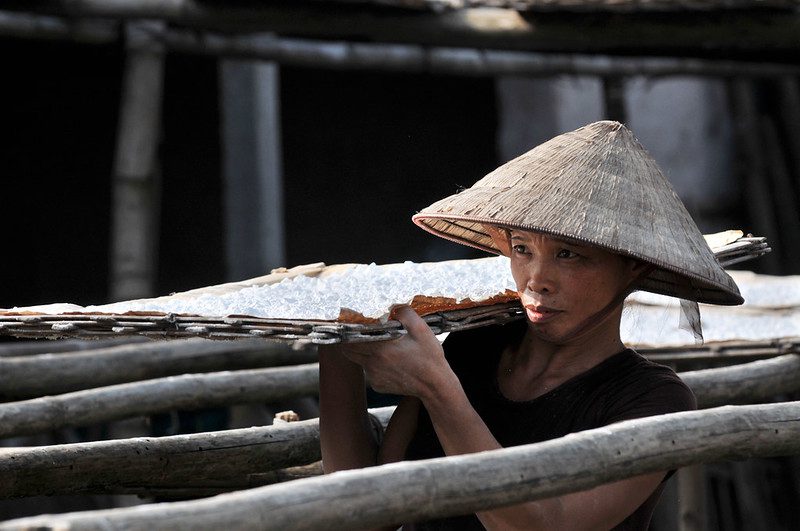
Lack of human rights in Vietnam remains a major issue. Citizens proceed to fight for their oppressed freedoms of speech and assembly, while harsh police brutality and imprisonment for activists and bloggers continues.
Authorities within The Communist Party of Vietnam continue to restrict basic rights, as bloggers and activists face frequent physical assaults and trial charges. According to the Human Rights Watch, during 2016, at least 34 people reported that unknown assailants beat them. Nguyen Chi Tuyen, a 43-year-old dissident blogger from Hanoi, wasn’t able to identify his attackers. However, he stated with complete certainty, “We know they were organized by the [country’s] security forces.”
The number of bloggers and activists convicted and sentenced to prison has risen from 7 to at least 19 within the past year. Consequently, it is clear that many human rights in Vietnam, such as freedom of speech and assembly, have been seized by the government.
Many of the bloggers on trial were accused of “abusing rights to freedom and democracy to infringe upon the interests of the state.” The judge who ordered their conviction also stated that their articles “present a one-sided and pessimistic view, causing anxiety and worry, and affecting people’s confidence [in the Communist Party].”
Despite the government’s accusations during these trials, many citizens argue that they have a hidden agenda working to withhold human rights in Vietnam. Governmental restrictions on freedom of movement are often used to keep bloggers and activists from attending public events, such as protests or human rights discussions.
Prominent rights campaigner Nguyen Quang A and blogger Pham Doan Trang were strategically detained by the government to prevent them from attending a private meeting with President Barack Obama during his visit to Vietnam. In reference to Nguyen Quang A, the Human Rights Watch reports that “between late March and early August 2016, police detained him six times to prevent him from meeting with foreign diplomats and delegations including Germany, the United States, the European Union and Australia.”
Commenting on the lack of U.N. assistance, Nguyen Anh Tuan, a 27-year-old Hanoi activist, stated, “I would say that the U.N. in Vietnam is very active when it comes to the less sensitive issues, for example, HIV prevention, but when it comes to political rights, for example, freedom of expressions, freedom of assembly, freedom of association, they are less active.”
As forceful government intervention continues to keep citizens from their basic human rights in Vietnam, it is important that their struggle for justice does not go unnoticed and more drastic interference is taken on the part of the United Nations.
– Kendra Richardson
Photo: Flickr

Wealth Inequality: On the Causes of Poverty in Mexico
The definition of wealth inequality is the unequal distribution of household or individual income across the various participants in an economy. Wealth inequality is a daunting social issue persisting in many countries. It is one of the main causes of poverty in Mexico.
Wealth inequality in Mexico is extremely high. Although Mexico is among the top 14 richest countries as calculated by GDP, over half the population lives in poverty. The gap between the wealthy and the poor in Mexico continues to expand.
Consuelo Lopez-Zuriaga, the Oxfam Mexico Executive Director states that “while the wealth of Mexican multimillionaires is multiplied by five, 48 percent of state schools have no access to sewage, 31 percent have no drinking water, 12.8 percent have no bathrooms or toilets and 11.2 percent have no access to electricity.”
Just one percent of the population owns about half of the country’s wealth. While their wealth increases, the poverty rate in Mexico has not decreased by much, leaving an estimated 53.3 million people living below the poverty line. From 2012 to 2014, the poverty rate in Mexico only fell by 0.3 percent. This implies that efforts to confront the issue have been unsuccessful.
President Peña Nieto recognizes that inequality along with corruption and global economic turmoil are the primary challenges that Mexico’s economy faces. Under President Peña Nieto, the poverty rate has only increased, and many criticize him for a lack of dedication to combating poverty. In fact, some say that encouraging large-scale private and foreign investment is the primary focus of the administration.
Though there are small successes in developmental programs aimed at combatting poverty in Mexico, it is not enough to resolve the underlying issues. Wealth inequality is one the worst causes of poverty in Mexico that is unsolved as it continues to increase the poverty rates. Strategization by those in power will need to be rethought in order to better distribute wealth to Mexico’s citizens in the future.
– Danyel Harrigan
Photo: Flickr
10 of the Most Common Diseases in Afghanistan
The World Health Organization (WHO) recently called the health status in Afghanistan one of the worst in the world. Most of the common diseases in Afghanistan are communicable, and epidemics are happening more frequently than in the past. The health system is trying to recover from decades of neglect, under-funding, institutional vacuum and fragmentation. These are the 10 most common diseases in Afghanistan:
These 10 common diseases in Afghanistan can be deadly when untreated. Luckily, many medical relief organizations are working to eradicate the likelihood of these diseases and to provide vaccinations to those in need of them.
– Emily Arnold
Photo: Google
The Current Issue of Human Rights in Vietnam
Lack of human rights in Vietnam remains a major issue. Citizens proceed to fight for their oppressed freedoms of speech and assembly, while harsh police brutality and imprisonment for activists and bloggers continues.
Authorities within The Communist Party of Vietnam continue to restrict basic rights, as bloggers and activists face frequent physical assaults and trial charges. According to the Human Rights Watch, during 2016, at least 34 people reported that unknown assailants beat them. Nguyen Chi Tuyen, a 43-year-old dissident blogger from Hanoi, wasn’t able to identify his attackers. However, he stated with complete certainty, “We know they were organized by the [country’s] security forces.”
The number of bloggers and activists convicted and sentenced to prison has risen from 7 to at least 19 within the past year. Consequently, it is clear that many human rights in Vietnam, such as freedom of speech and assembly, have been seized by the government.
Many of the bloggers on trial were accused of “abusing rights to freedom and democracy to infringe upon the interests of the state.” The judge who ordered their conviction also stated that their articles “present a one-sided and pessimistic view, causing anxiety and worry, and affecting people’s confidence [in the Communist Party].”
Despite the government’s accusations during these trials, many citizens argue that they have a hidden agenda working to withhold human rights in Vietnam. Governmental restrictions on freedom of movement are often used to keep bloggers and activists from attending public events, such as protests or human rights discussions.
Prominent rights campaigner Nguyen Quang A and blogger Pham Doan Trang were strategically detained by the government to prevent them from attending a private meeting with President Barack Obama during his visit to Vietnam. In reference to Nguyen Quang A, the Human Rights Watch reports that “between late March and early August 2016, police detained him six times to prevent him from meeting with foreign diplomats and delegations including Germany, the United States, the European Union and Australia.”
Commenting on the lack of U.N. assistance, Nguyen Anh Tuan, a 27-year-old Hanoi activist, stated, “I would say that the U.N. in Vietnam is very active when it comes to the less sensitive issues, for example, HIV prevention, but when it comes to political rights, for example, freedom of expressions, freedom of assembly, freedom of association, they are less active.”
As forceful government intervention continues to keep citizens from their basic human rights in Vietnam, it is important that their struggle for justice does not go unnoticed and more drastic interference is taken on the part of the United Nations.
– Kendra Richardson
Photo: Flickr
10 Facts About Uzbek Refugees
The Republic of Uzbekistan is a Central Asian country with a population of about 32 million. From 1924 to 1991, Uzbekistan was a constituent republic within the Soviet Union. Since gaining independence in 1991, the Uzbek people have been dominated by an authoritarian government. Here are 10 critical facts about Uzbek refugees from the former Soviet state:
Torture is commonplace in the Uzbekistan justice system, and adults and children are subjected to forced labor. Collecting data on Uzbekistan, especially on its human rights violations is difficult. This lack of information is due to Uzbekistan refusing to allow U.N. human rights experts access to the country since 2002.
Some Uzbek refugees have had to bounce from country to country until they feel safe from the Uzbekistan government. Furthermore, countries like neighboring Kyrgyzstan, close to Uzbekistan geographically and culturally, deport Uzbek refugees in compliance with the Uzbekistan government’s request. Kyrgyzstan has never granted the request of an Uzbek refugee.
President Islam Karimov ruled Uzbekistan from its independence from the Soviet Union until his death in September 2016. The current president, Shavkat Mirziyaev, has vowed to bring human rights reforms to Uzbekistan. However, organizations like the Human Rights Watch say that there has been little to no progress thus far.
– David Mclellan
Photo: Google
New Strides in Girls’ Education in Saudi Arabia
With the first private school for girls opening in 1956 and the first public school opening around 1960, the history of girls’ education in Saudi Arabia is relatively brief. And though some gender disparity remains in the country’s adult literacy rate, the education gender gap is rapidly closing due to new kingdom-wide objectives.
Though just 91.84% of women are literate versus 96.95% of men, the disparity is significantly smaller among the youth population, with both male and female literacy hovering around 99%—an astounding rise from the two percent female literacy rate in the 1970s.
Primary, middle and secondary schools are free and open to both boys and girls. Though boys enroll at a slightly higher rate than girls—99% versus 96.35%—the education system is well on its way to gender equality, in spite of the kingdom’s reputation for severe treatment of women.
Saudi Arabia’s Vision 2030 plan drives these advancements. Implemented under King Salman Bin Abdulaziz Al-Saud, the plan aims to structure the kingdom’s social, political and fiscal future—and recognizes women’s potential to bolster the workforce. Many citizens have adopted this point of view, as well as the idea that all children, regardless of sex, gain greater opportunities to contribute as adults when they have access to quality education.
In service of these values, Vision 2030 aims to foster an educational environment congruous with the demands of the evolving job market. Schools also now prioritize students’ ability to meet personal goals.
Though public schools are divided by gender, leaders strive to improve and diversify the educational system for both girls and boys. The upcoming school year will bring an exciting new opportunity for girls in Saudi Arabia: physical education classes.
Some citizens of Saudi Arabia oppose women’s access to sports, as they are considered masculine activities, but many others are satisfied with the development. Hatoon al-Fassi, a Saudi women’s historian, anticipates that the motion will help girls to build bodily autonomy.
Advancements in girls’ education in Saudi Arabia have indeed empowered women to pursue their own potential. Beyond secondary school, many Saudi women earn advanced degrees. Data from 2015 shows that women account for 51.8% of students at Saudi Universities. Around 551,000 women are enrolled in undergraduate programs, with 24,498 in graduate programs and 1,744 pursuing PhDs. An additional 35,537 study abroad in 57 countries.
Women in Saudi Arabia faced many obstacles to get to where they are today. With the continued support of many citizens and leaders, the disparity between men and women is bound to dissolve.
– Madeline Forwerck
Photo: Google
The Cost of Living in Peru Versus the United States
In the United States, the first image of Peru that might come to mind is Machu Picchu or an equally stunning mountainous view. Stereotypes aside, those sorts of natural monuments mask the growing economy and standard of living in Peru.
Peru was listed as the 20th most free economy in the world as of 2015, progressing slightly slower than Chile, its southern neighbor. This is due to the decreasing value of copper, gold, silver and other major exports in Peru.
One characteristic of economic growth in poorer countries is that eventually places of historical and cultural values will begin to be preserved even at the expense of population growth or economic growth. For example, a new highway project in Lima was altered in order to prevent the destruction of a historical site.
Due to this growth, Peru is now in a sweet spot where the standard of living is decently high and the cost of living is low. Outside of Lima, $2,000 per month would cover one’s basic expenses. While living in Peru, international supermarkets cost more than grocery shopping at a local market. Interestingly enough, going out to eat at local restaurants often costs even less than shopping and cooking for oneself. You can get a three-course meal for three dollars at a local Picanteria.
One source puts costs of Peru and the United States against each other, and overall, consumer prices in Peru are 45.61% lower than in the United States. Paying rent is 60.37% lower than in the U.S. and paying for groceries is 50.71% lower than in the U.S. Living in Peru makes it easy to stick to a budget.
For anyone looking to retire in Peru, it’s possible to do so at $500 per month, though this makes extremely frugal living necessary. However, Peru is still one of the least expensive places to live in South America and one of the nicest.
– Ellen Ray
Photo: Flickr
Cost of Living in Croatia Higher Than Neighboring Countries
The cost of living in Croatia is relatively steep in comparison to the minimum monthly wage, though expected growth in the region’s economy and hikes in the area’s minimum wage will benefit its residents trying to make ends meet.
This year alone, the country’s economy is expected to grow by 2.9%, according to the World Bank. In the following year, it is projected to increase by approximately 2.6%.
Items such as service exports, investments and personal consumption all contribute to the economy’s growth.
According to Wageindicator, as of March 2017, the minimum monthly wage in Croatia is just shy of $507. In comparison, approximate month-to-month living costs in Croatia total around $330.
Other expenses such as food, clothing and utilities often push the total cost of living over the minimum monthly wage. This fact means residents might resort to sharing a living space with multiple people, though these spaces are often not intended for more than one person.
According to an article from Croatia Week, in Zagreb, the country’s capital, the average resident will earn a little under $1,000 a month. Of these wages, just over $200 must be set aside for utility bills, according to the article.
A full week’s work is required to cover basic living costs in Zagreb. Approximately 38 hours of work per week are needed in Zagreb to cover the cost of utilities.
Compared to other European capitals, Zagreb has some of the highest utility rates, topping even that of London, one of the world’s most expensive cities. The cost of living in Croatia is typically greater than that of its neighboring countries.
In recent years, a rise in tourism in the region has increased the cost of living in Croatia. Compared to other Eastern European countries, everyday costs are significantly higher in Croatia, though they are lower than in Western Europe and the U.S.
– Leah Potter
Photo: Flickr
Causes of Poverty in Romania Run Deep
Severe poverty and complications within economic systems occur for a variety of different reasons. The contributing factors behind poverty in the poorest of countries are usually obvious. They include poor water quality, a lack of resources, shared food and housing and other noticeable struggles. However, the causes of poverty in Romania go a little deeper than these norms.
Romania entered the European Union in 2007. Despite its growing economy, it ranks as Europe’s most poverty-stricken nation.
Even though the structures and education systems are better established in Romania than in many other poor countries, Romania’s social systems and flawed pay benefits cause great financial harm to its citizens.
When asked about the causes of poverty, Romanians report that several of Romania’s social programs give equally to those who are rich and to those who are poor, neglecting to give direct attention to those who are struggling financially. This fact, combined with flaws in Romania’s social systems that allow people to misuse the aid, results in the failure of assistance to reach some of the families that need it the most.
On paper, Romania’s economy seems to flourish, yet poverty continues to worsen.
Racism is the root of several causes of poverty in Romania. Those who are Romani in Romania are more likely to struggle with poverty due to racism and oppression.
Large Roma families are hardly able to afford food and basic necessities. They often live in dangerous and unstable areas such as caves and are not considered to be Romanian citizens by the public.
A 2013 survey found that around 27% of men of Roma descent reported being discriminated against due to their race when looking for jobs. This, of course, does not include those who are ashamed of unemployment or are too afraid to acknowledge their own discrimination.
Between flaws in Romania’s government and some very problematic racial issues, Romania experiences an array of poverty sources.
Care.org provides opportunities to help people in Romania by providing sources for advocacy and donations. This is a way that anyone can help alleviate financial distress and fight the causes of poverty in Romania.
– Noel Mcdavid
Photo: Pixabay
Human Rights in Somalia: A Fight for Rebirth
Since being thrown into anarchy following the coup against President Siad Barre in 1991, Somalia’s political terrain has seen slow and stagnated progress. Dubbed the Horn of Africa, Somalia has been attempting to rebuild itself after more than two decades of political instability and violent infighting. Human rights in Somalia are in need of vast improvements.
The country’s efforts have been widely disrupted by insurgent uprisings and terrorist groups, which have flourished in an environment of reduced economic security and weak state control. Egregious violations of human rights in Somalia have occurred from the violent uprisings as well as the inability to access adequate food, water and shelter.
In March 2017, President Mohamed Abdullahi Farmajo declared Somalia’s drought a national disaster. With an estimated 43% of Somalians living below the poverty line, the dire situation has only been exacerbated by poor climate conditions. The Food and Agricultural Organization (FAO) predicted that the drought had put further strain on the 6.5 million Somalis who already face resource insecurity due to years of violent conflict.
In the dry and sparse terrain of the most rural parts of Somalia, many young girls and women alike have been targets of gender-based violence as they are forced to venture further out in search of sources of food and water. UNICEF officials fear that the scope of the issue is even larger than is known, as not all cases have been reported. With gender and human rights in Somalia at continued risk, there have been fervent calls for further international engagement with the issue.
The U.S. has been quick to respond to the emergence of insurgent groups and al-Qaeda-affiliated al-Shabaab militants in Somalia. Experts have called for a multifaceted approach towards eradicating poverty and improving the record of human rights in Somalia. The Human Rights Watch amongst others has articulated that military intervention in the form of drone strikes can only be a part of a much more robust strategy, especially one that does not put innocent civilians at such high risk.
On an international level, 2017 saw the U.N. Migration Agency launch a project, assisted by one million dollars in donations by China, to have emergency relief resources reach Somalia’s most vulnerable. On a domestic level, the 9th Parliament served its full-term after two decades, with the election in 2016 resulting in 17% youth and 26% women MPs, which marked a significant step forward for Somalia.
Although there is much left to be done, with an internationally sponsored government intact and multi-faceted relief projects on their way, there appears to be more hope for stability than there has been in decades for human rights in Somalia.
– Sydney Nam
Photo: Flickr
Feed My Starving Children Addresses Hunger in Somalia
Somalia, a country in eastern Africa, is on the brink of catastrophic famine. More than half of the population of Somalia needs some sort of help regarding food. Camps providing aid are set up around the country, but even there the situation of hunger in Somalia is dire.
Feed My Starving Children (FMSC), a nonprofit organization based in Minnesota, decided to find a way to help. This organization operates on a volunteer basis to provide assistance in the battle against world hunger. Volunteers sign up for a shift to come in and pack food into bags for however long they choose. Each bag packs six meals made up of a formula researched to provide the most nutritional value for a starving person. They are all vegetarian and halal certified.
FMSC sends the food they package to at least 60 countries worldwide, constantly working to solve the problem of world hunger. But besides their normal volunteer work, the organization creates mass packing events in various locations. From June 2 through June 5, FMSC hosted its largest packing event in the history of the organization in St. Paul, Minnesota. Partnering with Love Somalia, there were over 15,000 volunteers working in 2.5-hour shifts. The volunteers packed and sent an amazing 4.9 million meals to Somalia in order to assist during the famine. It’s a start to addressing the overwhelming hunger in Somalia that equates to more than six million people who need aid.
Other major packing events have gone towards relief in Haiti, the organization’s largest recipient. In 2015, FMSC sent 78 million meals to Haiti and sends even more after hurricanes.
The United Nations writes that a “massive increase in humanitarian assistance is urgently needed to avert a famine,” especially one that resembles the famine Somalia experienced in 2011, where more than 250,000 people died of starvation. While there is still a long way to go, Feed My Starving Children has begun taking steps to help.
– Ellen Ray
Photo: Flickr