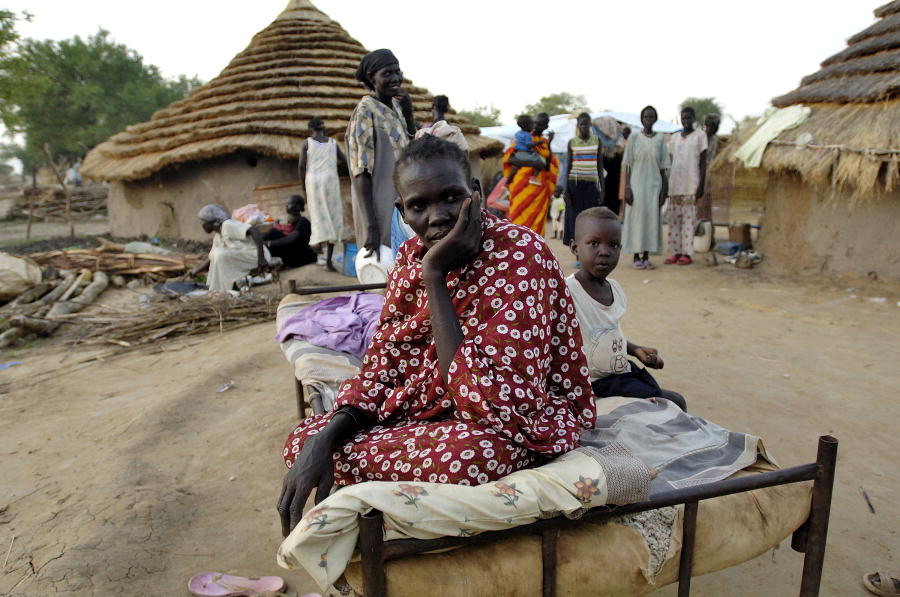
 The civil war has impacted fragility and the rule of law in Sudan, and the safety of 50 million people. According to the World Food Programme (WFP), a total of 24.6 million people are acutely food insecure, while 637,000 face catastrophic levels of hunger. Meanwhile, Sudan is in the top four countries in the world for the highest prevalence of global acute malnutrition, at an estimated 13.6%. Sudan has also lost an estimated 5.2 million jobs, and economic activity in Sudan’s capital, Khartoum, has plummeted.
The conflict has weakened central governance and key infrastructure, requiring humanitarian efforts from the international community. However, armed clashes, widespread insecurity and lack of funding has made it increasingly difficult for aid agencies to reach affected communities.
About the Recent Civil War
The current Sudanese civil war began on April 15 2023, during Ramadan, when Rapid Support Force (RSF) members were deployed across the country, a move which the Sudanese armed forces saw as a threat. Before this, Political disagreements increased tensions between Gen. Abdel Fattah al-Burhan, the de facto president and head of Sudan’s armed forces, and his deputy, Gen. Mohamed ‘Hamedti’ Hamdan Dagalo, leader of the RSF. The two rose to power after the 2019 coup of dictator Omar al-Bashir, as well as subsequent coups of the transitional government.
Disagreements centered on the increase of Hamedti’s power in government, the integration of the RSF into the Sudanese army, and the multiple delays in establishing a democratic government. Bouts of conflict have wracked the rule of law in Sudan since its independence in 1956, when it was already embroiled in the first Sudanese civil war.
Sudan’s History
Before independence, Sudan was part of the Anglo-Egyptian condominium. Although both the U.K. and Egypt administered the region, the U.K. held more authority. In 1954, both countries signed a treaty which would grant sovereignty to the new Republic of Sudan in 1956. Despite this, war gripped the country when the first Sudanese civil war began in 1955 as a result of cultural divides and political and economic inequality in the region.
Britain governed the Sudanese north and south as different entities. The north comprised wealthier, more educated Arab and Muslim populations, whereas the south comprised poorer Christian or pagan peoples who were less politically conscious. Due to its wealth, the north leveraged more political power from both colonial and post-colonial administrations, thereby driving further inequality between the regions. Discontent between the North and South grew after the 1947 Juba conference, where both the North and South would be subsumed into one government, further dissipating southern autonomy. In addition, northern Islamization and Arabization of the south heightened even further animosity between the two. The aftermath of the war and continuation of North/South inequalities would lay the groundwork for the second Sudanese civil war in 1983, and would also lead to the succession of South Sudan in 2011.
The Dictatorship of Omar Al-Bashir
In 1989, during the second Sudanese civil war, Brigadier General Omar Al-Bashir ousted the democratically elected government in a military coup and became head of state. Accusations of electoral fraud and corruption marred his dictatorship of the country, which incited numerous protests. Furthermore, his governance focused heavily on strict Sharia law interpretations, with many rights taken away through morality policing and persecution of religious minorities and Sunni apostates.
In 2009, the International Criminal Court (ICC) indicted him for five counts of crimes against humanity and two counts of war crimes. Then, in 2010, the ICC added three additional counts of Genocide to his indictment. These charges related to the treatment of ethnic minorities, including the Fur, Zaghawa and Masalit, during the Darfur war.
In 2019, a military coup that the SAF and RSF jointly carried out overthrew him. The aftermath left a power vacuum, impacting the rule of law in Sudan and the fragility of the government.
A New Government
On March 4, 2025, the RSF and allied groups signed a transitional constitution for a parallel government in regions under their military control. The new government aims to gain diplomatic legitimacy from opposing forces and establish more access to advanced weaponry.
In a UN Security Council meeting, U.S. Representative John Kelley stated, “Attempts by the RSF and aligned actors to establish a government in RSF-controlled territory in Sudan are unhelpful for the cause of peace and security in Sudan, and risk a de facto partition of the country.”
The 2025 Sudan Humanitarian Needs and Response Plan
In December 2024, the U.N.’s Office for the Coordination of Humanitarian Affairs (OCHA) developed the 2025 Sudan Humanitarian Needs and Response Plan. It aimed to provide humanitarian assistance to 21 million people and reduce mortality in areas with a risk of further deterioration of rule of law in Sudan.
Recently as part of the response plan, between May 4th and 8th, the World Food Programme distributed food to more than 335,000 people in Tawila in response to worsening conditions. This program has raised $600 million, however, this falls woefully short of the much-needed total requirement of $4.1 billion.
Because of global funding shortfalls, the Emergency Relief Coordinator asked humanitarian teams to ensure that the most life-saving assistance reaches the most vulnerable populations.
It has shortened its target to 17.3 million people, for which $2.4 billion is needed to provide. This amounts to $0.38 per person per day over one year.
On March 10th, the United Nations Resident and Humanitarian Coordinator in Sudan, Clementine Nkweta-Salami, commented on the funding shortfalls in a press release. She stated that “The abrupt funding cuts and suspensions will end life-saving humanitarian assistance for millions of women, children and other vulnerable groups across the country. Without urgent funding, famine is likely to spread in the coming months. This is a time when every lifeline must flow to save lives. I call on all our major donors to reconsider their decisions to reduce funding for life-saving humanitarian assistance in Sudan. I also urge other governments, donors, foundations, charities, faith-based networks, the private sector and individuals to urgently step up to help fill the gaps left by these devastating reductions.”
– Samuel Devine
Samuel is based in Cardiff, Wales and focuses on Business and Politics for The Borgen Project.
Photo: Flickr

WHO Advocates Progress for Syrian Women’s Health
Gender-Biased Laws Upon Women in Syria
Extremist groups Jabhat al-Nusra, Islamic State of Iraq and Sham have imposed strict gender-biased laws upon women in Syria. Women have unlawfully become required to wear hijabs and full-length robes and threatened if they do not comply, according to Human Rights Watch. Failure to conform leads to misogynistically charged discrimination, barring girls from attending schools, moving freely in public and working.
Since the onset of the Syrian Civil War and its backlash effects on women, the WHO has championed programs in Syrian women’s health care that offer rehabilitation and education services alongside their advocacy for systemic changes. Since 2018, the WHO has institutionalized routine care for victims of gender-based violence.
Syria’s Health Care System
The prolonged conflict has desecrated approximately half the health care infrastructure in Syria, resulting in a shortage of medicine, facilities, health workers and equipment. More than 100 health facilities in northwest Syria have sustained severe damage and a loss of complete funding. More than 15.9 million people are left in need of health support, including 257,000 pregnant women, according to the United Nations Population Fund (UNPF).
With women making up nearly 50% of Syria’s population and the majority of those displaced in refugee camps, the WHO has launched targeted programs to address their health needs. According to the WHO, these initiatives ensure that “every woman enjoys her right to the highest attainable standard of health.”
Advancing Gender Equality in Syria’s Health System
The WHO base in Syria has “mainstreamed gender equality in its programming.” It assures women the highest standard of care through pregnancy, birth, violence and discrimination. By educating women on how to make informed decisions about their health care, the Syria-based program has made meaningful progress in preventing the rise of mental health issues and gender-based violence.
These efforts empower women with knowledge, helping them protect their well-being and advocate for their rights in a challenging environment. The organization provides essential psychosocial treatments to aid in women’s mental and physical health after facing gender-based violence. According to the WHO team in Syria, these services have been implemented in health facilities around Syria.
The fertility rate in Syria was reported by the WHO at 2.7% per woman in 2021, a reduction from 3.4% recorded in 2010. In light of this, reproductive health care in Syria has been threatened by unjust rulings. The WHO and UNPF support hospitals in northeast Syria by providing natural and c-section births, family planning, nursing and how-to care.
Looking Forward
“As we continue supporting gender mainstreaming in the health sector through research, policy formulation and capacity-building, we draw our inspiration and strength from the women of Syria, who, together with other members of society, drive gender transformative changes in achieving universal health coverage and health for all,” the WHO said.
– Chloe Fox Rinka
Photo: Flickr
HIV/AIDS in Estonia
What Is HIV/AIDS?
HIV/AIDs is a virus that attacks a person’s immune system and weakens it, leading to an increased number and severity of infections. People can get HIV/AIDS by having sex with someone who has it and is not receiving proper medical treatment, or by sharing needles and other drug injection equipment with someone who has HIV/AIDS and is not receiving proper medical treatment.
Without proper treatment, HIV leads to AIDS. Without treatment, someone with AIDS lives about three years. While there is no cure for HIV, people can get antiretroviral therapy, sometimes called ART. With ART, people with HIV can live long, happy lives.
HIV/AIDS in Estonia
Most new HIV diagnoses in Estonia are in people over the age of 40. Authorities reported that more than half of the new cases of HIV/AIDS in Estonia in people who originally came from outside the country. As of 2023, most of the people who got HIV in Estonia contracted it from heterosexual sex (sex between a woman and a man).
The capital city of Tallinn and North-Eastern Estonia report the majority of new cases. These areas also have the highest rate of people injecting drugs in the country.
Treatment and Prevention of HIV/AIDS in Estonia
In 1987, Estonia started biological surveillance of HIV/AIDS. The government developed and adopted the first National Program for AIDS Prevention in 1992. Since then, the government has made improvements in the prevention and treatment of HIV/AIDS in Estonia.
Since 2016, health care institutions provide free HIV testing, and pharmacies sell home HIV tests. Then, since 2017, family doctors in Estonia have had an unlimited budget for HIV testing. This has paid off as the number of people tested has increased since the 2000s.
Cases of HIV/AIDS have decreased across the country. Particularly among young people. In 2001, there were 560 cases of HIV diagnosed in 15 to 19-year-olds. By 2016, doctors diagnosed only three cases among that age group.
A program of sex education that includes information about HIV/AIDS has been implemented in Estonian schools. The county has also launched multiple media campaigns focused on prompting the use of condoms and HIV testing.
Poverty and HIV/AIDS can form a vicious cycle. Someone living in poverty is more likely to get HIV than someone who is not. The high cost of treatment can then further increase poverty. By having HIV testing be free, Estonia has addressed this problem.
Looking Ahead
The Estonian government and health organizations need to scale up HIV/AIDS testing and target it more effectively to vulnerable populations, such as sex workers and drug users. There is also a lack of proper preventative equipment, such as condoms and clean needles, within certain prisons in Estonia. However, with continued efforts to treat and prevent HIV/AIDS in Estonia, hopefully, it can become a thing of the past.
– Axtin Bullock
Photo: Unsplash
5 Bold Solutions for Poverty Reduction in Myanmar
By 2017, the poverty rate in Myanmar had dropped below 25% with 24.8% of the population living below the national poverty line. However, conflict, political instability and a faltering economy (just 1% GDP growth) have displaced more than 3 million people and worsened living conditions. These challenges underscore the need for bold and proven strategies to achieve poverty reduction in Myanmar. Here are five solutions for poverty reduction in Myanmar.
1. Revive Rural Agriculture
Almost half of Myanmar’s workforce depends on agriculture; however the yields remain low. Climate-smart seeds and improved irrigation can greatly improve the output of yields.
From 2019 to 2022, the Climate Smart Rice Project helped 4,100 farmers in Shan, Mon, Mandalay and Bago adopt improved seed varieties and water-saving practices. These efforts increased rice yields by up to 22% while reducing methane emissions and water use. Similarly, the MYRice Pilot Program by IRRI introduced better post-harvest drying and storage techniques. This reduced crop losses and increased the market value of rice by 15%.
Investing in value chains, such as processing, transport and storage, not only increases rural incomes but also creates jobs and reduces food waste, contributing significantly to poverty reduction in Myanmar.
2. Scale Up Social Protection
A limited number of vulnerable households benefit from social safety nets. In Chin, Rakhine, and Kayin states, which are part of the nationwide rollout that began in 2017, the Maternal & Child Cash Transfer (MCCT) program has provided 15,000 kyats per month (about $10–11 USD) to pregnant and lactating women for up to 24 months, supporting their children’s crucial first 1,000 days. As of October 2019, the program reached 33,723 women in Chin State and 124,719 women in Rakhine State.
Meanwhile, Yoma Social Development Association’s mobile health initiatives in Karen State have tackled child malnutrition by training mothers in organic vegetable cultivation. In 27 villages, field facilitators identified children with moderate acute malnutrition and then equipped women, especially expectant and breastfeeding mothers, with seeds (e.g. beans, okra, eggplant) and farming tools. They also held nutrition awareness sessions and cooking demonstrations, resulting in a “noticeable improvement in positive social behaviors related to nutrition,” particularly for children under five.
3. Invest in Smart Infrastructure
A shocking 84% of rural households lack electricity access in Myanmar. NGOs, like Techno Hill, have implemented solar micro-grids which serve 700 households and deliver 24/7 power to remote villages.
Moreover, by investing in all-weather rural roads and digital infrastructure, daily life in underserved regions can be transformed as economic productivity would be boosted and various aspects of life, such as education, disaster resilience, financial services and health care would be greatly improved, helping to reduce poverty in Myanmar.
4. Expand Financial Access
Only 23% of adults possess formal bank accounts, according to CGAP and GSMA. Expanding mobile banking and microfinancing services will create many opportunities for millions currently excluded from formal finance. Wave Money dominates the mobile finance market here—holding more than 80 % market share and serving about 38 % of the population via its agent network of 50,000 outlets. In 2019 alone, its transaction volume more than doubled to 6.4 trillion kyat ($ 4.3 billion USD).
KBZPay, which the KBZ Bank developed and launched in October 2018, has rapidly scaled, amassing more than 6 million downloads, serving 4 million customers, and enabling seamless digital access via a network of 280,000 agents nationwide.
5. Govern With People, Not Just for Them
Corruption and opaque procedures pollute trust and public support. In Kachin, Kayah and Ayeyarwady, community budgeting and public scorecards have allowed for more responsive local services and reduced fund leakages. It is important to note that in conflict zones, poverty reduction and peacebuilding work in tandem as displaced households can be supported through integrated Humanitarian-Development-Peace (HDP) approaches.
Moving Forward
Despite Myanmar’s worsening poverty crisis, there are tested and scalable solutions already in place: cash transfers, solar energy, climate-resilient farming, mobile finance and community-led governance. These interventions have demonstrated measurable impact and represent a viable path forward.
The future of poverty reduction in Myanmar depends on building on what works and ensuring these strategies reach the most affected, including rural communities, women, ethnic minorities and displaced families. While the challenges remain immense, the tools for transformation are already in motion.
– Arabella D’Aniello
Photo: Pixabay
How Boxing Helps Fight Poverty
Ghana
Ghana has made significant progress in reducing poverty in recent decades. It boasts one of the 10 fastest-growing economies in the world and the second-largest economy in Africa as of 2018. Despite that, it still ranks 140th out of 189 countries on the Human Development Index and nearly a quarter of the population lives below the poverty line.
However, in the town of Bokum, boxing is a way for children to endure and overcome community violence. Furthermore, boxing helps fight poverty within the community. In makeshift gyms that spill onto the streets, with ropes forming improvised rings, locals turn to boxing for community and support from coaches. Boxing in Bokum is also highly competitive, as evidenced by the eight world champions that come from there. This helps young boxers hone their skills to make money to support themselves.
Boxing-related support in Ghana comes from nonprofits. For example, the Azzumah Nelson Foundation, founded by former Ghanaian world champion Azzumah Nelson, has built sports and education facilities where children can learn sports like volleyball, table tennis and boxing. The organization has also provided rural parts of the country with vocational training and health services.
Mexico
Mexico is a country plagued by significant poverty. Nearly 47 million people live in poverty and around 80% of all national wealth is held by the wealthiest 10% of the population. Poverty has forced many children into violent gang activities, causing those aged less than 25 to make up a third of all murders in Mexico as of 2013.
In response, the Mexican government is turning to boxing to keep its kids off the streets. In Mexico City, 42,000 people gathered for a large-scale boxing lesson led by boxing greats like Oscar de la Hoya and Julia Cesar Chavez. There, President Claudia Sheinbaum Pardo announced the Federal government’s “Stay Away from Drugs. Fentanyl Kills You” campaign and affirmed, “The people of Mexico say yes to education, sport, peace and love.”
The World Boxing Council (WBC) has also used its Cares Program to support and empower young people through its global influence. Whether it be building confidence through its KO Bullying Campaign or virtual seminars at juvenile detention centers during the pandemic, WBC Cares has worked to give children the skills and confidence necessary to avoid drugs and crime. Notably, the Boys and Girls Club CDMX and the State of Mexico offer a safe place for children to participate in developmental activities in the summer. According to the Executive Director, Alejandro Palomino, they served more than 240 young people in the summer of 2024.
Citizens themselves have been supporting their community through boxing. Under a bridge in Ecatepec de Morelos, the Ramirez family built a gym to give children an escape from drugs and crime. By day, head coach Miguel Ramirez sells street tacos and by evening, he trains young boxers, some of whom have gone on to win medals.
Cuba
Since Fidel Castro came to power, boxing and other sports have been a source of national pride for Cubans amid the financial hardship caused by their economic isolation. Their strong national boxing program and uniquely rhythmic style have helped them dominate Olympic boxing for decades and made it widely popular.
The island nation is considered to have some of the worst poverty in Latin America. In 2023, DataWorld reported that Cuba was the most indigent nation in Latin America. In 2024, the Cuban Observatory of Human Rights, an independent organization based in Madrid, reported from a study that almost 90% of the population lives in “extreme poverty.” Of those interviewed, 72% said the food crisis was the biggest problem.
Considering the hard living conditions for many Cuban children, boxing can offer both an outlet and a refuge. Employed by the Cuban government, coaches set up gyms, sometimes in empty lots, to scout for talented children who could move to more advanced national boxing academies. Boxers who are successful enough can even earn money for themselves and their family through professional prizefighting ever since the government lifted its ban in 2022.
Nonprofits also use boxing as a means to help people in Cuba. The Gloves of Hope, for example, collects donations to improve boxing facilities and equipment for women and children in Cuba. Similarly, the International Boxing Association donated 500 pairs of boxing gloves in 2024 to celebrate International Boxing Day.
Conclusion
Boxing in these countries is just one example of the positive effect sports can have for children, as it helps in the fight against poverty. Anytime children experiencing poverty engage in an activity that makes them healthier and stronger, mentally and physically, they give themselves a better chance at a brighter future. Furthermore, they’re also given a break from their harsh living conditions to have fun. Whether boxing or something else, sports should be shared with impoverished communities.
– Seth Pintar
Photo: Wikimedia Commons
Preventing Generational Poverty in the Dominican Republic
Causes of Generational Poverty
Generational poverty in the Dominican Republic has persisted for decades, fueled by factors such as poor living conditions, the country’s vulnerability to extreme weather and the segregation of Haitian immigrants. Many factors contribute to widespread poverty. When a family struggles to find steady work, care for their children or recover from a hurricane, all while lacking access to essential services, their stability quickly unravels.
Even families living just above the poverty line are vulnerable; one in four will be impacted by natural disasters, forcing them to seek support for education, health care and basic survival. Additionally, limited access to education and health care leaves children deprived and vulnerable. Attending school and living in stable conditions is crucial for their development and helps reduce future poverty and child mortality. Even economically stable families face risk; there is a one in eight chance that natural disasters will severely impact them, potentially pushing them into poverty.
Annually, nearly 1% of the country’s gross domestic product (GDP) is used to aid those in humanitarian crises, such as natural disasters, poor health and separation from families. It’s a cycle that persists and without humanitarian support, global aid and education funding, breaking it will take far more time. It will place an even greater financial burden on the country.
How It Affects Children’s Daily Life
Children are considered to be one of the most vulnerable groups of people in a community. Without proper nurturing, education, necessities and safety, they become even more susceptible and do not suddenly become more stable or independent as adults. Without proper education, children are also not taught about comprehensive sexual health. As a result, teen pregnancy becomes more common and so do the fatal risks of being pregnant.
Unfortunately, the population of Haitian immigrants in the Dominican Republic faces harsh ridicule and systemic discrimination, not only from employers and peers but also from the government. Haitian children born in the Dominican Republic face discrimination, too, being less likely to be helped by the local government for aid due to a crisis or general poverty.
This is exacerbated by the government’s refusal to give proper identity to these children, not allowing them to access health, minimal education or social benefits. Mass deportation is done to rid Haitian migrants, sending them to Haiti. This causes constant distress for the Haitian community in the Dominican Republic and overall poverty for those who cannot receive help or obtain work. This, in turn, adds to the overall population of those in poverty in the Dominican Republic.
Prevention
Programs like Project HOPE aim to improve the lives of those facing crisis and poverty. It supports the Dominican Republic by reducing maternal and newborn mortality through health worker training and improved medical resources. It also promotes adolescent health via family planning and HIV education and provides migrant women with culturally sensitive care. The charity’s work includes disaster response, like aiding communities affected by Hurricane Fiona with supplies, clean water and training.
Conclusion
The cycle of generational poverty in the Dominican Republic is perpetuated by numerous factors that continue in the country. It prevents an end to discrimination, lack of proper education, lack of enough jobs for citizens, adequate health care for all ages and demographics and proper nutrition. Prioritizing the main issues and making continuous efforts to aid the country as a whole will change the lives of all populations. By addressing these issues, the Dominican Republic could build resilience to climate and health crises and promptly create opportunities for its citizens.
– Paige Eldridge
Photo: Pexels
Expanding Somalia’s Vaccination Program
On the Ground
In Somalia, there is about a 10% chance that a baby of one month will not make it to the age of 5. This is largely due to low immunization rates, which are especially important for children, as they are more vulnerable to disease. High child mortality rates correlate with slow economic development, poor education and lack of government healthcare funding.
Historically, Somalia has had some of the lowest vaccination rates across the world; however, since its election in 2022, the Somali government is proving its commitment to lowering under-5 mortality rates by investing in nationwide immunization programs.
Somalia’s Vaccination Program
In 2022, the Somali government joined the U.N. and WHO to create the “Big Catch-Up” vaccination plan targeting polio and measles. The campaign achieved the vaccination of 3.2 million children under five against polio, and another 3.5 million against measles. More recently, in 2024, the Somali government implemented the Immunization and Polio Eradication Task Force (SIPE), a multi-agency initiative between the government, WHO and U.N. It also launched the Child Survival Forum to prioritize “zero dose” children, monitor progress and design action plans. An example of its success includes the nation-wide implementation of an electronic immunization registry to efficiently trace individuals’ vaccination records.
In April 2025, SIPE introduced two new vaccines to its agenda; the rotavirus vaccine and PCV. Rotavirus is deadly due to diarrheal effects which can severely dehydrate the child and cause malnutrition. Meanwhile, pneumococcal bacteria can lead to illnesses including pneumonia and meningitis, which are infections of the lungs and infections of the spinal cord and brain tissue, respectively. Together, vomiting, pneumonia and measles account for 43% of child deaths in Somalia.
Looking to the Future
Projections from 2023 suggest that by 2030, Somalia’s child mortality rate could see a decrease from 104 out of 1,000 newborns dying to approximately 91 out of 1,000. Additionally, Lives Saved Tool (LiST) projections show that accounting for both rotavirus and pneumococcal related illnesses, an estimated 28,974 lives could be saved and 1,309,326 cases could be averted between 2024 and 2030.
Government prioritization and financial investment in a robust national immunization initiative are already seeing success. Expansion since implementation, and partnerships with institutions including WHO, U.N. and Vaccine Alliance, prove Somalia’s commitment to a strong, lasting vaccination program for children. Ultimately, slow progress is better than no progress, and the impact of efforts to combat major social obstacles is best observed on a broader scale of time.
– Emily Galán
Photo: Flickr
Rural Fishermen Safeguard Small-Scale Fishing in Honduras
Background
Honduras is a lower-middle-income country, as 63% of the population lives in poverty, one in five rural residents experiences extreme poverty, and 19% of children under 5 experience malnutrition, causing developmental delays. Unstable access to essential services, increasing violence and inequality alongside the changing climate and disproportionate economic growth have contributed to food insecurity and malnutrition.
Additionally, in 2024, the country faced several challenges, including droughts, unpredictable rainfall, inflation, and economic instability, which led to struggles in the agricultural sector and a decline in household incomes. These problems were significantly more damaging in rural and marginalized communities.
Fishing Project
The plan in Santa Rosa de Aguan will involve collaboration with local fishermen, who will survey and patrol coastal waters to combat illegal fishing, utilize sustainable fishing gear, and protect the long-term health of shoreline ecosystems. Beaches, rainforests, coastal mangroves and 12 nautical miles of open ocean comprise the 112-square-mile zone accessible to fishermen working within the new project. With the help of Rare, the project aims to protect 100% of mangrove swamps and reserve 12 nautical miles of open seas exclusively for small-scale fishing and conservation, Good News Network reports.
Rare, through its Fish Forever initiative, has helped create more than 28,000 square miles of community fisheries in 2,000 cities and towns around the world. The global project recognizes that healthy coastal fisheries are essential to the food security, economic prosperity, and climate resilience of coastal communities worldwide. Furthermore, they work with fishers to revitalize coastal fisheries and partner with local governments, funders, leaders, and NGOs to support local communities in managing them sustainably.
Outcomes
According to the Statistics Institute of Honduras, the indigenous Garifuna speakers of Santa Rosa de Aguan live with half their population in extreme poverty. These small-scale fishing communities, comprising multiple generations of fishermen, have exclusive access to sustainable food supplies, employment opportunities, and secure wages. The scheme enables locals to utilize traditional fishing methods, building upon the fishing industry and developing it into a sustainable source of employment in the country. With the help of Rare, fishermen have gained access to an expansive region of waters that will be used to continue developing the fishing industry and eventually contribute to Honduras’ economy. Mayor of Santa Rosa de Aguan, Heber Flores, states, “By protecting the resources that sustain us—fishing and agriculture—we’re securing a future of dignity, resilience, and opportunity for our communities,” Good News Network reports.
The Future
In conclusion, the establishment of the Santa Rosa de Aguan Site of Importance for Wildlife marks a significant step toward sustainable small-scale fishing practices and community empowerment on the Caribbean coast of Honduras. By involving local fishermen and prioritizing environmental conservation, this initiative aims to uplift impoverished communities while ensuring the long-term health of vital marine ecosystems.
As these communities come together to protect their resources, they pave the way for a brighter future where dignity, resilience, and economic opportunity can flourish in harmony with nature. Through collaborative efforts, the vision for sustainable fishing addresses not only immediate needs but also strengthens the overall welfare of future generations.
– Phoebe Guildford
Photo: Flickr
The State of Higher Education in Haiti
The State University of Haiti in Port-au-Prince, the country’s biggest university, has seen sharp fluctuations in attendance numbers. In the 2022-2023 school year, almost 30,000 students were enrolled. That number reduced by half, with fewer than 15,000 students attending the current 2024-2025 school year. This sharp drop is directly linked to the dangerous conditions in Port-au-Prince, where armed gangs have taken over large parts of the city and even the countryside. This sharp drop in attendance shows the impact Haiti’s instability has had on higher education in Haiti.
How Higher Education in Haiti Impacts Poverty and Stability
Rebuilding Haiti: ACTIVEH
There are groups working hard to strengthen higher education in Haiti. One great example is Action Toward Initiatives & Volunteering for Education in Haiti (ACTIVEH). This nonprofit started in Port-au-Prince in 2011 and is working to improve Haiti’s higher education system by giving students real-world experience and leadership skills.
ACTIVEH runs a volunteering and community service program and an internship program. Since 2014, it has brought in more than 250 students from 10 different universities and helped more than 150 students get internships.
Haiti’s current crisis has impacted the number of students attending its universities and prevented people from getting an education so that they can contribute in a positive way. This decrease in trained professionals weakens Haiti’s ability to solve its most urgent problems, which are what cause poverty in the country.
Looking Ahead
Despite these huge roadblocks, groups like ACTIVEH show the amazing strength and potential within Haiti to rebuild its education system. By doing so, they offer a real way to bring stability and reduce poverty. Supporting these efforts is absolutely crucial for Haiti’s long-term recovery and for the well-being of its people.
– Jeff Mathwig
Photo: Pexels
Fragility and Rule of Law in Sudan
The conflict has weakened central governance and key infrastructure, requiring humanitarian efforts from the international community. However, armed clashes, widespread insecurity and lack of funding has made it increasingly difficult for aid agencies to reach affected communities.
About the Recent Civil War
The current Sudanese civil war began on April 15 2023, during Ramadan, when Rapid Support Force (RSF) members were deployed across the country, a move which the Sudanese armed forces saw as a threat. Before this, Political disagreements increased tensions between Gen. Abdel Fattah al-Burhan, the de facto president and head of Sudan’s armed forces, and his deputy, Gen. Mohamed ‘Hamedti’ Hamdan Dagalo, leader of the RSF. The two rose to power after the 2019 coup of dictator Omar al-Bashir, as well as subsequent coups of the transitional government.
Disagreements centered on the increase of Hamedti’s power in government, the integration of the RSF into the Sudanese army, and the multiple delays in establishing a democratic government. Bouts of conflict have wracked the rule of law in Sudan since its independence in 1956, when it was already embroiled in the first Sudanese civil war.
Sudan’s History
Before independence, Sudan was part of the Anglo-Egyptian condominium. Although both the U.K. and Egypt administered the region, the U.K. held more authority. In 1954, both countries signed a treaty which would grant sovereignty to the new Republic of Sudan in 1956. Despite this, war gripped the country when the first Sudanese civil war began in 1955 as a result of cultural divides and political and economic inequality in the region.
Britain governed the Sudanese north and south as different entities. The north comprised wealthier, more educated Arab and Muslim populations, whereas the south comprised poorer Christian or pagan peoples who were less politically conscious. Due to its wealth, the north leveraged more political power from both colonial and post-colonial administrations, thereby driving further inequality between the regions. Discontent between the North and South grew after the 1947 Juba conference, where both the North and South would be subsumed into one government, further dissipating southern autonomy. In addition, northern Islamization and Arabization of the south heightened even further animosity between the two. The aftermath of the war and continuation of North/South inequalities would lay the groundwork for the second Sudanese civil war in 1983, and would also lead to the succession of South Sudan in 2011.
The Dictatorship of Omar Al-Bashir
In 1989, during the second Sudanese civil war, Brigadier General Omar Al-Bashir ousted the democratically elected government in a military coup and became head of state. Accusations of electoral fraud and corruption marred his dictatorship of the country, which incited numerous protests. Furthermore, his governance focused heavily on strict Sharia law interpretations, with many rights taken away through morality policing and persecution of religious minorities and Sunni apostates.
In 2009, the International Criminal Court (ICC) indicted him for five counts of crimes against humanity and two counts of war crimes. Then, in 2010, the ICC added three additional counts of Genocide to his indictment. These charges related to the treatment of ethnic minorities, including the Fur, Zaghawa and Masalit, during the Darfur war.
In 2019, a military coup that the SAF and RSF jointly carried out overthrew him. The aftermath left a power vacuum, impacting the rule of law in Sudan and the fragility of the government.
A New Government
On March 4, 2025, the RSF and allied groups signed a transitional constitution for a parallel government in regions under their military control. The new government aims to gain diplomatic legitimacy from opposing forces and establish more access to advanced weaponry.
In a UN Security Council meeting, U.S. Representative John Kelley stated, “Attempts by the RSF and aligned actors to establish a government in RSF-controlled territory in Sudan are unhelpful for the cause of peace and security in Sudan, and risk a de facto partition of the country.”
The 2025 Sudan Humanitarian Needs and Response Plan
In December 2024, the U.N.’s Office for the Coordination of Humanitarian Affairs (OCHA) developed the 2025 Sudan Humanitarian Needs and Response Plan. It aimed to provide humanitarian assistance to 21 million people and reduce mortality in areas with a risk of further deterioration of rule of law in Sudan.
Recently as part of the response plan, between May 4th and 8th, the World Food Programme distributed food to more than 335,000 people in Tawila in response to worsening conditions. This program has raised $600 million, however, this falls woefully short of the much-needed total requirement of $4.1 billion.
Because of global funding shortfalls, the Emergency Relief Coordinator asked humanitarian teams to ensure that the most life-saving assistance reaches the most vulnerable populations.
It has shortened its target to 17.3 million people, for which $2.4 billion is needed to provide. This amounts to $0.38 per person per day over one year.
On March 10th, the United Nations Resident and Humanitarian Coordinator in Sudan, Clementine Nkweta-Salami, commented on the funding shortfalls in a press release. She stated that “The abrupt funding cuts and suspensions will end life-saving humanitarian assistance for millions of women, children and other vulnerable groups across the country. Without urgent funding, famine is likely to spread in the coming months. This is a time when every lifeline must flow to save lives. I call on all our major donors to reconsider their decisions to reduce funding for life-saving humanitarian assistance in Sudan. I also urge other governments, donors, foundations, charities, faith-based networks, the private sector and individuals to urgently step up to help fill the gaps left by these devastating reductions.”
– Samuel Devine
Photo: Flickr
LoCHAid and the Future of Hearing Aids in Developing Countries
Age-Related Hearing Loss (ARHL)
In particular, age-related hearing loss (ARHL) is a prominent problem globally, affecting 226 million elderly people. According to experts from Georgia Tech and Lamar University, ARHL is five times as common in many developing nations throughout Asia and Africa than in wealthier countries. Although no “cure” exists for ARHL to date, hearing aids often help alleviate its effects.
WHO estimates that only 3% of those who need it have adopted hearing aids in developing countries compared to 20% in higher-income countries. The number one barrier for not having hearing aids is its unaffordability.
LoCHAid’s Low-Cost Solution
LoCHAid has created hearing aids that cost less than $1 in components per hearing aid. However, this price fails to include assembly, which raises the price to $2.40 if bought from MacroFab, according to PLoS One article. Yet these numbers are still notable, especially in comparison with other products on the market and their several-thousand-dollar price tags. LoCHAid hearing aids can even be customized to every individual with 3D-printable features, and their target is specifically elderly patients with ARHL. Also increasing its accessibility is the fact that LoCHAid is sold over-the-counter instead of requiring a specialist, which is crucial for those who may not have such a resource available to them.
LoCHAid is unique in how well it treats ARHL acoustically. LoCHAid uses innovative open-source technology instead of requiring parts that are impossible to acquire. Plus, it uses inexpensive materials that still manage to be durable and effective.
Other Hopeful Solutions
Besides the recent invention of LoCHAid seeking to address the affordability of hearing loss technology, there are fortunately many organizations fighting for this cause.
The Global Foundation for Children with Hearing Loss (GFCHL) focuses on minimizing the impact of hearing loss in children around the world. With initiatives in Kenya, Bhutan, Vietnam, Mongolia, Nepal, and Ecuador, the Global Foundation for Children with Hearing Loss trains educators and families in early intervention for children suffering from hearing loss, helping them adapt with technology and communication lessons.
Nonprofits Hear the World Foundation and World Wide Hearing teamed up to screen 85,000 Peruvian kids and give 2,000 the hearing aids they needed.
Addressing Needs of Those in Poverty
As hearing loss is such a prevalent global poverty and exacerbated by lack of accessible resources in many developing countries, these affordable hearing aids in developing countries will transform lives for millions of hard-of-hearing people. By addressing their hearing impairment, these people will have new opportunities–from social to employment–open to them. This is especially important for those in poverty, providing a light at the end of the tunnel.
– Klara Jones
Photo: Flickr