How Boxing Helps Fight Poverty
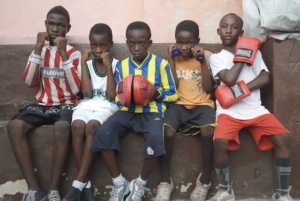 Boxing has always helped those in poverty, especially children. Like other sports, it offers kids in poverty a safe place from a harmful environment. It teaches life skills that help them navigate out of poverty. Additionally, those who are talented enough have started careers in boxing after taking it up while in poverty; notable examples include George Foreman, Mike Tyson and Muhammad Ali. With the sport being so globally popular, impoverished people worldwide have shown how boxing helps fight poverty.
Ghana
Ghana has made significant progress in reducing poverty in recent decades. It boasts one of the 10 fastest-growing economies in the world and the second-largest economy in Africa as of 2018. Despite that, it still ranks 140th out of 189 countries on the Human Development Index and nearly a quarter of the population lives below the poverty line.
However, in the town of Bokum, boxing is a way for children to endure and overcome community violence. Furthermore, boxing helps fight poverty within the community. In makeshift gyms that spill onto the streets, with ropes forming improvised rings, locals turn to boxing for community and support from coaches. Boxing in Bokum is also highly competitive, as evidenced by the eight world champions that come from there. This helps young boxers hone their skills to make money to support themselves.
Boxing-related support in Ghana comes from nonprofits. For example, the Azzumah Nelson Foundation, founded by former Ghanaian world champion Azzumah Nelson, has built sports and education facilities where children can learn sports like volleyball, table tennis and boxing. The organization has also provided rural parts of the country with vocational training and health services.
Mexico
Mexico is a country plagued by significant poverty. Nearly 47 million people live in poverty and around 80% of all national wealth is held by the wealthiest 10% of the population. Poverty has forced many children into violent gang activities, causing those aged less than 25 to make up a third of all murders in Mexico as of 2013.
In response, the Mexican government is turning to boxing to keep its kids off the streets. In Mexico City, 42,000 people gathered for a large-scale boxing lesson led by boxing greats like Oscar de la Hoya and Julia Cesar Chavez. There, President Claudia Sheinbaum Pardo announced the Federal government’s “Stay Away from Drugs. Fentanyl Kills You” campaign and affirmed, “The people of Mexico say yes to education, sport, peace and love.”
The World Boxing Council (WBC) has also used its Cares Program to support and empower young people through its global influence. Whether it be building confidence through its KO Bullying Campaign or virtual seminars at juvenile detention centers during the pandemic, WBC Cares has worked to give children the skills and confidence necessary to avoid drugs and crime. Notably, the Boys and Girls Club CDMX and the State of Mexico offer a safe place for children to participate in developmental activities in the summer. According to the Executive Director, Alejandro Palomino, they served more than 240 young people in the summer of 2024.
Citizens themselves have been supporting their community through boxing. Under a bridge in Ecatepec de Morelos, the Ramirez family built a gym to give children an escape from drugs and crime. By day, head coach Miguel Ramirez sells street tacos and by evening, he trains young boxers, some of whom have gone on to win medals.
Cuba
Since Fidel Castro came to power, boxing and other sports have been a source of national pride for Cubans amid the financial hardship caused by their economic isolation. Their strong national boxing program and uniquely rhythmic style have helped them dominate Olympic boxing for decades and made it widely popular.
The island nation is considered to have some of the worst poverty in Latin America. In 2023, DataWorld reported that Cuba was the most indigent nation in Latin America. In 2024, the Cuban Observatory of Human Rights, an independent organization based in Madrid, reported from a study that almost 90% of the population lives in “extreme poverty.” Of those interviewed, 72% said the food crisis was the biggest problem.
Considering the hard living conditions for many Cuban children, boxing can offer both an outlet and a refuge. Employed by the Cuban government, coaches set up gyms, sometimes in empty lots, to scout for talented children who could move to more advanced national boxing academies. Boxers who are successful enough can even earn money for themselves and their family through professional prizefighting ever since the government lifted its ban in 2022.
Nonprofits also use boxing as a means to help people in Cuba. The Gloves of Hope, for example, collects donations to improve boxing facilities and equipment for women and children in Cuba. Similarly, the International Boxing Association donated 500 pairs of boxing gloves in 2024 to celebrate International Boxing Day.
Conclusion
Boxing in these countries is just one example of the positive effect sports can have for children, as it helps in the fight against poverty. Anytime children experiencing poverty engage in an activity that makes them healthier and stronger, mentally and physically, they give themselves a better chance at a brighter future. Furthermore, they’re also given a break from their harsh living conditions to have fun. Whether boxing or something else, sports should be shared with impoverished communities.
– Seth Pintar
Seth is based in La Jolla, CA, USA and focuses on Business and Politics for The Borgen Project.
Photo: Wikimedia Commons
