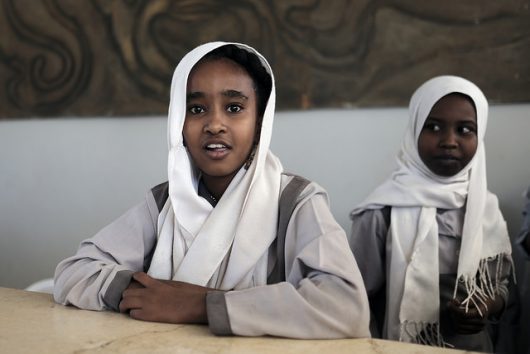
For those who are poor or illiterate, understanding and using legal services is often difficult and preventative from obtaining justice. Since 2008, the United Nations Development Programme (UNDP) has worked with the Ministry of Justice to provide free legal aid in Egypt for the impoverished and illiterate, establishing 35 Legal Aid Offices as of 2016.
Free Legal Aid in Egypt
This project focuses on disputes in family courts and handles cases that do not require an attorney. Without this help, those who are impoverished generally cannot afford legal services and the illiterate do not have the skills to successfully fill out the required paperwork. These two populations often intersect, as the poor are more likely to be illiterate.
Financed by UNDP and Swedish International Development Agency (SIDA), over 50,000 cases in Egypt have now been assisted by free Legal Aid Offices.
The project also trains staff, holds roundtables for family court judges and assists with digitizing family court records. Approximately 17 training sessions and workshops for family court judges have been organized, reaching over 500 judges and legal aid employees.
Dispute Settlement offices have been upgraded as well, and employees have received training on dispute settlement skills, child rights and personal status laws. Additionally, efforts have been made to influence lawmakers to amend laws that would make the processing of cases more efficient and lead to cases being resolved more quickly.
New Goals, New Connections
Beginning in 2013, new goals were added to the project after an evaluation by an independent consultant of the free legal aid in Egypt. These goals include:
- Developing adequate training programming
- Improving court and case management
- Modernizing hotlines in order to get feedback
- Increasing dissemination of legal information
- Designing outreach programs for both literate and illiterate women
The Ministry of Justice is working to establish a central electronic database of court decisions to link electronically to Egypt’s national bank. This connection would make payments awarded by the courts easier to collect.
In December 2014, UNDP, the Egyptian Ministry of Justice, the National Center for Judicial Studies, and the French Cultural Center in Egypt organized a workshop for legal aid employees. This workshop was “to strengthen participants’ knowledge of French legal framework for family mediation and introduce practical tools for mediation based on international best practices and relevance to local family courts.”
Legal Aid in Egypt Empowers Egyptian Women
Approximately one million cases are filed in Egyptian family courts each year, and 80 percent of those are brought by women. Therefore, the UNDP’s legal aid in Egypt is often for women in desperate need of legal services. In fact, over 70 percent of the 50,000 cases handled by the project were filed by women.
Without this support, women — particularly poor and illiterate women — often do not have the resources to settle marital or family disputes. Male family members or spouses can often get away with violent behavior or criminal acts if the woman they’ve harmed is barred from legal aid by a system not amenable to vulnerable populations.
Incidents of Personal Distress
For example, “Yasmin” is an Egyptian woman who faced legal difficulties after her ex-husband kidnapped her oldest daughter. She went to the court on multiple occasions, unable to find a resolution to this problem. However, with the free legal services provided by UNDP, Yasmin was finally able to file her claim in the family court system.
Another woman, Omaima Abdel Khaleq, utilized free legal aid in Egypt to file a domestic violence case against her husband. She explains, “The legal aid office made me aware of what exactly I should do instead of being lost among lawyers.”
Situations like these are not uncommon for women, and the project’s Legal Aid Offices help women complete the required paperwork, as well as provide legal advice about their rights and claims.
Helping the Impoverished and Illiterate
If an individual is illiterate, they are far less likely to be knowledgeable about the laws that protect them (or the person they wish to file a claim against). Without the help of an oftentimes unaffordable attorney or legal services, these people will not be able to access the information they need to correctly file a claim and obtain justice.
Project manager Gihane El Batouty states, “We are helping people themselves — and women themselves — with their legal rights.” UNDP wants to continue to grow this project, as it has become essential to helping the impoverished and illiterate, many of whom are women, access legal aid in Egypt.
Across the globe, UNDP supports similar initiatives in 54 other countries. This support reflects the organization’s commitment to making legal services available to vulnerable populations.
– Sara Olk
Photo: Flickr

The Development of South Asia Through Integration
South Asia is considered one of the least integrated regions across the globe; yet in recent years, international organizations, such as the World Bank, are implementing strategies to unite the nations economically.
Understanding South Asia
South Asian countries consist of Afghanistan, Bangladesh, Bhutan, India, Maldives, Nepal, Pakistan and Sri Lanka. South Asia is considered one of the fasting growing regions within the world today, and the region is home to two very fast-growing economies.
According to the World Bank, the development of South Asia is projected to increase from 6.9 percent to 7.1 percent in the upcoming year.
Bhutan, alone, is currently the fastest growing economy — the nation reports that it will grow at a staggering annual rate of 11.1 percent. India is also one of the fastest growing economies as well, with a growth rate at about 7.73 percent from 2017-2019.
The World Bank emphasizes the importance of cooperation and trade among South Asia, and they believe that the growth rate is predicted to increase if these nations work together in harmony.
Path to Progress
Regional, economic entwinement is the way in which development of South Asia progresses — the World Bank recognizes such measures and has initiated plans in order to unify this region.
As one of the first steps, the World Bank brought approximately 100 students together at the Fourteenth South Asia Economics Students’ Meet (SAESM). Economic undergraduates discussed their academic and experimental research about regional integration and its advantages.
They also explained how to attain economic prosperity through cooperation and trade, and students developed long-lasting friendships that should unequivocally encourage future relations among South Asian countries.
‘One South Asia’
Not only has the World Bank encouraged millennials, but they also have a twofold program called “One South Asia,” which directly forms connections among South Asian countries. The first objective is technical assistance, which will offer economic opportunities to strengthen trade connections. The second goal is to increase conversation about regional integration and local investments.
They are also trying to work with both the public and private sectors. The development of South Asia begins at the engagement of all levels of the economy.
There has been many obstacles to achieve “One South Asia,” yet the World Bank is determined to merge these nations together so they are successful economically, politically and socially. The development of South Asia as a whole will be difficult, yet it is possible and can occur if the region continues on this trajectory.
The World Bank’s Influence and Steps to Development
The World Bank has many projects within South Asian nations — particularly Afghanistan, Bangladesh, Nepal, Sri Lanka and Pakistan — to improve their economies individually. Most of these initiatives create jobs and opportunities for their citizens.
Regional integration is also crucial to the development of South Asia. The only way to reach prosperity is for countries to form a union — if South Asia mirrored the European Union, the opportunities for growth within each nation are endless.
This is a challenge, yet if international organizations, governments and the citizens of South Asia work tirelessly, they will surely reach their Sustainable Development Goals.
– Diana Hallisey
Photo: Flickr
How the Media Misrepresents South Sudan
According to most of the international media coverage, the situation in South Sudan is hopeless. When it became the 54th country to join The African Union on July 11, 2011, there was hope that the decades of violence and poverty that had plagued the southern end of Sudan would become a memory. But, two years into South Sudan’s formation, a civil war broke out between the country’s two most powerful politicians–President Salva Kiir and his former Vice-President turned-rebel-leader Riek Machar. The war has been ongoing.
How the Media Misrepresents South Sudan
Despite the problems that plague South Sudan, there has also been a lot of good news coming out of the country; however, the public rarely hears about it. This is because of how the media misrepresents South Sudan. The international media is more likely to focus on the tragic than on the uplifting.
Most outlets have not covered the all-woman police unit from Rwanda that was just sent to South Sudan as part of The U.N. peacekeeping mission or American actress Ashley Judd’s recent visit to a maternity hospital in a U.N. camp in the country to empower women who have been victims of sexual assault. Instead, the media misrepresents South Sudan by pumping out stories that resort to a familiar narrative: tribal groups fighting and killing one another.
Often, articles are filled with stereotypes and simplistic generalizations. For much of the world, the only representation or knowledge of the Sudanese is of suffering. For example, one recent article in The Guardian is titled: “Born out of Brutality, South Sudan, the World’s Youngest State, Drowns in Murder, Rape and Arson.” The problem with this type of language is that it can make the reader feel helpless, unable to enact change.
Sensational headlines also dehumanize the people behind the images. While the horrors that the South Sudanese are facing must be recognized, it is equally important to acknowledge the moments of hope, the small victories and the people who are trying to rebuild their lives amid the chaos and violence. Here are two recent events in South Sudan that many people haven’t heard about due to how the media misrepresents South Sudan.
Two Important Positive Events That Took Place in South Sudan
On June 28, President Salva Kiir sat down at the capital with his former vice-president and the country’s largest rebel group leader, Riek Machar. It was their first meeting in two years. After five years of civil war, they announced a permanent cease-fire. While the ceasefire agreement has not been altogether effective, (fighting resumed soon after it was implemented), this agreement has other benefits that can help the South Sudanese people.
Most importantly, the agreement allows humanitarian aid to resume, which has slowed in recent years in part due to the fact that South Sudan is one of the most dangerous places in the world to be an aid worker. The U.N. Humanitarian Response is calling for 1.72 billion in aid for South Sudan in 2018. As of July, donor countries have already contributed $706 million.
In May, over 200 children were released by armed groups in Pibor County, Jonglei, bringing the total number of children released up to 806 since the beginning of 2018. Many of these children were child soldiers who are now receiving medical and psychological care. It is expected the in the upcoming months that more than 1,000 children will be released.
Mahimbo Mdoe, UNICEF’s Representative in South Sudan, said that “Every time a child is released and able to return to their family, it’s a source of great hope – hope for their future and for the future of the country.” The challenge now is how to reintegrate these children into civilian life and create opportunities for them to succeed in an unstable country with limited employment and educational opportunities.
Ignoring or glossing over the good news is a good example of how the media misrepresents South Sudan. And in doing so, the media fails to acknowledge hopeful events like the two listed above that may lead to peace. In the coming months, it will become apparent whether or not Kiir and Machar’s agreement holds any weight. Regardless of the result, fair media coverage of these events along with coverage on the way people are making a difference in the country is crucial to the public’s understanding of what is going on in the country.
– Evann Orleck-Jetter
Photo: Flickr
7 Reasons Why Cooperatives Are Important To Poverty Reduction
Cooperatives are critical to reducing poverty. All cooperatives, social or economic, are mechanisms that ensure the growth and prosperity of communities. In developing and transitioning countries that lack access to capital, education, and training, cooperative structures allow communities to pool together their resources to solve problems, identify common goals and target the causes and symptoms of poverty.
What Are Cooperatives?
Cooperatives, or co-ops, are organizations of all types that address a wide range of issues — from food producers and consumers in sub-Saharan Africa, to credit and hybrid cooperatives all around the globe.
Anytime people have common concerns, face similar struggles or are looking for solutions bigger than they alone can accomplish, cooperatives offer an answer via strength in numbers. This is why cooperatives are important to poverty reduction.
When Did Cooperatives Begin?
Co-ops date back to the 1840s when the Rochdale Society of Equitable Partners came together after losing their jobs to industrialization. This group decided to band its resources together and open a store that provided goods they all needed, but couldn’t afford on their own.
Out of their individual experiences, we were left with the Rochdale Principles — a set of operations still in use today that helped the pioneering group manage the realities of poverty in an organized and productive manner.
What Are Cooperatives Core Principles?
The success of co-ops depends upon seven core principles of cooperative development:
More than 760 million people around the world are a part of the cooperative movement. Here are seven reasons why cooperatives are important to successful poverty reduction.
7 Reasons Cooperatives are Important to Poverty Reduction
Empowerment and Collaboration
Co-ops organize all over the world because they can help in almost every circumstance. Both developing and developed countries depend on cooperatives because they are an empowering model that promotes collaborative social change.
While foreign aid and investments drastically help impoverished communities, external remedies are only half the battle. Co-ops provide a grassroots initiative and social structure to address all symptoms of poverty.
Cooperatives also make aid and assistance all the more powerful. With strong communities and the right foreign assistance, eradication of extreme poverty becomes all the more feasible.
– Joseph Ventura
Photo: Flickr
Cape Town: Can ‘Day Zero’ Be Avoided?
Cape Town, South Africa has experienced a drought for the last three years, leading up to what officials are calling ‘Day Zero,’ or the day the city will turn off a large portion of its tap water and turn to rationing the remaining water among citizens. However, water shortage issues began as early as 1995 with little action from the city to remedy the situation.
Water Crisis
What happened in 1995 that caused a crisis over two decades later? The population of Cape Town began increasing and has steadily increased by over three-quarters of its previous population. Fortunately, this multiplication alone was not the cause of the water crisis; rather, it was population growth paired with little increase in water storage.
The city failed to compensate a growing population to its water usage, and while this has made a significant impact on the amount of water in Cape Town, the city has still been able to maintain reasonable water levels despite a lack of added water storage facilities.
This success is primarily due to plentiful rainfall during the monsoon seasons, which may also be why Cape Town has previously failed to increase its water storage for so many years.
Restrictions and Rations
Unfortunately, a drought began in South Africa in 2015 that severely limited the amount of water available to citizens, especially those in Cape Town.
The drought brought to light the water storage issue for Cape Town officials who began urging citizens to conserve the remaining water. They initially asked that each citizen use approximately 87 liters of water before decreasing the amount to a mere 50 liters, or just over 13 gallons, daily.
The South African government has created a rationing system to be implemented when the water levels decrease to a low enough level. The day this occurs is the day referred to as ‘Day Zero.’ However, in the meantime, the most energy is being placed into reminding citizens to continue to reduce their water usage.
Applications and Online Services
In light of the water crisis, the University of Cape Town has developed a series of cell phone applications that will aid in water conservation. The first is a free application called ‘DropDrop.’
DropDrop allows users to track water usage in real time, helping citizens ensure that they are staying within the city’s new water restrictions. The app is especially useful in areas where regular access to the internet does not exist due to the application’s offline nature after initial download.
Among the services created for Capetonians during the water crisis is an organization, Picup. The group started with the goal of quickly shipping water to Cape Town residents, and now allows Capetonians to order bottled water and receive it to one’s home within 24 hours.
The water can be purchased in two order sizes, with the smallest being 30 liters with an affordable price tag of around 176 Rands, or approximately $13.
City Initiatives
Among the initiatives implemented to conserve water in Cape Town is the initiative started by Cape Town officials that monitors household water usage. The initiative also awards certificates and name recognition on the city website for households showing a 10 percent or higher decrease in water usage.
The city also gives daily updates on water levels for surrounding dams in order to encourage Capetonians in their conservation efforts.
Moving Forwards
Despite the outstanding circumstances Cape Town has faced over the last few years, the future looks bright. With a strong community making huge lifestyle changes to conserve water, the city’s water basins are filling back up and allowing citizens to be a part of a community survival story.
The water crisis in Cape Town has proved the city’s growing wisdom and trendsetting environmental responsibility. This growth has not only set an example for the world to follow, but it has also been the first to prove that any inescapability, even one as drastic as ‘Day Zero,’ can be overcome.
– Alexandra Ferrigno
Photo: Flickr
Women in the Workplace in India: The Secret to Development
India is the world’s second largest populated country with over 1.3 billion people living within its borders. Of these 1.3 billion, 60 percent live in poverty. Indian poverty is further exacerbated by a growing income inequality. According to the British charity, Oxfam, only the top 10 percent of people in India own the majority of the country’s wealth (80 percent). This has real-world consequences; three out of every four Indians still live in small rural villages, and seven out of twenty are illiterate. These statistics present serious challenges for India’s development.
If the majority of India’s population is too poor to buy consumer goods, the economy will not be able to grow as quickly. Complex as the issue of poverty in India may seem, there is one relatively simple and effective solution; fully incorporate women in the workplace in India.
How Women in the Workplace in India Will Help the Economy
According to Catalyst, an international nongovernmental organization (NGO) that works to represent women’s interests in the workplace, women access higher education in India at the same rates as men (27 percent). However, the labor statistics are a different story. Only about 29 percent of Indian women work compared to 82 percent of Indian men. This leaves the Indian economy at a developmental disadvantage. If the rate of women in the workplace in India jumped to a mere 40 percent by 2025, India could add $700 billion to its GDP.
Unfortunately, according to The Economist, instead of increasing, the rate of female participation in India’s labor force has been decreasing in recent years. Since 2005, India’s labor force has dropped at least nine percentage points, despite overall population growth. This leaves India with one of the largest untapped worker populations in the world. If Indian women worked just as often as men, the nation would have over 200 million extra workers. According to The International Monetary Fund, this shift would grow the nation’s economy by 27 percent, effectively making India a developed country.
Why Women in India Are Not Working
There are several factors influencing the drop in women in the workforce. Firstly and primarily, there is the issue of cultural bias against women working. In India, especially after the marriage, most women are expected to remain in the home. In fact, women working is considered a mark of a lower social status. This is why, as a whole, as Indian households become wealthier, fewer women are participating in the workforce.
Secondly, there is the issue of maternal responsibility. Indian mothers are expected to shoulder the burden of household duties on their own. Employers have to provide 26 weeks of paid maternity leave, but there is have no obligation at all to provide paternity leave. On top of this, employers are deterred by the requirement to provide childcare for women returning to work. When combined with the high expectation of caring for the family, these factors create a “motherhood penalty” for working women.
Finally, regardless of gender, many traditional Indian jobs are disappearing because of industrialization. Because of Indian law, unlike in other developing countries, they aren’t being replaced by women-friendly factories. This scarcity further reduces the opportunities for women in the Indian workplace. A 2012 poll found that when jobs are harder to come by, 84 percent of Indians believe men are more entitled to have them.
How India Is Working To Include Women in the Workforce
The obstacles created by culture, politics and the economy may seem insurmountable, but various organizations have already been putting forth various solutions. The Prime Minister, Narendra Modi launched two programs on the anniversary of former, late, female leader Jayalalithaa. One provides working women with scooters, making their commutes to work easier and safer; the other plants 70 lakh trees to honor the 70 years since Jayalalithaa’s birth.
The Prime Minister also launched Make in India (2014) and Startup in India (2016) in order to not only invest in the people of India by helping to fund small businesses but also to provide jobs that these businesses would bring to India. Both of these initiatives provide opportunities for women to enter the workforce.
Furthermore, another government organization, Women Entrepreneurship Platform (WEP), was launched to encourage women’s participation in business by offering support and collaboration with industry partners while NGOs such as CARE India are mobilizing to support the country’s working women by empowering individuals to be role models for their communities.
In the future, in order to ensure the development of these organizations, India should continue to work to change the social norms that have surrounded women regarding work and maternal responsibilities. The Indian government should look deeply into their development plans and aid working women by changing policies that disproportionately harm them. Only when there is a more balanced amount of women in the workplace in India, can the country develop fully.
– Lydia Cardwell
Photo: Pixabay
Unlocking Legal Aid in Egypt Changes Lives
For those who are poor or illiterate, understanding and using legal services is often difficult and preventative from obtaining justice. Since 2008, the United Nations Development Programme (UNDP) has worked with the Ministry of Justice to provide free legal aid in Egypt for the impoverished and illiterate, establishing 35 Legal Aid Offices as of 2016.
Free Legal Aid in Egypt
This project focuses on disputes in family courts and handles cases that do not require an attorney. Without this help, those who are impoverished generally cannot afford legal services and the illiterate do not have the skills to successfully fill out the required paperwork. These two populations often intersect, as the poor are more likely to be illiterate.
Financed by UNDP and Swedish International Development Agency (SIDA), over 50,000 cases in Egypt have now been assisted by free Legal Aid Offices.
The project also trains staff, holds roundtables for family court judges and assists with digitizing family court records. Approximately 17 training sessions and workshops for family court judges have been organized, reaching over 500 judges and legal aid employees.
Dispute Settlement offices have been upgraded as well, and employees have received training on dispute settlement skills, child rights and personal status laws. Additionally, efforts have been made to influence lawmakers to amend laws that would make the processing of cases more efficient and lead to cases being resolved more quickly.
New Goals, New Connections
Beginning in 2013, new goals were added to the project after an evaluation by an independent consultant of the free legal aid in Egypt. These goals include:
The Ministry of Justice is working to establish a central electronic database of court decisions to link electronically to Egypt’s national bank. This connection would make payments awarded by the courts easier to collect.
In December 2014, UNDP, the Egyptian Ministry of Justice, the National Center for Judicial Studies, and the French Cultural Center in Egypt organized a workshop for legal aid employees. This workshop was “to strengthen participants’ knowledge of French legal framework for family mediation and introduce practical tools for mediation based on international best practices and relevance to local family courts.”
Legal Aid in Egypt Empowers Egyptian Women
Approximately one million cases are filed in Egyptian family courts each year, and 80 percent of those are brought by women. Therefore, the UNDP’s legal aid in Egypt is often for women in desperate need of legal services. In fact, over 70 percent of the 50,000 cases handled by the project were filed by women.
Without this support, women — particularly poor and illiterate women — often do not have the resources to settle marital or family disputes. Male family members or spouses can often get away with violent behavior or criminal acts if the woman they’ve harmed is barred from legal aid by a system not amenable to vulnerable populations.
Incidents of Personal Distress
For example, “Yasmin” is an Egyptian woman who faced legal difficulties after her ex-husband kidnapped her oldest daughter. She went to the court on multiple occasions, unable to find a resolution to this problem. However, with the free legal services provided by UNDP, Yasmin was finally able to file her claim in the family court system.
Another woman, Omaima Abdel Khaleq, utilized free legal aid in Egypt to file a domestic violence case against her husband. She explains, “The legal aid office made me aware of what exactly I should do instead of being lost among lawyers.”
Situations like these are not uncommon for women, and the project’s Legal Aid Offices help women complete the required paperwork, as well as provide legal advice about their rights and claims.
Helping the Impoverished and Illiterate
If an individual is illiterate, they are far less likely to be knowledgeable about the laws that protect them (or the person they wish to file a claim against). Without the help of an oftentimes unaffordable attorney or legal services, these people will not be able to access the information they need to correctly file a claim and obtain justice.
Project manager Gihane El Batouty states, “We are helping people themselves — and women themselves — with their legal rights.” UNDP wants to continue to grow this project, as it has become essential to helping the impoverished and illiterate, many of whom are women, access legal aid in Egypt.
Across the globe, UNDP supports similar initiatives in 54 other countries. This support reflects the organization’s commitment to making legal services available to vulnerable populations.
– Sara Olk
Photo: Flickr
Electricity Coverage Rising in Africa
It is hard to imagine life without electricity. In the American standard of living, electricity pervades every aspect of a person’s life, from food storage to entertainment and everything in between. In Africa, however, only 30 percent of people have access to electricity.
Power Africa
Power Africa is a USAID agency that aims to provide people in Africa with access to electricity. They plan to make 60 new electricity connections and generate 30,000 more megawatts (MW) of electricity across the continent by 2030. The goal is to do this by harnessing the sun, wind, lake water, and natural gas to power rural areas that do not have access to electricity.
Power Africa tracks its progress on various projects by tracking business transactions with African power companies. For example, in 2016, they made a deal with the U.S.-Africa Clean Energy Finance Initiative (ACEF), the Overseas Private Investment Corporation (OPIC), and the U.S. Department of State to provide $30 million worth of financing of 32 renewable energy projects in 10 countries in Africa. With Power Africa’s help, 90 business transactions have been completed and 25 of Africa’s 55 countries now have access to some form of electricity. Examples from Power Africa actions are described in a text below.
Mali
Although the demand for electricity in Mali is currently greater than the supply, that does not mean that there is no supply at all. Electricity in Mali currently comes from mostly hydraulic and thermal energy (55 and 44 percent, respectively). Power Africa plans to help Mali produce an additional 80 MW of hydroelectric energy, more than 300 MW from biomass, and unlimited MW from the sun.
Electricity usage has already gone up in Mali. Major mining companies increased their energy consumption by 136 MW (189 percent) between 2008 and 2011. In 2016, the government passed a law mandating partnerships between public and private electric companies in order to increase MW production. The ultimate goal is to make an additional 20,000 MW of energy and distribute it to 50 million people by 2020.
Namibia
Currently, Namibia gets most of its electricity from power grids in South Africa, Zimbabwe, and other nearby countries. However, electricity demand in these countries is way higher than supply, forcing Namibia to find ways to generate its own electricity. As of 2008, Namibia can only generate 393 MW from 3 stations, while the national demand is 533 MW.
One of these stations, the Ruacana power station, is dependent on the flow of water from the Kunene River, which flows out of Angola. Another station, the coal-run Eck power station, is costly to operate and maintain. Eck, along with the oil-based Paratus power station, is only used for short-term peaks in electricity demand.
For the time being, Namibia still needs to have its electricity needs met by its neighbors. The Caprivi link is a transmission line that connects Namibia’s power grid to those in Zambia and Zimbabwe. This provides the country with an additional 600 MW, fulfilling Namibia’s electricity needs. In 2007, Namibia consumed 3.6 TWh of electricity.
Tanzania
Most of Tanzania’s electricity (90 percent) comes from biomass. This has resulted in mass deforestation and, thus, is far from ideal for the ecosystem. Only 18.4 percent of Tanzanian citizens have access to electricity in any form. Currently, the country is financially incapable of extending the power grid into all rural areas.
In 1975, the government founded the Tanzania Electric Supply Company Ltd (TANESCO). TANESCO has a nationwide monopoly on electricity production and distribution. However, the Ministry of Energy and Minerals (MEM) is trying to end this monopoly by allowing companies to get licenses to generate, transmit and distribute electricity. The Rural Energy Agency (REA) is slowly getting electricity into rural areas. With these services, the government aims to make electricity available to everyone in Tanzania, and one can see electricity coverage rising from their efforts.
Conclusion
In the modern day, electricity seems like a basic ingredient for life that it seems like everyone should have it. The people in Power Africa agree and we can see electricity coverage rising in Africa as a result of their efforts. Mali is making more energy from more sources than ever, Namibia is starting to make its own electricity, and Tanzania is spreading electricity out as far as it can. Africa is becoming more and more electrified, reaching the ultimate goal- provide access to electricity for everyone on the continent.
– Cassie Parvaz
Photo: Flickr
Combatting the Currency Crisis in Argentina
Argentina has experienced quite a few economic struggles in the past decade. The country now faces its fifth recession in the past ten years and its currency, the Argentine peso, has lost a third of its value. Now the lowest performing currency in the world, the currency crisis in Argentina imposes the new challenge to revamp its peso and bypass the friction of its economy.
Who Is Affected?
Virtually everyone in Argentina is affected by this crisis. Business owners who expected to succeed in their business endeavors, due to the nature of Argentine markets and demand, are evidently experiencing a consumer drought.
Moreover, current negotiation details between the International Monetary Fund (IMF) and Argentina’s government have consequences for the public. Infrastructure projects will be postponed, subsidies cut, transfers to the provinces reduced and the federal payroll shrunk. Social unrest has followed already as the General Confederation of Labour, the greatest trade-union group in Argentina, protested against the government’s economic policies on June of 2018.
How Did the Crisis Commence?
Wolf Richter, a writer who featured on Business Insider, described the origin of the currency crisis in a simple yet concise fashion. Lending money to Argentina’s government is a tricky venture since lending to the government in its own currency devastates their peso and lending in a foreign currency leads to defaulting of the loan.
The currency crisis in Argentina started from reasons outside of the country’s control as well as the institutional reactions to them. Argentina underwent the greatest drought in 50 years at the beginning of this year, specifically affecting the harvesting of two export crops: maize and soybeans. A stronger U.S. dollar and Treasury yields led to the risk aversion of international investors, leaving riskier assets. Thereafter, Argentina’s peso, alongside Mexico’s peso, Brazil’s real, Turkey’s lira and Russia’s ruble, struggled.
Following these uncontrollable forces, the Central Bank of Argentina raised interest rates to a staggering 40 percent in the hope of helping the Argentine peso. The endeavor did not work as planned. Argentina’s president Mauricio Macri and his administration took a $50 billion loan from the IMF. President Macri collaborated with senators, governors and other leaders in order to get the country on board with the plan. Nevertheless, the public is skeptical because of Argentina’s past experiences with the IMF, such as the 1990s Convertibility Plan that fell through and spiraled into one of the greatest economic crises for Argentina.
Possible Solutions
Solutions to this problem that directly involves Argentina and international organizations, proposed by different institutions, are as follows:
The currency crisis in Argentina is undergoing a tug and pull from differing sides. The public keeps a retrospective mindset as they remember the past events of the 1990s and early 2000s. On the other hand, President Macri holds onto a prospective plan, trying to help Argentina climb out on top and even willing to take a $50 billion loan from the IMF. There are a number of solutions that have been drawn out. Although Argentina struggles to find a national consensus, the gears are in motion to eradicate this crisis and past mistakes are increasingly considered as citizens politically mobilize.
– Roberto Carlos Ventura
Photo: Flickr
Thought-Provoking Facts about Poverty in the UK
Although the United Kingdom (U.K.) is one of the largest economies in the world, the persistent battle with poverty is one that has plagued the nation for decades. Both the need for work and the average income level are nearly stagnant with little room for growth.
Persistent poverty is defined as experiencing low income continually for three or more years. For solutions to become clearer, the general public must become acquainted with the top 10 facts about poverty in the U.K.
Top 10 Facts About Poverty in the U.K.
A Bright Future
The United Kingdom continues to struggle in the terms of its poverty, but understanding these top 10 facts about poverty in the U.K. creates stepping-stones to a brighter future and helps alleviate people out of poverty.
– Tresa Rentler
Photo: Flickr
Time for Celebration: Paraguay Successfully Eliminates Malaria
Paraguay has successfully eliminated malaria, making it the first country in the Americas to accomplish such a feat in nearly 50 years.
Victories Against Malaria
The country’s success has been attributed to its ability to detect malaria cases in a timely manner and discern whether or not the cases had been spread inter or intranationally. Between 1950 and 2011, Paraguay developed and implemented programs and policies meant to both control and eliminate the disease; the country registered its last case of P. Vivax Malaria, the most frequent cause of recurring malaria, in 2011.
After 2011, a five-year program focusing on case management, community engagement and public health education was launched in order to prevent transmission and prepare for official “elimination certification.”
Since the program’s completion in 2016, the Ministry of Health has launched a three-year initiative meant to further train Paraguay’s healthcare workers in regards to malaria. This prioritization will inevitably strengthen the country’s ability to promptly detect, diagnose and treat new malaria cases, as well as address the ongoing threat of “malaria importation.” The country has also prioritized controlling and minimizing mosquito populations within its borders.
New Directions and Prioritizations
The elimination of malaria provides economic leverage for Paraguay’s impoverished population. The significant financial burden of approximately $5 a day per malaria case, according to a study published by the U.S. National Library of Medicine, will no longer plague Paraguayan families. Such relief will help enable them to direct their money towards other essentials, such as food and education.
Poverty affects almost 40 percent of Paraguay’s rural population, as opposed to only 22 percent of its urban population. Peak malaria infection often coincides with harvesting season, severely impacting the amount of food rural families are able to produce.
Malaria cases are typically concentrated in said rural areas, where many lack the resources and public health education to adequately detect or treat the virus. The immediate situation of these rural communities is only impacted by instances of extreme flooding, which act as a breeding ground for mosquitos (potential carriers of the virus).
Points of Impact
Malaria primarily occurs in poor, tropical and sub-tropical regions of the world, most of which don’t have adequate access to primary care facilities – in many of the countries it’s present, malaria is the primary cause of death.
The virus is the result of a parasite carried by mosquitos. The most common symptoms of malaria include chills, fever and other flu-like symptoms. Left untreated, the disease can be fatal.
The groups most vulnerable to high levels of malaria transmission include young children and pregnant women. Malaria caused approximately 216 million clinical cases and over 440,000 deaths in 2016 alone.
Future Goals to Successfully Eliminate Malaria
The success of these programs provides a blueprint for other countries to successfully eliminate malaria themselves. Paraguay’s situation contrasts with those of other countries within the Americas, where the increase in malaria cases is greater than in any other region of the world. In fact, nine different countries reported malaria case increases of at least 20 percent between 2015 and 2016.
As a whole, however, Latin America witnessed over a 60 percent decrease in malaria cases between 2000 and 2015. As treatment and surveillance progress, many other countries will follow Paraguay in eliminating the virus. Argentina is expected to be certified later this year, and other malaria-free Latin American countries include Ecuador, El Salvador and Belize.
– Katie Anastas
Photo: Flickr