 Though major improvements have stimulated Brazil’s economy over the past few decades, the country still faces a major poverty deficit. While the country does have one of the top 10 economies in the world, poverty in Brazil is still a major issue. The percentage of the population that lives beneath the poverty line struggles to make it from one day to the next. Four components that influence poverty in Brazil are the pertinent numbers, the unemployment situation, the influence on housing and the current global lockdown’s impact.
The Numbers
With more than 200 million citizens, Brazil has the fifth largest population in the world. While the poverty rate is now impressively less than 10%, 16 million Brazilians still live unsustainable lives.
Many of the families living in poverty do not have access to education, clothing, clean water, food or fuel. Kim Lango, a humanitarian who has spent a number of years helping to relieve poverty in Brazil, told The Borgen Project in an interview that “We once drove a Pre-Med student home one evening only to discover his home only had three walls….” On their way to the house, Lango passed by dead and wounded people on the streets who were waiting for an ambulance that would only come if the family had sufficient funds.
According to a Getulio Vargas Foundation study, an alarming gap exists between the wealthy and poor, and it is increasing. Marcelo Silva de Sousa and Víctor Caivano state that Brazil ranks with the “most unequal nations in a broader region where the gap between rich and poor is notorious.” During the seven years of the study, the richest Brazilians increased their income by over 8%. However, the income of the poorest population decreased an entire 14%.
The gap shows Brazil’s drastic inequality. In fact, only 10% of Brazil’s citizens earn half of the income in the country.
Lango gave her perspective on some of the reasons for this gap. She first stated that “lack of access to adequate education[…] creates a vicious cycle.” Those living in unsafe and inadequate places often find themselves stuck there due to the rigor and expense of the education system. Lango also said that discrimination plays a significant role in this gap and that many consider poor people unsafe and ones they should not connect with.
While the poverty rates are startling, Lango offers hope: “the most beautiful acts of overcoming will always be from Brazilians helping their own people.”
The government has a welfare program devoted to alleviating poverty. The Family Grant, known as the Bolsa Família, offers a monthly allowance to families in poverty.
Unemployment
Another of the components that influence poverty in Brazil is unemployment. When a major recession hit between 2014 and 2016, the unemployment rate hit 13% and emerged as a major issue contributing to poverty in Brazil. While the unemployment rate had improved somewhat since then, it had yet to recover enough to significantly impact the poverty in Brazil.
Unfortunately, in 2019, Brazil’s unemployment increased to a 12.4% unemployment rate, leaving millions of Brazilians out of work and desperately searching for the means to make money. Still, the available jobs often have an informal and inconsistent nature.
According to Mark S. Langevin, Director of Brazil Works, Brazil has reached a “historic and dismal record” of citizens not contributing to the workforce. Langevin stated that the number is more than 65 million.
Housing
Because of extreme poverty, many Brazilians do not have access to proper shelter, or even shelter at all. In fact, according to Habitat for Humanity, more than 50 million people in Brazil do not have adequate housing. The country requires 6 to 8 million new houses to sufficiently shelter its people.
Habitat for Humanity is working to develop proper housing for those living in the slums. Due to the successful implementation of their programs, Habitat for Humanity is currently working on more than 1,500 houses in Pernambuco, one of Brazil’s states.
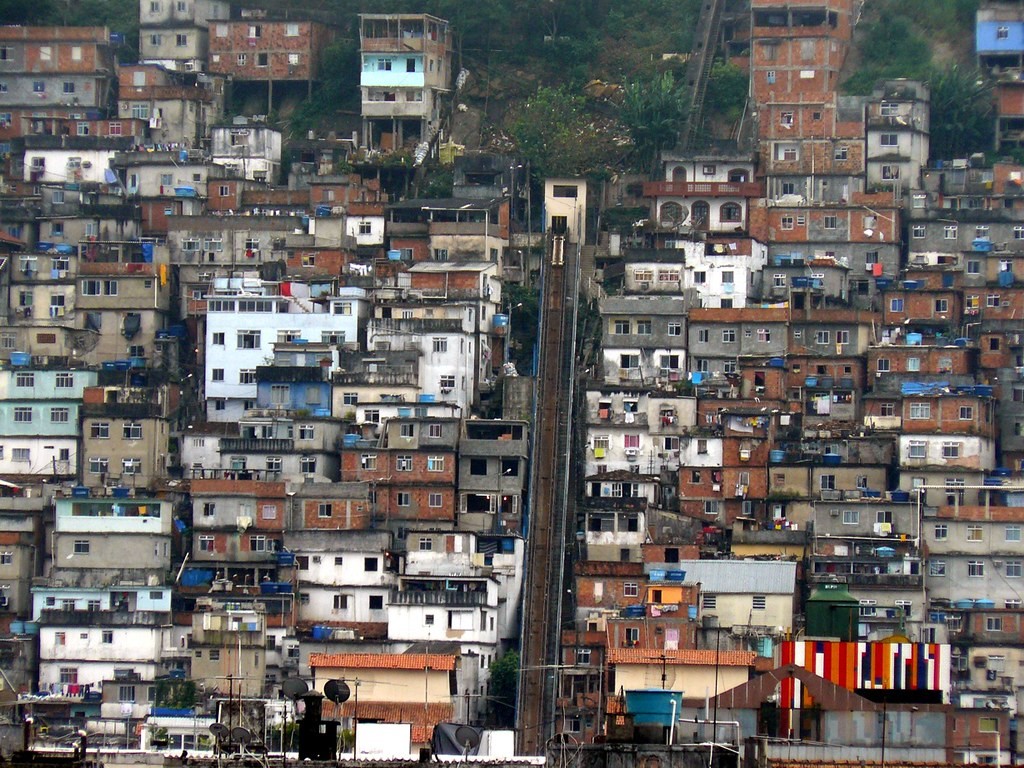
A report determined that the 2010 census revealed that more than 5% of Brazilians live in makeshift settlements called favelas. Brazilians often build favelas using materials that they scavenged. Moreover, these homes often do not have appropriate water access.
The government has been working since 1993 to improve these conditions. During that year, 20% of Brazil’s population lived in favelas, so the Municipality of Rio de Janeiro developed a program to help improve the housing and road access for those who lacked sufficiency in those areas. The program, the Favela-Bairro project, also funded social programs for children.
While some are making efforts to improve the conditions, the poor housing situation remains prevalent.
The Current Lockdown’s Impact
The last of the components that influence poverty in Brazil includes COVID-19’s impact on the country. With the current global lockdown due to Covid-19, poverty in Brazil could increase drastically. There are more than 30 million informal workers who have unprotected jobs that the lockdown now threatens.
The lockdown has come at an unfortunate moment due to social program cuts that came as a result of the recession in 2014. During that time, many workers became sporadically self-employed, which severely weakened the economy.
Humanitarian groups have had to scramble to increase food programs. One of these groups, a Catholic relief group called Caritas, has oriented its focus entirely to providing food.
While those already in poverty or unpredictable work situations are facing an uncertain future, the government has begun to respond to the issue. It adapted the emergency aid fund rules to improve workers’ lives during the shutdowns. The banks have more restrictions and there has been a loan suspension for school funds.
Though the poverty here is vicious, wonderful programs, both governmental and humanitarian, are stepping up to fight the deficit. Hopefully, continued aid and government efforts will eradicate poverty in Brazil in the future.
– Abigail Lawrence
Photo: Flickr

8 Facts About COVID-19 in Romania
Romania, like the rest of the world, is currently dealing with the global outbreak of the virus, COVID-19. The pandemic has affected health services and the economy, disproportionately affecting the poor populations of Romania. In response to the growing pandemic, the government issued ordinances to prevent the spread of the virus. Here are some facts about how Romania is responding to COVID-19.
8 Facts About COVID-19 in Romania
The Romanian hotline is going to help lower-income communities in Romania, like the Romas. These communities do not have access to medical services or technology, like televisions and computers to receive health care information during the COVID-19 outbreak. The Romanian ordinances, along with the hotline, protect the Romanian people not only from the virus but also the economic issues surrounding a pandemic.
– Kaitlyn Gilbert
Photo: Flickr
4 Components that Influence Poverty in Brazil
The Numbers
With more than 200 million citizens, Brazil has the fifth largest population in the world. While the poverty rate is now impressively less than 10%, 16 million Brazilians still live unsustainable lives.
Many of the families living in poverty do not have access to education, clothing, clean water, food or fuel. Kim Lango, a humanitarian who has spent a number of years helping to relieve poverty in Brazil, told The Borgen Project in an interview that “We once drove a Pre-Med student home one evening only to discover his home only had three walls….” On their way to the house, Lango passed by dead and wounded people on the streets who were waiting for an ambulance that would only come if the family had sufficient funds.
According to a Getulio Vargas Foundation study, an alarming gap exists between the wealthy and poor, and it is increasing. Marcelo Silva de Sousa and Víctor Caivano state that Brazil ranks with the “most unequal nations in a broader region where the gap between rich and poor is notorious.” During the seven years of the study, the richest Brazilians increased their income by over 8%. However, the income of the poorest population decreased an entire 14%.
The gap shows Brazil’s drastic inequality. In fact, only 10% of Brazil’s citizens earn half of the income in the country.
Lango gave her perspective on some of the reasons for this gap. She first stated that “lack of access to adequate education[…] creates a vicious cycle.” Those living in unsafe and inadequate places often find themselves stuck there due to the rigor and expense of the education system. Lango also said that discrimination plays a significant role in this gap and that many consider poor people unsafe and ones they should not connect with.
While the poverty rates are startling, Lango offers hope: “the most beautiful acts of overcoming will always be from Brazilians helping their own people.”
The government has a welfare program devoted to alleviating poverty. The Family Grant, known as the Bolsa Família, offers a monthly allowance to families in poverty.
Unemployment
Another of the components that influence poverty in Brazil is unemployment. When a major recession hit between 2014 and 2016, the unemployment rate hit 13% and emerged as a major issue contributing to poverty in Brazil. While the unemployment rate had improved somewhat since then, it had yet to recover enough to significantly impact the poverty in Brazil.
Unfortunately, in 2019, Brazil’s unemployment increased to a 12.4% unemployment rate, leaving millions of Brazilians out of work and desperately searching for the means to make money. Still, the available jobs often have an informal and inconsistent nature.
According to Mark S. Langevin, Director of Brazil Works, Brazil has reached a “historic and dismal record” of citizens not contributing to the workforce. Langevin stated that the number is more than 65 million.
Housing
Because of extreme poverty, many Brazilians do not have access to proper shelter, or even shelter at all. In fact, according to Habitat for Humanity, more than 50 million people in Brazil do not have adequate housing. The country requires 6 to 8 million new houses to sufficiently shelter its people.
Habitat for Humanity is working to develop proper housing for those living in the slums. Due to the successful implementation of their programs, Habitat for Humanity is currently working on more than 1,500 houses in Pernambuco, one of Brazil’s states.
A report determined that the 2010 census revealed that more than 5% of Brazilians live in makeshift settlements called favelas. Brazilians often build favelas using materials that they scavenged. Moreover, these homes often do not have appropriate water access.
The government has been working since 1993 to improve these conditions. During that year, 20% of Brazil’s population lived in favelas, so the Municipality of Rio de Janeiro developed a program to help improve the housing and road access for those who lacked sufficiency in those areas. The program, the Favela-Bairro project, also funded social programs for children.
While some are making efforts to improve the conditions, the poor housing situation remains prevalent.
The Current Lockdown’s Impact
The last of the components that influence poverty in Brazil includes COVID-19’s impact on the country. With the current global lockdown due to Covid-19, poverty in Brazil could increase drastically. There are more than 30 million informal workers who have unprotected jobs that the lockdown now threatens.
The lockdown has come at an unfortunate moment due to social program cuts that came as a result of the recession in 2014. During that time, many workers became sporadically self-employed, which severely weakened the economy.
Humanitarian groups have had to scramble to increase food programs. One of these groups, a Catholic relief group called Caritas, has oriented its focus entirely to providing food.
While those already in poverty or unpredictable work situations are facing an uncertain future, the government has begun to respond to the issue. It adapted the emergency aid fund rules to improve workers’ lives during the shutdowns. The banks have more restrictions and there has been a loan suspension for school funds.
Though the poverty here is vicious, wonderful programs, both governmental and humanitarian, are stepping up to fight the deficit. Hopefully, continued aid and government efforts will eradicate poverty in Brazil in the future.
– Abigail Lawrence
Photo: Flickr
7 Facts About Overpopulation and Poverty
Contemporary understandings of poverty are more holistic, rather than just quantitative measures of income. Considering factors such as health care and education helps broaden the view of poverty and its causes. Here are 7 facts about overpopulation and poverty.
7 Facts About Overpopulation and Poverty
Despite gradually increasing developments, global overpopulation and poverty continue to remain prevalent. Steps such as viewing poverty holistically and working to end the stigmatization and taboo surrounding discussions about overpopulation help further the much-needed improvements for overpopulation and poverty.
– Sarah Wright
Photo: Flickr
7 Facts About Poverty in Bangladesh
About one in four Bangladeshis live in poverty, making poverty in Bangladesh an ongoing fight for the nation. However, there has been significant economic growth and improved education and infrastructure. With international development assistance, poverty in Bangladesh is on a downward trajectory, especially in rural areas. These seven facts about poverty in Bangladesh show the country’s improvements.
7 Facts About Poverty in Bangladesh
These seven facts about poverty in Bangladesh show that efforts to alleviate poverty in the country have been remarkably successful in the past few decades. Still, much work remains essential in order to alleviate poverty in urban areas and bring about continued growth in Bangladesh’s economy, infrastructure and access to food security. However, with continued international assistance and Bangladesh’s commitment to reducing poverty, there is hope that Bangladesh will continue to be a global model for poverty reduction.
– Anita Durairaj
Photo: Wikimedia
Humanitarian Aid During COVID-19 in Algeria
Algeria, a North African country bordering Morocco and Mali, has faced new obstacles from the rapid spread of COVID-19. With one of the highest infected rates in Africa with more than 5,000 cases confirmed, authorities have advised citizens to limit their social interactions. Under these unprecedented times, there are several efforts to combat the spread and promote the well-being of Algeria’s citizens.
The Problem
As stated above, Algeria is facing hardships due to the increased death toll that COVID-19 has left behind. In response, the government has implemented a conditional lockdown where it has modified curfew in order to halt the spread of the virus. However, many have met the increased safety measures with concerns. Because an increasing number of individuals of Arabic descent dominate Algeria, conflicts have arisen in regard to Ramadan, a period of fasting.
One of Algeria’s most prominent politicians, Noureddine Boukrouh, has called for canceling fasting as it “poses a health risk and contributes to the outbreak of COVID-19.” People have met his statements with controversy, yet the country has made no formal precautions.
Algeria is beginning to impose restrictions on sanctuaries as well. For example, authorities have begun closing Mosques, leading followers of Islamic traditions to face difficulty balancing the risk of COVID-19 infections against the weight of religious traditions.
Amidst the controversies, the Algerian government is also having trouble aiding its citizens. With Algeria’s economy being heavily dependent on oil, the sudden price reductions from COVID-19 have hurt the nation. Algeria is now under a reduced budget, meaning that it cannot prioritize its citizens.
As a result, citizens of Algeria have seen food shortages as well as a lack of medical equipment. From Algeria’s budgeting issues, individuals who have the virus are also having trouble in hospitals due to inadequate conditions.
Road to Change
Despite the increased death toll and speculations surrounding the Algerian government, the conditional lockdown has seen positive results. By limiting social interactions, the nation has seen more than 2,000 individuals recovering, leading Algeria’s citizens to become more optimistic about the future.
In addition to the efforts combatting COVID-19, Algeria has received great aid from countries and organizations. Most notably, Chief Mark Lowcock, the U.N. Humanitarian Chief, donated $15 million from the Central Emergency Response Fund.
Another notable contribution was from China; it sent a 13-member Chinese medical team and equipment, worth around $450,000. This team is distributing masks and protective clothing all across Algeria so that citizens could protect themselves better.
Before these contributions, Algeria suffered a shortage of equipment and staffing. Patients in hospitals could not receive treatment effectively and the general public lacked access to goods to protect themselves. Without this aid, Algeria would have seen a dramatic increase in deaths due to its lack of technology and manpower for COVID-19.
To further accelerate this growth, protests by the Hirak that began in late March 2020 are ongoing. The protests have been an attempt to motivate the government to focus on improving conditions. The Hirak is a group of Algerian citizens who have the goal of bringing change to the government’s acts of ignoring the public. Along with the aid from large organizations and countries such as UNICEF and China, the wide distribution of hand sanitization stations and testing kits are continuing.
Volunteer Help
Volunteer doctors have also taken the stage in Algeria. Large teams have established COVID-19 hotlines, and shortly after establishment, they have reached more than 46,000 people. These hotlines provide verbal assistance to patients as well as education to citizens regarding the harsh effects of COVID-19. Algerians battling the virus utilize these hotlines to immediately get aid from doctors.
In addition, volunteers have made strides to assist the majority of the provinces in Algeria; more than 48 have an infectious disease center. Through these newly established centers, volunteers have been able to reach out to thousands of Algerians while pairing patients with doctors.
The Future
Algeria is currently on the road towards improvement. By increasing the number of testing kits, medical equipment and volunteers, the number of recovered patients has grown tremendously.
However, it is evident that Algeria’s government must take the initiative to aid citizens in need. Through fostering the abilities of volunteers and continuing to improve the qualities in hospitals, Algeria has the potential to fully combat COVID-19 while looking out for the well-being of its citizens.
– Aditya Padmaraj
Photo: Pixabay
10 Facts About Education in Japan
10 Facts About Life Expectancy in Slovenia
10 Facts About Life Expectancy in Slovenia
These 10 facts about life expectancy in Slovenia show that the country has a number of issues to address in the area of health. However, life expectancy in this country is relatively high. Good social support as shown by the fact that 92% of people feel they have someone they can turn to in need may be one of the reasons. With increased awareness of the mental and physical health challenges the country faces, Slovenia’s life expectancy will most likely continue to increase.
– Caleb Steven Carr
Photo: Flickr
10 Facts About Sanitation in Colombia
Colombia is a fast-growing country with a population of 49 million. In the last 10 years alone, the population has increased by 5 million people. As a result of the added pressure on the country’s infrastructure, many citizens may not have access to basic water, sanitation and hygiene (WASH) facilities. In recent years, Colombia has been working to increase its population’s access to WASH facilities. The country continues to develop initiatives on how to increase this accessibility. Here are 10 facts about sanitation in Colombia.
10 Facts About Sanitation in Colombia
Despite the improvements, there is still a large number of Colombia’s population that do not have access to safe or basic WASH services, especially when considering the country’s rural communities. Luckily, with the government and organizations continuing to work to improve sanitation in Colombia, a brighter, cleaner future is on the horizon.
– Laura Embry
Photo: Flickr
9 Facts About Sanitation in Eritrea
The land that encompasses the modern-day state of Eritrea is vast and old. The country itself, however, is one of the youngest countries on the African continent. After winning its independence from neighboring Ethiopia in a 30-year-long war of liberation, Eritrea emerged on the world stage as an underdeveloped and rural nation. While Eritrea has dealt with more than its fair share of struggles in its first 30 years of independence, sanitation and water usage continue to challenge communities. Many consider sanitation to be a gateway to development and modernization, and subsequently, Eritrea is taking steps to address this rising national issue. Here are nine facts about sanitation in Eritrea.
9 Facts About Sanitation in Eritrea
These nine facts about sanitation in Eritrea provide a glimpse into the current modernization techniques that the country is pursuing. While Eritrea still has plenty of work to do, thanks to the participation of rural and urban communities alike, sanitation across the country is increasing both in quality and reach.
– Elizabeth Price
Photo: Flickr
COVID-19 in Colombia: 3 At-Risk Groups
Officials have reported 16,295 cases of COVID-19 in Colombia and 592 deaths as of May 19, 2020. In an effort to contain the virus, the government has closed all international travel. It has also recently extended its nationwide stay-at-home order through May 25. Testing is available at the Colombian National Institute of Health facilities.
Most public locations remain closed. Individuals over the age of 70 will need to self-isolate until at least the end of May 2020. Municipal authorities allow one hour per day of exercise, at prescribed times, for individuals ages 18 to 60. Though the virus poses a nationwide public health threat, here are three particularly at-risk groups in Colombia.
COVID-19 in Colombia: 3 At-Risk Groups
COVID-19 in Colombia has undergone rapid growth, bringing economic and social challenges in its train. Now more than ever, it is incumbent upon world leaders to support vulnerable populations in Colombia and help the nation emerge from this world crisis.
– Katie Painter
Photo: Flickr