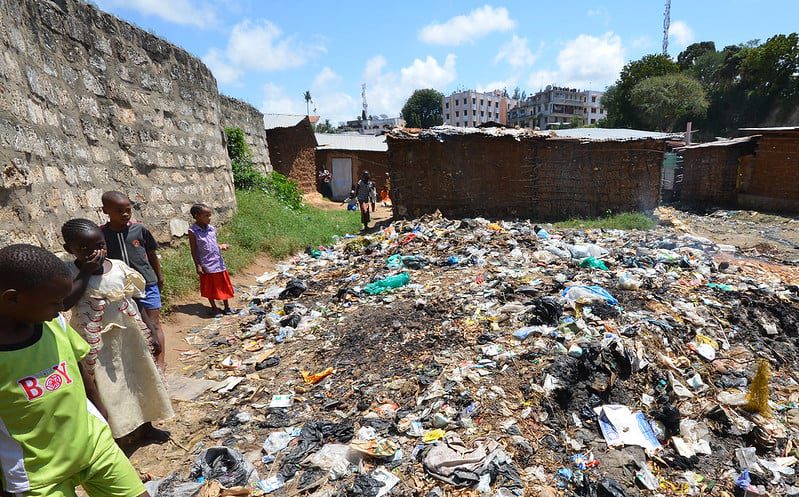
 Kenya, a country bordering Somalia and Ethiopia, has faced increasing obstacles combatting homelessness. With over 2 million citizens fighting homelessness in Kenya, the problem is only worsening. However, newly implemented organizations are seeing rapid improvements through their aid those in need.
The Problem in Numbers
It is estimated that in the near future, the homeless population will rise by over 200,000 people. Of the 2 million Kenyans without proper shelter, over 50% comprise of children. Most of these children spend their lives on the streets, struggling to make ends meet.
It’s important to know that only 2% of the formally constructed houses target lower-income families. This leaves over a million citizens in Kenya without the opportunity to find a home. Adding to the problem, 68% of Kenyans are without land documentation or tenure security which hurts their ability to find a home and house their families.
Leading Causes
A variety of factors have led to the rise in the homeless population. A primary factor is the commercial interests of businesses and other groups, which have displaced hundreds of thousands of Kenyans. Under these severe land shortages, Kenyans must cram themselves in slums, as the cost of land continues to increase. As a result, certain groups may resort to violence as a means of garnering more land. Some communities have reported sightings of Tharaka herders, who often fight others for land. River Naka, a place filled with farmers, was raided by these herders and left hundreds homeless.
Recently, despite the spread of COVID-19, more than 7,000 people from land in Nairobi slums were evicted, forcing them into homelessness. The government believed these individuals were living on “public land” and acted accordingly.
Consequences
Various issues have stemmed from the severe homelessness problem in Kenya. Kenyans who are homeless often only have one meal a day. Malnutrition commonly occurs among homeless youth because of this food shortage. Another problem is the increase in theft as adults and children forced to live on the streets steal money and food to feed themselves. Due to police intervention, thousands of homeless Kenyans face severe consequences in jail.
Another major problem stemming from homelessness in Kenya is HIV/AIDS. With no access to proper medical treatment, the homeless community in Kenya are frequently exposed to the deadly virus.
The Road to Change
There are an estimated 250 organizations in Kenya that look to help combat homelessness in Kenya. One of the more prominent organizations is Habitat for Humanity which provides for the needs of Kenya’s slums. Habitat for Humanity hired numerous volunteers to build affordable housing for low-income families battling homelessness. They promote the idea of homeownership to low-income Kenyans in order to help them find stable housing and therefore escape poverty.
Another successful organization is Kenya Children of Hope, which seeks to rescue homeless children from the streets. In one month alone, Kenya Children of Hope has saved over 300 children, placing them under safe care.
Looking to the Future
Even with hundreds of organizations pitching in to help combat homelessness in Kenya, governmental intervention is key to make more serious progress. The consistent evictions along with the land restrictions increase the prevalence of homelessness.
For Kenya’s government to reach a future with a reduced homeless population, they must act in an empathetic manner in cases of land distribution. They must also prioritize the well being of their citizens in the COVID-19 pandemic. If the numerous organizations looking to end the homelessness in Kenya were to receive substantial aid from the government, hundreds of thousands of Kenyans would greatly benefit.
– Aditya Padmaraj
Photo: Flickr

Tennis in Poverty-Stricken Countries
Around the world, people have always considered tennis to be an aristocratic sport. Although tennis is one of the most popular sports worldwide, many people in poor nations simply do not have the infrastructure to play. However, tennis in poverty-stricken countries is growing in popularity. From post-Soviet European societies to rapidly developing African nations, tennis is spreading to a diverse community of people all over the world, and it is helping catalyze the development of under-resourced areas.
Rising Stars: Tennis in Eastern Europe
One prominent example is the effect that tennis has had in Eastern Europe and the Balkan region. The brutal internal conflict spanning nearly 20 years at the end of the 20th century centered around border disputes and ethnic boundaries between Serbians, Bosnians and Croatians. As war ravaged the former Yugoslavia, tennis became an outlet for many youths to escape the conflict and make a name for themselves. One such youth was a boy named Novak Djokovic, who went on to receive wide regard as one of the greatest tennis players of all time.
Djokovic, who experienced his transformative years in Belgrade, Serbia during the late 1990s, described growing up with tremendous adversity. Like other tennis players, he sometimes had to play in abandoned swimming pools because the courts experienced bombing. Partially accrediting his later success to this difficult childhood, Djokovic recalled one period from 1999: “We were waking up every single night at 2 or 3 a.m. for two and a half months because of the bombings.” He went on to articulate that “these experiences made me a champion, it made us tougher, made us more hungry for success.”
The “us” he refers to is his cadre of fellow Eastern European tennis players from war-torn or poverty-stricken countries in the 1990s. The Serbs took the tennis world by storm in the 2000s, dominating both men’s and women’s tours. Janko Tipsarević, Filip Krajinović, Nenad Zimonjic, Jelena Janković and Ana Ivanović are just a few examples. The popularity of tennis radiated from the war-torn Balkan nations northward to poor post-Soviet states like Bulgaria, Ukraine, Belarus and the Baltics, and even to Russia. All of these countries now have players in the top 100 world rankings.
Progress On and Off the Courts
Though one cannot overlook the impact of the sport on world rankings, tennis has also helped develop and unify struggling nations. Extracurricular programs and character development among children are just a few positive side-effects of tennis. Indeed, following the conflict at the end of the 20th century, Balkan nations have seen relative progression and development. This formula of development through tennis also appears in other regions of the world.
Africa suffers from many circumstances similar to the Balkans such as poverty, despair and ethnic conflict. Tennis in poor countries in Africa can offer incremental progress toward building strong young people for the future and mending broken societies. Many organizations share this vision. Tennis in Africa, a nonprofit organization, is trying to kickstart tennis infrastructure in Ghana and other nations to help build not only technical tennis skills but also life skills to bring families out of extreme poverty. In July 2018, locals received a tennis clinic in Ghana well. Organizations like Tennis in Africa provide year-round training for impoverished youth on the continent, helping cultivate the seeds of growth and development in an underprivileged area of the world.
Working in conjunction with other support efforts, the International Tennis Federation (ITF) development fund has its sights set on the African continent too. Being the central governing body of tennis, the ITF raised its budget by 12% to a total of $11.3 million in 2019. The ITF works to give underprivileged athletes financial support in traveling and making a living through tennis, while also covering other areas of development like coaching, facilities and administration to underprivileged communities. In addition to these organizations, some of the most successful tennis players in the world, like Rafael Nadal, are using tennis as a means of an education — both physical and emotional — all over the world. In one such project that the Rafa Nadal Foundation conducted, underprivileged youth in India received access to tennis and education through Nadal Educational Tennis School (NETS). NETS aims to alleviate extreme poverty in Anantapur, India by enrolling over 200 disadvantaged children each year. NETS is just one example of how tennis can be a positive societal force to spur progress, especially for future generations.
Hope for Tennis Players Worldwide
Though tennis has traditionally been a sport of privilege and wealth, the modern game is seeing many new faces from disadvantaged parts of the world. Especially for young people, tennis in poverty-stricken countries offers a unique opportunity for character development, as well as building healthy physical habits. Beginning with Eastern Europe, tennis has had an overwhelmingly positive social influence, helping nations recover from economic, social and political upheaval. There is no reason why the sport should not receive extension into underdeveloped nations across the world, providing a vehicle to help lift people out of extreme poverty.
– Zak Schneider
Photo: Flickr
Essential Education Reforms in India
Impoverished and Uneducated?
In 2017, 22% of India’s population lived in poverty. Among them, 287 million were unable to read or write: the basic fundamentals of primary education.
India has the highest worldwide rate of illiterate children. Sadly, illiteracy makes many students unable to keep up in classes and causes them to be removed from the public school system. Disproportionately, 78% of the children out of school are girls.
Children who fail out of lower school due to illiteracy are in greater danger of falling or staying beneath the poverty line if their family is already facing hardships. Indian children who are not included in the school community face greater social seclusion and lack of community support. Without support and opportunities from their communities, these challenges greatly stunt a child’s socioemotional and economic growth.
Building the Budget
Although there are difficulties, education reforms in India are growing. In 2019, the Indian government in New Delhi declared the 2019-2020 school year budget for public institutions to be ₹94,853.64 Indian rupees ($1,254). This was a raise of $149 U.S. dollars since the previous school year.
Although the New Delhi government is increasing its budget with the funds it can spare, India spends nowhere near the U.S. $64 billion yearly budget for public education.
Building the budget for public education in India means much more than funding for materials and updating technological services in school buildings. Along with a lack of access to education, many children in India are malnourished, making it more difficult to focus during school.
The budget has also increased the amount allocated for the lunchtime meal plan to ₹11,000 Indian rupees. Thus, students receive more services than classroom instruction while in the school building. This betters the overall physical and mental health of a student.
Three Initiatives of Public Education Reforms in India
Is Socioemotional Learning the Future?
India has invested in enhancing the level of mental and emotional growth that a child can have at school. This includes self-enhancing and enlightening engagement from the school curriculum and staff. The benefits of these initiatives implemented by the government are making many nations around the world start to question the benefits of investing in their children’s emotional and social well-being during the school day.
Photo: Flickr
Homelessness in Croatia
Croatia has become a massive tourist destination in recent years. Whether visitors are in search of relaxing beaches, national parks or Games of Thrones filming locations, the small Balkan nation offers a myriad of attractions. In the midst of a mass exodus of tourists due to the COVID-19 outbreak though, a 5.3-magnitude earthquake struck the country in March and damaged thousands of buildings, injured dozens and killed one person. Immediately following the disaster, the government drafted a vague plan for reconstruction. Josip Atalic, an associate professor at Zagreb’s Faculty of Civil Engineering, anticipates it will take years for the affected infrastructure to be completely repaired.
Thousands of buildings, from schools and hospitals to apartments and homes, have been deemed unusable. Unfortunately, Croatia doesn’t have the resources to handle more displaced persons. Here are four facts about homelessness in Croatia.
4 Facts About Homelessness in Croatia:
“Croatia ranks among the most vulnerable countries of the European Union in terms of poverty rates,” according to the nation’s Ministry of Demographics, Family, Youth and Social Policy. Between 2010 and 2017, the number of citizens receiving unemployment benefits decreased from almost 80,000 to about 35,000. Yet, the rate of people at risk of poverty has consistently hovered around 20% since 2013. Poverty, unemployment and homelessness intersect at different points. With so much of the population at risk of poverty, the risk of homelessness grows all the more.
The official number of homeless people in Croatia depends on a very particular definition of homelessness. As a result, the statistic is lower than it might be if other organizations were to calculate the quantity. European Typology of Homelessness and Housing Exclusion, or ETHOS, has six categories that encompass varying degrees of homelessness. These degrees range from people living in public spaces to temporary residence due to a lack of personal housing accommodations. The Ministry of Demography, Family, Youth and Social Policy found only 364 homeless persons in Croatia in 2018. This number is quantified by the definition in the Social Welfare Act of 2013, which determines a homeless person as one “who has no place to live, resides in a public or other place not intended for housing and has no means to settle the need for housing.” The government only counts most extreme cases of homelessness, in which a person is without a roof over his or her head. The total does not include the number of individuals who are without permanent residences and occupy beds in shelters, refuge accommodations, healthcare institutions or penal institutions. If the ministry were to include all ETHOS categories, there could be up to 10,000 homeless people in Croatia.
Croatia has 14 homeless shelters in the entire country, with enough space to house 383 people. About a fourth of the nation’s population lives around Zagreb; as a result, most of Croatia’s homeless occupy the nation’s capital. There is only one shelter in Zagreb, and just recently it nearly closed as its lease with the city government came to an end. Without adequate resources to combat homelessness in Croatia, those afflicted have fewer chances to escape it.
Aside from these aforementioned statistics, there is little research on poverty and homelessness in Croatia. In the last few decades, however, a number of organizations dedicated to homeless and vulnerable populations—Pragma, Caritas and the Croatian Anti-Poverty Network, to name a few—have materialized in Croatia. Most of these organizations are connected to the Croatian Network for Homelessness. Just a few years ago, a formerly homeless man began giving “anti-tours” of Zagreb; this was done in partnership with a social impact agency and the humanitarian association Fajter. He educates tour groups on the existence of homelessness in Zagreb, which is hardly noticeable due to strict vagrancy laws.
In the wake of two disasters that have impaired the infrastructure and the health of Croatia, it’s unclear how the country’s homeless population is faring. Nonetheless, between anti-tours and the growing number of aiding organizations, homelessness in Croatia is becoming more central to humanitarian efforts. Hopefully, in a few years, further research about the country’s vulnerable populations will be conducted. This would make more information available, and thus lead to more effective policies needed to address homelessness in Croatia.
– Mary Wilkie
Photo: Wikimedia Commons
5 Facts About Hunger in Angola
5 Facts About Hunger in Angola
Although Angola faces these pervasive issues, some organizations are working to fight for the Angolan people and their well-being. Doctors With Africa CUAMM is an NGO working to fight malnutrition specifically in mothers and children under the age of five in Cunene. They first began their work in Angola in 1997, but their “Mothers and Children First” program took off in 2012 by working to ensure safe birthing and newborn care practices. Doctors With Africa CUAMM has visited nearly 27,500 Angolan mothers and newborns in addition to building 20 health centers near Cunene. The NGO focuses on building long-term healthcare projects, training African and Italian health care providers, conducting scientific studies about health in Africa and providing educational resources about health to the general public.
In 2017, Angola requested aid to help provide resources to Congolese refugees entering Angola. The U.S. Food for Peace partnered with the U.N. World Food Program to contribute $4.5 million to their efforts in 2019. The money went toward local food distribution, to affected locals and refugees as well as monitoring the drought situation. With this money, better protection of refugees has become possible, and locally produced food has become more accessible in northern provinces. While these are helpful steps forward, a more permanent set of solutions is still needed to eliminate hunger in Angola.
– Natalie Tarbox
Photo: Flickr
5 Improvements for Women in Togo
The extreme poverty that exists in Togo disproportionately affects women, as they are not granted equal opportunities for work and education. Togo ranks 115th of the world’s 129 countries on the Sustainable Development Goals’ gender index, which measures each country’s gender equality in terms of the sustainable development goals. These goals include access to education and health, among others, as well as addressing the prevalence of gender-based violence. Despite the many difficulties that still exist in almost every sector of daily life, there have been significant improvements for women in Togo over the past few decades.
5 Improvements for Women in Togo
These five improvements for women in Togo depict the country’s steady progression toward gender equality. Togo’s improvements in healthcare, education and economic opportunities for women contributed to a higher female life expectancy, which rose from 54.29 in 2000 to 61.61 in 2018. However, Togo must continue to address the problem of child marriage, as it is still legal for families to marry off their daughters to receive a dowry. Although the legal age for marriage is 18 in Togo, marriages can be arranged before the age of 18 with parental consent. There is still work to be done in Togo, to reform laws in order to give women more power over their marital choices and educate parents about the harm child marriage can have on young girls and their futures.
– Melina Stavropoulos
Photo: Flickr
Quick Facts about Homelessness in Kenya
The Problem in Numbers
It is estimated that in the near future, the homeless population will rise by over 200,000 people. Of the 2 million Kenyans without proper shelter, over 50% comprise of children. Most of these children spend their lives on the streets, struggling to make ends meet.
It’s important to know that only 2% of the formally constructed houses target lower-income families. This leaves over a million citizens in Kenya without the opportunity to find a home. Adding to the problem, 68% of Kenyans are without land documentation or tenure security which hurts their ability to find a home and house their families.
Leading Causes
A variety of factors have led to the rise in the homeless population. A primary factor is the commercial interests of businesses and other groups, which have displaced hundreds of thousands of Kenyans. Under these severe land shortages, Kenyans must cram themselves in slums, as the cost of land continues to increase. As a result, certain groups may resort to violence as a means of garnering more land. Some communities have reported sightings of Tharaka herders, who often fight others for land. River Naka, a place filled with farmers, was raided by these herders and left hundreds homeless.
Recently, despite the spread of COVID-19, more than 7,000 people from land in Nairobi slums were evicted, forcing them into homelessness. The government believed these individuals were living on “public land” and acted accordingly.
Consequences
Various issues have stemmed from the severe homelessness problem in Kenya. Kenyans who are homeless often only have one meal a day. Malnutrition commonly occurs among homeless youth because of this food shortage. Another problem is the increase in theft as adults and children forced to live on the streets steal money and food to feed themselves. Due to police intervention, thousands of homeless Kenyans face severe consequences in jail.
Another major problem stemming from homelessness in Kenya is HIV/AIDS. With no access to proper medical treatment, the homeless community in Kenya are frequently exposed to the deadly virus.
The Road to Change
There are an estimated 250 organizations in Kenya that look to help combat homelessness in Kenya. One of the more prominent organizations is Habitat for Humanity which provides for the needs of Kenya’s slums. Habitat for Humanity hired numerous volunteers to build affordable housing for low-income families battling homelessness. They promote the idea of homeownership to low-income Kenyans in order to help them find stable housing and therefore escape poverty.
Another successful organization is Kenya Children of Hope, which seeks to rescue homeless children from the streets. In one month alone, Kenya Children of Hope has saved over 300 children, placing them under safe care.
Looking to the Future
Even with hundreds of organizations pitching in to help combat homelessness in Kenya, governmental intervention is key to make more serious progress. The consistent evictions along with the land restrictions increase the prevalence of homelessness.
For Kenya’s government to reach a future with a reduced homeless population, they must act in an empathetic manner in cases of land distribution. They must also prioritize the well being of their citizens in the COVID-19 pandemic. If the numerous organizations looking to end the homelessness in Kenya were to receive substantial aid from the government, hundreds of thousands of Kenyans would greatly benefit.
– Aditya Padmaraj
Photo: Flickr
Achieving Universal Internet Access in Africa by 2030
Internet Access in Africa
According to InternetWorldStats, roughly 39% of Africa’s entire population had access to the internet as of December 2019. As of 2019, “17.8% of households in Africa had internet access at home“, and “10.7% of households in Africa had a computer.” These percentages might seem low considering that computer technology is more prevalent than ever before. In Africa, however, high-quality internet access is a luxury many people cannot afford.
Barriers to Internet Access
Affordability is the biggest issue concerning internet access in Africa. Internet access in many African countries is expensive compared to countries outside of the continent. Africa as a whole has the least affordable internet prices on the planet. In the Alliance for Affordable Internet’s annual affordability report for 2019, it stated that “across Africa, the average cost for just 1GB data is 7.12% of the average monthly salary.” To put it in perspective, if the average U.S. consumer had to pay 7.12% of his or her average monthly salary for internet access, it would cost nearly $373 per month to access only 1GB of data.
Solutions
Although the amount of people who have high bandwidth internet access in Africa is low today, numerous organizations are working to close the continent’s digital divide. For instance, an initiative called the Africa Digital Moonshot aims to digitally connect all facets of life in Africa by 2030. Some of the “Moonshot Objectives” include:
Establishing more digital infrastructure
Teaching basic digital skills and literacy
Increasing the amount digital platforms
Making Digital financial services more accessible
Expanding upon digital entrepreneurship
To see this dream come to fruition, the Broadband Commission for Sustainable Development laid out the first goal for the initiative in a past report: doubling Africa’s broadband connectivity from its current number by 2021. If this is achieved by next year, the plan to implement good quality, universal internet access in Africa by 2030 is on schedule. Although these developments are necessary for improving internet access in Africa, they come with a hefty price tag, since roughly $100 billion is needed to cover numerous implementations (such as infrastructure, legal costs and network management.) Even though the goal hasn’t been achieved yet, internet access rates in Africa are moving in a positive direction. Moreover, the Broadband Commission for Sustainable Development is closer than ever to reaching its Seven 2025 Targets for worldwide, universal high bandwidth internet access.
The Economy and Internet Access
Experts also have stressed the critical role high bandwidth internet access in Africa will have for boosting Africa’s economy in the future. Makhtar Diop, the World Banks’ Vice President for Infrastructure, stated that “the digital agenda is first and foremost a growth and jobs agenda.” He goes on to explain that “broadening internet access means creating millions of job opportunities.” When it comes to job creation, universal internet access not only improves domestic business but it also allows for more participation in marketplaces worldwide. For many Africa countries, e-commerce is heavily underutilized, but installing suitable, accessible internet throughout the continent can make conducting e-commerce internationally a top priority for most African businesses.
Given the positive progress Africa has made over the past 20 years concerning internet access, many are optimistic about the continent’s online presence development for the near future. E-commerce, telehealth, mobile education and many other virtual alternatives are slowly becoming more prevalent throughout Africa. The necessary first steps toward improving internet access in Africa have yielded positive results, and these plans for improving access are only the beginning of the continent’s untapped digital potential.
– Maxwell Karibian
Photo: Flickr
Using Geospatial Mapping Technology for Social Good
Geospatial Mapping Technology Contest
The American Geographical Society’s innovational contest, The EthicalGEO Challenge, is creating a dialogue around the ethics of geospatial mapping technology. The initiative calls for participants to enter a three-minute video proposal detailing their idea for a mapping tool that will promote social good.
Seven winners were selected in 2019 for a $7,500 fellowship prize to help them launch their respective projects, which will use location data and geospatial mapping technology to empower vulnerable communities in a variety of ways.
Several fellows’ projects will use mapping technology to tackle social justice challenges — for example, land rights and expulsion in a Tanzania community, exploitation of public health data or environmental protection and sustainability. Another fellow chose to take a more direct approach in addressing ethics by developing a video toolbox that can be used to teach geo-privacy in classrooms. Through their wide range of ideas, the contest winners are shedding light on the versatility and adaptability of geospatial mapping technology.
Geospatial Mapping in Rural Fishing Villages
Fellowship winner Dr. Alfredo Giron-Nava, a Postdoctoral Research Scholar at the University of California, Santa Barbara, is focusing on using geospatial mapping technology to empower small-scale fishing villages.
These coastal regions are often classified as vulnerable because of their high dependency on a single commodity, and can face overexploitation if they lack sustainable fishing methods. Additionally, their reliance on natural resources makes fisheries sensitive to the effects of climate change, which have become more distinct in recent years. Fishing is a critical need but endangered the economic sector in many regions including South Asia, Central America and Mexico’s Gulf of California where nearly 80% of the population experiences poverty.
Giron-Nava proposed a plan to create the first global map on the prevalence of poverty in fishing villages around the world. The mapping initiative is aimed at better understanding the demographics and locations of these fishing communities, particularly those in developing regions where fisheries are essential to the economy.
Contextualizing data on poverty levels by country is important because it allows for the development of specific poverty reduction strategies that match the social, cultural and economic context of each community.
Information gathered by innovative technologies creates a new lens for the development of social justice policies. A crucial first step to eradicating poverty is understanding the distribution and concentration of those whom it affects. By addressing these key issues in a responsible and ethical manner, geospatial mapping technology has the potential to be a powerful tool for ending poverty in rural and isolated areas.
– Sylvie Antal
Photo: Flickr
The Fight Against Child Poverty in New Zealand
New Zealand is an island country located southeast of Australia. The population of the nation is estimated to be 4.8 million with 1.2 million of its people under the age of 18. The issues of income inequality and poverty impact children heavily. The children living in this unfortunate situation lack quality meals to eat, sanitation products and adequate opportunities in education. COVID-19 threatens to increase the number of children these hardships affect. The child poverty rate in New Zealand stands at 27% which is higher than the 13% world average. However, government officials have a plan for the next 10 years to lower poverty in New Zealand among children.
4 Ways New Zealand’s Government Fights Child Poverty
The government of New Zealand believes these steps will reduce child poverty in New Zealand. Over the next 10 years, officials plan to add more items to the list of solutions to help children suffering from a lack of needed resources. The added items will focus on the purposes of improving child health and wellness.
– Donovan Baxter
Photo: Flickr
Homelessness in Thailand: Building Hope Through Building Houses
Homelessness in Bangkok has risen 10 percent since 2018, as found in a survey organized by the non-profit The Issarachon Foundation. Organizations such as The Issarachon Foundation are taking active steps to reduce homelessness in Thailand. Its advocacy, along with others, has recently inspired government-funded projects that are working to rehabilitate the homeless population by providing temporary homes.
The True Extent of Homeless in Thailand
In 2019, Thailand’s unemployment rate was at 1.1 percent, according to Thai Government statistics. However, foreign research teams have been conducting additional forecasts. For example, The World Bank Statistics suggest that these government findings are largely under calculated. The organization advocates that homelessness in Thailand is still a prominent issue.
Unemployment and homelessness in Thailand are not directly correlated. People commonly assume that homeless means jobless. Yet, 40 percent of Thai people who are homeless and beneath the poverty line, are employed with steady pay. Many are still homeless because they work menial jobs with very low pay, primarily due to a lack of education, family resources or disabilities. To fall beneath Thailand’s poverty line, a person’s average income per day is roughly 26 baht. The exchange rate of 26 baht to the U.S. Dollar equates to only 83 cents.
Despite Thailand’s recent improvement in its annual Gross Domestic Products (GDP), not everyone is benefiting. A 2018 Gallup World Poll reported that more than 40 percent of citizens struggle with food security. Additionally, 30 percent said they struggle to afford shelter. These statistics serve as another indication of the government’s inaccurate estimations of homelessness in Thailand.
The Launch of Homelessness Banks
A team composed of members from the Selavip Newsletter, the Asian Coalition for Housing Rights (ACHR) and Community Organizations Development Institute (CODI), met with the Mayor of the city of Chiang Mai in October 2008. Together the team pitched a solution for decreasing the number of homeless living within Chiang Mai city. The proposal and solution aimed to reorganize homeless shelters within the city to ensure safety for those living without housing. The team suggested that by allowing homeless people to run the shelter themselves, they would learn methods to secure a better future.
Directly following the meeting, this team launched the Chiang Homeless Bank (CHB) in an effort to help even further. Residents of the shelter contribute any earnings they receive into a Homeless Network saving account. Not only the homeless residents but all members of the community are allowed to participate in the banking system. This encourages financially stable citizens to donate funds into the Homeless Network saving account. The pooled savings account means homeless members have to meet together in order to make financial decisions. Discussions include how to properly distribute the funds, create collective housing and keep the shelter running.
The Selavip Newsletter, ACHR and CODI, had seen success in three other shelters located throughout Thailand prior to proposing the bank for Chiang Mai in 2008. In 2020, the number of community-run and collective shelters continues to grow. Today, shelters with more than 100 homeless Thai citizens are running effectively. Self-sufficiency and the opportunity to manage and direct the accumulated funds result in a communal sense of confidence. Thailand’s homeless population now have the chance to live on their own and remain financially stable.
Collective Housing Programs
Since 2008, both awareness and action against homelessness in Thailand continues to gain momentum. In 2016, Thailand’s national cabinet approved a 20-year National Housing Development Program. This government-funded program’s goal is to have one million impoverished families receiving stable housing by 2036.
Further observations in 2019 by CODI strongly suggests the National Housing Development Program cannot be achieved unless collective housing shelters exist. The community-driven aspect of these housing programs truly allows the shelters to be sustainable. Since CODI and the government are only providing communal development grants, the mutual ownership of resources requires involvement from all impoverished and homeless members of the community. With continued management and public financial contributions, collective housing shelters are sustainable and will be able to run independently without CODI or government funding.
Recent Developments in The Cause
The progress made in exposing the issues of Homelessness in Thailand is the result of persistent activism and the extent of this awareness over the past two decades. In 2020, the homeless platform is gaining even more attention due to the coronavirus pandemic. Specifically, homeless Thai people are not able to abide by the government enforced lockdown. Police are arresting citizens without shelter for disobeying government orders.
Public outcry gives some hope that officers will look the other way and not arrest homeless citizens. Despite government statistics largely undercounting the homeless population, legislation is still in place to tackle the issue. Strategies such as collective housing and homeless banks are positive examples of projects that are decreasing homelessness in Thailand.
– Grace Elise Van Valkenburg
Photo: Flickr