Essential Education Reforms in India
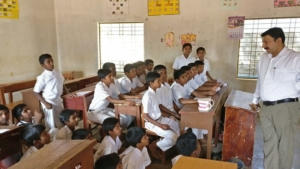 After 30 years, the government of India has finally revamped its standards in secondary and higher education. Among the education reforms in India, there has been an increase in socioemotional care, staff qualifications and access to innovative program opportunities in the public school system. These changes are significant for today’s Indian children, who made up 30% of the world’s poorest children in 2016.
Impoverished and Uneducated?
In 2017, 22% of India’s population lived in poverty. Among them, 287 million were unable to read or write: the basic fundamentals of primary education.
India has the highest worldwide rate of illiterate children. Sadly, illiteracy makes many students unable to keep up in classes and causes them to be removed from the public school system. Disproportionately, 78% of the children out of school are girls.
Children who fail out of lower school due to illiteracy are in greater danger of falling or staying beneath the poverty line if their family is already facing hardships. Indian children who are not included in the school community face greater social seclusion and lack of community support. Without support and opportunities from their communities, these challenges greatly stunt a child’s socioemotional and economic growth.
Building the Budget
Although there are difficulties, education reforms in India are growing. In 2019, the Indian government in New Delhi declared the 2019-2020 school year budget for public institutions to be ₹94,853.64 Indian rupees ($1,254). This was a raise of $149 U.S. dollars since the previous school year.
Although the New Delhi government is increasing its budget with the funds it can spare, India spends nowhere near the U.S. $64 billion yearly budget for public education.
Building the budget for public education in India means much more than funding for materials and updating technological services in school buildings. Along with a lack of access to education, many children in India are malnourished, making it more difficult to focus during school.
The budget has also increased the amount allocated for the lunchtime meal plan to ₹11,000 Indian rupees. Thus, students receive more services than classroom instruction while in the school building. This betters the overall physical and mental health of a student.
Three Initiatives of Public Education Reforms in India
- Happiness Curriculum: The implementation of the Happiness Curriculum in 2018 created requirements to include meditation and mental exercises in the public schools’ daily programs. The 45-minute daily “happiness” period takes students into a deep reflection and meditation. As a result, students reduce feelings of anger, anxiety and fear – all emotions that stunt students’ physical and mental growth.
- No Detention Policy: In the vital years of middle school, students in grades fifth through eighth are now able to retake their final examinations if they fail for their grade level. Following the 2017 Right of Children Act and immense community advocacy for struggling students this bill was written; the legislation was put into action for the 2018 school year.
- Ph.D. Required for College Professors: The New Delhi government has increased the required level of education to a Ph.D. for university staff. This requirement raises the level of education that students at public universities will pursue and receive. By 2021, the government plans for all college-level professors to have received a Ph.D. and undergone a month’s worth of induction training. The training teaches innovative ways to structure the professors’ school year. For example, teachers learn the tools to use two hours of their days for mentoring and extracurricular activities. This change has created layers of education reforms in India.
Is Socioemotional Learning the Future?
India has invested in enhancing the level of mental and emotional growth that a child can have at school. This includes self-enhancing and enlightening engagement from the school curriculum and staff. The benefits of these initiatives implemented by the government are making many nations around the world start to question the benefits of investing in their children’s emotional and social well-being during the school day.
Photo: Flickr
