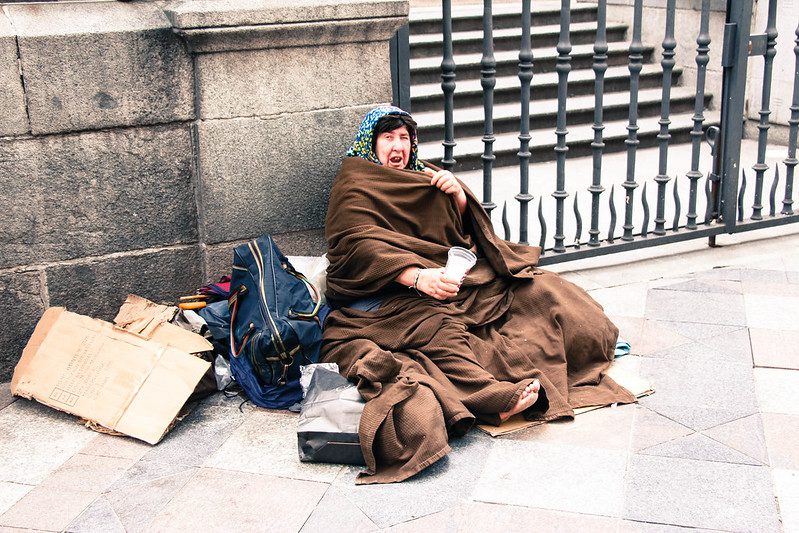
 Belarus, known as Europe’s last dictatorship, is a former member of the Soviet Union. It is a relatively poor nation, ranking 136th in GDP growth rate and 94th in GDP per capita. The U.N. classifies Belarus as an “economy in transition.” This classification is for countries that have been transitioning from a centrally planned, Soviet-style economy to a market economy since the 1990s. That change has not been easy, as the millennium began with Belarus’ poverty rate hovering at 60%. Despite the nation’s massive reduction in poverty — to less than 1% in 2013 — homelessness in Belarus continues to persist.
Belarus Guarantees the Right to Housing in its Constitution
Ratified in 1973, Belarus’ constitution guarantees housing as a human right: “In the absence of basic shelter and housing for a large group of people, the State is obliged to make every effort and use all available resources to meet the minimum obligations for the realization of the right to housing.”
The constitution states that homelessness should not exist. The national government must put policies in place to address homelessness in Belarus and to combat the discrimination and persecution homeless individuals face. In reality, however, the housing supply is low, forcing many vulnerable individuals into homelessness. The current government mostly ignores the homeless issue and has not addressed it by increasing the availability of adequate, affordable housing.
Lack of Data on Homelessness in Belarus
Accurate, up-to-date information and a systematic approach to data collection are vital in addressing homelessness. Belarus does not have a singular standardized method utilized throughout the nation. Each district and city government has their own way of collecting data, which leads to conflicting information.
In 2014, Minsk, the capital, officially registered 65 homeless individuals, but the national government counted 500. In 2013, the ministry of labor and social protection reported approximately 4,000 cases of homelessness throughout the entire country, but five years earlier, the 2009 census counted 587. These varying statistics plant seeds of doubt in future counts.
The real number of homeless people in Belarus could be higher than any previous count. In 2015, Minsk counted 320 homeless individuals. These 320 people were all registered at the city’s shelters, but 1,600 people had recently “inquired” about shelter registration. Without one standardized approach, this statistical unreliability will continue, and the true scope of the problem will remain unknown.
The National Government Takes Little Action
While the constitution states that homelessness in Belarus should not exist, the government takes little action. The lack of reliable statistics on the issue is a prime example of this. The national government relies on temporary shelters, located in a handful of cities, mainly Minsk, to house the homeless. The city governments are responsible for these shelters, complicating matters.
For example, Gomel announced in 2011 that a homeless shelter would be completed in 2016, but this never happened, and no other alternatives have since been proposed. Also, Minsk once had 11 operational temporary shelters. There are now three presently accepting homeless individuals in a city of almost 2 million people.
The actions the national government does take on homelessness include taxing those suffering from it. In 2015, the Belarusian parliament signed Presidential Decree number 3 into law. This bill, also known as the “freeloaders tax,” fines individuals that have been unemployed for six months. Belarusian President Alexander Lukashenko argued that the legislation disciplines the “work-shy.” Such a bill affects those that are chronically homeless, who have not been working for many years.
Everyday Citizens Are Volunteering to Combat Homelessness in Belarus
Private citizens have decided to take matters into their own hands. Dr. Karina Radchenko has been providing the homeless population of Minsk with free healthcare since 2019. Her work has recently gained international media attention due to the COVID-19 pandemic. Radchenko was spurred into action because many homeless Belarusians do not have proper identification, meaning treatment for diseases such as COVID-19 or AIDS is not free.
The volunteer doctor has tested more than 200 homeless people for HIV. Radchenko’s mission has since grown. Her group, now known as Street Medicine, consists of 20 volunteers. They go to the Minsk city center twice a week, helping any that ask. Neither the Belarusian government nor the Minsk government offers Street Medicine any financial assistance, forcing the group to rely solely on donations.
Conclusion
The present homeless policy in Belarus will result in the problem continuing. The true scope of homelessness in Belarus is unknown. No standardized approach to counting these individuals has been created under Lukashenko’s government. Instead, a tax has been levied against the chronically homeless. This all occurs under a constitution that guarantees adequate housing to all its citizens. Belarusian citizens like Dr. Karina Radchenko are taking matters into their own hands and pushing for the necessary changes — changes that will have to occur if life for Belarus’ most vulnerable citizens is to improve.
– Marcus Lawniczak
Photo: Flickr

4 Facts About Healthcare in Morocco
Globalization and industrialization have improved living conditions and increased economic prosperity in Morocco. The introduction of economic reforms in the early 1980s also stimulated growth in a variety of sectors. Yet, despite these efforts, poverty, illiteracy and unemployment rates in Morocco remain high. In 2018, Morocco ranked 121st out of 189 countries in the Human Development Index—a statistic composite index of life expectancy, education and per capita income indicators. A significant factor in Morocco’s low ranking is the country’s inaccessible and inadequate healthcare. Here are four things to know about healthcare in Morocco today.
4 Facts About Healthcare in Morocco
Improving the Moroccan health system is a slow process; however, with support from international public health organizations like WHO and healthcare professionals, healthcare in Morocco could advance significantly. Equal healthcare to women and Moroccans living in rural and remote areas will ensure a brighter, healthier future for Morocco and the world.
– Alana Castle
Photo: Flickr
6 Facts About Hunger in Senegal
The Republic of Senegal, located just off the West African coast, has one of the most stable economies in the region, but there are surprisingly high unemployment and poverty rates. With a population of 15.85 million, 39% of Senegal’s citizens are living in poverty. Senegal is one of many nations that rely solely on rain seasons for resources and goods to sell – when the rain does not come, crops cannot be harvested, sold or traded. Lack of rain can also start brush fires that destroy crops and shock rural towns into food insecurity. All of these factors contribute to a system of poverty and hunger that must be addressed. Here are 6 facts about hunger in Senegal.
6 Facts About Hunger in Senegal
Hunger in Senegal has been an increasingly pressing issue over the last two decades. Currently, Senegal is one of seven African countries that have succeeded in reducing food insecurity and malnutrition; since the year 2000, malnutrition in the nation has been lowered by 56%. Reduction of hunger and malnutrition remains Senegal’s main priority; analysis has shown that the education of farmers in nutrition and efficient farming practices has contributed towards this goal. There is still much work to be done, but great strides have been made.
– Kim Elsey
Photo: Flickr
Women and Pandemics: How Disease Furthers Gender Inequality
Most healthcare workers on the front lines are female, but there is another pandemic that plagues women during times of health crises: gender inequality. Epidemics and pandemics further gender inequality as women struggle socioeconomically and in healthcare. Gender equality can combat world poverty, but diseases can slow societal advancement for women.
Society and the Economy
Globally, 740 million women work low-paid and informal jobs, which they are quick to lose during pandemics and epidemics. The livelihoods of women are at risk with an increase in job insecurity and job loss during times of crisis. During the Ebola outbreak in Liberia, closed borders caused women to face much higher unemployment rates than men since 85% of cross-border traders are women.
In the developing world, 70% of women work informal jobs, but women’s unpaid labor boosts global economies and should not be ignored. According to the United Nations Foundation, “women on average do three times more unpaid care work than men.” Women who work to care for their families bring in $1.5 trillion to the world GDP. Jobs without pay create even more inequality as women stay at home, complete domestic tasks and care for the sick. The burden of caring for the ill in the family puts women at a greater risk of falling ill. More West African women were affected by Ebola because they worked in hospitals or aided the sick at home.
A shelter-in-place due to pandemics can result in girls dropping out of school and puts women at a higher risk for violence. As seen from the Ebola outbreak, closures of schools put young girls at high risk for pregnancy and child marriage. During country-wide lockdowns in 2020, women have to remain with their abusers. Domestic violence against women tripled in China and increased by 30% in France. Even more shocking, some use the exposure of COVID-19 as a means of suppression against women.
Healthcare
Although 70% of health workers are women, men make most of the decisions in the healthcare sector. Only 27% of women are executives in world healthcare. This gender segregation in healthcare leaves women in lower roles and creates a bias towards men. Personal protective equipment uses male sizes and thus does not protect female workers as effectively. In Spain, 5,265 out of 7,329 health workers infected by COVID-19 were women. Data collection may ignore gender in some studies, which makes it harder to understand the current trends and how they affect women.
While most healthcare resources are focused on fighting pandemics, women’s health may be overlooked. More women in Sierra Leone died from obstetric complications than from Ebola. COVID-19 will likely cause 18 million women to not be able to acquire contraceptives in Central and South America. Providing fewer health services during pandemics has detrimental effects on women’s health.
Operation 50/50
Pandemics affect both men and women, but 80% of the WHO Emergency Committee on COVID-19 are men. In order to provide women with more representation during the COVID-19 pandemic, the United Nations has created the campaign Operation 50/50. The campaign aims to accomplish five goals: recruiting more women for leadership roles, valuing women’s unpaid care work, providing better conditions for health care workers, utilizing gender attentive data and funding NGOs for women. Around the world, women have a high risk of exposure to disease, whether that be in the healthcare field or staying at home with the sick. Elimination of gender inequality in healthcare will increase safety for women during global pandemics.
– Hannah Nelson
Photo: Pixabay
Homelessness In Belarus: Citizens Are Taking Action
Belarus Guarantees the Right to Housing in its Constitution
Ratified in 1973, Belarus’ constitution guarantees housing as a human right: “In the absence of basic shelter and housing for a large group of people, the State is obliged to make every effort and use all available resources to meet the minimum obligations for the realization of the right to housing.”
The constitution states that homelessness should not exist. The national government must put policies in place to address homelessness in Belarus and to combat the discrimination and persecution homeless individuals face. In reality, however, the housing supply is low, forcing many vulnerable individuals into homelessness. The current government mostly ignores the homeless issue and has not addressed it by increasing the availability of adequate, affordable housing.
Lack of Data on Homelessness in Belarus
Accurate, up-to-date information and a systematic approach to data collection are vital in addressing homelessness. Belarus does not have a singular standardized method utilized throughout the nation. Each district and city government has their own way of collecting data, which leads to conflicting information.
In 2014, Minsk, the capital, officially registered 65 homeless individuals, but the national government counted 500. In 2013, the ministry of labor and social protection reported approximately 4,000 cases of homelessness throughout the entire country, but five years earlier, the 2009 census counted 587. These varying statistics plant seeds of doubt in future counts.
The real number of homeless people in Belarus could be higher than any previous count. In 2015, Minsk counted 320 homeless individuals. These 320 people were all registered at the city’s shelters, but 1,600 people had recently “inquired” about shelter registration. Without one standardized approach, this statistical unreliability will continue, and the true scope of the problem will remain unknown.
The National Government Takes Little Action
While the constitution states that homelessness in Belarus should not exist, the government takes little action. The lack of reliable statistics on the issue is a prime example of this. The national government relies on temporary shelters, located in a handful of cities, mainly Minsk, to house the homeless. The city governments are responsible for these shelters, complicating matters.
For example, Gomel announced in 2011 that a homeless shelter would be completed in 2016, but this never happened, and no other alternatives have since been proposed. Also, Minsk once had 11 operational temporary shelters. There are now three presently accepting homeless individuals in a city of almost 2 million people.
The actions the national government does take on homelessness include taxing those suffering from it. In 2015, the Belarusian parliament signed Presidential Decree number 3 into law. This bill, also known as the “freeloaders tax,” fines individuals that have been unemployed for six months. Belarusian President Alexander Lukashenko argued that the legislation disciplines the “work-shy.” Such a bill affects those that are chronically homeless, who have not been working for many years.
Everyday Citizens Are Volunteering to Combat Homelessness in Belarus
Private citizens have decided to take matters into their own hands. Dr. Karina Radchenko has been providing the homeless population of Minsk with free healthcare since 2019. Her work has recently gained international media attention due to the COVID-19 pandemic. Radchenko was spurred into action because many homeless Belarusians do not have proper identification, meaning treatment for diseases such as COVID-19 or AIDS is not free.
The volunteer doctor has tested more than 200 homeless people for HIV. Radchenko’s mission has since grown. Her group, now known as Street Medicine, consists of 20 volunteers. They go to the Minsk city center twice a week, helping any that ask. Neither the Belarusian government nor the Minsk government offers Street Medicine any financial assistance, forcing the group to rely solely on donations.
Conclusion
The present homeless policy in Belarus will result in the problem continuing. The true scope of homelessness in Belarus is unknown. No standardized approach to counting these individuals has been created under Lukashenko’s government. Instead, a tax has been levied against the chronically homeless. This all occurs under a constitution that guarantees adequate housing to all its citizens. Belarusian citizens like Dr. Karina Radchenko are taking matters into their own hands and pushing for the necessary changes — changes that will have to occur if life for Belarus’ most vulnerable citizens is to improve.
– Marcus Lawniczak
Photo: Flickr
5 Brilliant Inventions Helping Fight Global Poverty
The Shoe That Grows
Across the globe, children in poverty-stricken conditions fall victim to illness and disease. Over 1.5 billion people suffer from diseases transmitted from the soil. Bare feet, believe it or not, can kill. The majority of children living in poverty do not have shoes. Those that have been fortunate enough to receive donated pairs eventually grow out of them and walk around with no protection at all. The Shoe That Grows addresses this problem head-on.
Through a unique design of adjustable notches and snaps, the shoe continues to grow with the child. In total, the shoe can expand up to five different sizes. A five-year-old child using The Shoe That Grows will typically be able to wear the same shoe until they turn nine years old. This solution to bare feet prevents the soil-transmitted disease from wreaking havoc and averts injuries to the feet.
Life Saving Dot
Thousands of women in rural India suffer from iodine deficiency, a problem caused by a lack of iodine in the human body. Iodine deficiency in women can lead to breast cancer, disease and complications with pregnancies. India’s primarily vegetarian diet and poor levels of iodine in the soil has led to high levels of iodine deficiency, primarily in women. The Life Saving Dot helps restore iodine balance in the human body to prevent disease.
Made to mimic an Indian bindi, women wear the Life Saving Dot between their eyebrows. The device supplies the wearer with a sufficient amount of iodine each day. It is fairly inexpensive to buy, only costing around 10 rupees for a pack of 30 dots.
Mazzi
Impoverished families across the globe depend on milk, not only for nutritional support but also for income. The transportation of milk, however, is tricky and can lead to spills, spoilage and contamination. Mazzi allows for easier and cleaner transportation of milk.
Through a durable, 10-liter plastic container, people transport milk from the farm to the family or to the market. The container has a wide mouth that allows for a large collection of milk. The container itself is spill-proof and keeps the milk fresh as it is transported from one place to another. It is also easy to clean, reusable and cost-efficient.
Eco-Cooler
Summers in Bangladesh can be unbearably hot, often leading to higher rates of heat strokes and dehydration. Residents of Bangladesh live in houses with roofs that enhance the temperature of the sun, sometimes reaching up to 45 degrees Celsius, or 113 degrees Fahrenheit, inside of their homes. Air conditioning is, unfortunately, not a luxury that Bangladesh residents have. To combat the extreme temperatures in an environmentally conscious way, Eco-Cooler was born.
Developed as a low-cost cooling system, the Eco-Cooler is made entirely out of recycled plastic bottles that draw cool air into homes. Plastic bottles cut in half are placed onto a board, which is then placed on the wall, acting like a window. The bottles compress hot air, cool it down, and drastically decrease the inside temperatures, sometimes by as much as 40 degrees Fahrenheit.
Embrace Warmer
According to Embrace Global, more than 1 million infants die every year on the day of their birth and 98 percent of those deaths occur in impoverished countries. The main cause of those deaths? Hypothermia. Infants in developing countries are more susceptible to hypothermia as a result of premature and low-weight births. Embrace Warmer is a unique invention intended to combat the increasing numbers of infant mortality in developing countries.
The Embrace Warmer acts like an infant sleeping bag. It helps regulate a newborn baby’s body temperature during the first few days of their life. The warmer keeps the child warm, does not depend on electricity, is cost-effective, portable and above all, safe. The Embrace Warmer has helped save the lives of 200,000 hypothermic infants in developing countries.
These five inventions helping fight global poverty prove that innovation has the power to help those in need. It is through these unique and brilliant inventions that progress is attained.
– Jacey Reece
Photo: Flickr
5 Facts About Paul McCartney’s Humanitarian Work
Sir James Paul McCartney, known professionally as Paul McCartney, is a singer, songwriter, poet, bass player and animal rights activist. He is best known for his work with the English rock band The Beatles. During his 63-year-long ongoing career that revolutionized the world of music, McCartney has amassed a fortune of over $1 billion. This drove him to begin making significant charitable donations to organizations. McCartney’s humanitarian work emphasizes spreading awareness about causes for which he advocates.
5 Facts About Paul McCartney’s Humanitarian Work
Paul McCartney’s humanitarian work proves his unwavering dedication toward improving the welfare of humans and animals alike. His aid has made him one of the celebrities best known for generous donations. His championship for nearly 50 charities and organizations proves how one can use their wealth to better the state of the world.
–Kia Wallace
Photo: Flickr
3 Aspects of Poverty in the United Arab Emirates
When Americans think of the United Arab Emirates, they may often think of cities like Dubai consisting of staggering skyscrapers, extravagant lifestyles and unimaginable wealth. Americans may not always see the underlying struggles that many Emirates deal with on a day-to-day basis. Aspects of poverty include a dominating wealth gap, which exists at the expense of migrant workers, water insecurity and issues regarding food supply. This article will address each of these facets of poverty in the United Arab Emirates while also discussing the efforts to help people suffering today.
Wealth Inequality and Migrant Workers
According to the World Inequality Database, the top 1% of Emiratis constitute about 22.8% of total income in the UAE, while the bottom 50% of Emiratis make up only 5.8%. As for wealth, the top 1% of individuals in the UAE hold more than 50% of the entire country’s wealth.
The UAE is indeed a rich nation, yet few understand the makeup of this wealth. The upper echelons of Emirati society hold the majority of this wealth and income, which leaves far more individuals struggling for what is left. Foreign nationals make up as much as 88% of the population in the UAE, and migrant workers often receive low pay and work in forced labor.
The country has made some progress in the arena of workers’ rights. For example, an unprecedented bill passed in 2017, guarantees certain labor rights. However, the visa sponsorship program in the UAE still ties migrant workers to their employers with strict punishments for those who leave. Systemic financial inequality and lax workers’ rights policies force migrant workers to bear the brunt of poverty in the United Arab Emirates.
Water Insecurity
The U.N. defines “water-scarce” as having less than 1,000 cubic meters of water per capita, per year. The UAE has less than half of that figure. Lacking renewable freshwater, the country relies on desalination, which provides 98% of the water supply for the 2 million people in Dubai. The Water Resources Institute ranked the country 10th out of 164 countries with the most extreme water supply issues.
While desalination plants have picked up some slack, water insecurity is a looming threat in the region. The issue will likely affect members of the lowest classes of Emirati society first. Luckily, organizations like the nonprofit UAE Water Aid Foundation, or SUQIA, are working to provide accessible, potable water throughout the world. Since 2015, SUQIA has helped by improving water purification practices, building wells, installing water coolers and improving water distribution networks and sanitation facilities. This aid organization has expanded its efforts outside the UAE, helping more than 13 million individuals suffering from water insecurity in 36 countries. Improving water access and sustainability has a direct impact on millions suffering from predatory labor norms and poverty in the United Arab Emirates.
Food Supply
The lack of a sustainable source of freshwater means the UAE cannot grow enough food to support its population. As such, the UAE relies on imports for 90% of its food supply. This causes the nation to be extremely vulnerable to global shortages and price changes. While the UAE is able to provide food to most of its citizens, projections determine that its population could grow by more than 2 million people in the next five years, which could increase pressure on the fragile food supply. Consumption is similarly growing by 12% each year. Migrant workers and other less-wealthy individuals could suffer first because of this growth.
Less than 5% of the land in the UAE is arable farmland, yet more than 80% of the water in the country goes to this tiny agriculture sector. As a result, entrepreneurs like those at Madar Farms are working to increase productivity. The company, led by Abdulaziz Al Mulla, purchased old storage containers and repurposed them into indoor farms, growing vegetables under LED lights. These efforts have also translated to the Persian Gulf, where the Ministry of Climate Change and the Environment has built artificial caves and established coral gardens to improve the sustainability of fish farming. Doing so enhances the sustainable food supply, which will largely help those suffering from poverty in the United Arab Emirates. National programs like this reduce the risk of a hunger crisis should global supply plummet.
Poverty in the United Arab Emirates
While few associate poverty with the UAE, the reality is that millions struggle to provide for themselves and their families. Restrictive labor policies in the country provide little help to people in lower socioeconomic classes. Water insecurity is a relatively well-known issue in the UAE, but few recognize hunger as a common problem.
In truth, the UAE has been able to provide for most of its people, but it is easy to overlook everyday threats. Water insecurity and food supply will harm impoverished Emiratis far before they reach the wealthy classes associated with the country. Luckily, organizations like SUQIA and Madar farms are at the forefront of building workable solutions. These efforts provide hope for the UAE, a country that would suffer if left to rely solely on global markets.
– Connor Bradbury
Photo: Flickr
How Buengo Reduces Poverty
There are a few sounds die-hard baseball fans know well: the tune of “Take Me Out to the Ball Game,” the chorus of crunching sunflower seeds, the crack of a boiled peanut shell and spilling hot, salty water on the stadium floor. Unfortunately, people did not hear these familiar sounds and many others during the spring of 2020 as the global pandemic stretched to all four corners of the world. Concerts, festivals and graduation ceremonies experienced silence, but one thing rang true: spring cleaning. True to course, rusted pots and pans clattered inharmoniously as they found their new home in a garbage bag, tattered sweaters and last seasons boots ricocheted off closet floors and scooters rattled on the way out of the garage. An abundance of black and white trash bags with toys, household items and clothes lined the streets in the early spring days, landfill-bound. However, thanks to new-age technology, there is an alternate path for spring cleaners to take that can help eradicate global poverty: Buengo. Here is some information about how Buengo reduces poverty.
How Buengo Reduces Poverty and Benefits Charities
Buengo is a marketplace application that encourages users to take their second-hand clothes, gadgets and home goods to Buengo rather than the landfill. This application, which debuted on the App Store and Google Play in March 2018, not only reduces environmental waste but also helps the world’s poor. Items that people sell on Buengo go directly from the seller to the buyer’s hands. The money, however, takes a different route. When the seller markets an item, they choose a campaign or charity for the profit to go towards. All of these “good causes” are in the U.K., but they have a global influence.
One organization that benefits from how Buengo reduces poverty is Poverty Child, which helps children in Payatas, the Philippines reach their fullest potential through educational programs, therapeutic endeavors, promotion of general well-being and security provision. Another nonprofit that reaps from Buengo is The Origin Charity. This organization works with indigenous people in Ethiopia to educate, equip and train the next generation of leaders. The Origin Charity also teaches marketable skills to vulnerable women, who are often the sole providers of their families. Any U.K. based charity or nonprofit can register their organization. However, Buengo is working to expand its industry to other countries so that everyone can follow the company’s motto and “sell it for good.”
The Good of Buengo
How much “good” do nonprofits and charities receive? The answer is 95% of all sales. Buengo says that “This covers the cost of what goes on behind the scenes: development of Buengo, continual support for all Buengo users, operational costs and overheads. We’re essentially offering the same service as a charity shop, but online. In physical locations, the amount taken from sales can be as much as 20%, so when you support a cause through Buengo, more of your money actually goes to the charity.”
As one wades through the pool of shirts that they no longer wear and trips over pants one size too small, there is another option instead of throwing unused items away. Instead of tossing unworn clothing in a trash bin, downloading Buengo and giving it to a global cause could be a good option.
– Chatham Kennedy
Photo: Flickr
The Remedy for Hunger Pain
Today, people wear masks. These masks hide people’s faces and protect them from a disease they cannot see, but not all masks are visible. Some masks are invisible. One of these masks is glue and some use it to silence the stomach’s growl. In many developing countries, teenagers use glue as an inhalant drug to quell the cries of their stomach, a remedy for hunger pain. Unfortunately, there is little statistical data readily available on this topic, making any hope of reform nearly impossible. However, research from the National Institute of Health (NIH) has made the effects of sniffing glue evident.
According to NIH, inhalants can cause the following damage to the brain: distorted speech, poor bodily coordination, euphoria and dizziness. The brain is not the only part of the body that sniffing glue negatively affects. Long-term use can result in damage to the liver, kidney and bone marrow. Loss of physical coordination and delayed behavioral development can also occur.
A Prevalent Issue
Kimberly Solórzano, who works at a Honduran orphan care center, spoke with The Borgen Project about how sniffing glue impacts the long-term health of children and adolescents. Solórzano said, “They are just sniffing glue, and that is very common among teens coming out of these kinds of shack communities. They are sniffing glue to stay warm and to feel full when they’re hungry…just kind of becoming oblivious to the world around them due to their addiction.” Solórzano made The Borgen Project aware that many children who find themselves addicted to inhalants are uneducated about the long-term effects.
Unfortunately, this is an issue that touches all four corners of the world. In Kenya, estimates determine that 250,000 children sniff glue. In Nepal, a research study found that 88.46% of street children sniff glue and 89.13% were unaware of the effects of the inhalant. These alarmingly high statistics seem to hide the good news. However, there is hope for reform.
Educational Reform
Hope is spelled “education.” Through proper education on the effects of inhalant use and methods for combating food shortages and world hunger, there is hope for drastic change. One organization that fights for educational reform in the area of global hunger is Bread for the World. Bread for the World focuses on sustainable progress, which it defines as “progress that is intended to be, and is capable of being, enduring- depends on addressing all of the issues in an interconnected manner.” Education on various food storage methods echoes sustainable progress. Specifically, Bread takes time to teach farmers in India how to properly contain vegetables, like corn.
Another goal of Bread is to witness the Sustainable Development Goals come to life. Bread states that “Universal secondary education, which is included in the Sustainable Development Goals, would no doubt lead to swifter progress in ending hunger and malnutrition.” Through secondary education for all, the remedy for hunger pain would no longer be inhalants but nutritious food. Education is key and Bread is fully aware of this fact.
Thankfully, Bread is one of many United States nonprofits working to end global hunger. Together, these organizations make a lasting impact by bringing educational and congressional reform on the topic of global hunger, provide nutritious food as a remedy for hunger pain and create a lasting impact from generation to generation.
– Chatham Kennedy
Photo: Flickr
5 Facts About Hunger in Guyana
Guyana is a country located on the northern coast of South America. Despite the country’s rapidly growing economy, hunger in Guyana has increased in recent years, disproportionately impacting rural and remote populations. As such, the state has adopted several measures to protect vulnerable families and increase food production capabilities.
Reflecting this dynamic are five facts about hunger in Guyana.
5 Facts About Hunger in Guyana
Despite earning a low score in the 2024 Global Hunger Index (GHI), current child malnutrition rates show that Guyana continues to suffer from acute food insecurity. However, counteractive measures such as increasing agricultural productivity may help lessen the number of affected people. Joint efforts by the state and organizations such as the United Nations are crucial in strengthening food systems and improving socioeconomic welfare in Guyana for the years to come.
– Ayesha Asad, Moon Jung Kim
Photo: Flickr
Updated: October 15, 2024