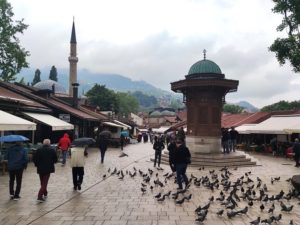
 During the Bosnian War, a bloody conflict centered in the Bosnian capital city of Sarajevo from 1992 to 1995 and thousands of people experienced immense hunger in the country. Sarajevo did not have a connection to the rest of the world, resulting in immediate shortages of food, medicine, water and electricity. Lacking these basic necessities and in constant danger of violence, nearly 12,000 civilians died by the end of the war. Unable to survive on what remained in the country, United Nations humanitarian aid efforts saved many by bringing in 160,000 tons of food, medicine and other essential goods.
Postwar Challenges
The end of the war in 1995 brought necessary relief, as well as a new set of challenges as the nation recovered. In 2014, with an unemployment rate of 27.5%, frustrated people in Sarajevo rioted in response to the government insisting that there was no hunger in Bosnia and Herzegovina. This statement angered citizens, and it led to the closure of several factories that had laid off many workers. They responded by setting fire to multiple government buildings, a scene reminiscent of the Bosnian War just years before.
In 2020, the European Union, in partnership with the United Nations Development Program, allocated 20 million euros to the development and modernization of the agri-food sector in Bosnia and Herzegovina. Although the program was positioned to independently assist countries in implementing the U.N.’s Sustainable Development Goals, strong partnerships with entities such as the European Union were considered to be crucial for the goals’ success.
Nevertheless, by 2021, the prevalence of moderate or severe food insecurity in Bosnia and Herzegovina was 13.4%, the highest it had been in the previous decade and almost 5% higher than its 2017 low point.
In May of 2021, the Council of Ministers of BiH and the United Nations Country Team signed a four-year Sustainable Development Cooperation Framework (2021-2025) that included reference to future accession to the European Union. One of the commitment’s four strategic priorities was “quality, accessible and inclusive education, health and social protection,” and one of the many stated related human rights was the right to adequate food, with food safety noted as an intended cooperation outcome.
Targeted Food Insecurity
Then, with the February 2022 Russian invasion of Ukraine, came a further impact on both income and food security for those who were already vulnerable.
A UNDP December 2022 Assessment Report for BiH reported sufficient availability of food but also noted that vulnerable groups did not have enough money for a regular diet because of inflation. The majority (80%) of humanitarian organizations managing soup kitchens felt that they had insufficient funds and that the inadequacy of social protection affected their ability to reduce hunger. At that time, BiH was a net importer of foodstuffs and agricultural products.
A small, 2022-2023 UNDP rapid countrywide assessment, published in May 2023, found a third of those surveyed defined themselves as food insecure, the most insecure being the elderly and single parents. The General Food Insecurity Index labeled almost 78% of those surveyed to be at risk of food insecurity and food deprivation.
The 2023 Global Health Index identified BiH as one of 20 countries with a GHI score in the Low category, but that was because there was insufficient data to calculate a score. Nevertheless, the trend for BiH indicator values has been low since 2000, based on the indicators of the percentage of the population undernourished, and the percentage of children younger than 5 who suffered from child wasting, child stunting and child mortality.
Early 2023 saw inflation grow to over 14%, causing extreme challenges in the agricultural sector. The price of foodstuffs, for example, was affected by an increase of up to 200% for some raw materials. This reduced those in greatest poverty to being able to buy fruits and vegetables only by the piece.
With an SDG Index Score of 73.99 (out of 100), BiH now ranks 50 of the 166 countries ranked on the U.N.’s Sustainable Development Goals in the 2024 Sustainable Development Report. This is the country’s overall progress toward meeting the 17 goals. On SDG 2, Zero Hunger, BiH is seen as making moderate improvement, but with significant challenges remaining. Although improvement has been made in tackling undernourishment and wasting in children under 5 years old, the most significant remaining challenge is the prevalence of obesity.
A Multisectoral Approach
Hunger can also be tackled in a multi-pronged approach that simultaneously addresses other social issues. U.N. Women and the Food and Agriculture Organization (FAO), with support from Sweden, have held a series of workshops pairing “gender-sensitive credit solutions” with climate-resilient agriculture. While BiH’s agricultural sector includes women entrepreneurs, only 8% of the country’s agricultural assets are women-owned. In June 2024, 12 workshops were planned across the country, with the ultimate aim being to include a gender perspective in “agricultural and rural development policies, enhancing the resilience and inclusivity of these sectors in light of climate vulnerabilities.” In other words, the plan is to address climate-resilient agriculture, rural economic sustainability, financing and gender equality at the same time. In August 2024, 23 “commitment makers” pledged to focus on gender equality activities.
– Staff Reports
Photo: Flickr
Updated: September 1, 2024

Food Insecurity and Permaculture in South Africa
Benefits of Permaculture
Permaculture uses holistic solutions to harvest and distribute the food, agriculture and energy within a cultivated ecosystem. The main goals of permaculture include restoring natural ecosystems, implementing zero-waste policies and participating in sustainable consumption.
Additionally, localized food systems provide access to nutritious food in impoverished communities. Permaculture design programs also provide economic, ecological and health benefits. The additional benefits of permaculture include reduced food insecurity and undernutrition and long-term environmental sustainability. They also include increased savings from reduced input costs, high agricultural yields and improved human health and well being.
Participation in community permaculture design and cultivation encourages residents to work toward the United Nations Sustainable Development Goals (SDGs). SDGs that address sustainability and poverty, such as responsible consumption and zero hunger, reflect the leading principles of permaculture; care for people, care for Earth and fair share. Resilient and diverse agricultural systems also promote economic and social equity through permaculture redistribution principles.
Nutrition, Human Health and Development
A majority of South Africa’s nutrition burden falls on the under-five population through development complications like child stunting and wasting. South Africa’s child stunting prevalence is 27%. This is approximately 2% above the national average for child stunting in developing countries. The prevalence of child stunting in South Africa indicates poor nutrition and diet during the critical stages of child development.
Improved diet through accessible and diverse food can reduce rates of child stunting and malnutrition nationwide. SEED permaculture in South Africa allows the community of Mitchells Plain to access nutritious foods like broccoli, carrots and turnips. As a result, human health and development improve due to reduced risk of infection, improved immune system function and increased cognitive development.
Investing in the Youth of Mitchells Plain
Furthermore, according to SEED, approximately 400,000 unemployed youth reside in Mitchells Plain. Nearly half of the unemployed youth population lives below the poverty line. As a result, food insecurity and malnutrition pose a threat to young adults. SEED plans to reduce poverty and food insecurity by introducing the township youth to permaculture design, urban regeneration and organic production.
Seeding Futures is a 15-week permaculture resilience program hosted by SEED. It teaches community development through sustainable agricultural practices. The Seeding Futures program covers permaculture design ethics and urban ecosystem regeneration. It also covers communication skills and self-care practices.
Students are encouraged to develop their strengths and explore employment opportunities within the local green community. During the last four weeks of Seeding Futures, students shadow local green businesses to gain valuable insight into the eco-friendly job market. According to SEED, approximately 89% of students who complete the program develop the skill set to grow food long-term. SEED uses permaculture in South Africa to provide sustainable solutions that address the intersection of poverty, unemployment and food insecurity in Mitchells Plain.
– Madeline Zuzevich
Photo: Pixabay
Hunger in Bosnia and Herzegovina
Postwar Challenges
The end of the war in 1995 brought necessary relief, as well as a new set of challenges as the nation recovered. In 2014, with an unemployment rate of 27.5%, frustrated people in Sarajevo rioted in response to the government insisting that there was no hunger in Bosnia and Herzegovina. This statement angered citizens, and it led to the closure of several factories that had laid off many workers. They responded by setting fire to multiple government buildings, a scene reminiscent of the Bosnian War just years before.
In 2020, the European Union, in partnership with the United Nations Development Program, allocated 20 million euros to the development and modernization of the agri-food sector in Bosnia and Herzegovina. Although the program was positioned to independently assist countries in implementing the U.N.’s Sustainable Development Goals, strong partnerships with entities such as the European Union were considered to be crucial for the goals’ success.
Nevertheless, by 2021, the prevalence of moderate or severe food insecurity in Bosnia and Herzegovina was 13.4%, the highest it had been in the previous decade and almost 5% higher than its 2017 low point.
In May of 2021, the Council of Ministers of BiH and the United Nations Country Team signed a four-year Sustainable Development Cooperation Framework (2021-2025) that included reference to future accession to the European Union. One of the commitment’s four strategic priorities was “quality, accessible and inclusive education, health and social protection,” and one of the many stated related human rights was the right to adequate food, with food safety noted as an intended cooperation outcome.
Targeted Food Insecurity
Then, with the February 2022 Russian invasion of Ukraine, came a further impact on both income and food security for those who were already vulnerable.
A UNDP December 2022 Assessment Report for BiH reported sufficient availability of food but also noted that vulnerable groups did not have enough money for a regular diet because of inflation. The majority (80%) of humanitarian organizations managing soup kitchens felt that they had insufficient funds and that the inadequacy of social protection affected their ability to reduce hunger. At that time, BiH was a net importer of foodstuffs and agricultural products.
A small, 2022-2023 UNDP rapid countrywide assessment, published in May 2023, found a third of those surveyed defined themselves as food insecure, the most insecure being the elderly and single parents. The General Food Insecurity Index labeled almost 78% of those surveyed to be at risk of food insecurity and food deprivation.
The 2023 Global Health Index identified BiH as one of 20 countries with a GHI score in the Low category, but that was because there was insufficient data to calculate a score. Nevertheless, the trend for BiH indicator values has been low since 2000, based on the indicators of the percentage of the population undernourished, and the percentage of children younger than 5 who suffered from child wasting, child stunting and child mortality.
Early 2023 saw inflation grow to over 14%, causing extreme challenges in the agricultural sector. The price of foodstuffs, for example, was affected by an increase of up to 200% for some raw materials. This reduced those in greatest poverty to being able to buy fruits and vegetables only by the piece.
With an SDG Index Score of 73.99 (out of 100), BiH now ranks 50 of the 166 countries ranked on the U.N.’s Sustainable Development Goals in the 2024 Sustainable Development Report. This is the country’s overall progress toward meeting the 17 goals. On SDG 2, Zero Hunger, BiH is seen as making moderate improvement, but with significant challenges remaining. Although improvement has been made in tackling undernourishment and wasting in children under 5 years old, the most significant remaining challenge is the prevalence of obesity.
A Multisectoral Approach
Hunger can also be tackled in a multi-pronged approach that simultaneously addresses other social issues. U.N. Women and the Food and Agriculture Organization (FAO), with support from Sweden, have held a series of workshops pairing “gender-sensitive credit solutions” with climate-resilient agriculture. While BiH’s agricultural sector includes women entrepreneurs, only 8% of the country’s agricultural assets are women-owned. In June 2024, 12 workshops were planned across the country, with the ultimate aim being to include a gender perspective in “agricultural and rural development policies, enhancing the resilience and inclusivity of these sectors in light of climate vulnerabilities.” In other words, the plan is to address climate-resilient agriculture, rural economic sustainability, financing and gender equality at the same time. In August 2024, 23 “commitment makers” pledged to focus on gender equality activities.
– Staff Reports
Photo: Flickr
Updated: September 1, 2024
Hunger in Moldova: What You Need to Know
The Global Hunger Index 2024 ranked Moldova 26 out of the 126 countries ranked. Its score has dropped 68% since its first ranking 20 years ago, moving it from the Moderate to Low hunger category. All of the component indicators for the index were under 10%, with the highest being children under five who are stunted (6.6%). The percent of the population undernourished is less than 2.5%.
At the same time, food security varies among target groups. As noted by the World Food Programme, the Moldova 2022 Social Cohesion and Reconciliation Survey reported that 43% of women surveyed said that they could not meet household nutritional needs, with 24% saying they didn’t have money for food. This was particularly true for women older than 65, women survivors of domestic abuse, and women in the north of the country. Other at-risk groups included rural citizens, the disabled, those with less education, the unemployed, single-person households and households with five or more children.
Key Challenges to Food Security in Moldova
Three Responses to Moldova’s Food Security Challenges
As of 1993, there has been a legal basis for ensuring “the right to adequate food” enshrined in the Constitution of the Republic of Moldova.
– Staff Reports
Photo: Flickr
Updated: November 2, 2024
Tackling Hunger in Finland
Despite enjoying one of the world’s most advanced social-democratic welfare systems and the lowest human insecurity rates, there are still major struggles with poverty and hunger in Finland.
First Signs
The first signs of hunger in Finland emerged following a financial crisis in the 1990s which resulted in roughly 100,000 Finnish people reportedly hungry during the years 1992 and 1993. As a result, the foundation for a network of charity-based food aid provisions proliferated in Finland during the 1990s. Several spikes occurred in CFA rates in the late 1990s, with the largest increase at the turn of the century.
What is interesting about this particular response to food insecurity in Finland is that, in principle, the Nordic welfare state “is assumed to provide universal social security against social risks, such as poverty, for all its citizens.” However, at-risk people in Finland have received support largely through charity-based food aid, indicating that the current welfare state falls short of feeding everyone.
Giving Back
In 2013, EVIRA, the Finish Food Safety Authority, improved food safety regulations by allowing food and retail industries to donate food to charity with greater ease. This new food waste redistribution project was part of a new wave of social innovations in the greater E.U. which operated in efforts to reduce food insecurity and ecological waste.
As of 2014, the CFA in Finland had 400 distributors “including parishes, FBOs, unemployment organizations and other NGOs.” It reached roughly 22,000 Finnish people every week.
At-Risk Populations
Statistics Finland’s research shows that the number of people at risk for severe poverty and homelessness was 890,000 in 2017, which is roughly 16.4% of the population. Findings from the European Anti Poverty Network (EAPN) Poverty in Finland Report from 2019 show that the number of people living on minimum income benefits and experiencing livelihood problems such as food shortages continues to be a growing problem. The share of Finns turning to food banks every week was roughly 20,000 in 2019. The risk of poverty and malnutrition is highest amongst single mothers and older women living alone, according to the National Council of Women in Finland. Finland is also among one of the most racist countries in the E.U., making it even harder for migrants, especially women, to achieve success in the current economic climate. As a result, many migrants in Finland are poor and at risk of food insecurity.
A Hopeful Horizon
Progressive social reform strategies such as Finland’s Housing First strategy with the extensive food aid provision network in the country have the power to eradicate hunger in Finland. In fact, Finland’s Housing First strategy already accomplished a lot in regard to shelter insecurity in the country. Perhaps a stronger state role in providing food aid could be the extra push necessary to completely tackle the stagnating food insecurity problem.
– Jasmeen Bassi
Photo: Unsplash
5 Facts About Healthcare in Romania
Romania is a country of around 20 million people located in Southeastern Europe. Since the fall of communism in 1989, the country has transitioned to a democracy with more personal freedoms and a better economic outlook. Economic trends have improved since Romania joined the European Union in 2007. Even though Romania has enjoyed high levels of growth in recent decades, it remains plagued by corruption and the emigration of skilled professionals to other European nations. These issues create problems for healthcare in Romania. Here are five facts about healthcare in Romania.
5 Facts About Healthcare in Romania
Ending corruption would go a long way to improving the quality of healthcare in Romania. Recently, there have been signs that the government understands this and is willing to take meaningful action to end bribes and raise salaries for doctors. As a whole, medical salaries have been growing much quicker than the national average. There are hopes that higher wages will reduce the impact of bribes and entice skilled doctors to stay in the country. It will be a long process to correct the deeply flawed healthcare system in Romania. However, progress is possible if the government and the private sector work together toward reform.
– Jack McMahon
Photo: Flickr
Healthcare in Peru: An International Perspective
Healthcare in Peru by the Numbers
Structure of Healthcare in Peru
Due in part to fluctuating governmental structures and rulers, Peru currently operates with a decentralized health care system administered by five entities. Two of these entities provide 90% of the nation’s healthcare services publicly, while three provide 10% of the nation’s healthcare in the private sector. This distribution results in considerable overlap and little coordination, depleting the healthcare system of resources and providers. In fact, many healthcare providers in Peru work an assortment of jobs across different subsectors.
As healthcare is a necessary sector of the economy, Peru’s healthcare worker density is increasing, even as health worker outmigration also increases. But since these workers are not equitably distributed, coastal and urban areas monopolize the majority of these providers. Lima and tourist coasts boast the highest distribution of healthcare workers, while rural and remote areas such as Piura and Loreto are home to few health providers.
Impact of the Healthcare Structure on Women
The detrimental effects of inequitable healthcare distribution are most visible in the country’s astonishing maternal mortality rate. The World Bank’s 2017 data showed that 88 out of 100,000 mothers in Peru die from pregnancy-related causes. However, Peru’s efforts have substantially reduced the number from 10 years before when the maternal mortality rate in Peru was 112 per 100,000 mothers in 2007.
The burden of maternal mortality rests squarely upon the shoulders of poor, rural, and Indigenous women. They are dying from largely preventable causes in a massive breach of human rights. These women disproportionately face countless barriers to pregnancy wellness and birth healthcare, including a dearth of emergency obstetric and neonatal services, language barriers and a lack of information regarding maternal health. Peru has implemented policies in recent years to reduce the rate of maternal mortality, such as the increase of maternal waiting houses for rural pregnant women to reside in as they approach birth.
The only cause of premature death that precedes neonatal disorders as a result of inadequate neonatal obstetrics is lower respiratory infections. This type of infection is the most likely cause of premature death, and it has remained so since 2007. This illness, too, disproportionately impacts women and children. They are the most likely groups to die from household air pollution, a type of pollution caused by the burning of solid fuels for cooking and heating purposes. In Peru, 429 out of an estimated 1,110 yearly childhood deaths are caused by acute lower respiratory infections resulting from household air pollution. Combined, neonatal disorders and lower respiratory infections cause more death and disability than any other factor in Peru. These are shortening the lives of Peruvian women and children by almost 20%.
Moving Forward with Healthcare in Peru
The healthcare system in Peru is one that suffers many flaws. It is straining to support its people, especially in the midst of a worldwide pandemic. While the going is slow, the country is striving to reform its healthcare system. Peru is doing this by reforming its healthcare system in the direction of universal coverage – an achievable but certainly strenuous goal. Since vigorously implementing healthcare reform in the late 90s, Peru reports coverage of 80% of its population with some form of health services. While this number is far from ideal, it is evidence that the Peruvian government is not only cognizant of but concerned about its healthcare failures, and it is striving for a fuller coverage future.
– Annie Iezzi
Photo: NeedPix
Corruption in Ecuador
Corruption’s Impact on the Poor
Corruption has a widespread impact on many different social classes. However, corruption disproportionately impacts those in poverty. Money that could be used to help provide public services to the people who need it has been lost due to corruption. Money that the U.N. provides to impoverished nations has been wasted by corrupt governments as well.
While corruption in Ecuador is a serious problem, the Ecuadorian citizenry has been vocal about corruption through their voting behavior. Various international organizations have also attempted to prevent corruption in Ecuador alongside current President Lenín Moreno.
The International Republican Institute (IRI)
The IRI has offered to lend a helping hand in the fight against corruption in Ecuador. One way that the IRI has helped Ecuador is through its Vulnerabilities to Corruption Approach (VCA). The IRI has used the VCA to help Ecuadorian municipalities make their local authorities more transparent with their citizenry and shifted their focus to important anti-corruption issues. The IRI initiated the VCA in Cuenca, Ecuador, as well as four other cities. The reason for this approach is that these cities have a more serious corruption problem compared to others in Ecuador. At the national Local Transparent Governments Conference, the leader of Cuenca, Ecuador’s anti-corruption unit, shared different methods used for preventing corruption with more than 150 different nationally and locally elected officials.
Changes Within the Government
The people of Ecuador have also tried to stop corruption by voting for new candidates. The 2019 local elections throughout Ecuador brought forth a great amount of change because of this. This is abundantly obvious considering that many of the candidates that were voted for in the local elections came from third parties or were entirely new to Ecuadorian politics. This is why many of them attended the Local Transparent Governments Conference. These candidates simply did not know or have the experience needed to identify corruption or prevent it.
Current President Moreno has also made efforts to reduce corruption in Ecuador. One example of this was the conviction of the former vice president for accepting bribes that amount to $13.5 million. Convictions like this are only possible because President Moreno has allowed high-level corruption cases to be investigated.
Due to the help of the IRI, the votes of the Ecuadorian people and actions within the government, the people of Ecuador are making strides to reduce corruption within their country.
– Jacob E. Lee
Photo: Flickr
Preventing a COVID-19 Global Food Emergency
On June 9, United Nations Secretary General António Guterres released a new U.N. policy brief regarding global access to proper nutrition and a potential COVID-19 global food emergency. The brief explained that if countries do not act now, a global food emergency will be inevitable. Millions of people were dealing with hunger and malnutrition before the pandemic, but current statistics show that hunger is more rampant than ever due to the pandemic’s effects.
According to the U.N., there is enough food to feed the global population of 7.8 billion people, but 820 million people remain hungry. Of these people, 144 million children are stunted due to malnutrition – more than one in five children worldwide. A “stunted” child has physical and cognitive growth failure that develops over a long period of time due to limited access to food and health care. Similarly, there are currently 47 million children classified as “wasting.” Wasting children have a dangerously low weight-to-height ratio due to acute food shortages or disease. The growth of 700,000 children will be stunted for every percentage point drop in the global GDP, making the pandemic’s economic impact even greater.
As of May, 368 million schoolchildren were missing out on daily school meals that they depended on for food. While these numbers are already high, they are predicted to continue to rise if countries do not act now to avoid a global food emergency. The U.N. policy brief posed three recommendations to save lives and create sustainable food production.
Essential Food Services
Measures to control COVID-19 outbreaks are affecting global food supply chains. Border restrictions and slowing harvests in some parts of the world are leaving millions of seasonal workers without jobs. Also, these factors constrain the transport of food to markets.
Governments are forcing the closure of many meat and dairy processing plants and food markets due to virus outbreaks among workers. Farmers have been buying perishable produce or dumping milk as a result of supply chain disruption and falling consumer demand. Because many people cannot buy fresh fruits and vegetables, dairy, meat and fish, they are suffering from malnutrition.
To combat these challenges, countries should require that food and nutritional services, and the processing and transport of their goods, are considered essential and remain open during the pandemic. Additionally, governments should provide protections for people working in this sector.
Meal Protections
The policy brief stated that countries should strengthen social protection systems for nutrition, including the millions of children missing out on meals at school. There needs to be a focus on vulnerable groups like children, pregnant or breastfeeding women and the elderly so they can access safe and nutritional foods.
Food Systems
Food systems are a major contributor to climate change. In general, countries need to transform food systems to achieve a more sustainable world. Food systems contribute to 29% of all greenhouse gas emissions, including 44% of all methane emissions. Not only are these realities damaging on their own, but they are exacerbated by additional challenges due to the COVID-19 pandemic. Countries should be aware of their environmental impact and reconsider how they produce, market, process and consume food and how they dispose of waste. Per the U.N. policy brief, countries are strongly urged to consider the recommendations to avoid a COVID-19 global food emergency.
What Is Being Done, and How You Can Help
Across the world, food systems must be protected not only for consumers but also for humanitarian efforts. The United Nations World Food Program (WFP) is dedicated to helping millions of people around the world. Thirty million men, women and children depend on WFP for daily survival as it is their only source of food. WFP is responding by increasing food production, supporting the global response and monitoring data. Data is essential to creating the right solutions at the right time. Donations are always needed and now more than ever to provide millions with the necessary food.
As WFP states “Hunger won’t stop because of a virus, so neither will we.”
Photo: Flickr
Improving Healthcare in Burkina Faso
Healthcare in Burkina Faso is not often in the eye of the media. War and violence have heavily affected the country and taken a toll on its healthcare system. Due to the escalation of violence and lack of financial means, roughly 1.5 million people have seen a significant reduction in their access to healthcare since 2019.
Funding and Outcomes
Violence is not the only problem that affects Burkina Faso’s healthcare system. Healthcare in Burkina Faso also suffers from a past and present lack of financial means to hire healthcare workers. The 5% government funding towards the healthcare system reflects this, which was $82 per person as of 2016. To compare, the United State’s government funding is at 17.7% and Canada’s is 11.6%.
The inability to hire experienced medical personnel has lead to less than one physician per 10,000 people, 3.57 nurses per 10,000 people and 2.39 midwives per 10,000.
This lack of experienced medical personnel strongly affects the outcomes of Burkina Faso’s healthcare system. For example, the minimum accessibility to midwives has led to a 21/1,000 stillbirth rate. Burkina Faso’s healthcare system also has a 49% chance of infant mortality.
Access to Resources
Though war and violence have put a strain on Burkina Faso’s healthcare system, there is also the issue of an inability for households to access resources. More than 45% of Burkina Faso’s population lives on less than $1.25 per day, and as a result, many are not able to afford and access proper food and water. The fact that 10.4% of children under 5 suffer from acute malnutrition illustrates this. Acute malnutrition is a form of undernutrition that can range in severities and cause growth stunting. This affects 30.2% of children in Burkina Faso.
Additionally, there are roughly 3 million people in Burkina Faso who cannot access improved water sources, which causes many digestive issues as well as dehydration. Another issue that Burkina Faso’s healthcare system has to bear is poor sanitation. Poor sanitation can lead to increased transmission of diseases. For example, only 22% of people have access to a toilet, which causes over 2,800 childhood deaths per year for children under 5.
Overall, the low individual income for the citizens of Burkina Faso acts as a barrier between them and healthcare. The fact that healthcare in Burkina Faso does not receive the necessary funding to hire experienced medical personnel, purchase quality products and afford and access technology negatively impacts the quality of care that each individual obtains.
Work to Improve Healthcare in Burkina Faso
Though Burkina Faso’s healthcare system has a long way to go, the United States and the rest of the world have been providing aid. For example, USAID is currently granting amazing services to Burkina Faso in the form of efforts to alleviate child hunger, provide malaria treatment and implement prevention programs targeting children under 5 and pregnant women. As one of the largest donors in the fight against malaria, the United States has contributed to a 62% reduction in mortality from it over the past five years.
In 2018, the World Bank approved an $80 million International Development Association grant and $20 million from the Global Financing Facility (GFF) in Support of Every Woman, Every Child. This money went toward supporting government efforts to increase accessibility and quality of health services in Burkina Faso.
Burkina Faso’s Efforts
Health minister Nicolas Meda has been working to achieve improvement to Burkina Faso’s healthcare system. In 2018, he welcomed the support of the Burkina Faso Reference Group. With the help of the group, the government identified four main goals it wished to achieve; expanding the current access to family planning, ensuring proper food and nutrition, eliminating infectious disease and revitalizing primary healthcare. Meda also wants to limit the household spending on healthcare to 20% instead of its 32% average which could increase households’ abilities to spend money on food, education, etc.
Global Context
Burkina Faso is a country that highlights the importance of foreign aid and healthcare protections. Without U.S foreign aid, the state of Burkina Faso’s healthcare system could be much worse than it is today. Through continued efforts, healthcare in Burkina Faso should continue to improve.
– Hope Arpa Chow
Photo: Pixabay
6 Things to Know About Obstetric Violence
Of all topics concerning women, obstetric violence is one of the most taboo. Obstetric violence involves patients experiencing abuse, neglect or disrespect at the hands of their OB-GYN, particularly during childbirth. A study by the WHO which followed and interviewed over 2000 women pre- and post-childbirth in Ghana, Nigeria and Guinea concluded that 42% of respondents experienced discrimination or verbal or physical abuse. This abuse includes slapping, mocking, forced episiotomies and unnecessary medication or cesarean sections. Here are six things to know about obstetric violence.
6 Things to Know About Obstetric Violence
Obstetric violence violates fundamental women’s rights. Fighting it will involve recognizing the role gender inequality has in creating hierarchical dynamics between doctor and patient. Efforts by governments and NGOs to end mistreatment by OB-GYNs will improve the physical and mental welfare of women and children around the world.
– Mathilde Venet
Photo: Flickr