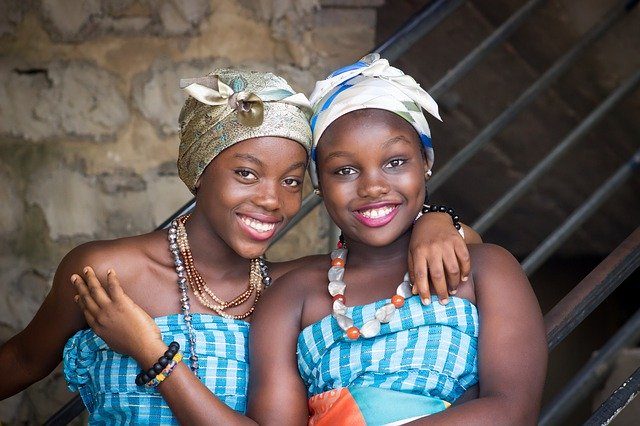
 Around the world, women are disproportionately affected by poverty. Kenya is one place where gender issues and poverty go hand in hand. Over 35% of the Kenyan population lives below the poverty line, and women, children and the elderly are most at risk. However, as poverty and inequality increase, so does the movement to help change the tides in Kenya. Nicole Minor learned of Kenya’s struggles and set out to change the lives of women throughout the country. The Pangea Network, a non-profit organization focused on empowering women in Kenya, was born.
Poverty in Kenya
Kenya has a population of more than 50 million, with over 17 million currently living in poverty or extreme poverty — on less than $1.90 a day. However, poverty in the country is steadily decreasing, falling from 43% in 2003 to 36% in 2016. And although poverty in Kenya remains a significant problem, the country has a lower overall poverty rate than most sub-Saharan countries. Kenya’s GDP continues to rise by approximately 5% annually, which is an impressive feat. Despite these facts, however, Kenya is unlikely to reach the goal of eradicating poverty by 2030 without new poverty reduction policies and faster growth rates.
Women in Kenya
In Kenya, women and girls are most vulnerable to poverty. One notable gap between men and women is in education. Of those in Kenya that earn higher education, approximately 30% are women — despite government policies that ensure gender equality in education. One reason for this is that women in Kenya have traditionally been relegated to the domestic sphere and lack opportunities for attending university, which can limit job prospects.
Despite the hardships they face, women are fighting back against gender inequality and poverty through enterprise and entrepreneurship. That’s where the Pangea Network comes in.
What is the Pangea Network?
The Pangea Network is a nonprofit organization focused on “empowering motivated individuals” with “knowledge, skills and an ongoing network of support in order to achieve their dreams and make positive, life-changing contributions in the communities where they live.” The organization’s founder, Nicole Minor, began creating the framework for the Pangea Network in 2005 in an effort to dedicate herself to social service. Today, the Pangea Network is an international organization that operates in Kenya and the United States.
How it Works: The Kenyan Women’s Network
The Pangea Network operates a four-year course called the Kenyan Women’s Network, which teaches participants a variety of skills intended to guarantee their future success. Some practical skills that participating women may learn include bookkeeping, financial literacy and micro-financing; women can also learn about issues like human rights, wellness and personal development.
The ultimate goal of the Kenyan Women’s Network is to enable participants to develop and grow their own businesses, which will generate profit and allow them to become financial providers for their households. Women who participate receive loans from the Pangea Network, allowing them to fully develop and expand their enterprises.
Impact
The Pangea Network has had a huge impact throughout its years in action. For those participating in the Kenyan Women’s Network, the average weekly income rose by almost 40% between 2015 and 2018. Over 560 different businesses founded by participants have grown in size and revenue, 45 of which began only with help from the Pangea Network. Furthermore, almost 200 women have received animal husbandry and livestock training; nearly 400 women have received first aid training; and more than 60% of Kenyan women who participate in the program report that they are their family’s primary source of income.
Beyond the Women’s Network, the Pangea Network provides scholarships for school-aged children in Kenya. It also sponsors boys’ and girls’ retreats focused on empowering children and providing them with both skills and a love of learning.
The Pangea Network is an inspiring organization dedicated to empowering Kenyan women and equipping them to succeed. Participants in the Women’s Network are hardworking, driven and well-deserving of the tools they are given to start or grow their own businesses. The Pangea Network is not only providing these women with hope, but it is also helping to close the gender gap and fight poverty in Kenya.
– Paige Musgrave
Photo: Pixabay

4 Facts about Measles in the Central African Republic
Measles is a viral infection spread through airborne respiratory droplets from an infected individual. Measles can cause typical flu-like symptoms and a skin rash, and, under certain circumstances, it can lead to death. While the illness is virtually obsolete in more developed countries, other countries, such as the Central African Republic, struggle with keeping it at bay. Here are four important facts you should know about measles in the Central African Republic.
4 Facts About Measles in the Central African Republic
Although the prevalence of measles in the Central African Republic is serious, the government and other organizations are committed to fighting it. Moving forward, continued efforts are needed to reduce the prevalence of measles in the nation.
– Danielle Kuzel
Photo: Flickr
Addressing Child Labor in South Sudan
South Sudan is an East-Central African nation considered to have one of the worst cases of child labor in the world. The crisis of child labor has been amplified by the outbreak of civil war in 2013, spreading violence and insecurity nationwide. Child labor in South Sudan is a complex issue that negatively affects children’s health and education. However, UNICEF is working to end child labor in the nation.
4 Causes of Child Labor in South Sudan
Formal vs. Informal Sector
Data on child labor can only be effectively collected from children working within the formal sector. As of 2019, nearly 46% of children aged 10-14 work in the formal sector. About 60% of these children find themselves working in agriculture, over 38% percent in industry and nearly 2% in services. While these ratios of children engaged in formal labor are large, even more children likely work in the informal sector, including jobs such as child soldiers and prostitutes.
Impact on Education and Health
Poor education in South Sudan increases participation in child labor. As a result, only 31.5% of children aged 6-14 were enrolled in school in 2019. Despite the fact that education is free, the rate of primary school completion sits at just 25.7%. Consequently, as of 2019, only about 27% of the adult population in South Soudan is literate. Not only does a lack of education stunt individual children’s development, health and economic opportunities, but also those of communities in which they live.
South Sudan also has a poor healthcare structure. This is reflected in the national life expectancy of 57.6 years, which is only worsened by the institution of child labor. Children working in the informal sector are placed at great risk: these jobs are life-threatening and drastically reduce life expectancy. However, children working in the informal sector are not the only children at risk. Jobs in the formal sector, such as construction and mining, are labor heavy and place great strain on children’s bodies. Journalist Losika Losepio reported in 2018 that an 8-year-old girl in South Sudan working in the mines said “It’s hard work digging and the shovel is heavy. I just want to be in school,” while holding an infected wound on her elbow. In the best of cases, child labor only takes children out of school; in the worst of cases, they are injured by their labor and potentially even killed.
The Good News
UNICEF is a United Nations agency responsible for providing humanitarian and developmental aid to children. Programming by UNICEF has made great progress in regard to child labor in South Sudan. In 2018, UNICEF freed over 1,000 children, many of whom were child soldiers for various armed groups. Additionally, UNICEF combats the root causes of child labor, such as lack of education. In 2018, the organization helped to rehabilitate schools damaged by conflict by leading teacher training and providing necessary classroom supplies. Through such efforts, UNICEF also helped 550,000 children re-enroll in school in 2018.
Children everywhere have a right to education, health and safety. Child labor in South Sudan serves as an obstacle to each of these rights and must be counteracted. Progress has been made through organizations such as UNICEF, but the situation remains dire: these efforts must not only continue but expand across the nation.
– Lily Jones
Photo: Wikimedia
4 Efforts to Alleviate Child Poverty in North Macedonia
When Yugoslavia disintegrated in 1991, Macedonia became an autonomous nation. However, standards of living have significantly decreased since the country’s independence. Unemployment rates are consistently high, which has directly affected children across the nation. Approximately 6% of children work and 12% marry before turning 18. The child poverty rate is 27.1%, with those from a Roma background at a much higher disadvantage. Fortunately, international organizations and the government are working to eliminate child poverty in the nation. Here are four efforts to alleviate child poverty in North Macedonia.
4 Efforts to Alleviate Child Poverty in North Macedonia
These four efforts show the nation’s determination to support children in need, and, more broadly, to shift Macedonia from an impoverished nation to one of prosperity and equality. The success of these reforms will depend on governmental spending, as well as programs supported by nonprofits and international organizations. Moving forward, alleviating child poverty in Macedonia must continue to be a priority.
– Michael Santiago
Photo: Wikimedia Commons
Dementia in Developing Countries
Dementia and Alzheimer’s
The most common cause of dementia is Alzheimer’s Disease. But as with nearly all forms of dementia, there is progressive brain cell death, so as its symptoms progress, cognitive functions become severely impaired. As early as the second stage of mild dementia, individuals may require intensive care and supervision from others with tasks in their daily life. However, healthcare systems are stretched thin in many developing countries. Often, their frontline providers may not be adequately trained in providing the long-term care needed for these conditions. Even when assisted-living arrangements in a medical facility are an option, people with dementia have limited autonomy over their care because there are few systems in place to monitor the quality of dementia care in poorer nations.
Treating Dementia in Developing Countries
Due to the lack of formal care, people with dementia in the developing world tend to rely upon systems of “informal” care by family, friends, or other community members. These support mechanisms are under great strain due to the economic, emotional and physical demands of unpaid, and often unsubsidized, caregiving. Caring for someone with dementia can demand up to 74 hours a week and cost around $4600 a year. Furthermore, symptoms associated with the later stages of dementia, such as aggression, depression and hallucinations can have distressful psychological effects for these caregivers. In fact, 45% of family caregivers report experiencing distress, and 39% have feelings of depression.
Social Stigmas Surrounding Dementia
The social stigma associated with mental health diagnoses as well as general health illiteracy and unfamiliarity with dementia also contributes to inequities within the quality of dementia care. A study conducted in India suggested that 90% of dementia cases in low and middle-income nations go undiagnosed. Even healthcare professionals may lack the awareness to identify early signs of dementia. The wide-spread myth that dementia is not a medical issue in developing countries can mislead providers to dismiss dementia’s symptoms as characteristics indicative of normal aging.
Furthermore, in some parts of Sub-Saharan Africa, such as rural Kenya and Namibia where knowledge of dementia is not widespread, people may associate dementia with witchcraft or punishment for previous wrongdoings. Such beliefs further entrench the stigma surrounding it into the broader culture, discouraging people with dementia from seeking an official diagnosis. Organizations like the Strengthening Responses to Dementia in Developing Countries (STRiDE) Project have worked specifically towards reducing this stigma.
Understanding Poverty and Dementia
The immense prevalence of undiagnosed cases is particularly detrimental, considering poverty may increase one’s risk of dementia. Poverty is linked with many risk factors for dementia — one of which is stressful experiences like financial insecurity and education difficulties. Incidence of dementia has also been linked to lower levels of education since early development of neural networks can help the brain combat damages to its pathology later in life. A study on the rural Chinese island of Kinmen, where the median level of education is one year, showed dementia rates rising as people turned 60. This trend is earlier than in developed nations, and implies that illiteracy and lack of education can bring on dementia sooner.
Looking Forward
It remains unclear whether there is a correlation or direct causation between education level and the likelihood of dementia later in life. But one thing, however, is clear — low education levels serve as a frequent marker for other socioeconomic issues that are more common in developing nations, such as poverty, malnutrition, and toxic environmental exposures. Furthermore, the most commonly recommended strategy for reducing the risk of Alzheimer’s is maintaining overall health, which is more difficult in poorer countries due to malnutrition and unequal access to health care.
Moving forward, we must expand the support available to informal care systems, while ensuring healthcare providers receive dementia-specific training and health literacy. Women often the ones left to provide the majority of dementia care, but their efforts largely go ignored by their governments. Incentives, like universal social pensions, disability benefits and carer’s allowances, could support family and friends who house and care for people with dementia. Still, formal health systems too need to be bolstered to supplement and eventually substitute the role of informal carers. Policy-makers worldwide need to prioritize and anticipate the growing number of people with dementia as it remains the only leading cause of death still on the rise.
– Christine Mui
Photo: Flickr
The Pangea Network: Supporting Women Entrepreneurs
Poverty in Kenya
Kenya has a population of more than 50 million, with over 17 million currently living in poverty or extreme poverty — on less than $1.90 a day. However, poverty in the country is steadily decreasing, falling from 43% in 2003 to 36% in 2016. And although poverty in Kenya remains a significant problem, the country has a lower overall poverty rate than most sub-Saharan countries. Kenya’s GDP continues to rise by approximately 5% annually, which is an impressive feat. Despite these facts, however, Kenya is unlikely to reach the goal of eradicating poverty by 2030 without new poverty reduction policies and faster growth rates.
Women in Kenya
In Kenya, women and girls are most vulnerable to poverty. One notable gap between men and women is in education. Of those in Kenya that earn higher education, approximately 30% are women — despite government policies that ensure gender equality in education. One reason for this is that women in Kenya have traditionally been relegated to the domestic sphere and lack opportunities for attending university, which can limit job prospects.
Despite the hardships they face, women are fighting back against gender inequality and poverty through enterprise and entrepreneurship. That’s where the Pangea Network comes in.
What is the Pangea Network?
The Pangea Network is a nonprofit organization focused on “empowering motivated individuals” with “knowledge, skills and an ongoing network of support in order to achieve their dreams and make positive, life-changing contributions in the communities where they live.” The organization’s founder, Nicole Minor, began creating the framework for the Pangea Network in 2005 in an effort to dedicate herself to social service. Today, the Pangea Network is an international organization that operates in Kenya and the United States.
How it Works: The Kenyan Women’s Network
The Pangea Network operates a four-year course called the Kenyan Women’s Network, which teaches participants a variety of skills intended to guarantee their future success. Some practical skills that participating women may learn include bookkeeping, financial literacy and micro-financing; women can also learn about issues like human rights, wellness and personal development.
The ultimate goal of the Kenyan Women’s Network is to enable participants to develop and grow their own businesses, which will generate profit and allow them to become financial providers for their households. Women who participate receive loans from the Pangea Network, allowing them to fully develop and expand their enterprises.
Impact
The Pangea Network has had a huge impact throughout its years in action. For those participating in the Kenyan Women’s Network, the average weekly income rose by almost 40% between 2015 and 2018. Over 560 different businesses founded by participants have grown in size and revenue, 45 of which began only with help from the Pangea Network. Furthermore, almost 200 women have received animal husbandry and livestock training; nearly 400 women have received first aid training; and more than 60% of Kenyan women who participate in the program report that they are their family’s primary source of income.
Beyond the Women’s Network, the Pangea Network provides scholarships for school-aged children in Kenya. It also sponsors boys’ and girls’ retreats focused on empowering children and providing them with both skills and a love of learning.
The Pangea Network is an inspiring organization dedicated to empowering Kenyan women and equipping them to succeed. Participants in the Women’s Network are hardworking, driven and well-deserving of the tools they are given to start or grow their own businesses. The Pangea Network is not only providing these women with hope, but it is also helping to close the gender gap and fight poverty in Kenya.
– Paige Musgrave
Photo: Pixabay
Renewable Energy in Argentina
Economic Independence
Argentina has employed renewable energy in Argentina for several reasons. For one, the nation wants to be economically independent, and not rely on imports from other countries to meet their energy needs. Argentina struggled through default of $100 billion in 2001, losing 75% of its currency value. In 2005, energy subsidies grew from 1.5% to 12% within only a few years, sharply increasing government spending. Low investment in the domestic energy sector also made Argentina dependent on importing oil from other countries. In order to diversify its energy sector and remove its independence, Argentina sought out its own abundant natural and renewable resources.
Argentina has also made the transition to renewable energy because the country possesses many regions that are adaptable to solar and wind farming. Helpfully, the areas of Argentina with the most wind and solar energy potential are sparsely populated, meaning that the installation of wind turbines and solar panels are not as invasive to people’s homes or property.
Wind Energy
Many of the most powerful winds in Argentina can be found in the Patagonia region, located near the Argentina-Chile border. Argentina’s largest wind farm, called the Madryn Wind Farm, is located in this region. It has the capacity to produce 987,000 MW of energy per year. The wind farm became operational in 2019 and is home to 62 wind turbines, each 117 meters high.
Solar Energy
Many, but not all, of Argentina’s solar panels can be found on farms in the province of Entre Rios. Some of the farmers in this province raise rice and are reliant on water pumps to water their crops. Previously, these farmers had often gone out of business because they could not afford the fuel to power these necessary pumps; with the installation of solar panels, however, farmers can now rely on cheaper solar energy for power. This is an especially important development, considering that 13% of Argentina’s GDP comes from agriculture. The installation of solar panels has helped farmers keep their livelihoods and contribute to national economic growth.
Solar panels have also contributed to safety in the Puna Highlands of Argentina. A village located in the highlands, called San Francisco, used to be difficult to traverse at night. But thanks to the installation of 40 solar panels that power LED lights within the village after sunset, that is no longer the case. The village can now be easily spotted at night, and travelers no longer have to wait until sunrise to leave the village.
These examples are just a few ways in which renewable energy in Argentina can benefit people living in poverty and improve the economy. This technology must be pursued and perfected in years to come to guarantee further progress.
– Jacob E. Lee
Photo: Wikimedia
4 Technological Solutions Alleviating Poverty
Providing cheap, accessible and reliable technological solutions can alleviate poverty in developing nations. Technological innovations have proven to provide small-scale farmers with agribusiness and expansion opportunities for education services. They also provide growth in energy production and water security. Affordable innovations are therefore essential to improve the lives of those in need. Here are four technological solutions alleviating poverty in developing nations.
4 Technological Solutions Alleviating Poverty
Overall, affordable technological solutions alleviate global poverty in developing nations. Technology must be easy to use and consistent with the intension of generating economic progression. As technology continues to develop, services should become less exclusive and therefore more available to developing countries.
– John Brinkman
Photo: Flickr
5 Facts About Child Homelessness in Dominican Republic
5 Facts About Homelessness in the Dominican Republic
Palomos lead a life of sadness and poverty. These children get through difficult times by finding companions on the streets and sticking together. Most of children on the street are homeless for one of two reasons: either they were kicked out or abandoned by their family, or they left on their own accord after enduring horrible circumstances at home. While some children return home, others remain on the streets, subjected to the natural elements, abuse, muggings and other misfortunes. The Dominican Republic must do better for its homeless population, especially its children.
– Kate Estevez
Photo: Flickr
7 Ways 5G Internet Could Reduce Poverty
With the “fourth industrial revolution” underway as technology rapidly advances and changes the global outlook, fifth-generation (5G) internet has proved to be a breakthrough that could potentially pull millions out of poverty. One can characterize 5G internet by its high speed, high capacity and low latency with a bandwidth almost 10 times more than fourth-generation (4G) internet. Peak download speeds for 5G internet are around 20 gigabits per second, allowing users to download full movies, videos, advanced Internet of Things (IoT) software or artificial intelligence (AI) in minutes. 5G internet could reduce poverty significantly if countries implement the correct infrastructure for it.
Many countries have already begun building 5G networks. According to a report by Cisco, at the end of 2019, 26 countries were commercially selling 5G programs, 14 of which were developing countries. Countries with high rates of poverty could especially benefit from 5G internet as it would provide a stable internet connection and allow them to access a wealth of online resources. Below are seven ways 5G internet could reduce poverty.
7 Ways 5G Internet Could Reduce Poverty
Currently, 5G internet is accessible mostly in urban areas due to population density, but rural areas will not lag far behind if areas put the right infrastructure in place. South African cities and Cape Town were the first in Africa to see 5G due to the growth of Rain, a South African company. These seven facts about how 5G internet could reduce poverty show that it holds a bright future for many of the developing countries and will be a key player in the coming years.
– Nitya Marimuthu
Photo: Flickr
Greta Thunberg Launches New Humanitarian Campaign
Everyone knows Greta Thunberg as the young Swedish environmental activist. Thunberg started her work of raising awareness about the effects of climate change when she was 15 years old, and she has now become the face of the environmental movement. However, Greta Thunberg recently started a humanitarian campaign. Amid the coronavirus pandemic, Thunberg partnered with the Danish nonprofit, Human Act, to support the United Nations’ Children’s Fund (UNICEF). This nonprofit works to provide protection for vulnerable children.
COVID-19 is a deadly disease that disproportionately affects vulnerable populations. It is widely believed that elderly populations are the most at-risk for COVID-19, as the elderly are more likely to have weakened immune systems and underlying health conditions. However, Greta Thunberg argues that the coronavirus is a “children’s rights crisis” as children can also contract and spread the disease, and they will continue to experience the effects of the pandemic long into their futures. Therefore, UNICEF is focusing its relief efforts on children impacted by COVID-19, specifically impoverished and underprivileged children who lack adequate opportunities and resources to survive the pandemic.
Greta Thunberg donated $100,000 to a new humanitarian campaign created by UNICEF called “Let’s move humanity for children in the fight against coronavirus.” On April 22, the Danish nonprofit Human Act awarded Greta Thunberg with $100,000 for her climate activism efforts; however, the donation was redirected to help launch the campaign. It will focus on supporting at-risk children in all 190 countries that UNICEF works in.
5 Ways the UNICEF Campaign is Supporting Children
Greta Thunberg is using her platform as a world-famous environmentalist to spread awareness about children’s plight and stand in solidarity with impoverished children during this desperate time. By taking advantage of her large following, Thunberg has been able to communicate the important message that the virus will continue to impact our children long into their futures, so it is imperative to start supporting them today. Additionally, Thunberg’s leadership efforts inspire children around the world to take a stand and advocate for policies that support them. Thunberg, Human Act and UNICEF encourage everyone who has the protection and resources to safely continue their lives during the pandemic and to donate to the campaign to help protect children who do not have the same chance of survival.
– Ashley Bond
Photo: Flickr