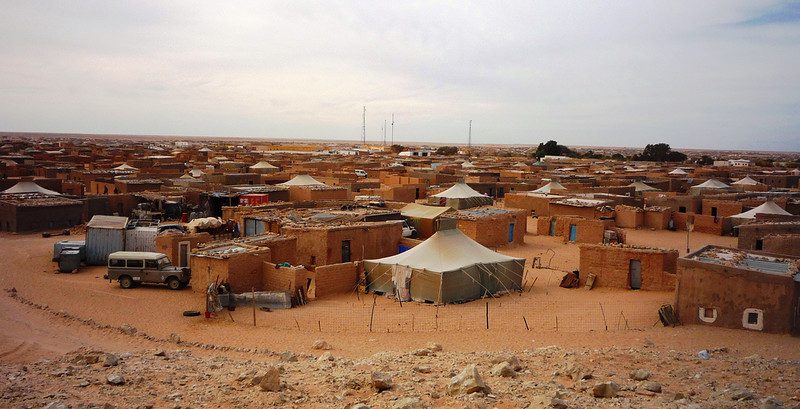
A relic of the Cold War, the Morocco-Western Sahara conflict remains frozen and mired in uncertainty. Nearing its 50th year, the clash has displaced and killed thousands over the years. Thankfully, some organizations have floated proposals to remedy this fight, although obtaining little success. Still, some humanitarian organizations are on the ground and working to improve the lives of those who desperately need it.
What is Western Sahara?
Western Sahara is the largest non-autonomous territory in the world. With an area of 266,000 square kilometers, Western Sahara is home to over 650,000 people. That’s roughly the size of Colorado, with a little more than a tenth of its population. Although rather poor, the desertic region contains significant phosphate deposits and rich fisheries off its coast. The arid climate over there prevents substantive agriculture, forcing Western Sahara to import much of its food. Life expectancy there is low, averaging only 64 years, and infant mortality is high, with 47.9 deaths per 1,000 children born.
The Dispute.
As colonial powers relinquished many of their claims, Spain decided to leave Western Sahara in the early 1970s — known then as the Spanish Sahara. The Spanish finally left the territory in 1975, as the tensions regarding the ownership of the region began heating up.
In 1974, the International Court of Justice had issued an advisory opinion finding that Morocco did not have a claim to the ownership of Western Sahara. This decision, which was mired in Cold War politics, was effectively ignored by Morocco. Shortly after the decision had been issued, more than 300,000 unarmed Moroccans marched into Western Sahara with copies of the Quran in what became known as the “Green March”. Then, Spain brokered a deal between Morocco and Mauritania, giving both countries part of Western Sahara and withdrawing from the region in late 1975.
Presence of the UN.
Peace, however, did not flourish. In 1979 Mauritania ceded its claim to Western Sahara, leaving Morocco as the sole ruler. Then, Algeria – Morocco’s neighbor and geopolitical rival – worked with the independence movement Polisario Front to oppose Moroccan rule, thereby starting a conflict that stretched for close to a decade and took the lives of nearly 14,000 people. With the collapse of the Soviet Union, the Polisario Front lost many of its backers, leaving the two sides in somewhat of a stalemate.
The Morocco-Western Sahara conflict has been locked in a ceasefire since 1991 when the UN sent in peacekeepers to make sure violence was kept to a minimum. This mission, which was officially called the UN Mission for the Referendum in Western Sahara (MINURSO) was also intended to provide a forum through which Morocco and Western Sahara could reach an agreement on the region’s autonomy. Sadly, no agreement has been made and Western Sahara’s fate still remains in limbo.
What is Being Done?
Since then the living conditions in Western Sahara have deteriorated thanks to the war and to its arid landscape. More than 40,000 Sahrawi refugees who were displaced by the conflict now live in camps in Algeria. One camp in Tindouf – the site of the 1963 “Sand War” between Morocco and Algeria – has been in operation since the onset of the war. Deutsche Welle reported that the dry conditions limit agriculture and the availability of water there. Thankfully, some aid organizations have stepped up to supply the refugees with much-needed basics.
Early this year, Italy provided the World Food Programme with over $500,000 to provide monthly food rations. Other organizations have operated as forces for good in Western Sahara:
- Oxfam responded to the COVID-19 pandemic by equipping 33 health clinics in the Tindouf camps.
- UN peacekeepers constructed wells in Western Sahara, giving residents access to a vital resource.
- Action on Armed Violence assisted Sahrawis in removing mines, cluster bombs and other un-detonated explosives. In total, 22,000 devices were cleared.
- AOAV also gave micro-grants to over 200 people who had been injured by these remnants of war.
Future Perspectives.
In 2006, Morocco proposed the Autonomy Plan, whereby Western Sahara would be governed by Morocco and yet retain some sovereignty of its own. The UN Security Council endorsed the idea, as have several other countries. Morocco controls 80% of Western Sahara and most Sahrawis already live under Moroccan control. But this plan has so far stalled. In its own fashion, Morocco has improved life in Western Sahara for some people. In 2015, the General Confederation of Moroccan Enterprises announced a $609 million investment plan for Western Sahara.
Still, much remains to be done. Despair is still common among refugee camps and long-term solutions have yet to be realized. Therefore, organizations on the ground need to increase their assistance while other countries and international organizations need to revisit the Morocco-Western Sahara conflict with redoubled efforts. Perhaps this frozen conflict can eventually thaw into peace.
– Jonathan Helton
Photo: Flickr

The Accessibility of Healthcare in Malta
Malta is a picturesque country located in the Mediterranean, home to half a million people. While it is a tiny nation, healthcare in Malta is some of the best in the world. In fact, the World Health Organization (WHO) ranked Malta fifth out of more than 100 countries for its healthcare system. Other independent studies have found it to place even higher. Residents of Malta can choose between a public healthcare plan and purchasing a private one, and there are even options for tourists.
Citizens of Malta and other nations in the European Union have the option of receiving public healthcare or obtaining their own private insurance. The public healthcare plan is available to all citizens, legal residents who pay social security contributions and retirees. Taxes fund public health insurance, which covers any visits to public hospitals. It also covers a wide variety of conditions and issues, ranging from childbirth to rehabilitation. The plan includes special treatment as well, such as therapy and visits to special clinics. Due to the small size of Malta, it is fairly easy for residents to seek medical care no matter where they are. Public hospitals are easily accessible, with a total of eight spread across the country, as well as a network of smaller clinics and pharmacies.
Accessibility of Private Insurance
Some people will opt for private health insurance, which gives them a greater pool of doctors and hospitals to choose from. As public insurance does not cover non-E.U. citizens, they must also purchase a private plan. Private insurance is becoming increasingly popular; people often think that it is faster and easier to receive treatment this way. Costs vary depending on what the plan covers and most companies offer a range of options to suit the needs of each individual or family. Healthcare costs are generally very reasonable. Many residents will choose private insurance over the public one: an indication of how affordable healthcare in Malta is.
Citizens can also choose to rely primarily on the public healthcare system and pay for visits to private hospitals or clinics as they go. Medical costs and medicines are extremely affordable when compared to countries like the United States, so this is not an uncommon practice. A visit to the doctor will only cost about $20, and a visit to the specialist may cost $65.
Tourists and people on short visits from the E.U. nation can consider applying for a European Health Insurance Card (EHIC), which will provide the same coverage as a local would receive from the public healthcare plan.
Conclusion
Residents of Malta have the freedom to either rely on the country’s public healthcare system or buy private insurance. The public insurance covers visits to any public hospital as well as a wide range of treatments and conditions. While it is a competent plan, some people choose to pay for a private plan. Private insurance provides a greater number of doctors and practitioners to choose from, allowing for visits to private hospitals and clinics. Private insurance providers typically offer several plans designated for the different needs of clients. Citizens are also free to rely mostly on public healthcare and pay for visits to private practices out of pocket.
People who lack access to healthcare are at a greater risk of falling into poverty, and poor health conditions keep people trapped in poverty. The cost of medical services can be a huge burden on individuals and their families. Women and children may have to leave school in order to help their families earn money, causing an education disparity which only leads to more severe impoverishment. A good healthcare system is paramount to reduce poverty in a nation. Malta’s public healthcare system offers its benefits and services to everyone, keeping Maltese citizens out of poverty.
– Alison Ding
Photo: Flickr
COVID-19 in Yemen
“Over the past five years, I can’t count the number of times I’ve thought that surely things can’t get more desperate in Hodeidah, [Yemen,]” writes Salem Jaffer Baobaid for The New Humanitarian. Fortunately, fighting and airstrikes have ceased in the city, but the Yemeni Civil War still rages on in other parts of the nation. Now, however, COVID-19 promises to further complicate the situation in Yemen. According to UNICEF, approximately 80% of the Yemeni people require humanitarian aid, which is around 24 million people nationwide. Amid the terror and destruction, hospitals are shutting down, leaving people more vulnerable than ever to the biological dangers of COVID-19 in Yemen. To understand the state of addressing the pandemic in Yemen, one must be aware of the conflict unfolding, how COVID-19 affects the conflict and what assistance is being provided to the Yemeni people.
Where Did This Violence Come From?
After the Arab Spring demonstrations in 2011, former President Ali Abdullah Saleh is replaced through a Gulf Cooperation Council (GCC) deal placing Abdrabbuh Mansour Hadi, his deputy, into power. Houthis, the other major group in the conflict, are pushing against Hadi’s power and Saudi influence in the region. In 2014, the Houthis took control over the capital, Sanaa, Yemen, which led to more violence and airstrikes led by Saudi Arabian forces. However, the Houthis are known to be supported by Iran informally, though there are rumors of financial and military support as well.
COVID-19 in Yemen Amid Conflict
Amid airstrikes, city-wide takeovers and alleged coups, the Yemeni people have been largely forgotten. Hospitals all over the nation have shut down due to physical damage and shortages of fuel and medical resources. Only 51% of hospitals and clinics were functioning as of 2015. Meanwhile, over 300 districts in Yemen do not have a single doctor operating within their borders. Due to hospital shutdowns, there are 675 Intensive Care Unit (ICU) beds and only 309 ventilators available. These numbers demonstrate the very real threat posed by COVID-19. Lack of reliable reporting and economic struggles have only deepened the struggle to contain COVID-19 in Yemen.
On April 2, 2020, a Houthi news organization reported the first case of COVID-19 in Yemen, but this was retracted only for another news release to be published around a week later. As of June 2020, the nation reports 1,100 cases and over 300 deaths, placing the startling mortality rate near 25%.
COVID-19 is also creating economic troubles for Yemen’s citizens. Many people in Yemen are reliant on remittances, or money being sent to them from a relative outside of the country. However, COVID-19 has led to economic recessions and copious layoffs all over the world. As a result, people who have lost jobs are unable to send money back to Yemen.
As the nation struggled to grapple with the loss of remittances and a surge in COVID-19 cases, Yemen also lost international aid that it relied on. The United States alone cut $73 million of aid to Yemen in April 2020 as a response to its own COVID-19 crisis, according to Oxfam.
Assisting the Yemeni People
Amid such chaos, nonprofit groups are moving in to fight for the underdog. Oxfam stands out as one of the most effective groups. Oxfam is currently working to help families in small refugee settlements throughout the nation. There Oxfam digs wells to increase accessibility to clean water in addition to passing out “hygiene kits” that include mosquito nets, wash bins, water jugs and more.
Oxfam is also heavily involved in educating people on how to avoid contracting diseases such as COVID-19 in Yemen. Meanwhile, there are groups working in the United States government to stop its halt on funding for the crisis in Yemen.
– Allison Moss
Photo: Flickr
An Overview of Poverty in Equatorial Guinea
Mariano Ebana Edu’s hit single, “Carta Al Presidente,” made big waves in 2013 for speaking up about poverty in Equatorial Guinea. In this passionate rap song, Edu, who performs under the name Negro Bey, criticizes President Teodoro Obiang Nguema Mbasogo’s oppressive government for keeping its citizens in poverty. Although the oil-rich country has experienced rapid economic growth since the 1990s, rampant corruption and wealth inequality prevent large populations from reaping the benefits. Here is some information about poverty in Equatorial Guinea.
Wealth Inequality
The Republic of Equatorial Guinea is a small country with a population of approximately 1.3 million located on the west coast of Central Africa. Although the country has become one of sub-Saharan Africa’s top five oil producers, poverty in Equatorial Guinea remains a major issue. Oil revenues have funded the luxurious lifestyle of President Obiang and his political elite while large populations still lack access to clean water and health care.
Human Development Report
Information about poverty in Equatorial Guinea can be difficult to find since Obiang’s government strictly controls the country’s media. In 2019, the United Nations Development Programme (UNDP) ranked Equatorial Guinea 144 out of 189 countries in its Human Development Report, combining life expectancy, education and per-capita income data. According to the U.N., more than half of Equatorial Guinea’s population still lacks access to clean water. UNICEF has found that 26% of the population uses unimproved drinking water sources, and only 66% have access to basic sanitation services.
Health Care
Healthcare remains a major issue for people living in poverty in Equatorial Guinea, where diseases like malaria and HIV/AIDS continue to be a threat. UNICEF estimates that in 2019, there were approximately 900 new cases of HIV in people ages 0-19 and 1,200 new cases in adolescents and young adults ages 15-24. Insecticide-treated nets (ITNs) are protective gear to help prevent the spread of malaria, but only 38% of households in Equatorial Guinea have at least one ITN. Meanwhile, 20% of children born in Equatorial Guinea die before the age of 5.
Aid and Progress
Enterprise for Development (EfD) is a U.K.-based organization working to eliminate poverty in Equatorial Guinea. EfD provides grants to poor farmers to help improve irrigation and ultimately create sustainable local enterprises with pro-poor benefits.
The Joint United Nations Programme on HIV/AIDS is a leader in global coordination and advocacy to help end AIDS as a public health threat. Data from UNAIDS shows that in 2019, 23,000 people living with HIV in Equatorial Guinea had access to antiretroviral therapy (ART), and hundreds of expecting parents received prevention of mother-to-child transmission services (PMTCT).
In 2019, the International Monetary Fund (IMF) approved a $280 million bailout to Equatorial Guinea. However, after credible accusations of high-level corruption President Obiang and his senior officials must reveal their private assets before the country can receive the full amount. Equatorial Guinea must also join the Extractive Industries Transparency Initiative in an effort to fight corruption in its oil and gas industries. These reforms can help ensure that foreign aid goes directly to improving the lives of Equatorial Guinea’s poor.
– Stephanie Williams
Photo: Flickr
The Morocco-Western Sahara Conflict
A relic of the Cold War, the Morocco-Western Sahara conflict remains frozen and mired in uncertainty. Nearing its 50th year, the clash has displaced and killed thousands over the years. Thankfully, some organizations have floated proposals to remedy this fight, although obtaining little success. Still, some humanitarian organizations are on the ground and working to improve the lives of those who desperately need it.
What is Western Sahara?
Western Sahara is the largest non-autonomous territory in the world. With an area of 266,000 square kilometers, Western Sahara is home to over 650,000 people. That’s roughly the size of Colorado, with a little more than a tenth of its population. Although rather poor, the desertic region contains significant phosphate deposits and rich fisheries off its coast. The arid climate over there prevents substantive agriculture, forcing Western Sahara to import much of its food. Life expectancy there is low, averaging only 64 years, and infant mortality is high, with 47.9 deaths per 1,000 children born.
The Dispute.
As colonial powers relinquished many of their claims, Spain decided to leave Western Sahara in the early 1970s — known then as the Spanish Sahara. The Spanish finally left the territory in 1975, as the tensions regarding the ownership of the region began heating up.
In 1974, the International Court of Justice had issued an advisory opinion finding that Morocco did not have a claim to the ownership of Western Sahara. This decision, which was mired in Cold War politics, was effectively ignored by Morocco. Shortly after the decision had been issued, more than 300,000 unarmed Moroccans marched into Western Sahara with copies of the Quran in what became known as the “Green March”. Then, Spain brokered a deal between Morocco and Mauritania, giving both countries part of Western Sahara and withdrawing from the region in late 1975.
Presence of the UN.
Peace, however, did not flourish. In 1979 Mauritania ceded its claim to Western Sahara, leaving Morocco as the sole ruler. Then, Algeria – Morocco’s neighbor and geopolitical rival – worked with the independence movement Polisario Front to oppose Moroccan rule, thereby starting a conflict that stretched for close to a decade and took the lives of nearly 14,000 people. With the collapse of the Soviet Union, the Polisario Front lost many of its backers, leaving the two sides in somewhat of a stalemate.
The Morocco-Western Sahara conflict has been locked in a ceasefire since 1991 when the UN sent in peacekeepers to make sure violence was kept to a minimum. This mission, which was officially called the UN Mission for the Referendum in Western Sahara (MINURSO) was also intended to provide a forum through which Morocco and Western Sahara could reach an agreement on the region’s autonomy. Sadly, no agreement has been made and Western Sahara’s fate still remains in limbo.
What is Being Done?
Since then the living conditions in Western Sahara have deteriorated thanks to the war and to its arid landscape. More than 40,000 Sahrawi refugees who were displaced by the conflict now live in camps in Algeria. One camp in Tindouf – the site of the 1963 “Sand War” between Morocco and Algeria – has been in operation since the onset of the war. Deutsche Welle reported that the dry conditions limit agriculture and the availability of water there. Thankfully, some aid organizations have stepped up to supply the refugees with much-needed basics.
Early this year, Italy provided the World Food Programme with over $500,000 to provide monthly food rations. Other organizations have operated as forces for good in Western Sahara:
Future Perspectives.
In 2006, Morocco proposed the Autonomy Plan, whereby Western Sahara would be governed by Morocco and yet retain some sovereignty of its own. The UN Security Council endorsed the idea, as have several other countries. Morocco controls 80% of Western Sahara and most Sahrawis already live under Moroccan control. But this plan has so far stalled. In its own fashion, Morocco has improved life in Western Sahara for some people. In 2015, the General Confederation of Moroccan Enterprises announced a $609 million investment plan for Western Sahara.
Still, much remains to be done. Despair is still common among refugee camps and long-term solutions have yet to be realized. Therefore, organizations on the ground need to increase their assistance while other countries and international organizations need to revisit the Morocco-Western Sahara conflict with redoubled efforts. Perhaps this frozen conflict can eventually thaw into peace.
– Jonathan Helton
Photo: Flickr
Forced Marriage in Iraq and Afghanistan
In Iraq, a 1987 law entitled the Personal Status Law and Amendments stated that a person may not marry until age 18, however, they could marry with judicial consent at age 15. Nevertheless, 24% of girls marry by age 18 and 5% marry by age 15. In Afghanistan, the numbers are just as shocking. In fact, 35% of girls in Afghanistan marry by 18, and 9% by age 15. The consequences of forced marriage in Iraq and Afghanistan are detrimental to the development of a young girl’s identity and safety, and they shed light on issues with child marriage around the globe.
Child Marriage in Iraq
Child marriage is often the result of extreme poverty or religious beliefs, and because of these factors, it is at its highest in the Middle East. In Iraq, one in four children lives in poverty, making them extremely vulnerable to forced marriage. When families receive offers of money in exchange for their child, they often accept in order to feed the rest of their family. The girls that enter these marriages often suffer abuse and rape, or become pregnant; then in some cases, they experience divorce and end up on the street. Women over age 15 are also vulnerable to abusive marriages because 85% do not work and cannot financially support themselves.
In Iraq, child marriage is not criminalized and many often consider it normal or protect it. Recently, the rate of “pleasure marriages” has skyrocketed as well. Pleasure marriages are temporary marriages that have religious approval and often occur either so the man can obtain money from the girl’s family or for sexual exploitation of the girl before the marriage ends and the wife experiences abandonment. This is detrimental to young girls in poverty and rural communities, as their family often abandons them after paying large dowries to the man’s family.
Child Marriage in Afghanistan
Forced marriage in Iraq and Afghanistan is an unfortunate commonality, largely because of religious beliefs but also because girls lack opportunities for independence. In Afghanistan, although there are laws in place that make it illegal to marry anyone under age 18, they rarely experience enforcement. A 2017 study by UNFPA stated that girls who complete secondary school are less likely to be married under age 18, but unfortunately, the most recent data reflects that only 44% of girls in Afghanistan enter primary school. Only half of those girls then go on to secondary school. The lack of education that leads to poverty does not only take away a girl’s chance to experience growth and independence–in Afghanistan, it makes her all the more vulnerable to a forced marriage.
The effects of child marriage on a girl’s health and well being are detrimental. Girls under 15 years old are five times more likely to die in childbirth, according to the Women’s Health Coalition. Just as devastating, a child born to a child bride is 60% more likely to die in their first year of life. Girls forced to marry often cannot access healthcare because they have signs of abuse both physical and sexual. Because of this, the risk of STD contraction is very high.
Combatting Child Marriage Globally
Forced marriage in Iraq and Afghanistan affects too many young girls. Girls Not Brides is an international organization working to enforce the sustainable development goals that are necessary to end child marriage, starting with poverty and hunger. Girls Not Brides outlines steps in its Theory of Change and monitors change frequently. The organization’s website allows people to email and call leaders in support of enforcing the legal age of marriage. Thanks to organizations such as that, child marriage now is declining in the world. In 2016, the percentage of women married before the age of 15 globally was 7%, as opposed to 12% in the 1990s.
There are also fact sheets and visuals to use on social media. In the U.S., the Girls Lead Act, or S.2766, is in need of support. This bill would provide funding for education initiatives for the millions of girls worldwide. This bill also focuses on the lack of girls in politics, science and technology; it will fund programs to make these fields of study more accessible. Beginning with education and stable living conditions, girls living in poverty won’t have to fear losing their futures.
– Raven Heyne
Photo: Flickr
10 Facts About Sanitation in Guam
Guam is a U.S. island territory in the Western Pacific with a population of slightly less than 170,000 people. There are multiple U.S. military bases on the island, which many consider critically important bases for U.S. strategic interests in the Pacific. The bases also provide the island with its principal source of income. Aside from being one of the military’s crown jewels, Guam has a rich indigenous (Chamorro) culture and beautiful coral reefs surround it. While not as beautiful but still impressive, Guam has a relatively robust system of sanitation. Here are 10 facts about sanitation in Guam.
10 Facts About Sanitation in Guam
As these 10 facts about sanitation in Guam show, the island has a solid foundation of water, sanitation and trash systems. The massive coastal cleanup and the community-driven efforts to combat the spread of COVID-19 clearly demonstrate the commitment of the islanders to their home. Although the pandemic is putting Guam’s sanitation and health facilities to the test, individual citizens and organizations are rising to the challenge.
– Spencer Jacobs
Photo: Department of Defense
How Solar Freeze Aims to End Food Loss in Africa
Growing up in the rural Kenyan village of Machakos, Dysmus Kisilu witnessed firsthand how smallholder farmers struggled financially, losing 40-60% of their harvest due to the lack of refrigeration. When food losses are at such a high rate, food security also becomes an issue. About 30% of Kenya’s population faces food insecurity and poor nutrition each year, and agricultural food loss in Africa plays a significant role.
Kisilu wanted to utilize his knowledge and skills in renewable energy to make an impact on small-scale farmers, specifically women and youth, and food insecurity in Kenya. After studying solar-powered solutions to post-harvest losses at UC Davis in 2016, he developed Solar Freeze – a company that provides mobile solar-powered cold storage units for small-scale farmers.
Solar Freeze
Solar Freeze includes four innovative technologies within its system:
Implementation in Kenya
Solar Freeze takes on a micro-franchise business model that aims to integrate its technology and knowledge with village women and youth. The goal is to get more women to own and operate the cold storage units as independent micro-franchisee entrepreneurs. Through the micro- franchise model, Solar Freeze will supply women smallholder farmers and their communities with solar-powered cold storage units and provide resources, training and mentorship to operate the units and grow their agribusinesses.
Solar Freeze has also created a youth empowerment program called Each One Teach One. The program, already training 50 youth, teaches the younger generation how to work with the cold storage equipment as well as solar irrigation. They learn the entirety of the solar-powered technology to repair and maintain the machinery. Students then teach others in their community the skills that they learned.
The innovative technology and implementation of Solar Freeze aim to transform rural agriculture in Africa, making agribusiness more efficient and profitable. It also plans to aid in ending women and youth unemployment, food loss and hunger in Kenya and Africa.
Future of Solar Freeze
Solar Freeze has currently tested its technology and business model with 3,000 smallholder farmers in Kenya. Out of the 3,000 farmers, 90% reported that there was a reduction in post-harvest losses. Kisilu plans to impact 30,000 farmers with Solar Freeze by 2030. The impact Solar Freeze can have on smallholder farmers and the surrounding communities could be a massive stride in revolutionizing farming and ending hunger and food loss in Africa for future generations.
– Dalton Dunning
Photo: Flickr
5 Documentaries About Healthcare Around the World
During quarantine, many people resort to watching Netflix shows and movies. Though the pandemic has freed up more time for binging meaningless films, one can also use this time to learn about how impoverished countries are handling the COVID-19 pandemic. While documentaries have a reputation for being boring, many documentaries about healthcare are the opposite. Here are five documentaries about healthcare around the world.
1. “The Final Inch” (2009)
Rating: PG-13
Where to Watch: HBO
In the late 2000s, polio spread through India, Pakistan and Afghanistan. “The Final Inch” focuses on efforts to eradicate polio in these countries (it has since seen elimination in India, but there are ongoing efforts to reduce the numbers in Pakistan and Afghanistan). Produced by the philanthropic division of Google, this documentary aims to increase awareness of the outbreak of polio in these countries and the efforts of healthcare workers to eradicate the disease. This documentary follows numerous workers and volunteers in their efforts to administer the polio vaccine in these vulnerable places. While dangers arose in Afghanistan while filming, this documentary about healthcare provides a raw outlook on the polio epidemic and its effects on these countries.
2. “Sicko” (2007)
Rating: PG-13
Where to Watch: Amazon Prime Video
Directed by Michael Moore, “Sicko” is a political documentary that investigates healthcare in the United States. Centered around the American pharmaceutical industry, this film compares the non-universal U.S. healthcare system to systems in Canada, France and Cuba. “Sicko” follows Moore’s journey to understand the difference in how the United States and other countries around the world handle the same problems. Moore considers issues of health insurance and money, revealing horror stories behind healthcare policies. Moore effectively combines tragedy and comedy in this raw film and exposes the truth behind American healthcare.
3. “Living in Emergency: Stories of Doctors Without Borders” (2008)
Rating: Unrated
Where to Watch: Amazon Prime Video
Doctors Without Borders is a nonprofit organization that provides medical care in impoverished countries around the world. Set in the Congo and post-conflict Liberia, Oscar-nominated documentary “Living in Emergency” follows four doctors and their efforts to provide emergency medical care to the public. Through the chaos, this documentary about healthcare follows these volunteers as they confront many challenges and make tough decisions. The doctors often face limited resources, personnel and poor living conditions. “Living in Emergency” provides a new, more realistic perspective for those privileged enough to access proper healthcare.
4. “Period. End of Sentence” (2018)
Rating: TV-PG
Where to Watch: Netflix
While menstruation is a shared experience across the world, it is a taboo topic in India. In rural communities in this country, sanitary products are out of reach, as proper healthcare is often available only in urban areas. “Period. End of Sentence” follows a group of women in the Harpur district outside of Delhi, India as they create sanitary products. Throughout the film, these women not only learn how to produce pads, but they also rid their community of stigma against menstruation. Nominated for an Oscar, this documentary about healthcare in India has severely changed the view on periods in healthcare systems and rural communities as well. Beyond changing the way people view menstruation, “Period. End of Sentence” has also yielded significant praise as a documentary.
5. “Cervical Cancer in Uganda: Three Perspectives” (2014)
Rating: Unrated
Where to Watch: YouTube
In sub-Saharan Africa, the most prominent form of cancer is cervical cancer. Research from the National Center for Biotechnology Information concludes that cervical cancer causes the most cancer-related deaths in Uganda. While cervical cancer is common in this country, however, it does not get mainstream attention. This documentary follows Sascha Garrey as she travels through the country to understand the prevention and treatment options for women in Uganda. Produced by the Pulitzer Center, this documentary on healthcare educates viewers on cervical cancer and its prevalence in impoverished countries.
While these five documentaries may not all be the most recent, watching them during the pandemic can provide valuable insight into healthcare in impoverished countries. Instead of watching mindless films to pass the time, consider watching an informative and interesting documentary about healthcare conditions around the world.
– Aditi Prasad
Photo: Flickr
Addressing the Impact of COVID-19 in Nepal Via Direct Relief
Direct Relief Background
Direct Relief is renowned for its consistent dedication to helping people around the world recover from natural disasters, humanitarian crises and widespread medical emergencies such as Ebola. In addition, Direct Relief raised and delivered $1.17 billion in aid resources to various countries in 2019. Now, Direct Relief is focusing its aim on the far-reaching impacts of COVID-19 globally.
History of Direct Relief’s Help in Nepal
Direct Relief has a long history of helping Nepal through times of crisis. Since beginning its work with Nepal in 2008, Direct Relief has provided more than $67 million worth of medical aid to local healthcare providers. After the 2015 earthquake that killed approximately 9,000 Nepali people, the organization focused on providing on-the-ground assistance in the form of equipment, medicine and trained paramedics. Additionally, Direct Relief repaired destroyed medical facilities and provided mobile assistance for those who could not access what care centers were left.
It is important to note that Nepal is greatly dependent on India for resources. Further, because of the border lockdown, access to medical supplies became severely limited. Nepal is also a mountainous country since it is home to both the Himalayas and Mount Everest. This type of terrain makes it extraordinarily difficult to properly distribute supplies.
Direct Relief’s Assistance During COVID-19 Pandemic
In response to the rise of COVID-19 in Nepal, Direct Relief distributed medication, prepared ICU kits and supplied in-person treatment for those infected. Because of its efforts, Direct Relief has successfully acquired and circulated equipment to hospitals all across Nepal. While the borders remain closed and resources are still limited, Direct Relief continues to fight for Nepal and other developing countries in similar situations. Of note, Direct Relief delivered more than 2 million pounds of medicine in Nepal alone.
COVID-19 is a large hurdle to overcome. It is one that can appear seemingly insurmountable for countries struggling to provide sustainable aid for its population. However, it is a threat that can be targeted and minimized with the right kind of effort. Direct Relief continues to apply this effort for the many millions who still suffer around the world.
– Nicolette Schneiderman
Photo: Flickr
Anti-Poverty in Mongolia: Residents use a Phone App to Vote
Public Participation in Mongolia
In 2013, the Mongolian government created a new law titled The Integrated Budget Law. This is the first law in Mongolia that works toward Mongolian residents’ participation in the Local Development Fund. The fund emerged to offer monetary assistance in urban centers and the more rural areas. The fund immediately provided relief by placing 280 street lights in various cities between 2013 and 2015. Despite this, the needs of Mongolian residents vary depending on where they are located. Urban centers long for more street lights while rural areas need more welfare to provide support for stagnating jobs.
The Asia Foundation and Anti-poverty in Mongolia
To gain public participation, the government has partnered with the nonprofit The Asia Foundation and a government organization called The Swiss Agency for Development. The Asia Foundation created an app to vote on public projects in 2014 and working with the Ulaanbaanter Municipal, mapped out entire districts and important amenities on a website called manaikhoroo.
The Asia Foundation is concerned with rural areas receiving the important services they need like job training and loans. The urban centers still have a majority of representation in government, but the focus is turning more towards local khoroos to find what they need the most. The efforts going toward anti-poverty include attempting to give more power to local communities. Another program connected to the participatory budget, named the Urban Governance Project, is working towards giving all residents a scorecard to identify what things they need the most. The government is attempting to provide equal representation for all khorros. The Asia Foundation also worked with another NGO named the GER Community Mapping Center to focus on the subdivisions of Ulaanbaatar, called khoroos, to share the Local Development Fund equally in all areas.
Mongolia has Replicated Brazil’s Anti-poverty Measure
The idea behind participatory budgeting began as an anti-poverty measure in Porto Alegre, Brazil. The Brazilian Worker’s Party introduced the participatory budget as a way to counteract the dictatorship in 1989. The struggle with participatory budgets is keeping the people interested in taking part in determining the budget. As with Porte Alegre, participation has passed through waves of interest and disinterest. The Asia Development Fund estimated from a survey of 33 khoroos, that only 18% knew about the Local Development Fund.
The app works better in Ulaanbaatar because 90% of people have an internet connection in the city. It is more difficult to inform the nomadic people living in Mongolia. Since 40% of the people live in nomadic tribes, it is difficult for the government to work towards mapping entire areas. Along with this, 60% of the nomadic population has settled into gers around the central city of Ulaanbaatar because of drastic weather changes making it difficult to wander as they used to.
How Mongolia Can Improve its Anti-poverty Measures
By updating the mapping of the gers and informing the public, the government can provide funding to the areas that need it most. A lot of work is necessary to implement the voting system in all areas in Mongolia, but so far, 800,000 people in Ulaanbaatar have voted using the app. Despite this only accounting for half of the population, 54% of women voted using the app. The Asian Development Bank is working towards providing community meetings to explain to residents how they can involve themselves with the Local Development Fund.
A participatory budget is useful in aiding anti-poverty measures and other cities are picking up on using the same principles as Mongolia. In 2015, Paris introduced a new participation method geared toward citizens suggesting ideas that generated benefits for residents in local communities. Paris government officials partook in a social media campaign and garnered more than 1 million views on an online platform discussing the most popular ideas. Paris government officials held discussions in community meetings and people could suggest ideas offline as well.
The Mongolia model of participation budgeting is still new, but as the model gains traction through advocacy and mapping, the government officials in Ulaanbaatar hope to spread the participatory budget system to other places in Mongolia to let residents know that they care about how the government spends their money.
– Sarah Litchney
Photo: Pixabay