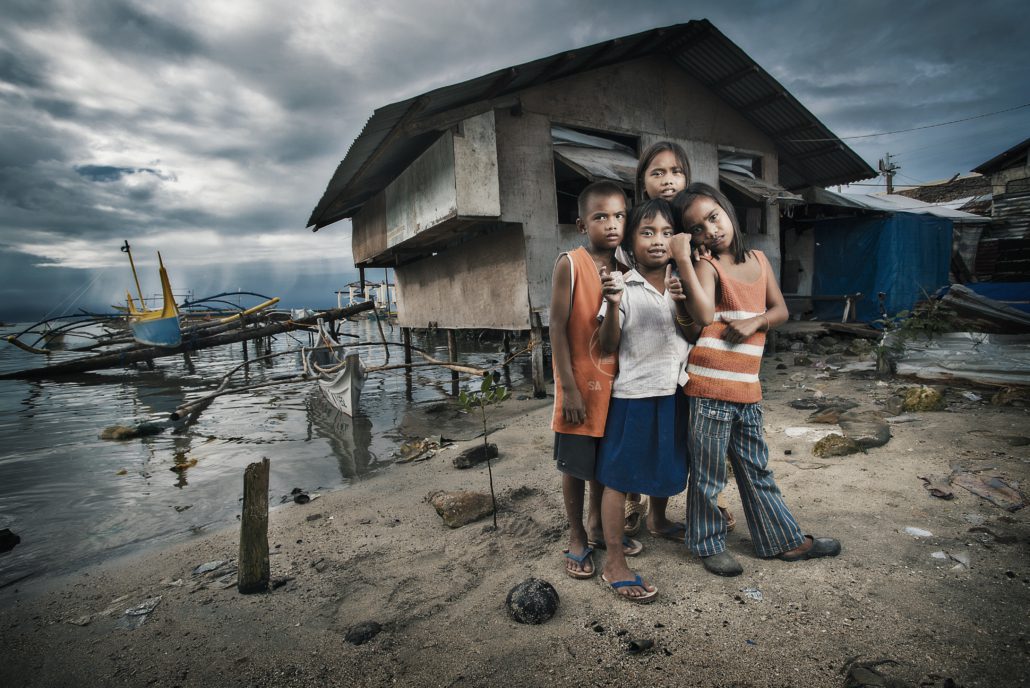
Every year, hundreds of natural disasters are reported worldwide. In 2019, 409 natural disasters occurred, many in the Asian Pacific region. Natural disasters in the Philippines are quite common and they pose great difficulties for islands with large populations and vulnerable infrastructure.
Geography of the Philippines
The Philippines is one of highest-risk countries for natural disasters. The nation’s location exposes it to storms that lead to floods, mudslides and typhoons. Additionally, the presence of offshore trenches such as the Manila Trench puts the Philippines at risk for tsunamis. Unfortunately, the list does not end there. The Philippines is also on top of the Ring of Fire, a path in the basin of the Pacific Ocean where there is a high risk for earthquakes and active volcanoes.
Infrastructure
The Philippines is made up of 7,107 islands, which poses many challenges to improving infrastructure. Natural disasters also disproportionately impact infrastructure in poverty-stricken areas. That being said, in the past decade, the Filipino government made strides to improve infrastructure and make the nation more disaster-ready.
In 2020, nearly a quarter of the Filipino government’s budget was allocated for infrastructure. President Rodrigo Duterte hopes to allocate 6% of the nation’s GDP to infrastructure by 2022. His “Build, Build, Build” program has played a large role in this increase of funds, which will be allocated to projects such as the Manila subway and other modes of transportation, water resources and energy.
The Global Facility for Disaster Reduction and Recovery (GFDRR) has outlined $2.5 million in funds being used for infrastructure projects in the Philippines. GFDRR focuses on understanding and reducing disaster risk, strengthening governance and improving recovery, rehabilitation and reconstruction. GFDRR currently has three active projects in the Philippines. First, the “Support to the Sustainable, Inclusive, and Resilient Tourism Project” is set to be complete in June 2021. The second project is “Philippines Disaster Risk Financing,” scheduled to be complete in August 2020. Finally, the “Support to the Earthquake-Resilient Greater Metro Manila Program” is set to be complete in September 2021.
Poverty Reduction
According to the World Bank’s October 2019 report, the Philippines is expected to sustain its progress in poverty reduction. The Philippines’ GDP growth was roughly 5.8% in 2019 and is expected to reach 6.2% by 2021. Many believe this growth is tied to transportation infrastructure among the Filipino islands. According to the 2013 Philippines Human Development Report, economic integration will be key to creating sustainable growth throughout all of the Filipino islands and reducing poverty in rural areas.
The main production sectors in the Philippines are electronics assembly, garments, footwear, pharmaceuticals, food processing, petroleum refining and fishing. Agriculture is also a significant sector; however, self-employed farmers are the most susceptible to geographic hardships from natural disasters. Additionally, many farmers struggle due to a lack of insurance, inadequate post-harvest facilities, inadequate irrigation techniques and limited access to the market as a result of poor transportation services.
To address these problems, the Philippine Development Plan for 2017-2022 plans to expand economic opportunities for those engaged in the agricultural sector, especially small farmers. This plan aims to get rid of irrigation fees for small farmers, pass the National Land Use Act to protect important natural lands, implement the Agrarian Reform Program to distribute land to landless farmers.
Conclusion
The Philippines is still considered at third world country according to its GDP, human development index, life expectancy and infant mortality rate. However, while the Philippines still has many structural issues inhibiting its growth, its progress over the last decade has been momentous. Equipping islands to handle natural disasters in the Philippines and supporting farmers are two key ways the country can reduce poverty and improve livelihoods.
– Danielle Forrey
Photo: Flickr

3 Organizations Improving Living Conditions in Africa
Although the percentage of African citizens living in extreme poverty has decreased over the last 30 years, poor living conditions and growing populations help to perpetuate a continuous cycle of poverty. 90% of people in Africa live in informal housing, and often lack basic needs such as sanitation, clean water and food security. Poor living conditions affect entire communities, as crowded living spaces, dirty water, lack of hygiene and food insecurity contribute to disease transmission. As living conditions improve, more people are able to stay healthy and participate in education and the economy, thus reducing inequality. Here are 3 organizations working to improve living conditions in Africa.
Habitat for Humanity
Habitat for Humanity improves living conditions for people across 10 African countries by building and renovating homes. The organization also improves access to sanitation and promotes hygienic practices. In Uganda, where rapid population growth will require 3 million more homes by 2022, Habitat for Humanity is providing housing for those in rural areas. These homes include a ventilated pit latrine, shower stall and water tank. Simultaneously, the organization educates families about HIV/AIDS, malaria, reproductive health, proper hygiene and sanitation. Habitat for Humanity also promotes economic security by encouraging youth to learn vocational skills that are desired by local markets. The organization served more than 60,000 Ugandans in 2019.
In Ethiopia, where 70% of homes are in need of replacement, Habitat for Humanity improves sanitation by renovating houses and building water facilities and shared toilets. Families are trained in adequate hygiene practices, resulting in community-wide improvement and an overall decrease in health risks. The organization served almost 20,000 Ethiopians in 2019. Habitat for Humanity’s multifaceted approach to improving living conditions in countries across Africa serves thousands in need.
Okodwela
Okodwela constructs housing and increases employment rates in rural Zambia through the Okodwela Home Project. The organization assesses individual families and hires locals to build homes using regional materials. Additionally, to encourage sanitation, Okodwela ensures that each house has a toilet, bedding and filtered water bottles. Every home has two rooms, giving families the option to rent out a room as an additional source of income.
Since its founding in 2018, Okodwela has provided housing for 32 people and employed 26 construction workers. An Okodwela-built home for a family of four in Meloni Village provided income that was sorely lacking after their young daughter was diagnosed with a health condition. For a family of five in Mulala Village, Okodwela’s new home provided shelter, as their previous residence had nearly collapsed. By evaluating families and providing solutions for their specific needs, Okodwela drastically improves living conditions for the rural communities.
Action Against Hunger
Action Against Hunger improves living conditions in more than 20 African countries by enhancing access to clean water and sanitation services and promoting food security. In Somalia, the organization built 29 shared water sources and 324 emergency latrines to improve hygiene and sanitation. Food shortages and droughts coupled with extreme poverty make food security a challenge in Somalia. In response, Action Against Hunger worked to reach over 97,000 people in the area with food security programs.
The organization also directly provides money to families to purchase food and implements improved health systems for herd animals. Additionally, its work includes enhancing agricultural practices and educating communities about acquiring savings. By improving sanitation and food security across Africa, Action Against Hunger reduces malnutrition rates and the spread of disease. As a result, the living conditions of hundreds of thousands of people have improved.
Next Steps
In light of Africa’s rapid population growth, significant interventions are necessary to improve living conditions in both urban and rural areas. Habitat for Humanity, Okodwela and Action Against Hunger positively impact an array of people across the continent. However, governments in African countries need to focus on mitigating the effects that urbanization and population growth have on living conditions. Inequalities that contribute to and are perpetuated by poor living conditions should be placed at the forefront of governmental concern. These organizations are paving the way for much-needed change in the living conditions in Africa.
– Melina Stavropoulos
Photo: Flickr
Geography and Poverty: Natural Disasters in the Philippines
Every year, hundreds of natural disasters are reported worldwide. In 2019, 409 natural disasters occurred, many in the Asian Pacific region. Natural disasters in the Philippines are quite common and they pose great difficulties for islands with large populations and vulnerable infrastructure.
Geography of the Philippines
The Philippines is one of highest-risk countries for natural disasters. The nation’s location exposes it to storms that lead to floods, mudslides and typhoons. Additionally, the presence of offshore trenches such as the Manila Trench puts the Philippines at risk for tsunamis. Unfortunately, the list does not end there. The Philippines is also on top of the Ring of Fire, a path in the basin of the Pacific Ocean where there is a high risk for earthquakes and active volcanoes.
Infrastructure
The Philippines is made up of 7,107 islands, which poses many challenges to improving infrastructure. Natural disasters also disproportionately impact infrastructure in poverty-stricken areas. That being said, in the past decade, the Filipino government made strides to improve infrastructure and make the nation more disaster-ready.
In 2020, nearly a quarter of the Filipino government’s budget was allocated for infrastructure. President Rodrigo Duterte hopes to allocate 6% of the nation’s GDP to infrastructure by 2022. His “Build, Build, Build” program has played a large role in this increase of funds, which will be allocated to projects such as the Manila subway and other modes of transportation, water resources and energy.
The Global Facility for Disaster Reduction and Recovery (GFDRR) has outlined $2.5 million in funds being used for infrastructure projects in the Philippines. GFDRR focuses on understanding and reducing disaster risk, strengthening governance and improving recovery, rehabilitation and reconstruction. GFDRR currently has three active projects in the Philippines. First, the “Support to the Sustainable, Inclusive, and Resilient Tourism Project” is set to be complete in June 2021. The second project is “Philippines Disaster Risk Financing,” scheduled to be complete in August 2020. Finally, the “Support to the Earthquake-Resilient Greater Metro Manila Program” is set to be complete in September 2021.
Poverty Reduction
According to the World Bank’s October 2019 report, the Philippines is expected to sustain its progress in poverty reduction. The Philippines’ GDP growth was roughly 5.8% in 2019 and is expected to reach 6.2% by 2021. Many believe this growth is tied to transportation infrastructure among the Filipino islands. According to the 2013 Philippines Human Development Report, economic integration will be key to creating sustainable growth throughout all of the Filipino islands and reducing poverty in rural areas.
The main production sectors in the Philippines are electronics assembly, garments, footwear, pharmaceuticals, food processing, petroleum refining and fishing. Agriculture is also a significant sector; however, self-employed farmers are the most susceptible to geographic hardships from natural disasters. Additionally, many farmers struggle due to a lack of insurance, inadequate post-harvest facilities, inadequate irrigation techniques and limited access to the market as a result of poor transportation services.
To address these problems, the Philippine Development Plan for 2017-2022 plans to expand economic opportunities for those engaged in the agricultural sector, especially small farmers. This plan aims to get rid of irrigation fees for small farmers, pass the National Land Use Act to protect important natural lands, implement the Agrarian Reform Program to distribute land to landless farmers.
Conclusion
The Philippines is still considered at third world country according to its GDP, human development index, life expectancy and infant mortality rate. However, while the Philippines still has many structural issues inhibiting its growth, its progress over the last decade has been momentous. Equipping islands to handle natural disasters in the Philippines and supporting farmers are two key ways the country can reduce poverty and improve livelihoods.
– Danielle Forrey
Photo: Flickr
Healthcare in Czechia Finds Success
Healthcare in Czechia
The Czech Republic spends around 7% of its GDP on healthcare. Other funding comes from employees and employers who pay toward the healthcare system. Anyone who works for a Czech employer has health insurance. The Czech Republic government makes contributions on behalf of the unemployed, so coverage is essentially universal.
Aside from employee-funded and government-funded public healthcare options, the Czech Republic also offers an option for private insurance. The differences between the public and private healthcare systems can be significant. For instance, common problems with the public system include very long wait times for patients, tired and overworked doctors and a lack of English-speaking doctors. These are common issues in public healthcare systems, to which some countries have responded by offering a more expensive but private option, as the Czech Republic does.
Coverage for All
When comparing healthcare in Czechia with other Central and Eastern European (CEE) countries, the Czech Republic stands out as a “star performer.” Its high ranking is attributed to healthcare accessibility, cost-effectiveness and lack of corruption.
The idea of universal healthcare in the Czech Republic dates back to the 18th century, when the Austro-Hungarian Emperor Joseph II built hospitals and organized ways for everyone to have healthcare. By 1900, most European countries had state-subsidized healthcare. The Czech Republic, which was then part of Czechoslovakia, had one of the best healthcare systems in Europe even then.
In an article published by StarTribune, author Bonnie Blodgett explores what she considers to be the most important aspect of Czech healthcare: the idea of “self-administration.” Blodgett dates this back to the year 1989, when the Czech Republic government began to emphasize a bottom-up, instead of top-down, decision-making process.
A prime example of “self-administration” in Czech healthcare, aside from the ability to choose public or private, is doctors’ incentives to practice medicine. In the United States, being a doctor is a well-paying job. As Blodgett points out, some Americans may enter medicine with a primary interest in the financial incentives. This is not the case in the Czech Republic. Instead, doctors and nurses enter the profession to make sick people healthy. This is incentivized by the government, which gives and withholds money based on medical results.
Problems with the Czech System
The system of “self-administration” is not perfect. Many Czech doctors and physicians have threatened to leave the Czech Republic to work in a different European country that will pay them higher wages. Additionally, some critics of the Czech system worry that the government’s insistence on keeping public healthcare as affordable as possible risks turning healthcare in Czechia into a two-tier system. Interestingly, Blodgett points out that many Americans travel to Prague to undergo surgery because of how inexpensive the procedures are compared to in the United States.
Despite potential problems for the Czech Republic’s healthcare system, the country’s determination to keep healthcare affordable and accessible for all citizens is commendable. For now, the Czech Republic remains one of the most affordable and well-ranked healthcare systems in Europe.
– Lara Smith
Photo: Flickr
How Food Waste in Macedonia is Solving Hunger
Are the Programs Working?
People continue to have severely limited access to nutritious food in the country despite the recent progress made in reducing poverty. The GHI found that 5-10% of the childhood population under the age of five experienced stunting in the form of impaired growth and development, a common indicator of undernourishment. In addition, one in five Macedonians continues to struggle with food insecurity on a daily basis. The Macedonian government pointed to food waste as being a relevant contributor to the level of hunger in North Macedonia.
According to the World Bank, globally, people waste one-third of food. For developing countries, waste is largely due to poor infrastructure and storage. In North Macedonia, 40% of solid waste comes from food, accounting for a staggering 100,000 tons of waste. Agricultural surpluses create the majority of waste. This leads to decreased access to nutritious foods, lower incomes for actors in the value chain, and increased food prices for consumers. These all negatively impact those living in poverty, and further, may potentially lead to an increase in hunger in North Macedonia.
Is There a Solution to Food Waste?
Food waste and support for eradicating global hunger is on the rise. An apparent solution to the problem would be to redistribute food waste to those at risk of hunger. The Fund for Innovation and Technological Development has teamed up with the Ministry of Labour and Social Policy to address these redistribution efforts. The organization has provided support to the Let’s do it North Macedonia association to address sustainable solutions for food waste in Macedonia. People in need are receiving the redistribution of food surplus through the Everyone Fed program. This is happening in Skopje, Kumanovo and Prilep. The program has supported 10,000 people in need, including the provision of over 550,000 meals.
The Let’s do it North Macedonia association has successfully advocated for the passage of the Food Surplus Donation Law. The association is currently advocating for the creation of the first National Food Loss and Waste Prevention Strategy. These measures will help further mitigate food waste in Macedonia and contribute to the alleviation of hunger. In addition to redistributing food waste, the waste can be reduced through investments in infrastructure, as recommended by the NGO Ajde Makedonija. At the international level, the FAO is supporting smallholders and family farmers in Macedonia to overcome insufficient agricultural infrastructure which may further alleviate hunger. By eliminating food waste in Macedonia through innovative measures, such as the redistribution of surplus food, the Macedonian economy could save an upwards of $1 million a year. People could, in turn, repurpose these savings to further address poverty and hunger in Macedonia.
– Leah Bordlee
Photo: Flickr
Are UK Poverty Reduction Efforts in Danger?
In the last decade, the United Kingdom’s most influential international organization, known as the British Council, has made various cuts to British foreign aid in developing countries. The world recognizes the U.K. for generous foreign aid, but policymakers are beginning to push for “development assistance.” These budget cuts are occurring to fulfill more self-serving international interests. This bureaucratic debate has sparked increasing tension among council members over the value of U.K. poverty reduction efforts.
Imminent Change
In her December 2019 speech, Queen Elizabeth II announced that the U.K. government would restructure international policy in more integrated terms. Prime Minister Boris Johnson recently made the most drastic change to U.K. foreign policy since the end of the Cold War.
On June 15, 2020, the tension over foreign aid led Johnson to merge two historically distinct departments: the U.K. Department for International Development (DFID) and the Foreign & Commonwealth Office (FCO). This essentially terminated the DFID, which championed World Bank’s “poverty reduction strategies.” This change has not sparked an immediate consequence. British policy-makers and journalists alike are asking a fearful question: will this shift put ongoing U.K. poverty reduction efforts in danger?
A Threat to “Soft Power”
The merging of DFID and FCO will likely compromise a significant amount of funding for the Official Development Assistance (ODA), which provides poverty-reducing aid to developing countries. The projected 30% loss to the aid budget, equivalent to $2.5 billion, will force the government to cut a variety of aid programs.
While outstanding U.K. poverty reduction efforts remain vital to the ongoing development of countries, they also maintain the soft power on which Britain prides itself. The June 2020 interim report by the U.K. House of Commons International Development Committee argued for the DFID to remain independent. Independence would maintain Britain’s global reputation for aid and soft power. Soft power is Britain’s ability to shape another country’s decisions through collaboration rather than coercion. Nevertheless, the departments merged a week after the report’s publication.
As far back as a decade ago, foreign policy reports projected a collapse in Britain’s diplomatic capacity if the government made cuts to an already inexpensive foreign aid budget. In comparison, the U.K. spends significantly more on other foreign policy matters, such as defense. Britain gains diplomatic influence at both a bilateral and multilateral level by providing aid to impoverished countries; thus, cutting back on foreign aid reduces Britain’s voice and reputability in these meetings and relationships.
Active Solutions
There is much uneasiness around cutting vital aid to developing countries. Still, the restructuring of DFID and FCO may not undo years of U.K. poverty reduction efforts. If the government takes certain steps, the U.K. could remain a leader in international aid efforts. Namely, the newly combined department must adhere to the International Development Act of 2002, which allows the U.K. to allocate aid money to poverty reduction initiatives. Additionally, the government could appoint a cabinet minister for development. This role would ensure that poverty reduction efforts remain at the forefront of the U.K. aid strategy.
According to the International Development Committee member Sarah Champion, Britain is a country of humanitarians who value helping the world’s most vulnerable communities. As a result, it only makes sense to represent their values through policy and action. Ultimately, it is the duty of FCO to ensure that U.K. poverty reduction efforts remain a priority. Supporting the world’s poor is more imperative than ever in the midst of a global pandemic. With hope, British leadership will continue to aid communities suffering from systemic underdevelopment and poverty.
– Stella Grimaldi
Photo: Flickr
5 Facts About Hunger in Serbia
The Republic of Serbia, located in the Balkans region of Southeast Europe, has a population of approximately 7 million citizens and ranks 25 out of 117 qualifying countries struggling with hunger, per the Global Hunger Index. Hunger additionally coincides with low food security — a detrimental status that many inhabitants face due to lack of money for food or the absence of other resources for them to use as food. The United States Department of Agriculture defines low food security as the multiple reports of “reduced quality, variety, or desirability of diet.” As Serbia’s persistent hunger crisis continues to affect its inhabitants, many will encounter illness and death because of the insufficient amounts of nutrition consumed. Here are five facts about hunger in Serbia.
5 Facts About Hunger in Serbia
A Need for Strategic Intervention
As the issues of malnutrition and hunger in Serbia continue to affect the populace, the country’s overall health will continue to decline — unless the country devises and implements a premeditated plan of action. Despite the many hunger reduction and alleviation strategies that have emerged to aid in these issues, the Republic of Serbia still has ample room to enhance its citizens’ nutritional health and well-being for a much healthier future.
– Isabella Socias
Photo: Flickr
5 Facts about Hunger in Cabo Verde
Cape Verde, commonly referred to as Cabo Verde, is a country consisting of 10 islands off the west coast of Africa. The country has a small population of approximately 593,000 people dispersed among the nine inhabited islands. Due to the country’s isolated location, volcanic origin and limited resources, poverty and hunger in Cabo Verde are significant issues. Below are five facts about hunger in Cabo Verde.
5 Facts About Hunger in Cabo Verde
Solutions to Hunger
Both the state and international aid organizations have taken steps to address hunger in Cabo Verde. In 2023, the WFP began to purchase and deliver in-kind food commodities to support the School Feeding Programme that the state implemented in 1979 to combat food insecurity and provide nutritional options to students. This program currently benefits 20% of the country’s population by supplying them with at least one hot meal per day during the school year, mitigating the vulnerability of low income families at risk of succumbing to a food crisis. Through the implementation of the Limited Emergency Operation (LEO), the WFP was able to bolster the strength of the School Feeding program on hold and support the government’s fundraising strategy. Thus, with a combination of support and collaboration, Cabo Verde has been able to continue moving towards poverty reduction in an effort to solve its ongoing hunger crisis.
Hope for Cabo Verde
Even though poverty and hunger remain prevalent concerns in Cabo Verde, recent political and socioeconomic successes pose hope for the future. In 2024, real GDP growth is expected to remain stable at 4.7%, and inflation is projected to decrease to 2.7%. By leveraging its economic growth and reinforcing current reform programs designed to target hunger, Cabo Verde may be able to take substantial steps in eradicating hunger in contrast to its predicted persistence.
– Evan Coleman, Moon Jung Kim
Photo: Flickr
Updated: July 31, 2024
5 Facts About Femicide in Turkey
5 Facts About Femicide in Turkey
While many of these facts can appear disheartening, Turkey also demonstrates plenty of improvement. We Will End Femicide and similar groups are empowering women in Turkey to fight for their rights. Protests across Turkey have seen inspiring turnout since the death of Pınar Gültekin was made public on July 21. Western nations have also been made aware of the prevalence of femicide in Turkey via social media, and women around the world are joining the #challengeaccepted trend to raise awareness of the issue on social media.
– Caroline Warrick
Photo: Wikimedia
Africa Medical Supplies Platform Confronts COVID-19
African countries have a new tool in the fight against the COVID-19 pandemic: an online marketplace for medical supplies. The site makes COVID-19 tests and personal protective equipment more accessible. On June 18, South African President Cyril Ramaphosa introduced the Africa Medical Supplies Platform (AMSP), describing it as the “glue that is going to bind the continent together.” The World Health Organization reported that, by July, there had been more than 380,000 COVID-19 cases and 9,500 deaths in Africa. AMSP, a non-profit initiative, aims to help save lives while saving African countries billions of dollars.
Fighting COVID-19 by Connecting the Continent
The African Union, Africa Centres for Disease Control and Prevention (CDC), African Export-Import Bank and ECA, along with other organizations, collaborated to create Africa Medical Supplies Platform. The online marketplace works much like eBay and Amazon, enabling African Union Member States to access COVID-19 medical supplies efficiently. N95 masks, hand sanitizer, ventilators, surgical gloves, face shields, surgical masks, thermometers, oxygen concentrators, isolation gowns and diagnostic test kits are all available for purchase. The website also prioritizes products that are made in Africa. If healthcare providers want to obtain PPE or medical equipment, AMSP will connect them to reliable suppliers as well.
AMSP suppliers are reputable, and the procurement of medical supplies will be transparent and equitable. AMSP also allows African countries to better contain COVID-19 without competing with stronger health systems around the world. Additionally, South African Airways and Ethiopian Airways have committed to ensuring that supplies will be delivered expediently.
On July 17, African Union special envoy Strive Masiyiwa announced that the Bill and Melinda Gates Foundation will support efforts to provide dexamethasone to Africa. The drug functions to treat severely ill COVID-19 patients in the United States and Europe. In Africa, dexamethasone will aid in the treatment of roughly one million people. Furthermore, the MasterCard Foundation has provided the African CDC with $15 million to purchase PCR tests through the platform. After African Union Member States register on the Africa Medical Supplies Platform, they will be able to access these medical supplies.
AMSP’s Potential Impact on Mass Testing
The ability to obtain and utilize a large number of COVID-19 test kits is a key component of containing COVID-19. Increased testing allows countries to better understand which precautions are necessary to reduce the spread of COVID-19. Unfortunately, many African countries lack sufficient resources to administer mass testing. Commercial tests can be expensive and therefore difficult to distribute widely in lower-income countries.
According to Masiyiwa, about 0.17% of people in Africa had been tested for COVID-19 as of June. This rate is notable, especially in comparison to 3.16% in the United Kingdom and 4.41% in the United States. Mass testing can protect health workers and provides information about the groups most vulnerable to the virus. It can also help show whether lockdown measures and social distancing are effective. Masiyiwa attributes the African continent’s low testing rates to global shortages of test kits. AMSP was created in part to address this issue.
Lockdowns, another aspect of COVID-19 containment, are also harming African countries economically. The United Nations Economic Commission for Africa (ECA) estimates that the continent loses about $65 billion every month as a result of stay-at-home measures. Vera Songwe, executive secretary of the ECA, has stated that Africa Medical Supplies Platform “could save [Africa] $40 billion” because it allows for increased testing, which could reduce the need for strict lockdown rules. Less strict lockdown rules would also allow some people to go back to work and earn an income.
AMSP Helps Contain COVID-19 and Works Against Poverty
According to a recent AMSP press release, demand for medical equipment has been high since the Africa Medical Supplies Platform was launched in June. “Member States of the African Union, leading international non-governmental organizations as well as international and African foundations” have all used AMSP. This platform is helping African countries contain COVID-19 and boost their economies. It will also supply the COVID-19 vaccine, once available.
The World Bank estimates that the coronavirus pandemic will push 71 million people into extreme poverty, and people in India and Sub-Saharan Africa will be most affected. By helping combat the spread of COVID-19 and allowing health systems to function at lower costs, AMSP can also reduce the pandemic’s negative impact on individuals and prevent people across Africa from falling into extreme poverty.
– Rachel Powell
Photo: Flickr
Homelessness in Kyrgyzstan
Homelessness has been rising steadily in Kyrgyzstan and has remained a prominent issue within the country in recent years. Kyrgyzstan is a small, mountainous country located in central Asia. With a population of approximately 6 million, the country’s economy is in the lower-middle-income bracket with a GDP of $8 billion as of 2018 and has a heavy reliance on agriculture. It was a member of the Soviet Union until its collapse in 1991 and subsequently lost much of its financial support. Despite this, poverty has been steadily decreasing from 50% during the mid-1990s but remains high at approximately 22%. In addition, an estimated 70% of Kyrgyz citizens require new housing or are homeless.
Reality at a Glance
Approximately 3,500 Kyrgyz citizens living in the capital, Bishkek, are homeless, and the city only has one year-round homeless shelter that houses a maximum of 70 people. On top of this, Kyrgyzstan’s extremely cold weather during winter months makes the lack of safe housing potentially lethal, leading to dozens dying due to overexposure every year.
Many charity workers attribute the rise of homelessness in Kyrgyzstan to alcohol abuse, as well as the rising population, migration into larger cities, unemployment and inability for people to reintegrate into society after prison time. Additionally, the country has built very few new homes. In fact, 85% of houses emerged during the Soviet era, meaning that even those who have access to housing may not have access to basic necessities or require repairs.
Currently, Kyrgyz law dictates that every citizen should receive a plot of land. However, this policy led to corruption, and many are unable to claim their land due to bureaucratic obstacles. Migrants illegally grab land near Bishkek, and the government does not resettle or evict the migrants, which slows down the wait time for receiving an official plot of land. Additionally, many settlements do not have legal recognition or receive essential government services unless they already have a substantial infrastructure in place and have wealthier citizens wanting to move in. As a result, the government benefits from the labor of settlers working to improve previously inhabitable land into a desirable place to live.
A Look Forward
In spite of these difficulties, Kyrgyzstan’s economy has been steadily improving for the past 20 years, and the government has taken steps to try and remedy the homelessness in Kyrgyzstan. The country operates on the Affordable Housing program through the State Mortgage Company established in 2013. The company works to help the people of Kyrgyzstan gain access to houses, and for building new housing. Additionally, the Street Football Federation of Kyrgyzstan has been working with vulnerable children and marginalized adults living in illegal settlements in Kyrgyzstan by running annual tournaments at orphanages, providing humanitarian aid, and giving opportunities while selecting the national Homeless World Cup team.
Ever since 2010, Kyrgyzstan has been steadily stabilizing over the years. The causes of poverty within the country are not unsolvable, and humanitarian aid has greatly improved conditions. Despite the turmoil and economic unrest, there is still hope for the further reduction of poverty and homelessness in Kyrgyzstan.
– Elizabeth Lee
Photo: Flickr