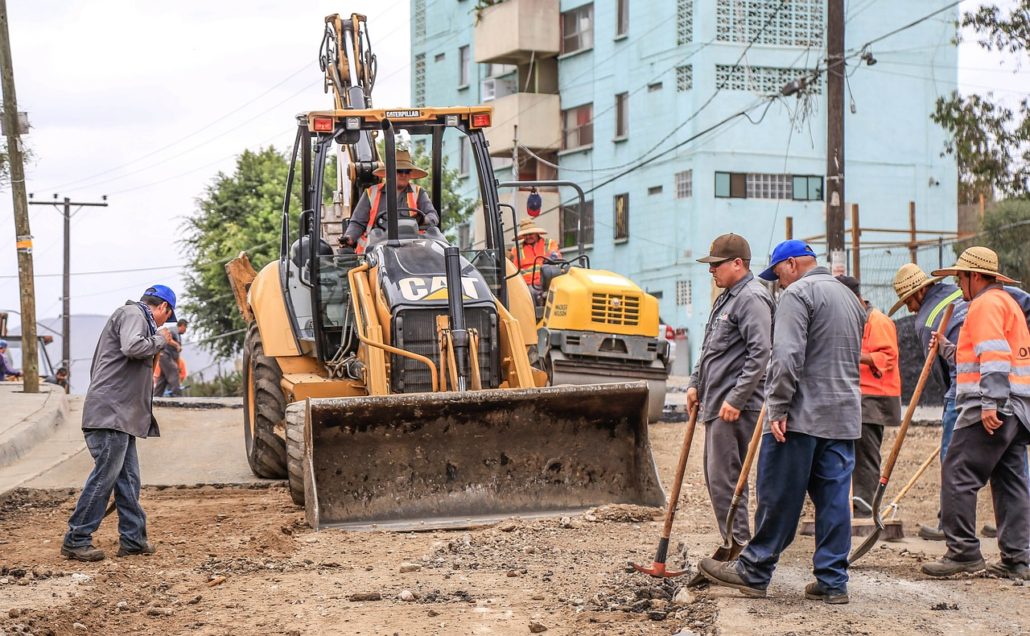
Engineers Against Poverty mobilizes engineers around the globe to fight poverty through more effective, transparent and equitable infrastructure development. Founded with an engineering focus, the U.K.-based group has expanded its work to improve ways of life in low- and middle-income countries by advocating for ethical working conditions, mitigating the effects of climate change and reducing poverty worldwide. As a massive infrastructure funding gap stands in the way of global poverty relief, Engineers Against Poverty works to empower a multi-sector network to improve infrastructure policy and practices.
Infrastructure and Global Poverty
Engineers and infrastructure development play a vital role in the fight against global poverty. According to the Asian Development Bank, poverty reduction requires not only well-governed economic development, but also improved infrastructure for irrigation, electricity, water and sanitation and other basic needs. In 2016, Our World in Data reported that 40% of the globe experienced water scarcity and 13% of the world did not have electricity. In 2015 and 2016, one-third of the global population did not have access to an all-weather road. Engineers Against Poverty explains that infrastructure will play a vital role in achieving the United Nations Sustainable Development Goals, which were released in 2015 to be achieved by 2030.
“For EAP, its goal is to scale up influence on global infrastructure policy and practice to promote sustainable social, climate and economic impacts that contribute toward the elimination of poverty,” Engineers Against Policy Senior Communications Manager Charlotte Broyd said.
The Infrastructure Funding Gap
One of the greatest barriers to global poverty reduction is a massive infrastructure funding gap. At the 2015 release of the United Nations Sustainable Development Goals (SDGs), the World Economic Forum reported the infrastructure funding gap would prove the biggest challenge to meet the SDGs. The World Economic Forum explained that there exists a $15 trillion investment gap between the money needed and the existing funding to reach “adequate global infrastructure by 2040.” This gap, Engineers Against Poverty explains, must be tackled as a “governance challenge.” Up to one-third of global investment in infrastructure is lost to mismanagement in governance, particularly in low-income countries.
Broyd commented, “There is a role for many stakeholders in addressing the infrastructure investment gap (governments, international organizations as well as donors). For donors specifically, they can help by recognising the importance of transparency and accountability in the infrastructure sector and the need for support to initiatives and others promoting these principles. This is particularly important in the coronavirus pandemic and the ensuing economic crisis where any economic loss must be minimized.”
The World Bank has identified collaboration between the private and public sectors as a key approach to closing the infrastructure funding gap. The former managing director of the World Bank explained at the release of the SDGs that to help mitigate these investment hazards, investors and donors must make more comprehensive investments in policy, insurance, regulation and more to make their investments effective.
Engineers Against Poverty’s Infrastructure Transparency Initiative
Engineers Against Poverty’s global Infrastructure Transparency Initiative (CoST) is key to closing this infrastructure funding gap. CoST, which currently works in 19 countries, encourages collaboration between civilians, engineers and policy-makers to work toward “improving transparency and accountability in public infrastructure” to reduce investment losses to mismanagement and corruption.
CoST has already seen success in many countries, including Thailand, where transparency, competitive bidding, decreasing contract prices and more efficient fund management have saved the country $360 million in infrastructure spending since 2015. In Afghanistan, CoST-prompted contract reviews saved the country $8.3 million in just one year for road-network maintenance.
The initiative focuses on increasing infrastructure project transparency by improving data disclosure, ensuring data is accessible to the public, creating social accountability for decision-makers and empowering civilians and communities to advocate for better infrastructure governance and delivery. By 2018, CoST had helped disclose data on around 11,000 projects through accessible platforms. CoST has also established legal mandates and disclosure commitments with governments in many countries.
“Our experience indicates that informed citizens and responsive public institutions help drive reforms that reduce mismanagement, inefficiency, corruption and the risks posed to the public from poor quality infrastructure,” the CoST website explains.
A key feature of CoST is citizen engagement and media attention, which enables civilians to hold their policy-makers accountable and make the infrastructure funding gap a priority for civil society. “CoST has enabled citizens to advocate for quality infrastructure through community events in several of its countries including Uganda, Ghana, Malawi and Thailand,” Broyd said. “Simply by raising the issues affecting them, citizens give the media powerful stories to report, which has generated much good publicity.”
CoST therefore illustrates the importance of involving citizens in solving poverty locally, nationally and globally. The combined efforts of engaged civilians and Engineers Against Poverty stand to make important headway in the fight against global poverty.
– Emily Rahhal
Photo: Pixabay

4 Facts About Innovations in Poverty Eradication in Italy
4 Facts About Innovations in Poverty Eradication in Italy
There is still a long way to go in eradicating poverty in Italy, and COVID-19 may worsen the plight of low-income families in Italy. However, it is still important to note these programs as they help families in need and create innovations in poverty eradication in Italy.
– Ayesha Asad
Photo: Unsplash
Health Care on Air Delivers Healthcare in the Pacific
The COVID-19 crisis has cemented itself as a problem that all countries in the world must face. Complicating matters is the fact that circumstances surrounding COVID-19 are quite dynamic — changing by the day. As such, experts release new information and studies about the new coronavirus, constantly. Therefore, healthcare workers need to stay informed. For small, proximal nations in the Pacific, this is especially important. Healthcare in the Pacific faces a unique set of challenges. As Fiji’s Hon. Minister for Health and Medical Services, Dr. Ifereimi Waqainabete, says, “The global spread of COVID-19 to countries and territories indicates that ‘a risk somewhere is a risk anywhere’ and as a global village, the increasing incidence of the disease in some countries around the world is a threat to the entire Pacific.”
The Challenge
In many Pacific nations, it is challenging to ensure that all healthcare workers remain updated. “The majority of nurses and midwives in the Pacific are located in remote rural areas and outer islands, which means they often miss out on regular trainings and updates,” says UNICEF Pacific Representative, Sheldon Yett. These remote workers service more than 2 million people in the Pacific.
The Solution
To address this problem regarding healthcare in the Pacific, governments of nations therein have recently collaborated with UNICEF, the U.S., New Zealand and Japan to launch a new program called Health Care on Air. This is the first regional training program of the sort. The United States Agency for International Development (USAID) has invested $1.85 million in this program.
Health Care on Air consists of 33 half-hour-long episodes to be broadcasted on the radio and other communication channels. While standard communication platforms like TV and online training are available in the Pacific — they do not reach all workers. Importantly, radio is the only form of media that reaches every corner of the Pacific. These episodes will teach healthcare workers skills and give them the necessary knowledge to deliver effective services, during the pandemic. In addition to the training sessions, participants will be able to ask questions and share information through UNICEF’s RapidPro platform. Notably, the platform works with free SMS and other smartphone messaging apps.
Project Scope
The project is especially concerned with reducing human-to-human transmission and limiting secondary impacts of COVID-19. Secondary impacts, i.e. the additional burden and expense on healthcare systems caused by COVID-19. Efforts to limit these secondary impacts focus on preparing healthcare centers to quickly adapt to new knowledge and specializations. The focus on reducing transmission and increasing adaptability is key for Pacific Island countries. This is because they cannot handle large-scale infections in the same way that larger, developed countries do.
The first episode aired on July 10, 2020, in Fiji. The program will eventually show in 14 additional countries in the Pacific — including the Cook Islands, Samoa, Federated States of Micronesia, Palau, Tuvalu, Niue, Vanuatu, Solomon Islands, Kiribati, Nauru, Tonga, Republic of Marshall Islands and Tokelau. Notably, more than 5,000 healthcare providers will benefit from this program.
Applying Lessons Learned
In the future, the lessons learned from the Health Care on Air program will be integrated into national nursing accreditation programs as well. While the COVID-19 pandemic is a major world crisis, it is the hope that these new and innovative communication systems will continue to serve communities in the Pacific for years to come.
– Antoinette Fang
Photo: U.S. Indo-Pacific Command
Seeing Clearly: Photography of the World’s Poor
Photography of the World’s Poor: Inviting Empathy
Between a click of shutters and closed corner frames, moments freeze into ageless photographs. Photography invites the viewer into a new world and a new perspective through a single captured moment. Such invitation is essential to the impact of photography, as both an art form and a journalistic device.
Photography of the world’s poor is a powerful tool. Photographs offer a visual language, one that situates the viewer in a specific moment and allows headlines and statistics to become real and palpable. Many non-profit and news organizations have utilized photography of the world’s poor in order to inform, mobilize and inspire the public to further help those in need.
Studies: The Identifiable Victim and The Visual
Photography’s power stems in part from the identifiable victim effect, which “refers to peoples’ tendency to preferentially give to identified versus anonymous victims of misfortune.” The phenomenon connects one’s empathy with an ability to humanize and personalize another. A study in 2007 exemplified the identifiable victim effect by showing that people were likely to donate more when they were presented with a single individual, such as an image of an orphan that would benefit from their donation, than with a group statistic reflecting the millions in need.
Along with employing the identifiable victim effect, photography harnesses power as a visual medium. A 2013 study found that subjects were more likely to donate when they were given a photograph of an orphan than if they saw a silhouette of that child or her name. The study shows how the visual stimulation of an image generates a greater response in viewers than other personal but non-visual information.
Through its use of the identifiable victim effect and a visual medium, photography can inspire empathy and generosity in its viewers. Photography of the world’s poor can quite literally open the public’s eyes to the suffering and injustices that are taking place globally. It is difficult to wrap one’s mind around the millions of people suffering from extreme poverty, but looking at a portrait of a single individual suddenly makes the issues a lot more personal and pressing.
The Dangers of Photography: Poverty Porn
With photography’s power comes consequences. Photography of the world’s poor has the potential to objectify and exploit its subjects. Some describe such photos as “poverty porn.”
Poverty porn can be difficult to define, but it seeks to identify exploitative images that strive to be as horrifying and pitiful as possible in order to shock the viewer into feeling sympathy and oftentimes making a donation. Sometimes photographers may even stage subjects, positioning them to look particularly poor and helpless in order to capture a specifically desired image.
This type of photography is not only one-dimensional, but it is dangerous. Poverty porn creates a culture of paternalism and objectification that paints the viewers as saviors and reduces the poor down to their struggles. Furthermore, poverty porn disregards a community’s capability, strength and resilience, and instead “evokes the idea that the poor are helpless and incapable of helping themselves.” Rather than intelligent and competent agents, the poor become disempowered individuals, stripped of their dignity, in order to invoke a guilt-ridden response from the viewer.
Utilizing Photography for Good
For all its power and potential, photography of the world’s poor brings with it an ethical responsibility. When done right, photography can provide an important look into the lives it captures, giving voice to the voiceless and inspiring viewers to care more deeply for the world around them.
Yet, in utilizing this precious tool, it is also necessary to understand what remains unseen in these images. As described in an article in the National Center for Biotechnology Information (NCBI), “each image arises from a set of momentary, fragmented relationships embedded in asymmetrical power relations.” These “asymmetrical power relations” begin with the photographer’s choices and extends into the viewer’s perception of the image. It is important to remember that the individuals in the photograph do not always have a say in how they are depicted.
No photograph, no matter how justly done, can convey the full story: complex, intricate human lives cannot be completely captured by a two-dimensional frame. Yet, as written in the NCBI article, “our photographs — and [the] emotional reactions they produce — speak to both the very need for the image and the desire for it to capture what will literally ‘work’ for the agencies that commission their production.”
Photography’s ability to inspire empathy in viewers and connect the world through a single human moment is enough evidence that it is an art form worth utilizing in the fight against world poverty, when done correctly.
– Jessica Blatt
Photo: Flickr
5 Innovations in Poverty Eradication in Indonesia
5 Facts About Innovation in Poverty Eradication in Indonesia
Overall, these programs are all essential in reducing and eradicating poverty in Indonesia. Poverty, homelessness and hunger are still relevant issues in Indonesia. However, these programs will pave the way for more innovations in poverty eradication in Indonesia that can also help in other parts of the world.
– Ayesha Asad
Photo: Flickr
5 Innovative Solutions for Water Management in Africa
Many communities in Africa have historically suffered from inadequate clean water access due to factors such as geography, urbanization, population growth and low GDP. For this reason, in March of 2020 the European Commission and the High Representative for Foreign Affairs and Security Policy suggested new policies for water management in Africa. The goal of these policies is to “increase Africa’s preparedness to address water and climate change vulnerabilities, with less fragmentation of efforts, as well as improve upon monitoring and forecasting tools, and enhance knowledge sharing and technology transfer.” To do this, the Commission is focusing on innovation and enhancing the existing skill sets of local organizations concentrating on water management in Africa. Here are five innovative solutions focusing on water management in Africa.
Five Innovative Solutions for Water Management in Africa
While there is still more work to be done, these five projects have already made lasting impacts on many communities throughout Africa. An important aspect of these projects is their focus on creating sustainable solutions and including community leaders. These long-term solutions are a necessity, as they allow members of these communities to focus on economic stability while improving water management in Africa.
– Danielle Forrey
Photo: Flickr
Engineers Against Poverty: Closing the Infrastructure Funding Gap
Engineers Against Poverty mobilizes engineers around the globe to fight poverty through more effective, transparent and equitable infrastructure development. Founded with an engineering focus, the U.K.-based group has expanded its work to improve ways of life in low- and middle-income countries by advocating for ethical working conditions, mitigating the effects of climate change and reducing poverty worldwide. As a massive infrastructure funding gap stands in the way of global poverty relief, Engineers Against Poverty works to empower a multi-sector network to improve infrastructure policy and practices.
Infrastructure and Global Poverty
Engineers and infrastructure development play a vital role in the fight against global poverty. According to the Asian Development Bank, poverty reduction requires not only well-governed economic development, but also improved infrastructure for irrigation, electricity, water and sanitation and other basic needs. In 2016, Our World in Data reported that 40% of the globe experienced water scarcity and 13% of the world did not have electricity. In 2015 and 2016, one-third of the global population did not have access to an all-weather road. Engineers Against Poverty explains that infrastructure will play a vital role in achieving the United Nations Sustainable Development Goals, which were released in 2015 to be achieved by 2030.
“For EAP, its goal is to scale up influence on global infrastructure policy and practice to promote sustainable social, climate and economic impacts that contribute toward the elimination of poverty,” Engineers Against Policy Senior Communications Manager Charlotte Broyd said.
The Infrastructure Funding Gap
One of the greatest barriers to global poverty reduction is a massive infrastructure funding gap. At the 2015 release of the United Nations Sustainable Development Goals (SDGs), the World Economic Forum reported the infrastructure funding gap would prove the biggest challenge to meet the SDGs. The World Economic Forum explained that there exists a $15 trillion investment gap between the money needed and the existing funding to reach “adequate global infrastructure by 2040.” This gap, Engineers Against Poverty explains, must be tackled as a “governance challenge.” Up to one-third of global investment in infrastructure is lost to mismanagement in governance, particularly in low-income countries.
Broyd commented, “There is a role for many stakeholders in addressing the infrastructure investment gap (governments, international organizations as well as donors). For donors specifically, they can help by recognising the importance of transparency and accountability in the infrastructure sector and the need for support to initiatives and others promoting these principles. This is particularly important in the coronavirus pandemic and the ensuing economic crisis where any economic loss must be minimized.”
The World Bank has identified collaboration between the private and public sectors as a key approach to closing the infrastructure funding gap. The former managing director of the World Bank explained at the release of the SDGs that to help mitigate these investment hazards, investors and donors must make more comprehensive investments in policy, insurance, regulation and more to make their investments effective.
Engineers Against Poverty’s Infrastructure Transparency Initiative
Engineers Against Poverty’s global Infrastructure Transparency Initiative (CoST) is key to closing this infrastructure funding gap. CoST, which currently works in 19 countries, encourages collaboration between civilians, engineers and policy-makers to work toward “improving transparency and accountability in public infrastructure” to reduce investment losses to mismanagement and corruption.
CoST has already seen success in many countries, including Thailand, where transparency, competitive bidding, decreasing contract prices and more efficient fund management have saved the country $360 million in infrastructure spending since 2015. In Afghanistan, CoST-prompted contract reviews saved the country $8.3 million in just one year for road-network maintenance.
The initiative focuses on increasing infrastructure project transparency by improving data disclosure, ensuring data is accessible to the public, creating social accountability for decision-makers and empowering civilians and communities to advocate for better infrastructure governance and delivery. By 2018, CoST had helped disclose data on around 11,000 projects through accessible platforms. CoST has also established legal mandates and disclosure commitments with governments in many countries.
“Our experience indicates that informed citizens and responsive public institutions help drive reforms that reduce mismanagement, inefficiency, corruption and the risks posed to the public from poor quality infrastructure,” the CoST website explains.
A key feature of CoST is citizen engagement and media attention, which enables civilians to hold their policy-makers accountable and make the infrastructure funding gap a priority for civil society. “CoST has enabled citizens to advocate for quality infrastructure through community events in several of its countries including Uganda, Ghana, Malawi and Thailand,” Broyd said. “Simply by raising the issues affecting them, citizens give the media powerful stories to report, which has generated much good publicity.”
CoST therefore illustrates the importance of involving citizens in solving poverty locally, nationally and globally. The combined efforts of engaged civilians and Engineers Against Poverty stand to make important headway in the fight against global poverty.
– Emily Rahhal
Photo: Pixabay
How Infrastructure Addresses Urban Overpopulation in Africa
Rural-Urban Migration
African cities have fast-growing population growth. The UN reports that urban population growth has evolved “from about 27% in 1950 to 40% in 2015 and is projected to reach 60% by 2050.” This pressure has led to the over-exploitation of infrastructural resources like roads and markets. Many rural areas in Africa are remote, and they have fewer job opportunities. Accordingly, many people move from these regions to urban areas where they can find jobs easily. This problem causes a migration influx that leads to urban overpopulation in many African cities. Because urban areas also have advanced, easily accessible social services and facilities, people who may need or want better medical care or educational services have to move to urban areas. This kind of migration leads to increased population growth and urban overpopulation.
Urban Overpopulation
Increased population automatically increases urban areas’ population density, or the measurement of population per unit area. Overpopulation occurs when urban areas contain more people than the optimal proportion of population to land. When urban areas become overcrowded, people start building slums, the roads become very busy with high traffic, public markets and malls consistently become overcrowded and the competition for resources increases. This leads to increased pollution and the destruction of much infrastructure.
Urban Planning
African governments have started investing in solutions to accommodate this growing urban population through infrastructure. One way in which they are doing so is through urban planning. Many African nations have begun to provide urban planning education facilities and resources. This solution started preparing people who were equipped to design and plan for the overpopulated cities in Africa. For example, Nigeria established the Town Planners Registration Council. This council is in charge of determining who is capable of being the town’s planner and setting the basic requirements for people who want to enter the profession of urban planning. In 2013, Kigali City in Rwanda established the city’s master plan. This plan represented a vision the country had for organizing settlement in the city. The Building Permit Management Information System reports that this master plan is a “comprehensive long term plan intended to guide growth and development of Kigali City.”
Building Infrastructure
Most African countries have a complex topography. Some cities are hilly or close to forested areas. These natural features become a big challenge to companies seeking to build roads and skyscrapers in the most environmentally friendly ways possible. Despite these challenges, African nations are investing in building new infrastructure to support urban areas. GlobeNewswire reports that in 2019, all projects in Africa invested in building new and upgrading “54,110 km for roads, 55,345 km for railway and 599 km for bridges” in total. To include the environment in these developing cities, some countries introduced green belts in urban regions. For example, Kenya and Rwanda have started reserving some areas in cities for planting trees.
Africa’s population is growing fast. However, countries are investing in sectors that will manage to accommodate this urban population. Infrastructure has been one of the sectors that have helped cities plan for the population and the cities’ activities.
– Renova Uwingabire
Photo: Flickr
Contributions to Aid for COVID-19 in Brazil
Brazil, the largest South American nation, recently recorded 100,000 casualties from the novel coronavirus (COVID-19). The country now has the second-highest figure of deaths linked to COVID-19. They come after the United States, which has over 150,000 casualties as of August 2020. President Jair Bolsonaro dismissed the effects of the virus out of concern for the nation’s economy. However, physicians working in the Brazilian Ministry of Health debated with him over the effects of social distancing. They also debated over the use of the controversial hydroxychloroquine on ill patients. Unable to come to an agreement with Bolsonaro, both ministers resigned from their position.
With conflicting views among Brazilian leaders on how to contain the virus, concerns start to rise. These concerns are about plans to mitigate the disease in Brazil, or the lack thereof. As the numbers increase, other leaders around the world have taken the initiative to halt the coronavirus’ spread in Brazil.
Environmental Activist Greta Thunberg’s Contribution
Greta Thunberg is a Swedish teenage activist prominent for mobilizing youth all over the world around the cause of global warming. She is donating $114,000 of prize money she received directly to efforts mitigating the coronavirus outbreak in the Amazon. She plans to send it to SOS Amazônia, a nongovernmental organization focused on protecting the Amazon rainforest. It also focuses on providing access to food, healthcare and hygiene to indigenous communities in the most vulnerable regions. This is not the first time Thunberg has contributed financially to weather the effects of the pandemic. In May 2020, she donated an additional $100,000 of the award money to UNICEF to protect children from the coronavirus. By aiding Brazilians’ fight against COVID-19, she hopes to bring awareness to people on the front lines affected by the climate crisis. This particularly applies to people in the global South.
Taiwan’s Efforts
The East Asian nation had a quick reduction of the virus during the early stages of the pandemic. It is also stepping in to contribute supplies in Brazil’s battle with the disease. Tsung-che Chiang, the nation’s representative to Brazil, donated 100,000 face masks to the residents of Manaus, a city suffering one of the biggest outbreaks of COVID-19 in Brazil. The masks will be sent by the Taiwanese government and distributed by the Manaus health department to public hospitals. This will protect medical personnel in the front lines of the virus’s battlegrounds. After Brazil, Taiwan has expressed interest in providing aid to other countries with high numbers of COVID-19 cases, under the Taiwan Can Help program.
Help from the Vatican
Vatican became aware of the lack of supplies in a hospital treating indigenous patients with COVID-19 in Brazil. As a result, Pope Francis sent a temperature gauge and respirator to the Campanha de Maraba Hospital that the apostolic nunciature in Brazil delivered. President Bolsonaro vetoed a law that would have provided indigenous populations with extra supplies and hospital beds due to their vulnerability to the virus. Because of this, the hospital was very much in need of the supplies. Pope Francis’ expressed affection for the Amazon made this contribution even more significant to the community near the hospital, which is predominantly Catholic. Including the aforementioned respirator, Brazil received three other respirators from the Vatican to subdue the spread of COVID-19 in Brazil.
Although the coronavirus’s presence in Brazil shows no sign of ending, neither have the efforts of leaders across the world. Numerous nations and authoritative figures donate their time and money to afflicted regions and organizations. Their efforts go toward organizations that provide much-needed aid to marginalized communities suffering from the virus. Once a unanimously-agreed-upon plan is formulated by the Brazilian government, a decline can be seen in the number of COVID-19 cases and casualties in South America’s largest nation.
– Faven Woldetatyos
Photo: Flickr
Healthcare in Antigua and Barbuda
Health for the Citizens
Most health care in Antigua is free through the Medical Benefits Scheme, which is paid for by a payroll tax that sets aside revenue for the health system. In 2014, the health sector received 2.77% of the country’s GDP. Considering that they are a collection of small islands, that percentage goes a long way. Antigua has 25 public health clinics with services ranging from dentistry to testing for NCDs (non-communicable diseases). The major hospital on the island is St. John’s Medical Centre in St. John, Antigua. They also have a much smaller extension of the hospital in Barbuda that holds eight beds. However, the number of health centers is growing with the improvement of infrastructure.
Natural Disasters and Diseases
Antigua and Barbuda has had a history of natural disasters plaguing their island from Hurricane Hugo in 1989 to Hurricane Irma in 2017. Irma left Barbuda uninhabited for the first time in modern history, and the population of Barbuda evacuated to Antigua. The effects of these hurricanes go past evacuating the island. They threaten the island’s food security, quality of water, tourism and even health of citizens. Though they’ve had many challenges, diseases are not very prevalent on the islands. Tuberculosis and HIV/AIDS affect less than 1% of the population.
Mother and Child Health
Additionally, at St. John’s Medical Centre, maternal health is a serious issue. Trained personnel deliver the babies, and all expenses are covered for the mother. The hospital got even better after three maternal deaths between 2010 and 2015 by providing more services and increasing patient education. Sadly, the Antigua and Barbuda did not reach the target of the Millennium Development Goal (MDG) in 2014. While the target is 8 deaths per 1,000 live births, the country’s data was 17.2 deaths per 1,000 births. Most of these deaths occur in the neonatal period and are caused by common things like injuries and prematurity.
World Health Organization Cooperation
Many agencies have provided cooperation in health on the islands throughout the years. The WHO/PAHO has continued to help through funded projects and other initiatives. The WHO currently has the Country Cooperation Strategy in place, which will be in effect until 2024. The five priorities of WHO reveal its main areas of focus. Their first priority is to establish a more universal healthcare system, getting coverage for more citizens. The main way the WHO will achieve this goal is by strengthening the Primary Health Care (PHC) to better align with the citizens’ needs. Priority two deals with the elimination of diseases and NCDs. Priority three focuses on reducing risk. By integrating mental health and substance abuse in the PHC, implementing measures for reducing NCD cases is all part of their plan.
Overall, Antigua is not just special because of its world-famous beaches. These collections of islands care more about the healthcare and well being of their citizens than most countries combined. Thinking about healthcare in Antigua and Barbuda may not be the most interesting thing. However, it gives insight into a country not normally talked about. Although it is plagued by hurricanes every few years, it still manages to take care of its citizens in the best way it can.
– Bailey Sparks
Photo: Flickr
Hunger in Comoros
Comoros is an archipelagic country in the Indian Ocean near Madagascar and the Mozambique Channel. With nearly 300 inhabitants per square mile, Comoros is densely populated, which often culminates in natural disasters that place intense pressures on food supply. Today, an estimated 44% of the population faces either moderate or severe food insecurity. Hunger in Comoros is therefore a precarious dilemma that requires immediate intervention. Without the appropriate aid, thousands of people – especially children – are at risk of health concerns or mortality.
Natural Disasters
The high population density of Comoros strains both natural resources and the environment. Combined with the nation’s topography and location, this puts the country at constant risk of a variety of natural disasters including tropical storms, cyclones, volcanic eruptions, earthquakes and landslides. Hydrometeorological disasters in particular are expected to increase in frequency and intensity due to climate change. Projections indicate that the average annual temperature will rise an estimated 1.35°C by 2040-2059, 0.8-2.1°C by the 2060s and 1.2-3.6°C by the 2090s, raising the risk of extreme heat and floods.
While the impact of such disasters on food security is often observed in the destruction of food supply and arable land, the damage caused to transportation infrastructure obstructs local communities from access to key food products. In April 2019, Cyclone Kenneth damaged the substructure of Port Boingoma, one of the three major ports in the country, in addition to an estimated 10% of Comoros’s total road network. In 2023, the port was further degraded by Cyclone Cheneso, rendering it inaccessible an average of two working days per week. Due to ongoing transport issues, staples like seafood and rice in the Comorian diet have become unavailable or deteriorated beyond safe consumption. International commodities and goods that have managed to arrive without defects are subject to high prices to offset demand and transportation costs, excluding them from a vast majority of households in need.
Despite rationing and periodical shipments offered as recent solutions to supply chain interruptions, many Comorians today still suffer from hunger. With more than two-thirds of the population residing in rural areas and thus dependent on imports for survival, natural disasters and the resulting fragmentation of interisland connectivity play a large role in Comoros’s current hunger levels.
Children
Children are one of the most food-insecure groups in Comoros. According to the World Bank, chronic malnutrition currently leads to stunting in 31 out of every 100 children. In the Bambao region, more than one in five children under 5 are stunted and more than 13% are underweight or wasted. Factors such as low economic productivity, high unemployment rates and low quality of health care have been identified as major contributors to undernutrition. Additionally, waterborne diseases and unsanitary drinking water infrastructure have been correlated with common child health concerns such as diarrhea. Lastly, challenges to maternal health during pregnancy, which are directly linked to high adult food insecurity levels, frequently result in complications during birth that increase the risk of chronic health conditions for children that can manifest in the years leading up to adulthood.
World Bank and UNICEF
Comoros is in dire need of structural reform to alleviate nationwide food insecurity levels. Fortunately, organizations such as the World Bank and UNICEF are dedicated to helping hungry households by implementing several initiatives designed to improve interisland connectivity and child health care.
Formed in May 2022, the World Bank’s Comoros Interisland Connectivity Project prioritizes the strengthening of maritime transport resilience, connectivity and safety between the islands, specifically by rehabilitating Port Boingoma. The first phase of the project in 2022 primarily focused on constructing a breakwater to protect the port against waves, providing structural support to withstand extreme climates and maritime travel. Building upon the first phase, the second phase aims to expand port capacity, develop infrastructure at selected priority sites to assure safe passenger operations, and pilot a new passenger boat program. Although the project has yet to publish substantive metrics to illustrate its results, it hopes to establish overall improvements in the economy and reduce the likelihood of consumer product shortage throughout the archipelago by 2028.
Chiefly focused on improving the lives of children, UNICEF has continued to partner with Comoros’s Ministry of Health in a number of projects intended to reduce neonatal mortality and support child health service delivery. As of November 2023, UNICEF’s endorsement of the “kangaroo mother care” practice benefitted 1,478 preterm and low birth weight infants, resulting in a recovery rate of 90%. By implementing solar power in three Moheli health facilities, vital enhancements were made to medical infrastructure and quality of care, directly benefiting 15,452 women and 10,301 children under 5. UNICEF has also played a crucial role in boosting child nutrition rates throughout the country by distributing micronutrient supplements such as Vitamin A to an estimated 133,818 children.
Looking Ahead
The 2023 Global Hunger Index has categorized Comoros as having a level of hunger that is serious. The country’s high vulnerability to natural disasters places transportation systems at great risk of structural damage, resulting in the isolation of local communities that depend on trade for sustenance. Among the groups marginalized by systemic barriers, Comoran children are especially disadvantaged and often suffer from health conditions that arise from malnutrition such as stunting. However, organizations such as the World Bank and UNICEF are looking to provide innovative solutions to these issues by maximizing the use of their resources and existing state partnerships. Persistent intervention and reform by such groups will be the deciding factor for the relative health and security of Comorans in the years to come.
– Moon Jung Kim
Photo: Flickr
Updated: September 18, 2024