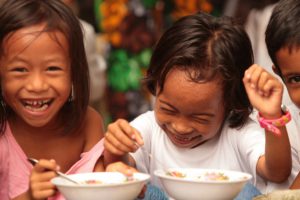
Many people know about large aid organizations like the World Food Programme, Oxfam and HOPE International. Often, young non-governmental organizations (NGOs) fly under the radar while still fostering social and economic growth. Encompass: Reaching the Philippines established in 2019. This young NGO has started several projects aimed at reducing food insecurity and improving opportunities.
Poverty in the Philippines is almost overwhelming, and certainly so by U.S. standards. The Asian Development Bank believes that roughly a sixth of the population lived below the national poverty line in 2018, while 2.9% of Filipinos lived below the international poverty line of $1.90. Poverty directly impacts food security. About 13% of the people are undernourished, with stunting affecting around 30% of young children.
Several organizations are helping the Philippines reduce food insecurity in various ways. Encompass: Reaching the Philippines is taking a sustainable approach to building economic and food resilience. Dr. Paul Helton, associate professor of Psychology at Freed-Hardeman University, started Encompass in 2019 after several trips to the country. This faith-based organization has funded several community start-ups and social development projects.
The Need for Engagement
The Philippines has a long history with the United States. Since 1946, the U.S. has aided in the development of economic growth, education, infrastructure, environmental protection, health and government in the Philippines. In 2018, the U.S. invested $275 million in aid to the Philippines. As a result, the U.S. and the Philippines maintain an important partnership in development, trade and security.
The Helton family similarly has a history with the Philippines. Helton lived there for two years as a child and has traveled back to the country several times throughout his life. After one recent trip, he noted the need for engagement. We “have to do more than wait for them to ask us” for help, he told The Borgen Project. The Filipino people “can be in dire need and still not ask you,” since their culture frowns on asking for outside assistance. He said this creates a cycle of harm, where their economic positions and health decline, and yet they refrain from asking for help.
Help from Encompass: Reaching the Philippines
In light of this, Helton founded Encompass: Reaching the Philippines to find and meet community needs. It currently operates a feeding program for children in two locations, feeding about 60 kids weekly. Helton has also helped out individual families with food, dental and medical supplies, including a full-body wheelchair for a 21-year-old suffering from cerebral palsy. His family can now take him to the beach or to church without difficulty.
Encompass also helped a family of four with the capital costs of starting a pig farm. Helton informed The Borgen Project of the success of the pig farm. Despite a virus killing a few of the animals, about a year after its inception the operation is almost self-sufficient. COVID-19 delayed its self-sufficiency, but Helton is confident it will meet that goal in the near future. This farm, he said, would provide revenue to the family and the community at large. Interestingly, manure is the farm’s most lucrative product, as locals buy it for fertilizer.
The Emotional Impact of Poverty
Commenting on the emotional impacts of poverty, Helton told the story of a family trying to send their daughters to college. As college loans are not readily available and the several hundred dollar tuition was not something the family could front at once, they turned to a loan shark. After their oldest daughter graduated, she took a teaching job in Hong Kong and contributed to her sister’s college fund, as the family eked out loan payments. Helton said existence in the Philippines, for many, is a day-to-day endeavor.
Future Plans for Encompass
Encompass has plans to further its support to families and communities. Some of its funding went to buy a piece of property, on which the locals constructed a community center and may eventually build a church. The organization is looking at assisting an aquaponics startup as well.
Again noting Filipino culture, Helton said that he founded Encompass: Reaching the Philippines not because the Filipino people asked, but because some people in the U.S. noticed the need for a “proactive organization” in the country. Its efforts have certainly been proactive and will undoubtedly continue to make small-scale, definitive progress.
– Jonathan Helton
Photo: Flickr

The Process of Combating Hunger in Iraq
Facts About Hunger in Iraq
Statistics
Good News
Numerous organizations are taking decisive action in challenging times to enhance the living conditions of the Iraqi people. For instance, the World Food Programme (WFP) provides food assistance to internally displaced persons, refugees and other vulnerable populations. However, its mission extends beyond this. The WFP also collaborates with the government to equip youth with essential technical skills, empowering them to become self-reliant. One such initiative is the “National Jousour Program,” which teaches young people English and digital skills to enhance their employability and secure sustainable sources of income. Other programs and centers also offer photography, baking, knitting, and carpentry training. These initiatives have benefited thousands of individuals across Iraq and continue to make a positive impact.
Action Against Hunger provides training, education and cash grants to help individuals achieve self-sufficiency and reduce poverty and hunger in Iraq. Given that Iraq is a country recovering from conflict, it offers mental health training for health care workers to help address the trauma experienced by survivors. The organization also focuses on improving the irrigation system to enhance crop production and agriculture. Thus, it helps build resilience and self-sustenance in the community.
Closing Thoughts
Iraq is in urgent need of assistance. The international community must unite for lasting peace and rehabilitation in the country by focusing on sustainable development projects in education, healthcare, agriculture and infrastructure. Only then can we effectively reduce poverty and hunger in Iraq. The priority should be to develop a system of checks and balances and accountability. This would ensure that aid reaches those who truly need it. By working on these lines, we can help create a stable and prosperous future for the people of Iraq.
– Carlie Chiesa and Maria Waleed
Photo: Flickr
5 Causes of Hunger in Cameroon
Commonly referred to as “Africa in miniature,” many know Cameroon for its geographical diversity and cultural vibrance. However, despite its reputation as a nation of peace and stability, Cameroon faces many threats to the food security of millions. Today, an estimated 10.6% of people in Cameroon are subject to acute food insecurity, which is correlated with severe health issues such as malnutrition and stunting in children. Understanding the causes that comprise food insecurity in Cameroon are crucial to finding effective and long-term solutions. As such, below are five contemporary causes behind the country’s ongoing hunger crisis.
5 Causes of Hunger in Cameroon
Combating Hunger in Cameroon
In order to combat malnutrition, organizations such as the World Food Programme (WFP) and Action Against Hunger have been working to allocate supplies and introduce health education and services in regions lacking such resources.
Working with the state, the World Food Programme aims to achieve zero hunger in Cameroon by responding to the immediate food and nutrition needs of crisis-affected populations and implementing a variety of interventions to strengthen the long-term resilience of communities. According to their 2023 Annual Country Report, the organization provided 876,400 Cameroonians with food and cash assistance, targeting mostly women based on vulnerability. During the same year, WFP also supported 82,300 people facing sudden calamities and 86,500 under lean season assistance. Today, WFP and the U.N. Refugee Agency (UNHCR) have engaged the government and other donors to counter the effects of funding shortfalls that have recently cut vital food assistance to refugees.
Adopting similar objectives, Action Against Hunger reached around 130,000 Cameroonians through nutrition, health and food security programs in 2023. Farmer Field Schools, one of their most notable educational programs, connected agriculture experts with farmers to teach them climate-smart growing techniques, introduce resilient crops and provide plots for people to test their understanding of the curriculum before putting them into practice. In the coming years, Action Against Hunger seeks to increase funding for water, sanitation and hygiene (WASH) programs to improve overall accessibility to clean water.
Conclusion
Today, Cameroon’s food supply is still under constant threat from neighboring violence, disaster and high food prices. Fortunately, organizations such as WFP and Action Against Hunger are committed to improving food security by implementing a wide range of solutions to ensure a healthier future for the residents of Cameroon.
– Adrian Rufo, Moon Jung Kim
Photo: Flickr
Updated: September 3, 2024
Innovations in Poverty Eradication in Somalia
Somalia, a country bordering both Ethiopia and Djibouti, has faced recent struggles in regards to poverty. An estimated 70% of its population under the age of 30 faces a wide range of social, economic and political challenges. Many of Somalia’s citizens are enduring hardships. However, certain programs have emerged, leading to massive innovations in poverty eradication in Somalia.
Issue in Numbers
Almost nine in 10 Somali households do not have a fundamental dimension. This dimension is access to income, electricity, education or water and sanitation. Basic necessities become rarer among the majority. As a result, Somalia needs help to see growth in the long term. One must also note that only 27% of children are enrolled in primary school. With these statistics projected to decline in the future, human capital development is at risk due to the issue of poverty. However, various forms of aid have jumpstarted Somalia’s economy while developing innovations in poverty eradication in Somalia.
International Aid
Somalia is currently $4.7 billion in debt. However, it has partnered with many other countries, significantly boosting its funding. Britain, the European Union and Qatar have offered to cover about $150 million of the roughly $330 million that Somalia owes. After Somalia handles its finances, it will receive grants worth about $300 million per year. This will help boost funding towards job opportunities, infrastructure and transportation.
Remittances for Poverty Reduction
In an attempt to aid the Somalian citizens who poverty impacts, Somalia utilized remittances. This is where the country provided families with financial assistance. It also distributed resources for families to meet basic needs and requirements. These remittances reduced the wage gap among impoverished citizens while giving them an outlet towards new jobs and opportunities.
Organizations Pushing for Change
Many nonprofit organizations have also stepped up to aid the ones in need. A massively impactful organization is Action Against Hunger, which has developed programs for adults and children battling poverty. By providing integrated nutrition, health and food security services as well as water, sanitation and hygiene services, 213,986 Somalians received treatment, with 103,407 being for minor illnesses and 41,502 being children under the age of 5 obtaining treatment for malnutrition. With the lack of resources becoming an ongoing issue, Action for Hunger contributed to 51,908 Somalians receiving clean water. It also contributed to 97,011 Somalians receiving sufficient resources through food security programs.
Another prominent organization is Alight, which has heavily focused on efforts aiding the youth. Through building support camps for refugees, it provided thousands of Somalians with water, protection and shelter. In addition to these camps, it partnered with the private sector, opening up 50,000 job opportunities for those in need. It also educated children on health services, where it shared information on improving hygiene.
Although various countries, organizations and financial plans have acted, Somalia still has over 4.9 million citizens battling poverty. With seven in 10 Somalian facing financial burdens, only governmental intervention will combat this issue on a larger scale. If the Somalian government can effectively partner with nonprofit organizations and countries to produce meaningful policies, then Somalia will see rapid economic growth. The country might only see effective innovations in poverty eradication in Somalia through these acts.
– Aditya Padmaraj
Photo: Flickr
Innovations in Poverty Eradication in Iceland
With a population of 341,741 people and poverty rates rising, Iceland has continued its trend of incorporating old and innovative solutions to eradicate poverty. Valdimar Svavarsson, the manager of the Christian nonprofit organization Samhjalp in Iceland, told The Borgen Project that “Iceland is overall considered to be among the best places to live in the world in terms of quality of life.” However, the COVID-19 pandemic has threatened that quality of life significantly. Several innovations in poverty eradication in Iceland, such as welfare centers, government programs and other new ideas have emerged as the pandemic has increased the unemployment rate in Iceland.
Lowering Unemployment and the Department of Welfare
Iceland has been working towards reducing its unemployment and poverty rate by initiating welfare centers. Six welfare service centers are in Reykjavik, and they help Icelandic citizens access services related to Icelandic schools, financial support, counseling and more.
The Department of Welfare for Reykjavik, Iceland coordinates a variety of projects and events to help with poverty-related issues in Iceland with the core values of welfare, respect and activity in mind for people who request help. It mainly focuses on projects involving financial assistance, child protection and social housing programs, which all help with Icelandic low-income households. In particular, the financial assistance department of the Department of Welfare works to help unemployed citizens and families in Iceland through a simple application process. The application process requires that citizens search for employment. However, citizens can appeal the results of their applications if they receive a denial.
Homelessness and Limited Housing
The capital city of Iceland, Reykjavik, last reported that 360 people were homeless at the end of 2017. In an interview with The Borgen Project, Vilborg Oddsdottir, the Head of the Domestic Department of the Icelandic Church Aid Group, said that “there is a low-income housing company in Iceland right now” to help deal with the high housing prices in Iceland.
Solutions to Reducing Child Poverty in Iceland
Another innovation in poverty eradication is how Iceland has been working toward eliminating child poverty in the country. In fact, it ranks at the top for children’s rights. As of the latest report in 2015, the child poverty rate in Iceland was on the lower end of approximately 5% based on their families’ income levels prior to the pandemic.
The Icelandic Church Aid Group formed in 1970 and is better known as the Church Relief Society. The Church Relief Society partnered with Iceland’s Evangelical Lutheran Church for an innovative poverty solution that gives educational supplies to lower-income families across Iceland through an application process starting in late August 2020. The new initiative entitled “No Child Left Out” wants to make sure students are not experiencing social isolation based on their family’s financial situation. Vilborg Oddsdottir advised The Borgen Project that “education is the best way out of poverty, and we have to maintain respect for all kinds of education” available to students in Iceland. In 2020, the Icelandic Church Aid Group helped approximately 30,000 children in Iceland according to Oddsdottir.
How Iceland enacted Innovative Testing Procedures and Government Aid during COVID-19
Only 5.4% of Iceland’s citizens were living below the poverty line in 2015. One of the major causes of poverty in Iceland is the COVID-19 pandemic, which has caused unemployment rates to skyrocket even as the country implemented innovations in COVID-19 protection early on. In the past few months, Iceland was able to test any citizen requesting a test and automatically isolate infected citizens from the public as most businesses remained open. Due to these innovative precautions, Iceland was able to reopen to tourists as early as June 15, 2020, and even implemented the requirement of testing each tourist.
After most of the Icelandic public received COVID-19 tests, the citizens were able to view their results using an innovative contact tracing application to prevent an outbreak. Even with precautions, Vilborg Oddsdottir has seen that “COVID has affected us a lot because now we have nearly 9% unemployment in Iceland. Even in our bank crisis, we have not seen unemployment like we have now.” The Icelandic government’s innovative support system is addressing the increased unemployment rate. The unemployment benefits stated that people would receive some of their salary based on the amount of part-time work they had with their company until September 30, 2020.
Food Aid
The Iceland Family Aid program has been working towards helping low-income families across Iceland since its founding in 2003. The organization is accepting food donations every month at its only two locations in Reykjavik and Reykjanesbaer. The way for the food undergoes distribution across Iceland is through an online registration process that delivers the food to low-income residents once a month, providing aid to various families and people living in poverty and aiding in poverty eradication in Iceland.
With the reduction in tourism and increasing unemployment rates due to COVID-19, Valdimar Svavarsson has found that “at the moment, the government is doing many things to support the growing group that is now facing unemployment.” The current innovative solutions and input of the Icelandic government should help the country bounce back from high unemployment rates while helping low-income citizens.
– Evan Winslow
Photo: Flickr
Uganda: MamaOpe Smart Jacket for Pneumonia
Effects of Slow Diagnoses and Misdiagnoses of Pneumonia
Studies show that patients are often wrongfully diagnosed with malaria. Over-diagnosis of malaria means that other life-threatening conditions, such as pneumonia, are not treated. Misdiagnoses end up contributing to the death rate associated with other ailments, including pneumonia. Children, in particular, are adversely affected as pneumonia accounts for 15% of deaths among children under the age of five. Every year, one million children under the age of five die from pneumonia. Pneumonia causes more deaths than malaria, diarrhea and HIV/AIDs combined. In 2015, more than 490,000 children died from pneumonia in sub-Saharan Africa.
Between 2001 and 2016, childhood pneumonia deaths had fallen by only 50% relative to an 85% decrease in childhood deaths due to measles and a 60% decrease in childhood deaths due to malaria, tetanus and AIDS. According to UNICEF, slow or limited progress in the diagnosis and treatment of pneumonia is associated with poor funding for preventative care and treatment management. In 2011, for every dollar spent on global health, just two cents went toward pneumonia.
MamaOpe Provides a Solution
The MamaOpe smart jacket, which was shortlisted for the prestigious Africa Prize for Engineering in 2017, is designed specifically for children from the ages of zero to five who are particularly vulnerable to pneumonia. “Mama” is shorthand for “Mother,” and “Ope” means “Hope.” MamaOpe thus signifies “Hope for the Mother.” It is also a reference to the 27,000 children in Uganda who die of pneumonia annually.
In order to monitor patients’ chests and heartrates, listen to their lungs and check their breathing rates and temperatures, MamaOpe utilizes a stethoscope, which is embedded in a jacket that patients wear. The jacket covers the patients’ entire chests and sides. It is made from polymer, a material selected to reduce the risk of spreading infection when the jacket is shared among patients.
The jacket itself is connected to an android application on a mobile device via Bluetooth. The technology helps eliminate human error. According to the company, measurements made by the device assist doctors in diagnosing pneumonia three to four times faster than when doctors use a normal stethoscope. MamaOpe displays the results after three minutes of tracking a patient’s vitals.
Hope for the Future
The MamaOpe smart jacket is still in its prototype and testing phase but reports suggest that the company plans to bring the product to market in 2021. The current cost of the jacket is $60 and the price will likely decrease when full-scale manufacturing begins and the jacket tests successfully in Uganda.
As MamaOpe strives to prevent cases of pneumonia misdiagnosis and decrease the child death rate associated with pneumonia, the company is proving just how important innovation can be in combatting deadly illnesses. If governments ramp up support for pneumonia prevention, management and treatment, the lives of hundreds of thousands of children can be saved annually.
– Zoe Engels
Photo: Flickr
Fighting Period Poverty in Tanzania
Periods and Poverty
Over 50% of the Tanzanian population does not have access to improved sanitation and clean drinking water is often limited. Without access to menstrual hygiene products, information and adequate sanitation services, women and girls are at risk for poor physical or reproductive health. Lack of proper sanitation contributes to lower girls’ attendance in school and limits opportunities and potential for women in Tanzania.
Fighting Period Stigma
Ending the taboo around menstruation is an important step toward ending period poverty. There is a lot of misinformation about periods and Tanzanian women are made to feel ashamed about themselves and their bodies. Due to period stigma, girls are often ridiculed when their periods catch them off guard.
Education on menstrual and reproductive health is one of the most empowering tools to combat period poverty in Tanzania. Many organizations have made it their mission to end gender-based discrimination and destigmatize female hygiene. For example, the Maji Safi Group aims to teach young girls to embrace their bodies and help them reach their fullest potential as academics and as mothers. The organization’s comprehensive approach includes community outreach, after school programs, employing Tanzanian women as community health educators and providing learning materials.
Affordable Products
Managing menstruation is expensive and disposable sanitary products are a luxury that vulnerable women in Tanzania cannot afford. In recent years, world leaders have committed to creating change in the country by investing in the menstrual hygiene product industry. For instance, the World Bank partnered with an entrepreneurial enterprise called WomenChoice, which manufactures and distributes affordable menstrual hygiene products. WomenChoice further empowers women from low-resource backgrounds by offering vendor, sales agent and volunteer positions. The micro-enterprise serves as a model for other organizations seeking to keep girls in school and end period poverty in Tanzania.
Impact of COVID-19
The closing of schools in Tanzania due to the COVID-19 pandemic may compound the challenges of period poverty throughout the country. Worldwide disruptions limit access to essential sanitary products in the country as well as information about sexual and reproductive health. However, UNFPA, the United Nations sexual and reproductive health agency, has made the fight against period poverty an essential part of their pandemic response efforts by maintaining open access to its centers, information and services in the country during COVID-19.
Continuing the Fight Against Period Poverty
The government of Tanzania has partnered with UNICEF and pledged to dramatically increase access to sanitation over the next five years. This step will not only help keep girls in school but also help them reach their fullest potential and escape period poverty. While there is still much more work to be done, ongoing efforts by the government, international partners, communities and organizations help make a brighter future possible for Tanzanian girls and women.
– Rachel Moloney
Photo: Flickr
Paani Project Improves Water Access in Pakistan
The Water Crisis in Pakistan
The Paani Project is addressing one of the most acute water crises in the world today. With a population of 212 million, poor water management, climate change and intensive agriculture, access to clean water can be scarce. An estimated 40% of deaths in the country are linked to unclean water.
Pakistan also has a shocking disparity in water access between its urban and rural areas. With up to 70% of rural regions having no access to clean water, millions in Pakistan’s more remote areas face a severe risk to their health and livelihoods.
Origins of the Paani Project
In order to combat this critical issue, four University of Michigan students decided to launch the Paani Project. The mission began on a local scale. For three months, on their way to class and around campus, the students would sell doughnuts, slowly collecting enough funds to build their first well in a rural region of Pakistan’s southeastern province of Sindh.
Since funding their first well, the team has put hours of effort, collaboration and organization into the project, creating a fully functioning nonprofit that has seen widespread success.
The Paani Project Impact
With over 850 wells built across rural areas as of 2020 and more than $300,000 donated, the Paani group has made an undeniable impact in improving water access in Pakistan. Their work has spread from Sindh to Khyber Pakhtunkhwa and Balochistan, serving rural needs across the country.
In addition to building wells, the project has also diversified its mission by leading a number of different humanitarian efforts around the country. In Azad Kashmir, Paani led a winter coat drive and in Karachi, the group operated a dental clinic to provide care for those that would not have access otherwise.
The organization has also provided relief from the COVID-19 pandemic by providing food to thousands of workers in Khyber Pakhtunkhwa and Sindh who rely on daily wages to support their families.
Other Initiatives
Paani also believes that education is an important step in combatting poverty and increasing water access in Pakistan. With every well that has been built, Paani has held “hygiene education seminars” to teach community members about proper sanitation practices and how to maintain the well. The group has also helped develop education curriculums in Sindh, through which they hope to increase knowledge about the water crisis and proper hygiene practices.
Although Pakistan’s water crisis is one that continues to make headlines and threatens the lifestyles of millions of people across the country, work by organizations such as Paani has helped to turn the tide. With tens of thousands of people directly reaping the benefits of Paani’s wells, the group’s contributions are sure to be much more than just a drop in the bucket in the fight for universal water access in Pakistan.
– Shayaan Subzwari
Photo: Flickr
German Companies Combat Africa’s Energy Poverty
In an effort to place German companies at the center of Africa’s rising market, Germany has allocated $1.1 billion in the Development Investment Fund. According to the executive chairman of the African Energy Chamber, using German companies’ technology and capital will allow Africa to build a sustainable energy model.
Three Pillars of the Development Investment Fund
The Development Investment Fund comprises of three components. These components are AfricaConnect, AfricaGrow and the African Business Network. Each project aims toward a different aspect of growth for German companies as well as the African market. One aims toward larger businesses, one toward small and medium enterprises (SME) and one towards SMEs as well as foreign investment and development.
The isolation of individual African countries due to COVID-19 has caused them to start building necessary gas and power projects. These projects provide energy to those who are out of reach. More than 600 million Africans lack access to electricity. This prevents them from utilizing all the resources available to pull them out of poverty. The investments come at a time where the continent is already working to reshape its energy infrastructure. The AfricaConnect program has incorporated additional provisions due to COVID-19 in order to boost the African and German economy.
AfricaConnect
The AfricaConnect initiative contains 400 million Euros to go toward German businesses for projects in Africa. Companies receive loans between $845,000 to $4.5 million if the projects are ecologically and socially sustainable. German companies have to benefit African markets by creating jobs, introducing new technology or doing other groundwork.
AfricaGrow
Additionally, AfricaGrow aims at SME businesses in Africa. This fund aims at African businesses rather than German businesses along with African venture and equity funds. With around $188 million in the fund, it is meant to close the existing financial gap. It also allows the African economy to comprise of many SMEs that will create sustainable jobs for the future.
African Business Network
Furthermore, the third prong of the Development Investment Fund is the African Business Network, which aims at trade promotion. By boosting development cooperation, German SMEs are able to participate in the African market, expanding the role of German businesses in these fields. This initiative provides support to German companies through advice by stakeholders. It also acts as a means of holding SMEs in the market. The African Business Network focuses on 12 African countries in particular. These countries are Ethiopia, Egypt, Benin, Burkina Faso, Côte d’Ivoire, Ghana, Guinea, Morocco, Rwanda, Senegal, Togo and Tunisia.
German Companies and Energy Poverty
Due to the lack of a sustainable energy source in many parts of Africa, African businesses in the energy sector have struggled with maintaining power. In South Africa, the electricity company Eskom had to fly out German technical experts to help with building sustainable energy grids due to the fact that around 80% to 90% of their power came from coal power plants, according to The South African. As a result, South Africa turns to solar energy. It launches an Integrated Resource Plan which calls for six gigawatts of solar by 2030.
How Germany is Helping Africa
This lack of sustainable energy is exactly what German companies entering the energy industry look to solve, thereby harnessing the full power of the African consumer market. Senegal was one of the first African countries to begin this, seeing German support for around 800 SMEs. Germany has more than 200 million Euros invested in projects focusing on providing electricity throughout the country. This electricity is provided through renewable energy and better harnessing pre-existing energy sources. Power plants that produce 25 megawatts of energy are placed outside of Dakar. This pushes African energy sources forward.
The funds also gave rise to multiple German companies in the energy sector including Pfisterer Unternehmensgruppe. Pfisterer Unternehmensgruppe has already begun placing offshore wind farms and building a variety of generators to hold the power in smaller spaces. Smaller companies such as AfricanSol aim to build solar panels across the continent with the initial panels built in Eritrea. However, these efforts slowed down as countries shut down due to COVID-19.
Energy poverty is one of the largest obstacles that Germany and a number of African countries will work together to tackle. However, the funds will also give rise to better technology for a growing market that is involved in the larger world. As Africa’s trade deals connect it to the global market, millions of consumers enter and a trillion-dollar economy opens up. For both Germany and Africa, investing now will lead to huge payoffs. With the rich natural resources of the country combined with front-running German technology, poverty in Africa might see huge decreases in the near future.
– Nitya Marimuthu
Photo: Pixabay
Encompass: Reaching the Philippines Fights Poverty
Many people know about large aid organizations like the World Food Programme, Oxfam and HOPE International. Often, young non-governmental organizations (NGOs) fly under the radar while still fostering social and economic growth. Encompass: Reaching the Philippines established in 2019. This young NGO has started several projects aimed at reducing food insecurity and improving opportunities.
Poverty in the Philippines is almost overwhelming, and certainly so by U.S. standards. The Asian Development Bank believes that roughly a sixth of the population lived below the national poverty line in 2018, while 2.9% of Filipinos lived below the international poverty line of $1.90. Poverty directly impacts food security. About 13% of the people are undernourished, with stunting affecting around 30% of young children.
Several organizations are helping the Philippines reduce food insecurity in various ways. Encompass: Reaching the Philippines is taking a sustainable approach to building economic and food resilience. Dr. Paul Helton, associate professor of Psychology at Freed-Hardeman University, started Encompass in 2019 after several trips to the country. This faith-based organization has funded several community start-ups and social development projects.
The Need for Engagement
The Philippines has a long history with the United States. Since 1946, the U.S. has aided in the development of economic growth, education, infrastructure, environmental protection, health and government in the Philippines. In 2018, the U.S. invested $275 million in aid to the Philippines. As a result, the U.S. and the Philippines maintain an important partnership in development, trade and security.
The Helton family similarly has a history with the Philippines. Helton lived there for two years as a child and has traveled back to the country several times throughout his life. After one recent trip, he noted the need for engagement. We “have to do more than wait for them to ask us” for help, he told The Borgen Project. The Filipino people “can be in dire need and still not ask you,” since their culture frowns on asking for outside assistance. He said this creates a cycle of harm, where their economic positions and health decline, and yet they refrain from asking for help.
Help from Encompass: Reaching the Philippines
In light of this, Helton founded Encompass: Reaching the Philippines to find and meet community needs. It currently operates a feeding program for children in two locations, feeding about 60 kids weekly. Helton has also helped out individual families with food, dental and medical supplies, including a full-body wheelchair for a 21-year-old suffering from cerebral palsy. His family can now take him to the beach or to church without difficulty.
Encompass also helped a family of four with the capital costs of starting a pig farm. Helton informed The Borgen Project of the success of the pig farm. Despite a virus killing a few of the animals, about a year after its inception the operation is almost self-sufficient. COVID-19 delayed its self-sufficiency, but Helton is confident it will meet that goal in the near future. This farm, he said, would provide revenue to the family and the community at large. Interestingly, manure is the farm’s most lucrative product, as locals buy it for fertilizer.
The Emotional Impact of Poverty
Commenting on the emotional impacts of poverty, Helton told the story of a family trying to send their daughters to college. As college loans are not readily available and the several hundred dollar tuition was not something the family could front at once, they turned to a loan shark. After their oldest daughter graduated, she took a teaching job in Hong Kong and contributed to her sister’s college fund, as the family eked out loan payments. Helton said existence in the Philippines, for many, is a day-to-day endeavor.
Future Plans for Encompass
Encompass has plans to further its support to families and communities. Some of its funding went to buy a piece of property, on which the locals constructed a community center and may eventually build a church. The organization is looking at assisting an aquaponics startup as well.
Again noting Filipino culture, Helton said that he founded Encompass: Reaching the Philippines not because the Filipino people asked, but because some people in the U.S. noticed the need for a “proactive organization” in the country. Its efforts have certainly been proactive and will undoubtedly continue to make small-scale, definitive progress.
– Jonathan Helton
Photo: Flickr
5 Advancements in Agricultural Technology
Agriculture is a salient cultivation practice, enriching the quality of life for generations upon generations of people since the first civilizations formed on Earth. Today, agriculture is essential for stimulating the global economy and can lead to higher job creation, especially when considering national poverty reduction efforts. Advancements in agricultural technology can make agriculture more efficient and help reduce poverty levels around the world.
More agricultural productivity means greater income for farmers, lower food prices, increased food supplies and more job opportunities in rural and urban areas. Consumer demand for goods that non-agricultural sectors produce also increases as income increases; this connection between growth in the agricultural sector and other constituents are what have allowed developing countries to diversify the products and services available within their own economies and the global economy.
Food Insecurity and Agriculture
Today, over 800 million people globally are undernourished and approximately 700 million people are severely food insecure, though there is a falling trend in malnourishment as time passes. This is demanding for all, but especially for children, who are the most vulnerable, as they are still developing both physically and mentally. Poor nutrition, even for a short time, can stunt development in the long run and produce adverse effects on children’s futures.
Despite these harsh realities, the FAO has been a key player in reducing global hunger, assisting countries in assessing various constraints on land use with the goal of achieving an optimally sustainable usage and allocation of resources and empowering people to make informed agricultural decisions for their communities. In the last 20 years, the FAO reports that undernourishment fell from 18.7% to 11.3% globally, and from 23.4% to 13.5% for developing countries.
Advancements in Agricultural Technology
In order to further mitigate the adverse effects of food insufficiency and insecurity, countries must rely on technological innovations in the agricultural sector to keep up with increasing food demands. Here are five advancements to agricultural technology that aim to shift the paradigm of hunger and malnourishment for generations to come.
As the world shifts into a time where innovation is the prevalent driver of change, humanity’s oldest sustainable cultivation practices are also shifting to meet the dynamic array of global needs. Advances in agricultural technology are necessary to meet the increasing demands of food and sustainability for future generations. And while finances are difficult to procure for any investment in innovation, there is a culture of empowerment—especially in the nations who need these advancements the most—which instills a socioeconomic structure regarding the social context of innovation, necessary to inform and encourage the younger generations to further improve the world.
– Sarah Uddin
Photo: Flickr