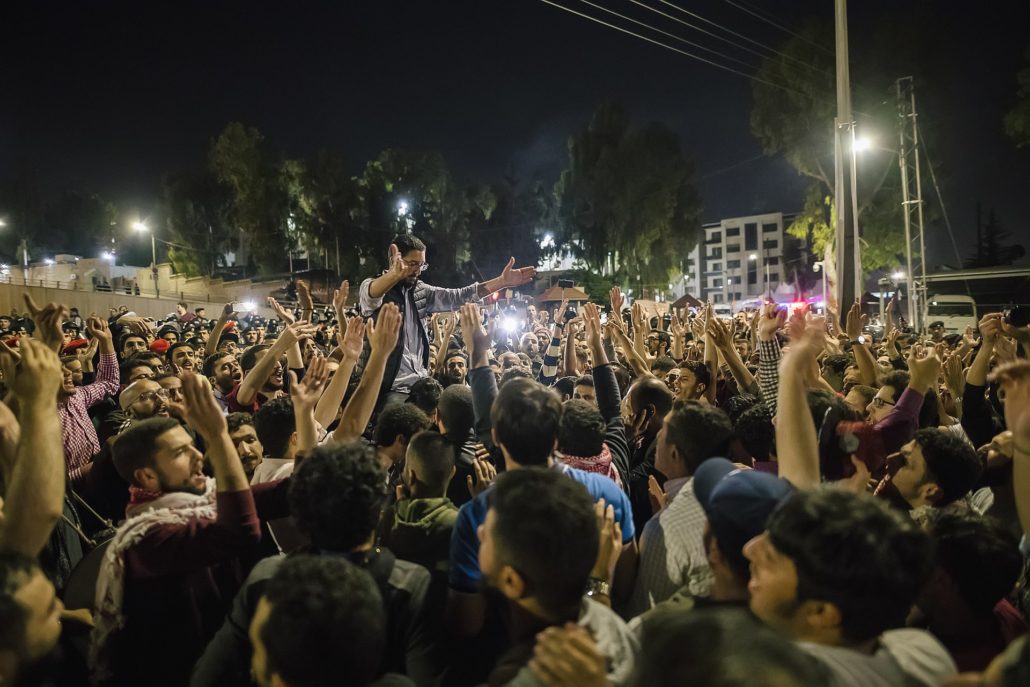
Similar to the United States, Jordan’s school year starts in the fall. Jordan is a small nation in the Middle East between Saudi Arabia, Israel and Syria. However, this school year marks the second year in a row where many Jordanian schools closed down to widespread teacher strikes. During September 2019, 140,000 teachers who were a part of Teachers Syndicate, a Jordanian teachers’ union, led a strike against the government demanding increased wages for their work. The result was a compromise in which the government explained that teachers nationwide would see a minimum wage increase based on their tenure and position as educators. This halted teachers’ protests in Jordan for the rest of the 2019 academic year, but tensions have risen yet again as the 2020 school year approaches.
Rising Tensions
As the effects of COVID-19 began to harm the nation economically, the Jordanian government made the decision to freeze all public sector pay increases in April 2020, which included the pay increases that it promised to teachers and educators as a result of the prior September’s teachers’ protests in Jordan. The government rationalized this situation due to the unanticipated and detrimental effects the pandemic had on the country’s economy. What resulted was a resurgence of the teacher’s demands from the previous year, and Teacher’s Syndicate began preparing to take action against the government’s decision.
Unfortunately, the demands of the teachers’ union did not make it too far. After months of political action, the government issued a ban on the operation of the union for two years and arrested all 13 council members of the union on July 25, 2020. In response, teachers of the now-disbanded union rallied in protests across the nation to refute the unlawful action the government took to arrest these advocates of fair pay for educators. At these protests, police detained nearly 1,000 teachers on the grounds of new coronavirus legislation that prevented the gathering of large groups of people. Now, as schools are to reopen while navigating the difficulties of education in times of social distancing, many schools do not have teachers.
Jordan’s Education System
The education system of Jordan is in a unique state. Even though 98% of people over the age of 15-years-old are literate, the country has seen a 15.4% decrease in the number of students attending primary school during the past 15 years. This is mostly due to the lack of funding that Jordan’s government has granted to the education system, as education only receives 11.6% of total government funding. The poor salaries of teachers reflect this, which has made the occupation of being an educator a selfless act, as it is not a position that offers a high wage or financial security.
Many teachers live frugal lifestyles, and the lack of teachers in the education system has had a negative effect on the percentage of the population that completes both primary and secondary education. Often, education and poverty link together, and as the number of Jordanian students in school has decreased, the country has experienced a 1.3% increase in those living below the poverty line.
Looking Ahead
The current situation in Jordan, however, is not as meek as it sounds. The members of the teachers’ union are of diverse backgrounds that other unions across the country do not necessarily reflect. This diverse group has united members of different communities within Jordan to fight for the justice that teachers deserve. The peaceful protests and advocacy of 2019’s protests helped Teachers Syndicate garner national attention and motivate the government to decide to increase the wages of hardworking educators.
Even though the current protests are still fighting the same battle, Jordanians possess resiliency and determination, as their efforts paid off in the past. In a country that could be slowly moving towards poverty as national education decreases, these protests shed light on a valid concern within the government of Jordan. Jordan must prioritize education, and educators are making it known that the first step towards better national education is fair compensation for those who begin the education in the classroom.
The teachers’ protests in Jordan have also garnered global attention. Education International, a global teachers’ union, has also been urging the Jordanian government to free the board members it arrested. Teachers Syndicate also continues to grow as an influential union in Jordan, with a total of 140,000 members since its founding in 2011.
– Evan Coleman
Photo: Flickr

8 Facts About Healthcare in Iran
The Islamic Republic of Iran is an ancient country with a special geostrategic location in the Middle East and West Asia. Iran throughout its history has faced revolutions, wars and periods of instability that might make people believe that its healthcare system is underdeveloped. Additionally, sanctions from the West have had a direct effect in the medical field, specifically in the access of certain pharmaceuticals. Nevertheless, in the last decades, Iran’s motivation to improve the healthcare infrastructure has resulted in surprising figures and has contributed to rural poverty alleviation. Today, Iran’s healthcare system includes both public and private facilities and services. Here are eight facts about healthcare in Iran.
8 Facts About Healthcare in Iran
Despite the challenges in the fields of sustainability of resources and health governance, these facts about healthcare in Iran show that it is exceptionally modern in different ways. Overall, Iran has managed to improve health indicators, reduce the urban-rural gap and develop a system that grants basic healthcare to almost every geographic area in the territory. These efforts have improved the quality of life, contributed to the development of human capital and played an important role in helping rural areas alleviate poverty and health insecurity. In recent years, Western sanctions have made it more difficult, but still, Iran’s health-related figures have improved dramatically and health expenditure has increased. Thus, Iran is becoming a leading nation in the region for its healthcare system because many consider it a secure destination for patients from countries nearby.
– Isabella León Graticola
Photo: Unspash
How Gleaning Can End World Hunger
World hunger is one of the largest obstacles facing this generation. More and more people every day are struggling to feed their children and themselves, in a world that generates a surplus of food. According to the Food Aid Foundation, one in nine people go to bed hungry and one in three people experience malnutrition. It has a goal to create a world without hunger by 2030. While progress is slowly happening, there is still so much that people can do, especially when one considers how much food goes to waste. Luckily, the technique of gleaning can end world hunger.
What is Gleaning?
Gleaning is the act of harvesting or collecting grain or other crops that are still in the fields after farmers have harvested. Gleaning first showed up many years ago in the Old Testament of the Bible. Hebrew farmers would leave part of the crops unharvested for individuals who had no other resources to come and gather what they could. Throughout history, governments in countries such as France and England conserved this process for those in need. It was common up until World War II when more private property laws and technology began to evolve.
The Reality of Food Waste
Since then, food waste has skyrocketed. About one-third of the food produced in the world goes to waste. That is equivalent to 1.3 billion tons of food. Of that, a large proportion of food waste comes from fruits and vegetables. Gleaning would greatly reduce this. People often discard a large number of fruits and vegetables due to appearance standards; in fact, grocery stores frequently throw food away if it is not aesthetically pleasing. However, if one-fourth of the food wasted globally was not discarded, it could feed 870 million people in need. Not only could gleaning end world hunger, but saving food from waste also may help save resources such as water, labor and the production of gas emissions.
How Can Gleaning End World Hunger?
In 1987, the U.S. House of Representatives Committee on Hunger raised awareness for gleaning organizations. In 1996, it signed the Good Samaritan Act, urging people to donate surplus food rather than letting it go to waste. Since then, gleaning organizations have popped up across the country and world, with over 20 gleaning nonprofits in California. These organizations save surplus food from farms, restaurants, markets, stores and even backyards. Food Forward, a company based in Southern California, is helping to fight this. It wants to end hunger and food waste by saving surplus produce and donating to people in need.
A study in Nigeria shows the popularity of gleaning amongst different populations. The study found that the majority of individuals gleaning in Delta State, Nigeria were either females, widows, had little education or were over 50 years of age. However, individual gleaners faced discrimination and had a hard time finding left-over crops that were still edible. Regardless, gleaning is a necessary survival tool for those living in harsh conditions.
Gleaning has evolved since biblical times but still retains the same urgency to help those in need and prevent waste. Today, field harvesting is not a common practice for a myriad of reasons. However, modern machinery and mechanical harvesting miss a lot of produce. In the U.S. alone, these techniques lose or waste 96 billion pounds of food. Organizations like FoodForward can go into fields and rescue thousands of pounds of nutritious food which they then feeds right back into the community.
– Hannah Kaufman
Photo: Flickr
Women Overcome Obstetric Fistula in Nepal
Many women in Nepal are shunned for obstetric fistula, even though they are completely preventable holes in the birth canal. One woman, Dhani Devi Mukhiya, recalls what the villagers in her community told her. They said it was “punishment for a sin” she committed in a previous life. Her relatives ignored her in public and her husband threatened to take a new wife. Unfortunately, this is the story for many women who suffer from obstetric fistula in Nepal, especially in rural areas. Both their communities and families shun them. However, one campaign is working to give them back the lives that have been taken away from them as a result.
What is an Obstetric Fistula?
An obstetric fistula is a small hole in the birth canal that leads to incontinence. The injury often results from childbirth complications, with high frequency in adolescent pregnancies. If left untreated, the hole can cause an infection, pain and depression resulting from severe shunning and social isolation. Obstetric fistula in Nepal is common because of high rates of child marriages, poverty and lack of access to care. The mountainous geography and rough travel conditions prevent many people from receiving the health services they need, as it is difficult to get to a hospital. more than 2 million marginalized women across the globe suffer from this complication. These women include child brides, those without access to money and those without access to maternal services.
Is it Preventable and Treatable?
Obstetric fistula has been practically eliminated in industrialized nations because of how easy they are to prevent and treat with access to maternal care. The main problem is that Nepalese women still lack sexual and reproductive health information and services. Due to this, 4,300 women live with obstetric fistula in Nepal, and there are 200-400 new cases each year. This statistic may not even be accurate; obstetric fistula in Nepal often goes unreported due to its high stigmatization.
The Good News About the Issue
This is the good news: the Campaign to End Fistula is actively working to give these women back their lives. Established in 2010, this program, supported by the UNFPA (United Nations Population Fund), provides surgery and post-op care for women in rural Nepal. The surgeries take place at B.P. Koirala Institute of Health Sciences, the only public, high-tech hospital in the region. Now, it is an obstetric fistula training center.
To these women, the surgery on offer is not just a surgery. It is a life without pain, a life without stigma and a life without isolation; it was like “walking out of prison” for Ms. Rajdhobi. The program resulted in the performance of 487 surgeries since 2012, and the issue is gaining awareness. Because of the efforts of the Campaign to End Fistula, May 23 is now celebrated as the International Day to End Obstetric Fistula in Nepal. The Campaign together with UNFPA has helped the world to recognize obstetric fistula as a public health issue and has enabled numerous advocacy programs. It will take time to end the stigma surrounding obstetric fistula, but great strides have been made.
– Fiona Price
Photo: Flickr
5 Facts About Femicide in Bolivia
Bolivia is a South American country with a population of more than 11 million people. Due in part to the prevalence of “machismo culture” that views women as property, violence against women is commonplace throughout the country. Femicide in Bolivia is a prevalent concern.
According to the World Health Organization (WHO), femicide is the “intentional murder of women because they are women.” Men most commonly perpetrate violence against women, especially male relatives and partners, and this treatment typically follows both repeated physical and verbal abuse. Intimate femicide, when the perpetrator is a partner or relative of the victim, is the most common form. Estimates show that it causes over one-third of annual female murders around the world. These five facts about femicide in Bolivia show the extent of gender-based violence and how the government combats the problem.
5 Facts About Femicide in Bolivia
While violence against women is common in the country, the government is taking the problem seriously. They are making many attempts to eliminate gendered violence. Many of the laws passed have proven difficult to enforce. However, Bolivia continues to combat femicide and societal norms that lead to such high rates of violence against women.
– Sydney Leiter
Photo: Pixabay
How Mercy Corps is Supporting Girls’ Education
Amid COVID-19, rural communities continue to face economic, health and safety concerns. From misinformation to improper sanitation, pastoral communities require immediate assistance to not only survive, but thrive. Mercy Corps, a humanitarian organization, has stepped in to support these communities’ most vulnerable members. In recent months, the NGO has shifted its priorities; now, Mercy Corps is supporting girls’ education more than ever.
The Mission of Mercy Corps
In addition to reducing poverty and oppression through sustainable community building, Mercy Corps recently established a Resilience Fund to combat COVID-19’s effects. Mercy Corps explained that its funding will “provide emergency supplies, food and clean water” to developing countries like Colombia, Yemen and Nepal. However, donations go beyond monetary support as the organization targets public health concerns and stimulates economic recovery through education.
To protect pastoral communities, Mercy Corps supplies counseling stations, hand-washing training and sanitary facilities for nursing mothers and children. It also provides food when local markets close and funnel donations directly to at-risk families. To stimulate economic growth, Mercy Corps’ supports farmers, small businesses and girls’ education.
A New Focus: Girls’ Education
Recently, Mercy Corps made girls’ education its top priority as it “produces exceptional gains in areas of health, infant mortality and economic well-being of families.” However, the consequences of the pandemic forced many rural communities to relegate girls’ education to a lower priority. When countries like Kenya closed their borders, cities also shut down their schools. In turn, young women returned to their families and household chores.
Mercy Corps projects that the pandemic will significantly affect learning within rural communities. UNICEF organizations like Voices of Youth understand that education can delay young women’s marriages: each year a woman remains a school, she receives greater opportunities for personal growth and employment. However, Mercy Corps, and perhaps even Voices of Youth, fear that COVID-19 will increase the number of high school dropouts and consequently increase the rate of child marriages.
In the face of economic uncertainty, Mercy Corps supports girls’ education and aims to prevent its disappearance from public consciousness. Small donations and public outreach will counteract the pandemic’s effects and return young girls to safe, supportive environments that nourish their learning potential. The Resilience Fund will also maintain the Mercy Corps’ STEM program, which helps women in Nepal and Yemen complete their education through invaluable tutoring programs.
Cooperating with Communities to Increase Impact
Mercy Corps values girls’ education as a resource for development and hints at its potential social effects. However, UNICEF believes local communities must provide women access to quality education in three concrete ways:
If rural communities consider UNICEF’s recommendations and remain open-minded to the benefits of girls’ education, the Mercy Corps Resilience Fund will serve a greater purpose. The Resilience Fund will stimulate economic development and encouraging proper hygiene. It will also counter COVID-19’s effects and ensure that girls’ education becomes a worldwide priority. Mercy Corps is supporting girls’ education to provide hope for economic viability in the next generation of women.
– Kyler Juarez
Photo: PickPik
A Masked Batman Gives Food to the Homeless in Chile
Chile is one of the wealthiest nations in Latin America, yet as of 2018, half the country’s median monthly income stood at less than $600. Comparing the salaries of the top 20% of the wealthiest people to the most impoverished, the 20% of top earners make 14 times the amount of the severely impoverished. The COVID-19 pandemic has created new obstacles for the homeless in Chile to meet their food and nutritional needs. In the middle of a crisis, however, is a citizen dressed up as Batman, armed with a face mask and bags of food for the homeless.
Inequality in Wealth
Although the income gap is common in most countries, Chile’s gap is 65% higher than the average of all OECD (Organization for Economic Cooperation and Development) countries. Unlike many homeless populations, 77% of homeless Chileans have jobs but cannot find affordable housing. A standard one-bedroom apartment costs around $660 a month in Chile’s capital city of Santiago, meaning that the average salary of $400-$550 USD a month is not enough to afford housing let alone bills, utilities and food. During the winters, many of the homeless in Chile use the money saved up while living on the streets in the summer to afford housing to avoid the harsh winter weather.
Food Shortages and Obesity
The majority of the country lives off a scarce monthly salary, leaving the bare minimum amount to purchase food for an individual let alone for families of three or more. Within the last 50 years, nutritional change has spread through the country. Twice as many Chileans from low-income families suffer from obesity in comparison to those with access to higher education and salary. As of 2016, obesity is the number one cause of death in Chile and nearly half of children aged 2-4 are obese. This is a direct result of the country’s increased consumption of food containing processed sugars, fats and salt.
When COVID-19 spread to Chile, the country went on strict lockdown like the rest of the world. High food prices have been a long-standing issue but the strain on food-supply chains has prompted price increases. Environmental factors and an extreme drought already put Chile’s food supply in crisis mode before the pandemic. Now, Chile’s most impoverished are struggling to eat for days at a time.
COVID-19 Exacerbates Poverty
Similar to the rest of the world, COVID-19 has shut down many businesses, factories and other non-essential work. Factories are a massive part of the Chilean job market but demand for products decreased exponentially when COVID-19 hit the Americas in March 2020. Around 80% of companies providing service and industrial companies reported drops in sales. Factories have either closed or laid off employees due to the pandemic. Nearly half of the offices in Chile have had to close, resulting in job losses. The homeless in Chile who previously had employment now cannot afford food and cannot save enough money to secure shelter for the winter months.
Chile’s Food Monopoly
In early May 2020, protestors took to the streets amid growing food shortages and extreme class inequality. Sebastián Piñera, Chile’s president, responded by promising the delivery of more than 2 million food baskets to the country’s most impoverished. The backlash from protestors pointed to the fact that this would only further serve large chain grocery stores and severely impact the small local shops already struggling.
Fruit exports already power Chile’s food market. These frequently take up farming power where grains and legumes suffer, creating a reliance on the import of those highly useful products. Only 5% of local farmers have permission to sell their produce in supermarkets. The few wealthy individuals that monopolize selling mass amounts of food to supply chains dominate the rest of the market. This keeps class division extreme and makes it impossible for local farmers to lower prices without risking going under completely.
Batman Makes A Difference
The majority of the homeless in Chile live in the capital city of Santiago, sleeping on bus stop benches, sidewalks or on the ground in the park. Among them is a caring citizen dressed in DC’s Batman costume donning a medical mask and handing out bags of food to those in need. The anonymous man provides the homeless of Chile hot food regularly, delivering a few dozen meals each day around the capital. The costume choice aimed to both keep his anonymity and bring happiness while doing his rounds.
Along with food, Chile’s pandemic Batman tries to be a source of positivity and foster basic human interaction that can help uplift the spirits of people suffering in the streets. Human kindness is a necessity for those who are suffering from a lack of food and housing. The anonymous Batman of Santiago, Chile, is doing what he can for his fellow Chileans.
– Amanda Rogers
Photo: Flickr
Education and Teachers’ Protests in Jordan
Similar to the United States, Jordan’s school year starts in the fall. Jordan is a small nation in the Middle East between Saudi Arabia, Israel and Syria. However, this school year marks the second year in a row where many Jordanian schools closed down to widespread teacher strikes. During September 2019, 140,000 teachers who were a part of Teachers Syndicate, a Jordanian teachers’ union, led a strike against the government demanding increased wages for their work. The result was a compromise in which the government explained that teachers nationwide would see a minimum wage increase based on their tenure and position as educators. This halted teachers’ protests in Jordan for the rest of the 2019 academic year, but tensions have risen yet again as the 2020 school year approaches.
Rising Tensions
As the effects of COVID-19 began to harm the nation economically, the Jordanian government made the decision to freeze all public sector pay increases in April 2020, which included the pay increases that it promised to teachers and educators as a result of the prior September’s teachers’ protests in Jordan. The government rationalized this situation due to the unanticipated and detrimental effects the pandemic had on the country’s economy. What resulted was a resurgence of the teacher’s demands from the previous year, and Teacher’s Syndicate began preparing to take action against the government’s decision.
Unfortunately, the demands of the teachers’ union did not make it too far. After months of political action, the government issued a ban on the operation of the union for two years and arrested all 13 council members of the union on July 25, 2020. In response, teachers of the now-disbanded union rallied in protests across the nation to refute the unlawful action the government took to arrest these advocates of fair pay for educators. At these protests, police detained nearly 1,000 teachers on the grounds of new coronavirus legislation that prevented the gathering of large groups of people. Now, as schools are to reopen while navigating the difficulties of education in times of social distancing, many schools do not have teachers.
Jordan’s Education System
The education system of Jordan is in a unique state. Even though 98% of people over the age of 15-years-old are literate, the country has seen a 15.4% decrease in the number of students attending primary school during the past 15 years. This is mostly due to the lack of funding that Jordan’s government has granted to the education system, as education only receives 11.6% of total government funding. The poor salaries of teachers reflect this, which has made the occupation of being an educator a selfless act, as it is not a position that offers a high wage or financial security.
Many teachers live frugal lifestyles, and the lack of teachers in the education system has had a negative effect on the percentage of the population that completes both primary and secondary education. Often, education and poverty link together, and as the number of Jordanian students in school has decreased, the country has experienced a 1.3% increase in those living below the poverty line.
Looking Ahead
The current situation in Jordan, however, is not as meek as it sounds. The members of the teachers’ union are of diverse backgrounds that other unions across the country do not necessarily reflect. This diverse group has united members of different communities within Jordan to fight for the justice that teachers deserve. The peaceful protests and advocacy of 2019’s protests helped Teachers Syndicate garner national attention and motivate the government to decide to increase the wages of hardworking educators.
Even though the current protests are still fighting the same battle, Jordanians possess resiliency and determination, as their efforts paid off in the past. In a country that could be slowly moving towards poverty as national education decreases, these protests shed light on a valid concern within the government of Jordan. Jordan must prioritize education, and educators are making it known that the first step towards better national education is fair compensation for those who begin the education in the classroom.
The teachers’ protests in Jordan have also garnered global attention. Education International, a global teachers’ union, has also been urging the Jordanian government to free the board members it arrested. Teachers Syndicate also continues to grow as an influential union in Jordan, with a total of 140,000 members since its founding in 2011.
– Evan Coleman
Photo: Flickr
7 Facts About Women’s Rights in Lebanon
Although making some positive strides in recent years, Lebanon is still behind some of its regional counterparts when it comes to women’s rights. Women in Lebanon still lack important protections against abuse and violence, personal status laws and representation under civil and religious law. Here are seven facts about women’s rights in Lebanon.
7 Facts About Women’s Rights in Lebanon
Many of the setbacks women face are the product of the fact that approximately 2.7 million people in Lebanon are living in poverty. Men, who have historically always held political and religious power, deprive women of rights as a strategy to keep women and children financially tied to men. This means money stays in the hands of majority groups and used at their discretion. However, many international and domestic groups are fighting through institutions and on the ground for representation, protection and power. This activism and attention may lead to a large improvement in women’s rights in Lebanon in the years to come.
– Claire Brady
Photo: Flickr
Natural Disasters and Homelessness in Dominica
The Commonwealth of Dominica is a small island country in the Eastern Caribbean. People know it for its beautiful mountainous landscape and jungles, which are home to several native species of plants and animals. Though Dominica has abundant natural beauty, its location in the Caribbean is along the path of annual storms, and these storms are a major cause of homelessness in Dominica. This homelessness has been hard to track as there have been no official reports or studies about homelessness in Dominica.
Poverty in Dominica
Dominica is a poor country in comparison to its neighbors in the East Caribbean. In fact, it had a poverty level of 39% of the population in 2004. Dominica’s two largest industries are the agricultural and tourism industries. Environmental challenges, such as the hurricanes and tropical storms that pass over the island frequently, have affected both of these critically. The storms have made the island less likely to attract tourists. Meanwhile, flooding and landslides have decimated crops and fields.
Homelessness and Tropical Storms
Because Dominica has a relatively poor population, homelessness often becomes a major issue after tropical storms. Many families cannot afford repairs for damaged or destroyed houses, thus leaving them in need of shelter. An example of this is the tropical storm, Erika, in August 2015. The storm caused massive flooding and landslides which devastated much of the land, small towns and villages on the island. Over 800 households became homeless in the wake of the storm. Further, over 1,400 homes either experienced destruction or became at-risk due to the storm. After Hurricane Maria in February 2017, hundreds of Dominicans became homeless including Prime Minister Roosevelt Skerrit himself. Estimates determined that the devastating category five hurricane damaged or destroyed around 90% of the houses on the island.
The Grotto Home for the Homeless
After storms in Dominica, shelters frequently undergo construction, but the majority are not permanent. A report also noted that the current status of NGOs in Dominica is not very robust and that the people mainly rely on the government to provide these necessary facilities. One of the largest permanent housing facilities is the Grotto Home for the Homeless. This organization is one of the few that focuses on providing shelter for homeless Dominicans, though it has faced issues with both its facility and funding. This organization helps to highlight some of the key issues surrounding homelessness in Dominica.
The home, which can accommodate 60 persons, needed remodeling which began in 2008. All of the residents moved to a temporary facility while they waited. Due to the constant storms and the lack of funds, the new home still did not reach completion by 2018. This helps to show how the services that others provide for the homeless are not always effective.
There is not much data on homelessness in Dominica, but it is clear that the severity of the weather exacerbates it. Dominica ranks 12th out of 111 countries in the Composite Vulnerability Index which analyzes a countries vulnerability based on a number of factors including population, weather, diversity of business and education. Dominica has a high risk of rapidly losing stability, which often results in spikes in the homeless population.
However, it is clear that after the devastation that Hurricane Maria caused, the Dominican government has been working to create more reliable and more permanent housing for those who lost their homes and for those who cannot afford to repair damages.
– Jackson Bramhall
Photo: Flickr
Nzeve Helps Teach Deaf Children in Zimbabwe
With the current pandemic, it can be easy for countries to focus primarily on themselves. The coronavirus is a pressing issue, but that does not mean that all of the other issues in the world have gone away. In fact, the coronavirus compounds many of these issues as well as takes focus away from their solutions. Deaf children in Zimbabwe are an example of those who still need help despite the focus being on the pandemic. COVID-19 has shut down economies and closed off borders between nations. Necessary aid for these children has not been able to reach them as well as before. They still need to progress in their education with teachers who know how to teach and work with deaf children.
Poverty in Zimbabwe is no friend to the deaf children in Zimbabwe. Families are unable to send their children to special schools because they cannot pay for them. Also, education is such an important component of raising a country out of poverty. This is because educated people are more likely to get higher-paying jobs to support their families and to boost the economy.
Facts about Poverty in Zimbabwe
After seven years, twice as many people lived in extreme poverty as of 2019. The poverty rate in Zimbabwe as of 2019 was 34%. As in many countries, poverty affects the parts of the country outside of cities the most. Of the children that live in these areas, over 70% are impoverished. Malnutrition is also a serious problem; as of 2019, food insecurity affected nearly half of Zimbabwe.
The Nzeve Deaf Center
The Nzeve Deaf Center is a nongovernmental organization that teaches deaf children in Manicaland Province, Zimbabwe how to use sign language. It also teaches them how to survive in the world as a deaf person. It not only teaches the children but is also involved with their families so that the children can have nurturing environments in school and at home. Manicaland is one of the poorest areas of Zimbabwe in regards to the children there.
Nzeve’s Help During COVID-19
Additionally, Nzeve will provide economic relief for families who wish to send deaf children to school. It will teach them ways to make money to pay for their children’s schooling as well as lower the cost of school. Deaf children still need to keep up with their studies while staying in quarantine. Therefore, Nzeve will teach them until they are able to go back to school. Nzeve also reaches out to fellow NGOs, informing them and others about helping disabled children.
In conclusion, the negative effects of COVID-19 have affected Zimbabwe tremendously. The poverty rate has increased because of the external factor of the worldwide shutdown that caused internal factors such as unemployment. Countries do have to focus on their own people in order to protect them and to stop the spread of the virus within their borders. However, there are people in other countries like Zimbabwe who still need help, especially with the current coronavirus crisis. Specifically, the deaf children in Zimbabwe still need access to education, and their families still need help paying for that education. Nzeve has accepted the challenge of helping these children to have a brighter future.
– Moriah Thomas
Photo: Flickr