What are the Killing Fields of Cambodia?
 Forty years ago, a massacre took place in Cambodia that, while not very known, proved to be one of the most violent in history. The Cambodian genocide took place over four years and killed more than one million people. This led to the formation of killing fields in Cambodia.
The Khmer Rouge regime, led by Pol Pot, took over Cambodia in 1975. During its four-year rule, over one-quarter of the country’s entire population was killed in the regime’s ruthless pursuit of totalitarian control. In 1979, the Vietnamese ended the corruption by invading Cambodia and seizing power from the regime.
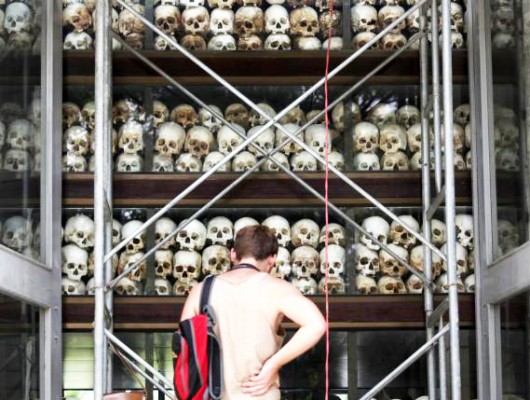
The largest pieces of evidence from this time in history are the remains of the killing fields of Cambodia. These were the places where those who did not cooperate were sent to work to their death. The fields exist today as a museum of sorts, with 20,000 people buried underground. The fields also hold displays, such as 8,000 human skulls placed in glass shrines.
The experiences that the Cambodian people underwent were deeply inhumane. Men, women and children were starved, worked to their death or were murdered in these fields. The fields are not just one inclusive area; there are 343 fields that have been discovered. Especially gruesome is that when it rains on the fields, bone and teeth fragments often wash up.

Cambodia coordinated with the U.N. General Assembly almost three decades after the Khmer Rouge were driven out. On Jun. 6, 2003, the Cambodian government agreed to prosecute the crimes committed during the genocide, which established the Extraordinary Chambers in the Courts of Cambodia (ECCC). Though many perpetrators had already passed away by this time, the ECCC did prosecute five men involved.
Although they hold a dark past, the killing fields of Cambodia have actually become a positive asset to the country. According to National Geographic, tourism in Cambodia has increased by 40 percent every year since 1998 as curiosity about the genocide has grown. The fields have created many tour guide jobs for hundreds of Cambodians and the large rise in tourists has helped boost the country’s economy.
When people visit this site, however, they are most importantly paying their respects to Cambodia’s history and those who have passed. The fields will continue to exist as a reminder of the horror that comes when tyranny and genocide take hold.
– Kerri Whelan
Sources: World Without Genocide, National Geographic, University of Rochester, MTVU, CyberCambodia
Photo: Reuters Media
