• Link to X
  • Link to Facebook
  • Link to Instagram
  • Link to TikTok
  • Link to Youtube
  • About
    • About Us
      • President
      • Board of Directors
      • Board of Advisors
      • Financials
      • Our Methodology
      • Success Tracker
      • Contact
  • Act Now
    • 30 Ways to Help
      • Email Congress
      • Call Congress
      • Volunteer
      • Courses & Certificates
      • Be a Donor
    • Internships
      • In-Office Internships
      • Remote Internships
    • Legislation
      • Politics 101
  • The Blog
  • The Podcast
  • Magazine
  • Donate
  • Click to open the search input field Click to open the search input field Search
  • Menu Menu

Tag Archive for: Somalia

Posts

Global Poverty

The Adverse Effects of Counter terrorism Laws

hamas_adverse_effects_foreign_aid
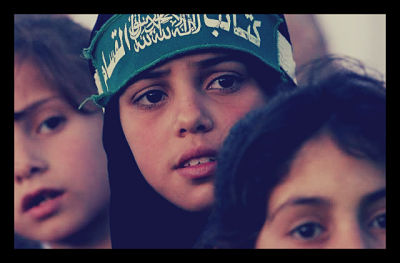
In the last decade, following the attacks on September 11th, 2001, there has been a proliferation of counter terrorism legislation. Most notably the Patriot Act, but many such others have been drafted and passed. A large focus of these laws is to reduce the effectiveness of terrorist organizations by cutting them off from international aid.

There is a side effect though to this crackdown on organizations designated as terrorist, especially in regions where those organizations have control. In Gaza for example, where a rift in the Palestinian government has led to Hamas control of the region, international funding has all but evaporated, due to the labeling of Hamas as a terrorist organization. This isn’t due to the money not being available or no one being willing to assist with humanitarian issues in the region, but rather because a large number of counter-terrorism measures have attached strings to donations.

Examples include an NGO that was prohibited from distributing food because the ministry of social affairs required it to share its beneficiary list, and, as this would constitute a connection to Hamas, the donor wouldn’t authorize it. Similarly, a school project was blocked because the headmaster at the school was viewed to be too senior in the Hamas administration. By placing conditions on the distribution of aid, or prohibiting any connection to a terrorist organization, in a region dominated by that organization, these counter-terrorism laws are preventing many NGOs from securing funding. The first concern for them now is to avoid association with the terrorist organization, and only then can humanitarian action be taken. Or, as more often happens, local NGOs simply refuse funding from external donors, as conditions can’t be met.

Somalia has seen a similar decline in aid, for similar reasons. Kate Mackintosh, co-author of a report commissioned by the UN Office for the Co-ordination of Humanitarian Affairs, says, ‘We did find negative impacts on humanitarian activities, as restriction of funding, blocking of projects and self-censorship by International Organizations and NGOs. After 2008, for example, when the US listed al-Shabaab as a terrorist group, we saw an 88% decrease in aid to Somalia, between 2008 and 2010.’

While counter-terrorism measures are a sad reality of our time, what needs to be reviewed is their impact on humanitarian aid. These laws need to make exceptions to avoid having a negative impact on aid organizations and allow them to operate with the needs of beneficiaries foremost.

– David M Wilson

Sources: The Guardian, IRIN
Photo: LA Times

August 2, 2013
https://borgenproject.org/wp-content/uploads/borgen-project-logo.svg 0 0 Borgen Project https://borgenproject.org/wp-content/uploads/borgen-project-logo.svg Borgen Project2013-08-02 04:00:102024-05-25 00:14:23The Adverse Effects of Counter terrorism Laws
Global Poverty

What is Adeso?

Adeso2_opt
One of the more promising pieces of information being realized in the developing world deals with the immense economic potential of Africa. Already, the United States is beginning to see the nations there as equal partners in world economic affairs, and this isn’t by accident. Briefly, continued attention from nongovernmental aid organizations including the United Nations in conjunction with individual developments in Africa has, over years, vastly increased the capacity of Africans. People all over the continent are slowly winning the war against poverty. In a recent trip to the continent, President Obama made known the intention of the United States to become a global economic partner to help Africa realize its potential and rise up out of its poverty-stricken circumstances. Specifically, Mr. Obama touted the “Power Africa” initiative which would support the proliferation of electricity in the sub-Saharan region.

While the President did not visit Somalia during his trip, the progress made there captured his attention. Somalia is going through many of the same difficulties that plague other African countries such as drought, civil unrest, and economic conflict. With a lack of education and training, the people of Somalia struggle to overcome these situations.

Thankfully, with the help of the organization Adeso: African Development Solutions, many were able to escape their circumstances and become models of the immense potential Somalians hold.

Adeso has more than 20 years of history in Africa, being registered as a nonprofit group in Kenya, the United States, and England and Wales. They focus on garnering results by using the resources and processes that are familiar and accessible to those they are helping; drawing a solution from within a community. This is done with humanitarian aid, skill building, policy change, fostering communication, and working to bolster local economies.

A three year project undertaken in Somalia aimed at building entrepreneurship recently yielded very positive results. Adeso, using it’s Bakool Entrepreneurship Skills Support Action (BESSA), was able to help people diversify their skill sets and thereby increase income. Adeso helped to link national markets and gave farmers and small businesspeople more options in their work. Community-based groups taught new skills and literacy to people, increasing their capacity and understanding of the changes. The outcomes included households that were ready for economic shock, more steady incomes, and more mobility for women who now have more options and buying power.

Increased business is guaranteed to help the Somalian economy, especially in the wake of civil unrest. Despite lack of national cohesion and infrastructure, entrepreneurship can be a tool for uniting people. Mohamed Ali, a Somali refugee who has since returned to his homeland, has started the Iftiin Foundation to promote business values much like Adeso has. Citing that many Somalis are young and unemployed, building those skills and capacities early will promote peace and prosperity. Somalia has much to look forward to with partners like Adeso and the Iftiin Foundation.

– David Smith

Sources: Obama in Africa Adeso All Africa
Photo: Facebook

July 28, 2013
https://borgenproject.org/wp-content/uploads/borgen-project-logo.svg 0 0 Borgen Project https://borgenproject.org/wp-content/uploads/borgen-project-logo.svg Borgen Project2013-07-28 05:01:422024-12-13 17:49:32What is Adeso?
Foreign Aid

Remittances Outweigh International Aid to Africa

aid_opt
Millions of Africans live in migrant communities around the world, and a large number of these regularly send money to family back home. In 2010, the total amount of these remittances topped $50 billion – and possibly up to three times that, as much of the money is sent informally. For comparison, official development assistance that year was $43 billion, according to the World Bank. There is a difference too in the manner of aid. Because remittances are sent directly to family members, they are targeted and aimed at specific needs, be they schooling, or essentials like food and medicine. A recent study showed that nearly half of the population of Somalia, among many other countries, is dependent on money sent from abroad and that the total amount of remittances sent annually reaches $350 billion.

In some ways, money sent directly to families in developing countries can be better spent than official international assistance, as there is no bureaucracy to go through and people can address their needs directly. However, this does not allow for infrastructural development and other government driven projects. And if the income of many people is generated abroad, then local governments receive no benefit from taxation. Therefore, international aid is still important as a facilitator of broader governmental programs in conjunction with the individually distributed remittances.

– David M Wilson
Sources: The Economist, BBC
Photo: Zehabesha

July 27, 2013
https://borgenproject.org/wp-content/uploads/borgen-project-logo.svg 0 0 Borgen Project https://borgenproject.org/wp-content/uploads/borgen-project-logo.svg Borgen Project2013-07-27 04:55:122016-02-16 11:54:23Remittances Outweigh International Aid to Africa
Global Poverty

5 Facts About Mogadishu

When most people consider Mogadishu, the capital of Somalia, they often associate the city with piracy, terrorism, or instability. However, after a long history of violence and political volatility, Mogadishu is actually on an upswing. This is not to say that all of the problems plaguing Mogadishu in recent years have been solved, but there is slow and steady progress being made since the injection of foreign aid.

  1. Somalia has been a war-torn nation since 1991 and has been called the most unstable nation according to the Failed States Index. As the capital of Somalia, Mogadishu was no exception. During this period of political instability, it suffered greatly economically. Makeshift camps were set up throughout Mogadishu, and many of the city’s buildings, universities, schools, and colleges were also transformed into refugee camps.
  2. Evidence of the violence in the country can be seen throughout Mogadishu. As a result of the political instability, there are hundreds of military checkpoints throughout the city and many of the buildings are pock-marked from machine gun fire.. Also, even though the Bakara market thrives as an economic center of the city, those who can afford to shop there usually have to hire armed escorts to protect them just to browse the shop’s offerings.
  3. However, in late 2012, Somalia achieved a huge success by having its first election since the start of the civil war, ending the rule of an unstable interim government. Additionally, a new and widely praised constitution was put in place. Although the civil war continues to rattle the nation, the effects of Somalia’s newly achieved political prosperity has had a substantial impact on Mogadishu’s economy. In fact, as a sign of good faith in the nation’s new direction, USAID has announced plans to allocate an additional $20 million in development aid to Somalia. This aid includes building solar-powered lights in Mogadishu.
  4. Mogadishu’s economy is booming in 2013. The city once known for violence is now known for its rampant construction and expansion.  Besides the real estate market, the telecommunications and agricultural industries have been thriving as well. The money that USAID has been investing in Mogadishu in recent years has had a major impact.
  5. Mogadishu’s success has been so dramatic that it may someday become a tourist hotspot. Because of the returning diaspora of Somalis who wish to aid the city’s development now that it is much safer, hotels and beach resorts are already underway under the advisement of ambitious Somali businessmen.

– Sagar Desai

Sources: BBC, The Borgen Project
Photo: CNN

July 26, 2013
https://borgenproject.org/wp-content/uploads/borgen-project-logo.svg 0 0 Borgen Project https://borgenproject.org/wp-content/uploads/borgen-project-logo.svg Borgen Project2013-07-26 05:46:492013-08-09 12:37:305 Facts About Mogadishu
Global Poverty

Is Somalia the Next Tourist Hotspot?

Business is booming in Mogadishu, the capital of war-torn Somalia. This economic renaissance of sorts might come as a surprise considering the recent history of the nation, which has suffered from political instability and terrorist insurgency for the past twenty years.

However, after the people of Somalia elected their own president to represent them just last year, the economy of the nation has already shown considerable signs of steady improvement. On top of this, Somalia’s recently adopted provisional constitution, which has been praised as “one of the top legal documents in the world,” has had a powerful impact on the Somalian economy as well. According to many Somalian businessmen, peace inevitably leads to prosperity.

Bashir Osman, a real estate developer, knows that he took a huge risk by buying land for a luxury beach resort in Mogadishu, but he also is very confident that his investment will pay off. “[The tourists] were so excited when they saw how Mogadishu looks like, how beautiful city we have, how beautiful beach we have and that is what we want to show them again and again,” Osman tells.

Many believe that the economic resurgence in Somalia is not only because of businessmen like Osman but also because of the diaspora returning to rebuild the country. Somalian citizens who escaped the country to avoid the violence and political upheaval that plagued the last two decades are now coming back to reshape Mogadishu and other major cities.

The recent success of Somalia’s economy is not only found in the real estate sector but also in the telecommunications and aviation industry, further facilitating Mogadishu as a tourist hotspot. The nation’s economy is supported by aid from donor governments; Somalia’s pending success story is a testament to the vitality of these programs.

– Sagar Desai
Sources: Xinhua, CNN
Photo: Go Africa

July 24, 2013
https://borgenproject.org/wp-content/uploads/borgen-project-logo.svg 0 0 Borgen Project https://borgenproject.org/wp-content/uploads/borgen-project-logo.svg Borgen Project2013-07-24 12:10:152024-05-25 00:06:50Is Somalia the Next Tourist Hotspot?
Advocacy, Developing Countries, Extreme Poverty, Human Rights

Mercy Corps

Mercy Corps
Mercy Corps works to save and improve lives in some of the most impoverished places on earth. Since it was founded in 1979, the NGO has worked in war-torn and poverty-ridden countries to turn crises into opportunities. 95% of their staff are local residents working in nations like Somalia, Afghanistan, the Congo and Iraq.

The countries in which Mercy Corps works have several things in common. Usually children’s lives are at risk, women’s education is ignored, and there is little chance for economic growth. The organization helps to provide and build food security and create educational and economic opportunities. Their method is to listen to the locals and prioritize urgent needs first. They look at long-term and innovative solutions that bring systemic change.  Through taking responsible risks and thinking big, the organization is able to help large numbers of individuals.

Mercy Corps believes communities work best when they work for their own growth and change. They believe local markets provide sustainable recovery and good governance is the foundation to success. They focus their work on places in transition either from conflict, natural disasters, or political upheaval. They start with emergency relief and move to long-term goals to create communities that can withstand future shocks.

To get involved with Mercy Corps, check out their website at www.mercycorps.org.  They have lots of opportunities from donating money to fundraising to attending events or visiting their office in Portland. They also have a list of open positions and offer internships for those interested in a longer or more permanent position.

It is evident that the organization is making a difference in some of the toughest places on earth. Lives are being saved and communities are being changed through the work Mercy Corps does.

– Amanda Kloeppel
Source: Mercy Corps

July 13, 2013
https://borgenproject.org/wp-content/uploads/borgen-project-logo.svg 0 0 Borgen Project https://borgenproject.org/wp-content/uploads/borgen-project-logo.svg Borgen Project2013-07-13 04:00:412021-12-13 09:56:56Mercy Corps
Child Soldiers, Human Rights

5 Facts about Child Soldiers

child soldiers
The subject of many a documentary, news report, and even novel, the figure of the child soldier emerged onto the global stage in the late 20th century, largely the result of publicized conflicts in places like Uganda and the Democratic Republic of Congo.  The heartbreaking and sometimes frightening images of children—almost all of them African boys—turned into violent killers captured the attention of many in the west.  Like most images, these tell only a part of the story.  Here are five important and sobering facts about child soldiers.

1. Not all child soldiers are African. The organization Child Soldiers International reports that “since 2000, the participation of these soldiers has been reported in most armed conflicts and in almost every region of the world.” No exact figures have been compiled, but some estimates put the number at 250,000 child soldiers currently fighting in conflicts around the world. Countries, where child soldiers can be found, include Afghanistan, Burma, Iraq, the Philippines, Colombia, Thailand, India, Somalia, and Yemen.

2. They do more than just fight. Child soldiers not only fight on the front lines, but they also serve as runners, spies, and in some cases human shields. Many of them are also sexually abused and exploited.

3. Not all child soldiers are boys. Girls under 18 are often recruited or captured during conflicts, and most of the time they suffer sexual abuse and exploitation. An estimated 40% of them are girls.

4. They are both recruited and forced into serving. Many soldiers are violently kidnapped and forced to serve in armies or in opposition groups.  Some, however, are drawn in because poverty and deprivation leave them vulnerable to the promise of money, food, and clothing if they take up arms. Desperation proves to be a powerful motivating force for some children.

5. They can be and have been rehabilitated. Despite the horrors they have suffered and in many cases committed, these soldiers are children forced or lured into war. Many organizations around the globe work to provide the therapy, medical attention, and education that these children need. Hundreds of former soldiers have benefited from this kind of care and been reunited with family members and loved ones.

– Délice Williams

Sources: Child Soldiers.org, Peace Direct USA
Photo: MW

July 3, 2013
https://borgenproject.org/wp-content/uploads/borgen-project-logo.svg 0 0 Borgen Project https://borgenproject.org/wp-content/uploads/borgen-project-logo.svg Borgen Project2013-07-03 16:25:372024-06-05 01:53:345 Facts about Child Soldiers
Refugees and Displaced Persons

World’s Top 5 Largest Refugee Populations

refugee populations
An estimated 15.2 million people in the world are refugees, people forced to leave their home countries because of persecution, war, or other kinds of violence. That’s the equivalent of the populations of New York, Los Angeles, Chicago, and San Francisco combined.

Who are these people? Where do they come from? And where do they currently reside? Data from the United Nations High Commissioner for Refugees give us the following snapshot of these populations: of the 15.2 million refugees, 46% are under 18, and 48% are female. Most of these people have been forced to move to developing nations, which host an estimated 80% of the world’s refugee population.

The country with the largest refugee population in the world is Pakistan, which hosts an estimated 1.7 million refugees. Many of these refugees are from neighboring Afghanistan, the country that produces the greatest number of refugees, an estimated 2.7 million people. To place these numbers in a global context, below is a list of the world’s top 5 largest refugee populations by the nation of origin.

Largest Refugee Populations

1. Afghanistan –  2.7 million refugees worldwide

2. Iraq – 1.7 million

3. Somalia –  770,000

4. Democratic Republic of Congo – 477,000

5. Myanmar – 415,000


Refugees from these and other countries are forced to move across the globe, many of them ending up in Pakistan, Iran, Syria, Germany, and Jordan, the top 5 on the list of host countries. Jordan, Syria, Congo, Chad, and Montenegro are the countries with the highest proportion of refugees per 1,000 people. The United States currently hosts an estimated 265,000 refugees.

Although numbers like these are sometimes hard to grasp, compiling this kind of data is vital for refugee aid organizations like UNHCR, which rely on data to plan ways to help the people and countries involved. UNHCR publishes an annual Global Trends Report on refugee populations. The next such report is due in June 2013.

– Délice Williams

Sources: UNHCR, The Guardian, MSN Causes
Photo: Guardian

May 22, 2013
https://borgenproject.org/wp-content/uploads/borgen-project-logo.svg 0 0 Borgen Project https://borgenproject.org/wp-content/uploads/borgen-project-logo.svg Borgen Project2013-05-22 04:00:552024-06-10 03:22:52World’s Top 5 Largest Refugee Populations
Activism, Nonprofit Organizations and NGOs, Refugees and Displaced Persons

Dadaab Stories: By the People, For the People

Dadaab Stories: By the People, For the People
A story is best told by someone who was there. Whereas many documentaries as made by directors and producers passionate about the cause they are filming for, there is a difference between an outsider shooting their subjects, and the subjects shooting themselves.

The organization FilmAid had initially begun to screen videos and films at refugee camps. These films were mostly educational, providing those living in refugee camps with important safety and health information. They also showed films for purely entertainment purposes in order to help lighten the mood and spirit at the camps. In 2011, however, the organization’s branch in Dadaab, the world’s biggest refugee camp in Somalia, began a special project entitled “Dadaab Stories” where it began to train the refugees to work the cameras themselves and have the chance to tell their stories from their perspective.

Dadaab was built in the 1990s to house 90,000 refugees. Today, it is the home to over 500,000 refugees. Describing life in a refugee camp is difficult; insiders know more and have been around longer than an outside film crew.

Ryan Jones, an American videographer who joined FilmAid’s project in 2011, said that the part of the appeal of the program that it strays from the usual model of “an American film crew coming into a camp and spending a short period of time there and shooting some kind of 90-minute doc we hope to get into Sundance.”

Refugees have made various videos such as an emergency response video regarding a cholera outbreak, a safety video for rape awareness, the camp’s orientation film, a music video for the local group Dadaab All Stars, and documentation of actress Scarlett Johansson’s visit.

In October of 2011, however, a kidnapping incident involving Doctors Without Borders created intense restrictions and security issues which prevented the FilmAid team from coming back to Somalia. Since then, the refugees have been trying to manage posting videos and have begun to make their camp-wide newspaper The Refugee available online.

This project has not only taught the refugees a new and unique skill they would otherwise not have the chance to learn, but it gives them a creative outlet to truly show the world what life in a refugee camp is like. They may not be making feature length films or Sundance-worthy documentaries, but their progress and work are so valuable that it could never be put into a simple award category.

– Deena Dulgerian

Source: Co.EXIST

April 13, 2013
https://borgenproject.org/wp-content/uploads/borgen-project-logo.svg 0 0 Borgen Project https://borgenproject.org/wp-content/uploads/borgen-project-logo.svg Borgen Project2013-04-13 06:52:532024-12-13 17:53:44Dadaab Stories: By the People, For the People
Foreign Aid, Foreign Policy

Effects of Drone Strikes on Humanitarian Aid

Effects of Drone Strikes on Humanitarian Aid
The moral, ethical, and legal questions and uncertainties about secretive US drone strikes have increasingly become subjects of media attention. Many have criticized the Bush and Obama administrations for effectively engaging in endless, unchecked war, in many places, all the time. But one question has gone largely unasked in the debate over unmanned US strikes: what are the effects of drone strikes on humanitarian aid?

As we know, poverty and terrorism are closely linked. The daily struggles of those living in extreme poverty breed despair and desperation and leave many, especially youth, vulnerable to terrorist groups’ incendiary messages. Poverty reduction is an important part of US national security and foreign policy, and yet drone strikes may be undermining attempts to combat extreme poverty on the ground.

Organizations working in rural areas of Afghanistan, Pakistan, Somalia, Yemen, and other drone strike-targeted regions have reported increased hostility and resistance in relation to drone strikes. Suspicions are always aroused in the days and weeks following a strike. According to NGO security officials in Somalia, following a 2008 drone strike, attacks on aid workers increased from one to two a month to six to eleven.

Aid workers have been accused of complicity in drone strikes. Often, workers who have been collecting information for aid purposes are accused of passing on sensitive information that supposedly enable strikes, such as GPS coordinates. Some workers have been killed, either by hostile locals or as a direct result of strikes.

One of the biggest problems that aid organizations and NGOs face in dealing with drone strikes is the lack of human personnel involved in the attacks. There are no authorities on the ground to address the safety of aid workers or civilians in the region. It is difficult to determine responsibility for the attacks because even though drones often operate from regular military airbases, they are under the CIA’s jurisdiction.

Some groups, such as the UN Assistance Mission in Afghanistan (UNAMA), have had success interfacing with the US government through the International Security Assistance Force (ISAF). But others, like the Center for Civilians in Conflict, have had zero success in lobbying Congressional leaders for greater oversight of drone strikes. Civilians in Conflict released this report in 2012 on the effects of drone strikes on civilians.

The effects of drone strikes on humanitarian aid cannot be underestimated. Compounding tensions in areas already struggling with poverty and violence does nothing to alleviate the problems. Instead, it hampers the valiant efforts of those risking their own lives to make a positive difference. If the US government wants to positively contribute to poverty relief and reduction efforts, it needs to evaluate the effects of drone strikes on humanitarian aid work in targeted regions.

– Kat Henrichs

Source: IRIN
Photo:

March 30, 2013
https://borgenproject.org/wp-content/uploads/borgen-project-logo.svg 0 0 Borgen Project https://borgenproject.org/wp-content/uploads/borgen-project-logo.svg Borgen Project2013-03-30 09:53:042024-05-24 23:46:11Effects of Drone Strikes on Humanitarian Aid
Page 5 of 512345

Get Smarter

  • Global Poverty 101
  • Global Poverty… The Good News
  • Global Poverty & U.S. Jobs
  • Global Poverty and National Security
  • Innovative Solutions to Poverty
  • Global Poverty & Aid FAQ’s
Search Search

Take Action

  • Call Congress
  • Email Congress
  • Donate
  • 30 Ways to Help
  • Volunteer Ops
  • Internships
  • Courses & Certificates
  • The Podcast
Borgen Project

“The Borgen Project is an incredible nonprofit organization that is addressing poverty and hunger and working towards ending them.”

-The Huffington Post

Inside The Borgen Project

  • Contact
  • About
  • Financials
  • President
  • Board of Directors
  • Board of Advisors

International Links

  • UK Email Parliament
  • UK Donate
  • Canada Email Parliament

Get Smarter

  • Global Poverty 101
  • Global Poverty… The Good News
  • Global Poverty & U.S. Jobs
  • Global Poverty and National Security
  • Innovative Solutions to Poverty
  • Global Poverty & Aid FAQ’s

Ways to Help

  • Call Congress
  • Email Congress
  • Donate
  • 30 Ways to Help
  • Volunteer Ops
  • Internships
  • Courses & Certificates
  • The Podcast
Scroll to top Scroll to top Scroll to top