• Link to X
  • Link to Facebook
  • Link to Instagram
  • Link to TikTok
  • Link to Youtube
  • About
    • About Us
      • President
      • Board of Directors
      • Board of Advisors
      • Financials
      • Our Methodology
      • Success Tracker
      • Contact
  • Act Now
    • 30 Ways to Help
      • Email Congress
      • Call Congress
      • Volunteer
      • Courses & Certificates
      • Be a Donor
    • Internships
      • In-Office Internships
      • Remote Internships
    • Legislation
      • Politics 101
  • The Blog
  • The Podcast
  • Magazine
  • Donate
  • Click to open the search input field Click to open the search input field Search
  • Menu Menu

Tag Archive for: Poverty In Pakistan

Posts

Developing Countries, Development, Global Poverty

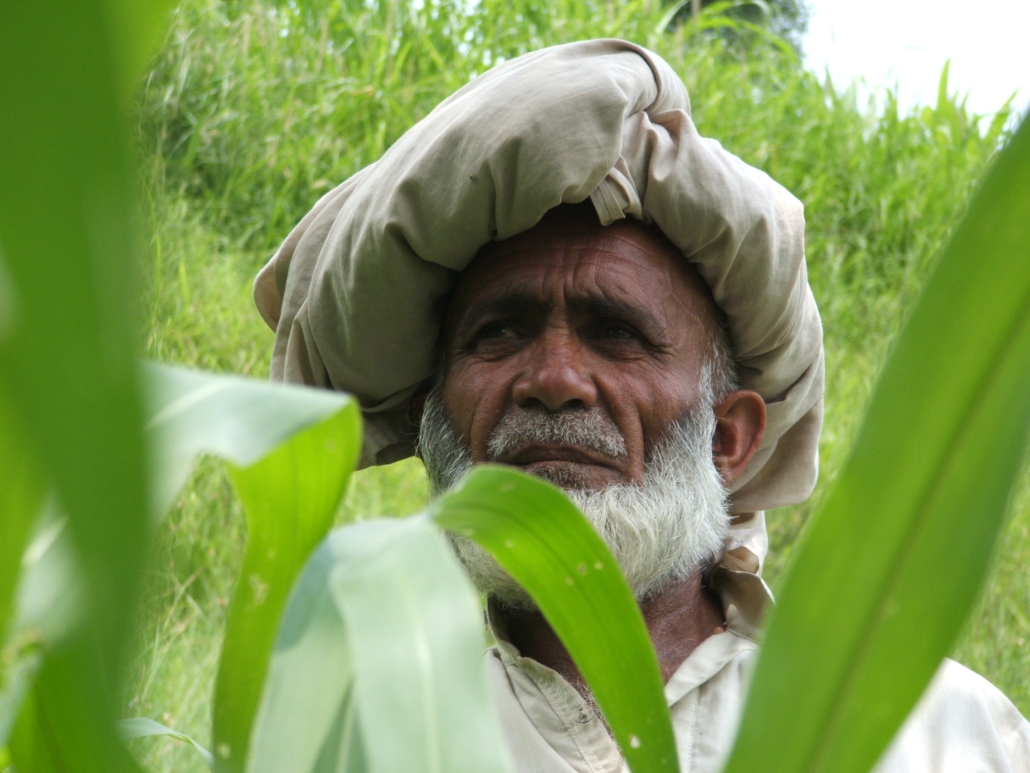
Tackling Energy Poverty in Rural Pakistan

energy_poverty
Each day, more of the world’s population gains access to electricity. Economic development, urbanization and aid programs have all helped increase global energy access. But 1.3 billion people still have no access to electricity, meaning that 18 percent of the world’s population is living in “energy poverty.” 97% of those living without electricity are located in either Sub-Saharan Africa or developing areas of Asia.

Electricity is vital for maintaining a clean water supply, sanitation systems and effective healthcare. It is also necessary for reliable lighting and heating, mechanical power, transportation and communication. It is crucial to a country’s economic development and its peoples’ well-being.

In Pakistan, only 67% of the population has access to electricity. In rural areas, this percentage dips even lower. However, the Sarhad Rural Support Programme (SRSP) is working to bring electricity to those living in rural Pakistan.

SRSP, a nonprofit founded in 1989, operates in the province of Khyber Pakhtunkhwa and the Federally Administered Tribal Areas, or FATA. The organization aims to empower communities, support economic and livelihood development, and provide humanitarian aid when necessary. Their overall goals are to reduce poverty levels and improve the quality of life in these regions. They have assisted in many areas, from providing relief after natural disasters to improving drinking water quality to building roads.

SRSP is making great strides in helping those in Khyber Pakhtunkhwa access electricity. They have been primarily working in the remote villages of the Hindu Kush mountains. Life in these villages is difficult — the area is prone to earthquakes and flooding and has been the site of many violent conflicts. However, the very mountains that isolate these villages have provided a source of energy for the people.

SRSP uses micro-hydro schemes powered by the glacier meltwater rivers that flow down the mountains to provide a sustainable source of energy. Micro-hydro schemes are able to provide electricity to whole communities while making very little impact on the environment. Since 2004, SRSP has built 189 micro-hydro schemes, bringing electricity to approximately 365,000 people. Over the next two years, the organization aims to reach 300,000 more people.

Having electricity has dramatically improved the quality of life for these villagers. Businesses can expand, communication is much easier, and students are able to study after dark and attain a better education. SRSP earned the 2015 Ashden International Award for Increasing Energy Access for their work in Khyber Pakhtunkhwa.

In today’s world, electricity is necessary for any nation to develop, and SRSP’s sustainable practices can help Pakistan to do so without harming the environment. Other regions in need of energy access, such as parts of Sub-Saharan Africa, could benefit from such systems. The model of using a region’s natural resources, from water to sunlight to wind, to provide power could work in other “energy poor” areas of the world. The methods used by SRSP prove that sustainable sources of energy can be hugely beneficial for expanding energy access while preserving a region’s natural ecosystems.

– Jane Harkness

Sources: Ashden, The Express Tribune, The Guardian, International Energy Agency, International Energy Agency 2, Sarhad Rural Support Programme, Sarhad Rural Support Programme 2
Photo: Sarhad Rural Support Programme

July 6, 2015
https://borgenproject.org/wp-content/uploads/borgen-project-logo.svg 0 0 Borgen Project https://borgenproject.org/wp-content/uploads/borgen-project-logo.svg Borgen Project2015-07-06 07:31:052024-06-11 02:52:15Tackling Energy Poverty in Rural Pakistan
Developing Countries, Economy, Extreme Poverty, Global Poverty

Poverty in Lahore, Pakistan

Poverty-in-Lahore-Pakistan
Pakistan is among the nations in the developing world that has made substantial progress in poverty reduction. The amount of people living in extreme poverty has gone down considerably over the years and continues to decrease today. What drives poverty reduction in Pakistan, especially in large areas such as Lahore, is income growth. Through a combination of support programs and reforms, as well as income equality, Pakistan was able to translate income growth to poverty reduction.

According to the World Bank Group, there are over 50 million less people living in poverty in present day Pakistan than there were in 1991. Additionally, the percent of people living on less than a dollar and a quarter a day fell from 66.5 percent to 12.7 percent. However, although extreme poverty in the region has been reduced, there is still over half of the population living under two dollars a day. Despite progress made in Pakistan, there still remains a high number of Pakistanis in poverty and many more who are vulnerable to falling back into poverty, especially in large cities such as Lahore.

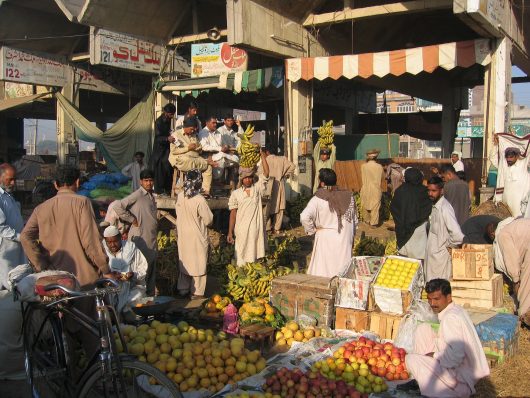
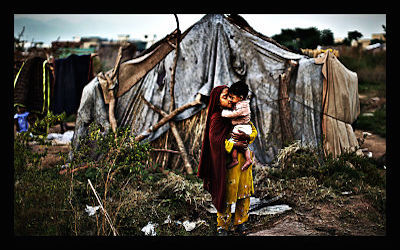
Lahore, a large region in Pakistan, is considered to be one of the most populated urban areas in the world and is one of the largest cities in the Islamic world. According to Index Mundi, as of January 2015, Lahore has an estimated 10 million people living in the region. The size of the region poses a bilateral problem; on the one hand, Lahore’s population and size contributes to its wealth and prosperity, while on the other hand, with a large city comes overpopulation and underdevelopment. Large cities such as Lahore often have another side to their urban development: the underdevelopment of parts of the region called the slums. Similar to the slums in various parts of India, Indonesia and Kenya, slums in Lahore are densely populated with areas lacking in basic necessities such as clean water, electricity, security and health care.

In Lahore, 30 percent of the region is considered to fall into the category of slums; however, the percentage does not take into account the amount of unregistered slum neighborhoods in the city. These slums are formed by low income communities that do not have the means to live in proper housing in the city, and they are a byproduct of over population, economic, political and social inequalities as well government intervention. Slums in Lahore are also a consequence of people moving from rural areas around Pakistan to the city in hopes of attaining a better life. The reality, however, reveals that many who move into the city have a difficult time securing employment, and eventually settle in the slum communities as a result. Health care, education, and basics such as sanitation and electricity, are extremely limited in the slums of Lahore and further contribute to low living conditions.

A solution that can bring poverty rates down in Lahore is to have more government involvement through political laws and reforms that pay special attention to these areas. More government interference and aid to counteract inequalities can be the beginning of reducing poverty in the slums of Lahore.

– Nada Sewidan

Sources: The World Bank, TribuneAcademia.edu
Photo: Pakistan Defence

June 6, 2015
https://borgenproject.org/wp-content/uploads/borgen-project-logo.svg 0 0 Borgen Project https://borgenproject.org/wp-content/uploads/borgen-project-logo.svg Borgen Project2015-06-06 12:00:572020-07-17 20:36:39Poverty in Lahore, Pakistan
Page 7 of 7«‹567

Get Smarter

  • Global Poverty 101
  • Global Poverty… The Good News
  • Global Poverty & U.S. Jobs
  • Global Poverty and National Security
  • Innovative Solutions to Poverty
  • Global Poverty & Aid FAQ’s
Search Search

Take Action

  • Call Congress
  • Email Congress
  • Donate
  • 30 Ways to Help
  • Volunteer Ops
  • Internships
  • Courses & Certificates
  • The Podcast
Borgen Project

“The Borgen Project is an incredible nonprofit organization that is addressing poverty and hunger and working towards ending them.”

-The Huffington Post

Inside The Borgen Project

  • Contact
  • About
  • Financials
  • President
  • Board of Directors
  • Board of Advisors

International Links

  • UK Email Parliament
  • UK Donate
  • Canada Email Parliament

Get Smarter

  • Global Poverty 101
  • Global Poverty… The Good News
  • Global Poverty & U.S. Jobs
  • Global Poverty and National Security
  • Innovative Solutions to Poverty
  • Global Poverty & Aid FAQ’s

Ways to Help

  • Call Congress
  • Email Congress
  • Donate
  • 30 Ways to Help
  • Volunteer Ops
  • Internships
  • Courses & Certificates
  • The Podcast
Scroll to top Scroll to top Scroll to top