• Link to X
  • Link to Facebook
  • Link to Instagram
  • Link to TikTok
  • Link to Youtube
  • About
    • About Us
      • President
      • Board of Directors
      • Board of Advisors
      • Financials
      • Our Methodology
      • Success Tracker
      • Contact
  • Act Now
    • 30 Ways to Help
      • Email Congress
      • Call Congress
      • Volunteer
      • Courses & Certificates
      • Be a Donor
    • Internships
      • In-Office Internships
      • Remote Internships
    • Legislation
      • Politics 101
  • The Blog
  • The Podcast
  • Magazine
  • Donate
  • Click to open the search input field Click to open the search input field Search
  • Menu Menu

Tag Archive for: Poverty in Eritrea

Posts

Global Poverty, Government

Agriculture and Freedom Keys to Poverty in Eritrea

Poverty in EritreaEritrea is a country in the Horn of Africa, bordered by Sudan in the west, Ethiopia in the south and Dijibouti in the southeast. The country gained independence from Ethiopia in 1993 and has been led solely by unelected president Isaias Afwerki since 1991.
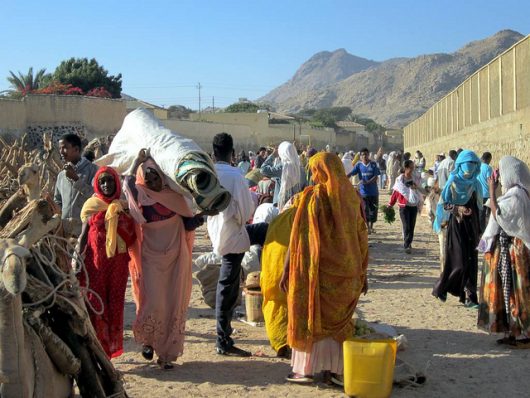
Eritrea has isolated itself from other countries and become one of the poorest in Africa. The most recent data on poverty, from 2004, showed that poverty in Eritrea affects more than 50 percent of the population. Between 1990 and 2001, 44 percent of children under the age of five were underweight and nearly two-thirds of Eritrean families experienced food insecurity.

Conflict with both Ethiopia and Djibouti has consumed Eritrea for more than three decades. The threat of war with Ethiopia has led to a large amount of defense spending that leaves very little room for economic development. Additionally, 18 months of military service is mandatory for men and often takes them away from making a livelihood for their families.

According to the World Bank, two-thirds of employment in Eritrea is accounted for by rain-fed agriculture. Around 65 percent of the population lives in rural areas and 80 percent depends on the agriculture to survive. In 2011, the worst drought in 50 years hit the Horn of Africa and devastated the agriculture and increased poverty in Eritrea.

While humanitarian groups tried to help during the drought, there was only limited data and communication from the Eritrean government. “[The Eritrean people] most likely are suffering the very same food shortages that we’re seeing throughout the region [and] are being left to starve because there is not access,” U.N. ambassador Susan Rice told the BBC. “There’s a clear-cut denial of access by the government of Eritrea of food and other humanitarian support for its people.”

A constitution was developed in 1997 but has not been put in place and other countries are unwilling to have diplomatic relations. The regime has shut down the independent press, limited civil rights and allegedly denied basic human rights to its people.

The government has placed restrictions on religion, speech, expression and association. According to the Human Rights Watch, there were 474,296 asylum-seekers in 2015 — this is 12 percent of the population attempting to escape poverty in Eritrea.

Many families and children traveling alone have begun the dangerous journey across the ocean to Europe. Many European countries have attempted to accept Eritrean refugees, while countries such as Israel have refused to take any. Refugees who make an unwilling return to Eritrea are met with imprisonment and sometimes torture.

While times have been tough in Eritrea for a long time, awareness of the issue maintains important. The Human Rights Council for Eritrea was created in May 2016 and has condemned the deplorable human rights violations and totalitarian practices. Reports like this are what can help reduce poverty in Eritrea and lead to a more democratic system.

Economic growth and food security have been a part of Eritrea’s political agenda since its independence in 1993, despite various setbacks. The government continues to work on eradicating poverty by improving the export markets for livestock and produce, increasing the productivity of the agriculture process and receiving investments from the private sector.

Additionally, when poverty problems arise, Eritreans hold a strong sense of community. If the government solutions fail or are set back, wealthier people often loan livestock and money to poorer relatives and neighbors to keep them afloat.

– Madeline Boeding

Photo: Flickr

September 27, 2017
https://borgenproject.org/wp-content/uploads/borgen-project-logo.svg 0 0 Borgen Project https://borgenproject.org/wp-content/uploads/borgen-project-logo.svg Borgen Project2017-09-27 01:30:082024-05-27 23:53:26Agriculture and Freedom Keys to Poverty in Eritrea
Global Poverty, Hunger, War and Violence

Disastrous Poverty in Eritrea

Poverty in Eritrea
Poverty in Eritrea remains a problem. While the country’s economy was doing well from 1993 to 1997, Eritrea was suddenly thrown into turmoil both by nature and politics. Due to challenges like drought, famine and recurrent war, poverty in Eritrea is on the rise and doesn’t seem to be stopping.

Eritrea fought with Ethiopia for 30 years before winning its independence. As any new country would, it had to deal with socio-economic hardships of a newly forming nation. Agriculture is its major source of income as well as food, as is the case for many African nations.

While Eritrea may be known as one of the world’s youngest countries, it is also one of the poorest. In 2005, the annual per capita income was $150. Out of 175 countries in the Human Development Index, Eritrea is ranked 155th.

Poverty and food insecurity in Eritrea are widespread and increasing. According to the Rural Poverty Portal, “even in years of adequate rainfall, about half of the food that the country requires has to be imported.”

While Eritrea’s government has implemented some poverty alleviation measures, these attempts have not mitigated poverty as they should have. This is partially due to the lack of resources and overall poorly implemented programs. Poverty in Eritrea has become rampant, and more than 66 percent of the population lives below the poverty line.

Access to sanitation was only available to 13 percent of Eritreans in 1997, and only 22 percent had access to clean water. Widespread malnutrition and inadequate healthcare also result in high infant mortality rates and low life expectancy.

Poverty in Eritrea barely allows its people to survive, let alone receive a proper education. The literacy rate is estimated at 49 percent. In addition, a weak education system does not help to relieve the issues associated with poverty.

While Eritrea still lacks resources and foreign aid, it will not be able to support itself after natural disasters and an ongoing war have ravaged the country. This young nation will require aid and guidance as it seeks growth and prosperity.

– Karyn Adams

Photo: Flickr

April 28, 2017
https://borgenproject.org/wp-content/uploads/borgen-project-logo.svg 0 0 Borgen Project https://borgenproject.org/wp-content/uploads/borgen-project-logo.svg Borgen Project2017-04-28 01:30:462020-05-03 14:43:59Disastrous Poverty in Eritrea
Global Poverty, Human Rights, Refugees

Citizens Fleeing Eritrea because of Poverty and Forced Labor

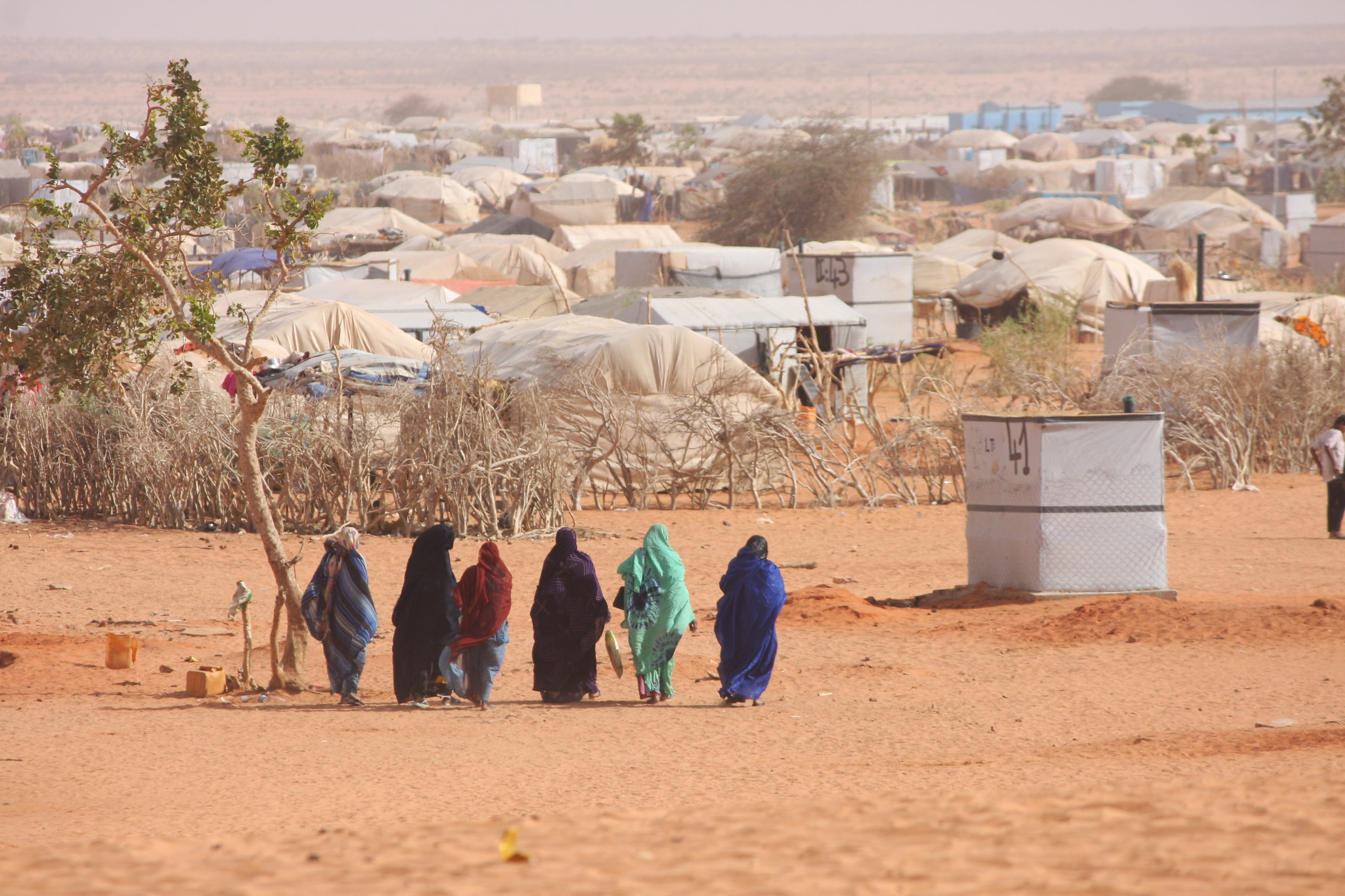
Fleeing EritreaSince 2012, one in every 50 Eritreans (nearly twice the ratio of Syrians fleeing from civil war) has sought asylum in Europe. According to the U.N., 5,000 Eritrean men and boys are leaving their families and fleeing Eritrea each month.

High Rates of Fleeing

The U.N. estimates that 400 thousand Eritreans, or nine percent of the population, have fled in recent years. According to the U.N. High Commissioner for Refugees (UNHCR), nearly one-quarter of the 132 thousand migrants arriving in Italy between January and September of 2015 were Eritreans.

Poverty in Eritrea is extreme. The CIA World Factbook reports the nation’s GDP purchasing power as $8.7 billion, ranking Eritrea 162nd in the world. Unemployment in the country is estimated at just 8.6%, but the poverty rate is estimated at 50%. More specific numbers are nearly impossible to acquire due to Eritrea’s secretive nature.

Reasons for Leaving

Why are people fleeing Eritrea? In June 2015, the UNHCR released a 500-page report detailing the systematic, widespread and gross human rights violations going on in Eritrea, violations that have created a climate of fear in which dissent is stifled. The report found that a large proportion of the population was being subjected to forced labor and imprisonment.

According to the report, the people of Eritrea are not ruled by law, but by fear. The Eritrean government denied repeated requests by the commission for information and access to the country. To gain insight into the situation, the commission conducted 550 confidential interviews with Eritrean witnesses in eight countries and received an additional 160 written submissions.

Conscription for 18 months is required of each Eritrean adult but is often extended indefinitely and carried out for years in harsh and inhumane conditions. Thousands of conscripts are subjected to forced labor that effectively abuses, exploits and enslaves them.

According to the UNHCR’s report, women conscripts are at extreme risk for sexual violence during national service. All sectors of the economy rely on forced service, and all Eritreans are likely to be subject to it at some point during their lives. The commission concluded that, “forced labor in this context is a practice similar to slavery in its effects and, as such, is prohibited under international human rights law.”

Mandatory conscription has not remedied poverty in Eretria. Instead, it has exacerbated it. Commission chair Sheila B. Keethrauth urged commitment from the international community to end the climate of fear in Eritrea.

“Rule by fear — fear of indefinite conscription, of arbitrary and incommunicado detention, of torture and other human rights violations — must end,” said Keethrauth.

– Aaron Parr

Photo: Flickr

November 1, 2016
https://borgenproject.org/wp-content/uploads/borgen-project-logo.svg 0 0 Borgen Project https://borgenproject.org/wp-content/uploads/borgen-project-logo.svg Borgen Project2016-11-01 01:30:582024-05-27 23:53:25Citizens Fleeing Eritrea because of Poverty and Forced Labor
Page 2 of 212

Get Smarter

  • Global Poverty 101
  • Global Poverty… The Good News
  • Global Poverty & U.S. Jobs
  • Global Poverty and National Security
  • Innovative Solutions to Poverty
  • Global Poverty & Aid FAQ’s
Search Search

Take Action

  • Call Congress
  • Email Congress
  • Donate
  • 30 Ways to Help
  • Volunteer Ops
  • Internships
  • Courses & Certificates
  • The Podcast
Borgen Project

“The Borgen Project is an incredible nonprofit organization that is addressing poverty and hunger and working towards ending them.”

-The Huffington Post

Inside The Borgen Project

  • Contact
  • About
  • Financials
  • President
  • Board of Directors
  • Board of Advisors

International Links

  • UK Email Parliament
  • UK Donate
  • Canada Email Parliament

Get Smarter

  • Global Poverty 101
  • Global Poverty… The Good News
  • Global Poverty & U.S. Jobs
  • Global Poverty and National Security
  • Innovative Solutions to Poverty
  • Global Poverty & Aid FAQ’s

Ways to Help

  • Call Congress
  • Email Congress
  • Donate
  • 30 Ways to Help
  • Volunteer Ops
  • Internships
  • Courses & Certificates
  • The Podcast
Scroll to top Scroll to top Scroll to top