• Link to X
  • Link to Facebook
  • Link to Instagram
  • Link to TikTok
  • Link to Youtube
  • About
    • About Us
      • President
      • Board of Directors
      • Board of Advisors
      • Financials
      • Our Methodology
      • Success Tracker
      • Contact
  • Act Now
    • 30 Ways to Help
      • Email Congress
      • Call Congress
      • Volunteer
      • Courses & Certificates
      • Be a Donor
    • Internships
      • In-Office Internships
      • Remote Internships
    • Legislation
      • Politics 101
  • The Blog
  • The Podcast
  • Magazine
  • Donate
  • Click to open the search input field Click to open the search input field Search
  • Menu Menu

Tag Archive for: Poverty in East Africa

Posts

Business, Global Poverty

AGOA is Building a Global Middle Class Via Fashion

AGOAFor many years, critics treated globalization as a race to the bottom. Brands chased cheaper labor while workers struggled to move beyond the poverty line. However, in recent years, a different model has emerged in some sectors of the apparel industry. When governments pair trade access with local production rules, fashion can help create stable jobs, stronger communities and something much more durable: a middle class. This model works best when countries build local manufacturing ecosystems that keep more value at home. Ethical fashion succeeds when it connects consumer demand to long-term local investment rather than short-term outsourcing.
Peru: Luxury Cotton in a Local Industry

Peru offers one of the strongest examples. The country built a premium textile sector around Pima cotton, a high-end fiber cultivated for thousands of years and tied closely to Indigenous agricultural traditions. Peruvian Pima cotton requires roughly 50% less water than conventional cotton because of its drought tolerance, making it both economically and environmentally valuable.

The apparel brand Nation LTD shows how this ecosystem works in practice. After starting production in Los Angeles, the company moved much of its manufacturing to Peru to access a vertically integrated supply chain that tracks production from cotton cultivation to finished garment production. Around 80% of Nation LTD’s clothing now comes from Peru through a “seed-to-garment” system in which cotton is grown, spun into yarn, knitted into fabric, cut and sewn locally, primarily around Lima.

That local concentration matters. Strong middle classes rarely emerge from fragmented subcontracting systems. They grow through industries that create layers of stable employment: agriculture, logistics, factory management, quality control, transportation and technical apparel manufacturing. Peru’s vertically integrated apparel model keeps more production inside the country while reducing transportation emissions and strengthening long-term industrial capacity.

The point extends beyond sustainability branding. High-value exports encourage investment in skills, product quality and long-term partnerships that create more economic opportunity. This model shows how ethical fashion can support local production instead of rewarding short-term supply chains.

East Africa: Apparel and AGOA

East Africa shows a different version of the same idea. Beginning in the early 2010s, global brands increasingly explored sourcing from Kenya and Ethiopia as buyers searched for alternatives to China and Bangladesh. McKinsey research found rising buyer interest in East African sourcing, particularly in Ethiopia and Kenya, supported in part by preferential U.S. trade access through the African Growth and Opportunity Act (AGOA). Ethiopia attracted buyers with lower labor costs while Kenya developed larger and more efficient factories through foreign direct investment and export-processing zones that expanded local apparel manufacturing.

The broader social impact matters just as much as exports. Most apparel-related jobs in sub-Saharan Africa go to women, who often direct income toward family health care and education. McKinsey also found that African firms average 25% female representation on corporate boards, above the global average of 17%.

In other words, apparel manufacturing creates one of the clearest pathways into formal employment for women, especially in economies where middle-management pipelines remain weak. Those jobs have helped families move toward a more stable middle class for years.

How Trade Policy Creates Opportunity

The U.S.-Peru Trade Promotion Agreement uses a “yarn-forward” rule for apparel. To qualify for tariff-free access to the U.S. market, companies must complete key production stages, such as spinning yarn, knitting fabric and sewing garments, within the trade region. The rule discourages companies from importing cheap textiles from overseas suppliers and finishing garments only locally. Instead, it rewards complete supply chains that sustain manufacturing jobs across multiple sectors. This kind of trade policy helps countries build industries rather than depend on temporary aid.

AGOA follows a similar logic. The program gives eligible sub-Saharan African countries duty-free access to the U.S. market for more than 6,000 products, including apparel, which helps attract foreign direct investment from manufacturers eager to benefit from tariff exemptions.

No industry can eliminate poverty on its own. However, smart trade policy like AGOA, paired with ethical fashion, can help create stable jobs, stronger local industries and more opportunities for people to build better lives.

– Camila Correch

Camila is based in Orangeville, Ontario, Canada and focuses on Good News, Politics for The Borgen Project.

Photo: Flickr

June 14, 2026
https://borgenproject.org/wp-content/uploads/borgen-project-logo.svg 0 0 Lynsey Alexander https://borgenproject.org/wp-content/uploads/borgen-project-logo.svg Lynsey Alexander2026-06-14 01:30:352026-06-13 12:07:42AGOA is Building a Global Middle Class Via Fashion
Global Poverty, Tourism

Tourism Recovery and Poverty Reduction in East Africa

Poverty Reduction in East AfricaTourism has long played a central role in the economies of East African nations, and its recovery after the COVID-19 pandemic is contributing to job creation, foreign exchange earnings and pathways out of poverty for many communities. As international travel rebounds, Kenya, Tanzania, Rwanda and Uganda are seeing increased visitor numbers, diversified tourism products and government strategies that link tourism growth to broader economic inclusion.
Background

According to recent data, Kenya’s travel and tourism sector is projected to contribute significantly to the national economy, supporting more than 1.7 million jobs and generating billions of dollars in visitor spending.  In Tanzania, tourism contributes a substantial share of GDP and employment, while in Uganda and Rwanda the rebound toward and beyond pre-pandemic visitor arrivals is generating increased demand for services and local goods.

Tourism’s economic impact in East Africa extends beyond park gates and resorts. Tourists who visit national parks, historical sites and coastal destinations create demand for accommodation, transportation, food, crafts and local entertainment, which in turn supports small-business owners, guides, artisans and farmers. In Kenya alone, tourism supports more than 1.2 million jobs directly and indirectly, helping households earn a steady income and community members pursue entrepreneurial opportunities.

Tourism and Poverty Reduction in East Africa

Tourism can reduce poverty by creating jobs, expanding incomes and increasing demand for locally produced goods and services. Studies indicate that tourism’s contribution to GDP in East African Community countries averaged nearly 10% before the pandemic, with higher shares in countries such as Tanzania and Rwanda. This economic activity generates important spillover effects beyond the travel sector, encouraging investment in infrastructure, agriculture, and small-enterprise development.

In Uganda, tourism’s share of GDP has increased since the pandemic, reflecting rising international arrivals and targeted marketing efforts.  Similarly, Kenya has embraced regional tourism strategies that encourage travel within East Africa, creating new opportunities for cross-border economic activity and community-level benefits.

Yet tourism’s poverty-reducing potential depends on how benefits are distributed. In many places, earnings from large lodges and luxury travel accrue primarily to foreign-owned companies or national revenue streams rather than directly to local communities.  A balanced approach must ensure that job quality, wages and local ownership are part of the sector’s growth, rather than just visitor numbers.

Government and Stakeholder Responses

East African governments are pursuing a range of strategies to ensure tourism supports broader economic well-being. Kenya is expanding air connectivity, digital visa systems and regional promotion to attract more visitors while encouraging spending in local enterprises.  Rwanda has diversified its tourism offer with conferences and business events alongside wildlife and nature tourism to boost revenues and create year-round employment.  Uganda is enhancing road infrastructure and e-visa platforms to make travel easier and more attractive for regional and international visitors.

Non-government stakeholders also contribute to inclusive growth through community-based tourism and eco-tourism initiatives. These models link conservation with economic benefits, enabling local populations to earn income from guiding, hospitality and cultural experiences while conserving natural resources.

Challenges and Considerations

While tourism offers important economic opportunities, it also presents challenges that can affect poverty outcomes. Many tourism jobs remain seasonal or low-wage, and without supportive policies, the sector’s growth can fail to uplift the poorest households. Infrastructure gaps, environmental pressures and competition from luxury tourism can also limit local benefit flows.  To maximize impact, governments and development partners must plan for workforce training, community ownership and equitable revenue sharing.

Conclusion

The recovery of tourism in East Africa offers a pathway to economic growth and poverty reduction when integrated with inclusive policy and community engagement. By focusing on employment creation, diversification of tourism products and regional cooperation, Kenya, Tanzania, Rwanda and Uganda are leveraging tourism not just as a source of foreign exchange but as a tool for more resilient and inclusive development. Continued investment in skills training, infrastructure and equitable benefit-sharing will be key to ensuring that tourism’s rebound translates into real, sustainable economic gains for communities across the region.

– Sean Leung

Sean is based in London, UK and focuses on Good News for The Borgen Project.

Photo: Flickr

February 11, 2026
https://borgenproject.org/wp-content/uploads/borgen-project-logo.svg 0 0 Naida Jahic https://borgenproject.org/wp-content/uploads/borgen-project-logo.svg Naida Jahic2026-02-11 01:30:592026-02-11 00:07:07Tourism Recovery and Poverty Reduction in East Africa
Global Poverty, Nonprofit Organizations and NGOs, Poverty Reduction

Bridges to Prosperity: Tackling Rural Isolation in East Africa

Rural Isolation in East AfricaFika, formerly known as Bridges to Prosperity, is an NGO that operates in East Africa to address rural isolation. What started as a small partnership with local communities to construct trail bridges now operates in 21 countries. It has built 480 trail bridges and has reached approximately 1.7 million people.

Despite being historically underestimated, rural isolation is a root cause of poverty. Approximately 1 billion people are considered rurally isolated, meaning they live more than two kilometers from an all-season road and 80% of people living in extreme poverty reside in rural areas. A significant proportion of these populations live in sub-Saharan Africa, underscoring that no long-term impact can be achieved without first addressing rural isolation in East Africa.

Fika’s Impact So Far

Over the past few years, Fika has had its greatest impact in Rwanda. Since partnering with the Rwanda Transport Development Agency in 2019 and building 200 bridges, the organization has reached more than 800,000 people nationwide. Fika estimates that each bridge results, on average, in a 75% increase in farm profits and a 30% increase in household income.

This impact benefits local communities and demonstrates a strong return on investment for a trail bridge. In fact, Fika calculated that each trail bridge returns 49% of its cost in increased economic activity annually, meaning each bridge essentially pays for itself within two years of operation. Even when considering nonmonetary factors, connecting communities to critical services has led to a 200% increase in school attendance among girls and improved access to health care in Rwanda.

These outcomes show a clear correlation between poverty and rural isolation in East Africa, meaning one cannot be addressed without the other. Furthermore, after years of research and testing, Fika designed a trail bridge model that is both cost-effective and sustainable. When the project began, the founders had limited access to heavy, durable materials.

As a result, it developed a system that uses repurposed and locally sourced materials to construct the trail bridges. These bridges are now simple to build and highly resilient, capable of withstanding the volatile climates of the countries in which they are built.

Vision for the Future

While many people have already benefited from the organization’s work, millions remain isolated from critical services. Fika aims to expand into other East African countries and broaden its reach into Central Africa; its newest program is launching in Zambia, with the goal of connecting 500,000 people by 2030. Most importantly, Fika is working to move away from philanthropy toward a more sustainable model in which governments or the private sector fund these projects.

The trail bridges built so far are owned by local governments, which makes them responsible for maintenance rather than Fika and helps ensure long-term upkeep without relying on the organization’s resources. Fika is still trialing partnerships with local governments, as each country requires a different cooperation model.

Final Thoughts

Although trail bridges are not the most traditional form of foreign aid or poverty alleviation, Fika represents a shift toward more permanent and sustainable solutions. Quick relief aid is essential and has helped millions in the past. However, organizations that address the root causes of poverty, such as rural isolation in East Africa, are more likely to achieve long-lasting impact and support future development without relying on continued foreign aid.

– Vittoria Cortese

Vittoria is based in Washington DC, USA and focuses on Good News and Politics for The Borgen Project.

Photo: Unsplash

February 9, 2026
https://borgenproject.org/wp-content/uploads/borgen-project-logo.svg 0 0 Lynsey 2 https://borgenproject.org/wp-content/uploads/borgen-project-logo.svg Lynsey 22026-02-09 03:00:162026-02-09 01:38:25Bridges to Prosperity: Tackling Rural Isolation in East Africa
Aid, Global Poverty

Turkey’s Approach to Poverty in East Africa

Turkey's Approach to Poverty in East Africa For decades, East Africa has struggled with harsh famines, conflicts and involuntary displacements. Traditionally, nations like the United States (U.S.), the United Kingdom (U.K.) and China have intervened to support stability and poverty alleviation in the region. However, Turkey has emerged as a significant, albeit less publicized, contributor to humanitarian and development efforts in East Africa. In 2023 alone, Turkey invested more than $85.5 billion in infrastructure projects across Africa, with President Recep Tayyip Erdoğan making 30 official visits to the continent, symbolising Turkey’s deep ties to the continent and its commitment to poverty reduction.

Historical Ties to East Africa

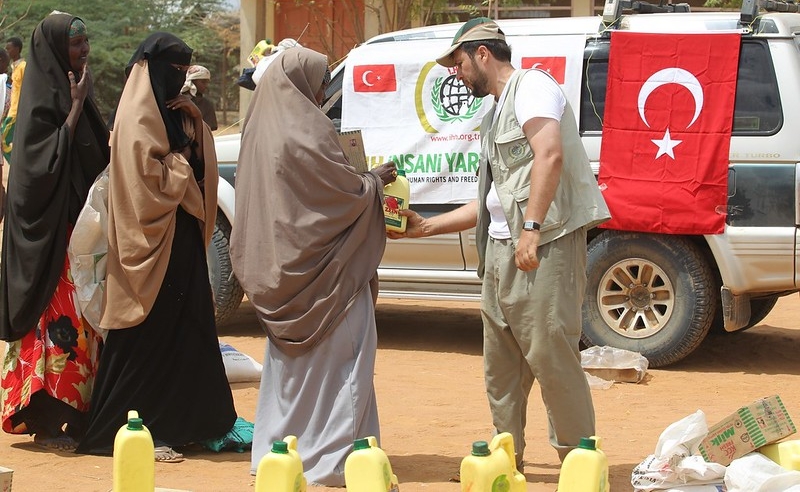
Turkey’s engagement with East Africa dates back to the Ottoman Empire, particularly in the Horn of Africa and around the Red Sea. These historical connections, coupled with shared Islamic traditions, have fostered strong cultural bonds. Reflecting this relationship, the Turkish Cooperation and Coordination Agency (TİKA) provided food aid to approximately 500 families in Ethiopia’s Lege T’afo refugee camp during Ramadan in 2025. In addition, Turkey has adopted an aid model dissimilar to other traditional foreign powers operating in East Africa, such as China and European countries. Ankara’s aid focuses on a noninterventionist approach, which provides humanitarian support and poverty relief without interfering in the political system or democracy of the recipient country.

Past Efforts

In 2005, Turkey announced the “Year of Africa,” marking a significant shift in its foreign policy toward several African countries. This support for East Africa became apparent in 2011 when Somalia suffered a widespread famine, resulting in the death of 260,000 people. Shortly after, Ankara committed more than $1 billion to humanitarian and development assistance. What’s more, between 1992 and 2018, Turkey awarded a total of 1,092 scholarships to Somali students, demonstrating a commitment to providing opportunities for talent from developing nations in East Africa. 

Present Efforts

TIKA, active in 170 countries, has expanded its variety of operations in East Africa, investing in health care such as the De Martino hospital in Somalia, which has received lifesaving neonatal incubators, stretchers and defibrillators. Other organizations of Turkish origin, such as the Türkiye Diyanet Foundation, have made important contributions to poverty reduction in East Africa, such as the construction of a high-tech solar-powered well in Ethiopia, which has a 5000-litre tank and has helped reduce the effects of drought and food insecurity in the village of Fadis.

Turkish Airlines

Apart from the government’s direct support for alleviating poverty through TIKA, other Turkish organisations and institutions, attached to Ankara, contribute to poverty alleviation in East Africa. Turkish Airlines, for example, plays a vital role in connecting some of Africa’s most isolated nations with Europe. According to the United Nations’ (U.N.) list of the 46 least developed countries, Turkish Airlines flies to 25 of them, providing more opportunities for global investment in these countries, consequently tackling the issue of poverty. The airline has committed to the U.N.’s Sustainable Development Goals for 2030, prioritizing poverty alleviation and zero hunger.

Looking Ahead

Turkey’s approach to poverty reduction in East Africa is characterized by a blend of humanitarian aid, infrastructure development and cultural engagement. Through organizations like TİKA and TDV, Turkey addresses immediate needs while investing in long-term solutions such as education and economic development. This comprehensive strategy underscores Turkey’s role as a key partner in East Africa’s pursuit of sustainable growth and stability.

– Alfie Williams-Hughes

Alfie is based in Nottingham, UK and focuses on Business and Politics for The Borgen Project.

Photo: Flickr

May 5, 2025
https://borgenproject.org/wp-content/uploads/borgen-project-logo.svg 0 0 Precious Sheidu https://borgenproject.org/wp-content/uploads/borgen-project-logo.svg Precious Sheidu2025-05-05 01:30:002025-05-20 03:07:09Turkey’s Approach to Poverty in East Africa

Get Smarter

  • Global Poverty 101
  • Global Poverty… The Good News
  • Global Poverty & U.S. Jobs
  • Global Poverty and National Security
  • Innovative Solutions to Poverty
  • Global Poverty & Aid FAQ’s
Search Search

Take Action

  • Call Congress
  • Email Congress
  • Donate
  • 30 Ways to Help
  • Volunteer Ops
  • Internships
  • Courses & Certificates
  • The Podcast
Borgen Project

“The Borgen Project is an incredible nonprofit organization that is addressing poverty and hunger and working towards ending them.”

-The Huffington Post

Inside The Borgen Project

  • Contact
  • About
  • Financials
  • President
  • Board of Directors
  • Board of Advisors

International Links

  • UK Email Parliament
  • UK Donate
  • Canada Email Parliament

Get Smarter

  • Global Poverty 101
  • Global Poverty… The Good News
  • Global Poverty & U.S. Jobs
  • Global Poverty and National Security
  • Innovative Solutions to Poverty
  • Global Poverty & Aid FAQ’s

Ways to Help

  • Call Congress
  • Email Congress
  • Donate
  • 30 Ways to Help
  • Volunteer Ops
  • Internships
  • Courses & Certificates
  • The Podcast
Scroll to top Scroll to top Scroll to top