• Link to X
  • Link to Facebook
  • Link to Instagram
  • Link to TikTok
  • Link to Youtube
  • About
    • About Us
      • President
      • Board of Directors
      • Board of Advisors
      • Financials
      • Our Methodology
      • Success Tracker
      • Contact
  • Act Now
    • 30 Ways to Help
      • Email Congress
      • Call Congress
      • Volunteer
      • Courses & Certificates
      • Be a Donor
    • Internships
      • In-Office Internships
      • Remote Internships
    • Legislation
      • Politics 101
  • The Blog
  • The Podcast
  • Magazine
  • Donate
  • Click to open the search input field Click to open the search input field Search
  • Menu Menu

Tag Archive for: Cost of Living

Posts

Global Poverty

Cost of Living in Switzerland

Cost of Living in Switzerland
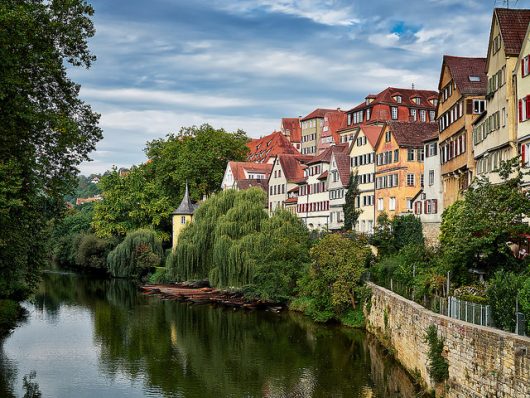
Known for its delectable chocolate and incredible skiing, the high cost of living in Switzerland is another of the country’s claims to fame. Switzerland ranks above other expensive countries such as Luxembourg and Hong Kong by being the second most expensive country in the world, according to Numbeo. With a gallon of milk costing about $6.50 in Geneva and gas reaching almost $5 a gallon, there is no hiding from high prices.

Geneva, the second-largest city in Switzerland, is 44% more expensive than New York City. The average family of four spends over 5,000 dollars a month on regular expenses. Hailing from the most expensive country in Europe, these expenses have become the norm across the land-locked country.

A dwindling unemployment rate of three percent has helped boost an already booming economy. In addition, the average yearly income is above $35,000, while in the United States it is only around $29,000. These factors contribute to one of the highest qualities of living in the world. A recent poll demonstrates that the Swiss give their quality of life a 7.6 out of 10. The average around the world is a 6.5 out of 10, revealing how high Switzerland ranks in all aspects of life.

If not for the high cost of goods, Swiss bank accounts have long kept Switzerland associated with the wealthy. After passing the Banking Law of 1934, the identities of Swiss bank account holders legally became confidential. This law made it a criminal offense to reveal any information pertaining to Swiss bank account holders. For example, Wegelin bank helped Americans to conceal $1.2 billion from the government in order to evade taxes. The confidentiality that comes along with a Swiss bank account is the driving force behind so many foreigners creating offshore bank accounts in Switzerland. This has contributed to the high cost of living in Switzerland.

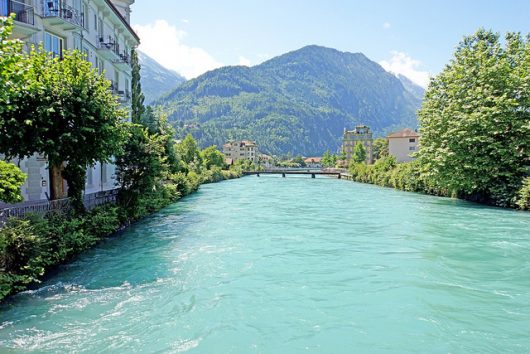
With the most expensive Big Mac in the world at $6.59, there is no sector of life untouched from the high cost of living in Switzerland. These exuberant prices come with one of the most scenic countries in the world. Switzerland’s mountains and picturesque towns offer exactly what you pay for. Although the high prices are not going anywhere, the cost of living in Switzerland represents the money it takes to live the ideal life.

– Sophie Casimes

Photo: Flickr

July 25, 2017
https://borgenproject.org/wp-content/uploads/borgen-project-logo.svg 0 0 Borgen Project https://borgenproject.org/wp-content/uploads/borgen-project-logo.svg Borgen Project2017-07-25 01:30:382024-12-13 17:58:21Cost of Living in Switzerland
Developing Countries, Global Poverty

The Current Cost of Living in Chile

Cost of Living in Chile
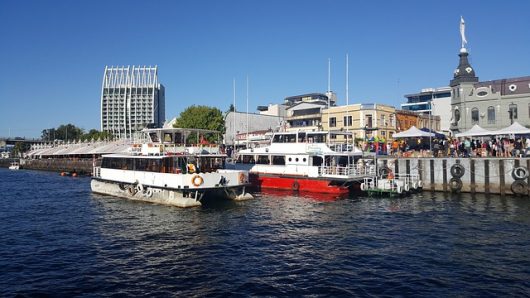
The cost of living in Chile is fairly steep compared to its neighboring countries, and poverty in the region has made it difficult for low-income families to live comfortably. However, recent hikes in the country’s minimum wage have begun to lessen the burden of the high cost of living for low-income families.

According to an article published in International Living, Chile has one of the highest costs of living relative to what people earn in South America. Despite the country’s relatively high living costs, Chile’s infrastructure and its middle class have continued to steadily develop. The economy is also considered to be fairly stable.

The article found that when living comfortably in downtown Santiago, the capital of Chile, monthly rent was a little over $400 per month and building fees were close to $100. Electricity costs around $50 each month and essential items came to about $80. Overall, the monthly cost of living in this city was just shy of $1,000, which is more than two times the average monthly workers’ wage.

According to a report from Bloomberg, Chile’s monthly minimum wage rose to 270,000 pesos ($400) effective July 1, 2017. The monthly minimum wage is expected to increase to 276,000 pesos ($409) starting January 1, 2018.

A report from the United Nations revealed that the cost of living in Chile is often overlooked when poverty is examined in the region. Philip Alston, a United Nations Special Rapporteur, said that because of Chile’s noteworthy anti-poverty programs, poverty in the region often goes “under the radar.”

“It remains to be seen whether the current middle class-driven political and social agenda will pay sufficient attention to the tragedy of those living in poverty,” he said in the report.

Alston added that poverty and economic inequalities are persistent in the area. “Persistent inequalities result in a highly segregated society, in which separate residential areas, separate schools, and separate employment markets operate to entrench privilege and stifle mobility,” he stated.

While the cost of living in Chile has become slightly less stressful to members of the lower class, the country still needs to make great strides ahead in order to support its low-income families.

– Leah Potter

Photo: Pixabay

July 18, 2017
https://borgenproject.org/wp-content/uploads/borgen-project-logo.svg 0 0 Borgen Project https://borgenproject.org/wp-content/uploads/borgen-project-logo.svg Borgen Project2017-07-18 07:30:522024-05-27 23:53:40The Current Cost of Living in Chile
Global Poverty

One Happy Island: The Expensive Cost of Living in Aruba

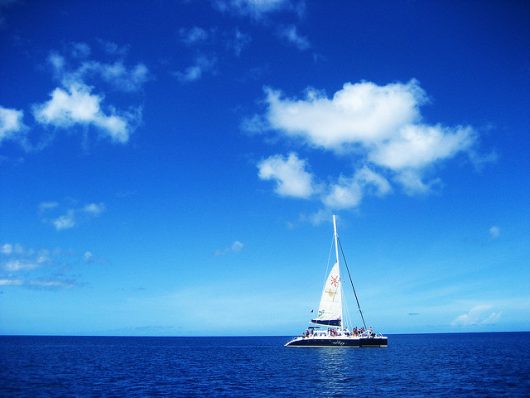
Aruba, known for their slogan, “One Happy Island,” is just one of four countries that make up the Kingdom of the Netherlands. It has been a desired tourist spot for vacationers due to its dry and reliably warm climate. Tourism dominates the economy with over one million tourists per year, mainly from the United States.
For an island as small as Aruba, 20 miles long by 6 miles wide, the cost of living in Aruba would seemingly be low. Yet, due to the size of the island, Aruba’s economy primarily depends on tourism as 30 percent of the island’s income, as well as aloe exports and petroleum refining.

In a July 2017 Aruba Economic of Affairs report, 2012 was said to have tourism receipts of 2,504.9 million Aruban Florin. This factor heavily affects the cost of living in Aruba.

In June 2017, $1 was equivalent to 1.79 Aruban Florin. Many businesses operate on the U.S. dollar instead of florins, especially in the resort district.

Compared to the U.S., rent prices are about 31 percent lower in Aruba, and restaurant prices are about 11 percent lower. While housing rent in and out of city centers tends to be significantly less than in the U.S., buying property tends to be more expensive. Costs such as utilities and income tax are often the most expensive part of the cost of living in Aruba.

Due to the poor soil quality and low rainfall, agriculture on the island is limited. This causes Aruba to have an increase in the import of groceries at a 5.75 percent increase over U.S. prices, due to its imports of milk, beef and fruits.

Aruba may rely on those imports to make up everyday grocery items, but the island is known to have the world’s third largest desalination plant. This allows Aruba to produce potable industrial water, makes the island independent from other sources and cuts the cost of bottled water.

Although tourism has been the main source of income for Aruba, imports and exports have continued to heavily influence the cost of living on the island. Aruba may heavily depend on its imports, but the government is making efforts to expand exports as well so as to balance trade and allow a balance in the cost of living as well.

– Stefanie Podosek

Photo: Flickr

July 17, 2017
https://borgenproject.org/wp-content/uploads/borgen-project-logo.svg 0 0 Borgen Project https://borgenproject.org/wp-content/uploads/borgen-project-logo.svg Borgen Project2017-07-17 07:30:132024-06-05 23:47:12One Happy Island: The Expensive Cost of Living in Aruba
Global Poverty

The Surprisingly Low Cost of Living in Costa Rica


With a small cost of living and a luxurious lifestyle to offer, Costa Rica is an ideal location for retirement, particularly for Americans. Not only is the scenery breathtaking, but the cost of living in Costa Rica is even more alluring.

Surprisingly enough, day-to-day living costs are much more affordable in Costa Rica than in both the U.S. and the U.K. At the end of 2016, the minimum monthly required income for a single person in Costa Rica was $1,500 to $2,000. A majority of retired couples succeed on as little as $2,000 to $3,000 per month.

Medicare costs in Costa Rica are very affordable. Most consider the medical care to be of exceptionally good quality, yet it comes at a low monthly cost that includes free services.

The monthly cost to rent a lavish condo in Costa Rica is a mere $500 to $900 dollars. In many other countries as well as most of the U.S., this amount will hardly cover a basic, low-quality apartment.

As far as services go, the cost of electricity is around $200 per month, high-speed internet lands at a small amount of $25 per month and there is a $200 monthly fee for hiring a full-time maid if a resident desires to have one.

Food costs are astoundingly low as well, with a dozen bananas costing a mere $0.42. Fresh bread loaves cost about $1.25, and a pound of tomatoes is only $0.35. For Americans, this amounts to a 45% savings for the average amount of purchased groceries.

The low cost of living in Costa Rica combined with the beautiful landscapes and relaxing beaches is enough to make it the perfect place to live or retire. In fact, Costa Rica often gets mentioned on lists of best places to retire for this very reason. Those who are looking to move and have no ties to their place of origin will find Costa Rica to be a very affordable and appealing option.

– Noel Mcdavid

Photo: Flickr

July 15, 2017
https://borgenproject.org/wp-content/uploads/borgen-project-logo.svg 0 0 Borgen Project https://borgenproject.org/wp-content/uploads/borgen-project-logo.svg Borgen Project2017-07-15 07:30:372024-06-04 01:08:21The Surprisingly Low Cost of Living in Costa Rica
Disease, Global Poverty

Poverty in French Guiana

Poverty in French Guiana
French Guiana is a small country with an estimated population of 270,000. It is located in South America, bordering Brazil and Suriname. It is a territory of France and therefore follows the French legal system. This means that it follows the French Constitution and is ruled by the French government. Officially, it is called a French Overseas Department.

Poverty in French Guiana is an interesting topic because so little is reported and few people are interested. It can be easy to focus on the largest populations in poverty in Africa or India, so much so that smaller countries are forgotten. This should not be the case, as all people deserve the right to escape poverty.

The lack of awareness for poverty in French Guiana is highlighted by the mere fact that statistics and data on this subject are hard to find. Since it is a French territory and technically considered part of France, global statistics from the United Nations or the World Bank are not often given for French Guiana individually. This signifies the relative unimportance of French Guiana among the international community. From the little information there is come these poverty facts from French Guiana:

  • In 2010, the unemployment rate was 30.5 percent; it was higher for women, at 36 percent.
  • 26.5 percent of households are below the poverty line.
  • The infant mortality rate in 2008 – 2010 was 11.6 per 1,000 live births.
  • Malaria is endemic, with 3,345 cases in 2009. Yellow fever and Dengue are also endemic.
  • A 2006 study showed that French Guiana has the highest rate of HIV infections in France, with 308 per million inhabitants, as opposed to 150 in the Ile de France region (the wealthiest region in metropolitan France.)
  • Food and living expenses are high because the country imports 90 percent of consumable goods from metropolitan France.
  • Only 7.8 percent of the population held university diplomas in 2010.
  • Only 27.9 percent of households had enough money to be taxed in 2010.

These facts may seem disjointed and random, but that is exactly how information relating to poverty in French Guiana is presented. There is little to no comprehensive data on this tiny French overseas territory, at least in the English language. Most of the raw data was taken from the French National Institute of Statistics and Economic Studies. The data is only available in French, which makes a global discussion of this issue difficult.

Who is going to care about this small community? With so little international discussion on poverty in French Guiana, it will be difficult to rally people around the cause. Action needs to be taken by the French government to fix the high rates of unemployment, infectious disease endemics, HIV rates and poverty levels. It is the responsibility of the French people to appease their government to do the right thing and help French Guiana out of poverty.

– Eleni Marino

Sources: United Nations, Phrase Base, Conseil National Du Sida, The Guardian, INSEE

Photo: PIB

June 2, 2014
https://borgenproject.org/wp-content/uploads/borgen-project-logo.svg 0 0 Borgen Project https://borgenproject.org/wp-content/uploads/borgen-project-logo.svg Borgen Project2014-06-02 09:36:122024-06-04 03:01:19Poverty in French Guiana
Page 4 of 41234

Get Smarter

  • Global Poverty 101
  • Global Poverty… The Good News
  • Global Poverty & U.S. Jobs
  • Global Poverty and National Security
  • Innovative Solutions to Poverty
  • Global Poverty & Aid FAQ’s
Search Search

Take Action

  • Call Congress
  • Email Congress
  • Donate
  • 30 Ways to Help
  • Volunteer Ops
  • Internships
  • Courses & Certificates
  • The Podcast
Borgen Project

“The Borgen Project is an incredible nonprofit organization that is addressing poverty and hunger and working towards ending them.”

-The Huffington Post

Inside The Borgen Project

  • Contact
  • About
  • Financials
  • President
  • Board of Directors
  • Board of Advisors

International Links

  • UK Email Parliament
  • UK Donate
  • Canada Email Parliament

Get Smarter

  • Global Poverty 101
  • Global Poverty… The Good News
  • Global Poverty & U.S. Jobs
  • Global Poverty and National Security
  • Innovative Solutions to Poverty
  • Global Poverty & Aid FAQ’s

Ways to Help

  • Call Congress
  • Email Congress
  • Donate
  • 30 Ways to Help
  • Volunteer Ops
  • Internships
  • Courses & Certificates
  • The Podcast
Scroll to top Scroll to top Scroll to top