
The United Nations has announced a new plan to support Lebanon after Beirut’s deadly explosion in August 2020. Operating in conjunction with the World Bank and the European Union, the U.N. has named its program 3RF, short for “Reform, Recovery[ ] and Reconstruction Framework.” Lebanon has long struggled under the weight of political and economic crises, which the explosion in its capital city only exacerbated. Therefore, 3RF comes as an effort from the international community to improve conditions in Lebanon over the long term.
An Explosion in the Capital
Shortly after 6 p.m. local time on August 4, 2020, a colossal explosion at Beirut’s port sent shockwaves rippling through the city. The disaster killed 200 people, injured thousands more and rendered approximately 300,000 individuals—out of the city’s total population of 2 million—homeless and destitute.
Officials have since identified the cause of the explosion as 2,750 tons of improperly stored ammonium nitrate, a chemical found in fertilizer. A welding project in one of the port’s warehouses sparked a fire that triggered the blast.
Shockwaves blew out windows at Beirut International Airport five miles away, and scientists from the United States Geological Survey reported that these equated to a 3.3-magnitude earthquake. Besides destroying commercial buildings and residential properties, the explosion also incapacitated three major hospitals and more than 24 clinics. Victims flooded the remaining healthcare centers, placing further strain on a system already contending with the COVID-19 pandemic.
Economic Crisis
Unfortunately, Lebanon was beset by problems before the August 2020 explosion. Public discontent has simmered for years, stoked by political corruption, economic hardship and a government struggling to provide services like reliable power and clean drinking water.
In October 2019, following a foreign currency shortage and the eruption of major wildfires, the Lebanese government announced new taxes in a bid to raise desperately needed revenue. However, the Lebanese government scrapped the plans after large-scale protests gripped the country.
Then, after lockdown measures underwent implementation in March 2020 to slow the spread of COVID-19, Lebanon’s economic crisis worsened. As businesses had to fire employees or place them on furlough without pay, prices on basic goods rose to prohibitory levels. In May 2020, former Prime Minister Hassan Diab wrote in The Washington Post that much of the country’s population had ceased buying meat and fresh produce and that soon people would be unable to afford bread.
Poverty and Corruption
The blast in Beirut has significantly compounded the hardships that Lebanese people have faced. Many residents within the financial capital have experienced trauma, including older citizens for whom the explosion brought up memories of the violent Lebanese Civil War (1975-1990). Additionally, more than 55% of the country lives below the poverty line, almost doubling the percentage registered in 2019. Extreme poverty has also surged within the past year, rising from 8% to 23%.
Unfortunately, corruption among Lebanese political elites has meant the lack of a government-led recovery plan. Popular protests in the wake of revelations about mismanagement of the ammonium nitrate at Beirut’s port led to the mass resignation of then Prime Minister Hassan Diab’s government. Instead, volunteers and NGOs have spearheaded efforts to clean up the city. Funds raised abroad have gone straight to these NGOs on the ground, bypassing the Lebanese government due to the international community’s lack of trust in its leaders.
3RF and Lebanon’s future
The program 3RF aims to address the desperate situation in Lebanon. Announced at the recent International Conference in Support of the Lebanese People, the plan underscores urgent needs for political reform to solve the root causes of Lebanon’s economic crisis. Such reforms will facilitate recovery and reconstruction in the long run.
For his part, U.N. Secretary-General António Guterres called upon political leaders in Lebanon “to put aside partisan political interests and form a government that adequately protects and responds to the needs of the people.” The International Monetary Fund also promised to help but emphasized the importance of active participation from a legitimate Lebanese government during the reform process.
Conditions for Lebanon’s people have been difficult during 2020. Stemming from a spiraling economy and political corruption, the COVID-19 pandemic and the catastrophic explosion at Beirut’s port exacerbated these hardships. With thousands of people homeless and poverty rising, the U.N.’s 3RF will hopefully provide immediate relief while also laying the foundation for better governance in the future. Pressure from the international community can likewise encourage Lebanese leaders to form a new government and begin implementing necessary reforms.
– Angie Grigsby
Photo: Flickr
 In 2015, the United Nations General Assembly announced a pledge to change the world for the better by the year 2030. That pledge led to the Sustainable Development Goals, also known simply as the Global Goals, which aim to eradicate hunger, combat inequality and clean up the planet. To this end, Samsung has joined the efforts to see the world accomplish these goals and released the
 The first Sustainable Development Goal (SDG) is to “end poverty in all its forms everywhere” and requires every nation to develop a comprehensive plan to
 In 2019, the
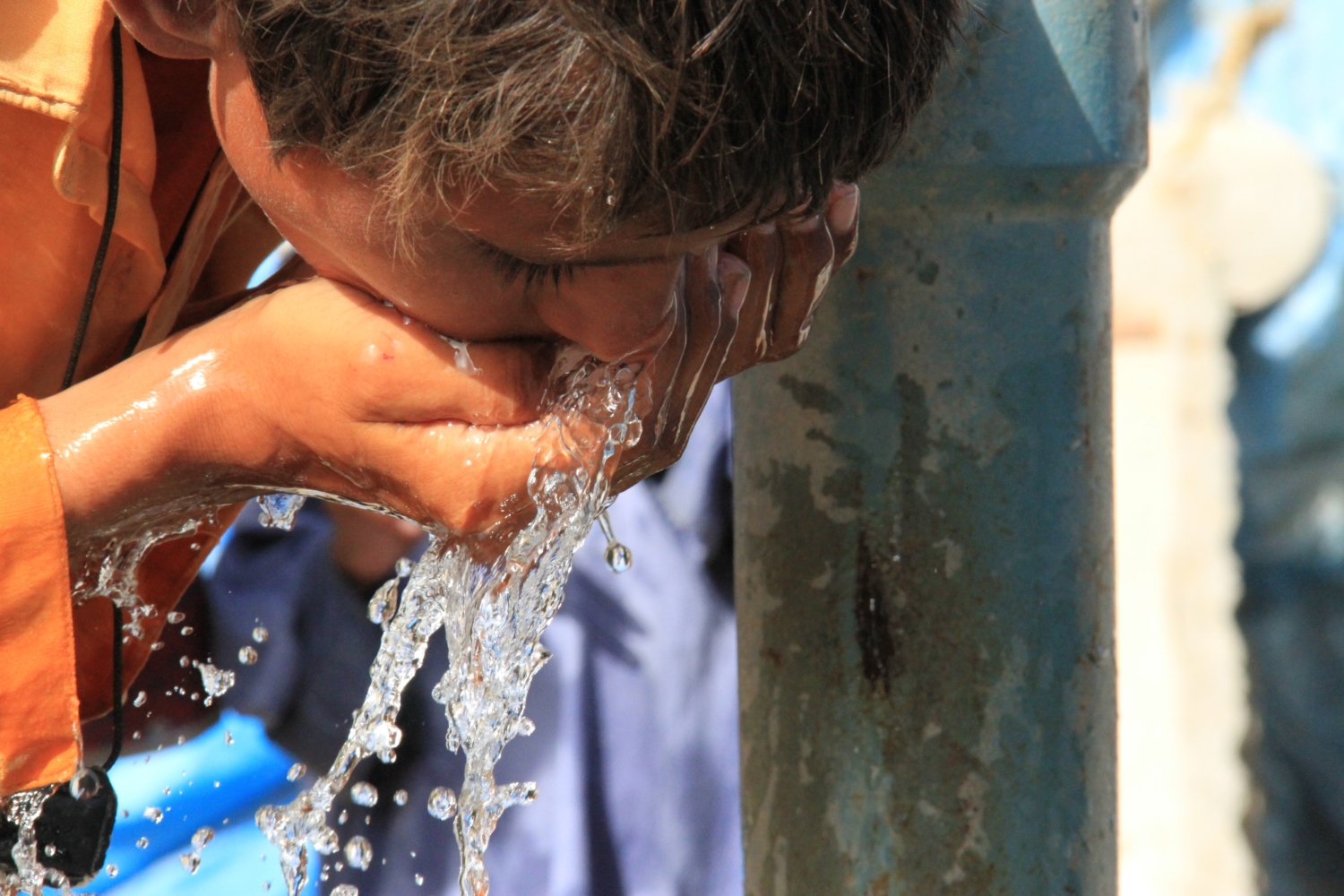 The United Nation’s sixth Sustainable Development Goal is devoted to enhancing clean water and sanitation. Specifically, it calls for equitable access to clean drinking water and basic sanitation for all by 2030. However, nearly one-third of the global population lacks access to clean drinking water. Some companies are making solutions to this problem in the form of apps improving access to clean water.