• Link to X
  • Link to Facebook
  • Link to Instagram
  • Link to TikTok
  • Link to Youtube
  • About
    • About Us
      • President
      • Board of Directors
      • Board of Advisors
      • Financials
      • Our Methodology
      • Success Tracker
      • Contact
  • Act Now
    • 30 Ways to Help
      • Email Congress
      • Call Congress
      • Volunteer
      • Courses & Certificates
      • Be a Donor
    • Internships
      • In-Office Internships
      • Remote Internships
    • Legislation
      • Politics 101
  • The Blog
  • The Podcast
  • Magazine
  • Donate
  • Click to open the search input field Click to open the search input field Search
  • Menu Menu

Archive for category: Human Trafficking

Human Trafficking

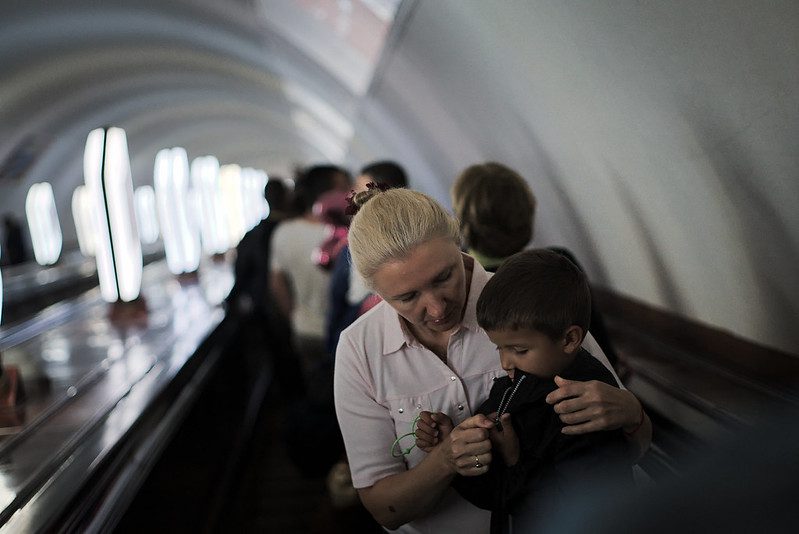
Fighting Human Trafficking in Ukraine

Fighting Human Trafficking in Ukraine
Human trafficking in Ukraine is a serious and overwhelming issue that has affected the lives of thousands of innocent men, women and children. Ukraine is one of the most prominent countries in Europe for human trafficking with over 260,000 Ukrainian trafficking victims over the last 30 years. Despite this disheartening number, Ukraine’s government and some organizations are fighting human trafficking in Ukraine.

The History of Trafficking in Ukraine

When Ukraine became a separate nation in 1991, the slave and human trafficking trade skyrocketed. The ongoing conflict between Russia and Ukraine has worsened the issue as it has caused displacement for millions of individuals. These individuals are far more susceptible to ending up in the trafficking trade because of the vulnerable state they are in due to the turmoil between the two countries, according to the Library of Congress Law. Traffickers often target the Roma community of Ukraine, a nomadic Indo-Aryan group of people, because they lack access to state social assistance programs. Low-skilled laborers, as well as children in state-run orphanages, are targets for traffickers as well. This is because they are poor and powerless in the eyes of the country.

Efforts to Fight Human Trafficking in Ukraine

Ukraine is taking huge strides in its governmental policies to combat human trafficking. The International Organization for Migration Ukraine Counter-Trafficking Program aims to support efforts to combat trafficking in Ukraine. It also provides access for victims to receive “assistance and justice.” The IOM program identified and was able to help around 600 victims of human trafficking from January to June 2019, with about 16,000 victims having received assistance throughout 19 years of the program’s existence. Without the help of the IOM, efforts towards tracking down victims and traffickers would not be as prominent.

Governmental Progress in Fighting Human Trafficking in Ukraine

Ukraine’s government has made huge strides in law enforcement efforts to combat human trafficking in the country. This includes increasing the number of investigated offenses and apprehensions from previous years. The government has increased financial assistance to victims of human trafficking. It has also been providing shelter through government housing, psychological assistance and medical care. The Ministry for Social Policy has continually made attempts at anti-trafficking efforts by creating Child Protection Day and World Day Against Trafficking in Persons.

Looking Ahead

The issue of human trafficking in Ukraine is on an upswing. This is because there is more governmental recognition of the way it is impacting Ukrainian citizens. With the efforts of organizations like IOM, there are more forces garnering action towards fighting human trafficking in Ukraine.

– Allie Degner
Photo: Flickr

May 30, 2021
https://borgenproject.org/wp-content/uploads/borgen-project-logo.svg 0 0 Kim Thelwell https://borgenproject.org/wp-content/uploads/borgen-project-logo.svg Kim Thelwell2021-05-30 07:30:202024-05-30 22:23:34Fighting Human Trafficking in Ukraine
COVID-19, Global Poverty, Human Trafficking

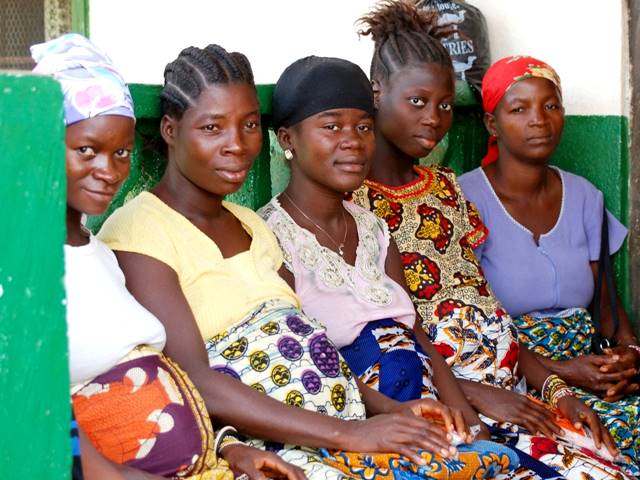
Human Trafficking in Sierra Leone

Human Trafficking in Sierra LeoneAs the COVID-19 pandemic emphasizes the importance of protecting vulnerable people from human trafficking, the need for a global solution has never been greater. Preliminary research shows that Sierra Leone acts mainly as a country of origin from which traffickers move individuals; this refers to victims trafficked within the country and abroad. Traffickers traffick both adults and children from Sierra Leone for a range of different purposes, including prostitution, labor, service as child soldiers and adoption. The government of Sierra Leone does not fully meet the minimum criteria for the prevention of human trafficking, but it demonstrates increasing efforts to do so.

Trafficking as an “Emerging” Issue in Sierra Leone

Civil society groups regularly comment that trafficking is “an emerging issue” that has existed in Sierra Leone for a long time, but now has a fresh identity as a form of exploitation. Traffickers move a large proportion of Sierra Leoneans internally from mostly rural areas to cities and towns. This form of trafficking impacts a significant amount of children who experience exploitation for sexual or labor purposes.

However, the population generally did not have access to knowledge about internal trafficking. Many people understood this term only in a very limited sense involving the abduction of children for adoption abroad. Overall, there was a great deal of uncertainty about what did and did not constitute trafficking. As an emerging issue, there is an urgent need to clarify the subject among civil society, the government and the population. This will require comprehensive awareness-raising and sensitization activities, as well as technical training. Addressing trafficking problems efficiently can help people make wise decisions about counter-trafficking interventions. Child protection agencies across the globe will therefore benefit from the successes and lessons learned from counter-trafficking efforts.

Sierra Leone as a Source Country

Information collected from various destination countries reveals that traffickers have trafficked Sierra Leoneans abroad for different forms of exploitation. Much trafficking to the E.U. appears to be for prostitution, as data shows that all assisted trafficked persons in the Netherlands were working in the sex industry. In the Middle East, Lebanon underwent identification as a key destination for Sierra Leonean children. Traffickers generally recruited them with promises of education or well-paid jobs. However, in reality, these children worked as domestic workers and often experienced sexual exploitation from their employers. Available data suggests that traffickers trafficked children to West Africa for working in plantations in Guinea and on the Ivory Coast, begging, committing petty crimes and prostitution. The presence of Sierra Leonean unaccompanied minors (UAMs) in various destination countries is arguably a signal of trafficking risk.

It is important to be aware of the extent to which human trafficking is an issue and how trafficking cases occur. Baseline information that one can use to evaluate the further growth of the problem, as well as the effectiveness of the policies and programs in place to tackle trafficking must also emerge. More in-depth qualitative research is necessary to understand the nature of trafficking in the country, including the recruitment process, the routes and destinations, victim profiles and the forms of exploitation.

Government Action

The government has demonstrated substantial efforts to prevent human trafficking; therefore, Sierra Leone has received an upgrade to Tier 2. These efforts included the increase in investigations and prosecutions, the arrest of traffickers for the first time in 15 years, increased training for trafficking officials, the commitment of an NGO center to the development of victims’ shelters and the establishment of anti-trafficking task forces at the district level.

However, the government still did not meet the minimum standards in several key areas. Shelter and services, especially for male trafficking victims, remained inadequate. Law enforcement did not investigate past reports of corruption and complicity which impeded law enforcement efforts. Sierra Leoneans remained susceptible to traffickers as labor migrants. The government had to rely heavily on NGOs and private shelters, including UNICEF — a large advocate against child trafficking in Sierra Leone.

Recommendations to Stop Human Trafficking in Sierra Leone

The key to stopping and addressing human trafficking in Sierra Leone will be the implementation of anti-trafficking legislation. The police must learn about the recent trafficking law and its required elements, and the judiciary must receive training regarding how to enforce the law. Enforcement of policies and legislation on child protection needs to undergo urgent development. The porous nature of the borders of Sierra Leone requires attention in order to tackle trafficking and other forms of crime. Moreover, awareness-raising campaigns and income-generating programs must target rural areas that many trafficked children originate from. While human trafficking in Sierre Leone is a serious issue, the increased counter-trafficking efforts are a step in the right direction.

– Aining Liang
Photo: Flickr

May 27, 2021
https://borgenproject.org/wp-content/uploads/borgen-project-logo.svg 0 0 Kim Thelwell https://borgenproject.org/wp-content/uploads/borgen-project-logo.svg Kim Thelwell2021-05-27 01:31:072021-05-26 09:56:43Human Trafficking in Sierra Leone
Global Poverty, Human Trafficking

Examining Human Trafficking in Kenya

Human Trafficking in Kenya
Human trafficking in Kenya, and all over the world, is a significant issue. In 2017, the International Labour Organization (ILO) estimated that more than 24 million people were victims of human trafficking worldwide. Moreover, human trafficking brings in profits of more than $150 billion every year.

Human trafficking in Kenya manifests internationally and nationally. In 2019, the U.S. State Department estimated that 853 people were victims of human trafficking. Traffickers sexually exploit their victims and/or force them into labor. However, many victims initially believe they are heading toward a better life and more employment opportunities. For example, many Kenyans have migrated to the Middle East in search of employment only to end up as forced domestic or manual laborers with very little or no wages. Additionally, a large number of refugees from Somalia, Sudan and Ethiopia has made human trafficking in Kenya a pressing issue.

A Source and Destination for Traffickers

According to the Kenyan National Crime Research Centre, Kenya is a source, transit route and destination for human trafficking victims. Poverty is the leading factor that contributes to human trafficking incidents in Kenya.

Both Kenyans and citizens of other East African countries are victims of human trafficking. Traffickers look for impoverished adults and children begging on the sides of the streets to force into labor. Meanwhile, traffickers have trafficked other nationals such as Ugandans into Kenya for forced labor. This is despite Kenya recently stepping up its fight against human trafficking.

Partnership with Uganda

Kenya has partnered with global organizations and neighboring countries to fight human trafficking. Kenya’s partnership with Uganda has been productive in fighting human trafficking in the region. In 2019, this partnership was able to rescue 96 Ugandans trafficked into Kenya.

This partnership has also improved Kenya’s international obligations under the U.N. Trafficking in Persons Protocol to fight global human trafficking through its close work with the U.N. Office on Drugs and Crime.

Regulating Labor Migration

More effectively, the Kenyan government set up national preventive measures to fight human trafficking. In 2019, the government created the National Employment Authority (NEA), which works to regulate labor migration both nationally and internationally. The NEA has made it safer for Kenyans to find employment. For example, NEA’s website has a list of accredited agencies that Kenyans looking for work abroad should engage with.

Protecting Kenyans Working Abroad and Children

In 2019, Kenya’s Ministry of Labor started offering migrant workers training sessions on labor rights abroad and the dangers of human trafficking in Kenya. The NEA has an online platform for recruiting Kenyans who seek to work in Saudi Arabia. These steps protect Kenyans on their way to work in other countries and, upon reaching their destination, continue to inform them of their rights. However, while this has been successful in protecting Kenyans from external human trafficking, vulnerable groups, such as women and children, require more protection from sexual predators.

Due to the large number of girls trafficked for sexual exploitation, the government of Kenya implemented a national plan against children’s sexual exploitation in 2019. This plan forces companies to train their staff on how to identify victims of child exploitation and create awareness. This has been important in reducing the entry of predators entering the country to traffic children.

Kenya’s TIP Ranking

The Trafficking in Persons Report, or TIP, is an annual international document that categorizes countries as Tier 1, Tier 2 or Tier 3 on their progress to eliminating human trafficking. Tier 2 countries are those that do not comply entirely with the measures to fight human trafficking but are taking significant steps to combat it. Even though Kenya has received the category of Tier 2, its international partnerships and national preventive measures are increasing its progress toward Tier 1.

– Frank Odhiambo
Photo: Flickr

May 27, 2021
https://borgenproject.org/wp-content/uploads/borgen-project-logo.svg 0 0 Jennifer Philipp https://borgenproject.org/wp-content/uploads/borgen-project-logo.svg Jennifer Philipp2021-05-27 01:30:032024-12-13 18:02:30Examining Human Trafficking in Kenya
Aid, Global Poverty, Human Trafficking

5 Nonprofit Organizations Fighting Human Trafficking

dedicated to fighting human trafficking
There are several organizations fighting human trafficking, as it is an ongoing problem that continues to spread around the world. There are 21 to 45 million people trapped in some sort of slavery today. Whether it is referred to as “modern-day slavery” or “human trafficking,” the exploitation of people is still taking place. Fortunately, there are many organizations and nonprofits dedicated to fighting human trafficking and ending this inhumane practice. Here are five nonprofit organizations fighting human trafficking.

5 Nonprofits Working To Stop Human Trafficking

  1. Apage International Mission (AIM): AIM is a Christian nonprofit organization dedicated to fighting human trafficking by protecting and caring for trafficking survivors and other victims of exploitation. Don and Bridget Brewster founded the nonprofit in 1988 after seeing the prevalence of child trafficking in Cambodia. The couple moved to Cambodia to help fight human trafficking and take a stand for the oppressed. The girls that AIM rescues often grow up to become abolitionists, with some even joining the organization. Through the nonprofit, they become social workers, teachers, artisans and even part of AIM’s SWAT team. AIM started a SWAT team after it partnered with the Cambodian government. Most of the SWAT raids on brothels that trafficked underage girls were successful. The organization has rescued more than 1,500 trafficking victims and has greatly improved the lives of trafficking survivors in Cambodia.
  2. Destiny Rescue: Tony Kirwan founded Destiny Rescue in 2001 after living in Thailand. Its mission is to rescue children from human trafficking and help them to remain free. Rescue, reintegration and prevention are the key focuses of Destiny Rescue. It has highly trained agents who go undercover in bars, brothels and on the street to track down human traffickers. After rescuing people who were trafficked, Destiny Rescue helps them return to normal life by reuniting them with families, transferring them to a transitional home and developing a Path to Freedom Plan to help decrease the vulnerabilities that led to exploitation. Destiny Rescue is diligent and dedicated to fighting human trafficking while helping victims get back on their feet.
  3. The Coalition to Abolish Slavery and Trafficking (CAST): CAST is a nonprofit organization founded in 1988 after the El Monte sweatshop case where 72 Thai workers were slaves for eight years. Founder Dr. Kathryn Macmahon and a group of activists became committed to fighting modern-day slavery and human trafficking. They created the nonprofit to provide relief, social services and outreach for those who have been victims of forced labor and modern-day slavery. It helps survivors by bringing awareness to modern slavery, advocating for antitrafficking policies and helping those who have been trafficked become reintegrated into society.
  4. Crisis Aid International: This nonprofit provides services that help the most vulnerable people in the world. It partners with other organizations to bring food, materials, medicine and other necessary items for those who need them. The organization serves people who have suffered as a result of natural disasters, famine, wars, human trafficking and other types of catastrophe. Founded in 2002, Crisis Aid International has helped approximately 1,378 sex trafficking victims, the youngest being four years old.
  5. Frees the Slaves: Free the Slaves is a lobbyist group and nonprofit. Its mission is to finish the work of early abolitionists fighting against slavery. Today, modern slavery exists in the form of forced labor, forced marriage and sex trafficking, with 50% of victims being children under the age of 18. Free the Slaves helps those held in bondage escape slavery, rebuild their life and continue to make a future for themselves and their families. The nonprofit advocates for human trafficking victims, empowers them through education and brings hope to those in slavery by letting them know their rights. Free the Slaves wants to demonstrate that creating a world without slavery is possible.

While human trafficking still persists, nonprofits are putting in the effort to eradicate this unjust practice. With organizations like Agape International Mission, Destiny Rescue, Coalition to Abolish Slavery and Trafficking, Crisis Aid International and Free the Slaves, fighting human trafficking is a group effort. These, along with many other organizations, will continue to fight for a future where people will no longer worry about forced labor, sex trafficking, forced marriage or any other cruel form of exploitation.

– Jose Ahumada
Photo: Flickr

May 23, 2021
https://borgenproject.org/wp-content/uploads/borgen-project-logo.svg 0 0 Kim Thelwell https://borgenproject.org/wp-content/uploads/borgen-project-logo.svg Kim Thelwell2021-05-23 01:31:232021-05-20 09:24:225 Nonprofit Organizations Fighting Human Trafficking
Global Poverty, Human Trafficking, Slavery

Ending Slavery in the Thai Fishing Industry

Slavery in the Thai Fishing Industry
With Thailand’s status as one of the world’s largest fishery exporters, the rest of the world is entangled in the industry’s human trafficking and forced labor violations. The spotlight ended up on Thailand in 2015 due to reports of slavery in the Thai fishing industry. In response, there has been movement from world governments and organizations alike towards ending slavery. However, industry workers, mostly poor migrants from Myanmar and Cambodia, continue to suffer.

Slavery Exposed

In June 2014, the story broke that the world’s top four shrimp retailers commissioned Thai fishing boats that supposedly had workers who were human trafficking victims aboard. Further reporting revealed the Thai fishing industry’s extensive misuse of workers. Supposedly, these workers experienced poor working conditions and confinement similar to a prison. In fact, workers were receiving pay below the minimum wage and not obtaining payments on time. Additionally, in extreme cases, reports as of January 2018 have determined that some workers died, suffered beatings or were trafficking victims.

Oceana analyst Lacey Malarky explained the reason for the pattern of human rights abuses in the fishing industry. Malarky said that the decline of global fishing stocks has caused fishing boats to travel further away. This caused “operators [to resort to] illegal, unreported and unregulated fishing and human rights abuses to protect costs.” 

Global Response to Slavery in Thailand

In response to reports of slavery in the fishing industry in Thailand, the U.S. reduced Thailand to Tier 3 status in its Trafficking in Persons report. Tier 3 is the lowest status regarding human trafficking that a country can receive. Additionally, the European Commission gave Thailand a “yellow card” and threatened a “red card,” resulting in European Union sanctions.

At the time, the consequences were devastating to Thailand’s fishing industry. The U.S. and European Union are the second and third largest markets for Thai seafood exports. The E.U. imported almost $500 million of Thai seafood in 2016 and the U.S. imported over $28 billion in 2018. 

In response, Thailand’s National Council for Peace and Order made moves to overhaul “fishing industry monitoring, control and management.” New frameworks  say that “teams of officials are now supposed to check fishing boats each time they depart and arrive in port.” Additionally, it made the effort to strengthen its laws and increase penalties if laborers’ rights experienced infringement.

Issues with Enforcement

One primary issue with protecting victimized fishermen is that Thai law does not protect migrant workers. In general, Thailand does not strongly enforce laws that protect workers. A Human Rights Watch report in 2018 found that “Thai inspection frameworks fail to adequately or systematically address issues of forced labor.”

For example, the government introduced a “pink card” registration scheme in 2014. This was to decrease undocumented migrants working in Thailand. However, the initiative has done very little to protect the most vulnerable. The “pink card” monitors and controls workers by occasionally making sure that fishermen match the pink card. This details a specific location and crew manifest of the boat a particular fisherman is on. Critics say that focusing on the “pink card” denies that both documented and undocumented migrants can be victims of exploitation. 

Another issue with intervention is that many poor fishermen agree to mediation and settlements following complaints. This tends to result in laborers being unable to receive the money they have entitlement to while abusive bosses can avoid legal action. The pattern of complaints resulting in settlements causes the continuation of abuse, failing to end slavery in the Thai fishing industry.

Documenting Progress

In the last six years, there have been significant efforts to reduce instances of slavery in the fishing industry. In January 2019, Thailand became the first Asian country to ratify the International Labour Organization Work in Fishing Convention. This is a guide that specifies laws and regulations to improve working conditions in industrial fishing. Additionally, in March 2021, a dozen industry associations in Thailand “signed pacts to rid their supply chains of child and forced labor.”

Seafood Slavery Risk Tool

Developed by Sustainable Fisheries Partnership, Seafood Watch and Liberty Shared, the Risk Tool analyzes risk using both public and non-public information. This is to help businesses “identify the risk of slavery in their supply chains.” The technology continues to evolve. The updates to the Risk Tool will provide businesses with interactive maps. This shows the risk of “forced labor, human trafficking and hazardous child labor” to help businesses make decisions about suppliers.

Global Fishing Watch’s Automatic Identification System

The Global Fishing Watch is an online database tracking fishing ships via an onboard satellite transmitter. This is called the Automatic Identification System, which was originally developed to prevent ship collisions, and now catches vessels engaged in illegal behavior. The system targets ships that need further inspection by collecting data on four points of potentially illegal behavior. The points include whether ships stayed at sea for months, temporarily turned off transmitters to enter marine protected areas, engaged in trans-shipment and avoided strict ports. Using the technology, analysts are hopeful that more justice will be possible for vulnerable, victimized workers.

Reports show that Thailand has made huge steps toward ending the abuse and misuse of workers. However, more is necessary to end slavery in the Thai fishing industry. Through further attention and ongoing attempts to mitigate and bring justice to slave labor in Thailand’s fishing industry, the treatment of laborers in the Thai fishing industry should improve.

– Brittany Granquist
Photo: Flickr

May 20, 2021
https://borgenproject.org/wp-content/uploads/borgen-project-logo.svg 0 0 Kim Thelwell https://borgenproject.org/wp-content/uploads/borgen-project-logo.svg Kim Thelwell2021-05-20 09:57:072021-05-21 09:57:20Ending Slavery in the Thai Fishing Industry
Global Poverty, Human Trafficking

Human Trafficking in Ecuador

Human Trafficking in Ecuador
Human Trafficking has become a global and commonplace issue that hampers the needs and will of millions of people around the world. Human trafficking rings have become commonplace in Ecuador, a South American country with a population of more than 17 million people and 4 million in poverty. Criminal organizations have targeted people in Ecuador so they can attain wealth and power in a place full of unemployment and economic struggles. However, many new programs have emerged to combat human trafficking in Ecuador including a joint campaign between the Ecuadorian government, the U.N. and the U.S. government.

The History Behind Trafficking

Researchers at the University of New Mexico reported that 5,000 yearly cases of child kidnappings have occurred related to human trafficking in Ecuador since the beginning of the early 21st century. The researchers also found that 80% of all cases involved women and girls. Ecuador’s human trafficking situation began as a serious issue that consumed the country of Ecuador starting in the early 1980s but has picked up steam in the last five years.

The crumbling economics of South American countries like Ecuador and neighboring Venezuela has created an influx of migration, mainly between Venezuela and Ecuador. These individuals have become susceptible to trafficking rings that use them for illegal activity such as child labor or domestic service upon plantations, fishing plants and mines to name just a few. Although many trafficking rings have operated without interaction, Ecuador has started a change within the country, stemming from outside help, to establish a better protective wall against illegal human trafficking. As mentioned in the article from the United Nations Office of Drugs and Crime (UNODC), “According to the 2018 UNODC Global Report on Trafficking in Persons, 72 per cent of detected human trafficking victims are women and girls. Ecuador fits this trend, but groups such as people with disabilities, returned migrants, indigenous communities, and youth with access to the Internet are also vulnerable.”

The Reasons for Human Trafficking in Ecuador

Human trafficking in Ecuador has become a commonplace issue due to its weak monetary and social infrastructure. Many people are out of jobs and live off dangerous side hustles, resulting in them being a target for many trafficking groups. A recent profile of human trafficking in different regions of Ecuador from scholars at The University of New Mexico found that traffickers are likely to target certain individuals. Many of these individuals are immigrants who come from neighboring countries like Venezuela, which has been suffering financially for the last decade. Discriminated groups like the LGBTQ community are also likely to fall into human trafficking in Ecuador.

Solutions

Although human trafficking has become a growing epidemic in Ecuador, various measures and movements have emerged to dictate a change from within Ecuador, a country that had a poverty rate of higher than 24% in 2017. One of those changes was the introduction of increased international support from the U.S. The U.S. Department of State has recommended stronger prosecution laws regarding the criminalization of labor traffickers. As a result, Ecuador’s laws prescribe penalties from 13 to 16 years of imprisonment as opposed to the previous penalties of an average of 8 years.

The Ecuadorian government has also dictated a new code of ways to prevent human trafficking in Ecuador. With the U.S. government, it created a campaign named #AQUIESTOY with the intention of creating an awareness of human trafficking in the country. The campaign reached over 88 million people by April 2019. Ecuador also established a hotline that people can use to counter human trafficking situations.

Along with a stronger force of prosecution and prevention, protections have emerged for human trafficking victims. Units such as the Office of the Prosecutor General’s formal witness protection program (SPAVT) provide aid to victims of human trafficking by granting them medical care, legal provisions, aid in garnering employment or accessing education and more. Reports determined that investigative and financial support of up to $400,000 went towards helping victims and potential victims.

Concluding Thoughts

Ecuador is an ever-developing country that kidnappings and trafficking have hit. However, the situation should be able to improve with help from the Ecuadorian government as well as outside sources. With more time and support, human trafficking in the country can become an unlikely tragedy rather than an everyday situation.

– Mario Perales
Photo: Flickr

May 7, 2021
https://borgenproject.org/wp-content/uploads/borgen-project-logo.svg 0 0 Jennifer Philipp https://borgenproject.org/wp-content/uploads/borgen-project-logo.svg Jennifer Philipp2021-05-07 01:31:092021-05-04 11:36:29Human Trafficking in Ecuador
Global Poverty, Human Trafficking

Addressing Human Trafficking in Liberia

Human trafficking in LiberiaWhile the Liberian Government does make some effort to eliminate human trafficking, it does not entirely meet the minimum standard for the elimination of trafficking. Liberia ranks as Tier 2, which indicates that the country does not fully comply with the Trafficking Victims Protection Act (TVPA) standards. On the other hand, the country does make significant efforts to comply. Liberia has increased internal investigations on trafficking and assigned a budget to the anti-trafficking task force. The TVPA outlines the criteria to meet in order to combat human trafficking in Liberia and all other countries.

The Trafficking Tier System

The U.S. Department designates the ranking for anti-human trafficking compliance. The various tiers represent an evaluation of a government’s actions to combat trafficking. Countries and territories that take great measures to comply with TVPA standards are considered Tier 1. Those that do not fully comply with TVPA standards, but make significant efforts to be compliant, are considered Tier 2. Liberia is one such country that ranks as Tier 2. Tier 3 countries and territories do not comply with the TVPA standards and are not making any significant efforts.

In Liberia, traffickers convicted received unsatisfactory prison terms. Resources and knowledge of trafficking continue to lack in the law enforcement area, thus resulting in ineffective investigations and prosecutions of trafficking crimes. Shelters and services for trafficking victims also remain limited.

Targeting the Most Vulnerable

Women and children are the most vulnerable to trafficking and are generally trafficked from rural areas. Promised better education, improved living conditions and proper jobs in the city, many fall prey. The traffickers themselves are generally trusted people. They can be family members, friends or members of the community. Victims of trafficking are forced into being street beggars and street vendors. Others do hard labor working in rubber plantations or diamond mines. Sex work and domestic service work are also common with trafficked victims.

International trafficking is most common with trustworthy and professional organizations. The trafficking organizations often use the lure of employment. Women from other countries in West Africa are often trafficked and brought to Liberia. The girls are usually trafficked by their own parents for forced marriages.

The Fight Against Trafficking

Liberia has legal and policy frameworks known as the National Anti-Human Trafficking Action Plan. A specialized task force also fights against trafficking in accordance with the anti-human trafficking plan. However, Liberian authorities do not have the appropriate knowledge and skills to properly identify and address human trafficking incidents. Police officers receive little anti-trafficking training, and units do not have the necessary resources to address suspected cases.

The International Development Law Organization (IDLO) implemented a program to help Liberian law enforcement workers and other necessary parties effectively address trafficking cases and support victims. The U.S. Department of State supports the program. IDLO’s program also spreads human trafficking knowledge and awareness to the general public through community-focused plans. Through awareness, people will be less likely to fall victim to traffickers with false promises.

With efforts from organizations supporting anti-human trafficking strategies in Liberia, the most vulnerable people will be protected and supported.

– Candice Lewis
Photo: Flickr

May 1, 2021
https://borgenproject.org/wp-content/uploads/borgen-project-logo.svg 0 0 Kim Thelwell https://borgenproject.org/wp-content/uploads/borgen-project-logo.svg Kim Thelwell2021-05-01 07:44:002021-06-04 07:44:23Addressing Human Trafficking in Liberia
Global Poverty, Human Trafficking

5 Facts About Human Trafficking in Cameroon

Human Trafficking in Cameroon
The U.S. Department of State placed the Republic of Cameroon on the Tier 2 Watch List because it is making efforts to eliminate trafficking and protect individuals, but has not fully met the standards that the U.S. Department of State has set. Up to the present, Cameroon has made progress by convicting more traffickers, identifying and referring victims of trafficking to services, and providing repatriation assistance for foreign trafficking victims. Obstacles including terrorist organizations such as Boko Haram have increased the difficulty for nations such as Cameroon to address human trafficking as they contribute to the issue. Here are five facts to know about human trafficking in Cameroon.

5 Facts About Human Trafficking in Cameroon

  1. The Trafficking of Children Remains an Issue: Human trafficking in Cameroon involves children. Through the Ministry of Social Affairs (MINAS), Cameroon was able to identify 1,147 street children vulnerable to trafficking in 2019 in comparison to the 877 children in 2018. Child trafficking victims often work on agricultural plantations where they do not receive compensation. According to a study done in 2012 that the Cameroonian government partially prepared, between 600,000 and 3 million children were victims of human trafficking. These children often must travel vast distances, forever experiencing separation from their families. Many times, when the children become old enough to resist coercion, traffickers deport them out of Cameroon.
  2. The Government has Increased its Efforts to Protect Victims: In 2019, government officials in Cameroon identified 77 potential human trafficking victims, which is an increase from 2018 when they identified 62 potential human trafficking victims. The government, along with other private centers that receive funding from non-governmental organizations (NGOs) continue to provide services for minors and vulnerable children who are at risk of becoming trafficking victims. All individuals including children who Cameroon’s government officials identified as human trafficking victims received care. These services offer food, shelter, vocational training, education, medical and psychological care and family tracing.
  3. Cameroon has Committed Itself to Addressing Boko Haram: Since 2014, Boko Haram has participated in transnational human trafficking across Western Africa, including in Cameroon. Throughout the past several years, Boko Haram has continued to target and traffic women and children within Cameroon. As Boko Haram threatens Cameroon and other neighboring states, Cameroon has committed itself to lead tireless combat against Boko Haram with no impunity for those responsible for the attacks. Specifically, Cameroon deployed two military operations in 2014 including Operation EMERGENCE 4 and Operation ALPHA to combat Boko Haram. Both operations continue to work towards fighting Boko Haram and eliminating transnational human trafficking.
  4. Funding Remains an Issue: The lack of funding within Cameroon continues to impede the government’s implementation of its anti-trafficking national action plan. No one knows the exact amount that currently goes toward Cameroon’s anti-trafficking national action plan and the amount of money necessary to properly implement it, as the government has not disclosed it to the public. Unfortunately, because funding has limitations within Cameroon, the country has cut many training programs that aim to educate law enforcement to detect situations of trafficking. The lack of funding limits the amount of research that the country can do with regards to human trafficking while also limiting the amount of aid and resources that it can provide to victims of human trafficking.
  5. Cameroon Maintains its Efforts to Prevent Human Trafficking: MINAS continues to inform Cameroonians about trafficking indicators through public awareness campaigns. In 2019, the government provided 2,864 informational sessions addressing human trafficking indicators and providing ways to help prevent human trafficking to Cameroonians. These 2019 informational sessions reached 397,447 individuals compared to only 69,000 in 2018. Law enforcement’s and immigration officials’ screening efforts within Cameroon’s international airports prevented several potential human trafficking victims from experiencing exploitation over the past several years.

Looking Ahead

To address human trafficking in Cameroon, the nation has made efforts to focus on families, recognizing how families can often play a role in facilitating trafficking. Many impoverished families often must sell children, especially girls, into trafficking and are unable to protect the children and women from becoming trafficking victims. With assistance from the United Nations, Cameroon has continued to work towards eliminating trafficking by aligning its laws and regulations with international law to ensure that the trafficking of persons undergoes criminalization. Working closely with NGOs as well as intergovernmental organizations (IGOs) such as The Ministry of Europe and Foreign Affairs and the United Nations Office on Drugs and Crime (UNODC), Cameroon hopes to eliminate human trafficking and continues to prioritize it as a primary issue.

– Ariana Chin
Photo: Flickr

April 30, 2021
https://borgenproject.org/wp-content/uploads/borgen-project-logo.svg 0 0 Jennifer Philipp https://borgenproject.org/wp-content/uploads/borgen-project-logo.svg Jennifer Philipp2021-04-30 07:13:252024-05-30 22:23:285 Facts About Human Trafficking in Cameroon
Global Poverty, Human Trafficking

Tackling Human Trafficking in Belize

Human Trafficking in Belize
Within a short distance of the Caribbean sea sits Belize, a small country with dense jungles, ancient ruins and tourist resorts. But recently, the coastal country has received classification on the Tier 2 Watch List for human trafficking. However, the country is paying attention to human trafficking in Belize amid the global COVID-19 pandemic. Its government is actively employing new strategies to relinquish this human rights violation.

The main targets of human trafficking in Belize are women and children. Traffickers often lure them into trafficking with promises of gainful employment.

The Human Trafficking Institute

Belize is on the Tier 2 Watch List according to the U.S. Department of State, meaning it does not meet the necessary requirements to prevent human trafficking. The minimum requirements for a Tier 1 ranking include meeting all standards that the Trafficking Victims Protection Act sets. These standards include decreasing the population of trafficking victims from the previous year, reporting all trafficked victims to appropriate officials and following the judicial system.

Seeking to eliminate human trafficking in Belize are the staff at the Human Trafficking Institute (HTI). The institute first emerged in 2015 and has been working toward implementing anti-trafficking laws and prosecuting traffickers to the fullest extent. The institute has made long strides to improve the overall safety in the community. On March 10, 2020, the country celebrated its second conviction, which found Rosa Anita Garcia Julian guilty of two counts of human trafficking. This proved to be a major milestone for the country, as it was the first conviction since 2016.

Most recently, HTI has partnered with Uganda to fight human trafficking. Over 2020, it helped rescue over 130 victims. Its new CEO, Victor Boutros, says changes need to occur in the way government addresses human trafficking. Through international diplomacy, governments could start contracts that commit to the overall safety and protection of victims of human traffickers. Government involvement is crucial in stopping human trafficking.

Importance of Biometrics

Higher conviction rates often lead to lower criminal activity. Technology is helping to prevent further injustices: an example of this technology in action is personal biometric data. Personal biometric data is any unique physical characteristic, like fingerprints, which can lead to convictions.

This data is also stored for future use. A prosecutor can use a fingerprint from 1990 to secure a conviction in a current case. Statistics can help pinpoint problem areas. Statistics track and monitor problem areas and also help to identify victims of human trafficking. Computers can recreate a single photograph of a child at age 10 to show what the child would look like 5 years later. This use of data and biometrics helps to identify and help victims.

Belize’s TIP Ranking

A yearly report tracks progress in lowering human trafficking rates. The TIP, or Trafficking in Persons Report, tracks each country’s progress ranking them in either Tier 1, Tier 2 or Tier 3 categories. Belize remained in the Tier 2 Watch List category for 2020 but is making fast progress to reach Tier 1 status to end human trafficking in Belize. Together, with the help of its government and police officials, it should be able to achieve this goal.

– Nancy Taguiam
Photo: Flickr

April 26, 2021
https://borgenproject.org/wp-content/uploads/borgen-project-logo.svg 0 0 Kim Thelwell https://borgenproject.org/wp-content/uploads/borgen-project-logo.svg Kim Thelwell2021-04-26 01:31:122021-11-26 05:23:02Tackling Human Trafficking in Belize
Global Poverty, Human Trafficking

Examining Human Trafficking in Costa Rica

Human Trafficking in Costa Rica
Known as one of the ultimate vacation destinations, Costa Rica is a place of beautiful scenery, tourist hotspots and lively culture. However, Costa Rica needs to address human trafficking. Human trafficking in Costa Rica is one of the only areas in which the country falls short in comparison to its Central American neighbors. When it comes to GDP, level of happiness, human development and corruption, Costa Rica performs quite well. Here is some insight into human trafficking in Costa Rica and why it is so prevalent.

The Trafficking Victims Protection Act (TVPA) of 2000

The Trafficking Victims Protection Act (TVPA) of 2000 aids the U.S. government’s anti-trafficking efforts by providing the implements necessary to monitor and combat trafficking across the world and in the United States. The amended act authorized the establishment of The President’s Interagency Task Force to Monitor and Combat Trafficking in Persons (PITF) as well as the Trafficking in Persons Report (TIP).

Every year, the Secretary of State submits a TIP report ranking a list of countries requiring special scrutiny. The Secretary of State ranks each country or territory in one out of four tiers.

  • Tier 1: Countries and territories that have governments that fully comply with the TVPAs minimum standards.
  • Tier 2: Countries and territories that have governments that do not fully comply with the TVPAs minimum standards, but are taking significant steps to meet the requirements.
  • Tier 2 Watchlist: Countries and territories that are in Tier 2 and are increasing in the estimated number of trafficking victims without taking proportional actions or the country or territory’s government and failing to provide sufficient evidence of increasing efforts in combating human trafficking from the previous year.
  • Tier 3: Countries and territories that possess governments that do not fully comply with TVPAs minimum standards and are not making any efforts to do so.

The Situation in Costa Rica

In 2020, Costa Rica was in Tier 2 under the TVPA. If human trafficking in Costa Rica does not show increasing progress over the next few years, it could fall to Tier 3. Not only does Tier 3 mean international disrepute, but it has serious economic consequences in regards to foreign assistance. Efforts to decrease human trafficking in Costa Rica include:

  • Increasing victim identification.
  • Investigating and convicting more traffickers.
  • Making human trafficking cases among its top priorities.
  • Using a larger percentage of its anti-trafficking budget.

Prioritized Recommendations for the Costa Rican Government

Although these steps by the Costa Rican government are significant, the country is falling short in some areas. The TIP report for Costa Rica includes “Prioritized Recommendations.” Here are some recommendations that Costa Rica could undertake:

  • Increase anti-trafficking training for police, prosecutors and judges.
  • Intensify investigation efforts to prosecute trafficking offenses.
  • Fund and implement a judicial action plan for investigations and prosecutions.
  • Coordinate with civil society to increase victim identification.
  • Reduce the number of trafficking cases that are experiencing a backlog in the judicial system.
  • Strengthen efforts to convict child sex tourists.

Factors of Human Trafficking in Costa Rica

Due to a lack of resources and job opportunities, systematic inequality and poverty most frequently link to human trafficking. Even though Costa Rica is among the least poor countries in Latin America and the Caribbean, it has not seen much economic growth since 2010, and about 21% of its population lives in poverty.

Another factor contributing to human trafficking in Costa Rica is its prostitution laws. Although the facilitation and promotion of prostitution are illegal, the act of prostitution is not a crime. This makes Costa Rica reputable as a sex tourism destination. It is the number one destination in Central America for sex tourism. The legality of prostitution makes corruption easy in regards to trafficking minors as well as making sex establishments more accessible.

Behind drugs, human trafficking is the second-most profitable illegal industry. According to The International Labor Organization (ILO), profits from human trafficking are around $150 billion annually. The high earnings of the industry are another factor that promotes human trafficking in Costa Rica.

There are also cultural factors that affect human trafficking in Costa Rica. For instance, Costa Rica has a strong presence of masculinity. As a result, many men in Costa Rica view women as sexual objects. Factors such as traditional gender views, sexual harassment and domestic violence strengthen the systematic inequality in Costa Rica and put women at more risk for exploitation.

Taking Action

Multiple institutions are coordinating together to prevent human trafficking in Costa Rica. The National Coalition against Illicit Smuggling and Trafficking of Migrants (CONATT) coordinates short and long-term assistance to trafficking victims in the form of shelter, food and medical care. Chaired by Migration Authority, CONATT comprises 22 public institutions, key NGOs and international organizations. They meet periodically to review progression in areas such as research, prevention, protection and prosecution. They take action to raise awareness via workshops, fairs, advertisements and training on how to identify and prevent trafficking. As these preventative measures continue, Costa Rica could be on its way to Tier 1 placement under the TVPA.

– Addison Franklin
Photo: Flickr

April 21, 2021
https://borgenproject.org/wp-content/uploads/borgen-project-logo.svg 0 0 Jennifer Philipp https://borgenproject.org/wp-content/uploads/borgen-project-logo.svg Jennifer Philipp2021-04-21 07:30:412024-06-11 23:16:52Examining Human Trafficking in Costa Rica
Page 12 of 31«‹1011121314›»

Get Smarter

  • Global Poverty 101
  • Global Poverty… The Good News
  • Global Poverty & U.S. Jobs
  • Global Poverty and National Security
  • Innovative Solutions to Poverty
  • Global Poverty & Aid FAQ’s
Search Search

Take Action

  • Call Congress
  • Email Congress
  • Donate
  • 30 Ways to Help
  • Volunteer Ops
  • Internships
  • Courses & Certificates
  • The Podcast
Borgen Project

“The Borgen Project is an incredible nonprofit organization that is addressing poverty and hunger and working towards ending them.”

-The Huffington Post

Inside The Borgen Project

  • Contact
  • About
  • Financials
  • President
  • Board of Directors
  • Board of Advisors

International Links

  • UK Email Parliament
  • UK Donate
  • Canada Email Parliament

Get Smarter

  • Global Poverty 101
  • Global Poverty… The Good News
  • Global Poverty & U.S. Jobs
  • Global Poverty and National Security
  • Innovative Solutions to Poverty
  • Global Poverty & Aid FAQ’s

Ways to Help

  • Call Congress
  • Email Congress
  • Donate
  • 30 Ways to Help
  • Volunteer Ops
  • Internships
  • Courses & Certificates
  • The Podcast
Scroll to top Scroll to top Scroll to top