• Link to X
  • Link to Facebook
  • Link to Instagram
  • Link to TikTok
  • Link to Youtube
  • About
    • About Us
      • President
      • Board of Directors
      • Board of Advisors
      • Financials
      • Our Methodology
      • Success Tracker
      • Contact
  • Act Now
    • 30 Ways to Help
      • Email Congress
      • Call Congress
      • Volunteer
      • Courses & Certificates
      • Be a Donor
    • Internships
      • In-Office Internships
      • Remote Internships
    • Legislation
      • Politics 101
  • The Blog
  • The Podcast
  • Magazine
  • Donate
  • Click to open the search input field Click to open the search input field Search
  • Menu Menu

Archive for category: Global Poverty

Key articles and information on global poverty.

Developing Countries, Global Poverty, Health

The Accomplishment of Polio Eradication in Africa

Polio Eradicated in Africa
On August 25, 2020, the World Health Organization officially declared the African continent free of wild poliovirus after reports of zero cases since August 2016. This achievement comes after decades of ambitious initiatives that distributed vaccinations to the African population in an effort to stop polio’s spread. In what many are describing as a “momentous milestone,” the news of polio eradication in Africa provides hope that other preventable diseases will one day be eliminated too.

What is Polio?

Polio, the disease that the poliovirus causes, is a highly contagious and potentially deadly illness commonly spread through feces. While one in four people infected merely experience a flu-like illness or are asymptomatic, polio presents serious symptoms to vulnerable populations, especially children.

Severe symptoms that people associate with polio include paresthesia, meningitis and paralysis. Paralysis, the most dangerous and most well-known, occurs in roughly one out of every 200 cases. The muscle and nerve damage that these side effects cause can permanently disable or even kill an infected person if vital organs, like the lungs, become paralyzed. Even after recovering, many younger patients suffer post-polio syndrome (PSP) which may cause muscle pain, weakness or paralysis in adulthood.

In the early ’90s, an estimated 75,000 African children became paralyzed each year due to polio. Due to Africa’s poor healthcare system and sanitation infrastructure, preventing the disease’s spread proved difficult. There is currently no known cure or treatment for polio, making it especially dangerous for children in poor regions suffering other medical issues like malnutrition. However, through multinational and multi-organizational efforts, polio rates began to decline as immunization rates rose.

How Did Africa Eradicate Polio?

The fight toward polio eradication in Africa began with the creation of the Global Polio Eradication Initiative (GPEI) in 1988, followed by Nelson Mandela’s Kick Polio Out of Africa campaign in 1996. These efforts aimed to combine resources from governments, U.N. bodies and organizations like the Bill and Melinda Gates Foundation to sponsor massive surveillance and immunization campaigns throughout the continent.

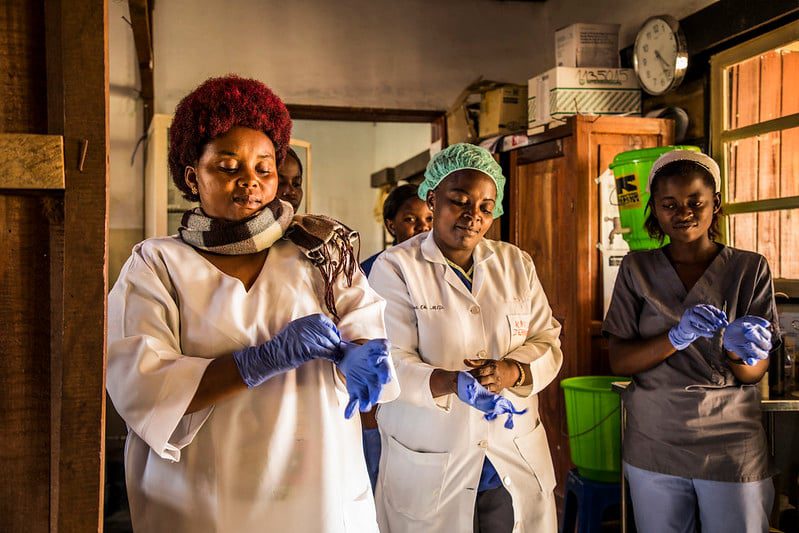
The combined efforts of these groups brought nearly 9 billion polio vaccines to Africa, according to the World Health Organization. Braving wilderness and war zones including territory held by the terrorist group Boko Haram, 2 million volunteers from organizations like Doctors Without Borders, UNICEF and Gavi immunized even the most isolated African villages.

The report of the most recent wild polio case was in August 2016 in northeastern Nigeria, within Boko Haram territory. However, the Nigerian government and outside supporters were able to quell the outbreak’s spread; since then, zero wild polio cases have occurred in Africa. This years-long feat allowed the World Health Organization to declare polio in Africa eradicated in 2020, a major feat for the continent’s residents and healthcare systems.

What Now?

Estimates determine that international efforts to defeat wild poliovirus in Africa have averted 1.8 million cases and 180,000 deaths. However, these figures only apply to the wild poliovirus—they fail to account for vaccine-derived polio.

There are two main types of polio vaccinations: oral and injected. Because the oral polio vaccination is much cheaper, it is most commonly used for widespread polio immunization campaigns in developing countries. However, this vaccine relies on a weakened version of the poliovirus to immunize rather than the inactive virus utilized by the injected vaccine. This disparity has led to occasional outbreaks of vaccine-derived polio in some African nations.

Currently, GPEI and its associated NGOs in Africa are working to curb any vaccine-derived polio outbreaks while frequently updating vaccinations for vulnerable children. There are only two remaining countries, Afghanistan and Pakistan, that have reported cases of wild polio in the past 12 months. However, by following Africa’s lead and adopting immunization initiatives, there is hope that wild polio can subside permanently in all countries.

– Aidan Sun
Photo: Flickr

September 9, 2020
https://borgenproject.org/wp-content/uploads/borgen-project-logo.svg 0 0 Kim Thelwell https://borgenproject.org/wp-content/uploads/borgen-project-logo.svg Kim Thelwell2020-09-09 10:30:042024-05-29 23:23:05The Accomplishment of Polio Eradication in Africa
Development, Food & Hunger, Global Poverty

Entomophagy: Reduce Poverty by Eating Bugs?

Entomophagy Reducing PovertyEntomophagy is the practice of eating insects. Throughout history and across geographical areas, adopting this diet has been a common and beneficial practice. Approximately 2 billion people across at least 99 countries regularly eat insects for protein, vitamins, minerals and fat content compared to meat or fish. There are about 1,900 edible insect species, from which humans eat eggs, larvae, pupae and adults. Insects of choice include bees, wasps, beetles, moths, caterpillars, crickets and grasshoppers. In recent years, researchers have explored this avenue and begun to consider the means by which entomophagy can reduce poverty.

Health Benefit

For years, insects have been viewed as a delicacy around the world. People eat boiled larvae with a nutty flavor and snack on crunchy beetles like popcorn. But bugs are also beneficial for their nutritional content: cooked grasshoppers, for example, can have up to three times the amount of protein and one-third the amount of fat compared to a hamburger. In low-income areas, insects are easily accessible from nature. People living in poverty could benefit significantly from this availability by either consuming them to prevent undernutrition or selling them at local markets to generate income.

Environmental Benefit

According to the UC Riverside Center for Invasive Species Research, insects are up to 20 times more efficient in converting food into edible tissue than cattle. Additionally, insects require far fewer resources and development to cultivate than other animals, which enables faster production (though this varies depending on the type of insect). Consuming insects offers a way to reduce crop-disrupting bugs without toxic or expensive insecticides. There is also little waste compared to cattle or other western proteins, which have to be processed and are only 40-50% edible. In contrast, people usually eat the entire insect.

Carbon emissions are lower in comparison to livestock. According to the Nutrition Bulletin from the Journal of the British Nutrition Foundation, the CO2 equivalent for beef is 2,058g/kg of mass gain, while insects have a CO2 equivalent of 68g/kg of mass gain. Many individual insect species leave an even smaller footprint.

Economic Benefit

The insect industry is diverse and can contribute to many markets. Silkworms are often used for fabrics and food, for instance, and weaver ants deter pests. The Chinese company HaoCheng Mealworm Inc. sells mealworms as flour, candy, condiments and instant noodles for human consumption. Also, this venture processes the worms into pet food for dogs, cats, birds and goldfish. Entomophagy provides economic contributions anywhere from street food businesses to commercialized companies.

Insect farming provides many employment opportunities for those living in rural areas of developing countries. Sericulture—the production and processing of silkworms—demands 11 workdays per kilogram of raw silk, a higher employment rate than any other industry. The majority of insect farming and gathering is performed on a relatively small scale through family-owned businesses, often in rural areas where employment and income are desperately needed.

Trading these insect-produced goods is essential for developing countries as well. Zimbabwe deals with countries including South Africa, Botswana, the Democratic Republic of the Congo and Zambia. Many countries in Africa, Asia and South America export insects for food. Even Europe and the United States have begun importing these products despite the relative lack of consumption in Western countries.

Thailand has a particularly prominent market for insect consumption, with imports estimated at $10/kilogram. For comparison, beef is $3.03/kilogram, and glutinous rice is $0.82/kilogram. Additionally, Thailand’s imports of these products total $1.14 million per year.

Regulations and Compliance of the Emerging Insect Market

National and international organizations play a crucial role in regulating the insect market. The Dutch Insect Farmers Association has been vital in lobbying to promote legislation and policies designed to improve quality standards, compliance and legal trading of these products.

While most of the Western paradigm does not consider insects to be a tasty snack or gourmet meal, continuing to research and develop this emerging market could prove essential in fully utilizing entomophagy to reduce poverty in rural areas.

– Sydney Bazilian
Photo: Wikipedia

September 9, 2020
https://borgenproject.org/wp-content/uploads/borgen-project-logo.svg 0 0 Kim Thelwell https://borgenproject.org/wp-content/uploads/borgen-project-logo.svg Kim Thelwell2020-09-09 10:02:232020-09-09 10:02:23Entomophagy: Reduce Poverty by Eating Bugs?
Development, Global Poverty

5 Facts About Nigerian Email Scams


The 419 email scams, also known as Nigerian email scams, are a familiar frustration to anyone with an email address. The scams lure a victim by offering to share an investment opportunity or fortune they need the recipient’s help to obtain. They either ask for the recipient’s bank information or a small advance payment for travel or other expenses. Americans lost approximately $703,000 to these scams in 2018. While people carry these scams out from across the world, more than one-fifth of them originate in Nigeria. Here are five facts about Nigerian email scams and why they are so common today.

5 Facts About Nigerian Email Scams

  1. The Nigerian email scam has been around for centuries. In the late 16th century, Nigerian scammers would send letters to disenfranchised French people claiming to be the faithful servants of marquises murdered during the revolution. The letters explained that their masters left behind a large fortune and that they needed the recipient’s financial help to find it. Scammers then offered to split the fortune with recipients. According to a French detective of the time, the process was successful about one in every five attempts. People have adopted, adapted and passed this scam down for centuries.
  2. This scam escalated in the 1980s. When oil prices collapsed in the 1980s, Nigeria faced economic upheaval and increased government corruption. Literate, English-speaking Nigerians were now facing poverty and rising unemployment rates. This environment forced many to find unconventional ways of supporting themselves and their families. Through the 1980s, millions of paper 419 scams were sent across the world using counterfeit postage.
  3. Corruption enables the Nigerian email scam. Those who participate in the scam have little to no fear of being punished by Nigerian law enforcement. The Nigerian Economic and Financial Crimes Commission, Interpol and other law enforcement offices are easily avoided through bribery. According to the Corruption Perceptions Index, Nigeria has always been one of the most corrupt nations in the world. As Nigeria becomes more corrupt, resources become scarce and poverty increases. In 2017, the United Nations Office on Drugs and Crime considered corruption to be the third most important problem facing Nigeria, following the high cost of living and increased unemployment rates.
  4. Corruption equals poverty. Though the Nigerian government has made implemented large-scale poverty relief efforts, corruption, lack of continuity and absence of legal framework or policy often lead to the failure of these efforts. Auwal Musa Rafsanjani, the executive director of Transparency International’s Nigerian chapter, explains that many national relief efforts fail because they are conduits for siphoning public funds.
  5. Greed begets disillusionment. The government’s mismanagement of Nigeria’s oil riches led to 86.9 million Nigerians living in extreme poverty by November 2018. According to Apolitical, the level of corruption in Nigeria has led to public disillusionment and has undermined the legitimacy and effectiveness of the government and its law enforcement offices. This environment is the perfect breeding ground for the Nigerian email scam.

It is important to understand that Nigerian email scams are just one consequence of many larger issues. Today, the email scam is the butt of many jokes, causing others to forget or ignore Nigeria’s struggles with poverty and corruption altogether. Despite this, many some are making efforts to reduce poverty and invest in a brighter future for Nigeria, meaning one day these scams may no longer exist.

– Caroline Warrick-Schkolnik
Photo: Pexels

September 9, 2020
https://borgenproject.org/wp-content/uploads/borgen-project-logo.svg 0 0 Kim Thelwell https://borgenproject.org/wp-content/uploads/borgen-project-logo.svg Kim Thelwell2020-09-09 08:37:072020-09-10 08:22:185 Facts About Nigerian Email Scams
Global Poverty

Renewable Energy in Colombia

Renewable Energy in ColombiaIn the past decade, the nation of Colombia has made great changes to the way that it obtains energy. These changes have allowed the country to become more reliant on its abundant renewable water resources. Today, Columbia relies heavily on hydroelectric power; so much so that it accounts for 65% of its annual energy consumption. During 2010, Colombia saw higher growth than any other country in the use of renewable energy. This is because of the transition to hydropower, with renewable energy generation at 2,543 MW. However, though hydroelectric power accounts for much of the energy production in the country, Columbia also has an abundance of other potential sources, including solar power, biomass and wind. This abundance of renewable energy in Colombia may become necessary in the years to come.

Wind Energy

Wind energy opportunities are extremely abundant in Colombia. Many experts have come to the conclusion that wind energy could sustain Colombia’s current total consumption. One area of Colombia, called La Guajira, is known for its extremely high wind speeds. This region on its own has the potential to provide an estimated capacity of 21GW. Colombia’s first wind farm is actually located in this area. It is possible that more could be installed to increase the potential of wind energy.

Biomass

Biomass is another potential source of renewable energy in Columbia. Due to the large agricultural sector within the nation, there are large amounts of agricultural waste that could be used to generate energy. For example, coffee is the largest agricultural export in Colombia, providing one-fourth of agricultural jobs within Colombia. Bananas and rice are important agricultural products as well;  overall, about 2 million metric tons of bananas and 1.8 million of rice are produced annually. These staple crops create large amounts of agricultural waste, which gives Columbia the potential to create biomass projects that could convert that waste into energy.

The Negatives of Reliance on Hydropower

Renewable energy in Colombia is clearly abundant. Yet, the country is extremely reliant on mostly hydropower. Part of the reason for this preference is due to a 1990s privatization act in Colombia, which led to about 50% of the hydropower production converting to private ownership. However, the use of alternate renewable energy might prove essential to the future of Colombia’s energy.

According to Energy Transition, Colombia’s reliance on hydropower could have negative outcomes. Just like other forms of energy, hydropower can have an invasive effect on the environment: dams that are used to generate hydropower can detrimentally impact various ecosystems, and even cause floods – such as the Hidroituango hydropower plant, which majorly flooded in 2018 and severely impacted the surrounding environment.

About 27% of people in Colombia live in poverty, and that number grows to 36% for those living in more rural locations. Additionally, impoverished and developing nations are often more negatively impacted by natural disasters than other nations. These statistics place impoverished Colombians at a great disadvantage if hydropower triggers any other large-scale environmental event; thus, diversification of energy resources is necessary.

While hydropower has done some good, renewable energy in Colombia still has the potential to be expanded. It can protect important ecosystems and prevent those living in poverty from natural disasters that can be prevented. Renewable energy in Colombia can accomplish this all while paving the way for increased reliance on clean energy.

– Jacob E. Lee
Photo: Unsplash

September 9, 2020
https://borgenproject.org/wp-content/uploads/borgen-project-logo.svg 0 0 Kim Thelwell https://borgenproject.org/wp-content/uploads/borgen-project-logo.svg Kim Thelwell2020-09-09 08:15:172024-05-29 23:22:59Renewable Energy in Colombia
Economy, Global Poverty

5 Countries in Southeast Asia Supporting American Exports

American ExportsThroughout the past several decades, nations in Southeast Asia have seen significant declines in extreme poverty rates. As poverty has fallen and these nations have developed economically, the Association of Southeast Asian Nations has become the United States’ fourth-largest trading partner. While the United States does rely heavily on this region for imports, trade with ASEAN also supports American exports and bolsters nearly 346,000 American jobs. The following five countries in Southeast Asia are critical trading partners and demonstrate the economic benefits that can coincide with a decrease in extreme poverty:

1. Malaysia

Malaysia has been extremely successful in reducing poverty throughout the past several decades. According to the United Nations, “… in 1970, 49.3% of Malaysian households were below the poverty line.” As of 2015, the figure had fallen to 0.4%. As poverty has fallen, Malaysia has also grown economically, developing profitable manufacturing, petroleum and natural gas industries.

As the country has reduced poverty and developed economically, it has become an important trading partner to the United States. The United States imports electrical machinery, tropical oils and rubber from Malaysia. It also exports soybeans, cotton and aircraft to the nation. In total, the trade between the two nations totals around $57.8 billion each year and supports nearly 73,000 American jobs.

2. Thailand

Thailand is another country that has seen impressive levels of poverty reduction in recent decades. According to The World Bank, poverty rates fell from around 65% in 1988 to under 10% in 2018. The nation has also evolved economically, developing large automotive and tourism industries as poverty rates have fallen.

Trade between the United States and Thailand has steadily grown, totaling $48.9 billion in 2018. When analyzing imports, the United States relied on Thailand for machinery, rice and precious metals. In terms of exports, the United States provided the nation with electrical machinery, mineral fuels and soybeans. In total, the exports to the nation supported nearly 72,000 American jobs. Additionally, exports to Thailand have been increasing in recent years, growing nearly 14.5% from 2017 to 2018.

3. Vietnam

Vietnam is perhaps one of the most astounding examples of poverty reduction and economic development. The World Bank reports that “the poverty headcount in Vietnam fell from nearly 60% to 20.7% in the past 20 years.” As it has done so, the nation developed one of the most rapidly growing middle classes in Southeast Asia, became a center for foreign investment and developed key industries in electronics, footwear and textiles.

While the United States has come to heavily rely on Vietnamese imports, Vietnam is also a rapidly growing market for American exports. In fact, American exports of goods to Vietnam increased by 246.9%, and American exports of services to the nation increased 110% since 2008. According to the Office of the United States Trade Representative, “U.S. exports of Goods and Services to Vietnam supported an estimated 54,000 American jobs in 2015.”

4. Indonesia

Though the nation still has significant progress to make, Indonesia is another nation that has seen a reduction in extreme poverty rates. Since 1990, the nation has managed to half its poverty rate and make significant economic advancements. Currently the largest economy in Southeast Asia, the nation has developed notable industries in petroleum, natural gas, textiles and mining.

Trade with the nation totaled around $32.9 billion in 2019. While the United States imported apparel and footwear from the nation, it also exported soybeans, aircraft and fuels to Indonesia. In total, American exports to Indonesia are growing, increasing 19.1% from 2017 to 2018 and supporting nearly 56,000 American jobs.

5. Philippines

While poverty is still an issue in the Philippines, it has seen significant declines in recent years. According to the World Bank, poverty fell from 26.6% to 21.6% from 2006 to 2015. The nation has also made significant improvements in developing industries outside of agriculture. While agriculture composed nearly one-third of the nation’s GDP in the 1970s, it currently represents 9.3%, split between an emerging industrial and service sector.

Trade with the nation currently provides $29.6 billion each year, and exports to the Philippines grew 3% from 2017 to 2018. Mainly, the Philippines relies on American exports for electrical machinery, soybean meal, and wheat. Overall, exports to the Philippines support an estimated 58,000 American jobs.

Affecting nearly one in five American jobs, international trade is a critical part of the American economy. As demonstrated by Southeast Asia, a reduction in global poverty rates not only contributes to global economic development but also supports the export industry and American jobs.

– Michael Messina
Photo: Pexels

September 9, 2020
https://borgenproject.org/wp-content/uploads/borgen-project-logo.svg 0 0 Kim Thelwell https://borgenproject.org/wp-content/uploads/borgen-project-logo.svg Kim Thelwell2020-09-09 07:59:012020-09-09 07:59:015 Countries in Southeast Asia Supporting American Exports
Global Poverty

Sustainable Land Management is Restoring Small Farms in Samoa

Sustainable Land ManagementSettled in the South Pacific between New Zealand and Hawaii, Samoa is a tropical Polynesian island country known for its crystal-clear waters and stunning beaches. However, increasing land degradation and drought threaten the future of Samoa’s inhabitants, posing a serious threat to the food, water and energy security of Samoa’s population. The Strengthening Multi-Sectoral Management of Critical Landscapes (SMSMCL) project establishes sustainable land management to combat degradation and improve agricultural and forest land quality. In particular, the project focuses on shifting Samoa’s farms from mono-cropping to mixed-use, as well as introducing resilient crops.

The History of Land Degradation in Samoa

Climate change, deforestation and agricultural expansion have resulted in extensive vegetation and forest deterioration. Additionally, as part of the Samoan government’s initiative to increase exports in the 1970s, many forests were cleared to make way for agricultural land. The intensive farming of crop commodities like coconut, taro, bananas and cocoa robbed Samoa’s soil of key nutrients and threatened the health of the agricultural sector. Agriculture accounts for 90% of Samoa’s exports and makes up a significant portion of the nation’s GDP, although profits rarely return to local communities. Land degradation affects the livelihoods of small-village and farming communities. As land resource insecurity rises, communities fear that future generations will be left with little to no development opportunities.

The SMSMCL Project

The Strengthening Multi-Sectoral Management of Critical Landscapes (SMSMCL) Project works to counter the land degradation problem by introducing sustainable land management strategies that improve food, water and energy security in Samoa. Funded by the United Nations Development Programme (UNDP) and implemented by the Government of Samoa, the project works to protect and sustainably manage productive landscapes from 2013-2018 in an effort to reduce poverty and combat the effects of climate change.

The SMSMCL Project takes a multifaceted approach to solving the problem. It encourages the use of nitrogen-rich plants like legumes to restore nutrients in critical landscapes and introduces climate-resilient food and tree crops to withstand environmental fluctuations. In addition, the project encourages a shift from mono-cropping to mixed-cropping. In the past, most of Samoa’s agricultural lands only cultivated traditional crops such as taro, a starchy root vegetable. The mono-cropping of taro deteriorated soil health, and the reliance on the crop devastated Samoa’s agricultural industry during a taro-leaf blight of the 1990s. By diversifying traditional food crops, the SMSMCL project improves agricultural productivity and strengthens crop resilience to prevent infectious crop diseases from devastating farmers’ livelihoods.

The SMSMCL Project involves village communities in every step of the process to educate Samoans on sustainable land and water management. Farmers, community organizations, students and church groups have responded enthusiastically to embrace sustainable land-management practices and encourage nature conservation.

Encouraging Results

Already, 126 villages throughout Samoa have benefited from the Strengthening Multi-Sectoral Management of Critical Landscapes project, and over 16,760 hectares of agricultural and forest land have been restored. Embracing sustainable land management strategies has improved the food security of Samoa’s population, helping communities cultivate their lands efficiently and secure opportunities for future generations.

– Claire Brenner
Photo: Pixabay

September 9, 2020
https://borgenproject.org/wp-content/uploads/borgen-project-logo.svg 0 0 Jennifer Philipp https://borgenproject.org/wp-content/uploads/borgen-project-logo.svg Jennifer Philipp2020-09-09 07:30:332024-05-30 07:52:40Sustainable Land Management is Restoring Small Farms in Samoa
Children, Education, Global Poverty, Health

George Mason University Professor Researches Obesity in Kenya

George Mason University Professor Researches Obesity in Kenya

For more than 10 years, Dr. Constance Gewa, a George Mason University professor and nutrition expert, has researched food security in her home country, Kenya. With each study, she has shined a light on different aspects of nutrition for women and children in the country. In 2019, when she returned for further research about obesity in Kenya, she came with more than questions — she brought some answers, too. 

Although Kenya has the classification of being a low-income country, the number of citizens struggling with obesity in Kenya is beginning to rise. This comes as a result of globalization and a growing international market. According to Gewa, Kenya is experiencing a nutritional transition as the country is importing more than it is exporting. Having previously survived on its own market and agriculture, Kenya now stocks stores with cereal, instant noodles, chips and cookies. These foods have cheaper prices and are extremely accessible to children, whose schools often provide them. However, they can also lead to obesity. 

Childhood Obesity in Kenya

In 2009, Gewa published a study titled Childhood overweight and obesity among Kenyan pre-school children: association with maternal and early child nutrition factors that addressed Kenya’s need to prevent overnutrition as well as treat malnourishment. Of the almost 1,500 children aged 3 to 5 whom she studied, Gewa found 18% to be overweight and 4% to be obese.

This may be due to mothers’ nutrition. A child whose mother is overweight due to a poor diet is 83% to 112% more likely to become obese. Gewa found that factors such as the duration the child exclusively breastfed were also important. She determined that children who solely breastfed for more than 24 months had a 45% decrease in obesity risk. In other cases, a mother believes that breastfeeding will not nourish her child enough and prematurely introduces other foods into the child’s diet. Popular alternatives to breastmilk include infant formula, solid food like bananas and rice as well as cow’s milk. All of these foods are too high in calories for the child, resulting in weight gain.

Mothers with a lower income and education are more likely to breastfeed, and therefore give their child a lower risk of becoming obese. A mother with primary or higher education will typically have a higher income, allowing her to purchase other foods to supplement breastfeeding. However, this does not mean that children living on a lower income are immune to the dangers of obesity in Kenya. Processed and fried foods are becoming cheaper and more accessible. Some Kenyans have explained that french fries and donuts are cheaper than fresh produce, and they cannot afford to prioritize nutrition.

Breastfeeding and Traditional Food

In 2016, Gewa published two papers. The first investigated maternal knowledge and the cessation of breastfeeding. From this study, Gewa concluded that early breastfeeding practices, a mother’s understanding of the recommendations regarding breastfeeding, the health of the child as well as the mother and social acceptability all determine how long a mother exclusively breastfeeds. If a mother is knowledgeable of the benefits of breastfeeding and feels comfortable breastfeeding at home and in public, she is more likely to breastfeed for a longer duration.

Gewa’s second 2016 study examined maternal beliefs and accessibility to indigenous and traditional food. Her research indicated that less than 60% of Kenyan mothers consumed indigenous traditional foods (ITF), but 52% wished they could eat more of this food. They attributed their lack of ITF consumption to inaccessibility, high prices and poor taste. Gewa stated that when Kenyan health officials discuss food security, they must consider both malnourishment and obesity to avoid “moving from one problem to another.”

Reducing Obesity in Kenya

From these studies, Gewa argues that education on proper nutrition and efforts to make healthy foods affordable are necessary to reduce obesity in Kenya. She used this knowledge to return to Kenya and use her research to spark change. On her return to Kenya, Gewa said, “It is important for study participants and communities to become aware of the research findings because they are stakeholders. I believe that sharing research findings motivates community ownership and participation in identifying solutions.” When Gewa met with the people represented in her study, they were surprised and grateful for her return — they told her no one had ever come back before.

To Gewa, the research is just the beginning. In addition to analyzing obesity in Kenya, Gewa’s work calls for discussion and works with those directly affected to create a greater impact. Local health officials and Kenya’s administration have found an open channel of communication with their constituents through Gewa’s research. While obesity in Kenya remains an issue, it is encouraging to see these steps in the right direction toward health and nutrition prioritization.

 – Alexa Tironi
Photo: Flickr

September 9, 2020
https://borgenproject.org/wp-content/uploads/borgen-project-logo.svg 0 0 Kim Thelwell https://borgenproject.org/wp-content/uploads/borgen-project-logo.svg Kim Thelwell2020-09-09 07:30:232020-09-07 10:35:58George Mason University Professor Researches Obesity in Kenya
Global Poverty

Colombian Family Creates YouTube Channel to Teach Sustainable Farming Practices

sustainable farming practices
Nubia Cardenas and her two sons, Jeimer and Arley, live in the countryside of Chipaqué, Colombia, a municipality close to Bogotá, the country’s capital. They have recently become YouTube stars with their channel “Nubia e hijos,” or “Nubia and children.” Many farmers in Colombia grow large fields of onions, potatoes and aromatic herbs for the residents of metropolitan areas. However, due to the ongoing COVID-19 pandemic, food supplies are more difficult to access and food prices are steadily increasing. This makes it more difficult for low-income communities and farmers to get the resources they need to survive. In this context, Cardenas’s YouTube channel, which focuses on sustainable farming practices, is crucial for farmers in Colombia.

Peasant Farming in Colombia

Recent corruption within the Colombian government is putting an even bigger strain on peasant communities throughout Columbia. The former minister of agriculture, Andrés Felipe Arias, created the Agro Ingreso Seguro program to assist poor farmers in the economic downturn. While the program was supposed to be a low-interest line of credit from the government to impoverished farmers, it only benefited wealthy farmers, giving them subsidies greater than 26,000 pesos.

The Agro Ingreso Seguro program might have resulted in a $300 billion diversion of funds, but it enabled the top 1% of the largest farms in Columbia to dominate 81% of the country’s farms, while millions of poor farmers live on tiny plots of land. Although Arias received a 17-year prison sentence over this scandal, his actions greatly impacted impoverished Colombian communities’ access to resources and opportunities they desperately need during the COVID-19 pandemic.

Columbia’s economic state and the current state of the world were two major reasons for the creation of the “Nubia e hijos” YouTube channel. The purpose of the channel is to share tips for sustainable farming practices, like how to grow fruits, vegetables and herbs. In doing so, the Cardenas family hopes to ensure that no one will have to go to bed hungry in Colombia.

5 Interesting Facts About the “Nubia e hijos” Channel

  1. The First Video: The family posted its first video without electricity and with little technical knowledge. Neither Cardenas nor her two sons had any knowledge about technology or social media before deciding to create a channel. The family did not even have a laptop to edit the video, but they were still dedicated to sharing their knowledge and helping others. Once the videos went viral, the trio reached out to their neighbor and friend, Sigifredo Moreno, and the social enterprise Huertos de la Sabana to collaborate on the channel’s audiovisual production.
  2. Planting Kits: Along with sharing their extensive cultivation knowledge, the family uses its YouTube platform to sell homemade planting kits to low-income farmers and families. For $5, subscribers can purchase kits that include soil, bags and seeds for planting. For $7, subscribers can purchase kits that include soil, seeds and three potted plants. The Cardenas family hopes that by providing viewers with both the knowledge and resources to enact sustainable farming practices, more individuals will have a constant, affordable and sustainable food supply.
  3. Beyond Food: The Cardenas family uses its platform to discuss other social issues in Columbia besides sustainable farming practices. In the family’s third video, Cardenas, her sister and her two sons discuss the difficulties of living in the countryside and taking virtual classes. Many impoverished families who live in the countryside of Columbia do not have access to the resources necessary to complete virtual classes, such as laptops and the internet. Therefore, the Cardenas family uses its channel to advocate for better tools and instructions for peasant children during COVID-19.
  4. Going Viral: “Nubia e hijos” now has 424,000 subscribers. In 11 days, Cardenas and her two sons posted four videos, which caused the YouTube channel to go viral. Their tips and instructions on how to plant food at home have become very popular and a large audience from all over the world is now viewing the Cardenas family’s videos. The family also has over 170,000 followers on Instagram due to its newfound fame.
  5. Improved Lifestyle: The Cardenas family was able to purchase a laptop due to support from their fans, both subscribers and buyers of their kits. In a recent video, Cardenas’s sons smiled as they show off their new laptop to the camera. The family can now use the laptop to produce more videos to help others like them through sustainable farming practices.

The coronavirus pandemic has limited interaction and communication to strictly online forms. However, the Cardenas family was dedicated to sharing their potentially life-saving knowledge with others. Through the “Nubia e hijos” YouTube channel, the Cardenas family has established an innovative way to improve their own economic situation and help fight hunger and poverty in many parts of the world through sustainable farming practices.

– Ashley Bond
Photo: Flickr

September 9, 2020
https://borgenproject.org/wp-content/uploads/borgen-project-logo.svg 0 0 Kim Thelwell https://borgenproject.org/wp-content/uploads/borgen-project-logo.svg Kim Thelwell2020-09-09 07:30:132020-09-07 10:27:46Colombian Family Creates YouTube Channel to Teach Sustainable Farming Practices
COVID-19, Global Poverty

Protecting Iraq’s Yazidi Communities During COVID-19

Yazidi CommunitiesHaving been targeted by ISIL during its military campaign in 2014, the Yazidis have gained significant international attention over recent years. However, few knew much about the importance of Yazidi communities to the overall stability in Iraq before their genocide.

Who Are the Yazidis?

The Yazidis are a Kurdish-speaking minority located primarily in northern Iraq, where about 400,000 lived as of 2014. They have traditionally kept to themselves but experienced ethnic and religious persecution from both Saddam Hussein’s regime over the years as well as ISIL most recently. Such oppression crippled Yazidi communities as their members dealt with the economic fallout and social setbacks resulting from trauma. The novel coronavirus poses a new threat, and the consequences for peace and security in Iraq will be manifold — especially if the Yazidis are excluded from Iraq’s COVID-19 economic recovery strategy.

The COVID-19 Crisis

The spread of COVID-19 has hurt Iraq and its people on a grand scale, as it has in the rest of the world. Yet, despite a low number of cases in northern Iraq, Yazidi communities have been disproportionately affected by the virus due to safety measures taken by the Iraqi government. In Sinjar, where many Yazidis in Iraq live, most of the working population must travel for jobs located outside of the city or are farmers who rely on visiting other cities to sell their crops. However, this way of life is no longer possible under the imposed movement restrictions. Yazidis cannot leave Sinjar for employment, and farmers cannot travel to other cities. Therefore, many Yazidi communities have essentially lost all means of income.

The emergency measures have also adversely impacted the Yazidis on the healthcare front, as access to healthcare has been reduced. Those requiring medical attention can only receive it four hours away in Mosul, taking an ambulance so that they can cross various checkpoints throughout the province. Along with the long trip, some Yazidis do not seek treatment in Mosul because of the language barrier. These factors have further ostracized the Yazidis economically and socially, thus risking an increase in regional poverty.

The Resurgence of Poverty and of ISIL

Poverty’s resurgence in Yazidi communities because of the novel coronavirus has myriad implications for peace and security within the Middle East. In addition to trauma following the end of ISIL’s occupation of Yazidi land, the pandemic has created a mental health crisis within Yazidi communities. Those who previously received counseling at mental health facilities are no longer able to obtain that help due to COVID-19. Some experts are even predicting that 25% of Yazidis will require mental health care after the pandemic subsides.

Others have raised concerns surrounding the return of ISIL during this period of instability. Iraq’s government has acted on this issue militarily and can continue to fight ISIL’s revival by providing economic aid and building necessary healthcare infrastructure in Yazidi communities.

Humanitarian Solutions and NGOs

Ultimately, northern Iraq’s stability will not be achieved through military success alone. The long-term solution will be humanitarian. Following the U.N. Sustainable Development Goals (SDGs), such as developing better infrastructure, will lead to extraordinary progress on other pressing problems in Iraq, like reducing poverty and improving health.

Giving non-governmental organizations, like Yazda, a bigger role in community building is another way to strengthen Yazidi societies. Yazda focuses on helping Yazidis in various ways. It has already helped thousands obtain mobile medical services in addition to providing hundreds of mental health and socioeconomic assistance and supporting hundreds more in their pursuit of criminal justice.

For now, Baghdad is focused on reopening its urban and economic centers. However, including Yazidi communities in the reopening process during and after COVID-19, as well as supporting them to become more resilient in tumultuous conditions, will be crucial in preventing future conflicts and eliminating poverty in Iraq.

– Alex Berman
Photo: Flickr

September 9, 2020
https://borgenproject.org/wp-content/uploads/borgen-project-logo.svg 0 0 Kim Thelwell https://borgenproject.org/wp-content/uploads/borgen-project-logo.svg Kim Thelwell2020-09-09 07:30:032024-05-30 07:52:38Protecting Iraq’s Yazidi Communities During COVID-19
Global Poverty

COVID-19 and the Uyghur Human Rights Policy Act

Uyghur Human Rights Policy Act
Xinjiang is located in China’s northeast corner. Of its 19 million inhabitants, 8 million belong to the Uyghur Muslim minority. Since the days of Mao Zedong, the Chinese government has consistently persecuted certain religions, including Islam. Separatist sentiments among the Uyghur population and their strong Muslim identity have made them a problematic minority for the government’s vision of a
united, nonreligious China in Beijing. The spread of COVID-19 as well as the mass detention and forced labor of the Uyghur peoples illustrate the importance of properly enacting the Uyghur Human Rights Policy Act.

A History of Tension

The Uyghur peoples have a history of independence. In the 1940s, the Xinjiang region was independent for a short time. The Uyghur language, religion and culture are completely different from those of the Han Chinese. Since Xi Jinping became the General Secretary of China’s communist party, religious persecution against Muslims, Christians and other spiritual groups has increased. Ethnic tensions have intensified, as the Uyghurs are often painted as thugs, Chinese separatists and religious extremists.

Multiple Uyghur-led, anti-government acts of violence in 2014 initiated Jinping’s harsh crackdown on the ethnic minority group. This meant the mass detention of Uyghurs in re-education facilities, an effective and wide-ranging surveillance system and forced labor. The Chinese government states that these measures are part of its fight against religious extremism and terrorism. In 2017, Jinping claimed that “Xinjiang is in an active period of terrorist activities, intense struggle against separatism and painful intervention to treat this.”

Uyghur Detention Facilities

The Chinese government has indefinitely detained an estimated 1 million Uyghurs in so-called re-education camps since 2014. The objective of these camps is to turn the Muslim Uyghurs into loyal citizens of the Chinese nation. Re-education includes forcing detainees to learn Mandarin and attempting to strip them of their Islamic faith. 

Many Uyghurs in these camps must work in factories and other forms of labor against their will. Some global companies rely on products produced in Xinjiang. In 2012, Volkswagen came under heavy criticism for its decision to open a factory in the region’s capital, but the German car manufacturer is far from the only company to do business in Xinjiang. Uyghur forced labor is also critical to the supply chains of global brands such as Adidas and H&M.

The Perfect Environment for COVID-19 Transmission

Recent spikes in COVID-19 cases throughout Xinjiang, China have many human rights activists concerned that a massive outbreak could happen in the dense re-education camps and factories. Governments throughout the world have released inmates from tightly packed prisons to prevent COVID-19 transmission on a grand scale, but such a move by the Chinese government seems unlikely. Chinese nationalist hardliners may view an outbreak in these re-education facilities positively, based on their current treatment and detention of Uyghur Muslims. However, the United States can do something about this blatant violation of human rights through the aggressive application and enforcement of the Uyghur Human Rights Policy Act.

The Reasons the Uyghur Human Rights Policy Act is Important

Economic pressure from the U.S. government could help release many Uyghur people from detention centers, a measure that is especially important with a deadly outbreak of COVID-19 in the region. The Uyghur Human Rights Policy Act gives Congress the authority to impose strategic sanctions and export restrictions on products produced in Xinjiang.  

The bill can encourage companies like Volkswagen to stop production in the area via sanctions, cutting off their access to the valuable U.S. market. This bill would thereby apply pressure on the Chinese government to change its policy of mass detention and forced labor of Uyghur Muslims. President Trump signed the Uyghur Human Rights Policy Act into law, giving himself the power to send Congress a list of “foreign individuals and entities” responsible for abusing the Uyghurs.

The U.S. has already sanctioned multiple Chinese companies over their actions in Xinjiang, but no sanctions have been levied on Western businesses that rely on forced Uyghur labor for their production or supply chains. Congress and President Trump have to power to more broadly and aggressively enact the Uyghur Human Rights Policy Act in order to institute real change in Xinjiang and avert the worsening of a human rights crisis.

 – Marcus Lawniczak
Photo: Flickr

September 9, 2020
https://borgenproject.org/wp-content/uploads/borgen-project-logo.svg 0 0 Kim Thelwell https://borgenproject.org/wp-content/uploads/borgen-project-logo.svg Kim Thelwell2020-09-09 01:32:022024-05-29 23:22:51COVID-19 and the Uyghur Human Rights Policy Act
Page 991 of 2161«‹989990991992993›»

Get Smarter

  • Global Poverty 101
  • Global Poverty… The Good News
  • Global Poverty & U.S. Jobs
  • Global Poverty and National Security
  • Innovative Solutions to Poverty
  • Global Poverty & Aid FAQ’s
Search Search

Take Action

  • Call Congress
  • Email Congress
  • Donate
  • 30 Ways to Help
  • Volunteer Ops
  • Internships
  • Courses & Certificates
  • The Podcast
Borgen Project

“The Borgen Project is an incredible nonprofit organization that is addressing poverty and hunger and working towards ending them.”

-The Huffington Post

Inside The Borgen Project

  • Contact
  • About
  • Financials
  • President
  • Board of Directors
  • Board of Advisors

International Links

  • UK Email Parliament
  • UK Donate
  • Canada Email Parliament

Get Smarter

  • Global Poverty 101
  • Global Poverty… The Good News
  • Global Poverty & U.S. Jobs
  • Global Poverty and National Security
  • Innovative Solutions to Poverty
  • Global Poverty & Aid FAQ’s

Ways to Help

  • Call Congress
  • Email Congress
  • Donate
  • 30 Ways to Help
  • Volunteer Ops
  • Internships
  • Courses & Certificates
  • The Podcast
Scroll to top Scroll to top Scroll to top