Colombia is helping Venezuelan refugees following instability in Venezuela. Colombia has received over one million Venezuelan refugees and the Colombia-Venezuela border has been relatively porous. These Venezuelans are escaping hunger, hyperinflation and generally poor living standards while Colombia faces many problems of its own.
Background
Colombia and its people, although needing humanitarian aid for their own country, have continued to allow Venezuelans to come in. Colombia far surpasses other countries as the number one receiver of Venezuelan refugees. The government provides them services in refugee camps such as orthodontic treatment, legal assistance, psychological guidance, haircuts, manicures and food. This has been described by various Venezeulen refugees to be beneficial. However, there are concerns that Colombia might not sufficiently meet the demands for this new mass influx of people considering its existing problems with its own people.
Colombia today sees high rates of terrorism and crime, from dissidents of the Revolutionary Armed Forces of Colombia (FARC) and groups like The National Liberation Army (ELN). Armed robberies are also common there, and Colombia’s social systems and law enforcement have failed to address this issue. This results in events like a car bomb incident in January 2019 in Bogota which killed 22 people and injured 66 more, a bomb in January 2018 when a bomb exploded in front of a police station in Barranquilla, a bomb in June 2017 when three people were killed in a shopping mall and an incident in 2018 where two Ecuadorian journalists and their driver were killed along the Colombia-Ecuador border. The U.S. State Department rates Colombia with a Level 3: Reconsider Travel rating, citing these issues as well as health concerns from COVID-19.
Current Sources of to Help
Despite this news, there are things people can do to aid in helping Venezuelan refugees. The USAID program in the country is one example of helping Venezuelan refugees and aiding Colombia’s effort for this task. USAID has provided ventilators as well as $30 million of aid to Colombia amid the COVID-19 pandemic and humanitarian aid after Hurricane Iota struck the region in November 2020. But most of all, it is the Colombian people who are helping Venezuelan refugees.
At border towns, people have taken Venezuelan refugees into their homes, often indefinitely at no cost at all. In the 1980s and 1990s, Colombia was experiencing a decade-long conflict with FARC. This destructive conflict displaced more than seven million people, and groups of Colombians migrated to the then prosperous Venezuela. The Venezuelans during this conflict took Colombians in the same way as Colombians are taking in Venezuelans now. The Colombian border state of La Guajira is the perfect example of this, as over 160,000 Venezuelan refugees have taken refuge in La Guajira. Venezuelans now make up one-fifth of the population. The selfless help from local Colombians has made a difference in helping Venezuelan refugees.
Aid outside the Colombian government does a lot in helping Venezuelan refugees. This is true whether it goes directly to the local people or arrives through sources like USAID. The intertwining between Venezuelans and Colombians, promoted by Venezuelan refugee events hosted by Colombians before COVID-19, can also help alleviate anti-Venezuelan sentiment and provide the region more stability.
– Justin Chan
Photo: Flickr
 Between 1970 and 1980, the suicide rate in Greenland was

 As the world strives to move away from fossil fuels and other non-renewable energy sources, solar power continues to increase in popularity. It is free, clean and abundant. There is no harmful by-product, private companies do not control it and no drilling is required.
 Rwanda is a small country in sub-Saharan Africa. Rwanda has struggled to become a stable country economically and politically since it became independent in 1962. As a developing country, Rwanda is still trying to develop its healthcare system. With years of conflict and instability, people especially struggle with mental health in Rwanda.
 Since the United Nations created the least developed countries (LDCs) list in the 1970s, only six nations have moved off of the list to a higher ranking of development. Vanuatu, an island nation in the South Pacific, became the sixth country to do so on December 4, 2020, after being designated an LDC in 1985. Vanuatu’s graduation from the LDCs list can serve as a beacon of hope for more LDCs to achieve higher rates of development.
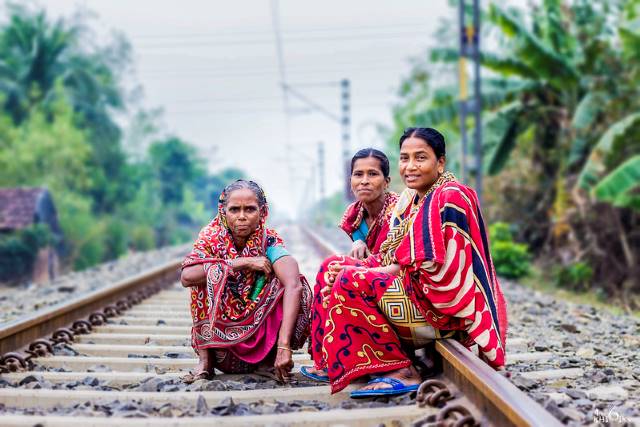 India is the second-most densely populated nation in the world, with more than 1.3 billion people. Of that number, more than 82 million citizens suffer from bipolar disorder, according to data from 2019. Bipolar disorder in India often goes undiagnosed and untreated for reasons ranging from ancient superstitions to the cost of treatment, but, bipolar awareness in India is steadily progressing.
 The nation of Australia suffers from the highest rates of cancer in the world, but, the disease takes a significant toll on the disadvantaged and rural residents in particular. Impoverished and disadvantaged Australians are