
The country of Colombia is a land with four distinct geographic locations. In its Pacific and Caribbean lowlands are rolling hills that stretch east and reach the Amazon Rainforest. Both the Andes Mountains and the Cordillera Central mountain range run through the country as well. However, it is difficult for those who suffer debilitating physical injuries to travel around the country. As a result, wheelchairs in Colombia have improved many lives.
Colombia’s Half-Century of Conflict
The government of Colombia has conflicted with the Revolutionary Armed Forces of Colombia (FARC) and the National Liberation Army (ELN) since the 1960s. As such, the conflict between the Colombian government has resulted in the displacement of 5.7 million people along with many deaths and disappearances. Additionally, there have also been paramilitary groups operating in the country that have contributed to the violence.
Improved Mobility for Victims of Conflict
Survivors of this long conflict have ended up with serious physical injuries. Many people have lost the ability to walk. This is especially troublesome when it comes to navigating around a country with various landscapes. In Colombia, around 200,000 people were living with a physical disability that resulted from the conflict. About 12,000 of them sustained injuries from anti-personnel landmines.
Researchers from various universities in Colombia realized that many of their fellow countrymen can no longer walk and have no way to get around their own country. Thus, these researchers set forth to create a solution called the All-Terrain Chair. These wheelchairs in Colombia had the specific design of helping people who suffered injuries from the ongoing conflict. Furthermore, these wheelchairs largely comprise magnesium, which is not only a strong material but extremely affordable as well.
MATT
The Colombian startup that people know as Mobility, Accessibility, Time and Work (MATT) has helped people with physical disabilities by providing them with employment. For example, MATT has organized three-hour wheelchair tours throughout the city of Medellin. People who can and cannot walk are welcome to join the tours. Furthermore, people with physical disabilities lead these tours. Wilson Guzman lost the use of his legs at the age of 17. Thus, these tours not only allow him to see the sights of Medellin but also gives the tourists who can walk a perspective on what it is like to not have the use of their legs.
Colombia’s economic productivity is low and has caused the economic growth of the country to lag. Additionally, Colombia has a sizable infrastructure gap. Despite the dire economic circumstances that the country is in, the government is doing its absolute best to provide jobs and a mode of reliable transportation for physically disabled people. The implementation of these wheelchairs in Colombia is a great first step in improving people’s lives.
– Jacob E. Lee
Photo: Flickr
 Roughly


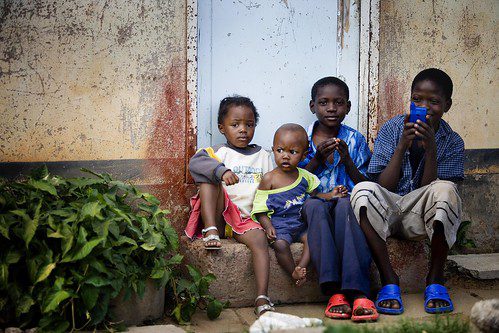 Healthcare in sub-Saharan Africa has a direct impact on poverty in the region. When adults are too ill to work, they and their children can quickly fall into extreme poverty, which leads to hunger and malnutrition. Around 46% of Africa’s population lives on

