• Link to X
  • Link to Facebook
  • Link to Instagram
  • Link to TikTok
  • Link to Youtube
  • About
    • About Us
      • President
      • Board of Directors
      • Board of Advisors
      • Financials
      • Our Methodology
      • Success Tracker
      • Contact
  • Act Now
    • 30 Ways to Help
      • Email Congress
      • Call Congress
      • Volunteer
      • Courses & Certificates
      • Be a Donor
    • Internships
      • In-Office Internships
      • Remote Internships
    • Legislation
      • Politics 101
  • The Blog
  • The Podcast
  • Magazine
  • Donate
  • Click to open the search input field Click to open the search input field Search
  • Menu Menu

Archive for category: Global Poverty

Key articles and information on global poverty.

Global Poverty

World Bank Calls for a Geothermal Energy Revolution

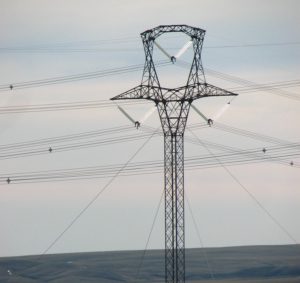
World Bank Calls for a Geothermal Energy RevolutionNearly 40 countries have met their energy needs by utilizing geothermal energy. The global potential for geothermal energy is very much untapped, with worldwide geothermal electricity capacity at only 11 gigawatts, or .3% of the total global power generation. To change this, the World Bank is implementing a Global Geothermal Development Plan to generate geothermal power for low- and middle-income countries to deliver power to 1.3 billion around the world who are without it.

At the Iceland Geothermal Conference in Reykjavik on March 6, Sri Mulyani, World Bank Managing Director, spoke about the need for donations to support the Plan as well as the importance of geothermal energy for developing countries. “Geothermal energy could be a triple win for developing countries: clean, reliable, locally-produced power,” said Indrawati. “And once it is up and running, it is cheap and virtually endless.” She adds that previously geothermal energy work has been done at the national and regional levels and that what is needed now is “a global push.”

The World Bank’s plan will focus on exploratory test drilling which makes geothermal projects more capital intensive than other renewable sources due to expensive and sometimes fruitless drilling. Significant investment in these projects is needed before a site is deemed viable enough to provide considerable geothermal energy. The cost of testing the potential of a site to produce geothermal energy is US$15 to 25 million, an investment that is lost if the site proves not suitable. However, in countries with more dense populations, geothermal energy, which has the smallest land footprint per kilowatt-hour, is an especially useful resource. The goal is to develop a pipeline of projects that are commercially-viable and ready for private investment.

25% of Iceland’s electrical power is generated by geothermal power plants and 95% of Iceland is heated by volcanic hot water. Currently, Iceland is potentially looking to sell and export the surplus energy the country produces. In collaboration with Iceland, the World Bank is working to assist surface exploration studies and technical assistance for some African countries. The Olkaria Geothermal Plant in Kenya has received long-term support from the World Bank. Only 16% of the Kenyan population has access to electricity. With an abundance of geothermal resources present in East Africa’s Rift Valley, the geothermal potential could provide 150 million households with power. The World Bank’s plan is to double geothermal generation to deliver close to 30% of Kenya’s electricity by 2020. Pierre Audient, Clean Energy Program Team Leader at the World Bank’s Energy Sector Management Assistance Program calls it “a potentially transformative resource,” especially for many developing countries.

Throughout the developing world, there are untapped geothermal resources. Geothermal energy is carbon-free access to electricity, is relatively clean, and delivers constant power. World Bank Group funding for geothermal developments has risen from $73 million in 2007 to $336 million in 2012. With the Global Geothermal Development Plan, the World Bank hopes to increase its support.

– Rafael Panlilio

Source: World Bank

March 15, 2013
https://borgenproject.org/wp-content/uploads/borgen-project-logo.svg 0 0 Borgen Project https://borgenproject.org/wp-content/uploads/borgen-project-logo.svg Borgen Project2013-03-15 19:25:182020-05-24 23:47:47World Bank Calls for a Geothermal Energy Revolution
Global Poverty

Luxury Hotels in Thailand for Charity

Luxury Hotels in Thailand for CharitySome mourn through tears, others through memoirs, but there are those people like Mark Weingard who mourn and honor the dead through 6 stars hotels. While vacationing at his beachfront home in Phuket, Thailand, in December 2006, Weingard was awoken by the same sound that silenced hundreds and thousands of voices. Thanks to the structuring of his home, Weingard survived the tsunami and was able to get back to his daily life in London as the CEO of Reset, the inter-bank broking firm he started in 1998.

Two years earlier, Mark’s fiancé was tragically killed in the Bali Bombings while attending a wedding. In her honor, as well as in an effort to bring about a sense of purpose in his own life, Weingard established the Annika Linden Foundation. The foundation’s main purpose was initially to help out children and their families who were victims of the bombing. In little over a decade, his organization, now known as the Inspirasia Foundation, has been able to collect over $10 million in donations from various banking firms. This money is used to fund 16 different programs and projects from rehabilitation to education in Thailand, India, and Indonesia.

Weingard’s newest endeavor is Iniala, a 6 star, 10 room, a luxury hotel built on the land where his destroyed beach house once stood. 10% of the proceeds will be directly used to help fund the work of Inspirasia, an expected $800,000 annually. But Iniala is going to be only one of a handful of luxury hotels that will be part of the Iniala Group, which designs and operates luxury hotels across Asia. The expected annual collection from this giant venture will total $10 million, all going to the foundation.

Weingard’s past was the drive for establishing his foundation as well as the inspiration for his unique philosophy on giving. After his father’s tragic accident when he was 9, and marginally escaping death a few times himself (he was scheduled for a meeting at a World Trade Center office on 9/11), Weingard believes that the human potential is much greater than ourselves. “We are only here once, and we have to make the most of life…not only for ourselves but also for those around us.”

Through what he calls ‘strategic philanthropy’, Weingard brings together multiple disciplines such as finance, marketing, and law to make sound investments in the non-profit world. Only this way will organizations be able to “generate and scale social change as effectively and efficiently as a successful company generates profit and expands its business”.

It is absolutely refreshing to see successful businessmen and women transferring their world-class experience and knowledge into the non-profit world. Mixing ideas from finance, the legal sector, politics, and design in an efficient manner ensures that no time or money is wasted in these massive operations to help those in need. To sustain and even revamp the direction of non-profit organizations, this sort of creative and unique outlook is absolutely required to draw attention, money, and time.

– Deena Dulgerian

Source:Business Week
Photo:Blog A-Cero

March 15, 2013
https://borgenproject.org/wp-content/uploads/borgen-project-logo.svg 0 0 Borgen Project https://borgenproject.org/wp-content/uploads/borgen-project-logo.svg Borgen Project2013-03-15 10:49:412020-05-24 23:50:28Luxury Hotels in Thailand for Charity
Global Poverty

Arguing for Foreign Aid

Arguing for Foreign AidSenator Rand Paul arguing for foreign aid in his recent filibuster has brought a bit more attention to his input on every part of the budget and sequester discussions. Paul’s impressive 13 hours filibuster regarding the use of military drones against U.S. citizens didn’t only shine the spotlight on the issue of drones, it brought the senator’s opinions themselves to the center of a national discussion. Paul claimed yesterday that foreign aid makes the United States less secure.

Read more about how foreign aid helps national security. First, it is important to remember that foreign aid is still less than 1% of the national budget. Yet when talks about budget cuts come up it seems like foreign aid is always about to get the axe while other expenditures, many related to military involvement, are apparently untouchable. Even military professionals overwhelmingly support foreign aid and non-military aid to developing countries and allies. In fact, 84% of military officers said that strengthening non-military tools, such as diplomacy, foreign aid, and development efforts, should be at least equal to strengthening military efforts.

Building self-sufficient communities and providing job opportunities and growing local economies are all essential to combating the root causes of terrorism. By supplying foreign aid to developing countries around the world we are avoiding future conflict while building stronger, positive relationships with the rest of the world and opening potential markets for American business. In the end, we really shouldn’t be thinking of cutting foreign aid anymore, the distribution of aid allows the United States to further ensure its’ national security, strengthen political ties, and create trading opportunities around the globe.

– Kevin Sullivan

Sources: PolicyMic, Global Poverty and National Security

March 15, 2013
https://borgenproject.org/wp-content/uploads/borgen-project-logo.svg 0 0 Borgen Project https://borgenproject.org/wp-content/uploads/borgen-project-logo.svg Borgen Project2013-03-15 10:30:132020-05-24 22:59:16Arguing for Foreign Aid
Global Poverty

WorldHaus Provides Homes for the Poor

WorldHaus Provides Homes for the PoorA for-profit business with non-profit principles, a growing trend in compassionate capitalism. WorldHaus is a great example – they have a mission to help the world’s “unserved housing market.”

In India alone over 500 million people, almost half the population, want and need better housing but the average cost of materials and labor makes it impossible to attain. There is no financing for the rural poor, or collateral to put up against a mortgage. WorldHaus is trying to fill this gap by manufacturing and building quality homes at a tiny fraction of standard costs, specifically developing a model that can be made affordable to the global poor.

Started in 2011, in India, WorldHaus makes customizable, weatherproof homes that can include amenities like clean-burning stoves, toilets, and solar electricity systems. Using a modular building system, families can build to any size and configuration they want. The base model – a one-room, 220 square foot home – can be built in about 10 days at a starting cost of below $2,000. Using local materials and on-site construction stimulates local economies through purchasing and employment, and cuts cost as well.

Additionally, they are working with mortgage providers to make homes available at $40/month, well within the reach for people making even $3 to $10 a day. They are setting up partnerships with governments, NGOs, and landlords to try and make homes available to families making less than $2 a day (through subsidies and rental programs).

A video from the Gate’s Notes website shows Bill Gates visiting Idealab and interviewing WorldHaus President Daniel Gross. WorldHaus was generated inside Idealab – a think tank and development project for innovative products.

– Mary Purcell
Source: WorldHaus

March 14, 2013
https://borgenproject.org/wp-content/uploads/borgen-project-logo.svg 0 0 Borgen Project https://borgenproject.org/wp-content/uploads/borgen-project-logo.svg Borgen Project2013-03-14 16:02:172020-05-24 23:02:28WorldHaus Provides Homes for the Poor
Global Poverty

A Solution to Global Poverty: Mobile Money

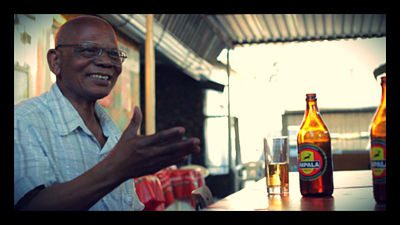
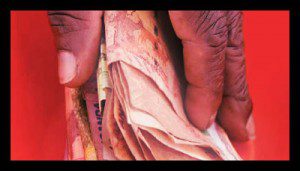
A Solution to Global Poverty: Mobile MoneyKenya has recently gained attention for its successful adaption of mobile money. A majority of its population, two-thirds of which live on less than $2 a day, are able to manage their finances using cell phones. Through this service, which does not require a bank account, millions of customers are able to send a text message to banks to pay bills, receive payment, and transfer money. Given that nearly 2.5 million people in the world do not have bank accounts and 2 billion people have cell phones, the program will make it easy to include a large number of people previously without access to finance management. As of now, there are 15 million mobile money customers in Kenya.

The impact of mobile money on people living in developing economies is vast. They now can boast financial independence, control of their funds, and the ability to assist family members and friends with ease. Mobile money can also improve financial security and local economic activity for small, low-income villages.  Most importantly, this is all available with the convenience and simplicity of a cell phone.

Safaricom developed the mobile money service in Kenya in 2007 and named it M-Pesa. Since then, many other companies have been eager to join the mobile sensation. However, despite the success seen in Kenya, mobile money providers have not been able to reproduce its effects in other countries like Afghanistan and Zambia. Many other factors contribute to mobile money besides technology. One reason why the Kenyan program has been so successful is due to its regulatory policies. The Kenyan government employs flexible regulatory rules after the innovative process occurs in order to ensure protection for customers and service providers.

Before this phenomenon, those living in poverty had little access to financial services. There are now 150 money mobile services throughout the world, which means that every day more and more impoverished people are able to benefit from mobile money. Little by little, one village at a time, we can hope to see improving economies in developing countries thanks to this innovative money service.

– Mary Penn
Source: Brookings
Photo:Business Daily Africa

March 14, 2013
https://borgenproject.org/wp-content/uploads/borgen-project-logo.svg 0 0 Borgen Project https://borgenproject.org/wp-content/uploads/borgen-project-logo.svg Borgen Project2013-03-14 11:49:052024-12-13 17:49:14A Solution to Global Poverty: Mobile Money
Global Poverty

Fijian Exports Seeking New Markets

Fijian Exports Seeking New MarketsFor many Pacific Island Countries, a huge factor in their economic survival and competitiveness is their agricultural exports. In Fiji, aid coming in from the European Union, Australia, and New Zealand has significantly helped farmers and other agricultural workers to either maintain or boost their production and business outreach into various markets. Recently, however, there has been a stalemate for the Fiji Export Council (FEC) in making sure this sector that employs 60-70 percent of Fijian is able to reach its full potential.

There are many different types of funding that sometimes go unnoticed by farmers and those in the industry that could make the difference in breaking even or making a profit. These funds can be put towards something as simple as buying new equipment or even helping advertise a company’s products to markets outside of the general PIC area.

Programs have been created over the past two years whose focus has been specifically on working with distributors to bypass certain export regulations that have inhibited them from selling their products in different markets. Pacific Horticultural and Agricultural Market Access (PHAMA), funded by the Australian government, helps target specific markets for high-value Fijian goods. Through collaboration with government agencies, PHAMA tries to help in the application process and a basic understanding of the different rules and regulations Fijian companies must by-pass to sell their goods.

Increasing Agricultural Commodity Trade (IACT) is similar to PHAMA in its goal to increase exports, however, it works with other PIC such as the Cook Islands, Samoa, Tonga, Papua New Guinea, among others.

Having the financial support and involvement of Australia and New Zealand as well as the EU is important to minimize the distance that money and information have to travel to Fiji and other PICs. Eliminating a huge geographical distance allows the Fijian agricultural sector and its various workers to operate faster and have greater transparency.

Although the FEC is focusing on its agricultural sector which employs so many people, it may also be wise to shift some of their energy into revamping their tourism, as this is their second-biggest source of revenue aside from sugar export. For island countries, tourism provides a high number of jobs and has the ability to completely transform the economy; a major revitalization project currently being undertaken by another island country, Haiti.

– Deena Dulgerian

Source: Fiji Times

March 13, 2013
https://borgenproject.org/wp-content/uploads/borgen-project-logo.svg 0 0 Borgen Project https://borgenproject.org/wp-content/uploads/borgen-project-logo.svg Borgen Project2013-03-13 12:17:422024-05-24 23:44:00Fijian Exports Seeking New Markets
Global Poverty

The End of a 50-Year Debate: Lake Malawi Mediation Begins in March

The End of a 50-Year Debate: Lake Malawi Mediation Begins in MarchA border dispute between Malawi and Tanzania that has remained unresolved for almost fifty years should be resolved within the next three months, according to government officials of both countries. The dispute involves ownership of Lake Malawi, also known as Lake Nyasa in Tanzania and Lago Niassa in Mozambique.

Lake Malawi is located in the southeastern region of Africa between Malawi, Mozambique, and Tanzania. It is Africa’s third-largest and second-deepest lake and is the ninth-largest lake in the world.

The lake is an extremely valuable resource for the region’s inhabitants. Besides being home to thousands of types of fish and other plants and wildlife, Lake Malawi is the primary source of income, food, transportation, and other basic needs for about 1.5 million Malawians and 600,000 Tanzanians. Local residents report that they are unable to cross freely between the countries because of tension, and even mistreatment, at the border.

The dispute over Lake Malawi ownership began in 1963 with the reaffirmation of the Heligoland Agreement, which stated that the national border lay on the Tanzanian side of the lake. Since that time, the countries have, tried twice to resolve the problem, to no avail. Malawi claims ownership of the lake as a stipulation of the treaty, while Tanzania claims the treaty is flawed and that the boundary should be redrawn down the lake’s center.

The dispute has come to a head recently due to the Malawian government reports that Lake Malawi holds rich mineral and oil deposits beneath its floor. Over the last eight months, Malawi has awarded oil exploration licenses to oil companies based in the United Kingdom and South Africa, which has increased tensions between the countries. Officials are hopeful that with the help of an objective third party, the Forum for Former African Heads of State and Government, the dispute will finally be resolved.

– Kat Henrichs

Source: All Africa
Photo: Real Malawi Travel

March 13, 2013
https://borgenproject.org/wp-content/uploads/borgen-project-logo.svg 0 0 Borgen Project https://borgenproject.org/wp-content/uploads/borgen-project-logo.svg Borgen Project2013-03-13 11:03:552020-05-24 23:10:24The End of a 50-Year Debate: Lake Malawi Mediation Begins in March
Global Poverty

The Connection Between Political Instability and Food Prices

The Connection Between Political Instability and Food PricesThe New England Complex Systems Institute has released a study on the relationship between political instability and food prices in the Middle East. The paper, titled The Food Crises and Political Instability in North Africa and the Middle East, examines contributing factors to social unrest and finds that violent protests have coincided with high food prices since 2008.

The problem of food riots, which are closely related to hunger, poverty, and high food prices, is nothing new. The French Revolution was due, in part, to the hungry protesting high food prices. In today’s global economy, where countries regularly import and export large quantities of food, even regional riots and resulting political instability hold vast implications for the entire world.

NECSI examines the relationship between political instability and food prices by using mathematical modeling to describe changes in food prices, then interpreting those models to determine the threshold at which riots become likely. Authors of the study predicted that high prices for US-grown corn and wheat in 2010 would cause unrest elsewhere. Their prediction came true with the events of the Arab Spring that began at the end of 2010.

Can socially disruptive riots and protests be accurately predicted? The NECSI study says yes: that when the FAO Food Price Index rises above 210, riots become significantly more likely.

The New England Complex Systems Institute (NECSI) is an independent research and education institution that studies the development of complex social, biological, and ecological systems. NECSI applies evidence-based science to real-world social problems such as poverty and climate change.

– Kat Henrichs

Sources: NECSI, NPR
Photo: DW

March 13, 2013
https://borgenproject.org/wp-content/uploads/borgen-project-logo.svg 0 0 Borgen Project https://borgenproject.org/wp-content/uploads/borgen-project-logo.svg Borgen Project2013-03-13 10:42:102024-05-24 23:44:03The Connection Between Political Instability and Food Prices
Global Poverty

Indonesia Seeks to End Shackling of Mentally Ill

Indonesia Seeks to End Shackling of Mentally IllFor many Indonesians, having a mental health condition can be like a prison sentence — literally. “Pasung,” or shackling, is still a common practice in many areas of the country, particularly in rural areas with little capacity for medical treatment. Those who are seen as suffering from mental illness are sometimes bound and held captive behind their home, or inside a small room. Those who engage in “pasung” believe that they need to restrict the mentally ill from attacking or hurting themselves or others. However, shackling has been banned as a solution for mental illness in Indonesia since 1977.

As a member of a Parliamentary Health Commission, Nova Rianti Yusuf claims that “pasung” persists because people “cannot afford mental health care and [try] to escape the stigma associated with mental illness.” Unfortunately for many of those individuals who are shackled, there was often no official diagnosis before they were victimized.

Indonesia is working to centralize its mental health system in order to better serve its large population, which is the fourth largest out of all the countries in the world. A psychiatrist known simply as Asmarahadi, who works at a state mental hospital in Jakarta, claims that conditions have drastically improved over the past decade. The old problems, like a lack of infrastructure and medication, have faded away. New problems remain, but they seem less impossible to solve: Asmarahadi explains that nowadays, “treatment failure is usually caused by a lack of patients’ compliance and family support.” And as far as “pasung” goes, the director of mental health at the Health Ministry, Diah Setia Utami, lists ending the practice as one of her priorities for 2013.

– Jake Simon

Source: IRIN News

March 11, 2013
https://borgenproject.org/wp-content/uploads/borgen-project-logo.svg 0 0 Borgen Project https://borgenproject.org/wp-content/uploads/borgen-project-logo.svg Borgen Project2013-03-11 13:42:372024-05-24 23:43:54Indonesia Seeks to End Shackling of Mentally Ill
Global Poverty

Growing Nigerian Middle Class Attracts Companies

johnny-rockets-nigeria_opt
As living conditions gradually improve for many of the 1 billion people who live in poverty, nowhere is the change so notable as in Africa, where over 300 million people still live in poverty. While the total number of Africans living on less than $1.25 per day has decreased over the past decade, much of this improvement has been in urban areas. 70 percent of Africa’s poor live in rural areas, and most depend on agricultural pursuits for their food and livelihood.

For those middle class Africans who live in cities, however, there are more opportunities than ever before to spend money at global corporations. Huge multi-national businesses such as Wal-Mart, as well as fast food chains and restaurants such as KFC and Domino’s Pizza, have continued to invest in Africa’s growing economy by opening new locations in urban and semi-urban areas.

Nigeria is at the forefront of business growth and development in Africa. With over 160 million inhabitants, Nigeria is Africa’s most populous country. Over 60 percent of those 160 million people, most of them in rural areas, still live below the poverty line. However, about a quarter of the country’s population falls into the middle class, earning between $480 and $645 per month. As the Nigerian middle class grows, its appetite for foreign brands, services, and foods has also grown.

Nigeria’s urban residents pay the equivalent of $22 USD for a double bacon cheeseburger at the restaurant chain Johnny Rockets, which recently opened a diner in Lagos, Nigeria’s largest city. A milkshake costs $11.25 USD. For the Nigerian middle class, dining at Johnny Rockets is a luxury they can afford only occasionally.

While those who have moved above the poverty line and into the middle class should have freedom in where and how to spend money, it is worthwhile to examine the potential negative impacts of the growth of multi-national corporations. The growth of global businesses contributes to ever-greater wealth inequality, as money becomes concentrated in the hands of the few who own and operate those businesses. Developing countries are better served by investing in and establishing strong local economies that utilize local talent and labor, support locally owned businesses, and keep wealth within the community.

– Kat Henrichs

Sources: Huffington Post, Rural Poverty Portal
Photo: Restaurant News

March 10, 2013
https://borgenproject.org/wp-content/uploads/borgen-project-logo.svg 0 0 Borgen Project https://borgenproject.org/wp-content/uploads/borgen-project-logo.svg Borgen Project2013-03-10 20:13:072020-04-24 02:34:45Growing Nigerian Middle Class Attracts Companies
Page 2155 of 2161«‹21532154215521562157›»

Get Smarter

  • Global Poverty 101
  • Global Poverty… The Good News
  • Global Poverty & U.S. Jobs
  • Global Poverty and National Security
  • Innovative Solutions to Poverty
  • Global Poverty & Aid FAQ’s
Search Search

Take Action

  • Call Congress
  • Email Congress
  • Donate
  • 30 Ways to Help
  • Volunteer Ops
  • Internships
  • Courses & Certificates
  • The Podcast
Borgen Project

“The Borgen Project is an incredible nonprofit organization that is addressing poverty and hunger and working towards ending them.”

-The Huffington Post

Inside The Borgen Project

  • Contact
  • About
  • Financials
  • President
  • Board of Directors
  • Board of Advisors

International Links

  • UK Email Parliament
  • UK Donate
  • Canada Email Parliament

Get Smarter

  • Global Poverty 101
  • Global Poverty… The Good News
  • Global Poverty & U.S. Jobs
  • Global Poverty and National Security
  • Innovative Solutions to Poverty
  • Global Poverty & Aid FAQ’s

Ways to Help

  • Call Congress
  • Email Congress
  • Donate
  • 30 Ways to Help
  • Volunteer Ops
  • Internships
  • Courses & Certificates
  • The Podcast
Scroll to top Scroll to top Scroll to top