• Link to X
  • Link to Facebook
  • Link to Instagram
  • Link to TikTok
  • Link to Youtube
  • About
    • About Us
      • President
      • Board of Directors
      • Board of Advisors
      • Financials
      • Our Methodology
      • Success Tracker
      • Contact
  • Act Now
    • 30 Ways to Help
      • Email Congress
      • Call Congress
      • Volunteer
      • Courses & Certificates
      • Be a Donor
    • Internships
      • In-Office Internships
      • Remote Internships
    • Legislation
      • Politics 101
  • The Blog
  • The Podcast
  • Magazine
  • Donate
  • Click to open the search input field Click to open the search input field Search
  • Menu Menu

Archive for category: Global Poverty

Key articles and information on global poverty.

Children, Education, Global Poverty

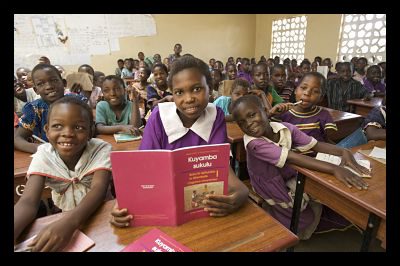
The State of Education in Peru

Education in Nicaragua
A brief description of Peruvian society is important to understanding the current state of education in Peru. Discussed below are key facts about Peruvian society.

  • The general population is around 30 million
  • 22 percent of the population lives in rural areas
  • 25.8 percent of the population lives in poverty at $2 a day (PPP)
  • According to the GINI Index, Peru ranks 25th for highest income inequality in the world
  • 85 percent of the population has improved drinking water sources
  • The unemployment rate is 9.5 percent
  • 34 percent of children ages 5 to 17 work in the labor force
  • The literacy rate is 90 percent
  • The main exports are minerals like gold and copper
  • 2.7 percent of the GDP is spent on health care

It is apparent that Peru has developed in some areas better than others. To see more comprehensive information on Peru, as well as country comparisons, go to the CIA World Factbook.


A Closer Look: Education in Peru


The system of education in Peru is somewhat similar to that of the United States. It has basic education (ages 3 to 5 years old), primary (ages 6 to 11 years old) and secondary (ages 12 to 16 years old), all of which are free. However school is only mandatory from ages 6 to 16 years old. There is higher education, but it is not mandatory or free, however, they do have scholarship programs.

Education in Peru has been expanding. The numbers were not all together low to begin with, but since 2005, enrollment has increased to 72 percent for ages 3 to 5 years old; the 6 to 11-year-old age group is at 97 percent and the 12 to 16-year-old age group is at 91 percent enrollment. However, these numbers do not tell the whole story. As stated earlier, 34 percent of children ages 5 to 17 are in the labor force. How can so many be working and going to school at the same time? It would seem that children may be enrolled at school, but do not actually go. Enrollment rates do not equal attendance rates.

Data taken from the National Institute of Statistics shows that since 1994, spending on education has quadrupled. However, Peru only spends 2.8 percent of the gross domestic product on education, which is one of the lowest in the world. It is hopeful to see the increase in spending over such a short period of time, but it is clear the Peruvian government can spend more on education.

There are problems with educating the indigenous population, as bilingual education is often not funded. Almost 46 percent of indigenous students are not provided education in their native language. Problems also arise when trying to educate the rural population. It is often hard for rural students, especially girls, to get to a school, as they come from isolated areas.

One of the biggest reasons Peru might spend more on education is the quality. In 2009, the Program of International Student Assessment ranked Peru near the bottom of the 65 countries studied for reading comprehension and science, while being second to last in math. Spending money is not enough by itself though. Money can be spent in productive ways. For example, in 2012, the government spent $225 million on 850,000 laptops and gave them to schools all over the country. The American Development Bank found that this laptop program did not increase the students’ levels in math or reading.

For children 7 years of age, only 13 percent reached required math levels and only 30 percent reached required reading levels. The laptops did not increase motivation or time spent reading and completing homework assignments.

Since 2003, the number of students at private universities has doubled and in public universities it has increased by 12 percent. This substantial increase in private education shows that the more privileged students are gaining access to higher education. As public university is not free, it is harder for those without money to access it. This makes sense considering Peru has one of the highest income inequalities in the world.

On the surface, it seems as though education in Peru has improved over the last decade. Literacy and enrollment rates are up as well as educational spending. However, when you look deeper, the quality and equal access to education is another story entirely. Increasing spending on education is a must, but investment in education needs to be done properly by way of researching effective policies, government organization, institutional change and societal support.

– Eleni Marino

Sources: UNESCO, CIA, Iberoamerican Universities Universia, INEI, Peru This Week, World Bank 1, World Bank 2, IPS News, The Economist, ICEF, UNICEF
Photo: Friends of Chimbote

June 4, 2014
https://borgenproject.org/wp-content/uploads/borgen-project-logo.svg 0 0 Borgen Project https://borgenproject.org/wp-content/uploads/borgen-project-logo.svg Borgen Project2014-06-04 04:00:062024-06-04 03:01:19The State of Education in Peru
Global Poverty

5 Lessons From the Late Dr. Maya Angelou

world_globe_borgen_africa
This past week, Wake Forest University students opened their emails to the following message from the University:

“Today members of the Wake Forest University community mourn the loss of beloved poet, author, actress, civil rights activist and professor Dr. Maya Angelou.”

Angelou passed away in her North Carolina home on Wednesday, May 28, at the age of 86. She served as the University’s Reynolds Professor of American Studies since 1982 and published more than 30 books of fiction and poetry, including her autobiography, “I Know Why the Caged Bird Sings.”

“Maya Angelou has been a towering figure — at Wake Forest and in American culture. She had a profound influence in civil rights and racial reconciliation. We will miss profoundly her lyrical voice and always keen insights,” said Nathan Hatch, President of Wake Forest University, in a press release.

As a Wake Forest student myself, I have had the honor to be an audience to her melodic voice on a few occasions, feeling as if each syllable shared with the room was a personal invitation to become a part of her world.

But these words were not merely pretty verses, but heartfelt, aching testaments to a life filled with obstacles, grit and determination. With her parents divorcing when she was only 3, Angelou continued to face tumultuous circumstances as she was later raped by her mother’s boyfriend around age 8. At age 17, she gave birth to son, Guy.

“I will always treasure “I Know Why the Caged Bird Sings,” because by revealing the sexual abuse she suffered as a child, Angelou opened the door to emotional healing for a lot of girls,” wrote Mary Mitchell in the article “Young Black Mothers Can Learn A Lot from Maya Angelou’s Life,” in the Chicago Sun-Times.

Through her openness about her own mistakes, Angelou helps others find the courage to confront their own struggles and failings. Below you will find five small lessons, from among many, left behind from one of the most “phenomenal” women of our time.

  1. “I’ve learned that people will forget what you said, people will forget what you did, but people will never forget how you made them feel.” — Interview for Beautifully Said Magazine (2012)
  2. “You may not control all the events that happen to you, but you can decide not to be reduced by them.” — Excerpted from “Letter to My Daughter,” a book of essays (2009)
  3. “One isn’t necessarily born with courage, but one is born with potential. Without courage, we cannot practice any other virtue with consistency. We can’t be kind, true, merciful, generous, or honest.” — Interview in USA TODAY (March 5, 1988)
  4. “Your destiny is to develop the courage to flesh out the great dreams, to dare to love, to dare to care, to dare to want to be significant and to admit it, not by the things you own or the positions you hold, but by the lives you live.” — 1985 Commencement Speech at Wake Forest University
  5. “I am a Woman Phenomenally, Phenomenal Woman, that’s me.” — “Phenomenal Woman,” poem (1978)

A remembrance website and guestbook for Maya Angelou can be found here.

— Blythe Riggan

Sources: Maya Angelou, WFU, Old Gold and Black, Sun Times, USA Today
Photo: Oprah

June 3, 2014
https://borgenproject.org/wp-content/uploads/borgen-project-logo.svg 0 0 Borgen Project https://borgenproject.org/wp-content/uploads/borgen-project-logo.svg Borgen Project2014-06-03 17:02:162016-03-07 11:19:095 Lessons From the Late Dr. Maya Angelou
Disease, Global Poverty

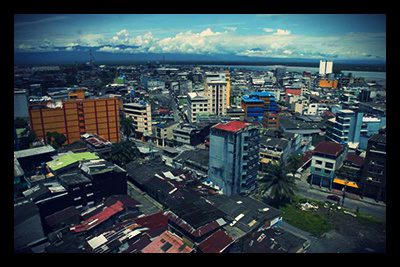
Poverty in French Guiana

Poverty in French Guiana
French Guiana is a small country with an estimated population of 270,000. It is located in South America, bordering Brazil and Suriname. It is a territory of France and therefore follows the French legal system. This means that it follows the French Constitution and is ruled by the French government. Officially, it is called a French Overseas Department.

Poverty in French Guiana is an interesting topic because so little is reported and few people are interested. It can be easy to focus on the largest populations in poverty in Africa or India, so much so that smaller countries are forgotten. This should not be the case, as all people deserve the right to escape poverty.

The lack of awareness for poverty in French Guiana is highlighted by the mere fact that statistics and data on this subject are hard to find. Since it is a French territory and technically considered part of France, global statistics from the United Nations or the World Bank are not often given for French Guiana individually. This signifies the relative unimportance of French Guiana among the international community. From the little information there is come these poverty facts from French Guiana:

  • In 2010, the unemployment rate was 30.5 percent; it was higher for women, at 36 percent.
  • 26.5 percent of households are below the poverty line.
  • The infant mortality rate in 2008 – 2010 was 11.6 per 1,000 live births.
  • Malaria is endemic, with 3,345 cases in 2009. Yellow fever and Dengue are also endemic.
  • A 2006 study showed that French Guiana has the highest rate of HIV infections in France, with 308 per million inhabitants, as opposed to 150 in the Ile de France region (the wealthiest region in metropolitan France.)
  • Food and living expenses are high because the country imports 90 percent of consumable goods from metropolitan France.
  • Only 7.8 percent of the population held university diplomas in 2010.
  • Only 27.9 percent of households had enough money to be taxed in 2010.

These facts may seem disjointed and random, but that is exactly how information relating to poverty in French Guiana is presented. There is little to no comprehensive data on this tiny French overseas territory, at least in the English language. Most of the raw data was taken from the French National Institute of Statistics and Economic Studies. The data is only available in French, which makes a global discussion of this issue difficult.

Who is going to care about this small community? With so little international discussion on poverty in French Guiana, it will be difficult to rally people around the cause. Action needs to be taken by the French government to fix the high rates of unemployment, infectious disease endemics, HIV rates and poverty levels. It is the responsibility of the French people to appease their government to do the right thing and help French Guiana out of poverty.

– Eleni Marino

Sources: United Nations, Phrase Base, Conseil National Du Sida, The Guardian, INSEE

Photo: PIB

June 2, 2014
https://borgenproject.org/wp-content/uploads/borgen-project-logo.svg 0 0 Borgen Project https://borgenproject.org/wp-content/uploads/borgen-project-logo.svg Borgen Project2014-06-02 09:36:122024-06-04 03:01:19Poverty in French Guiana
Global Poverty, War and Violence

The Trouble With Conflict Diamonds

Rope isolated on white background
In recent years, the issue of conflict diamonds has become a major human rights issue. A conflict diamond is a diamond mined in the war zones throughout Africa to fund the recurring civil wars there. Despite the attention given by the media and the increase in the awareness of this issue, conflict diamonds are still being produced and distributed at an alarming rate.

Since the 1990s, conflict diamonds have funded wars in areas such as Angola, Sierra Leone and the Democratic Republic of Congo. Rebels in these areas typically gain control of necessary natural resources, such as oil, wood, diamonds and other minerals, to attain more weapons and influence over the surrounding communities. These military factions oppose the governments in place, and so they wage violence in their struggle for power. According to Amnesty International, wars in these areas have resulted in the loss of more than 3.7 million lives.

Along with unjust violence, poverty also plays a central role in this issue. According to Brilliant Earth, diamond mining communities are impoverished because the one million diamond miners in Africa earn less than a dollar a day — a wage that is below the extreme poverty level. Since much of this work is unregulated — no labor standards or minimum wage laws are ever enforced — it contributes to the dangerous and unjust nature of this work.

Not only do miners acquire unfair wages, but they also work in dangerous conditions, sometimes without training or the proper tools necessary, and face health problems, such as HIV and malaria. Entire communities are exploited through these mining practices, and as a result, many of these communities lack the ability to develop economically while workers lack fundamental provisions, such as sanitary running water.

Despite the decrease in violence and the recent attention brought to this issue through media coverage and the 2006 film “Blood Diamond,” conflict diamonds are still in existence. These diamonds are sold in the diamond trade to fund rebel militia, and as a result, millions are suffering from both violence and poverty. To help combat this issue, the Kimberly Process was founded in December 2000 by the United Nations General Assembly.

Through the establishment of the Kimberly Process Certification Scheme (KPCS), participating countries now have the opportunity to ensure that all imported diamonds are ‘conflict-free’ and do not support the rebels in those parts of Africa. With 54 participants representing 80 countries, the Kimberly Process has been an important element in the struggle to address this human rights issue.

Even though the Kimberly Process works to halt the trade of conflict diamonds, it cannot stop the violence and poverty that result from these unethical mining practices. Those are two issues that can be addressed separately and efficiently. Unfortunately, poverty is such a huge and central element in many of the human rights issues we face today.

– Meghan Orner

Sources: Amnesty international, Brilliant Earth, Kimberly Process
Photo: Al Jazeera

June 2, 2014
https://borgenproject.org/wp-content/uploads/borgen-project-logo.svg 0 0 Borgen Project https://borgenproject.org/wp-content/uploads/borgen-project-logo.svg Borgen Project2014-06-02 08:00:192024-12-13 17:50:16The Trouble With Conflict Diamonds
Children, Global Health, Global Poverty, Health

Shot@Life Provides Vaccinations for Impoverished Nations

The United Nations Foundation Shot@Life aims to give everyone the shot they need to live a happy and healthy life.

The Shot@Life campaign is almost exactly like it sounds. This campaign works with volunteers to provide much needed vaccinations to the extremely impoverished nations of the world through advocacy and donations.

Shot@Life educates, connects and empowers the American people to support vaccines, and vaccinations are one of the most cost-effective ways to save the lives of children in developing countries.

The campaign is basically a national call to action for a worthy global cause. The foundation rallies the American public and members of Congress to help them understand the fact that together they can save a child’s life every 20 seconds just by expanding access to vaccines.

The global foundation encourages the American public to learn about, advocate for and donate to provide vaccines. Shot@Life aims to noticeably decrease vaccine-preventable childhood deaths and give every child a shot at a healthy life within the next 10 years.

This campaign began in 1998 as a U.S. public charity by philanthropist Ted Turner. The Shot@Life campaign was created in order to build upon the U.N. Foundation’s 13-year legacy in global vaccine efforts as a leading partner in the Measles Initiative and Global Polio Eradication Initiative.

The Shot@Life campaign draws on their core abilities through advocacy, community-building and communications in order to raise awareness for their cause.

There are a few causes in which they already have seen excellent success: the campaigns Nothing But Nets and Girl Up.

The Nothing But Nets campaign is dedicated to providing insecticide treated mosquito nets to impoverished peoples in order to prevent the spread of malaria from mosquito bites.

The Girl Up campaign was started in order to provide aid to young girls in poverty-laden nations. This campaign utilizes the help of teenage leaders in order to raise awareness about how young girls are being treated around the world.

Shot@Life is also partnered with some of the largest names in fundraising, nonprofits and charities. They have received partnerships from UNICEF, the Bill & Melinda Gates Foundation and The Lions Club, to name a few.

This U.N. Foundation is uniquely positioned with in-house expertise and leadership to successfully bring Shot@Life to the awareness of an American audience.

The nonprofit also utilizes social media in participation with news companies and webpages to give a portion of its advertising revenue on each company’s behalf for each like or share an article or blog post receives.

Providing vaccinations to the world’s poor is another huge step in the process to end global poverty. Getting vaccinations mean children will not die from diseases that are preventable such as smallpox, measles, polio and tuberculosis.

More children living into adulthood could potentially slow the birthrates and stabilize the life-expectancy of the people living in African nations as well as extremely impoverished parts of India.

The Shot@Life campaign is dedicated to providing peace of mind to all the nations of the world.

– Cara Morgan

Sources: CDC, GirlUp, HuffPost 1, HufFPost 2, NothingButNets, Shot@Life
Photo: Children’s Futures

June 2, 2014
https://borgenproject.org/wp-content/uploads/borgen-project-logo.svg 0 0 Borgen Project https://borgenproject.org/wp-content/uploads/borgen-project-logo.svg Borgen Project2014-06-02 08:00:032024-05-26 23:37:15Shot@Life Provides Vaccinations for Impoverished Nations
Education, Global Poverty

Rise of Private Education for the Poor

In recent decades, substantial progress has been made in student enrollment in primary schools around the globe. Even in some of the most poverty-stricken regions like Sub-Saharan Africa, enrollment has risen from 54 percent in 2000 to 69 percent in 2011.

However, despite the dramatic increase in the number of children who are in school, just being in a classroom does not translate into students receiving a proper education — one in which they are able to keep up with global standards or are even acquiring the skills they need to be successful.

Challenges like malnourishment, lack of educational resources and teachers who are ill-equipped or ill-prepared to teach, all lead to situations where although students are in school, they are not actually learning.

As a consequence, there has been a rise in private education for the poor, addressing the needs of children in even the world’s most impoverished countries.

For example, in Pakistan, where more than half of the population lives on less than $2 a day, many parents are spending 10 cents a day to send their children to the private schools where they know their child will get a better education.

In India, 28 percent of children attend private schools and, maybe even more revealing, four out of five public school teachers send their kids to private schools.

Private schools are filling a gap in providing an education that ensures students are not just sitting in a classroom idly, but that they are acquiring skills and knowledge. Yet, private schools are not able to truly address the educational needs of a nation and often are only available for those who can afford the cost and who are in the right location.

Despite the fact that literacy has dramatically improved around the world, the rise in private education demonstrates an on-going need to make sure public education is providing students with skills they need to be successful. If all students in low-income countries were able to read at a basic level, 171 million people would be lifted out of poverty (equivalent to a 12 percent cut in world poverty).

Access to free primary education is enshrined in the UN Declaration of Human Rights and therefore is intended to be provided by a country’s government.

Providing strong primary educational opportunities is an investment into the future of a country.

Each additional year of schooling for children can lift the average annual gross domestic product of a country by .37 percent. Education provides skills that open opportunities to jobs and helps boost productivity and economic output.

The rise in private education is a great motivator for governments to make sure that the education they do provide is not only meeting global standards allowing their students to compete and grow the economy, but also that it will provide them with the skills they need to be successful individuals in their local communities.

– Andrea Blinkhorn

Sources: Foreign Policy 1, UNESCO, Cato Institute, The Borgen Project, Global Partnership for Education
Photo: Education News

May 31, 2014
https://borgenproject.org/wp-content/uploads/borgen-project-logo.svg 0 0 Borgen Project https://borgenproject.org/wp-content/uploads/borgen-project-logo.svg Borgen Project2014-05-31 12:00:472024-06-05 01:57:27Rise of Private Education for the Poor
Global Poverty, Violence Against Women

Victims of Rape in Haiti Stand Up for Justice

Rape_in_haiti
Loutchama was just 12 years old when she was a victim of rape in Haiti. Her attacker, a man named Etienne Rene, and Loutchama’s neighbor at the time, reportedly had noticed none of her family members were home on April 30, 2011. After hearing of the rape, a physical altercation between Rene and Loutchama’s mother, Adrienne, would result in Adrienne’s eventual arrest.  Yet, while Rene, too, was arrested at his home soon afterward and would eventually be put on trial and sentenced to 15 years in prison, Adrienne feels devoid of justice. Loutchama died on August 26, 2013, and Adrienne believes it to be a direct result of Rene’s sentencing.

It would not be until a year and a half after Loutchama and her mother filed for rape against Rene that he would be sentenced. Haiti’s Minister of Justice, Jean Renel Sanon, says that it usually takes “four months” from the time a rape is reported to make it to court. Yet, all too regularly, cases are prolonged. Inevitably discouraged by Haiti’s judicial patriarchy, cases are usually given up by the victim mere months after their happening.

Poverty is a factor, too. Those with more money can afford to have warrants served expeditiously, guaranteeing them quicker justice. Yet, for the majority of poor Haitian women, their cases — which are at the hands of the judge — can be held stagnant for as long as five years if they are not dropped prior. A UN study conducted in 2012 proved just this. In a sample of 2010 reports, only one of a total of 62 rape cases filed over a three-month period made it to court.

For women like Loutchama, going through the judicial process is a constant reminder of their attack. Many of these women, most who work as street vendors, cannot afford a day off from work to go to trial and, subsequently, resort to unofficial monetary arrangements with their rapists. Of course, this poses a major problem. More often than not, poor rapists cannot actually afford to pay their victims, and zero judicial ties to the promise results in complete injustice.

Now crippled by her daughter’s death and worried for her own safety, Adrienne — who, prior to the case, had never even heard of the term “human rights” — believes Rene’s payback has just begun. “I’m poor,” she said. “And I will never have justice.”

Yet, Rene’s 15-year sentence may just be the long-awaited beginning of said justice for rape victims in Haiti. Through the recent works of Haitian organizations such as the Bureau des Avocats Internationaux, more rapists are being persecuted than ever before. In 2011, 13 of 22 rape cases resulted in conviction. While rape culture in Haiti is still all too prominent, many of these women are just beginning to feel secure enough to stand up for their own human rights.

– Nick Magnanti

Sources: IJDH, JJIE, Salon
Photo: Ehowzit

May 30, 2014
https://borgenproject.org/wp-content/uploads/borgen-project-logo.svg 0 0 Borgen Project https://borgenproject.org/wp-content/uploads/borgen-project-logo.svg Borgen Project2014-05-30 12:00:302024-06-05 01:57:27Victims of Rape in Haiti Stand Up for Justice
Global Poverty

5 Most Successful Education Systems

Successful Education Systems
Most countries around the world claim to make education a priority for their children, but some countries outshine others. The education group, Pearson, created a list of the top 20 most successful education systems. Factors like international test scores, graduation rates, amount of people pursuing higher education and other things are considered. But what is it that differentiates these nations from the average ones? What characteristics of the systems of the top five countries award them their ranking? Let’s take a look at the characteristics of the best of the best.


Top 5 Education Systems in the World


1. Finland- Finland’s success begins with its teachers. They are chosen from the top 10 percent of college graduates and are required to obtain a master’s degree in education. In the classroom, teachers are entrusted with the success of their students. There is not a strictly outlined curriculum; instead, teachers are able to do what is necessary to see their students improve. In Finland, 30 percent of students receive special tutoring .

2. South Korea- South Korea has invested heavily in education over the past decade. By making education a priority, young people are more willing to pursue higher education. The value of an education in South Korea is highly revered. Young people understand that obtaining a degree is the best way to ensure success later in life. A lot of pressure has been put on South Korean students, creating a competitive atmosphere in which each student wants to thrive.

3. Hong Kong- Hong Kong provides 12 years of free public schooling for every student. These schools are very structured and organized, ensuring that each student is receiving the same education. Teachers, administrators and the government are all invested in student success. Hong Kong school systems put a lot of emphasis on parent and community participation in the education of their students. Parents are devoted to helping their children both in the classroom and outside the classroom, including helping with homework and studying for exams.

4. Japan- The Japanese education system is based heavily in producing well-rounded students. From an early age, students take classes in all the regular subjects, but also take art, homemaking, music and physical education. By putting an emphasis on these subjects, students are able to learn a wide range of skills and to apply them to other subjects. The pre-high and high school years are the most important for Japanese students, as this is a time when many exams are taken to secure entrance into the best high schools.

5. Singapore- Much of Singapore’s education system consists of high-stakes examinations. Teachers are encouraged to teach what is going to be on these exams and to do it in a way that students will understand. Students from all of Singapore receive the same education because they take the same exams. Teaching is coherent and effective. Singapore also makes education a financial priority, allowing schools to have the best resources and teachers possible.

– Hannah Cleveland

Sources: CIEB, Education in Japan, Huffington Post, ICEF Monitor, MBC Times, Smithsonian Magazine, The Conversation
Photo: Smithsonian

May 29, 2014
https://borgenproject.org/wp-content/uploads/borgen-project-logo.svg 0 0 Borgen Project https://borgenproject.org/wp-content/uploads/borgen-project-logo.svg Borgen Project2014-05-29 13:49:122024-06-05 01:57:275 Most Successful Education Systems
Development, Education, Global Poverty, Health

Solutions For Ending Extreme Poverty By 2030

Currently, 1.3 billion people around the world live in extreme poverty. These people live on less than $1.25 per day, which roughly equates to enough money to purchase food, clean water and fuel for two meals.

The Development Committee of the World Bank set the goal of ending extreme poverty by the year 2030 and there has been some progress toward helping those who live in poverty. In the last 30 years, the proportion of the world’s population that lives below the global poverty line has been cut in half.

This was a steady decline, going from 52 percent in 1980, to 43 percent in 1990, 34 percent in 1999 and the latest numbers state that the percentage of people living in poverty was last at 21 percent.

In sub-Saharan Africa, the number of people living in poverty has declined from 58 percent in 1999 to 49 percent in 2010.

“Eradicating poverty in a generation is an ambitious but feasible goal,” stated the United Nations General Assembly.

The decline from 1.9 billion to 1.3 billion is a great change, but there are still 1.3 billion people living without the means to properly support themselves and their families.

However, there are tools that can help elevate people from poverty, including education, health care, water and sanitation, economic security and child participation.

When children receive a quality education, they gain the knowledge and life skills that they need to break the cycle of poverty. Studies have shown that a better-educated workforce, along with a highly trained workforce, is more likely to enjoy higher earnings. This can also allow them to access better healthcare.

Poverty and poor health are “inextricably” linked. The causes of poor health for those around the world can be rooted in political, social and economic injustices. Poverty increases the chances of poor health, which then in turn can trap communities into poverty. Marginalized groups and individuals who may be vulnerable are often affected the worst, deprived of information, money or access to health services that can help them prevent and treat diseases.

Diarrhea, pneumonia and malaria account for nearly half of all child death globally, and many other diseases, including HIV, tuberculosis and malaria, have affected over a billion people worldwide, thanks in part to poor water and sanitation.

“Sanitation is a cornerstone of public health,” said World Health Organization Director-General Dr. Margaret Chan. “Improved sanitation contributes enormously to human health and well-being, especially for girls and women. We know that simple, achievable interventions can reduce the risk of contracting diarrhoeal disease by a third.”

Preventing the spread of diseases also helps improve education for children, allowing them to be an added asset to their community. When children take part in their community, it helps engage them as citizens and aids them toward a higher economic prospect.

Allowing people to grow by giving them what every person should have allows them to grow economically, but by also providing ways to prevent and treat preventable diseases, the economies of developing countries will grow as well — thus shrinking the number of people who live in extreme poverty around the world.

– Monica Newell

Sources: Heath Poverty Action, Global Citizen, Prospect, WHO, New York Times
Photo: UN Foundation


May 28, 2014
https://borgenproject.org/wp-content/uploads/borgen-project-logo.svg 0 0 Borgen Project https://borgenproject.org/wp-content/uploads/borgen-project-logo.svg Borgen Project2014-05-28 04:00:592024-05-26 23:36:46Solutions For Ending Extreme Poverty By 2030
Global Poverty

Partnership Walk Raises $1.7 Million to Fight Global Poverty

On Sunday, May 25, a record 10,000 participants came together in Toronto for the 30th annual World Partnership Walk, raising around $1.7 million.

Toronto was one of ten cities across Canada to host the walk. Vancouver and Victoria also held events on May 25, while walks in Montreal, Ottawa, and Regina occurred the following Sunday on June 1. Upcoming Partnership Walks will be held in Calgary, Edmonton, London and Kitchener-Waterloo.

The primary 5K event began at Metro Hall in Toronto. Activities for children and seniors, team games and global education programs were also offered.

The World Partnership Walk is an initiative of the Aga Khan Foundation. The first walk was held in 1985 by a small group of women in Vancouver. They had immigrated from Africa and Asia and were looking for a way to support those they left behind. The first Partnership Walk included just over 1,000 walkers and raised $55,000.

Last year, nearly 40,000 walkers from 10 cities across the country raised more than $7 million for the cause. Toronto alone raised roughly $2 million and had 9,000 participants.

Today, the walk is considered the most successful event of its kind in Canada. In the last 30 years, participants and supporters have raised more than $82 million for global development programs. All of the money raised goes directly to development programs sponsored by the Aga Khan Foundation.

In 1995, the Partnership Walk expanded to the United States, and is now held in ten U.S. cities: Atlanta, Birmingham, Chicago, Dallas, Houston, Los Angeles, Memphis, Orlando, San Antonio and San Francisco. Many of these cities will be hosting events in September and October of this year. In 2007, the Partnership Golf event was launched, and is now held in Atlanta, Austin, Chicago, Dallas, Houston, Los Angeles and Seattle.

The Aga Khan Development Network is a private, non-denominational international organization. It supports programs that aim to improve the quality of life in the developing world, with a focus on Asia and Africa. The Aga Khan Development Network employs roughly 80,000 people to work in 30 developing countries around the world. In 2010, their budget for development activities was $625 million.

The Aga Khan Development Network is a system of agencies working together to achieve international development. Initiatives such as Health Services, Education Services, The Fund for Economic Development, and The Trust for Culture pursue their own development goals while supporting the primary framework of the The Aga Khan Development Network.

Funding for these development programs is obtained through national governments, institutions and private partners. Global partners include the Bill & Melinda Gates Foundation, Citigroup Foundation, European Commission, MasterCard Foundation, OXFAM, People in Need, Scotiabank, Smithsonian Institution, UNESCO, UNICEF and WHO. Funding also comes from donations and fundraising events such as the Partnership Walks and the Partnership Golf Tournaments held in Canada, the United Kingdom and the United States.

The founder and chairman of the The Aga Khan Development Network is the Aga Khan, who became the 49th hereditary Imam of the Shia Ismaili Muslims on July 11, 1957. Despite his religious affiliations, the Aga Khan is committed to international development for all global citizens, regardless of religion, race, ethnicity or gender. He has maintained a strong commitment to the The Aga Khan Development Network for more than 50 years.

– Kristen Bezner

Sources: The Aga Khan Development Network, Brampton Guardian, CNW, Partnerships in Action, World Partnership Walk
Photo: Active

May 26, 2014
https://borgenproject.org/wp-content/uploads/borgen-project-logo.svg 0 0 Borgen Project https://borgenproject.org/wp-content/uploads/borgen-project-logo.svg Borgen Project2014-05-26 09:19:482024-05-30 22:22:54Partnership Walk Raises $1.7 Million to Fight Global Poverty
Page 2012 of 2162«‹20102011201220132014›»

Get Smarter

  • Global Poverty 101
  • Global Poverty… The Good News
  • Global Poverty & U.S. Jobs
  • Global Poverty and National Security
  • Innovative Solutions to Poverty
  • Global Poverty & Aid FAQ’s
Search Search

Take Action

  • Call Congress
  • Email Congress
  • Donate
  • 30 Ways to Help
  • Volunteer Ops
  • Internships
  • Courses & Certificates
  • The Podcast
Borgen Project

“The Borgen Project is an incredible nonprofit organization that is addressing poverty and hunger and working towards ending them.”

-The Huffington Post

Inside The Borgen Project

  • Contact
  • About
  • Financials
  • President
  • Board of Directors
  • Board of Advisors

International Links

  • UK Email Parliament
  • UK Donate
  • Canada Email Parliament

Get Smarter

  • Global Poverty 101
  • Global Poverty… The Good News
  • Global Poverty & U.S. Jobs
  • Global Poverty and National Security
  • Innovative Solutions to Poverty
  • Global Poverty & Aid FAQ’s

Ways to Help

  • Call Congress
  • Email Congress
  • Donate
  • 30 Ways to Help
  • Volunteer Ops
  • Internships
  • Courses & Certificates
  • The Podcast
Scroll to top Scroll to top Scroll to top