New Direction for Global Partnership for Education
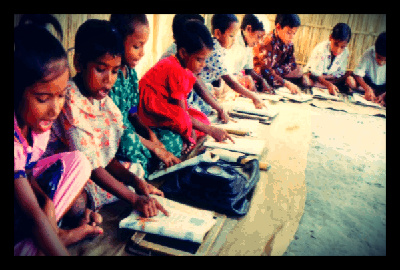
The Global Partnership for Education met recently in Brussels hoping to not only raise $3.5 billion for education, but implement a new strategy in order to attract funding where it is needed most.
Funding raised at the meeting benefits the world’s children who are the least able to access a proper education.
The Global Partnership for Education’s mission is to “galvanize and coordinate a global effort to deliver a good, quality education to all girls and boys, prioritizing the poorest and most vulnerable.” Established in 2002, the Global Partnership for Education is comprised of close to 60 developing countries, donor governments, international organizations, the private sector, teachers and NGO groups.
Countries furthest from the Education for All and Millennium Development Goals are also places with fragile political stability. This is a problem, as Overseas Development Assistance is channeled primarily toward “good performers” who have records of effective governance. This logic comes in the assumption that investment in education is only wise once good governance has been established.
The Global Partnership for Education has adjusted its philosophy, however, emphasizing that investing in education now can strengthen governance in a country in the future.
This relationship is more than a theory. Brookings Institute has found evidence of the connection between universal education and good governance, finding an unmistakable relationship between the two. Brookings has gathered that education allows for improvement in three elements of governing: voice and accountability, control of corruption and political instability and violence.
Education promotes the development of an increasingly informed population, promoting citizens to hold their governments accountable. Education is necessary for citizens to both access and act on information. These skills come through not only literacy, but math and reasoning skills—all necessary ingredients to influence policy and reform.
Apart from raw skills, education socializes people, opening more opportunities for community conversation. Increasing levels of socialization may lead to a greater attachment between the culture and its nation state. With greater attachment to the homeland comes a greater expectation from citizens for honest governance. Strong government institutions are less likely to experience corruption and will hopefully give back to the education system with increasing levels of stability.
Education is also positive for levels of individual productivity, which in turn can create conditions for economic equality. Economic equality is associated with political stability and low levels of violence.
Because “education” is a broad term, it is imperative that the education provided to these marginalized children is the right kind of education, the kind that will have a positive effect on governance. In this way, the content must be quality rather than propaganda.
The Global Partnership for Education’s new strategy will ensure that children are getting the resources they need to be educated, without waiting on their governments to get their act together first. After all, children have the potential to grow up into positive influences with the potential to change the world.
– Caroline Logan
Sources: Brookings, Global Partnership
Sources: UNESCO
