• Link to X
  • Link to Facebook
  • Link to Instagram
  • Link to TikTok
  • Link to Youtube
  • About
    • About Us
      • President
      • Board of Directors
      • Board of Advisors
      • Financials
      • Our Methodology
      • Success Tracker
      • Contact
  • Act Now
    • 30 Ways to Help
      • Email Congress
      • Call Congress
      • Volunteer
      • Courses & Certificates
      • Be a Donor
    • Internships
      • In-Office Internships
      • Remote Internships
    • Legislation
      • Politics 101
  • The Blog
  • The Podcast
  • Magazine
  • Donate
  • Click to open the search input field Click to open the search input field Search
  • Menu Menu

Archive for category: Food & Hunger

Information and stories on food.

Food & Hunger, Global Poverty

Chinese Investment in Cambodian Rice Storage Facility

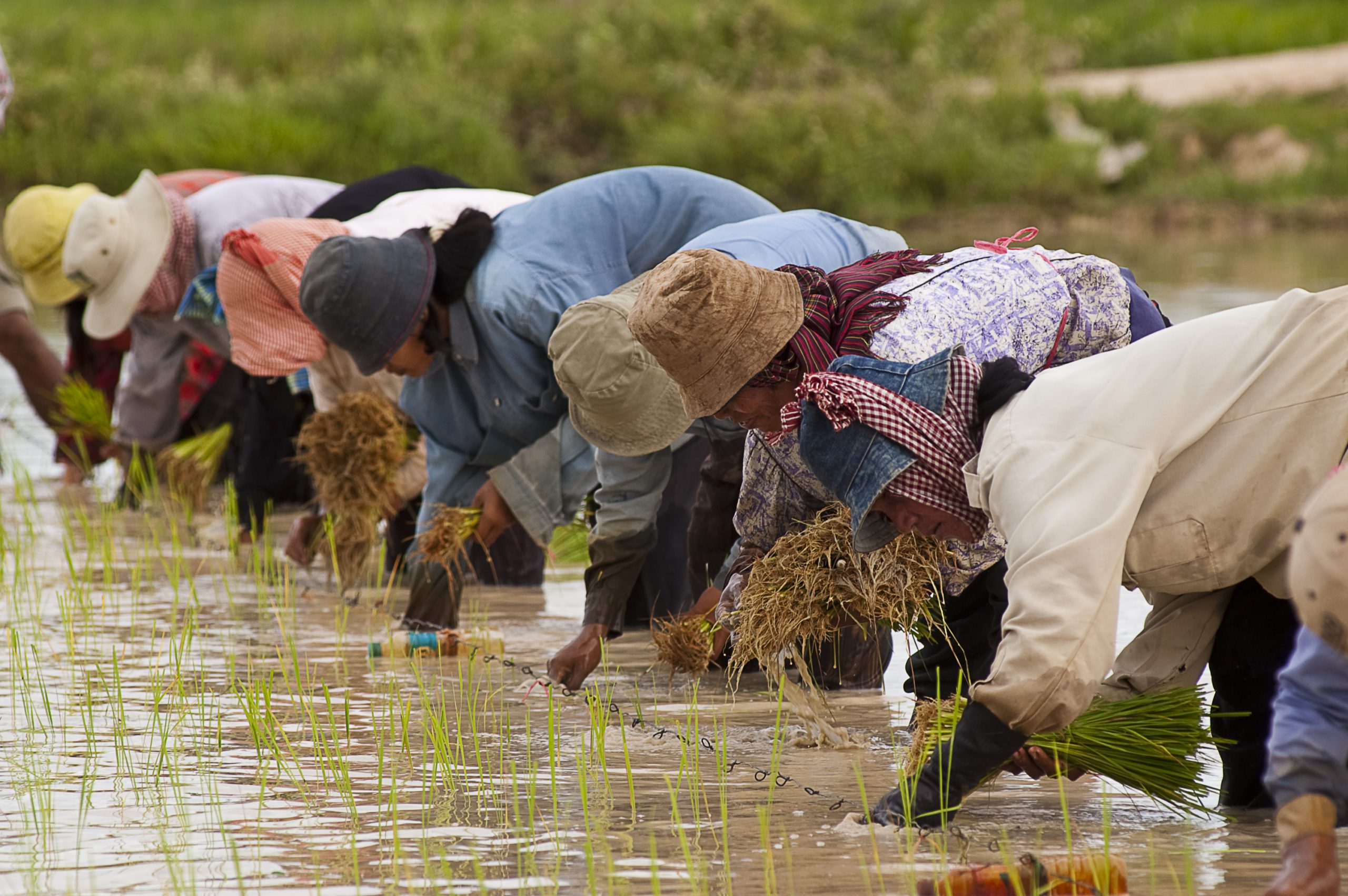
Local Cambodian millers will be able to boost rice production through increased storage capacity. The progress is possible through the investment of two Chinese investors in a proposed rice storage facility.

The Phnom Penh Post reported on July 3 that two Chinese investors are interested in building a large rice storage facility. The investors, Jilin Province Investment Group Co. Ltd. and Jilin Ianzhong Agricultural Development Co. Ltd., are from the northern Chinese province of Jilin.

The Jilin province is a major food producer, specializing in rice, corn, grain sorghum, millet and beans. Unlike Cambodia, the region is also very industrialized.

According to the World Bank, the agricultural industry in Cambodia is experiencing a deceleration from its prior growth, decreasing from 5.3 percent between 2004 and 2012 to less than two percent between 2013 and 2014. At the same time, poverty rates in the country also decreased, at least partly fueled by positive developments in agriculture. The World Bank reported it at 18 percent in 2012.

With 14 percent of the population living below the poverty line, Cambodia has a higher poverty rate than some of its neighbors. For example, in Indonesia only 10.9 percent of the population lives below the national poverty line, and in Vietnam the percentage is seven.

The Asian Development Bank emphasized the importance of the agricultural industry in sustaining the economy in Cambodia.

The World Bank reported that “since 2013, Cambodia’s rice production has flattened. This was due to the deceleration in land expansion, bad weather, failing global rice prices, and the tightening of completion among rice partners.”

The World Bank also recommended a policy of developing the agricultural business and agro-processing industry in Cambodia. Structural innovations like a rice storage facility in Cambodia would be able to contribute to a boost in the country’s economy.

In addition to boosting Cambodia’s rice exports, the new rice storage facility also has the potential to allow local millers to operate year-round. With safe, dry storage, the rice will also be less likely to absorb water from the humid environment.

By increasing the number of rice storage facilities, rice farmers will be able to protect their harvested rice from the weather and increase their crop production to offset lower global rice prices.

– Hannah Pickering

Photo: Google

July 18, 2017
https://borgenproject.org/wp-content/uploads/borgen-project-logo.svg 0 0 Borgen Project https://borgenproject.org/wp-content/uploads/borgen-project-logo.svg Borgen Project2017-07-18 01:30:182020-06-04 09:34:14Chinese Investment in Cambodian Rice Storage Facility
Food & Hunger, Global Poverty

The Cost of Living in Brazil

Cost of Living in Brazil
The cost of living in any country is a direct result of inflation and the economy. As of June 2017, $1 is equivalent to 3.31 Brazilian real. The cost of living in Brazil does not seem to be high for everyday products such as fruit, bread and eggs when compared to prices in the United States. The costs tend to differ more when it comes to mortgage rates, and gasoline and other imports.

Brazilian cities were more expensive in 2011 than cities such as Los Angeles, New York City, Berlin, Miami, Abu Dhabi and Luxembourg. The inflation rate was 6.5%, while the rate in the U.S. was 3%. The real should have become cheaper, not more expensive. This caused the cost of living in Brazil to rise.

By 2016, the economic situation had not changed much. Brazil, which had been the fifth-largest world economy when it won the Olympics, dropped to the ninth-largest economy after a significant decline in its gross domestic project. It went into its worst recession since the 1930s.

High taxes, poor infrastructure and low labor productivity have contributed to what is known as “Custo Brasil” (“Brazil cost” in English)­­– which refers to the increased costs associated with doing business in Brazil. It is likely that these costs directly impact the cost of living in Brazil.

The 2016 Olympic Games in Rio de Janeiro was expected to add to the economy while bringing Brazil out of the recession. With an influx of tourists’ spending money, the demand and supply for products should have increased.

More than 400,000 tourists came in for the Olympics and spent about 425 real per day; those 760,000 Brazilians who attended spent an average of 310 real per day. In total, the Olympics generated over $100 million in tourism revenue alone, based on the exchange rate as of August 2016.

Although the total amount of revenue generated remains unknown, companies spent more for the 2016 Rio Olympics than they did in Beijing in 2008 and in London in 2012. Between the revenue from tourism and sponsors, Brazil’s official inflation rate ended 2016 at its lowest level since 2013.

The central bank expects the cost of living to decelerate, with significant decreases having already occurred in the past few months. Brazil is expected to end 2017 with inflation below its target for the first time since 2009.

– Stefanie Podosek

Photo: Flickr

July 13, 2017
https://borgenproject.org/wp-content/uploads/borgen-project-logo.svg 0 0 Borgen Project https://borgenproject.org/wp-content/uploads/borgen-project-logo.svg Borgen Project2017-07-13 07:30:032020-06-04 10:45:17The Cost of Living in Brazil
Food & Hunger, Global Poverty

The Current Cost of Living in Panama

Cost of Living in Panama
Known for its 48-mile canal connecting the Pacific Ocean with the Atlantic Ocean, Panama receives over a million visitors each year. Panama’s beautiful beaches, ecotourism and international festivals can seduce many tourists into making Panama their home rather than a vacation spot. For those who entertain the thought of Panama as their permanent home, it is important to know the cost of living in Panama as well as what it’s like to live there.

Panama has a relatively low cost of living, which can range from $1,120 to $8,000 per month for two people, while the average middle-class salary in Panama is estimated at $1,200 per month. These costs fluctuate depending on what region or city you are going to be living in Panama.

The unemployment rate in Panama is 4.5%. The labor force in Panama is made up of 1.78 million people; a large majority of the population works in services while the rest works in agriculture and industry. The standard workweek in Panama is 48 hours, which is 8 hours more than a full-time work week here in the United States.

While the cost of living in Panama is low, migrants should know much more about Panama before making the decision to move there. For example, while Panama’s crime rate compared to other Central American countries is relatively low; however, it is still high compared to most of the United States. Panama, Colon, Herrera and Chiriqui are among the provinces with the largest cities which had the highest overall crime rate. There has been a pattern of decreasing crime in Panama. Homicide, armed robberies and petty theft rates have all continuously fallen.

Moving from the United States to Panama may come as a huge shock when you realize that Panama’s population is only four million. Approximately one-third of Panama’s population lives in Panama City or the immediate area around it. Panama City is packed with nightlife, shopping areas. The rest of the areas in Panama provide a quiet and relaxed life which provides quicker access to Panama’s nature.

There are many things to consider and know about Panama before turning your yearly vacation into a forever home. While Panama may be very appealing to the eye and its beautiful attractions may coerce someone into a quick move, the cost of living in Panama may be a deciding factor.

– Danyel Harrigan

Photo: Flickr

July 13, 2017
https://borgenproject.org/wp-content/uploads/borgen-project-logo.svg 0 0 Borgen Project https://borgenproject.org/wp-content/uploads/borgen-project-logo.svg Borgen Project2017-07-13 07:30:012024-06-04 01:08:21The Current Cost of Living in Panama
Food & Hunger, Global Poverty

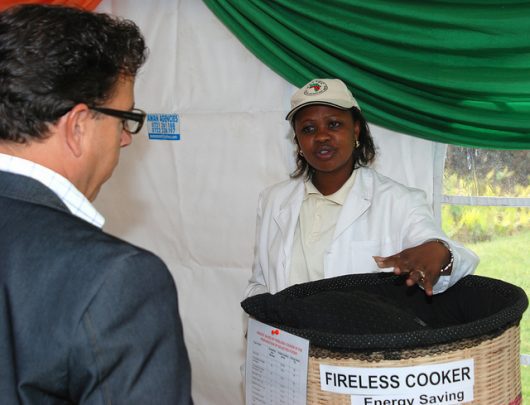
What Is a Fireless Cooker?

Fireless Cooker
In many developing countries, a lack of resources is the main reason why families struggle to survive. In Kenya, firewood for fuel is a huge burden to find and cut every day. Thus, the international NGO Practical Action created a solution to fight the issue of fuel: the fireless cooker.

A fireless cooker is an electricity-free and fuel-free device that helps families save time so they don’t have to sacrifice work to collect firewood.

Practical Action describes the purpose of the cooker as using “stored heat to cook food over a long period.” In a way, a fireless cooker is a simpler version of a crock-pot. It continues to cook the food after it is taken off of a heat source and keeps it warm for a long time, without wasting fuel.

To make one of these ingenious fuel-saving cookers is quite simple. Materials needed to operate the device include old clothing or banana leaves for insulation, rough cloth, heat-resistant polythene, two cushions (made from cloth stuffed with old clothes) and a basket big enough for cooking. Practical Action wanted to make it easy for families to use, so they chose materials that should be readily available in the communities in Kenya.

The first step in the creation process is to line the desired basket with old clothes or banana leaves. Then, a rough cloth is placed on top of the insulation materials to keep them in place. Next, the polythene is laid on top of the rough fabric to cover it like a bowl. The homemade cushions are then attached to both ends of the basket to store the heat inside.

The impact of this fireless cooker on the families and communities that use it are immense.  Practical Action stated that it can reduce fuel use by 40 percent, “preserving scarce food and saving people hours of precious time.”  One local of Kenya who is reaping the benefits of Practical Action’s invention said, “I am glad to know how to make a fireless cooker. It is going to be of great help to me since I’ll be preparing enough food before going to work on the farm.”

Not only is the fireless cooker environmentally friendly, but also it saves the stay-at-home mothers the tedious and arduous work of cutting and picking firewood every day. Now, the mothers in these households can focus on their children’s education and wellbeing of the family.

– Sydney Missigman

Photo: Flickr

July 12, 2017
https://borgenproject.org/wp-content/uploads/borgen-project-logo.svg 0 0 Borgen Project https://borgenproject.org/wp-content/uploads/borgen-project-logo.svg Borgen Project2017-07-12 07:30:472024-05-28 00:02:50What Is a Fireless Cooker?
Aid, Charity, Education, Food Aid, Global Poverty

How Sustainable is the McGovern-Dole Program?


The McGovern-Dole International Food for Education and Child Nutrition Program was established in 2000 by former Senators George McGovern and Robert Dole. It has fed millions of children all over the globe by way of school meals made from surplus U.S. agricultural products. In 2006, McGovern and Dole were awarded the World Food Prize for their work on the program. This award is seen as the “Nobel Prize for hunger.”

The program is credited with helping improve school attendance as well as feeding the hungry, as free school meals provide families with an extra incentive to send their children to school. This is especially the case for girls, as parents sometimes decide to keep them home from school to do housework.

McGovern-Dole has made recent news because the Trump administration’s 2018 budget outline proposes eliminating the program, citing that it “lacks evidence that it is being effectively implemented to reduce food insecurity.”

Forbes contributor Tim Worstall contends Trump’s claim that McGovern-Dole fails to reduce food insecurity is accurate. He points out that because McGovern-Dole consists only of food donations, it lacks sustainability, doing nothing to inject money into local economies or help farmers grow their crops. Although the program feeds people effectively, it is not a long-term solution to ending hunger locally.

This being said, McGovern-Dole does have sustainability measures in place, though they may not address food insecurity directly. The program is concerned with education. All meals through the program are offered through schools. This allows McGovern-Dole to track data such as the number of kids taking medication or learning to read at school. This helps other education-centered organizations focus their efforts. McGovern-Dole also implements teacher training, school infrastructure improvements and nutrition programs for pregnant women in the communities it serves.

Alternatives to direct food aid programs are not always reliable. The cash-based transfer, a form of assistance by which individuals in need receive bank transfers or vouchers to exchange for food at stores owned by the World Food Programme, is ineffective in communities with extremely unstable markets or bank services. Direct food aid like McGovern-Dole provides hungry individuals with food regardless of the state of the market in a community.

– Caroline Meyers

Photo: Flickr

July 7, 2017
https://borgenproject.org/wp-content/uploads/borgen-project-logo.svg 0 0 Borgen Project https://borgenproject.org/wp-content/uploads/borgen-project-logo.svg Borgen Project2017-07-07 07:30:122024-05-28 00:00:08How Sustainable is the McGovern-Dole Program?
Food & Hunger, Global Poverty

GMOs Like Brazil’s New Sugarcane Feed the World’s Poor


Brazil approved a new sugarcane genetically engineered to resist the most devastating plague in the country. The major sugar exporter is the first to approve commercial use of genetically modified (GM) sugarcane. The developer CTC created the cane with the commonly-used gene Bt (Bacillus thuringiensis). This allows the sugarcane to resist the insect Diatraea saccharides, which causes an annual loss of $1.52 billion to sugar producers.

Since most agriculture-based countries are in the developing world, insect-resistant crops such as Brazil’s new sugarcane can be especially helpful to poor farmers. Brazil will be the first to start utilizing the new sugarcane, but many other genetically modified organisms (GMOs) are already at work throughout developing nations.

While they remain a controversial topic in the U.S., GMOs like Brazil’s new sugarcane help feed the world’s poor.

Scientists, like the developers at CTC, possess the ability to engineer crops that solve manifold problems in developing countries. One example is Bangladesh’s Bt Eggplant, which resists a fruit and shoots borer pest. The eggplant’s genetic resistance decreases pesticide use and required labor while increasing crop yield, crop size and farmer profits.

Bangladeshi farmer Md. Milon Mia reported that pests used to ruin up to 40 percent of his crop yield before using Bt Eggplant. The GM eggplant now helps Bangladesh’s largely rural population, as the country climbs out of its position as one of the poorest in the world.

In a “Letter to the Editor” of The New York Times, a farmer from a village in India details his similar experience with GMOs. Like the farmers in Brazil and Bangladesh, Sudhindra Kulkarni uses a GMO designed to resist pests. With this GM cotton, his yields have increased four times, his crops have been healthier and his farm has been more sustainable.

Before the transgenic crop, bollworm pests were so damaging that he thought he “would barely scrape by.” But now, GM cotton has “transformed” the lives of his family. The impoverished Indian population has been cut in half in the past two decades, and developments such as GM farming are key to this progress.

Two billion people across the globe face food insecurity. 896 million people live on less than $2 a day. But GMOs like Brazil’s new sugarcane can improve this situation through the creation of more resilient crops.

With modern technologies, scientists can engineer crops that require less labor, cost less to produce and yield more product. With continued support for these lifesaving inventions, biologists can continue to develop solutions for the developing world.

– Bret Serbin

Photo: Flickr

July 5, 2017
https://borgenproject.org/wp-content/uploads/borgen-project-logo.svg 0 0 Borgen Project https://borgenproject.org/wp-content/uploads/borgen-project-logo.svg Borgen Project2017-07-05 01:30:192024-12-13 17:54:18GMOs Like Brazil’s New Sugarcane Feed the World’s Poor
Food & Hunger, Global Poverty, United Nations

10 Important Facts One Should Know About Famines


According to the United Nations, the world is undergoing the biggest humanitarian crisis since the end of World War II. Currently, South Sudan resides in the middle of a massive famine that affects 10,000 people. Forty percent of the people in South Sudan struggle with food, agriculture and nutrition assistance. Nigeria, Somalia and Yemen declared famine warnings, and malnutrition puts 1.4 million children at risk of death in Nigeria, South Sudan and Yemen. Furthermore, seven million people risk starvation in Nigeria.

The following are 10 facts about famine and its consequences.

  1. A famine is a condition of extreme starvation of food. Famines are caused by natural disasters like droughts, floods, earthquakes, insect plagues and plant diseases. Manmade causes, such as wars, civil disturbances, sieges and crop destruction can also lead to famines. Famines cause significant and prolonged hunger to a country’s population which results in malnutrition and death by starvation and disease.
  2. Famines are declared when:
    • 20 percent of the households in the area face extreme food shortage with limited ability to cope.
    • Acute malnutrition rates exceed by 30 percent.
    • Death rate exceeds two persons per day per 10,000 persons.
  3. Famines evolve slowly and may remain underreported for extended periods of time before they become massive famines. Families have experienced months of crippling hardship before a crisis makes a headline.
  4. Overpopulation is not a cause of famine. The English philosopher Thomas Malthus created this myth in his 1798 essay, in which he argued that population levels outpace available resources. Famines now grip lightly populated areas like Somalia and South Sudan.
  5. Violence and conflict serve as major sources of famines. Other countries cut South Sudan off of supply routes, causing food prices to increase and aid delivery to be hampered. The civil war in South Sudan led to widespread hunger, with half of the nation’s harvests getting destroyed, food deliveries blocked and workers attacked.
  6. Hunger is only one part of famines. Famines can damage future generations, as malnutrition in infants can lead to the suffering of poor health and stunted development.
  7. Famines can drive violence, as global threats of terrorism and political or economic instability grow out of poverty. The famine-affected areas undergo conflict, which leads to displacement and loss of livelihood. Lack of opportunity can lead to choosing terrorism as a way of life.
  8. The 21st century brought massive progress. Until the middle of the 20th century, massive famines could kill millions of people within a decade. The adoption of human rights and globalization has made it difficult to turn a blind eye on people dying of hunger.
  9. A massive famine hit Somalia between 2010 and 2012. Two hundred and sixty thousand people died.
  10. The United Nations needs 2.5 billion to respond to the famine crisis in the Horn of Africa. The agency fundraised 62 percent of this goal.

Famines and hunger are not inevitable and are often human-made. Thus, they can be human-solved. Action must be taken to improve the rights of millions of children and families around the world.

– Aishwarya Bansal

Photo: Flickr

July 4, 2017
https://borgenproject.org/wp-content/uploads/borgen-project-logo.svg 0 0 Borgen Project https://borgenproject.org/wp-content/uploads/borgen-project-logo.svg Borgen Project2017-07-04 01:30:242024-12-13 17:58:1410 Important Facts One Should Know About Famines
Aid, Food Aid, Global Poverty

Cash-Based Transfers: Food Assistance That Empowers


The cash-based transfer is a form of food assistance that has been supported by the World Food Programme (WFP) and the Food and Agriculture Organization of the United Nations since the early 2010s. In contrast to in-kind food assistance, which feeds hungry individuals by way of donations of food, cash-based transfers consist of physical money, debit cards and vouchers distributed to those in need and allow people freedom in selecting their food.

Cash-based transfers are both practical and empowering. Individuals that receive aid of any kind are often viewed as passive recipients. However, the program recognizes that people that receive aid know their nutritional needs best and deserve the agency to choose their own food.

The cash-based transfer is also a more sustainable aid program when compared to in-kind food assistance. The money provided through aid goes into local economies and provides support for a future in which hungry individuals will be able to obtain food from their communities. For example, $1.29 billion USD were introduced into Egypt, Iraq, Jordan, Lebanon, Syria and Turkey by WFP to revitalize those economies in the wake of the Syrian conflict.

Users of cash-based transfers can redeem them in stores connected to WFP and related U.N. agencies. This allows WFP to track what is bought and informs their future decisions concerning what foods they stock in their stores and what amounts of money are appropriate for cash-based transfers. The program is sustainable in its implementation on the ground and through the feedback that it provides to WFP.

However, the cash-based transfer is not always the most effective form of food assistance. It is inappropriate in areas with severely disrupted markets or untrustworthy banks and is too dependent on the structure to function in times of crisis, such as in the event of a tsunami, during which time direct donations of food are necessary for basic survival. WFP contends that it evaluates areas in need case-by-case and determines what combination of in-kind and cash-based transfer aid is appropriate. One variation on the cash-based transfer allows access to this type of aid conditionally— for instance, if a family’s children stay in school, they receive cash-based transfers. Other cash-based transfers only allow for the purchase of specific items.

It is important to note that cash-based transfers currently comprise less than 10 percent of overall global humanitarian aid. U.S. in-kind aid programs such as the McGovern-Dole Food for Education Program and Food for Progress are established and have succeeded in feeding billions of people all over the globe. However, the humanitarian nature and sustainability of cash-based transfers will likely continue to appeal to different governments as they search for long-term solutions to world hunger.

– Caroline Meyers

Photo: Flickr

July 2, 2017
https://borgenproject.org/wp-content/uploads/borgen-project-logo.svg 0 0 Borgen Project https://borgenproject.org/wp-content/uploads/borgen-project-logo.svg Borgen Project2017-07-02 07:30:142024-12-13 17:58:18Cash-Based Transfers: Food Assistance That Empowers
Food & Hunger, Global Poverty, Hunger

9 Facts About Hunger in Ireland

9 Facts About Food Poverty in Ireland
Food poverty is classified as the inability to afford an adequate and nutritious diet. The phrase has been used before to refer to hunger in Ireland, but resurfaced in 2012 with the global recession and continues to plague the country. Here are nine facts about hunger in Ireland.

9 Facts About Hunger in Ireland

  1. Despite an increase in median incomes since 2010, there were still almost 800,000 people living in poverty in Ireland in 2015, surviving on less than $13,354 per year.
  2. Due to these low incomes, many citizens have experienced a lack of basic needs. In particular, people are struggling to gain access to healthy foods. According to the Department of Social Protection, hunger in Ireland affected one in eight people in 2013.
  3. Safefood, an organization that focuses on informing citizens about food safety and nutrition, defines the three factors of food poverty in Ireland as follows: a person cannot afford a meal with meat or a vegetarian equivalent every second day; a person cannot afford a weekly roast dinner or vegetarian equivalent; or a person missed a meal in the last two weeks due to a lack of money.
  4. The average cost of a healthy bag of groceries ranges between 15 percent and 36 percent of a low-income person’s salary each week, and largely depends on the family composition. This cost went down slightly from 2014 to 2016.
  5. More than one million tons of food is wasted every year in Ireland, and 60 percent of this waste could be avoided. Annually, this equates to $783.72 per household.
  6. Research team Focus Ireland has suggestions for some policy frameworks that can play a key role in “tackling food poverty.” These include a national policy on social inclusion and anti-poverty, social welfare policy and provision, a national policy on health promotion and a planning and development policy.
  7. One in five Irish children goes to school or bed hungry. Fortunately, more than 500 breakfast clubs have opened in schools and communities to increase attendance and participation throughout the school day by making sure children are fed a nutritious meal.
  8. Safefood will be funding 13 “community food initiatives” between 2016 and 2018. The initiatives aim to work on a local level to teach families how to eat healthily on a budget, prepare food safely and inspire a healthy lifestyle.
  9. A nonprofit called FoodCloud helps supermarkets and other businesses reduce food waste through a new app. Businesses can connect with local charities and organizations to redistribute the food by sharing a description of items on FoodCloud’s app or website.

While food poverty in Ireland is improving, it is still not eradicated. Because food poverty involves many aspects and policies, an aligned front must be formed in order to continue to move in the right direction.

– Madeline Boeding

Photo: Flickr

June 29, 2017
https://borgenproject.org/wp-content/uploads/borgen-project-logo.svg 0 0 Borgen Project https://borgenproject.org/wp-content/uploads/borgen-project-logo.svg Borgen Project2017-06-29 01:30:582024-12-13 17:58:139 Facts About Hunger in Ireland
Developing Countries, Development, Food & Hunger, Global Poverty, Hunger

Four Things You Never Knew About Hunger in the Bahamas


The Bahamas isn’t just full of vacationers lounging in the sun or carefree islanders living a life of luxury. The country known for sandy beaches and tropical excursions can’t escape the universal problem of hunger. Trying to understand persistent hunger the Bahamas is complicated.

More than 20,000 Bahamians are undernourished, meaning they don’t eat enough to maintain their health and stave off hunger. What follows is an explanation of the various factors contributing to the country’s food insecurity and what’s being done about it.

Here are four things to know about hunger in the Bahamas:

  1. The country’s climate and geography are largely to blame. Only around 1.5 percent of the land is suitable for agriculture. The country consists of several islands made mostly of limestone rock, which, unlike other types of bedrock, does not form soil when it weathers. The soil that does exist is of little agricultural value and requires expensive machines to prepare for farming.Fertilizers further prepare the land for crops, and pesticides, fungicides and other materials must be imported to maximize yields. Adding destructive natural disasters and a harsh climate to the mix makes the farming outlook worse. Around 3 percent of Bahamian workers make their living through agriculture, and the farming industry contributes around 2 percent of the country’s total GDP.
  2. Rising food prices make hunger worse. To compensate for the Bahamas’ lack of agricultural resources, it imports more than a billion dollars worth of food, a third of the country’s $3 billion trade deficit. The imported food is sometimes processed and often unhealthy, but the there is little choice. Food prices in the Bahamas fluctuate based on conditions in exporting countries.A study from the University of The Bahamas found that prices of essential food items, like sugar, grits and cheese, have substantially increased since 2014, in one case by as much as 282 percent. Without money to pay for food, thousands of Bahamians eat less and go hungry. The money that is spent on imported food isn’t staying in the country. Most of the revenue goes to foreign sellers, leaving the Bahamas in a cycle of food dependency, aggravated by a lack of funds to support Bahamian farmers and agribusiness.
  3. High unemployment contributes to food insecurity. The unemployment rate is 14 percent, and among youth it is around 30 percent. Lacking sufficient incomes makes Bahamians vulnerable to food insecurity, as does living in poverty. One in eight Bahamians is impoverished, causing families to make sacrifices as far as what, if anything, goes on the dinner table.
  4. There is hope. Despite large-scale hunger in the Bahamas, the number of people without access to food is falling. The undernourishment rate is 5.6 percent, far lower than in other Caribbean nations. The archipelago is on its way to meeting the Sustainable Development Goal of eliminating hunger. World leaders have vowed to take on the eight goals as a way to eradicate extreme poverty and improve the lives of millions, if not billions.

To address hunger in the Bahamas, nonprofits are helping bridge the gap from shelf to stomach. One organization, Hands for Hunger, collects edible food from restaurants, stores, hotels and more to give to people who need it. Since 2008, the group has reallocated more than one million pounds of surplus food.

Bahamians are learning that investing in domestic farmers moves the country closer to food security. Supporting local agricultural workers through grants, easier land acquisition and small-business initiatives are all ways to give Bahamian farmers a better chance against international competition.

Experts have determined more efficient ways of farming on little land and poor soil. Hydroponics, for example, is a method of growing crops that requires no soil and less water than traditional methods. Companies that provide hydroponic systems are already serving the Bahamas. Another soilless option, aquaponics systems, are set up next to fisheries to grow vegetables. Aquaponics would help reduce the country’s trade deficit, as well help produce fish for a country that loves seafood.

Inefficient agricultural land and dependency on exporting nations constrain the Bahamas. But despite that, scientists, leaders and nonprofits are determined to eliminate hunger in the Bahamas.

– Kristen Reesor

Photo: Flickr

June 26, 2017
https://borgenproject.org/wp-content/uploads/borgen-project-logo.svg 0 0 Borgen Project https://borgenproject.org/wp-content/uploads/borgen-project-logo.svg Borgen Project2017-06-26 07:30:112024-12-13 17:58:10Four Things You Never Knew About Hunger in the Bahamas
Page 36 of 78«‹3435363738›»

Get Smarter

  • Global Poverty 101
  • Global Poverty… The Good News
  • Global Poverty & U.S. Jobs
  • Global Poverty and National Security
  • Innovative Solutions to Poverty
  • Global Poverty & Aid FAQ’s
Search Search

Take Action

  • Call Congress
  • Email Congress
  • Donate
  • 30 Ways to Help
  • Volunteer Ops
  • Internships
  • Courses & Certificates
  • The Podcast
Borgen Project

“The Borgen Project is an incredible nonprofit organization that is addressing poverty and hunger and working towards ending them.”

-The Huffington Post

Inside The Borgen Project

  • Contact
  • About
  • Financials
  • President
  • Board of Directors
  • Board of Advisors

International Links

  • UK Email Parliament
  • UK Donate
  • Canada Email Parliament

Get Smarter

  • Global Poverty 101
  • Global Poverty… The Good News
  • Global Poverty & U.S. Jobs
  • Global Poverty and National Security
  • Innovative Solutions to Poverty
  • Global Poverty & Aid FAQ’s

Ways to Help

  • Call Congress
  • Email Congress
  • Donate
  • 30 Ways to Help
  • Volunteer Ops
  • Internships
  • Courses & Certificates
  • The Podcast
Scroll to top Scroll to top Scroll to top