• Link to X
  • Link to Facebook
  • Link to Instagram
  • Link to TikTok
  • Link to Youtube
  • About
    • About Us
      • President
      • Board of Directors
      • Board of Advisors
      • Financials
      • Our Methodology
      • Success Tracker
      • Contact
  • Act Now
    • 30 Ways to Help
      • Email Congress
      • Call Congress
      • Volunteer
      • Courses & Certificates
      • Be a Donor
    • Internships
      • In-Office Internships
      • Remote Internships
    • Legislation
      • Politics 101
  • The Blog
  • The Podcast
  • Magazine
  • Donate
  • Click to open the search input field Click to open the search input field Search
  • Menu Menu

Archive for category: Food Security

Food Security, Global Poverty

The IDPoor Card and Poverty in Cambodia

IDPoor Card
Poverty could double in Cambodia as a result of the COVID-19 pandemic, pulling an estimated 17.6% of the population below the poverty line. Faced with a shrinking economy, Cambodia teamed up with the United Nations Development Programme (UNDP) and UNICEF to issue IDPoor cards, which give struggling families 176,000 riels, or about $43 per month. With an IDPoor card, a family can buy dry food ingredients and products with long shelf lives to ration throughout the month.

The IDPoor card is part of the “Cash Transfer Programme for Poor and Vulnerable Households,” a government initiative designed to help strengthen social protection in Cambodia in the face of COVID-19.  Based on the country-wide poverty identification system launched in 2007, the cash transfer programme is a game-changer for Cambodians across the region.

Inside the Cash Transfer Programme for Poor and Vulnerable Households

Each household has an entitlement to $20 or $30 monthly. Families with members of vulnerable groups–such as individuals living with disabilities or HIV–are eligible for additional monetary support.

A partnership between the UNDP, Australia and the Cambodian Ministry of Planning made the cash transfer programme possible. With 1,700 tablets and the necessary software supplied by the Australian government and the UNDP, local officials interviewed and registered families who had fallen into poverty during the pandemic. In total, nearly 700,000 people in the database received funds in a cashless form, either through their phone or a card.

The Groundwork and The Future

The U.N. worked swiftly alongside the Cambodian government, developing the IDPoor cards just three months after the COVID-19 pandemic hit the country. The groundwork for such an agile response took the form of a 2015 pilot program that supported vulnerable mothers and children before the pandemic. The onset of COVID-19 expanded the program to include low-income families across the region. UNICEF Chief of Social Policy, Erna Ribar, noted that the expansion of the 2015 pilot occurred in hopes of “[laying] the foundations for Cambodia to develop greater resilience to future economic shocks, ultimately paving the way towards a more equal society.” As the program came to fruition, the money transfer service extended its reach to even more remote populations, some of whom were handling money electronically for the first time.

In addition to the IDPoor Card, the U.N. continues to support the Cambodian government by providing medical equipment and technical support. The U.N. has also helped the country battle the pandemic by raising awareness about COVID-19.

The COVID-19 pandemic is among the greatest challenges in the modern world, and Cambodia believes that it should deal with it swiftly. Thus far, the country’s success in its money transferring service mirrors its success in controlling community spread. As Cambodians across the region continue to weather the economic consequences of COVID-19, the IDPoor card scheme remains a signal of hope.

– Jai Phillips
Photo: Flickr

June 3, 2021
https://borgenproject.org/wp-content/uploads/borgen-project-logo.svg 0 0 Kim Thelwell https://borgenproject.org/wp-content/uploads/borgen-project-logo.svg Kim Thelwell2021-06-03 07:31:172021-06-01 13:32:16The IDPoor Card and Poverty in Cambodia
Food Security, Global Poverty

Promoting Food Security in Odisha through Maize

Food Security in Odisha
According to the World Bank, the poverty rate in Odisha is 33%, making it one of the most impoverished states in the country as of May 2016. Shifting weather patterns, which have imperiled the traditional crops, are further straining food supplies in the region. In 2013, the International Maize and Wheat Improvement Center (CIMMYT) partnered with multiple organizations, both international and local, to introduce maize to the people of Odisha. The ultimate goal of the organization is to improve food security in Odisha. The method centers on new technology, education and female empowerment.

International Aid and Local Know-How

In a widespread effort to address food security in Odisha, CIMMYT partnered with three other organizations, the Cereal Systems Initiative for South Asia (CSISA), the Odisha Rural Development and Marketing Society (ORMAS) and the Integrated Tribal Development Agency (ITDA). On the local level, the organization had the assistance of the State Department of Agriculture of Odisha and two federations of women’s self-help groups. This diverse network combined the financial and technological muscle of international aid with the immeasurable value of local expertise.

From Fallow to Fertile

In Odisha, 60,000 hectares of land are fallow due to farmer aversion to risk and lack of knowledge with regard to resilient farming practices. CIMMYT saw an opportunity, targeting the uncultivated plots as proving grounds for the value of maize, which requires less labor and fertilizer than wheat and paddy. Critically, maize is also cheaper than traditional crops.

CIMMYT and CSISA provided fertilizers, machines to dig up weeds and drills to sow the seeds. These types of technology increase crop yields. The results have been encouraging, as a total of 5,400 hectares of once-fallow lands now include maize crops. In northeastern Odisha, in the Mayurbhanj district, approximately 50 farmers have taken up maize cultivation, which has provided the farmers with a new source of income in December 2020.

Women Taking the Lead

Odisha is a primarily rural state. According to the World Bank, over half of the population work in farming. In order to achieve food security in Odisha, women must be able to play a larger role in the agrarian sector. Traditionally, women have had to care for the children, manage the household and support husbands in a myriad of ways. Even when women worked on the farms, it counted as “day labor,” just another manner of supporting their husbands rather than focusing on true livelihood.

CIMMYT and its affiliates worked to change this trend, relying on local women’s groups in order to foster trust and buy into the program. As a result, women have begun to take on leadership roles, a significant step toward food security in Odisha. CIMMYT boasts that 28% of the farmers who have adopted maize cultivation are women. Furthermore, the women of Odisha are prevalent within the training programs. They are graduating from gaining general awareness to specializing in specific subjects, laying the groundwork for them to take on leadership roles. During COVID-19, with many men out of work, women supported families by selling green corn.

Promising Returns

Encouraged by early indicators of success, people fighting for food security in Odisha are looking to expand efforts throughout the state. As weather patterns continue to shift, farming practices have to become more efficient and resistant. CIMMYT and its affiliates believe that all populations in Odisha, regardless of gender, should reach their full potential.

– Greg Fortier
Photo: Flickr

June 2, 2021
https://borgenproject.org/wp-content/uploads/borgen-project-logo.svg 0 0 Kim Thelwell https://borgenproject.org/wp-content/uploads/borgen-project-logo.svg Kim Thelwell2021-06-02 01:30:242021-05-31 13:36:29Promoting Food Security in Odisha through Maize
Food Insecurity, Food Security, Global Poverty

Addressing Food Insecurity in Palestinian Territories

Addressing Food Insecurity in Palestinian Territories
In 2018, the World Food Programme reported that 68.7% of urban Palestinian territories and 67.4% of refugee camps experienced food insecurities. As the poverty rate continues to increase, COVID-19 has further damaged the nation’s economy. Despite the Palestinian market’s dependence on agriculture, many factors have affected the region including foreign occupation, insufficient governance and distanced global intervention. Palestine’s history of unsustainable farming practices and social pressures to sell land still exist, making food insecurity in Palestinian territories an ongoing struggle.

A History of Hunger

Poverty has affected these regions since the early 15th century as governing entities have deterred progression in agricultural advancement. Until the 1920s, the British occupation of Palestinian territories did not emphasize its agricultural sectors, leaving many farmers with elementary techniques.

In the 1950s, the neighboring Israeli state emerged, vastly increasing economic competition. The Arab-Israeli War of 1948  resulted in widespread poverty, creating an overflow of Palestinian refugees in the Gaza Strip. The rule of the Jordanian annexation of the West Bank in the 1950s changed land and water policies and increased taxation on Palestinian lands. Shortly after, Israeli’s markets began to bleed into Palestinian territories, and the two nations’ economies began to blend. Many Palestinians became the cheap labor source under the Israeli market system.

Considering the lack of diplomatic unity and relocation of labor and resources, the state of Palestine has never had a chance to renovate agricultural practices to sustain a consistent food source. One major source of stagnation exists that perpetuates the cycle of economic recession and insufficient production in Palestinian territories: the neighboring Israeli nation. Palestinian resources often go to Israeli markets due to the merging of the two nations’ economies. With Palestinian refugees working within Israel’s economy, Palestinian land, water, livestock and agriculture sectors work to fuel the neighboring commercial systems, deducting from Palestinian progress or self-efficiency.

An Ongoing Challenge

In 2021, Palestinians are still facing severe food insecurity along the Gaza Strip, battling various levels of poverty that the pandemic exacerbated. State efforts have undergone fragmentation, as the governing body is thinly spread between responding to COVID-19, severe food insecurity and the Israeli threat of annexation of the West Bank.

To combat this turbulence and provide aid to Palestinian territories, the UNRWA and IRUSA have collaborated to donate $2.44 million to provide COVID-19 relief and support food security. These nonprofit organizations target refugees and children in need of food assistance and contribute to education, health, food, livelihood and women’s initiatives.

Though these U.S. organizations have supplied funding to alleviate some poverty and food insecurity in Palestinian territories, these projects are temporary assistance because the problem has not experienced complete elimination.

Systemic Solutions

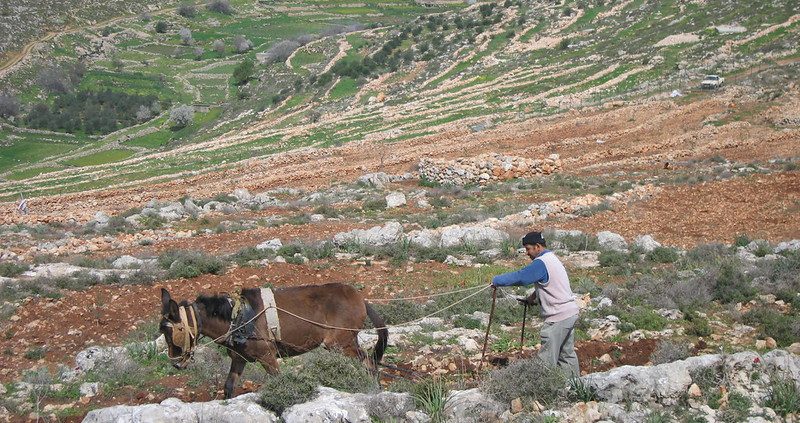
In efforts to mitigate the recession, Palestinian sectors are taking part in “agro-resistance” to reclaim independence and labor. Localization tactics are constantly circulating; the Palestinian people participate in nonviolent demonstrations and work to redefine methods of agriculture. Locals work together to catch rainwater from rooftops, preserve and catalog seeds and create gardens within households to support self-sustainability.

The most crucial advancement within this process is the education of farmers. Nonprofit organizations such as the Union of Agricultural Work Committees and Ma’an Permaculture Center work with the locals to reduce food insecurity in Palestinian territories and to rebuild the economy. The effort still continues as each sector receives education and renovation, even amid COVID-19 and existing poverty.

– Linda Chong
Photo: Flickr

April 30, 2021
https://borgenproject.org/wp-content/uploads/borgen-project-logo.svg 0 0 Kim Thelwell https://borgenproject.org/wp-content/uploads/borgen-project-logo.svg Kim Thelwell2021-04-30 07:30:142021-04-27 14:43:03Addressing Food Insecurity in Palestinian Territories
Food Security, Global Poverty

Zero-Waste Solutions in the Food Industry

Zero-Waste SolutionsThai researcher Sorawut Kittibanthorn is looking into how to transform the nutrient component found in chicken feathers into a powder that can be turned into a protein-rich source of edible food that can be used in a variety of dishes. Prototypes including his version of chicken nuggets and a steak substitute have received some positive feedback. Kittibanthorn feels chicken feathers have the potential of becoming an alternative food substitute that can reduce poverty and food insecurity. Kittibanthorn and others are determined to promote zero-waste solutions in an effort to reduce global waste and promote sustainability while addressing global poverty and hunger.

Chicken Feather Waste

The poultry market is a booming industry. Chickens are one of the most commonly consumed meat products in the world and poultry is a cultural and economic staple in many countries. The bird feathers, however, produce mass waste. In the U.K. alone, chicken farms discard around 1,000 tons of feathers per week. Few companies have taken notice of the potential behind these unwanted goods. Feathers have a high source of keratin protein, making the feathers ideal sources of insulation, plastic or animal feed. The findings of Kittibanthorn are unique and shift the conversation toward a multi-pronged solution in combating global hunger using creative solutions.

On top of reducing waste, Kittibanthorn maintains the idea that chicken feathers can be repurposed for elegant, elevated dining. The destigmatization of food waste is not completely unprecedented in the culinary world. Michelin star chef, Massimo Bottura, utilized a trash-to-table dining model in 2018 by recovering surplus ingredients to make nutritious and delicious meals for a community. Food waste is a largely uncomfortable issue around the world and the U.S. alone generates 40 million tons per year. By utilizing solutions similar to Kittibanthorn and Bottura, many countries could work toward resolving the issue of world hunger through zero-waste solutions.

A Zero-Waste Future

Utilizing chicken feathers as a zero-waste solution to combat poverty would fall in line with the U.N. Sustainable Development Goals, which include seeking to end hunger and improve nutrition. In the context of agricultural initiatives, chicken feathers open the conversation on the collaboration between innovations like feather-based foods and organizations that promote crop diversity.

The Borgen Project spoke with Rodrigo Barrios, strategic partnerships manager at the nonprofit organization, the Crop Trust. Barrios explains how crop diversity includes two elements of action: use and conservation. Barrios told The Borgen Project about the organization’s program called The Food Forever Initiative. The Food Forever Initiative seeks to enlighten the community with crop usability by connecting chefs to less popular crops and giving chefs the agency to promote agrobiodiversity. Barrios says that promoting crop diversity would also help reduce poverty. In a similar fashion, Barrios states “we identify all biodiversity, internationally, that is fundamental for food security and nutrition and agriculture and we ensure that the gene banks are funded in perpetuity, provided they are up to standard.” The Crop Trust’s goals align with the U.N. Sustainable Development Goals. The organization seeks to build more funding to support long-term conservation initiatives as zero-waste solutions.

The Road Ahead

The practice of repurposing materials that are typically disposed of, such as chicken feathers, has great potential to reduce poverty and push for more sustainable market practices including zero-waste solutions. Trends and practices related to repurposing materials would promote ethical decisions in the private sector, help communities with nutrition security and connect agronomics to crop supporting initiatives.

– Danielle Han
Photo: Flickr

April 30, 2021
https://borgenproject.org/wp-content/uploads/borgen-project-logo.svg 0 0 Kim Thelwell https://borgenproject.org/wp-content/uploads/borgen-project-logo.svg Kim Thelwell2021-04-30 04:52:052024-05-30 22:23:20Zero-Waste Solutions in the Food Industry
Food Insecurity, Food Security

Canadian Food Banks: Providing Meals During COVID-19

Canadian Food BanksCanadian food banks have been providing meals for those in need across Canada for the past 40 years. The more than 11,000 food banks in Canada saw a spike in clients in 2020, with a report of more than 1.1 million people going to food banks in March alone. Additionally, in 2020, 20,000 people a week used food banks in Canada, up significantly from 15,000 a week in 2019. However, food banks and donators have doubled their efforts amid COVID-19 to address food insecurity in Canada.
Food Insecurity in Canada

The 2019 Food Insecurity Policy Research report states that in 2018 one in eight households was food insecure. Moreover, in 2018, 4.4 million people ranged between marginal food insecurity (with roughly 1.5 million people), moderate food insecurity (with roughly two million people) and severe food insecurity (with roughly 500,000 thousand people) in those tiers.

Within the provinces, Nunavut reported the worst level of food insecurity at 57%, and the Northwest territories at 27%. The rest of the provinces, such as Yukon, faired a bit better at 16.9%, with the Quebec province being the lowest at only 11.8%. Additionally, 84% of those who reported food insecurity live in either Ontario, Alberta, Quebec or British Columbia.

Compared to reports in 2015-2016, food insecurity in the province of Nunavut rose roughly by 6% between 2017-2018 from 51% to 57%. In the Northwest Territories food insecurity rose by 7% from 20% to 27%, Yukon remained the same, British Columbia remained the same at 12% and Quebec went down 1% from 12% to 11%.

Food Banks’ Donations

In 2020, donations rose by approximately 5% in food banks across Canada, and they received over 24 billion pounds of food. It went up more than a million dollars compared to 2019, with a total of $24 million in food donations. In 2019, food banks received a total of $64 million of donations of all varieties, which was an overall decline from $54 million in total donations in 2020.

These statistics indicate 2019 was a drastically more prosperous year. However, 2020 saw an outflow of $56 million back to the people through other donated goods, money to other food banks and money donated overall back to the community. In contrast, 2019 only saw a $9 million return to the community.

In 2020, food banks had a higher return of goods back to the public than monetary donations, with over a $2 million difference. The demand is so high it begs the question of what is being done to help support food banks and Canadians in need.

Alternative Solutions for the Hungry

Canadians who may need to use food banks fall into several categories: people lacking the skills necessary for labor jobs within the Canadian market, the loss of well-paying blue-collar jobs, pensions not covering the basics, and inadequate programs to help those in serious need. Various reports have shown the several ways in which the Canadian government can better help those who are at risk of going hungry.

One way to address hunger insecurity is to increase investments in federal housing. Creating housing such as social housing that is controlled by the government results in capped rental prices, allowing vulnerable populations to pay rent each month at an affordable level. Addressing the higher levels of food security in the northern regions is another important goal. The Canadian Government should focus on areas such as Nunavut that have the highest rates of food insecurity.

Canada Child Benefit

Another way to provide more effective support to low-income families with children is to replace the current range of federal child benefits with a strengthened Canada Child Benefit. The Canada Child Benefit provides financial support to eligible families that have children under the age of 18. While the benefit does support households to a degree, it has not been seen as nearly enough. Moreover, the more funding given to families in need, the less likely they are to be food insufficient.

Thanks to the work of the Canadian food banks, thousands of people can enjoy hot meals. However, a sustainable solution to food insecurity must also include other solutions and government programs to eradicate hunger in Canada.

– Claire Olmstead
Photo: Flickr

March 17, 2021
https://borgenproject.org/wp-content/uploads/borgen-project-logo.svg 0 0 Kim Thelwell https://borgenproject.org/wp-content/uploads/borgen-project-logo.svg Kim Thelwell2021-03-17 07:30:012024-05-30 22:23:18Canadian Food Banks: Providing Meals During COVID-19
Food Security, Global Poverty

AI-Run Vertical Farming in Agriculture

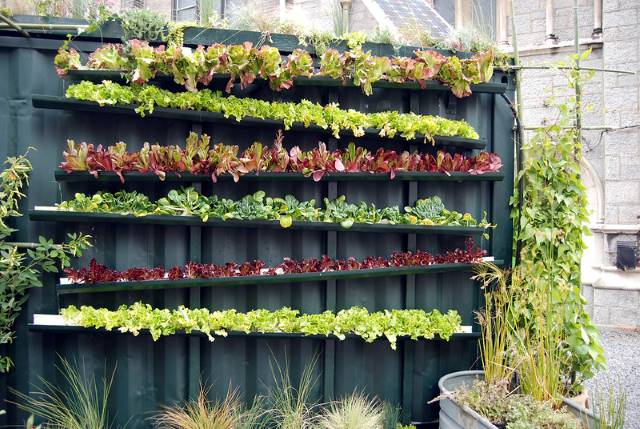
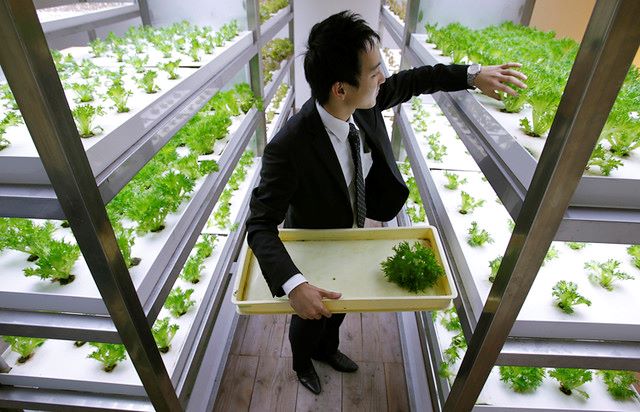
Vertical FarmingThe new AI-run vertical farming plantation brings new possibilities to agriculture and efficient production, as Plenty, an ag-tech company, co-founded by Nate Storey, proves there is now more benefit than cost to vertical farming. By utilizing robots and artificial intelligence systems to regulate LED sunlight panels, watering systems and pest control, this futuristic method has surpassed its previous form of being too expensive and complex.

Vertical Farming

Through the current transitions made toward maximizing agricultural use of AI, farming today has already begun employing drones and smart robots to remove weeds or spread herbicides efficiently. Greenfield Robotics had already released different functional fleets active in certain farms. Now, Plenty utilizes similar technologies with robots harvesting and organizing plants in the vertical farming stations. Fundamentals such as water, temperature and light are systematically calculated and regulated through smart systems that prioritize a greater, faster and better crop turnout.

Benefits of AI-Run Vertical Farming

Through artificial intelligence, farmers are now able to adopt a more eco-friendly methodology. Robots and machine learning promote certain technologies such as tracking soil composition, moisture content, crop humidity and optimal crop temperatures. Despite the previous vertical farming history and cost-benefit analysis, modern-day AI-run vertical farming allows certain resources to be recycled, controlled and reused. This can be seen in AI-run water filtration systems that catch evaporated water from the farms or indoor energy renewal systems.

Alleviating Agricultural Issues

These innovations alleviate many issues that arise in agriculture and distribution. The most notable feat is the space that vertical farming saves in comparison to traditional farmland regions. Plenty’s vertical farm covers two acres and yields similar, if not better, harvest and product quality to that of a 750-acre flat farm. Plenty’s website expresses its greatest feat yet: “Imagine a 1,500-acre farm. Now imagine that fitting inside your favorite grocery store, growing up to 350 times more.”

Plenty also points out the freedom AI-run vertical farming brings to agriculture today. By being independent and self-sufficient with consistent sunlight, recycled water and a controlled environment, farming is no longer restricted to natural inconsistencies. Climate change and weather patterns do not determine the outcome of the produce, due to this new ability to control the necessary components to production. In light of COVID-19 and wildfires that breakdown supply chains, this factor prevents unprecedented shutdowns of essential services in agriculture.

AI-run vertical farming allows farms to exist within metropolitan sectors instead of weather-dependent regions. By having a closer source, distribution is more efficient leading to less CO2 emissions and dependency on preservatives. This method also allows cost reduction, since transportation, product cost and labor are reduced, which allows impoverished communities access to better produce.

The Future of AI-Run Vertical Farming

All things considered, this new innovative alternative brings a cleaner and more sustainable future for agriculture, whether it be in produce quality or carbon footprint. With Plenty’s ongoing environmental adjustments and technological updates, the organization continues to expand its service, with a $400 million investment capital from Softbank, Amazon CEO, Jeff Bezos and former Google chairman, Eric Schmidt. Plenty has also partnered with Albertsons to supply 430 stores in California.

– Linda Chong
Photo: Flickr

February 17, 2021
https://borgenproject.org/wp-content/uploads/borgen-project-logo.svg 0 0 Yuki https://borgenproject.org/wp-content/uploads/borgen-project-logo.svg Yuki2021-02-17 07:30:272021-02-15 05:53:10AI-Run Vertical Farming in Agriculture
Developing Countries, Food Insecurity, Food Security, Global Poverty, Hunger

Can Lab-Grown Meat Fight Poverty?

Lab-Grown MeatIn the effort to reduce poverty around the world, scientific innovations and technological solutions are welcomed. Developments in technological capabilities provide new potential approaches to reducing poverty. One such development that has received increased attention is the emergence of lab-grown meat as an alternative source of food for populations in developing countries. Lab-grown meat has only emerged as a potential solution quite recently, and even at this young stage of development, there are many who argue both for and against its potential effectiveness and applicability in the effort to reduce poverty.

Lab-Grown Meat

Lab-grown meat, known alternatively as cultured meat, is an alternative application of stem cell technology typically used in medicine. Stem cells are extracted from an animal and converted to muscle cells. The cells are then cultured on a scaffold with nutrients and essential vitamins. From this point, they grow and can eventually be shaped into any desired form, such as sausages, hamburgers, steaks or mince. Lab-grown meat is being considered as a potential solution to food insecurity in impoverished countries as it takes much less time to grow, uses fewer of the planet’s resources and no animals need to be farmed or slaughtered.

The Arguments Against Cultured Meat

Those against the implementation of cultured meat as a tool in the struggle against world poverty point firstly to the impracticality of current production. The world’s first cultured burger, cooked on live TV in 2013, cost $330,000 to produce and more of its kind might not be commercially available for decades.

In addition to the practicality issue, critics also argue that providing meat grown in foreign labs to developing countries is not ultimately constructive. It creates a dependence on exports for food when most developing countries have the capabilities to produce their own food.

Most African and Asian countries used to be self-sufficient with regard to food production but this has changed over the last 30 years. Subsidized western-grown crops have been pushed on developing countries and barriers to markets have been lowered, allowing U.S. and European firms to export crops to developing countries.

Poverty Reduction Applicability

Kanayo Nwanze former president of the International Fund for Agricultural Development (IFAD), presented an argument in 2013 which has maintained support today. The argument is that the decline of agriculture in developing countries has been an effect of underinvestment as a result of structural adjustment programs pushed by the World Bank. The World Bank has funded numerous investment programs in recent years that aim to provide developing nations with western food as a means of poverty alleviation. Some argue that this is not a sustainable solution and will only lead developing nations to be dependent in the future. Instead of investing in big science, those looking to reduce global poverty should focus on supporting rural regions and small farmers.

Eat Just: Cultured Meat

Despite the existing criticism of cultured meat, supporters of this developing technology have reason to be optimistic. In December 2020, U.S. startup, Eat Just, became the first in the world to gain government approval to sell its product to the public. This approval came from the government of Singapore, which means cultured chicken will soon be available at an unnamed restaurant in Singapore. This is a landmark development for the cultured meat business. Following this gain of approval, more governments around the world may follow suit. According to Eat Just, cultured chicken nuggets will be available at “price parity for premium chicken you’d enjoy at a restaurant.”

The Potential of Lab-Grown Meat

The debate around the effectiveness of cultured meat as a tool in poverty reduction is justified and indeed necessary. Only after serious consideration and scrutiny does any new idea earn approval and the right to be implemented. Though right now it may seem that there are more arguments against its implementation than for, this is largely due to the novelty surrounding the idea. The technology and industry with regards to lab-grown meat as a whole are still in the early stages of development. The idea of lab-grown meat as a potential solution to hunger and poverty is being followed eagerly by supporters and skeptically by critics. Only time will tell whether this novel idea succeeds or falls short.

– Haroun Siddiqui
Photo: Flickr

February 13, 2021
https://borgenproject.org/wp-content/uploads/borgen-project-logo.svg 0 0 Yuki https://borgenproject.org/wp-content/uploads/borgen-project-logo.svg Yuki2021-02-13 01:30:522021-02-10 07:16:37Can Lab-Grown Meat Fight Poverty?
COVID-19, Developing Countries, Food & Hunger, Food Insecurity, Food Security, Global Poverty, Hunger

Cabarete Sostenible: Identifying the Cause of Hunger

cause of hungerThe COVID-19 pandemic is deemed a global health crisis that has resulted in an economic crisis and a hunger crisis too. In the Dominican Republic, Cabarete Sostenible seeks to address the root cause of hunger.
Unemployment Due to COVID-19

Cabarete, Dominican Republic, prides itself on being one of the watersports capitals of the world. Nearly two-thirds of Cabarete’s population depends on the local tourism industry for work and income. These jobs mostly fall under the informal economy.

Before the COVID-19 pandemic, more than 60% of the world’s working population were employed in the informal economy. The informal economy is defined by hourly jobs that offer neither a salary nor employee benefits. The pandemic left many people without a regular source of income and without health insurance.

Compared with the bailout packages that the governments of wealthy nations were able to provide to their citizens, the governments of impoverished nations were unable to provide citizens with such economic support. Around the world, NGOs have attempted to assist in providing the support that impoverished governments are unable to provide.

Cabarete Sostenible Addresses the Root Cause of Hunger

Moraima Capellán Pichardo, a citizen of Cabarete, is a supporter of the concept of food sovereignty. The Borgen Project spoke with Capellán Pichardo about the origins of Cabarete Sostenible and the organization’s long-term goals. Food sovereignty, the principle that individual self-actualization is dependent on having enough to eat, is at the heart of Cabarete Sostenible’s mission.

Capellán Pichardo told The Borgen Project that individual NGOs in Cabarete were working independently of each other when the COVID-19 pandemic began. These separate organizations had a common goal so they came together to form a coalition and increase their impact. This coalition became the nonprofit organization, Cabarete Sostenible. Everyone who works with Cabarete Sostenible is a volunteer. The organization works with local food distributors and organic farms and distributes the foodstuff that it receives to struggling families and individuals in Cabarete. This forms the organization’s first response to the hunger crisis.

Although it began as a method to address an acute crisis, Cabarete Sostenible seeks to address the root cause of hunger. Capellán Pichardo indicated that food sovereignty has been on the minds of Cabarete Sostenible’s volunteers and organizers since its inception. “Very early on, we sat down to discuss where we thought Cabarete Sostenible was going in the future. For us, we wanted to make sure that we did not just stick to giving out food because that does not really address the root problem.”

The Concept of Food Sovereignty

Food insecurity means being without reliable access to sufficient and nutritious supplies of food at any given time and is a common reality for citizens of Cabarete. On the other hand, food sovereignty, organizing society in such a manner that every individual has access to producing his or her own food, is a possible solution to food insecurity. “Food sovereignty is tied to land access,” Capellán Pichardo says. “For us, it is important that the first mission that Cabarete Sostenible focuses on is food sovereignty: access to healthy and appropriate food and using the native agricultural land to provide that.”

Food Sovereignty Addresses Food Insecurity

Since COVID-19, many factors have contributed to a rise in food insecurity and extreme poverty worldwide. Mass rates of unemployment have threatened access to food as even the poorest households spend close to three-fourths of their income on food.

Widespread unemployment, combined with unexpected drops in agricultural production, has created an unprecedented crisis. Because of supply line disruptions and trade barriers, often the result of increased health precautions, citizens of the world’s poorest nations are left without access to food. Some of the suffering caused by such disruptions can be mitigated by food sovereignty policies. Perhaps, a societal approach may be modeled after Cabarete Sostenible’s efforts to address the root causes of hunger.

Sustainable Community Solutions to Hunger

Capellán Pichardo is optimistic about the road ahead as she details how the organization has worked with local landowners to collaborate on solutions. The organization has opened the first community garden and is working to partner up to create a community-style farm. All this is work toward creating a social business model. Cabarete Sostenible seeks to address the root cause of hunger by helping to create a sustainable way of living, where food shortages are less likely and future hunger crises are averted.

– Taylor Pangman
Photo: Flickr

January 25, 2021
https://borgenproject.org/wp-content/uploads/borgen-project-logo.svg 0 0 Lynsey Alexander https://borgenproject.org/wp-content/uploads/borgen-project-logo.svg Lynsey Alexander2021-01-25 01:30:042021-01-25 03:57:28Cabarete Sostenible: Identifying the Cause of Hunger
Food Security, Global Poverty, Technology

Poverty Reduction: Farming Innovations in Japan

Farming Innovations in JapanAgri-tech, a growing term used to describe Japan’s digital farming technology has greatly advanced farming systems in the country in order to combat a potential water shortage by 2030. Both experienced and inexperienced farmers in Japan are using new technologies to limit the overuse of water and fertilizer, which in turn, is fighting food insecurity and poverty for the entire population. Professor Kiyoshi Ozawa, from Meiji University Kurokawa Field Science Center, summarizes the system, “instead of spraying a large amount of water with sprinklers or the like, fertigation uses narrow pipes to place drops of water and fertilizer at the roots of the growing crops.” Farming innovations in Japan aim to reduce overall poverty in the country.

Farming Innovations in Japan

There are several innovations to take note of that have eased the labor intensity and climate impact of farming in Japan, such as heat-resistant varieties, delayed transplanting and specialized application of fertilizers, to combat both climate change and poverty in the face of a potentially grave water and food shortages.

Japan Today, an esteemed magazine based in Japan, also highlights the main goal of this growing agri-tech business as a collaboration between experts, advanced farmers and younger generations to create permanent, sustainable solutions and share knowledge about the most efficient farming techniques. “The valuable experience and techniques of veteran farmers could also be more accessible to newer farmers via the web,” explains writer Allen Croft, “such as learning resources about harvesting times with databases and photos.”

Factors Affecting Farming in Japan

Not only do these farming innovations in Japan help to alleviate poverty in vulnerable communities but they also fight climate change issues by directly limiting water and fertilizer usage and combatting overproduction. Climate change has caused tension in the agricultural world of Japan, as unpredictable water levels cause heightened food prices, specifically in terms of rice production. Several other factors are contributing to pressure on Japan’s farming industry, including a decline in labor force participation as fewer young people are becoming farmers as well as Japan’s reliance on food imports.

These new technological farming innovations in Japan are working to alleviate the problems outlined above and are bringing new uses to AI and loT technology in a way the farming communities have never seen before. Through data analysis and observation of traditional farming structures, farmers can maintain exact water measurements and maximize soil fertility in order to maintain consistent crop growth. The main goal of these digital solutions to farming in Japan is to create permanently sustainable agricultural practices for generations to come.

The Japan Social Development Fund

Specifically from the standpoint of poverty alleviation, the World Bank has implemented a project, the Japan Social Development Fund, that aids impoverished communities while focusing on education, adaptation to climate change, health and sanitation services as well as environmentally sustainable agricultural practices. While most vulnerable communities in Japan do not have access to the digital technology innovations that farmers have developed, a social shift towards awareness of water usage has allowed farmers with limited resources to implement certain practices.

The Future of Digital Agriculture

There are a variety of growing measures set in place to make the agriculture business in Japan more sustainable in the face of both climate change and poverty. Digital agriculture is growing at an immense rate and it is predicted that the global market, specifically for agricultural robots, will reach $73.9 billion by 2024, which will vastly change the structure of food production and the labor force. The scope of digital farming innovations in Japan is broad and could potentially create a basis for agriculture in other countries struggling with water and food shortages as well.

– Caroline Pierce
Photo: Flickr

January 13, 2021
https://borgenproject.org/wp-content/uploads/borgen-project-logo.svg 0 0 Kim Thelwell https://borgenproject.org/wp-content/uploads/borgen-project-logo.svg Kim Thelwell2021-01-13 01:30:482024-05-30 07:55:39Poverty Reduction: Farming Innovations in Japan
Developing Countries, Food Security, Global Poverty

Conquering the Fall Armyworm in Uganda

Fall ArmywormMachine learning, a variation of artificial intelligence that includes the development of algorithms that independently learn new information, has innumerable applications. An example of this is visible in Africa where the fall armyworm pest in Uganda has ravaged crop yields. Amid the destruction, a new machine learning-based app created by a Ugandan developer has the potential to stop the spread of the crop-destroying pest.

Agriculture in Uganda and the Fall Armyworm

Approximately 22% of Uganda’s GDP comes from agriculture, with most Ugandans working in the agricultural sector, often engaging in subsistence farming. With the nation’s economic performance relying on successful agricultural harvests and the population’s everyday food sources coming from their own crop yields, any invasion of pests in Uganda can have serious consequences.

In 2016, Uganda experienced its first invasion of the fall armyworm pest, the larva of the armyworm moth. A native of the tropical regions of the western hemisphere, the fall armyworm pest eats through crops for nourishment before its transformation into a moth. By mid-2017, the fall armyworm had been detected throughout Uganda and estimations indicate that the infestation led to $192 million in maize crop losses alone. In some regions, farmers noted crop yield losses of up to 75%.

Despite the severe threat posed by the fall armyworm pest in Uganda, local developers have created a machine learning-based tool to assist Ugandan farmers with detecting the presence of the fall armyworm in their crops and preventing its spread.

Machine Learning to Protect Crops

In the aftermath of the arrival of the fall armyworm pest, Nazirini Siraji, a Ugandan woman from the city of Mbale, began work on a modern solution to the age-old problem of pest invasions. After attending one of Google’s Codelabs events, Siraji used Google’s TensorFlow platform to develop her Farmers Companion App. TensorFlow is an open-source machine learning tool that enables developers like Siraji to create digital solutions powered by artificial intelligence.

The Farmers Companion App enables farmers to use mobile technology to identify this specific pest on their crops and their lifecycle stage. Using this information, the app notifies the users about the threat level their crops face and the extent to which the fall armyworm has the potential to spread. The app also recommends specific pesticide treatments that farmers can use based on the level of threat to the farmers’ crops.

According to Google, the app has already been deployed in the agricultural lands surrounding Mbale where Siraji partners with local farmers to put the Farmers Companion App to use.

Big Tech Meets Local Developer

The global expansion of the internet is accompanied by a rise in local innovation aiming to solve local issues. In Africa, pest invasions have been responsible for countless crop shortages and famines, which exacerbates problems of instability and poverty. While invasions from pests like the fall armyworm will inevitably occur in the future, they will not happen again without opposition from new technology.

– John Andrikos
Photo: Flickr

January 10, 2021
https://borgenproject.org/wp-content/uploads/borgen-project-logo.svg 0 0 Lynsey Alexander https://borgenproject.org/wp-content/uploads/borgen-project-logo.svg Lynsey Alexander2021-01-10 07:30:022022-04-22 01:45:11Conquering the Fall Armyworm in Uganda
Page 14 of 18«‹1213141516›»

Get Smarter

  • Global Poverty 101
  • Global Poverty… The Good News
  • Global Poverty & U.S. Jobs
  • Global Poverty and National Security
  • Innovative Solutions to Poverty
  • Global Poverty & Aid FAQ’s
Search Search

Take Action

  • Call Congress
  • Email Congress
  • Donate
  • 30 Ways to Help
  • Volunteer Ops
  • Internships
  • Courses & Certificates
  • The Podcast
Borgen Project

“The Borgen Project is an incredible nonprofit organization that is addressing poverty and hunger and working towards ending them.”

-The Huffington Post

Inside The Borgen Project

  • Contact
  • About
  • Financials
  • President
  • Board of Directors
  • Board of Advisors

International Links

  • UK Email Parliament
  • UK Donate
  • Canada Email Parliament

Get Smarter

  • Global Poverty 101
  • Global Poverty… The Good News
  • Global Poverty & U.S. Jobs
  • Global Poverty and National Security
  • Innovative Solutions to Poverty
  • Global Poverty & Aid FAQ’s

Ways to Help

  • Call Congress
  • Email Congress
  • Donate
  • 30 Ways to Help
  • Volunteer Ops
  • Internships
  • Courses & Certificates
  • The Podcast
Scroll to top Scroll to top Scroll to top