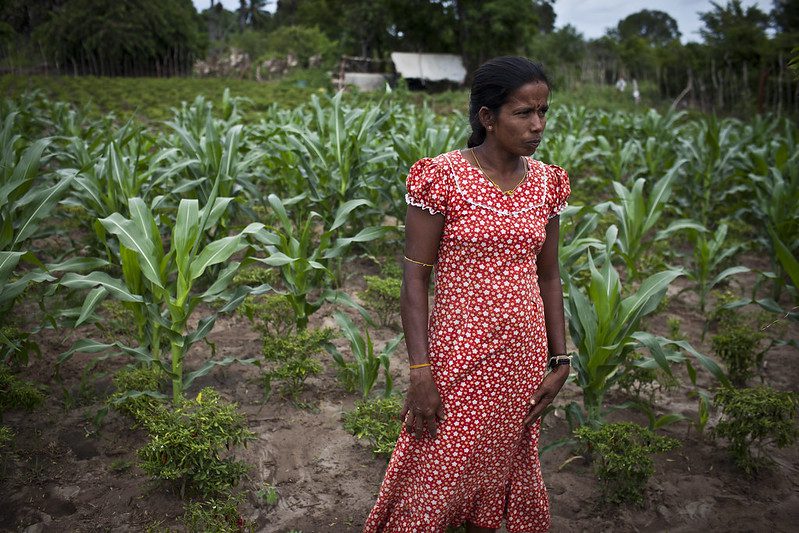
 The United Nations Environment Programme’s latest 2021 Food Waste Index Report suggests that the world is in “an epidemic of food wastage.” Currently, the world wastes about 17% of all food available for human consumption. Households contribute 61% to the total food waste while 26% comes from the foodservice industry and the retail industry contributes 13%. These wasted food resources could help to feed the 690 million undernourished global citizens.
A Closer Look at Food Waste
Food loss and waste persist for various reasons. Households may not utilize every food item they purchase and often throw out leftover food. Typically, the average household wastes roughly 74 kilograms of food per person annually. Food waste is responsible for an annual monetary loss of $1 trillion, impacting both farmers and families. The UNEP’s report finds that food waste occurs across all nations, not just low-income nations as is common belief. In fact, “at the farming stage alone,” roughly 1.2 billion tonnes of food is lost. Interestingly, middle and high-income nations account for “58% of global farm-stage food waste.” Considering these statistics, the world is searching for ways to decrease food waste and make food accessible to all.
The World’s Response
Many coalitions and campaigns are emerging to address the food waste crisis. In 2013, the UNEP began the Think Eat Save food waste awareness campaign. Now, UNEP is implementing “Regional Food Waste Working Groups in Africa, Asia Pacific, Latin America, the Caribbean and West Asia.” The groups share ideas and findings concerning food waste within a peer-to-peer network in order to reduce food waste across nations.
USAID is also taking a stand against food waste by investing $60 million over the next five years to research and reduce food waste. In September 2021, USDA Secretary Vilsack announced that “the United States joined the global coalition on food loss and waste” — the Food is Never Waste Coalition. The coalition aims “to halve food waste by 2030 and to reduce food losses by at least 25%.” The coalition works to fulfill the United Nation’s Sustainable Development Goal 12.3 to reduce consumer and retail food waste and loss.
The Food is Never Waste Coalition
The Food is Never Waste Coalition represents a significant step for global action against food waste. The international coalition works to reduce food loss and waste while emphasizing financial and economic sustainability. Members include G7 and G20 groups as well as more than 30 member states in addition to academic groups, NGOs, UN agencies and private sector groups.
Drawing from various sectors, including technology, energy and education, the coalition utilizes a public-private partnership (PPP). A PPP enables the coalition to look across food supply chains and intervene from multiple angles. By collaborating with governments and private businesses, the coalition invests in mutually beneficial sustainable food pathways. In Norway, a PPP strategy helped manufacturers reduce food waste by 15% in a period of just three years.
The Food is Never Waste Coalition will conduct research, share knowledge on food waste reduction methods and invest in food loss reduction. The coalition tracks progress with the UNEP’s Food Waste Index Report. Tracking progress will enable the coalition to maintain goals and establish necessary initiatives. Member states benefit from participating in the coalition. For instance, investing in food waste reduction creates business opportunities for local farmers and women in low-income countries.
The coalition also offers a platform for collaboration between countries by sharing knowledge on food waste research and strategies. Through grassroots efforts, private sector involvement and research, the Food is Never Waste Coalition seeks to improve food pathways. Additionally, the group will encourage food surplus donations among members states to feed those in need.
Alleviating Global Hunger by Reducing Food Waste
Ultimately, halving food waste and loss by 2030 will be a collaborative effort. The coalition embodies the international effort to improve food systems. Resources usually lost at the production or household levels could feed the world’s hungry. By improving global food pathways and encouraging surplus donations, the Food is Never Waste Coalition works to create sustainable and accessible systems with less food waste.
– Dana Gil
Photo: Flickr



 The first global Food Systems Summit will take place
 The World Bank classifies the dual-island nation of Antigua and Barbuda as
  Rice is the primary food source of more than two billion people worldwide. However, a quarter of the world’s rice production depends on rain instead of irrigation, threatening yields. “Current commercial rice strains have little genetic diversity.” Farmers require new drought-resistant and submersion-tolerant strains of rice. Resilient rice strains may potentially increase food security across Asia.
 With
With  Solar energy is a sustainable source and is considered to be the most cost-effective energy form in history. A solar energy initiative to convert solar power into electricity takes