• Link to X
  • Link to Facebook
  • Link to Instagram
  • Link to TikTok
  • Link to Youtube
  • About
    • About Us
      • President
      • Board of Directors
      • Board of Advisors
      • Financials
      • Our Methodology
      • Success Tracker
      • Contact
  • Act Now
    • 30 Ways to Help
      • Email Congress
      • Call Congress
      • Volunteer
      • Courses & Certificates
      • Be a Donor
    • Internships
      • In-Office Internships
      • Remote Internships
    • Legislation
      • Politics 101
  • The Blog
  • The Podcast
  • Magazine
  • Donate
  • Click to open the search input field Click to open the search input field Search
  • Menu Menu

Archive for category: Employment

Economy, Employment, Global Poverty

Cannabis Transforms Poverty in Saint Vincent and the Grenadines

Poverty in Saint Vincent and the GrenadinesIn 2018, Saint Vincent and the Grenadines decriminalized possessing up to two ounces of marijuana and Parliament passed laws to establish a medical cannabis industry. Vincentians use and appreciate the medicinal properties of cannabis, as well as the pivotal role it can play in reducing poverty in Saint Vincent and the Grenadines. In 2024, 18% of Vincentian adults were unemployed; youth were twice as likely as adults to be unemployed.

Additionally, the country’s volcano (La Soufrière) erupted in 2021. Coupled with the then-recent COVID-19 pandemic, the country faced huge economic setbacks. Whereas before the pandemic, only 4% of children in Saint Vincent were below the poverty line, this has now risen to 18%. Therefore, due to the industry’s up-and-coming market, utilizing cannabis in Saint Vincent is key to recovering the economy and securing jobs for unemployed young people.

Boosting the Economy

Ironically, it is the volcanic soil that makes cannabis in Saint Vincent high-grade and fast-producing. As a result, cannabis became an instrumental trading tool during the country’s recovery from the volcanic eruption. More recently, Saint Vincent has reported more than EC$60 million (slightly above $22 million) in private investment in its cannabis industry.

Beyond just trading, the small country is also now gaining an international reputation for its high-quality marijuana. In October 2025, Saint Vincent will host the annual CannaBliss festival for the second time. This is a four-day event that attracts customers from around the globe and dually acts as a chance for networking among the medicinal cannabis industry.

Not only does this boost Saint Vincent’s tourism industry, but it is also a chance for the country to share its culture with the world. The festival will feature reggae singers with international fame. However, it will also be a chance for local Vincentian singers to display their talent!

Medicinal Benefits

Due to cannabis’s unique medicinal uses, the drug is experiencing increasing demand worldwide, with the medicinal cannabis market expected to reach $58 billion in sales by 2028.

The United States Food and Drug Administration (USFDA) currently uses Epidiolex, which contains cannabidiol, to treat seizures. It also uses Marinol and Syndros, which contain Tetrahydrocannabinol (THC), for therapeutic purposes such as treating nausea associated with cancer chemotherapy and anorexia related to weight loss in AIDS patients. The USFDA continues to research additional medical applications of cannabinoids.

Meanwhile, the cannabis market is expanding globally. The U.K., Canada and several European countries have, for the first time, approved a plant-derived cannabinoid drug (Sativex) for medical use.

Supports Cultural Practices

Emerging in ’30s Jamaica, the religion Rastafari celebrates marijuana as a gift from God. Rastas believe in peace and living organically; they often adjust their language to avoid negative terms, oppose violence and oppressive systems such as capitalism and are typically vegetarian. Rastas use marijuana ritually to help enlighten their minds; before smoking the plant, they pray to Jah (God) or to Haile Selassie I.

Moreover, supporting Rastas means supporting local farmers. Since decriminalizing cannabis in Saint Vincent, farmers can now obtain a subsidized licence to grow marijuana and companies must buy 10% of their plants from traditional agriculturalists. Before this, it was difficult for Rastas to make a living.

Farmer Bobbis Matthews said to the Guardian, “It was hard! At least three times a year, U.S. helicopters would come and tear down the crop. In those days, it felt like you couldn’t even say the word marijuana because just to say marijuana, you could get arrested.” “We had a song called ‘Helicopter.’ It was about the panic and franticness whenever you hear the sound of the helicopter,” he continued.

Now, local farmers can live and celebrate their culture legally. The growing industry has created 2,500 more jobs for a country with low employment rates. Saint Vincent has also provided additional training in best cultivation practices to support the market and farmers further.

Final Comments

Overall, Saint Vincent and the Grenadines demonstrates how cannabis can be used ethically. The country is utilizing the plant for its medicinal benefits and its significance to the religious community. Marijuana’s rapidly growing market is also helping to reduce poverty in Saint Vincent and the Grenadines by increasing employment rates and expanding trading opportunities. This, in turn, is building a fast-growing industry that will play a pivotal role in the country’s future.

– Lysia Wright

Lysia is based in Derby, UK and focuses on Global Health for The Borgen Project.

Photo: Flickr

October 28, 2025
https://borgenproject.org/wp-content/uploads/borgen-project-logo.svg 0 0 Hemant Gupta https://borgenproject.org/wp-content/uploads/borgen-project-logo.svg Hemant Gupta2025-10-28 01:30:302025-10-27 22:58:19Cannabis Transforms Poverty in Saint Vincent and the Grenadines
Education, Employment, Global Poverty

Vocational Education Training Centers in Yemen

Education Training Centers in YemenVocational education training centers in Yemen are giving young people the tools to rebuild their futures. From classroom learning to community rebuilding, these centers are helping reduce unemployment and foster economic resilience in one of the world’s most vulnerable nations. 

About Vocational Education Training Centers in Yemen

Vocational education training centers in Yemen have faced immense challenges since Houthi rebels seized the capital city of Sanaa in 2014. The prolonged civil war has devastated Yemen’s social and economic structures, making it difficult for educational and training institutions to operate effectively. Regional intervention and years of political instability have fueled the conflict, driving millions of elders, women, children and innocent lives into poverty. Experts consider the conflict in Yemen one of the worst humanitarian crises in modern history, following the 2025 Gaza genocide, including widespread famine and disease outbreaks.

After nearly a decade of war, Yemen continues to face extreme economic, social and health challenges that will affect Yemenis’ lives in the long run. With collapsing infrastructure, limited job opportunities and severe disruptions to education, young people are among the most affected. According to the World Bank, the country’s real GDP per capita has dropped by nearly 60% since 2015, and more than half of Yemeni’s population now faces food insecurity. Poverty and war have forced many families to withdraw children from school or depend on unsatisfactory, informal labor just to survive.

In Yemen, where some children search for a loaf of bread to ease their hunger and families struggle to meet even their most basic needs, vocational education and training centers have emerged as a vital solution. By equipping youth and adults with practical skills in fields such as construction, agriculture and technology, these programs provide pathways to employment, support local economies and help restore a sense of stability and hope for a long-term recovery.

Skills for Stability

Vocational education training centers in Yemen are offering practical, life-changing skills to communities in crisis. These centers teach trades such as plumbing, solar installation, tailoring and information technology. Teachers at vocational centers teach skills that directly meet the needs of local markets in Yemen. According to UNICEF, programs supporting technical and vocational education in Yemen have helped thousands of youth, particularly women and displaced people, gain the expertise needed to secure jobs and rebuild their communities. 

In a country where years of conflict have left many without traditional schooling, these centers serve as safe havens for learning and empowerment. Students often share classrooms powered by solar panels they install themselves, blending education with action. Each new skill learned represents a step away from dependency and closer to resilience for individuals and communities in Yemen.

Amina’s Story

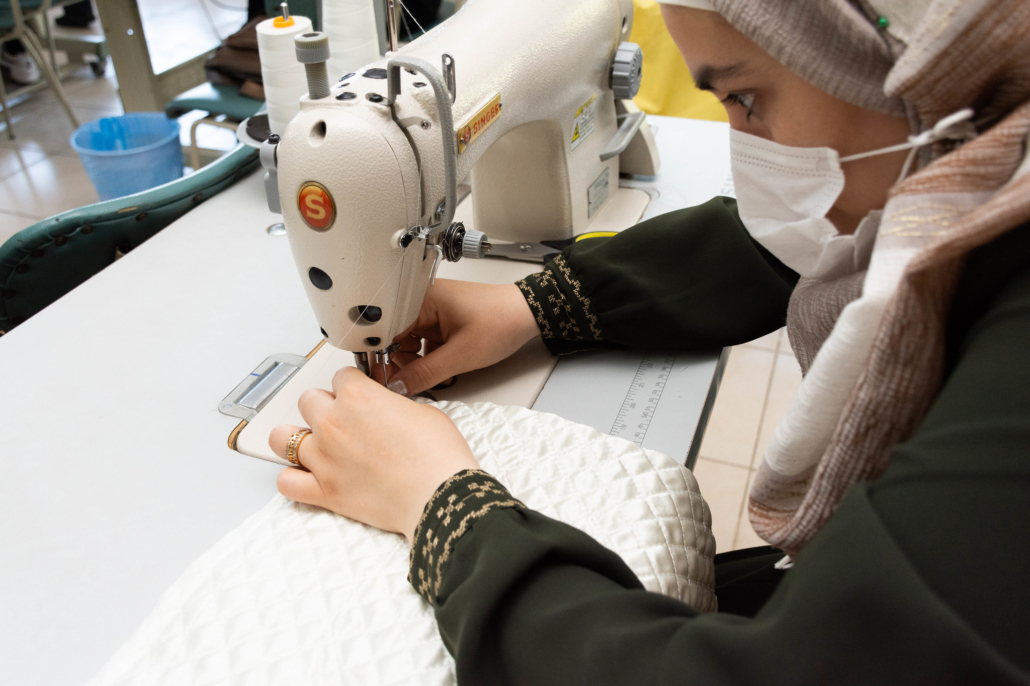
Despite the challenges, Amina, a young woman from Yemen, refused to give up hope. Her school principal nominated Amina to join a UNICEF-supported like-skills and vocational training program, and she eagerly embraced the opportunity. After more than two months, she learned sewing and business management and upon completing the training, Amina received a sewing machine and materials to start her own small business.

“My life has changed. I was afraid of meeting people before, but now I am more confident and independent. I can now provide all my needs without depending on others,” said Amina.

In a modest room made of stone and clay, Amina set up her own small workspace, where she now tailors vibrant dresses for women and girls in her neighborhood. What began as a simple effort to practice her new sewing skills quickly turned into a thriving business as word spread throughout her community. Today, she earns roughly 20,000 Yemeni riyals each month (about $84 USD), which is enough to support her parents and ten siblings. Amina’s journey shows how access to vocational education can transform lives, turning hardship into independence and hope into opportunity.

Economic Ripple Effects

Vocational education in Yemen does more than create jobs; it lays the foundation for long-term economic development. By equipping people with practical skills, training programs help reduce unemployment, boost productivity and encourage small business creation. According to the World Bank, Yemen’s economy had contracted by nearly 60% since 2015, making the rebuilding of human capital crucial for its recovery.

As trained workers begin to rebuild infrastructure and launch microenterprises, they stimulate local markets and attract investment opportunities. Indeed, international partners, including the World Bank and UNDP note that investing in job training in Yemen can also open new avenues for economic cooperation and trade, creating pathways for growth that extend beyond national borders. This progress highlights the importance of vocational education in Yemen as a driver of job training and economic development.

The Good News

Despite the challenges, success stories are emerging across Yemen. In Taiz, a women’s sewing collective launched in 2022 with support from UNICEF has trained more than 200 women in tailoring and business management. Many of these women now run small businesses that provide clothing for their communities and income for their families. In Sana’a, a solar training program that the Social Fund for Development created in partnership with local schools has equipped young people with the skills to install and maintain solar panels, helping restore electricity to schools and homes in areas that power shortages affect.

These programs restore livelihoods and strengthen hope, showing that even amid a crisis, education can rebuild lives and communities. Yemen’s vocational training centers demonstrate that opportunity can flourish in conflict. Supporting these initiatives helps transform crises into capacity, giving young people tools to rebuild their country. 

Advocating for policies and funding that expand the vocational education training center in Yemen remains essential to promoting long-term stability and economic recovery. Strengthening these centers helps create employment opportunities. Supporting local economies and empowering communities to rebuild their future through education and skill development.

– Furdeuce Mused

Furdeuce is based in Oakland, CA, USA and focuses on Good News and Technology for The Borgen Project.

Photo: Flickr

October 26, 2025
https://borgenproject.org/wp-content/uploads/borgen-project-logo.svg 0 0 Jennifer Philipp https://borgenproject.org/wp-content/uploads/borgen-project-logo.svg Jennifer Philipp2025-10-26 01:30:472025-10-26 01:09:22Vocational Education Training Centers in Yemen
Employment, Global Poverty, Migration

Migration to Austria: Social Initiatives Making a Difference

Migration to AustriaSince as early as the 16th century, Austria has drawn in migrants from Europe and around the world. Being situated in the center of Europe and sharing seven international borders, Austria has been both a country that migrants pass through and a country that offers economic stability for those who make it their new home. With a significant 19% of its population being foreign nationals in 2023, migration shapes the country.

Migration to Austria in the Second Half of the 20th Century

In the second half of the 20th century, Austria welcomed refugees from Europe and beyond, including those cast away from conflict in Uganda, Chile and Indochina amongst others. It has also offered a safe haven for persecuted groups.

Increased focus on guest-working programs that distributed manual labor amongst migrants coupled with conflicts in the Balkan region and Kosovo saw a rise in migration across the country in the second half of the century. Such initiatives saw potential for skill development in migrants who were severely limited due to poverty, lack of education and lack of access to basic human necessities. In line with the United Nation’s 2030 Sustainable Development Goals (SDGs), Austria has recognized how such migration benefits the development of the country as a whole and unlocked migrants’ potential by offering them employment and relieving them from poverty.

Thanks to its central location in Europe, stable economy and sympathetic attitude to refugees, it is easy to see why Austria is an obvious choice for many leaving their disadvantaged origins to create new lives abroad. 

Attitudes to Migration to Austria Today

It is no secret that attitudes towards migration have soured Europe-wide, and Austria is certainly not immune. According to a 2016 integration barometer study, 60% more of participants judged the migration of Muslim persons and communities as a negative thing. 

That is not to say that people view it negatively everywhere. The great metropolis of Vienna is predictably more welcoming to refugees and migrants. One empirical study conducted in 2023 revealed that Viennese people have a lot of social contact with people from migrant countries, with many also having family members from abroad. The city generally recognizes the positive impact of migrants on its economy, workforce and varied social landscape.

However, Vienna is somewhat its own microorganism. A study in October 2017 discovered that many Austrians lacked education surrounding issues of migration. Even if they were educating themselves about such issues, studies suggested biased news coverage that called for tougher border controls created unfounded fears and anti-migrant rhetoric.

Initiatives Fighting for Migrants’ Rights

Despite the rise of nationalist rhetoric across the country, social initiatives are still fighting for the lawful right of migration to Austria while also providing migrants with a framework that allows them to live and work in the country legally.

Megaphon, a street magazine based in Austria’s second-biggest city, Graz, just celebrated its 30th birthday. With it, it marked three decades of standing for social equality and migratory rights. Megaphon works specifically with migrants and asylum seekers from West Africa and Eastern Europe, offering them an empowering alternative to begging on the street by giving them the chance to sell the street magazine for double the amount they bought it for. 

Many of the Megaphon vendors have unfortunately slipped through the cracks of the bureaucratic system in Austria, meaning that they often face work permit restrictions. Megaphon makes it possible for vendors to be self-employed without having the necessary documentation.

Social Initiatives Are the Future

Megaphon is just one example of an organization pushing back against the anti-migrant rhetoric that is gaining prevalence across the country. Such initiatives are more important than ever to fight for those on the fringes of society and ensure they do not end up in a life of poverty. 

– Saroj Spickett

Saroj is based in Graz, Austria and focuses on Good News and Global Health for The Borgen Project.

Photo: Pixabay

October 22, 2025
https://borgenproject.org/wp-content/uploads/borgen-project-logo.svg 0 0 Jennifer Philipp https://borgenproject.org/wp-content/uploads/borgen-project-logo.svg Jennifer Philipp2025-10-22 07:30:242025-10-22 03:13:28Migration to Austria: Social Initiatives Making a Difference
Employment, Global Poverty, Migration

Labor Rights and Migrant Workers in Tunisia

Migrant Workers in Tunisia Need Labour Rights Tunisia was ranked among the top 10 worst countries for workers’ rights in 2025 by the International Trade Union Confederation (ITUC). Despite being at the epicenter of protests against corruption and economic deprivation in the region more than a decade ago, Tunisia’s systemic issues remain prevalent, and the poverty rate is still around 15%.

The Global Rights Index

The ITUC organizes to defend workers’ rights across the world, is democratically governed and motivated to manage cooperation between unions and major global institutions. It has created a database to track abuses against migrant workers, called the Global Rights Index. The 12th edition of the Index works to catalogue recent anti-democratic acts against workers from governments, revealing a crisis for workers’ rights globally.

The recent Index is paired with the ITUC’s campaign “For Democracy that Delivers,” an attempt to unite labourers’ collective power to successfully defend their rights. More and more governments are reshaping legislation to criminalize civil organizations as “foreign agents,” the ITUC believes. Unions negotiating for workers’ rights have seen judicial action and legal provisions being used to stifle freedom of expression in Tunisia, causing the ITUC to express concern for union figures facing possible prosecution or arrest.

The Business and Human Rights Resource Centre also manages a database to record the human rights violations against migrant workers around the world. It outlines companies and businesses named in the Migrant Worker Allegation Database, containing publicly recorded cases and conveying how vulnerable migrants are worldwide.

Migrants and Workers

Tunisia holds the status of a transit space and gateway for Sub-Saharan Africans to migrate into Europe, Carnegie Endowment for International Peace experts state. European governments often practice blanket policies and actions to prevent migrants from emigrating or seeking asylum, leaving this group to remain in Tunisia or bordering regions with an unstable status. While remaining in Tunisia, a number of migrants have to undertake work in the region to sustain themselves. 

An affiliated union in the Union Générale Tunisienne du Travail (UGTT) was established to organize Sub-Saharan African workers in light of their sizable number in the workforce. The UGTT, a political actor and union representing 800,000 Tunisian members, remains one of the Arab world’s most influential trade unions. Inclusion in this union provides a framework to succeed in strengthening the rights of migrant workers in Tunisia, securing and including them as part of a formal economy.

The International Labour Organization’s (ILO) conventions are agreements self-sanctioned and ratified by Tunisia, of which more than half are enforced according to the Danish Trade Union Development Agency. Despite this, the ITUC’s research stands that these rights are in jeopardy due to the persecution of free speech. Additionally, the government did not sign the four ILO ratifications specific to migrant protections as of 2024.

Anti-migration practices have led to the obstruction of critically inalienable human rights of migrants. Similar treatment is undeniably advancing toward other groups, as evidenced by the ITUC describing worsening rights for all workers in Tunisia. Both vulnerable to wavering legal frameworks, unadopted protective legislation and the degradation of workers’ rights, migrant workers in Tunisia have multidimensional security concerns.

Sub-Saharan African Migrants

Migrant workers from Sub-Saharan Africa faced even greater levels of hostility and economic risks from anti-migrant sentiment in the Tunisian government. Human Rights Watch recounts severe, “racially motivated” abuses after President Kais Saied’s abrasive remarks sparked violence in the first half of 2023. A large number of Black migrants, refugees and asylum seekers faced physical endangerment and economic risks due to targeted firings, increased unemployment and robberies.

Migrants unlawfully losing jobs creates less revenue for the host country, as the OECD claims economic impacts from migration are related to their structural integration into labour markets, salaries and employment. Its research suggests that, generally, migrants do not take more benefits than citizens and that they contribute more in taxes on average.

The Saied government’s lack of protection for the process of seeking asylum directly opposes its state obligation to shelter asylum seekers and refugees. International law also mandates the right to seek asylum from persecution according to Article 14 of the Universal Declaration of Human Rights. 

Looking Ahead

Despite increasing research and clarification on economic and humanitarian complexities, the Tunisian administration has held steadfast to expulsion tactics against the unprotected group. Tunisia has been encouraged by various human rights organizations on actions to take in order to uphold its duty to protect asylum seekers, migrants and refugees. Databases like the Global Rights Index and union operations for legislative inclusion are critical to confronting the issues faced by migrant workers in Tunisia.

– Aliyah Omar

Aliyah is based in Alberta, Canada and focuses on Global Health and Politics for The Borgen Project.

Photo: Pexels

October 12, 2025
https://borgenproject.org/wp-content/uploads/borgen-project-logo.svg 0 0 Precious Sheidu https://borgenproject.org/wp-content/uploads/borgen-project-logo.svg Precious Sheidu2025-10-12 07:30:352025-10-12 01:20:02Labor Rights and Migrant Workers in Tunisia
Education, Employment, Global Poverty

Higher Education in Barbados

Higher Education in BarbadosBarbados has a high literacy rate of 99% among its youth and adult population. This can be due to several factors but the main impact is from the government investing in the education system. In fact, in 2023, 12.5% of the government expenditure went to educational institutions across the island. From primary to secondary education, students receive resources to complete their learning regardless of financial challenges. These investments set students up for pursuing trade schools or higher education, which allows a range of opportunities for future careers. For some students, this can be the difference between independence and living in poverty. Higher education in Barbados offers promises for personal development, critical thinking skills and job stability.

Poverty and Education in Barbados

Barbados has a population of more than 282,000 within its borders. About 9% of its population lives in poverty on less than $6.85 a day. This percentage has only slowly decreased from 11.1% in 2016. The country also depends on tourism, foreign services and international businesses.

The World Bank has expressed concern for education in the Caribbean. It argues that teaching methods within the Caribbean remain traditional and have not caught up to the 21st-century demands. In addition, these countries, like Barbados, do not have the spending potential to implement devices and technological screens in classrooms as opposed to whiteboards and markers. Schools also have poor internet access and students do not have access to the necessary devices to gain a gateway into the internet age.

Barbados is also ill-equipped to work around climate events and diseases that affect the classrooms. For example, during the COVID-19 pandemic, students struggled with online schooling, with some even having no access to devices or the internet altogether. With the lack of wider access to technology and digital infrastructure, there is a worry for a lack in media literacy and critical thinking within the youth population. There is an effort to mitigate these circumstances, however.

Better Life Barbados

Better Life Barbados is an initiative created in 2023 to tackle the nation’s biggest issues. Its vision is that by 2030, poverty will decrease by 50%, home ownership will have increased among Barbadians and wider access to financial services on the island. Its six main missions include achieving a clean and sustainable state, equitable access to clean water and nutritious food and Digital inclusion in a resilient society.

It aims for a digital infrastructure that provides service access for all its citizens. This mission will aid students from primary to tertiary education to gain access to the internet and devices at home and also within their schools. Creating access and inclusion within the digital space for students and teachers will improve the literacy and numeracy rates across institutions. In addition, teachers can transition from traditional teaching methods to a mixed method of teaching as well.

Ministry of Education 

The higher education system in Barbados is well known for its emphasis on inclusivity, primarily led by the Ministry of Education. The Ministry of Education is the primary overseer of education from the infant level to the tertiary level. Established in 1974, the ministry is responsible for the development and implementation of programs in relation to education, technology and vocational training. The education system offers a variety of options for students to complete school. There are public schools available, which do not require any school fees. For secondary education, which hosts forms one through five, there are fees for books and resources utilized during the students’ education.

The Ministry administers the Caribbean Secondary Education Certificate (CSEC) exam for Form 5 students interested in higher education. It is a standardized school-leaving exam, provided by the Caribbean Examinations Council. Tertiary education institutions utilize the exam in accepting applicants pursuing post-secondary studies. In order to gain entry to the higher education of Barbados, applicants must have the CSEC or a General Certificate of Education. There is a total of four tertiary institutions that fall within the Ministry of Education in the country.

Tertiary Education

The Ministry of Education offers scholarships and grants to students, based on financial need, to access higher education in Barbados. It is in addition to fee waivers to accommodate students who cannot afford book and resource fees. These waivers are provided for studies at Samuel Jackman Prescod Polytechnic (SJPP) and the Barbados Community College.

SJPP offers the flexibility of choosing programs during the day and night. The school hosts a range of trades, such as building and engineering, agriculture and electrical trades. Similarly, Barbados Community College hosts courses in academic and vocational areas. It covers the arts, sciences and education. In addition, BCC offers associate degrees, post-graduate and post-associate degrees.

The University of the West Indies (UWI) comprises three campuses in the Caribbean. The three campuses are the Mona campus in Jamaica, St. Augustine in Trinidad and Cave Hill in Barbados. The university provides diplomas and certificates at the undergraduate and postgraduate levels. It offers majors such as medicine, computer science, science and technology, humanities and more.

Erdiston Teachers’ College is an institution that provides training to participate in the education system. It gives this training to graduate and non-graduate teachers. Students can attend it after completing secondary education.

Financial Aid

The Ministry of Education governs these four institutions and provides financial aid for students. However, financial expenses often shift from government to government. Before 2014, the government of Barbados took on the bills of tertiary education students of UWI on the island. Post 2014, the government decided to finance only 80% of students’ college education, which caused 20% of fees and costs to be remained. The following academic years at the University of the West Indies saw a significant decline of undergraduate students from 6,159 in 2014 to more than 3,000 in 2017 to 2018. This shows that students struggled to take on these expenses in order to remain in college. In May 2018, after elections ceased, the government fully resumed tertiary education fees but the damage had already been done. Enrollment years since have been unable to meet previous years pre-2014.

The island hosts a multitude of degrees offered at the undergraduate and postgraduate levels. Undergraduate students can aim for associate’s degrees, bachelor’s degrees, diplomas and certificates. Postgraduate degrees offered are a Master’s degree, a Research Master’s and a Doctoral degree. There is a constant need for innovative skills and experiences within the digital landscape. University students are able to be considered for these new jobs that provides a consistent source of income and an increased salary. Through financial funding of public universities and scholarship aid, Barbados is asserting a workforce that contributes to the country’s improvement.

Looking Ahead

Barbados champions its competitive education from childhood to tertiary education. Even though the unemployment rate as of 2023 hung around 7.9%, the Ministry of Education advocates for inclusivity, especially for students with special needs and disabilities. It strengthens the job market and prepares them for their future careers and jobs, thereby maintaining their independence. Additionally, various institutions can be considered for the final step beyond secondary education. There are constantly evolving methods being sought out to cater to students of all needs and the growing labor market as well. Missions like Better Life Barbados ensure a continued commitment to Barbadians and develop these methods to make a high-quality of life and accessible education possible for all.

– Nickaylia Anderson

Nickaylia is based in Syracuse, NY, USA and focuses on Good News and Politics for The Borgen Project.

Photo: Flickr
October 11, 2025
https://borgenproject.org/wp-content/uploads/borgen-project-logo.svg 0 0 Jennifer Philipp https://borgenproject.org/wp-content/uploads/borgen-project-logo.svg Jennifer Philipp2025-10-11 03:00:122025-10-11 02:58:56Higher Education in Barbados
Employment, Global Poverty, Nonprofit Organizations and NGOs, Technology

Youth Opportunities: Digital Literacy Programs in Southeast Asia

Digital Literacy Programs in Southeast AsiaSoutheast Asia is at the heart of one of the world’s fastest-growing digital economies. However, millions of people miss out on these opportunities because they lack digital skills, even as the region’s marketplaces grow and sectors are transformed by technology. This digital divide often leads to economic hardship, limiting the chances of upward mobility. Programs for digital literacy have become an essential response, giving young people the skills and knowledge they need to succeed in the modern workforce. By linking youth to employment, entrepreneurship and innovation, these initiatives aim to reduce unemployment and address poverty at its roots.

Growing Digital Economy and Skills Gap

Southeast Asia’s digital economy could reach $360 billion by 2025 and surge toward $1 trillion by 2030. However, most of the region’s workforce still lacks the digital skills needed to participate fully in this transformation. For instance, in Indonesia and Singapore, only 52% of non-tech employees receive digital skills training annually, as compared to 81% of tech employees. As a result, roughly half of non-technical employees do not have access to annual digital training. This gap threatens to widen inequality, as those without digital literacy remain locked out of opportunities created by online platforms, remote work and technology-driven industries. Thus, young adults run the risk of becoming stuck in low-wage, unofficial jobs that perpetuate poverty cycles. 

Impact of Digital Literacy Programs in Southeast Asia

Digital literacy programs in Southeast Asia are proving to be effective engines of opportunity as they equip young people with marketable skills. Initiatives such as “Digital Jobs Philippines” and Singapore’s “SkillsFuture” help thousands of young people get hands-on experience in coding, e-commerce and digital communication. Similarly, the United Nations Development Programme (UNDP) launched its “Skill Our Future” program in 2023. It offers free online training in AI, digital literacy and workplace skills to underserved youth in the Philippines and across Asia, specifically to improve employability. In the same year, UNDP and Microsoft announced a joint initiative to equip 2 million underserved youth in Asia with digital and AI skills, further boosting their chances in the labor market. 

Digital Literacy and Inclusivity

The impact of digital literacy programs in Southeast Asia extends beyond individuals. Marginalized youth, especially rural populations and women, often face the greatest challenges when it comes to digital participation. U.N. Women highlights that in several Asia-Pacific low and middle-income countries, women are 20% less likely to own smartphones or access the internet compared to men, emphasizing the critical need for training that is inclusive by design.

Moreover, according to the United Nations Children’s Fund (UNICEF), by 2030, 80% of jobs in Southeast Asia will require basic digital literacy and information and communications technology (ICT) skills. These digital literacy programs aim to close the inequality gaps by reshaping entire communities when designed to be inclusive. When marginalized youth gain digital skills, they secure better employment opportunities and also uplift their families and communities. Bridging these divides strengthens social cohesion and ensures that economic growth does not exclude anyone. These measures directly advance the fight against poverty as minoritized groups obtain opportunities to acquire skills that are greatly in demand, hence helping them access a plethora of opportunities. 

Long-Term Gains for Economies and Communities

Digital literacy does more than prepare individuals for immediate job opportunities. It also strengthens national economies. The Asian Development Bank expects improved digital skills to add $1 trillion to Asia’s GDP by 2030. A workforce with strong digital skills draws in investment, encourages innovation and increases resilience to shocks to the economy. This ensures that Southeast Asian economies remain competitive in the global marketplace. This long-term growth translates into poverty reduction on a national scale, as higher employment rates generate tax revenue that governments can reinvest in social programs, infrastructure and education. 

Looking Ahead

Digital literacy provides a pathway to opportunity by equipping Southeast Asia’s youth with highly demanded skills. In addition to empowering young entrepreneurs and ensuring that disadvantaged groups are not left behind, programs that offer these skills open avenues to employment. As governments, nongovernmental organizations (NGOs) and the private sector expand their investment in digital education, they are laying the groundwork for inclusive growth and long-term poverty reduction.

– Anagha Rajithkumar

Anagha is based in Charlottetown, Prince Edward Island, Canada and focuses on Business and Technology for The Borgen Project.

Photo: Flickr
October 1, 2025
https://borgenproject.org/wp-content/uploads/borgen-project-logo.svg 0 0 Precious Sheidu https://borgenproject.org/wp-content/uploads/borgen-project-logo.svg Precious Sheidu2025-10-01 01:30:582025-10-01 00:54:02Youth Opportunities: Digital Literacy Programs in Southeast Asia
Education, Employment, Global Poverty

Vocational Education Training Centers in the Dominican Republic

Vocational Education Training Centers in the Dominican Republic“On the one hand it’s crazy because when you take a course at INFOTEP, if it’s not in Santo Domingo, you can’t get a job, just a diploma… but if you do it online you get a job,” said Berkis Mateo, a former INFOTEP student from San Cristóbal, in a phone interview with The Borgen Project in September 2025, reflecting the uneven opportunities that define vocational education training centers in the Dominican Republic.

The basic premise of vocational training is simple: by equipping people with skills that the labor market rewards, it reduces unemployment while higher skill levels raise wages. But in the Dominican Republic, the effectiveness of these programs is mixed.

Dominican women face persistent inequality. According to the World Bank, they earn just 60% to 80% of men’s wages and make up nearly half of all informal workers, where jobs are unstable and underpaid. The U.N. World Food Program reports that nearly 23% of Dominicans live in poverty, with 3.5% in extreme poverty, while youth unemployment hovers above 13%.

In 2009, youth unemployment reached 28.1% among young women compared to 16.6% overall. To respond, vocational education programs like Juventud y Empleo (PJyE) trained more than 72,500 at-risk youth between 2002 and 2013, 57% of them women. However, the results highlight the urgent need for reform.

The Role of INFOTEP

Founded in 1980, the Instituto Nacional de Formación Técnico Profesional (INFOTEP) has become the country’s leading authority on vocational training. It operates independently, with input from government, employers, and labor unions. By law, every formal company contributes 1% of its payroll to INFOTEP, creating a reliable financial base unmatched by most public institutions.

INFOTEP offers more than 150 career paths, ranging from automotive mechanics and IT to hospitality, health care, construction and refrigeration. General Director Rafael Santos Badía announced in August 2024 that more than 3.8 million Dominicans have graduated from its programs since its creation, including 1.77 million young people between 2020 and 2024 alone.

Limits of Digital Access

Leunam Trinidad, the Academic Director at the Dominican Institute of Art and Design (COS) of INFOTEP and a licensed operator of a virtual INFOTEP training center, explained to The Borgen Project in an interview on September 2025 how technology is helping expand access.

“From what we offer, digital marketing works best because of the content format,” he explains. “The office software package is the hardest…because many students don’t have computers and must use their phones, which makes it very difficult.”

Virtual vocational education training centers allow people to study from anywhere in the country. Yet, the digital divide undermines the promise of digital learning. The Internet Society gave the country an overall Internet resilience score of 40% in 2024, indicating a medium capacity to withstand unexpected faults.

Many poor households lack reliable Wi-Fi, and electricity insecurity remains widespread, particularly outside major cities. This means that while online courses technically expand access, the poorest Dominicans are often excluded again. In other words, whether in person or online, poverty itself limits the benefits of even free vocational training.

How INFOTEP Programs Help

Leunam noted that his operation trains around 5,000 people each year. Like all INFOTEP programs, courses require minimum class sizes, typically 35 participants. Free programs are often oversubscribed, and thousands of applicants are turned away annually.

Since courses are free courses, they are often oversubscribed, and thousands of applicants are turned away each year. The very communities most in need are often the least able to benefit.

Vocational training contributes beyond employment. Dominican Today reports that in Puerto Plata, INFOTEP recently graduated 44 new park rangers, strengthening conservation in a country facing deforestation, erosion, and tourism pressures. It also certified 173 brigadistas, volunteers who bolster disaster response in a nation vulnerable to hurricanes, floods and preventable emergencies.

Vocational education training centers in the Dominican Republic can also play a crucial role in narrowing inequality, including the gender gap. Programs like PJyE show that women gained higher expectations of life success, greater self-esteem and improved wage demands long after training.

Stories From the Ground

But the path is uneven. Mateo’s story underscores the gap between training and opportunity. “I did a two-month internship and did not get a job because the pay was so low it only covered my bus fare from San Cristóbal to Santo Domingo,” she told The Borgen Project in a phone interview. In effect, commuting costs erased the benefits of her training and kept her trapped in underemployment, a challenge that thousands face outside the capital.

The Road Ahead

Despite its accolades, INFOTEP reflects the contradictions of Dominican society. Most advanced programs are concentrated in the most urbanized provinces, Santo Domingo and Santiago. This leaves rural provinces—where poverty is the deadliest—without access.

Institutions like the Loyola Polytechnic Institute (IPL) in San Cristóbal demonstrate another path forward. Though smaller in scale, IPL offers high-quality programs in electronics, mechatronics, and industrial design, while embedding values-based training. It highlights how partnerships beyond INFOTEP can diversify opportunities and address gaps in access. The challenge lies in scaling this success, so that opportunity extends beyond the cities to the poorest provinces.

– Shannon Garrido

Shannon is based in the United Kingdom and focuses on Politics for The Borgen Project.

Photo: Flickr
September 20, 2025
https://borgenproject.org/wp-content/uploads/borgen-project-logo.svg 0 0 Jennifer Philipp https://borgenproject.org/wp-content/uploads/borgen-project-logo.svg Jennifer Philipp2025-09-20 01:30:552025-09-20 02:34:56Vocational Education Training Centers in the Dominican Republic
Developing Countries, Employment, Global Poverty

4 Key Innovations in Poverty Eradication in Paraguay

Poverty in ParaguayParaguay has made remarkable progress in cutting poverty over the past two decades. According to the World Bank Group, the country’s poverty rate fell from 51.4% in 2003 to 24.7% in 2022. Social entrepreneur Martin Burt has been among the leading figures in creating innovations to reduce poverty in Paraguay. This success comes despite continuous challenges. Paraguay, a landlocked developing country in South America, with a population of around 6 million, still struggles with inequality and human capital gaps. Many Paraguayans face poor access to quality education, health care and formal employment.

Since the fall of the dictatorship in 1989, a strong implementation of macro-economic policies, market reform and social programs have driven significant growth and lifted millions out of poverty. Nonetheless, inequality still remains stagnant amongst Paraguayans. The World Bank Group has issued four key recommendations to improve poverty: invest in human capital, create quality jobs, strengthen the fiscal system and increase climate resilience. Here are four key innovations in poverty eradication in Paraguay.

1. Investment in Human Capital

Education reform is at the center of Paraguay’s long-term anti-poverty strategy. The OECD’s Paraguay Country Program, officially launched in March 2025, lists improving teacher training as a top priority. Experts see better-trained teachers as essential to raising learning standards and preparing students for the job market. 

One example is Tikichuela: Mathematics in My School, an online program designed to support teachers in helping primary students develop math skills. A Berkeley study found that Tikichuela has successfully narrowed the learning gap between low- and high-performing students in Paraguay. According to the study, 65% of students do not have the minimum proficient standards in mathematics, science and reading, making such teacher-supported programs vital. The initiative, which currently benefits 4,000 students in Paraguay, highlights how equipping teachers with the right tools and training enables them to deliver more effective learning. Building on this success, in 2017 the Paraguayan government announced plans to expand funding for Tikichuela at a national scale.

2. ‘Poverty Spotlight’ – Fundación Paraguaya

Social innovator Martin Burt developed Poverty Spotlight, a self-assessment tool that helps families, organizations and NGOs to assess their poverty levels on a holistic level. This innovation uses a metric of 50 indicators across six dimensions including: Income & Employment, Health & Environment, Housing & Infrastructure, Education & Culture, Organization & Participation and Interiority & Motivational. This creates a personalized ‘life map’ for individuals to understand their state of poverty and how best to overcome it.

The system uses a traffic-light color code: Red (extreme poverty), Yellow (poverty) and Green (not poverty). Staff works directly with the people, designing tailored plans to overcome their challenges. Families and individuals track their progress over time, moving from red to green with the support from local mentors and community. Since 2013, 100 public and private businesses in Paraguay have adopted the tool to improve employee well-being, reaching more than 15,000 workers and their families.

In 2021, the United Nations awarded Poverty Spotlight the ODS Recognition (Sustainable Development Goals) for its work dedicated towards ending poverty.

3. Creating Job Opportunities

Fundación Paraguaya runs several programs to help individuals gain key skills and find secure work. Here are some of its innovative programs that are aiding poverty eradication in Paraguay: 

  1. Football without Poverty: Football without Poverty is a program that encourages the combination of sport and activities connected to entrepreneurship to disconnect from the multidimensional poverty within families and communities.
  2. Junior Achievement Paraguay: This program develops the entrepreneurial skills of young people. This has benefited 27,000+ young people in 2024.
  3. Academy of Women Entrepreneurial (AWE): The Department of State of the United States Embassy in Paraguay initiated this enterprise. Its goal is to provide women with the necessary software platforms for them to carry out their business successfully.
  4. Young Ambassadors: Young Ambassadors provides full scholarships to 13 young leaders aged between 15 and 17 years old for a cultural exchange in the United States while representing Paraguay. They take part in training and activities enhancing their leadership skills. 
  5. Let’s Be Open: The foundation promotes this program as part of rebooting the economy in collaboration with Coca-Cola Paraguay. The program provides training to those without jobs or education, with the aim of increasing skills and employability.

Unemployment hit a record high of 8.55% in June 2021, but has since fallen to 5.7%. These innovations support Paraguay’s broader goal of eradicating poverty by fostering entrepreneurship and expanding economic participation.

4. Investing in Climate Resilience

Paraguay is one of the world’s leaders in clean energy production, generating 99.9% of its electricity from zero-carbon hydropower infrastructure. Thanks to its efficient dams, the country is able to produce more than it consumes. It exports the surplus to its neighboring countries Argentina and Brazil. These exports account for 7.1% of Paraguay’s net GDP, serving as a major source of public funding revenue that can be put towards social programs aimed at further reducing poverty.

However, a Berkeley study warns that the country’s climate shocks affect the success of its electricity export. A previous drought reduced export revenues by 12%, reducing the funds available for infrastructure, education and job creation, all of which are critical in reducing poverty in Paraguay.

Looking Ahead

Paraguay’s combination of education reform, innovative poverty measurement, job creation programs and climate conscious economic infrastructure shows how targeted strategies can reduce poverty in sustainable ways. The four key innovations in poverty eradication in Paraguay are key players in bringing the country forward.

– Ashley Pfeifer

Ashley is based in London, UK and focuses on Business and Good News for The Borgen Project.

Photo: Unsplash

September 6, 2025
https://borgenproject.org/wp-content/uploads/borgen-project-logo.svg 0 0 Jennifer Philipp https://borgenproject.org/wp-content/uploads/borgen-project-logo.svg Jennifer Philipp2025-09-06 01:30:252025-09-05 15:03:304 Key Innovations in Poverty Eradication in Paraguay
Conflict, Employment, Global Poverty

Preserving Yemen’s Cultural Pride

Yemen's Cultural PrideSince 2015, the civil war in Yemen has remained one of the largest humanitarian crises in the world. Widespread poverty, displacement, famine and diseases have dismantled the country. More than 80% of Yemenis struggle to access food, safe drinking water and adequate health services. The ongoing conflict and oppressive system continue to limit and deny Yemenis their fundamental human rights and freedoms.

However, Yemen’s cultural heritage fosters a profound sense of belonging, identity and resilience amidst the ongoing humanitarian crisis and conflict. Several initiatives are preserving and restoring historical archives, while instilling Yemen’s cultural pride and opportunities in the young generation. The Yemeni House of Music, Takween Cultural Club and the UNESCO Cash for Cash project are initiatives promoting artistic and creative industries, increasing employment and creating social cohesion among the Yemeni population.

Yameni House of Music and Art

Yemeni House of Music and Art (YHMA) is dedicated to preserving Yemen’s rich musical and artistic heritage. By digitizing 10,000 recordings, the lyric and audio heritage has been safeguarded. This has encouraged new research, helping to revive Yemen’s cultural heritage efforts. Additionally, there is a push to instill cultural pride in the younger generation by getting them involved in crafting and playing the Yemeni lute, Al Quanbus.

This endangered traditional musical instrument has been revived and honoured by Yemeni youth. YHMA promotes artistic expression through performances and exhibitions celebrating the richness of Yemeni culture. Likewise, The Heritage Symphony echoes a similar message and recently hosted composer Mohammad Alghoon, who plays a significant role in preserving Yemen’s musical legacy.

Alghoon’s ability to blend authenticity with modernity creates a distinct image of contemporary Yemeni cultural pride. Both celebrate Yemeni musical heritage, creating spaces of love, connection and identity, while promoting cultural pride.

Takween Cultural Club

The Takween Cultural Club ensures safe and expanded access to cultural artefacts and experiences. In particular, the restoration of the Alsutania Library has transformed the oldest library in Hadramout, becoming one of the first modern libraries in the Arabian Peninsula. The Writing Foundation supported the restoration project by reviving 3,000 manuscripts through basic repair strategies. During this process, damaged texts were digitized by newly trained library staff and volunteers.

More than 800 people participated, especially young men and women who gained practical IT and library management training. Both bookbinding and digital archiving formed the basis for ensuring the library’s longevity. After six months of conservation work, the library saw a 600% increase in visitors. Researchers, writers and university students can work safely and contribute to the archives. The library became a symbol of Yemeni cultural pride and community. It also became a hub for education and discussion through seminars and events, enriching public engagement.

UNESCO Cash for Cash Project

UNESCO Cash for Work supports Yemen’s disadvantaged youth by promoting social welfare opportunities. Launched in 2018, Cash for Work creates jobs related to cultural preservation for Yemen’s urban youth. The project seeks to develop sustainable short- and long-term employment opportunities since young people comprise 70% of the Yemeni population. These are focused on regeneration activities and the restoration of historic buildings.

This provides economic benefits and fosters a sense of cultural pride, social cohesion and peace-building through these restorative efforts. Additionally, Cash for Work addresses urban youth well-being and livelihood as it gives young people a purpose and skill set, preventing them from being influenced by radicalization movements.

Going Forward

Yemen’s cultural pride is at the nation’s heart, destabilized by the ongoing conflict. For many Yameni, these three initiatives have provided a sense of belonging, identity and community spirit. They have also successfully instilled a strong sense of cultural pride and purpose in the young generation of Yemenis to continue preserving, celebrating and restoring their rich and profound heritage into the future.

– Jule Riemenschneider

Jule is based in Oxford, UK and focuses on Good News for The Borgen Project.

Photo: Flickr

September 2, 2025
https://borgenproject.org/wp-content/uploads/borgen-project-logo.svg 0 0 Hemant Gupta https://borgenproject.org/wp-content/uploads/borgen-project-logo.svg Hemant Gupta2025-09-02 07:30:482025-09-01 13:32:10Preserving Yemen’s Cultural Pride
Employment, Food & Hunger, Global Poverty

How Mexico’s Plant-Food Industry Is Fighting Poverty

Mexico’s Plant-Food IndustryMexico is a global leader in plant-based living, boasting the world’s second-largest population adhering to a plant-based diet. Nearly 20% of Mexico’s population identifies as either vegan or vegetarian. The rise of Mexico’s plant-based food sector is driven by young people younger than 35, who comprise the most significant percentage of the nation’s vegans and vegetarians.

Plant-based diets can improve the health of Mexicans while also creating job opportunities and ending hunger among those most in need. In recognition, in April 2024, Mexico enacted the General Law on Appropriate and Sustainable Food (LGASS). This aimed to promote the consumption of healthy foods, though not necessarily vegan foods and ensure sustainable food production.

The law called upon the Secretariat of Health to establish regional food baskets, prioritizing locally or regionally produced foods derived from sustainable production. This naturally emphasizes fruits, vegetables and traditional plant-based staples.

Improving People’s Health

Diabetes, heart disease, high cholesterol and obesity all contribute to an early death. People can mitigate these ailments with a healthy diet of vegetables, fruits and whole grains. Plant-based diets of these foods allow people to get a rich assortment of vitamins and minerals.

One common misconception is that animal protein is the only source of protein. Plant-based diets provide plenty of protein, including foods like peanut butter, tempeh and beans. Mexicans eat beans multiple times daily, using them as a versatile ingredient in many dishes. This high consumption of beans, among other plant-based meat alternatives, ensures that vegans and vegetarians in Mexico always have a source of high-protein foods.

Another common misconception is that plant-based diets cause vitamin deficiencies. Except for vitamin B12, a balanced diet of fruits, vegetables and whole grains provides every vitamin a person needs. A vitamin B12 supplement is strongly recommended for people interested in switching to a plant-based diet. However, it’s worth noting that one in six meat-eaters will also experience vitamin B12 deficiency anyway, so a supplement is recommended either way.

New Economic Opportunities for Mexican Workers

New plant-based food companies are rapidly expanding across Mexico. They actively create crucial job opportunities for workers and skillfully leverage Mexico’s vast network of produce farmers to develop innovative products. Mexico already boasts a significant export market for fruits and vegetables and global companies are increasingly recognizing and investing in this burgeoning sector, further solidifying its economic potential within the nation’s borders.

Mexico’s plant-food industry is impacting poverty by generating new, high-paying manufacturing jobs that offer upward mobility for individuals who might otherwise have few options for stable employment. Food manufacturing is a critical driver of jobs throughout Mexico and the accelerating growth of the plant-based food sector holds immense potential to expand employment opportunities significantly for people living in impoverished areas.

Increased Food Availability and Ending Hunger

A common misconception suggests that plant-based diets are more expensive, but the evidence strongly indicates otherwise; plant-based eating can significantly save people money compared to meat-rich diets. This is particularly true for low-income communities, which often consume more plant-based foods due to their lower cost. Increasing access to diverse plant-based options in these communities would empower families to achieve well-balanced diets without financial strain.

As incomes rise, people tend to eat more meat, a trend seen in high-income countries like the U.S. and China, where meat is consumed at nearly every meal. The plant-based food industry is working to counter this by promoting the benefits of plant-based diets in low-income communities.

Respecting Cultural Differences and Individual Beliefs

Mexico’s growing plant-food industry offers undeniable benefits, holding the potential to alleviate poverty and uplift disadvantaged communities toward greater prosperity. This burgeoning industry promotes healthier lifestyles and fosters sustainable economic development. It creates new jobs and investment opportunities across the nation’s agricultural and manufacturing sectors. Beyond economic advantages, the health benefits of a plant-based diet impact individuals regardless of their income.

– Jeff Mathwig

Jeff is based in Philadelphia, PA, USA and focuses on Global Health and Politics for The Borgen Project.

Photo: Pexels

September 2, 2025
https://borgenproject.org/wp-content/uploads/borgen-project-logo.svg 0 0 Hemant Gupta https://borgenproject.org/wp-content/uploads/borgen-project-logo.svg Hemant Gupta2025-09-02 07:30:042025-09-01 13:37:20How Mexico’s Plant-Food Industry Is Fighting Poverty
Page 4 of 9«‹23456›»

Get Smarter

  • Global Poverty 101
  • Global Poverty… The Good News
  • Global Poverty & U.S. Jobs
  • Global Poverty and National Security
  • Innovative Solutions to Poverty
  • Global Poverty & Aid FAQ’s
Search Search

Take Action

  • Call Congress
  • Email Congress
  • Donate
  • 30 Ways to Help
  • Volunteer Ops
  • Internships
  • Courses & Certificates
  • The Podcast
Borgen Project

“The Borgen Project is an incredible nonprofit organization that is addressing poverty and hunger and working towards ending them.”

-The Huffington Post

Inside The Borgen Project

  • Contact
  • About
  • Financials
  • President
  • Board of Directors
  • Board of Advisors

International Links

  • UK Email Parliament
  • UK Donate
  • Canada Email Parliament

Get Smarter

  • Global Poverty 101
  • Global Poverty… The Good News
  • Global Poverty & U.S. Jobs
  • Global Poverty and National Security
  • Innovative Solutions to Poverty
  • Global Poverty & Aid FAQ’s

Ways to Help

  • Call Congress
  • Email Congress
  • Donate
  • 30 Ways to Help
  • Volunteer Ops
  • Internships
  • Courses & Certificates
  • The Podcast
Scroll to top Scroll to top Scroll to top