• Link to X
  • Link to Facebook
  • Link to Instagram
  • Link to TikTok
  • Link to Youtube
  • About
    • About Us
      • President
      • Board of Directors
      • Board of Advisors
      • Financials
      • Our Methodology
      • Success Tracker
      • Contact
  • Act Now
    • 30 Ways to Help
      • Email Congress
      • Call Congress
      • Volunteer
      • Courses & Certificates
      • Be a Donor
    • Internships
      • In-Office Internships
      • Remote Internships
    • Legislation
      • Politics 101
  • The Blog
  • The Podcast
  • Magazine
  • Donate
  • Click to open the search input field Click to open the search input field Search
  • Menu Menu

Archive for category: Development

Information and stories on development news.

Development, Global Poverty, Health

3 Infrastructural Changes for Healthcare in Guinea

Healthcare in Guinea
Guinea, officially the Republic of Guinea, is a Western African country located between Mali to the northeast and Sierra Leone to the southwest. With a population of 12.41 million and a total gross domestic product (GDP) equivalent to $11.4 billion, Guinea is one of the poorest nations in the world. Guinea’s poverty has limited its ability to develop the infrastructure necessary to sustain the health of its citizens. The people of Guinea have historically faced widespread public health risks such as malaria and Ebola. Infrastructural improvements resulting from domestic and global efforts are improving healthcare in Guinea.

The Problem: Lack of Healthcare Spending

As of 2018, Guinea’s per capita GDP of $920.80 amounted to only 7% of the world’s average. Within this figure, Guinea’s healthcare spending averaged the equivalent of $34 per capita. This minute healthcare budget has led to a variety of public health problems in Guinea, especially before 2014, such as:

  • Maternal & Under-5 Mortality: Guinea’s maternal mortality rate is among the highest in the world. Between 2006 and 2012, an average of 724 mothers passed away per every 100,000 live births. Guinea’s under-5 mortality rate is also a global stand-out. In the same time frame, an average of almost 120 children under the age of 5 passed away per every 1,000 births.
  • Malaria: Malaria has historically been troubling for Guinea, taking more lives annually than any other disease and ranking as the country’s top public health concern. The disease strains Guinea’s healthcare system and heavily contributes to its under-5 mortality rate. Malaria causes 31% of consultations, 25% of hospitalizations and 14% of hospital deaths of children under the age of 5.
  • Epidemic Risk: From 2014-2016, Guinea endured the worst of the Ebola epidemic. Originating in Guinea and spreading to nine other countries, reports determined there were a total of 28,000 cases and 11,000 deaths. Guinea was ill-prepared to face this outbreak due to limited resources and is at even greater risk from faster and more infectious diseases such as COVID-19.

Despite these issues, healthcare in Guinea is showing significant progress thanks to a combination of domestic and global efforts beginning in 2014. In the midst of the 2014 Ebola epidemic, the United States, alongside almost 30 other countries, co-initiated the Global Health Security Agenda (GHSA). The agenda focuses on struggling countries at high risk for infectious diseases like Guinea, equipping them with the resources to improve health systems by revitalizing their physical and organizational infrastructure. The GHSA would mark the beginning of a series of legislation to improve the capacity of Guinea’s healthcare system through infrastructure improvement. Here are the top three infrastructure changes for healthcare in Guinea.

 3 Infrastructure Changes for Healthcare in Guinea

  1. Emergency Operations Centers: The United States Centers for Disease Control (CDC) helped create a system of public health Emergency Operations Centers (EOCs) in 2015. These centers successfully responded to yellow fever, anthrax and Lassa fever in Guinea. They also strengthened vaccination campaigns for polio, tetanus and measles.
  2. Health Commodities: The United States Agency for International Development (USAID) aims to increase the capacity of Guinea’s public health systems by providing resources such as health training, equipment and technical assistance to struggling communities. The USAID Global Health Supply Chain Program, launched in February 2017, has helped maintain a continuous supply of these commodities.
  3. Epidemic/Pandemic Preparedness: The International Federation of Red Cross and Red Crescent Societies (IFRC) aims to help communities prepare and respond to health crises such as epidemics and pandemics. In conjunction with USAID funding, the IFRC created the Community Epidemic and Pandemic Preparedness Program (CP3) in 2017. This program strengthens the ability to prevent and address infectious diseases in Guinea and seven other countries. The infrastructure created through this program will continue to help in the preparation and response to such global crises as the COVID-19.

These global efforts have already proven effective. Guinea’s maternal mortality rate decreased from 724 per 100,000 births in 2006-2012 to 576 in 2017. Similarly, the under-5 mortality rate dropped from 120 per 1,000 births to about 100. 

While Guinea’s mortality rates may be decreasing and its healthcare improving, there is still much the country needs to do to attain a suitable healthcare system: even the country’s lower mortality rates are still among the highest in the world. Guinea must maintain and push forward global initiatives for better infrastructure for the sake of its livelihood.

– Asa Scott
Photo: Flickr

August 20, 2020
https://borgenproject.org/wp-content/uploads/borgen-project-logo.svg 0 0 Jennifer Philipp https://borgenproject.org/wp-content/uploads/borgen-project-logo.svg Jennifer Philipp2020-08-20 10:46:182024-05-29 23:23:273 Infrastructural Changes for Healthcare in Guinea
Children, Development, Education, Global Poverty

How TikTok is Educating Millions of Indian Users

TikTok was founded in September 2016 and has since taken the world by storm. Designed for users to easily create and share short videos that are meant to entertain and inspire, the social networking platform has roughly 800 million active users and has been downloaded almost 500 million times in India alone. The founders of TikTok realized the immense influence the app holds within the country and thus launched an educational campaign called EduTok. Through this initiative, TikTok is educating millions of Indian users by providing important resources to India’s youth and encouraging the democratization of India’s digital community.

What Is EduTok?

Users of EduTok include the hashtag #EduTok in any educational, motivational or career-related content in order to spread intellectual information throughout the Indian community. The hashtag has shared over 10 million videos since its genesis in October 2019, receiving more than 48 billion views.

Developing Partnerships with TikTok

Many educational technology companies including Made Easy, Toppr and GradeUp have acknowledged the influence of #EduTok and have collaborated with TikTok to promote their content. These partnerships deliver subject-focused information via entertaining videos, centralizing users’ interests and encouraging them to explore specific career paths.

TikTok also established an #Edutok Mentorship Program with Josh Talks and The/Nudge Foundation, two Indian nonprofit organizations. Josh Talks is an Indian media platform that highlights educational and motivational speakers to encourage India’s youth to form connections and pursue their interests; The/Nudge Foundation focuses on improving poverty, unemployment and education in India. The #EduTok Mentorship Program provides specialized educational content to first-time internet users to improve their transition to the digital world. The program will accomplish this mission by hosting 25 workshops to provide users with hands-on learning experiences from popular #EduTok creators. With just 5,000 users invited to attend each workshop, this experience will be uniquely personalized and participatory, including tailored content like skill development, career planning and identity building. By personalizing content and providing in-depth, hands-on experiences, young Indians have a unique opportunity to advance their knowledge and explore various career fields.

Inspiring A Wide Impact

#EduTok is a multifaceted integrated campaign. Although the campaign has only been launched in India so far, cities in India have interpreted and utilized the campaign differently to create a diverse platform. For instance, users in Bhopal primarily watch motivational videos; users in Armistrar concentrate on language learning; users in Delhi focus on technology hacks. By allowing each community to cater content to its unique needs, the #Edutok campaign provides a sense of adaptability that has enabled its immense success.

#EduTok is not the only rising TikTok initiative. The company recently collaborated with the National Skill Development Corporation (NSDC) to promote the #Skills4All campaign, a program that provides Indian youth with vocational training and skill development opportunities. These two campaigns both work to support education initiatives and encourage creativity with the common goal of boosting India’s economy through its youth.

In the midst of COVID-19 and other global challenges, TikTok is educating millions of Indian users by exploiting its influence to do good. By providing free and entertaining educational resources to billions of Indian youth through #EduTok, the company is ushering in a new-age approach to learning that will help to democratize education. Because of the #EduTok and #Skills4All campaigns, TikTok transformed from a popular social media platform to a service with real social value.

– Ashley Bond
Photo: Pixabay

August 19, 2020
https://borgenproject.org/wp-content/uploads/borgen-project-logo.svg 0 0 Kim Thelwell https://borgenproject.org/wp-content/uploads/borgen-project-logo.svg Kim Thelwell2020-08-19 12:38:112024-06-11 23:17:18How TikTok is Educating Millions of Indian Users
Development, Global Poverty, Health

The Rising Risk of Coronary Heart Disease in China

Coronary Heart Disease in ChinaAs China’s population growth rate continues to stabilize after a 2.7% peak in 1966, low birth and death rates indicate increased access to education, healthcare and employment opportunities. Stabilized population growth initiates a transition toward cardiovascular diseases like coronary heart disease (CHD). Cardiovascular disease is the leading cause of death worldwide; coronary heart disease in China remains the country’s second leading cause of cardiovascular death.

Risk Factors in China

CHD often leads to cardiac arrest and occurs as a result of cholesterol buildup in the coronary arteries. Out of the 290 million patients who suffer from cardiovascular disease in China, CHD accounted for approximately 11 million cases in 2018.

Risk reduction occurs through lifestyle modifications that promote physical activity and a healthy diet. Risk factors include:

  • High blood pressure
  • Obesity
  • Physical inactivity
  • High-sodium diet
  • Alcohol consumption
  • Exposure to air pollution
  • Smoking

China faces greater vulnerability to CHD due to common lifestyle choices, occurring as a result of the country’s economic growth and development. For instance, residents experiencing urbanization in low- and middle-income communities often utilize efficient transportation methods like trains or buses rather than physical activities such as biking, running or walking. Chinese dietary patterns also reveal the popularity of processed foods consumption. These processed foods are made with significant amounts of sodium and relatively low amounts of essential nutrients like potassium, vitamin C and calcium.

Dr. Cemal Ozemek, clinical assistant professor and cardiac rehabilitation director at the University of Illinois at Chicago, told The Borgen Project that developing countries experiencing economic growth “may have increased access to calorie- and sodium-dense foods,” as well as “decreases in daily life physical activity….and transition to sedentary jobs.”

In terms of tobacco use, China is the leading consumer and producer of tobacco products worldwide with nearly 300 million users. Since one-third of the global smoking population resides in China, smokers and non-smokers alike experience frequent exposure through direct and secondhand consumption. Tobacco alters blood chemistry and produces plaque buildup in the coronary arteries, further increasing the risk of CHD in China.

The Intersection of Poverty and Industrialization

Over 80% of global CHD deaths occur in low and middle-income countries. As the average Chinese life expectancy continues to rise, rapid industrialization, population aging and dietary changes are leading to an overall increase in the prevalence of CHD. Like many other countries, however, the impoverished population of China is disproportionately affected by CHD due to the following risk factors:

  • Decreased resources allocated to cardiovascular disease prevention
  • Lack of access to healthcare
  • Increased exposure to indoor air pollution
  • Inability to afford nutritious food

Impoverished people affected by China’s rising industrialization are at greater risk for cardiovascular diseases like CHD due to inaccessible healthy lifestyle modifications. Additional deficits like lack of environment walkability, little access to health education and high prevalence of food deserts affect CHD incidence rates among impoverished Chinese communities.

Improving Access to Healthcare in China

The Basic Public Health Services (BPHS) program was implemented in 2009 to provide free primary health services to Chinese residents. BPHS includes the establishment of medical records for Chinese residents, as well as health management and education programs. Another initiative, the Medical Financial Assistance (MFA) program, ensures healthcare access by providing financial assistance to low- and middle-income households. In 2012, the MFA assisted over 58 million individuals in primary health insurance enrollment.

Improving access to healthcare reduces the risk of CHD in China by providing residents with free recommended health consultations and check-ups. As a result, CHD patients experience increased life expectancy through early diagnosis and treatment initiatives. Financial assistance is crucial in extending healthcare access to impoverished communities because it assists low-income households with treatment costs.

According to the World Health Organization, cardiovascular diseases like CHD often reinforce cyclical poverty due to “catastrophic health spending” and “high out-of-pocket expenditure.” In addition to improving access to healthcare, nationwide interventions such as tobacco-free policies, taxation on high-sodium foods and health education systems help reduce the risk of coronary heart disease in China.

– Madeline Zuzevich
Photo: Flickr

August 19, 2020
https://borgenproject.org/wp-content/uploads/borgen-project-logo.svg 0 0 Kim Thelwell https://borgenproject.org/wp-content/uploads/borgen-project-logo.svg Kim Thelwell2020-08-19 12:37:572024-05-29 23:22:10The Rising Risk of Coronary Heart Disease in China
Development, Global Poverty

Roadblocks to the Elimination of Poverty in Gabon

Poverty in Gabon
For many citizens of the nation of Gabon, living on less than $2 a day is a harsh reality, with a third of the population living below the poverty line. However, this affliction of poverty in Gabon sharply contrasts the economic success of wealthier citizens, showcasing significant inequality within the country.

Economic Successes and Failures

Gabon had a GDP per capita of more than $7,600 as of 2019, the fourth-highest on the continent. Oil is by far the top industry in Gabon; as a small African country on the Atlantic Ocean, 80% of its exports are based on oil production, along with 45% of its GDP. However, some consider this dependence on the abundant supply of oil to be more of a curse than a blessing, as fluctuations in prices have the potential to significantly damage the Gabon economy. Additionally, oil dependence has also contributed to inequality, with only 20% of the population holding around 90% of the wealth in the nation. Gabon has done little to expand economic possibilities in spite of these effects, leaving approximately 400,000 people unable to find work and reinforcing the affliction of poverty.

Urbanization

Urbanization is incredibly high in Gabon, with more than half of the population living in two cities, Libreville and Port Gentil. In the overcrowded slums of Libreville, Gabon’s capital and largest city, many immigrant workers and local Gabonese live in absolute poverty. Thousands of people in Gabon’s urban areas do not have reliable sources of food or proper means of sanitation.

A positive for those living in the urban areas of Gabon is that clean drinking water is readily available: more than 97% of citizens living in cities have access. In rural areas, however, the percentage drops to less than 55%. Gabon’s government is working to make clean drinking water accessible throughout the country. In 2018, the African Development Bank (ADB) granted Gabon a fund of $96.95 million to improve the water deficit in Libreville by expanding the drinking water infrastructure into the greater Libreville area and other municipalities.

Lack of Infrastructure

The lack of developed infrastructure in rural areas has been a crippling issue. Most of the country’s roads are unpaved and impassable during the rainy season. The postal system is a nightmare for businesses trying to move products and raw materials around Gabon. To combat issues like these, Bechtel, an American engineering company, agreed to a partnership with Gabon in 2010, to complete projects improving transportation, housing, education, medical facilities and water and waste management. After six years of work, the partners agreed to extend the partnership by an additional $25 billion. The project will build 17 schools capable of housing 15,000 children, provide 64,000 homes with clean energy and repair roads and railroads, among other improvements. This modernization effort could prove revolutionary for industries in Gabon as well as the country’s poor. At the very least, this overhaul is bringing jobs to a population in desperate need, as the project hired much of its workforce locally.

In recent years, there have been great strides toward repairing Gabon’s economic issues. Reducing poverty in Gabon by diversifying the economy and repairing infrastructure both seem to be successful initiatives. With plans in place to modernize the country, prosperity could be on the horizon for the less fortunate citizens of Gabon.

– Matthew Beach
Photo: Flickr

August 18, 2020
https://borgenproject.org/wp-content/uploads/borgen-project-logo.svg 0 0 Borgen Project https://borgenproject.org/wp-content/uploads/borgen-project-logo.svg Borgen Project2020-08-18 07:30:222022-03-04 10:36:50Roadblocks to the Elimination of Poverty in Gabon
Development, Global Poverty, Health, Water Sanitation

10 Facts About Sanitation in Gabon

Sanitation in GabonGabon, officially known as the Gabonese Republic, is a coastal country about the size of Colorado, home to 2.1 million people. Independent of French imperial rule for only 60 years, the country maintains strong ties to European and American markets. Gabon neighbors the Atlantic Ocean to its west and many rivers inland, from the Ogooue to the Ivindo. Despite its recent development, however, poverty and access to basic sanitation still plague about one-third of the population. Here are 10 facts about sanitation in Gabon: both the present and plans for the future.
10 Facts about Sanitation in Gabon

  1. The country is working toward providing clean water to all. Gabon’s first Libreville Integrated Drinking Water Supply and Sanitation Program aims for universal access to sustainable forms for attaining drinking water and sanitation services by 2025. This program plans to expand the drinking water network out from the capital; by doing so, drinking water will reach about 300,000 more people in surrounding areas. The cities of Akanda, Owendo and Ntoum will all benefit from this infrastructure.
  2. Every home could soon have its own sanitation equipment. The use of shared sanitation in Gabon, or sanitation services utilized by two or more households, has significantly dropped from 36% of the population in 2003 to 27% in 2017. This is largely due to the increase in infrastructure for these services and outreach programs implemented by the government and international agencies.
  3. Defecating in public is uncommon, but back on the rise. Open defecation in Gabon is presently low, with 3% of the total population in 2017 compared to other countries like Niger (68%) and Ghana (18%). However, this figure actually shows an alarming increase from 2000, when a mere 1% of the population practiced open defecation.
  4. Disparities in access to water and sanitation are interconnected. In 2017, from the organized efforts of the WHO and UNICEF, it was reported that 90% of Gabon’s urban areas had access to drinking water but only 49% of households had access to basic sanitation services. In rural areas, availability drops significantly to 55% and 37%, respectively. Such disparities can be attributed to the lack of infrastructure and the wealth gap seen between the two areas.
  5. Education is helping to improve sanitation. Total Gabon and French organization Sensibilisation, Sante, Sexualite (3S) have been spearheading vital health programs in schools since 2017. These comprehensive programs aim to decrease the infant mortality rate and unsafe abortions. This will be done through education on sexual health, female hygiene and sanitation. As of 2017, over 40,000 people have learned the importance of family planning, contraception and pregnancy management. The program has also trained 42 young peer educators, who will become instrumental in further spreading valuable lessons on sanitation.
  6. Poor sanitation leaves Gabon’s citizens vulnerable to food and water-borne illnesses. According to a 2020 report from The World Factbook, people in Gabon are at a very high risk of food or waterborne diseases like bacterial diarrhea; however, deaths caused by diarrheal diseases have dropped by 22.8% from 2007 to 2017.
  7. Industrial pollution contributes to sanitation issues. In many underdeveloped countries, pollutants from excessive chemical use in agriculture and logging severely contaminate waterways. With Gabon’s robust timber industry, this phenomenon is especially apparent. Luckily, though, the country has dedicated one of its three pillars for a better future to environmental sustainability: “Green Gabon,” has diversified the job sector to reduce strain on the timber industry, lessening the amounts of air and water pollution byproducts. This translates into better conservation efforts, drinking water, disease and sanitation in Gabon.
  8. Drainage systems offer hope for improved sanitation. The Nzeng Ayong Watershed Management Project in Gabon incorporated a water drainage system in urban areas to improve sanitation in Gabon. As part of the National Indicative Program of the European Union, these drainage pipes and sanitation framework provided easy transport of wastewater. This helps prevent water-borne diseases and floods for 30,000 people in Libreville.
  9. COVID-19 is exacerbating current sanitation problems. Due to the global pandemic, many in Gabon are suffering a hard hit to their economy and the resulting unemployment. Nearly 250,000 additional people are now unable to pay their water bills, severely restricting access to drinking water. Gabon’s Budget Support Programme in Response to the COVID-19 Crisis not only intends to cover bills for those 250,000 people but also to distribute food aid to 60,000 people in its first phase alone.
  10. International aid organizations are getting involved. The World Bank and UNICEF have provided significant aid to Gabon. The World Bank has contributed $9 million to improve the country’s sanitation by supplying equipment like ambulances, personal protective equipment (PPE) and diagnostic kits. This money will also fund proper medical training and two new COVID-19 diagnostic centers. UNICEF has focused on supporting children in Gabon during COVID-19: the organization has funded sanitation kits, COVID-19 awareness campaigns, HIV/AIDS prevention initiatives and other educational efforts to 950 children without parental care. Mental and psychological resources have also been extended to 6,608 kids. Safe and accessible sexual abuse reporting systems have reached 811 people.

Universal sanitation and related basic needs are clearly part of an intricate web that entangles a host of other internal problems. With the rising influence of existing and emerging domestic and international programs, these investments will improve sanitation; this will ultimately move Gabon toward a healthier future.

– Mizla Shrestha
Photo: Flickr

August 4, 2020
https://borgenproject.org/wp-content/uploads/borgen-project-logo.svg 0 0 Kim Thelwell https://borgenproject.org/wp-content/uploads/borgen-project-logo.svg Kim Thelwell2020-08-04 12:58:212024-05-29 23:18:5910 Facts About Sanitation in Gabon
Development, Global Poverty, Health

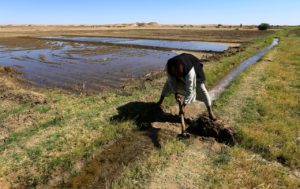
Solar-Powered Water Pumps Help Farmers in Sudan

Solar-Powered Water PumpsAs much as one-third of territory in the Northern State of Sudan can support agriculture, a key industry for Sudanese living in poverty. However, unequal access to reliable electricity and water leads many farmers to rely on diesel pumps to irrigate crops. The introduction of solar energy, specifically solar-powered irrigation, reduces farmers’ reliance on fossil fuels. This technological advancement reduces the expenses of farmers while dramatically increasing agricultural productivity.

Risks of Diesel-Powered Irrigation

Solar-powered water pumps help farmers eliminate their dependence on fossil fuel and overcome energy scarcity. An estimated 20 million people live without access to electricity in Sudan, approximately 65% of the country’s population. In the rural regions of Sudan, that percentage is even higher. For instance, up to 80% of rural Sudanese farmers lack reliable access to electricity.

Due to this scarce access to electricity, many farmers rely on diesel-powered water pumps to irrigate their fields. Diesel pumps not only produce harmful greenhouse gases but also can reduce agricultural efficiency. Specifically, the expensive and fluctuating prices of diesel fuel limit growing seasons and prevents farmers from planting consistently. Furthermore, the pumps contribute to smaller-scale environmental hazards by contaminating the surrounding water and plants.

Benefits of Solar-Powered Water Pumps

Solar-powered water pumps overcome the issue of energy scarcity by powering irrigation without tapping into fossil fuels. This mechanism helps farmers by providing a fuel source for irrigation that is both stable and effectively cost-free aside from initial installation and regular maintenance charges.

Solar-powered water pumps also help farmers increase land cultivation. Confidence in the availability of energy to irrigate crops enables farmers to increase cultivation. One pilot program for the introduction of solar pumps in the Northern State, operated by the United Nations Development Programme, found that the introduction of solar-powered water pumps increased the amount of land cultivated by farmers by 47%.

For example, the dry summer months were previously not economically viable due to the need for increased water-pumping and therefore costly diesel fuel. Following the introduction of solar-powered water pumps, land cultivation grew by 87% during the summer. Overall, farmers reported dramatic changes regarding both savings and reductions in overhead costs for farm management.

Additionally, solar-powered water pumps allow farmers to enrich agricultural production with high-value crops. Although agriculture accounts for around 80% of employment and roughly one-third of GDP in Sudan, individual farmers are particularly susceptible to poverty and food insecurity. However, with extended growing seasons and cuts in the cost of irrigation, Sudanese farmers can produce higher-value crops such as lemons, mangoes and cotton.

The Future of Solar Irrigation in Sudan

The Global Environmental Facility granted 4.89 million U.S. dollars to install 1,440 solar-powered water pumps throughout the Northern State between 2016-2021. The statistics make it clear that the farmers involved in pilot programs experienced notable benefits by utilizing solar pumps.

In addition to these individual benefits, Solar-powered irrigation could have much wider implications globally. The Sudanese initiative alone is projected to ultimately eliminate 860,100 tons of CO2 emissions and save 268,800 metric tons of diesel. Applied on a global scale, this technology could serve to drastically reduce emissions from the agricultural industry as a whole.

– Alexandra Black
Photo: U.N.

July 27, 2020
https://borgenproject.org/wp-content/uploads/borgen-project-logo.svg 0 0 Kim Thelwell https://borgenproject.org/wp-content/uploads/borgen-project-logo.svg Kim Thelwell2020-07-27 01:30:202024-05-29 23:18:51Solar-Powered Water Pumps Help Farmers in Sudan
Development, Global Poverty, Health

The Process of Improving Healthcare in Puerto Rico

Healthcare in Puerto Rico
Puerto Rico is a United States territory located east of Cuba with the Atlantic Ocean and the Caribbean Sea surrounding it. This beautiful tropical paradise is a land of wonder with picturesque landscapes for tourists and residents alike. However, behind this convincing guise is the reality of poverty and illness that plagues the country. With 43% of Puerto Rico living in poverty, the healthcare system is a system of great importance as it acts as a crutch to those living in poverty. Here is some information about healthcare in Puerto Rico.

Medicaid in Puerto Rico

Medicaid in Puerto Rico serves approximately half of Puerto Rico’s population of 3.2 million people. The Medicaid program in Puerto Rico is an outlier in comparison to other U.S. states, having to supply healthcare to those in need while facing shortages of doctors and funds. The annual healthcare budget in Puerto Rico is $367 million as of 2019, however, estimates determine that expenditures are closer to $2.8 billion.

Additionally, the Medicaid program operates on a Managed Care system. This system helps to manage cost, utilization and quality, making healthcare in Puerto Rico more affordable and offering better utilization of health resources.

Additional Funding

The Affordable Care Act, section 2005, provided the Medicaid program in Puerto Rico with $5.4 billion in additional Medicaid funding from July 1, 2011, to Sept 30, 2019. Puerto Rico also received an additional $925 million in funds to establish a healthcare market. The country had to exhaust Previous Affordable Care Act funds before it could use additional funds. The Affordable Care Act is a health reform law that passed in March 2010. The law has three goals including increasing the availability of affordable health insurance, expanding the coverage of the Medicaid program to cover adults below 138% of the federal poverty line and supporting innovative methods of medical care delivery to decrease costs of healthcare.

Doctors Leaving the Country

While medical professions receive respect and high pay in the U.S., this is not necessarily true for Puerto Rico. In fact, many Puerto Ricans enter the medical field so they can one day migrate to the mainland U.S.A. According to the Economic Research Institute, the annual average income for a Family Doctor is $194,307, while the U.S. average is $237,000.

Another issue that doctors in Puerto Rico are facing is the scarcity of medical equipment and personnel, often resulting in prolonged waiting times for appointments. According to Vox, the waitlist can take “as long as four to six months to see professionals,” a direct result of Puerto Rico losing approximately 15% of all medical personnel on the island.

Puerto Rico College of Physicians and Surgeons

Shortages in medical personnel and lack of funding have increased wait times and created shortages of medical supplies in Puerto Rico. Thankfully, the Puerto Rico College of Physician and Surgeons is working to combat these challenges. This organization emerged through Law 77 in 1994 and is mandatory for all students pursuing a career in the medical field. The Puerto Rican government uses it to provide doctors where people need them most. The Puerto Rico College of Physicians and Surgeons ensures that doctors studying in Puerto Rico serve there for sometime before finding opportunities elsewhere. As of 2016, the organization has lost approximately 4,000 members to the “temptation in accepting one of those lucrative job offers,” shrinking the number of members from 14,000 to 10,000.

Jaideliz Moreno

The state and quality of healthcare in Puerto Rico have fallen as the years pass by, proving to negatively affect the population. On a seemingly average day in Vieques, a small island off the coast of mainland Puerto Rico, Jaideliz Moreno developed flu-like symptoms. This is a common issue that people face on the mainland U.S.A., but it was a life or death situation for Jaideliz. This was because Vieques, recovering from the destruction that Hurricane Maria caused in 2017, lacked a proper hospital. A small clinic for veterans alongside a labor and delivery room has replaced the hospital that Hurricane Maria destroyed. The small clinic named Susana Centeno Community Health Center lacked the medical supplies necessary to cure 13-year-old Jaideliz Moreno. A helicopter rushed her to mainland Puerto Rico but she died on the way there.

FEMA —Federal Emergency Management Agency— is an agency that strives to support citizens and first responders to show that as a nation we work better together in the face of adversity and disaster. As of January 2020, FEMA has approved $39.5 million to fund the Susana Centeno Community Health Center until a permanent hospital in Vieques is built. As of now, there is no projected completion date of the Vieques hospital.

Healthcare in Puerto Rico is a developing system in need of vital resources and proper funding. This kind of support is key to the growth and improvement of Puerto Rico’s medical work.

– Ernesto Gaytan
Photo: Flickr

July 21, 2020
https://borgenproject.org/wp-content/uploads/borgen-project-logo.svg 0 0 Jennifer Philipp https://borgenproject.org/wp-content/uploads/borgen-project-logo.svg Jennifer Philipp2020-07-21 15:07:172024-05-29 23:18:02The Process of Improving Healthcare in Puerto Rico
Development, Foreign Aid, Global Poverty

5 Countries That Show Development Assistance is a Two-Way Street

Development AssistanceThe Development Assistance Committee (DAC) is a division of the Organisation for Economic Co-operation and Development (OECD). It facilitates economic development worldwide, partly by providing financial assistance to developing countries. The DAC currently has 30 members, including the U.S., Japan and the European Union. According to analysis organization DevelopmentAid, 155 countries received development assistance from these members and of other non-member donors in 2018.

Development Assistance Programs

Official Development Assistance (ODA) distributes financial assistance annually to low-income, lower-middle- and upper-middle-income status countries. Eligibility is based on national per capita income. Countries transcend eligibility once they exceed the high-income threshold set by the World Bank for three consecutive years.  The highest Gross National Income (GNI) was $12,376 as of 2018.

Many countries have graduated from being ODA recipients to become donors themselves. Researchers from the Overseas Development Institute found countries become donors when possible both out of morality and the recognition that aid can “lubricate commercial, trade and investment opportunities” for a donor country. But, it’s not just high-income countries that recognize this. Some nations have become development donors even while still being ODA recipients. Below are five such countries that are both aid donors and recipients simultaneously, proving foreign aid is often a two-way street.

Five Countries That Prove Foreign Aid is a Two-Way Street

  1. Brazil. With a 2019 GNI of $9,130 dollars, Brazil is an upper-middle-income country. It is an ODA recipient, receiving about $430 million in net ODA and official aid in 2018. According to the data organization Development Initiatives, Brazil’s biggest donors are Japan, Norway and Germany. Most of its ODA capital is directed to improving water and sanitation, agriculture and food security and infrastructure. However, Brazil has long been a donor nation, too. In 2010, the Brazilian government found that from 2005-2009 the country invested “more than $1.8 billion dollars into international development” efforts. In 2010 alone, Brazil disbursed $1 billion in aid abroad. One year later, it received that same amount itself in ODA financing. Brazil’s donations largely go to Latin America, the Caribbean and sub-Saharan Africa, particularly for peacekeeping and humanitarian purposes.
  2. South Africa. South Africa is an upper-middle-income ODA recipient with a 2018 GNI of $5,750. It received about $915 million in net ODA and official aid in 2018. In 2011, it received $1.5 billion, but it disbursed $209 million, according to Development Initiatives. Accurate assessments of total contributions and contribution breakdowns are hard to acquire because South Africa’s foreign aid programs are managed by various government organizations. Nevertheless, the country has several successful programs like the African Renaissance and International Cooperation Fund, which have steadily increased contributions since launching in 2001. South Africa’s foreign aid primarily fosters development across Africa. Conversely, as an ODA recipient, the country gets most of its ODA aid from the U.S., EU Institutions and Germany. It is directed primarily toward health issues.
  3. India. As of 2018 data, India is considered a lower-middle-income country. Its GNI for 2019 was $2,130, an all-time high for the country. However, as a nation far from the high-income threshold, it still receives substantial foreign aid. In 2018, it received $2.45 billion in ODA and official aid. The biggest ODA donors to India are the International Development Association, Japan and Germany. These funds are primarily spent on improvements in infrastructure, health and education. However, in 2011, while India took the third-largest share of ODA aid with $5.4 billion received, it also became the sixth-largest non-DAC member donor country. It disbursed $787 million toward international development cooperation. India’s contributions primarily support technical and economic development in Africa. 
  4. Chile. Chile was removed from the ODA eligibility list in 2018, having reached high-income status. It remained at $14,670. However, before achieving this status, Chile’s international development cooperation had been bilateral. The country was helping other nations throughout the world. Though its main beneficiaries are in Latin America and the Caribbean, Chile disburses money to a variety of areas for various purposes as needed. For example, it contributed $100,000 toward the crisis in Syria. The OECD estimated that in 2010, Chile’s overall contributions reached $42 million. However, it still received ODA at that time. In 2012, Chile was an upper-middle-income country and received $126 million in net ODA, largely from France and European Union institutions.
  5. Indonesia. With a 2018 GNI of $3,840, Indonesia is a lower-middle-income country that received just under $950 million in ODA and official aid in 2018. In 2011, Indonesia received $3.7 billion, making it the tenth-largest recipient of ODA. Japan is its largest donor. Almost 25% of all aid goes toward improving the country’s infrastructure. Despite still receiving such a large amount of foreign aid, Indonesia is seeing some growth. ODA’s share of national GNI has steadily decreased while government spending has increased. Moreover, in 2019, Indonesia created the Indonesian Agency for International Development to ramp up the country’s own participation in foreign aid. The agency will manage a $283 million endowment fund the government has set aside for development cooperation.

Development assistance benefits both national and global economies because it allows countries that don’t have sufficient funds internally to build domestically as well as participate in trade with other nations. This supports the logic in development aid flowing both ways in several countries. Brazil, South Africa, India, Chile and Indonesia are just five countries that exemplify such a circumstance.

– Amanda Ostuni
Photo: Wikimedia

July 12, 2020
https://borgenproject.org/wp-content/uploads/borgen-project-logo.svg 0 0 Kim Thelwell https://borgenproject.org/wp-content/uploads/borgen-project-logo.svg Kim Thelwell2020-07-12 15:47:442024-05-29 23:18:345 Countries That Show Development Assistance is a Two-Way Street
COVID-19, Development, Global Poverty

Top 3 Athletic Companies Aiding COVID-19 Efforts


Sports often bring people together and provide a sense of normalcy and relief during times of crisis. Amid the COVID-19 pandemic, athletes have stepped up and contributed to COVID-19 relief efforts. Marcus Rashford successfully lobbied the United Kingdom government to provide meals for impoverished school children and Lionel Messi donated €1 million to COVID-19 research and treatment. Major athletic companies have also supported global responses to COVID-19 around the world. Here are three major athletic brands contributing to the global fight against COVID-19.

Top 3 Athletic Companies Aiding COVID-19 Efforts

  1. Nike: Nike is arguably the most responsive athletic company in the world in regards to supporting worldwide COVID-19 responses. Nike, along with the Nike Foundation, has committed to donating about $25 million to help with the COVID-19 response. This donation will go toward the World Health Organization as well as funding for communities where Nike has headquarters. This includes $1 million to the COVID-19 Solidarity Response Fund and $1.1 million to the King Baudouin Foundation. The Solidarity Response Fund helps vulnerable low-resourced communities, protects displaced people and refugees and provides essential supplies such as food to impoverished and at-risk people. The funds for the King Baudouin Foundation will go towards funding for vulnerable and disadvantaged groups in Europe, the Middle East and Africa who have been heavily affected by COVID-19.
  2. Adidas: Adidas is supporting frontline workers, as well as donating to the global COVID-19 response. The company has produced over 100,000 medical masks for worldwide distribution to frontline workers. Adidas’ donations to fight COVID-19 have reached almost $5 million. To date, Adidas’ donations add up to $3.25 million towards the COVID-19 Solidarity Response Fund and $1.35 million to the China Youth Development Foundation. The funds to the Solidarity Response Fund will go towards similar causes as the donation from Nike, helping impoverished individuals and communities around the world. Donations to the China Youth Development Foundation will be used to help treat and respond to COVID-19 in disadvantaged regions in the country and help impoverished children who have been affected by COVID-19.
  3. Reebok: Through its Reebok Love campaign, the company has supported funding for global COVID-19 relief efforts. With every pack of face masks sold until June 30, Reebok will donate $2 to COVID-19 relief efforts, up to a total of $1.5 million. The donations are going to Save the Children’s Global Coronavirus Response Fund. The Save the Children fund will help support vulnerable regions like refugee camps and conflict zones by providing these areas with preparedness training and medical supplies. Funding will also go towards meals and educational supplies for impoverished regions where remote learning is not an option.

The actions these major athletic brands took in response to the global pandemic shows what is possible when the world and companies unite for the betterment of global health. By donating equipment and funds, these athletic brands are helping healthcare and frontline workers in the battle against COVID-19 while also supporting impoverished communities impacted by the virus.

–Zachary Laird
Photo: Flickr

June 29, 2020
https://borgenproject.org/wp-content/uploads/borgen-project-logo.svg 0 0 Kim Thelwell https://borgenproject.org/wp-content/uploads/borgen-project-logo.svg Kim Thelwell2020-06-29 15:59:092024-05-30 07:52:16Top 3 Athletic Companies Aiding COVID-19 Efforts
Development, Education, Global Poverty, Poverty

An Update on the Europe 2020 Strategy on Poverty

Europe 2020 strategy on povertyEach decade the European Union (EU) establishes an agenda to achieve goals for growth and social well-being. For the previous decade, the EU strategy focused on “smart, sustainable and inclusive growth” led by advancements in five main areas: employment, R&D and innovation, climate change and energy, education, poverty and exclusion. These five factors were essential in strengthening the EU economy. It also prepared the EU’s economic structure for the challenges of the next decade.

The Europe 2020 strategy set the target of lifting “at least 20 million people out of the risk of poverty.” To achieve this, the EU’s agenda included actions in stimulating education programs and employment opportunities. These actions aim to help Europeans at risk of poverty develop new skillsets. They also help Europeans find jobs that position them better in society.

For the last 10 years, poverty reduction has been a key policy component of the EU. In 2008, Europe had 116.1 million people at risk of poverty. As a result, EU members sought to reduce the number of poor Europeans to less than 96.1 million by 2020. Yet, as of 2017, the number of people at risk of poverty had only decreased to 113 million. So, what were the challenges that kept the EU from achieving its goal?

Employment in Rural Areas

The main tools the Europe 2020 strategy relied on greater access to education. Eurostat research shows that employment is crucial for ensuring adequate living standards. Furthermore, it provides the necessary base for people to live a better life. Although the EU labor market has consistently shown positive dynamics, the rates didn’t meet the Europe 2020 strategy target employment rate of 75 percent, especially in the rural areas. Jobless young people in rural Europe make up more than 30 percent of people at risk of poverty. As a result, the lack of new job openings and career paths in rural areas hindered individuals from escaping poverty and social exclusion.

Local Governance and Application of EU Strategic Policies

According to reports from 2014, the EU’s anti-poverty strategy was interpreted differently in every country. There is no common definition of poverty across all 27 member states. Therefore, the number of people at risk and their demographics vary. Moreover, EU policies were not implemented in all countries equally. Regional administrations and rural mayors are responsible for implementing EU anti-poverty policies. This localized approach resulted in a lack of coordination that was needed to correctly and efficiently realize the EU’s tools and strategies.

Education: The Winning Strategy Against Poverty

Despite these challenges, the EU showed that poverty can be addressed through education. Seen as key drivers for prosperity and welfare, education and training lie at the heart of the Europe 2020 strategy. Since higher educational attainment improves employability, which in turn reduces poverty, the EU interlinked educational targets with all other Europe 2020 goals. The Europe 2020 strategy did in fact achieve its goal of reducing the rates of people leaving education early to less than 10 percent in several EU countries. It also increased the number of workers having completed tertiary education to at least 40 percent. Both of these goals provide reasonable evidence of downsizing the risk of poverty by providing access to education.

Today, upper secondary education is the minimum desired educational attainment level for EU citizens. A lack of secondary education presents a severe obstacle to economic growth and employment in an era of rapid technological progress, intense global competition and specialized labor markets. Europeans at risk of poverty profit the most when given access to secondary education because it provides a path to staying active in society and learning marketable skills. The longer young people from rural areas pursue academic goals, the higher the chances of employment.

Moving Forward

As the Europe 2020 strategy showed, universal access to education has the potential to impact poverty across the European Union. Gaining new skillsets is one of the best ways to provide Europeans at risk of poverty and social exclusion with more opportunities for development and prospects for a better life.

– Olga Uzunova 
Photo: Flickr

June 10, 2020
https://borgenproject.org/wp-content/uploads/borgen-project-logo.svg 0 0 Kim Thelwell https://borgenproject.org/wp-content/uploads/borgen-project-logo.svg Kim Thelwell2020-06-10 01:30:222024-05-29 23:15:57An Update on the Europe 2020 Strategy on Poverty
Page 62 of 163«‹6061626364›»

Get Smarter

  • Global Poverty 101
  • Global Poverty… The Good News
  • Global Poverty & U.S. Jobs
  • Global Poverty and National Security
  • Innovative Solutions to Poverty
  • Global Poverty & Aid FAQ’s
Search Search

Take Action

  • Call Congress
  • Email Congress
  • Donate
  • 30 Ways to Help
  • Volunteer Ops
  • Internships
  • Courses & Certificates
  • The Podcast
Borgen Project

“The Borgen Project is an incredible nonprofit organization that is addressing poverty and hunger and working towards ending them.”

-The Huffington Post

Inside The Borgen Project

  • Contact
  • About
  • Financials
  • President
  • Board of Directors
  • Board of Advisors

International Links

  • UK Email Parliament
  • UK Donate
  • Canada Email Parliament

Get Smarter

  • Global Poverty 101
  • Global Poverty… The Good News
  • Global Poverty & U.S. Jobs
  • Global Poverty and National Security
  • Innovative Solutions to Poverty
  • Global Poverty & Aid FAQ’s

Ways to Help

  • Call Congress
  • Email Congress
  • Donate
  • 30 Ways to Help
  • Volunteer Ops
  • Internships
  • Courses & Certificates
  • The Podcast
Scroll to top Scroll to top Scroll to top