Solar-Powered Water Pumps Help Farmers in Sudan
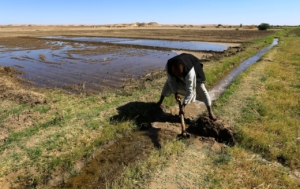 As much as one-third of territory in the Northern State of Sudan can support agriculture, a key industry for Sudanese living in poverty. However, unequal access to reliable electricity and water leads many farmers to rely on diesel pumps to irrigate crops. The introduction of solar energy, specifically solar-powered irrigation, reduces farmers’ reliance on fossil fuels. This technological advancement reduces the expenses of farmers while dramatically increasing agricultural productivity.
Risks of Diesel-Powered Irrigation
Solar-powered water pumps help farmers eliminate their dependence on fossil fuel and overcome energy scarcity. An estimated 20 million people live without access to electricity in Sudan, approximately 65% of the country’s population. In the rural regions of Sudan, that percentage is even higher. For instance, up to 80% of rural Sudanese farmers lack reliable access to electricity.
Due to this scarce access to electricity, many farmers rely on diesel-powered water pumps to irrigate their fields. Diesel pumps not only produce harmful greenhouse gases but also can reduce agricultural efficiency. Specifically, the expensive and fluctuating prices of diesel fuel limit growing seasons and prevents farmers from planting consistently. Furthermore, the pumps contribute to smaller-scale environmental hazards by contaminating the surrounding water and plants.
Benefits of Solar-Powered Water Pumps
Solar-powered water pumps overcome the issue of energy scarcity by powering irrigation without tapping into fossil fuels. This mechanism helps farmers by providing a fuel source for irrigation that is both stable and effectively cost-free aside from initial installation and regular maintenance charges.
Solar-powered water pumps also help farmers increase land cultivation. Confidence in the availability of energy to irrigate crops enables farmers to increase cultivation. One pilot program for the introduction of solar pumps in the Northern State, operated by the United Nations Development Programme, found that the introduction of solar-powered water pumps increased the amount of land cultivated by farmers by 47%.
For example, the dry summer months were previously not economically viable due to the need for increased water-pumping and therefore costly diesel fuel. Following the introduction of solar-powered water pumps, land cultivation grew by 87% during the summer. Overall, farmers reported dramatic changes regarding both savings and reductions in overhead costs for farm management.
Additionally, solar-powered water pumps allow farmers to enrich agricultural production with high-value crops. Although agriculture accounts for around 80% of employment and roughly one-third of GDP in Sudan, individual farmers are particularly susceptible to poverty and food insecurity. However, with extended growing seasons and cuts in the cost of irrigation, Sudanese farmers can produce higher-value crops such as lemons, mangoes and cotton.
The Future of Solar Irrigation in Sudan
The Global Environmental Facility granted 4.89 million U.S. dollars to install 1,440 solar-powered water pumps throughout the Northern State between 2016-2021. The statistics make it clear that the farmers involved in pilot programs experienced notable benefits by utilizing solar pumps.
In addition to these individual benefits, Solar-powered irrigation could have much wider implications globally. The Sudanese initiative alone is projected to ultimately eliminate 860,100 tons of CO2 emissions and save 268,800 metric tons of diesel. Applied on a global scale, this technology could serve to drastically reduce emissions from the agricultural industry as a whole.
– Alexandra Black
Photo: U.N.
