GEFI Makes Progress in India
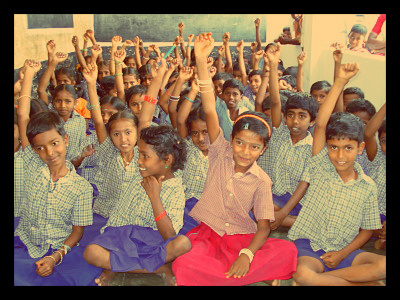
The five year Global Education First Initiative (GEFI) was launched in September of 2012. Its goal is to provide all people with an education. The GEFI has three main objectives: putting every child in school, improving the quality of learning and fostering global citizenship. The GEFI doesn’t do everything alone, it has a team of partners behind it to aid in the achievement of the three goals. UNDP, UNICEF, U.N. Women and World Bank are just a few of its partners.
The global community pledged to achieve universal primary education by 2015. The U.N. Country Team in India is supportive of the global initiative and this September has proven to be an important month for India.
India is focusing its joint advocacy and communications on the GEFI and has made some priorities of its own. Elementary school is a fundamental right in India and there has been a lot of focus on increasing school locations and ensuring that these schools have plenty of drinking water. The main priorities for India are universal access to education with equity, quality basic education and global citizenship education.
India plans on providing everyone access to education by focusing on equality, especially as it pertains to girls. The number of schools in India providing a separate toilet facility for girls has increased by 37 percent. This means that around 89 million girls have access to toilets; unfortunately, seven million girls are still denied access.
The second priority for India is improving the quality of basic education. In this one priority there are four sub categories that are imperative to its achievement. Learning the basics, having a child friendly school and system, pupil to teacher ratio and teacher training are all things that are being worked on in India.
Lastly, global citizenship education is important because it will lead to a better environment for all. Currently, about 65 percent of India’s population are under the age of 35. Soon, India will become the youngest country in the world and India has deemed it important to educate its people on social responsibility. The purpose of global citizenship education is to equip each generation with values, knowledge and skills. These are all taught with a foundation meant to respect human rights, social justice, diversity, gender equality and environmental sustainability. These are all meant to empower those who are learning to be responsible and educated global citizens.
– Brooke Smith
Sources: United Nations in India, Global Education First Initiative UNESCO
Photo: Flickr
