• Link to X
  • Link to Facebook
  • Link to Instagram
  • Link to TikTok
  • Link to Youtube
  • About
    • About Us
      • President
      • Board of Directors
      • Board of Advisors
      • Financials
      • Our Methodology
      • Success Tracker
      • Contact
  • Act Now
    • 30 Ways to Help
      • Email Congress
      • Call Congress
      • Volunteer
      • Courses & Certificates
      • Be a Donor
    • Internships
      • In-Office Internships
      • Remote Internships
    • Legislation
      • Politics 101
  • The Blog
  • The Podcast
  • Magazine
  • Donate
  • Click to open the search input field Click to open the search input field Search
  • Menu Menu

Archive for category: Developing Countries

Information and stories about developing countries.

Developing Countries, Global Poverty, Nonprofit Organizations and NGOs, Technology

Kopernik: Using Technology to Improve the Developing World

Kopernik: Using Technology to Improve the Developing World

Billions of people all over the world lack the technology allowing them access to light, fuel-friendly cooking and clean drinking water. This is why Kopernik, a nonprofit technology company, is working to distribute simple, life-improving technologies to the world’s poorest communities.

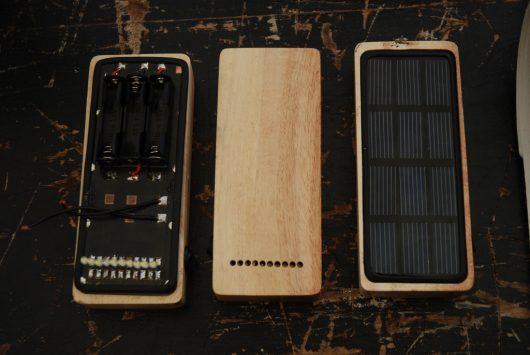
The company provides these communities with items such as water filters, solar power lights and cooking stoves. Nicolaus Copernicus is the organization’s namesake since Kopernik is meant to be a catalyst for change and new ways of seeing the world. Kopernik distributes the best technology for the developing world through sourcing, connecting and reinvesting.

Sourcing

Kopernik uses its website to spread awareness about its technology. In response, countries submit proposals for the items they need the most. Then Kopernik publishes projects on the website in order to raise funds.

Connecting

Once the projects are fully funded — usually by donors — Kopernik ships the technology to its local partners. People then buy that technology at an affordable price through those local partners.

Reinvesting

Next, the local partners repay the money from technology sales to Kopernik. This money is then reinvested into new technology. Kopernik also works with local partners to assess the technology’s impact and share feedback with technology producers.

Funding

Kopernik is a nonprofit organization with a for-profit arm. The for-profit part of the organization is a consulting firm that works with technology companies in product development. The profits from the consulting business are then channeled toward the nonprofit operations.

Kopernik receives funding from companies, government development programs and individuals. Its partners also provide in-kind support such as free or discounted services. This keeps the organization’s operating costs low.

Technology

Kopernik is helping women access clean birth supplies and information about safe birthing practices. For example, in the Chittagong district of Bangladesh as well as Laos, the nonprofit provides JANMA clean birth kits to women. These birth kits contain sterile tools to reduce the risk of infection during childbirth.

In Vietnam, the organization has also connected 90 families with hearing-impaired children with affordable hearing aid technology. This makes it possible for children to learn to speak and form a better bond with their families and communities.

Impact

So far, Kopernik has served 396,325 people and distributed 90,359 technologies. It has funded 170 projects and reached 26 countries, among them Japan, Vietnam, Indonesia, Ghana and Nigeria.

According to Patrick Vinck of the Harvard Humanitarian Initiative, “New applications of technologies to humanitarian action may be the most important factor influencing humanitarian effectiveness over the next decade.” In this regard, Kopernik’s emphasis on technology distribution represents great gains for the world’s anti-poverty organizations with only more progress to come.

– Liliana Rehorn

Photo: Flickr

January 31, 2017
https://borgenproject.org/wp-content/uploads/borgen-project-logo.svg 0 0 Borgen Project https://borgenproject.org/wp-content/uploads/borgen-project-logo.svg Borgen Project2017-01-31 01:30:052024-12-13 17:56:34Kopernik: Using Technology to Improve the Developing World
Developing Countries, Development, Global Poverty

How Global Internet Access Can Alleviate Poverty

How Global Internet Access Can Alleviate Poverty
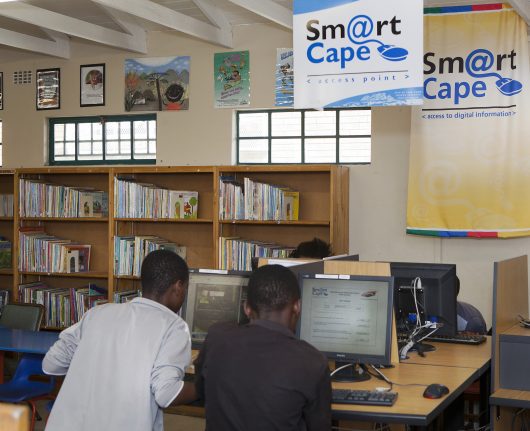
In 2015, Mark Zuckerberg proposed that global internet access could be the answer to eradicating extreme poverty. From there he pledged to work with the U.N. in acquiring internet access for refugee camps and has continued to launch campaigns and work alongside organizations such as ONE in gaining further global support.

On November 19, Zuckerberg proposed policy recommendations at the Asia-Pacific Economic Cooperation Summit in Peru where he addressed numerous world leaders and politicians. The summit concluded with unanimous support in implementing “accessible, open, interoperable, reliable and secure” global internet access.

Statistics have shown the dire need for internet access in developing countries and have compared accessibility to those in wealthier countries of which 81% of the population have internet access compared to a mere 15 percent in poorer countries. As much as 75% of Africa is disconnected and as a result, the issue has devolved to sexism in which women and adolescent girls are being further discriminated against with internet access. In fact, women in developing countries are “a third less likely” to receive internet access than males and the difference continues to increase.

ONE has recognized the separation in internet access that has been deepened by sexism and has created the Connectivity Declaration,which will gather support for equal, global internet access. Thus far, 76% of ONE’s goal for backer support has been reached— that’s 75,839 names pledged out of 100,000.

By creating a way for global internet access, lives can be enriched and the effects of poverty lessened. At stake for individuals in poor countries with no internet access is a lack of education, limited health information and weakened job opportunities. In wealthy countries such as the U.S., the benefits that come alongside internet usage are taken for granted. In Africa, for example, a pregnant woman could benefit from having internet access in order to receive pregnancy advice and farmers could utilize the internet to predict weather forecasts in order to optimally maintain their crops and income.

Zuckerberg has been a long-standing advocate for widening internet access and has joined the U.N. initiative in eradicating poverty by 2030. The Facebook CEO supports the need for global internet access by claiming that the Internet gives “a voice to the voiceless and power to the powerless.”

– Amy Williams

Photo: Flickr

January 25, 2017
https://borgenproject.org/wp-content/uploads/borgen-project-logo.svg 0 0 Borgen Project https://borgenproject.org/wp-content/uploads/borgen-project-logo.svg Borgen Project2017-01-25 01:30:472024-12-13 17:54:35How Global Internet Access Can Alleviate Poverty
Developing Countries, Global Poverty

Recycled Soap for Developing Countries

Recycled Soap for Developing Countries
Every day the hotel industry tosses out minimally used bars and bottles of soap that end up wastefully filling landfills. In developing countries, however, soap is a luxury that is frequently inaccessible and unaffordable. With the help of the Sundara organization, recycled soap for developing countries has been made useful. By collecting thrown out soap and sanitizing it, redistribution is carried out to impoverished communities that suffer from illness due to lack of proper hygienic care.

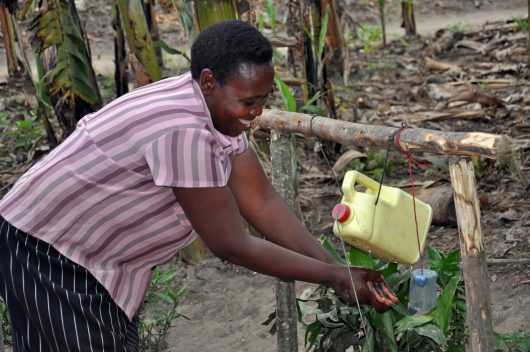
For the “bottom billion” of the world who live under one dollar a day, funds are prioritized toward food and water with no money left over to buy sanitary goods. In Uganda, for example, the cost of soap falls between 20 and 50 cents, forcing people to forego this “most basic preventable healthcare”. It is because of poverty that people within these communities that cannot afford soap are made vulnerable to disease and sickness, often leading to death.

The living conditions for these individuals are typically a slum-like environment with inefficient trash collection and health care. Environments such as this create a breeding ground for diseases caused by a lack of proper hygienic care. The CDC reports that 1.8 million children die annually due to diarrhea and pneumonia, both of which can be prevented with regular hand washing. By providing recycled soap for developing countries, preventable diseases such as these can be reduced.

The Sundara organization has recognized the need for soap and a purpose for recycling it. Collectively they have created a program that collects thrown out hotel soap and refurbishes them so they are clean and safely reusable. In addition to providing necessary soap products, they work toward empowering individuals of impoverished communities to become hygiene ambassadors within their own community. By equipping these individuals with basic hygiene education, communities receive further health education and women, specifically, are given employment by collectively recycling soap and educating others.

As a result of recycling soap, death and disease are prevented, communities are empowered, waste is saved and employment opportunities are provided. Since Sundara’s implementation of recycling soap, 45,600 kg of wasted soap has been salvaged, 132,000 bars of soap have been made, 3,000 hygienic care lessons have been taught, 20,000 lives, 16,000 children and 61 schools have benefited.

Efforts have been focused within India, Uganda and Myanmar. In Mumbai, India, three women have received the proper training to recycle soap and 26 women have been implemented as hygiene ambassadors. Together, these women help repurpose and deliver soap to medical centers and vulnerable communities such as the Kalwa slums. Similarly, Uganda has been able to employ victims of domestic violence and Myanmar distributes recycled soap to orphanages, juvenile detention centers and communities affected by leprosy.

Soap is the fundamental necessity for maintaining proper hygiene, though many communities lack the accessibility to such products. By helping expand the message for the importance of recycled soap for developing countries, a healthy and hopeful future for vulnerable communities stricken with preventable diseases could be greatly supported.

– Amy Williams

Photo: Flickr

January 25, 2017
https://borgenproject.org/wp-content/uploads/borgen-project-logo.svg 0 0 Borgen Project https://borgenproject.org/wp-content/uploads/borgen-project-logo.svg Borgen Project2017-01-25 01:30:412024-12-13 17:56:31Recycled Soap for Developing Countries
Developing Countries, Global Poverty

Mobility for Disabled Persons in Developing Countries

Disabled
Innovations like SafariSeat are about to revolutionize mobility for disabled persons in developing countries.

It is no secret that poverty and disability are correlated. According to the World Health Organization, about 15% of the world population—over a billion people—have a disability. Of this population, 80% live in developing countries, specifically in isolated rural areas where medical services are few and far between.

When it comes to physical disability, studies have shown that there is another correlation between access to wheelchair and GDP per capita. In developed countries, there are about 30 wheelchairs per 10,000 people. In developing countries, however, this figure decreases to only two or three wheelchairs per 10,000 people. But a severe difference between these cultures lies in the amount of walking done: in countries like the U.S., those aged 65 and older walk eight percent of daily trips. In Sub-Saharan Africa, walking comprises 50 percent of all daily trips. Mobility for disabled persons in developing countries is also the area where such access lies farthest beyond reach.

But Janna Deeble, creator of SafariSeat, could very well be the solution. SafariSeat is an off-road, hand-powered redesign of the wheelchair purposed to travel on all-terrain.

When growing up in Kenya, he had befriended Letu, a man immobilized by polio and thus trapped in the confines of his home. Ten years later, when Deeble had left Kenya and Letu, he suffered an accident that caused him to be wheelchair-bound for months. His tough experience surfaced memories of Letu’s lifelong hardship—and SafariSeat sparked in his mind.

SafariSeat uses an easy mechanism that “mimics car suspension ensuring all wheels remain on the ground at all times”. The wheelchair itself is intentionally low-cost, with the idea that local workshops can use even materials like bike parts to repair them. Deeble also called for the designs to be open-sourced, meaning that the blueprints are free to all people in all nations. This enables workshops to make SafariSeat for their residents, create “local, sustainable employment” and provide access to mobility for disabled persons in developing countries.

When finished, Deeble hopes to take this design to those in the remotest areas of East Africa and revolutionize the lives of all like Letu.

– Brenna Yowell

Photo: Flickr

January 24, 2017
https://borgenproject.org/wp-content/uploads/borgen-project-logo.svg 0 0 Borgen Project https://borgenproject.org/wp-content/uploads/borgen-project-logo.svg Borgen Project2017-01-24 01:30:342024-12-13 17:56:32Mobility for Disabled Persons in Developing Countries
Developing Countries, Education, Global Poverty

Education in Serbia

Education in Serbia
Since Serbia transitioned to democracy in 2000, its education system has faced challenges in regard to access, equity, quality and financing. However, in recent years the country has made major efforts to rebuild and improve its education system.

Access

The distribution of schools in Serbia does not correspond to its population. Although the gross enrollment rate (GER) for preschool education is 98% overall, the GER is as low as seven percent of children in rural areas. These children sometimes have to walk between three to 10 km on way to school.

Serbia adopted the Law on Foundations of the Education System in 2009 to address this issue. This law was meant to provide opportunities for the marginalized, economically disadvantaged and internally displaced students in Serbia.

Equity

A major inequity gap exists for children with special needs. According to a 2010 statistic, only 1% of children with disabilities have access to pre-primary education. These children are also more likely than non-disabled peers to drop out of school. Resources are particularly scarce for students with physical impediments.

In 2008, UNICEF signed a Memorandum of Understanding with the Ministry of Labour and Social Policy to address inequity. The goals in the Memorandum were to establish a foster care system for children with disabilities as well as establish new standards for accountability and protection of child rights.

Quality

Serbia’s learning outcomes are below the region’s international average. This low performance is due in part to the school system’s failure to address the psychosocial needs of children emerging from conflict. School safety, drinking water and restroom sanitation also need improvement.

A “School without Violence” (SwV) initiative has been implemented across the nation to improve school quality and yield safer school environments. It includes the development of plans for crisis situations, a parent’s manual and the promotion of fair play in sports.

Financing

Although the level of government spending on education in Serbia (3.8%) is comparable to other European countries, its outcomes are poorer. This is due in part to Serbia’s inefficiently small classrooms.

To increase efficiency, the World Bank suggests consolidating under-enrolled classes by shifting students to other classes in the same school. This would reduce education costs by 10%.

According to Minister of Education M. Srđan Verbić, education in Serbia needs to be broad and flexible with its curriculum. This will provide students with the skills necessary for any job in the global workforce.

The Education Reform Initiative of Southeast Europe (ERI SEE) has the potential to establish one such framework for educational qualifications. It will also better distribute funds for education in Serbia. This cooperation in the education sector will cumulatively optimize school networks and increase school readiness and quality, ensuring equal access and high-quality education to all children in Serbia.

– Liliana Rehorn

Photo: Flickr

January 16, 2017
https://borgenproject.org/wp-content/uploads/borgen-project-logo.svg 0 0 Borgen Project https://borgenproject.org/wp-content/uploads/borgen-project-logo.svg Borgen Project2017-01-16 01:30:102024-12-13 17:56:31Education in Serbia
Developing Countries, War and Violence

What is Ethnic Cleansing?

what is Ethnic Cleansing
What is ethnic cleansing? The term ethnic cleansing refers to the mass purge of members of an ethnic or religious group in an area by those of another. Throughout history, there have been many brutal examples of it. The aim is to rid of unwanted members of society and create an ethnically pure community.

The most famous examples of ethnic cleansing occurred throughout the 20th century. First, the Turkish massacre of Armenians during World War I, followed by the Holocaust during the Second World War. The Holocaust is possibly the most horrific example of ethnic cleansing, as the Nazis annihilated around 6 million European Jews. A final example is a forced displacement carried out in the former Yugoslavia and Rwanda during the 1990s.

A recent example of ethnic cleansing is the Iraq Civil War, that consequently led to the Iraqi insurgency, which began in 2011 and is still happening. Areas are being evacuated as a result of insecurity and fear. The United Nations estimates that 2.2 million Iraqis have been displaced and that nearly 100,000 Iraqis evacuated to neighboring countries each month.

It is common for ethnic cleansing and genocide to get confused, as both include mass expulsion. Genocide means the targeting of a large group and the deliberate killing of its members. The International Criminal Court has linked both ethnic cleansing and genocide very closely, labeling them both as crimes against humanity and war crimes.

Ethnic cleansing has many consequences. There have been many cases of depression and other forms of psychological anguish as a result of it. Communities built by refugees are plagued with sadness, and the numbers of those living beneath the poverty line continue to increase. Shortages of food, clean water and housing become more apparent as these numbers continue to rise.

Finding a solution to ethnic cleansing is too difficult due to the vast differences between various ethnic groups and members of society. The only help that can be given is to the victims of it. This can be done through the donation of resources, to help communities that are struggling as a result of brutal situations.

– Georgia Boyle

Photo: Flickr

January 16, 2017
https://borgenproject.org/wp-content/uploads/borgen-project-logo.svg 0 0 Borgen Project https://borgenproject.org/wp-content/uploads/borgen-project-logo.svg Borgen Project2017-01-16 01:30:002020-05-25 07:32:05What is Ethnic Cleansing?
Developing Countries, Technology

Five Space Inventions Helping the Developing World

Five Space Inventions Helping the Developing World
From non-stick frying pans to squirt guns to keeping our homes warm, innovations that originated as space inventions are used each and every day right here on earth. But, some space inventions have become even more useful than ever imagined, and are now helping fight poverty in the developing world. Here is a look at five space inventions and some of the ways each helps to alleviate human suffering.

Baby Blankets

From NASA’s efforts in the 1980s to create a material that could both insulate and cool astronauts facing extreme temperatures during spacewalks came phase-change materials, or PCM’s. Although this material never made it into astronaut’s gloves, the space invention that emerged proved effective for insulating. In 2013, Jen Chen created a company called Embrace Innovations, which makes swaddles and blankets using PCM technology. The Embrace business model is simple: buy a blanket or swaddle for your baby and one is donated to a baby in need in the developing world. To date, 200,000 babies have been reached across 10 countries.

Solar Energy

When NASA began studying Environmental Research Aircraft and Sensor Technology (ERAST) to develop uninhabited aircraft that could sustain long-duration flights without interruption, the need for new innovative solar power sources became paramount. Among the space inventions that resulted: single-crystal silicon solar cells that significantly reduced the cost of solar power. With billions still living without electricity worldwide, solar power has proved effective in helping get clean water, mobile charging, and general illumination to the developing world.

Freeze-dried Food

Through an alliance with Nestle, in the pre-Apollo era, NASA developed a technique for freeze-drying food which made the transportation of numerous orbital delight feasible. Today, freeze-dried food is used to prevent spoilage while providing life-saving nutrient-rich substance to people suffering from hunger in the developing world. For example, Stop Hunger Now, a non-profit based out of Raleigh, North Carolina, operates meal-packing programs in 20 cities worldwide. They ship dehydrated rice and soy meals that are fortified with 23 nutrients and vitamins to not only help solve the problem of hunger in the world but also help provide essential nutrients to those living with a vitamin or mineral deficiency.

Baby Formula

In an effort to alleviate some of the challenges of eating in space while also reducing waste, NASA, with the contracted help of Marietta Laboratories, worked with micro-algae to develop a special three-in-one food source. The invention didn’t work out as space-food; however, Marietta’s research provided the technology used to place nutritional supplements into infant formula and baby food. One in four children around the world suffers from chronic malnutrition that stunts their growth. And, due to poverty and poor nutrition, an estimated 200 million children under age five suffer from under-developed cognition. With nutrient-enriched baby food, organizations helping to fight poverty and malnutrition in the developing world have a better chance to reach children during the most critical stages of development — conception to two years.

Satellites

Some space inventions have not only changed the world but also changed the way we look at it. While the link between satellites, NASA and space are obvious, their ability to help feed those living in the developing world is a bit more complex. Satellites can generate images of vegetation that, in turn, can measure “greenness” and provide real-time rainfall data and imagery. Thus, this space invention helps officials and policy-makers monitor for potential crop failures throughout the developing world. With better prediction capabilities comes better awareness, and with better awareness comes the ability to prevent food shortages. NASA has even teamed up with the USAID through a new environmental monitoring program in West Africa called SERVIR-West Africa. The program plans to enhance the use of data collected from satellite imagery to help fight hunger by helping officials better manage climate issues that affect crop harvesting and nutritional planning.

– Ashley Henyan

Photo: Flickr

January 1, 2017
https://borgenproject.org/wp-content/uploads/borgen-project-logo.svg 0 0 Borgen Project https://borgenproject.org/wp-content/uploads/borgen-project-logo.svg Borgen Project2017-01-01 01:30:202024-12-13 17:56:27Five Space Inventions Helping the Developing World
Developing Countries, Global Poverty, Technology, Water

SE200 Community Chlorine Maker: Clean Water in Five Minutes

SE200 Community Chlorine Maker: Clean Water in 5 MinutesClean water is unavailable to many people around the world. According to Water.org, 663 million people do not have access to safe drinking water.

To help remedy this issue, the SE200 Community Chlorine Maker is using electricity and salt to provide clean drinking water to people in need. By producing accurate amounts of chlorine, the battery powered device is able to clean 200 liters of water in five minutes. Chlorine kills an array of microbes and sanitizes water thoroughly. However, chlorine is not always available in remote and impoverished areas.

The Chlorine Maker is simple to use. Water is mixed with salt and poured into a brine bottle. Then the solution is added to the chlorine maker. The device is attached to either a 12V battery or wall plug. After the start button is pushed the liquid begins to bubble. This indicates that electrolysis is occurring. The chemical reaction creates bleach.

Originally this technology was developed by the military but the Mountain Safety Research (MSR) in collaboration with PATH, an international health organization, modified it so anyone can easily use it directly at water sources.

Compared to other chlorine generators, the SE200 Community Chlorine Maker is relatively inexpensive and easy to use. Most importantly, it is able to calculate the correct amount of chlorine needed each time it is used. The SE200 Community Chlorine Maker has been tested in different countries such as Kenya and Ghana. It was officially put on the market in May of this year. It currently costs $200.

MSR and PATH in partnership with World Vision and Operation Blessing want to bring the Chlorine Maker to communities in need of clean water at no cost to them. MSR launched an Indiegogo campaign to raise $50,000 in order to send a minimum of 2,500 devices to communities around the world by the end of 2017. These devices will provide safe drinking water for approximately 500,000 people.

In late November, MSR reached their $50,000 goal and now hopes to reach $60,000. They are currently at $59,500 with 645 backers. With their goals met, the SE200 Community Chlorine Maker will improve the lives of many.

– Karla Umanzor

Photo: Flickr

December 21, 2016
https://borgenproject.org/wp-content/uploads/borgen-project-logo.svg 0 0 Borgen Project https://borgenproject.org/wp-content/uploads/borgen-project-logo.svg Borgen Project2016-12-21 01:30:142024-12-13 17:56:22SE200 Community Chlorine Maker: Clean Water in Five Minutes
Developing Countries, Global Poverty

Helping Vulnerable Communities Survive Disasters

Helping Vulnerable Communities Survive Disasters
Sparked by humanitarian organizations like the American Red Cross, backed by companies like JP Morgan Chase & Co., and enhanced with data sharing from Facebook, vulnerable communities now have a better chance at surviving disasters thanks to a program called Missing Maps.

A disaster can devastate any community, but historically, the damage is considerably more widespread in the world’s poorest and most vulnerable communities. For example, on October 4, 2016, when Hurricane Matthew made landfall on the southern peninsula of Haiti, over 3,200 homes were destroyed and more than 15,000 people were displaced. In Haiti alone, over 1,000 people died because of this storm.

Many times, if a disaster occurs in a vulnerable, unmapped location, first responders lack the information necessary to make valuable decisions regarding life-saving relief efforts. Missing Maps is a collaborative project that literally puts these vulnerable communities on the map. This way, humanitarian organizations can better meet the needs of the communities and people they are trying to help.

Digital volunteers working with Missing Maps have helped map the homes of 8 million people worldwide. Data from the program has already begun to enhance disaster response efforts — examples include Typhoon Haiyan that struck the Philippines in 2013, and the Nepal earthquake, in 2015.

JP Morgan Chase and its employees are supporting Missing Maps by participating in “mapathons,” where volunteers create digital maps for the world’s poorest and most vulnerable communities. Kathy W., a Business Operations Executive at JP Morgan Chase, commented on the effectiveness of the program, stating, “The work we’re doing really helps to build more resilient communities and helps save lives.” Chase employees have held 22 official “mapathon” sessions and have helped put vulnerable communities in South Africa, Vietnam, Colombia and Peru on the map.

Recently, Facebook joined the efforts and began sharing its population density data with Missing Maps in hopes of putting 200 million more people on the map. This will help the Red Cross and other organizations on the forefront of this project to reach their mapping goals.

Earlier this year, Facebook began applying techniques from computer vision satellite imagery to generate high-resolution population maps that indicate how and where people are aggregated in communities throughout the world. Originally intended to aid in developing geographically specific communications technologies, Facebook decided to publicly share this data in hopes of helping first responders and humanitarian organizations increase efficiency with disaster planning and disaster response.

As part of its work with Missing Maps, the American Red Cross has already implemented data from Facebook, mapping more than two million people in Malawi alone. The humanitarian organization plans to continue to use this data to map vulnerable communities in other disaster-prone areas, like Haiti.

– Ashley Henyan

Photo: Flickr

December 4, 2016
https://borgenproject.org/wp-content/uploads/borgen-project-logo.svg 0 0 Borgen Project https://borgenproject.org/wp-content/uploads/borgen-project-logo.svg Borgen Project2016-12-04 03:26:022024-12-13 17:56:16Helping Vulnerable Communities Survive Disasters
Developing Countries, Global Poverty

Longer Life Expectancy in Rich Communities Compared to Poor

Longer Life Expectancy in Rich Communities Compared to Poor
Life expectancy is a reliable parameter of development that reflects a country’s state of healthcare, population structure and development of treatment alternatives. Recently, researchers have revealed that inequality in incomes can result in a large divide in life expectancy between rich and poor societies.

The study investigated the life expectancy of several counties within the United States. The obtained values were compared to the life expectancy for 222 countries globally. The comparison revealed that more than half of the countries in the world performed better in terms of life expectancy in comparison to the poorest counties within the United States.

While this particular study was conducted in the United States, several other countries show similar results. For instance, an article published in The Lancet compared life expectancy for several districts belonging to England and Wales. The results revealed that the more economically prosperous districts in London had better life expectancy compared to districts in North-West England such as Liverpool and Blackpool.

So what creates the disparity between richer and poorer societies? An important causative factor is the level of healthcare in different countries. Poorer societies are likely to have access to a limited array of healthcare facilities, and may not be able to afford these services. As a result, individuals in poorer communities are excluded from access to life-prolonging treatment which can not only enhance life expectancy but also improve the quality of life.

An improvement in life expectancy is likely to benefit older population groups proportionately more. Thus, efforts to narrow the life expectancy difference should focus on improving health outcomes in the aging population. This can be achieved through an improvement in pension schemes. It is important to ensure that retired individuals receive sufficient stipend that will comfortably grant them access to healthcare resources.

Statistics published by the World Health Organization suggest that a boy born in 2012 in an economically developed country can expect to live approximately 16 years more compared to a boy born in a developing country. A larger difference of 19 years is expected for women, who typically have longer life spans in developed countries worldwide.

The WHO attributes the better life expectancy of economically flourishing countries to greater control over non-communicable conditions such as heart disease. This is done through timely monitoring of blood pressure, cholesterol levels and other aspects that help optimize management and reduce a risk of life-threatening crises.

By setting up regular health screening programs in rural communities, chronic conditions can be detected at a stage where they can be managed appropriately, without adverse side effects. Individuals can be encouraged to acquire control over their own health by implementing lifestyle alterations and becoming compliant with recommended treatment.

– Tanvi Ambulkar

Photo: Flickr

December 4, 2016
https://borgenproject.org/wp-content/uploads/borgen-project-logo.svg 0 0 Borgen Project https://borgenproject.org/wp-content/uploads/borgen-project-logo.svg Borgen Project2016-12-04 01:30:242024-12-13 17:56:15Longer Life Expectancy in Rich Communities Compared to Poor
Page 134 of 157«‹132133134135136›»

Get Smarter

  • Global Poverty 101
  • Global Poverty… The Good News
  • Global Poverty & U.S. Jobs
  • Global Poverty and National Security
  • Innovative Solutions to Poverty
  • Global Poverty & Aid FAQ’s
Search Search

Take Action

  • Call Congress
  • Email Congress
  • Donate
  • 30 Ways to Help
  • Volunteer Ops
  • Internships
  • Courses & Certificates
  • The Podcast
Borgen Project

“The Borgen Project is an incredible nonprofit organization that is addressing poverty and hunger and working towards ending them.”

-The Huffington Post

Inside The Borgen Project

  • Contact
  • About
  • Financials
  • President
  • Board of Directors
  • Board of Advisors

International Links

  • UK Email Parliament
  • UK Donate
  • Canada Email Parliament

Get Smarter

  • Global Poverty 101
  • Global Poverty… The Good News
  • Global Poverty & U.S. Jobs
  • Global Poverty and National Security
  • Innovative Solutions to Poverty
  • Global Poverty & Aid FAQ’s

Ways to Help

  • Call Congress
  • Email Congress
  • Donate
  • 30 Ways to Help
  • Volunteer Ops
  • Internships
  • Courses & Certificates
  • The Podcast
Scroll to top Scroll to top Scroll to top