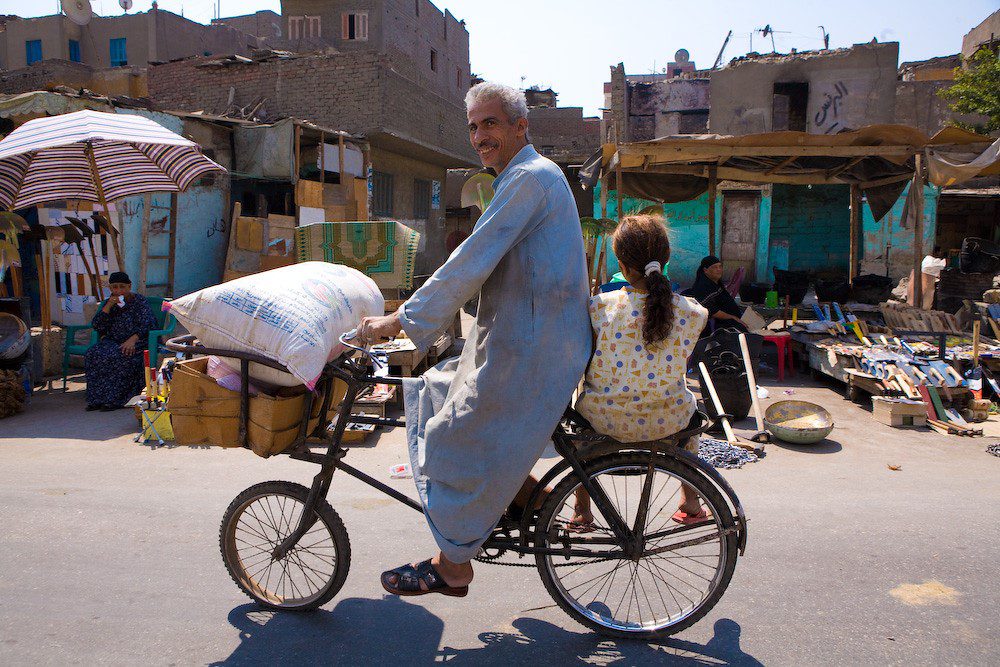
With more than 98 million people, Egypt remains the most populated country in North Africa. More than 32.5% of citizens live below the poverty line, making malnutrition and hunger in Egypt pressing issues. The current influx of poverty leaves children and adults without proper education, left to partake in dangerous and under-compensated work such as mining, quarrying and cement production.
The Situation
Although marketplaces are bustling and full, Egypt relies on imported foods. As the world’s largest wheat producer, Egypt is at risk of any drastic changes in commodity pricing and economies. While markets have more than enough fruits, vegetables and bread, most of the population cannot purchase essential grocery items. Without the capacity to control possible economic fluctuations, Egypt’s vulnerability leaves its hungriest citizens without a safety net from their government, let alone their savings.
Egypt’s hunger crisis is an accumulation of many setbacks, including global financial crises, food shortages and disease. Yet another economic or social misfortune has followed each attempted effort towards success. As a result, more than 1.3% of Egypt’s population was living with less than $1.90 to spend per day in 2015; the average American spends $164.55 per day.
How Did This Happen?
Since the early 2000s, Egypt has faced a series of difficulties including the 2006 avian influenza, food and fuel crisis of 2007, economic despair through 2009 and most recently, COVID-19. As a country treading between minor stability and complete poverty, each challenge, both global and local, has severe implications for Egypt and its people.
Hunger in Egypt has roots in food costs; a majority of the Egyptian population can only afford minimally nutritious meals. A 2011 UN World Health Organization study found that 31% of Egyptian children less than 5 years old suffer from stunted growth in comparison to 23% in 2005. Malnutrition not only affects brain development but also contributes to a cycle that perpetuates and exacerbates Egypt’s weaknesses.
Malnourished children cannot perform well in school; malnourished workers are incapable of providing for themselves and their families, making financial and cultural growth seemingly impossible.
Solutions
The prominent changes in Egypt’s condition are a result of the Egypt Vision 2030. As a roadmap to Egypt’s eventual security, Egypt Vision 2030 emerged to increase employment rates, begin food security initiatives, increase clean water access and generate accessible screening and treatment for malnourished individuals.
The mission is that by 2030, Egypt will rank within the top 30 countries for economy size, market competitiveness, human development, life quality and anti-corruption. With such improvements, eradicating hunger in Egypt becomes possible.
Within the economic and social dimensions of the plan, the sixth pillar outlines that by 2030, improvements in health conditions will occur through “early intervention, preventative coverage,” guaranteed protection for the vulnerable and prioritizing the satisfaction of health sector employees.
These extensive efforts have led to program and policy implementation, propelling Egypt to meet its targets. For instance, at the onset of the plan in 2015, the malnourishment rate was 4.5%. By 2030, Egypt hoped the rate would be below 3%. With 10 years until the 2030 deadline, 3.2% of the Egyptian population is malnourished. It is evident that the strategy behind Vision 2030 is effective.
Feeding Children Through Education
A vital pillar of the Egypt Vision 2030 is the National Strategic Plan for Pre-University Education. The World Food Programme (WFP) is spearheading the plan to increase school meals’ nutritional value. Though it helps enrolled students, the plan does not benefit children not attending school. The school meals incentivize students to attend, serving as an aspect Egypt tactfully uses to increase pre-university enrollment rates.
The Pre-University Education Plan resulted from new investment and financing strategies to develop curriculum, financial aid, illiteracy and dropout elimination programs, technical teacher training and recurring student assessments to ensure the meeting of international standards. To execute these programs, The National Strategic Plan for Pre-University Education set a goal to spend 8% of GDP shares on pre-university education by 2030. Currently, that number is at 6%, double the initial percentage that Egypt spent in 2014. Additionally, Egypt’s Ministry of Finance reported an 82% spending increase in education and health. With increased pre-university education attendance, children receive nutritionally balanced meals every day. Health and education funding creates a domino effect, which will eventually lead to the elimination of hunger in Egypt.
The budget increase, in addition to malnourishment, serves Egypt’s education system. Classroom sizes decreased from an average of 42 students in 2015 to between 23 and 16 in 2019. The National Strategic Plan for Pre-University Education 2030 target was to have an average of 35 students per classroom. Egypt’s strategies prove to be highly successful, as its school attendance numbers are higher than its once-projected targets.
Higher enrollment, smaller classroom sizes and well-trained teachers have replaced Egypt’s dated culture of memorization. This new approach emphasizes individual learning, life principles, and modern technology. Repairing the education systems tears has an undeniable correlation to employment and hunger rates. In changing the fundamentals of the educational experience, Egyptian students now have proper nourishment. As a result, they can have the brainpower to master skill sets that will earn them stable jobs with livable incomes, thus ending the cycle of poverty.
Aid from organizations like the UN and World Food Programme, in collaboration with the Egypt Vision 2030, can eradicate hunger in Egypt. In breaking the cycle of malnourishment and lack of education, Egypt will continue on its path towards growth, prosperity and stability.
– Maya Sulkin
Photo: Flickr

The Progress of Women’s Rights in Finland
Finland has a long history with gender equality, being the world’s first country to offer full political rights to women in 1906. Here are five facts about women’s rights in Finland, including landmark developments and where it needs to improve.
5 Facts About Women’s Rights in Finland
Despite being a pioneer for women’s rights in Finland, the country still experiences its fair share of women’s issues. However, with a female-led government and strong social welfare policies, Finland’s progress is effectively ongoing and still serves as a model for the rest of the developed world.
– Neval Mulaomerovic
Photo: Pixabay
The Chinese Classroom: Updates on SDG 4 in China
The United Nations defines SDG 4 as the attainment of inclusive and equitable quality education and promotion of lifelong learning opportunities for all. According to the 2020 reports from UNESCO, SDG 4 in China has already experienced achievement. UNESCO awarded China a nearly perfect score of 99.8 for literacy and 99.5 for lower secondary completion rate. However, not all the data is there. The percentage of children of the official school-age population who are enrolled in primary education remains unknown.
The hole in the data also points to a larger issue – the flexibility of interpretation of SDG 4 in China. What some define as a “quality education,” others see as an unhealthy culture of a rigid, score-driven curriculum.
As China rises as a global superpower, its students bear its weight. Giona Gao, 38, was once a student in Beijing. She has provided The Borgen Project with information about her experiences with the rigorous curriculum that characterizes the Chinese education system.
Unattainable Standards
Gao attended primary school through college in China. She moved to Seattle, Washington in 2013 and now works as an accountant.
When she was in high school, her classmates fretted the day that teachers would evaluate their skills. In Beijing’s elite schools, parents receive sheets with the test scores of each student, including their own child. “The parents are all in the room together and pass it around,” Gao said, “Everyone sees.”
The system places extreme pressure on students to succeed and come out on top. Many students work into the early morning to study for standardized tests.
China Daily declared suicide as the leading cause of death for young people in China. Further research by the South China Morning Post investigated 79 suicides in 2013. Almost 93% of suicides happened following arguments between the pupils and their teachers, or after the students experienced heavy pressure with their studies.
Years have passed since Gao has lived in China, but she remains close with some friends. Her friends have told her that the school system is becoming even more competitive. “They teach faster,” she said. “Even in Kindergarten, Chinese kids’ English is better than American kids,” Gao pointed out.
While it was not her favorite subject, Gao recalls some history classes focusing on relations between the U.S and China. “They wash out our brains,” Gao said. “They really try to teach how great the communist party is.”
Gao stayed in China to earn her bachelor’s degree, but it was not rare for kids to want to apply to international universities in English speaking countries. “Lots of Chinese kids want to go abroad for study. America might be their number one choice,” she explained. “They want to open their eyes and see the difference.”
A Lack of Critical Thinking
Zhiquan Zhu is a Chair of the Department of International Relations at Bucknell University and the author of multiple books on Chinese Affairs, including “The People’s Republic of China: Internal and External Challenges.”
Zhu describes himself as a product of the traditional Chinese educational system. He taught at Shanghai International Studies University and was the Senior Assistant to Consul for Press and Cultural Affairs at the American Consulate General in Shanghai.
While Zhu believes that the Chinese education system gave him a solid foundation, he explains that he developed many of his critical and analytical skills later when he attended school in the U.S.
Zhu has seen some improvements in Chinese education, but he admits that “test scores still matter the most.” According to Zhu, the Chinese school system should adopt the American liberal arts education style. “China has a long way to go to reform its educational system so that students will become more creative with more independent thinking, entrepreneurial spirit, sense of community, and practical skills, not just focusing on achieving high scores in tests,” Zhu explained.
The Urban-Rural Divide
While China has technically met educational standards for SDG 4 in China, there is still much more that it needs to do to improve. China Quarterly published a study that found that 63% of students in rural China drop out by secondary school.
The urban-rural divide is largely due to Hukou, a household registration system that assigns rights to families based on their birth status. Through this system, better education and healthcare are reserved for those living in urban cities. The Rural Education Action Program reports that the government spent an average of 900 yuan more each year on a student in an urban middle school than on a rural student. The same report found that rural schools lack qualified teachers and adequate teaching facilities.
The Rural Chinese Education Foundation is a charitable organization fighting to improve education for rural Chinese students. RCEF is currently raising funds to bring better teachers to rural China, provide financial aid to students, and instill a more useful curriculum that students can apply to real life.
According to its website, RCEF believes “education should be practical, inclusive, and socially responsible.” Organizations like RCEF show the potential to fill the gap in Chinese education, securing SDG 4 in China on an even higher level.
– Miska Salemann
Photo: Flickr
Understanding Hunger in Egypt
With more than 98 million people, Egypt remains the most populated country in North Africa. More than 32.5% of citizens live below the poverty line, making malnutrition and hunger in Egypt pressing issues. The current influx of poverty leaves children and adults without proper education, left to partake in dangerous and under-compensated work such as mining, quarrying and cement production.
The Situation
Although marketplaces are bustling and full, Egypt relies on imported foods. As the world’s largest wheat producer, Egypt is at risk of any drastic changes in commodity pricing and economies. While markets have more than enough fruits, vegetables and bread, most of the population cannot purchase essential grocery items. Without the capacity to control possible economic fluctuations, Egypt’s vulnerability leaves its hungriest citizens without a safety net from their government, let alone their savings.
Egypt’s hunger crisis is an accumulation of many setbacks, including global financial crises, food shortages and disease. Yet another economic or social misfortune has followed each attempted effort towards success. As a result, more than 1.3% of Egypt’s population was living with less than $1.90 to spend per day in 2015; the average American spends $164.55 per day.
How Did This Happen?
Since the early 2000s, Egypt has faced a series of difficulties including the 2006 avian influenza, food and fuel crisis of 2007, economic despair through 2009 and most recently, COVID-19. As a country treading between minor stability and complete poverty, each challenge, both global and local, has severe implications for Egypt and its people.
Hunger in Egypt has roots in food costs; a majority of the Egyptian population can only afford minimally nutritious meals. A 2011 UN World Health Organization study found that 31% of Egyptian children less than 5 years old suffer from stunted growth in comparison to 23% in 2005. Malnutrition not only affects brain development but also contributes to a cycle that perpetuates and exacerbates Egypt’s weaknesses.
Malnourished children cannot perform well in school; malnourished workers are incapable of providing for themselves and their families, making financial and cultural growth seemingly impossible.
Solutions
The prominent changes in Egypt’s condition are a result of the Egypt Vision 2030. As a roadmap to Egypt’s eventual security, Egypt Vision 2030 emerged to increase employment rates, begin food security initiatives, increase clean water access and generate accessible screening and treatment for malnourished individuals.
The mission is that by 2030, Egypt will rank within the top 30 countries for economy size, market competitiveness, human development, life quality and anti-corruption. With such improvements, eradicating hunger in Egypt becomes possible.
Within the economic and social dimensions of the plan, the sixth pillar outlines that by 2030, improvements in health conditions will occur through “early intervention, preventative coverage,” guaranteed protection for the vulnerable and prioritizing the satisfaction of health sector employees.
These extensive efforts have led to program and policy implementation, propelling Egypt to meet its targets. For instance, at the onset of the plan in 2015, the malnourishment rate was 4.5%. By 2030, Egypt hoped the rate would be below 3%. With 10 years until the 2030 deadline, 3.2% of the Egyptian population is malnourished. It is evident that the strategy behind Vision 2030 is effective.
Feeding Children Through Education
A vital pillar of the Egypt Vision 2030 is the National Strategic Plan for Pre-University Education. The World Food Programme (WFP) is spearheading the plan to increase school meals’ nutritional value. Though it helps enrolled students, the plan does not benefit children not attending school. The school meals incentivize students to attend, serving as an aspect Egypt tactfully uses to increase pre-university enrollment rates.
The Pre-University Education Plan resulted from new investment and financing strategies to develop curriculum, financial aid, illiteracy and dropout elimination programs, technical teacher training and recurring student assessments to ensure the meeting of international standards. To execute these programs, The National Strategic Plan for Pre-University Education set a goal to spend 8% of GDP shares on pre-university education by 2030. Currently, that number is at 6%, double the initial percentage that Egypt spent in 2014. Additionally, Egypt’s Ministry of Finance reported an 82% spending increase in education and health. With increased pre-university education attendance, children receive nutritionally balanced meals every day. Health and education funding creates a domino effect, which will eventually lead to the elimination of hunger in Egypt.
The budget increase, in addition to malnourishment, serves Egypt’s education system. Classroom sizes decreased from an average of 42 students in 2015 to between 23 and 16 in 2019. The National Strategic Plan for Pre-University Education 2030 target was to have an average of 35 students per classroom. Egypt’s strategies prove to be highly successful, as its school attendance numbers are higher than its once-projected targets.
Higher enrollment, smaller classroom sizes and well-trained teachers have replaced Egypt’s dated culture of memorization. This new approach emphasizes individual learning, life principles, and modern technology. Repairing the education systems tears has an undeniable correlation to employment and hunger rates. In changing the fundamentals of the educational experience, Egyptian students now have proper nourishment. As a result, they can have the brainpower to master skill sets that will earn them stable jobs with livable incomes, thus ending the cycle of poverty.
Aid from organizations like the UN and World Food Programme, in collaboration with the Egypt Vision 2030, can eradicate hunger in Egypt. In breaking the cycle of malnourishment and lack of education, Egypt will continue on its path towards growth, prosperity and stability.
– Maya Sulkin
Photo: Flickr
Poverty and Colorism in India
“I don’t know if I’ve ever experienced [colorism] myself, because I’m more on the lighter-skinned side, but I definitely adopted a colorist attitude when I was younger,” she said, recalling her experiences with colorism. “I wanted myself to look lighter or not get tanned in the summer.” Even with supportive parents who rarely mentioned colorism and told her to stay away from skin-lightening products, colorism still shaped Pulivarthy’s worldview growing up and even after moving to America. Sadly, Pulivarthy’s story is just one of millions. For many women growing up in India, this is the norm.
What is Colorism?
Colorism occurs when some people are discriminated against more than others of the same race, simply due to the shade of their skin. It is very prevalent in India, and it’s a gendered phenomenon, affecting Indian women more than men. Sometimes, colorism is obvious, but often it manifests in more subtle ways, like in everyday behavior. Something like commenting on how someone is “beautiful and fair-skinned” is commonplace in India. While those comments don’t necessarily insult those who have darker skin, they do show society’s preference for those with lighter skin.
Colorism in India
Colorism is so ingrained in everyday life and society, in fact, that skin-lightening products make up a multi-billion dollar industry in India. Bollywood, India’s movie industry, casts predominately light-skinned actors, which perpetuates beauty as light-skinned. Many Bollywood actors also endorse skin-lightening creams.
While the media plays a large role in these notions of lighter skin aligning with beauty, colorism in India can trace its roots all the way back to British colonization. The British ruled many South Asian countries, including India, for over 200 years. Their colonization embedded the idea that fair skin people were the ruling class, and darker-skinned people were the subjects. British rulers treated lighter-skinned Indians more favorably than their dark-skinned counterparts. They gave light-skinned Indians access to government jobs, while constantly demeaning dark-skinned Indians. This discrimination also bled into India’s caste system, where people perceived higher castes as fairer and superior and lower castes as darker and inferior. As such, these lasting colonial legacies mean that skin color still affects the socioeconomic status of Indians today.
How Colorism Affects Poverty
Poverty and colorism in India go hand-in-hand. Because the caste system still affects socioeconomic status, people with darker skin tend to be lower in socioeconomic status as well. Colorism makes social mobility harder for Indians in general. There is systemic discrimination against dark-skinned people in education systems and the labor market. Educators and employers still prefer light-skinned Indians over dark-skinned Indians, which plays greatly into the opportunities for social mobility that darker-skinned Indians do and do not have.
A basic link between poverty and colorism in India is that impoverished people are not able to take care of their appearance and diet. Though they don’t have access to skin-lightening products, they are seen as “dirty” and “dark.” Over time, these connotations begin to blur, and socioeconomic status and skin tone become connected to social and financial status.
One of the most unique effects of colorism in India is how arranged marriages, common in India, discriminate against dark-skinned people. Marriage ads allow people to filter out women on every condition under the sun, including skin color. A study done at the University of New Delhi, India found that dark-skinned men and women were consistently rated lower on marriage ads. This demonstrates yet another way that colorism in India inhibits social mobility, which makes it harder for impoverished people to change their circumstances.
Combatting Colorism in India
Anti-blackness and anti-darkness together ultimately create discriminatory systems that disenfranchise dark-skinned people in India and across South Asia. However, protests over summer of 2020 in the U.S. have prompted calls for equity and justice around the world, especially in India. In particular, there has been a new wave of conversations surrounding colorism in India and how to fight it.
Many Indians are asking themselves and their family members how they can continue to support “Black Lives Matter” while also perpetuating harmful colorism within their own communities. Some people are starting the fight against colorism by talking to their friends, families and community members about colorism. Others are using social media to create movements, like #UnfairAndLovely, which takes the name of a popular lightening cream and uses it to brand positivity posts for dark-skinned Indians. Still others are calling for accountability from notable Indian celebrities like Priyanka Chopra, who has promoted skin-lightening products in the past.
No matter the level of activism, combatting colorism in India needs the work of all of society to make India equitable for all Indians, regardless of skin color. Fighting colorism in India also helps fight poverty, and vice versa. Ultimately, colorism in India shows us that the fight for poverty is not just a fight for living wages, but a fight for global human rights.
– Hannah Daniel
Photo: Flickr
Innovations in Poverty Eradication in Zimbabwe
Hyperinflation and Drought
In addition to a general economic downturn, several droughts across Zimbabwe have caused the prices for food and other essential goods to rise. These same droughts slumped agricultural production, especially in rural communities, where people were hit the hardest by this downturn.
The African nation has also been struggling with hyperinflation for more than a decade. This problem results from economic mismanagement by the nation’s previous president, Robert Mugabe. The Zimbabwean dollar lost 85% of its value against the American dollar between February and December of 2019. According to Trading Economics, Zimbabwe’s inflation rate was 737.3% in June 2020, growing to 837.5% by July 2020. As such, Zimbabwe faces severe hyperinflation, which does not help with its fight against widespread poverty. Here are two innovations in poverty eradication in Zimbabwe that are aiming to solve this problem.
Children in the Wilderness
One of these innovations in poverty eradication in Zimbabwe is a project by Children in the Wilderness (CITW), which started in February 2020. The project’s goal is to generate income within rural regions by creating businesses for women to operate. In northern Matabeleland, poverty levels are high due to a lack of diverse income-generating fields. Previously, this land relied on farming to produce income; however, unreliable rainfall and poor soil have made this method ineffective. Families now rely on an average monthly income of $9. This makes it a challenge to survive and prohibits many families from sending their children to school, which could help lift them out of poverty.
In response, CITW hosted classes that educated women on business and budgeting. The women who participated learned how to apply their innovative ideas, make money from their crafting skills and sell their work. CITW’s teachings have also promoted sustainability and self-management amongst the community. For example, the project provided a way to recycle unwanted waste by having women use it in basket weaving. To help women sell these goods, CITW pitches the crafts to businesses around Hwange National Park and Victoria Falls. As these businesses grow, poverty in northern Matabeleland will decrease. Importantly, CITW’s project has not only worked to eradicate poverty but has also brought women together and built pride in their local culture.
The Shoe That Grows
In 2020, CITW arrived in Tsholotsho, an area heavily affected by poverty, to act on a donation made by Melissa Cabrera Wilson. Wilson aims to ease the effects of poverty on children by providing them with another of many innovations in poverty eradication in Zimbabwe. The Shoe That Grows brand has provided children in Tsholotsho with something that most of them will never receive: new shoes. Without this donation, children would have to use shoes that have been passed down to them or nothing at all. So far, CITW has donated more than 45 shoes. The shoes can adjust from sizes one to four, allowing them to be used as the children grow. This innovation has given children relief from the harsh terrain they must walk miles on to get to school every day.
Hit by poverty and hyperinflation, Zimbabwe’s citizens are struggling. With these innovations in poverty eradication in Zimbabwe, they are beginning to overcome poverty step by step. The income-generating groups in northern Matabeleland will have a lasting effect on citizens, as a reliable and creative source of income is game-changing. Additionally, the shoes given to children in Zimbabwe and all over the world have also softened the harsh results of poverty on kids. In all, these innovations in poverty eradication in Zimbabwe have made life more tolerable for many of those affected.
– Emma Green
Photo: Flickr
5 Facts About Poverty in Panama
In the past decade, Panama’s economy has been one of the fastest-growing among its Latin American counterparts, its growth largely due to the expansion of the Panama Canal in 2016. Yet, the growth of the economy does not translate to the prosperity of the entire country. According to a CIA analysis, Panama’s income distribution is the second-worst in Latin America. This means that even with a growing economy, poverty in Panama is still a significant issue with many Panamanians living under the poverty line.
Though the Panamanian government allocates funds to education and social programs, poverty continues to be a significant issue in Panama. Poverty is more significant in certain areas of the country, highlighting the economic inequality within Panama. Factors such as ethnicity, income level and education level all hold influence over one’s access to basic services and opportunities such as education and health care. Here are five facts about poverty in Panama.
5 Facts About Poverty in Panama
The COVID-19 Pandemic and Unemployment
There is a sharp difference between the rich and the poor in Panama. In 2017, the top 20% of the population generated 54.2% of the income, while low-income communities had high poverty and unemployment rates. One such community is Colón, a coastal city in Panama that has a 50% unemployment rate. There, inhabitants struggle to pay rent as a result of Panama’s building boom.
Panama’s economy relies heavily on global trade through the Panama Canal as well as its service section, which makes up 75% of the country’s GDP. Both saw a sudden drop in activity as a result of the ongoing COVID-19 pandemic. As a result, the country expects to see a rise in unemployment and poverty rates, reversing the Panamanian government’s push to improve poverty rates.
Reducing the Poverty Rate
Though expectations are that Panama’s poverty rate is going to rise due to the COVID-19 pandemic, the overall trend appears to be positive. From 2010 to 2018, the percentage of the population living under $3.20 USD per day halved, dropping from 10.7% to 5.2%. There has also been an increase in secondary education among rural and indigenous communities. Panama’s $326 million portfolio oversees five active projects that push to improve social protection, governance, disaster risk management, wastewater management and support for the Indigenous Peoples Plan. With economic growth and government policies, Panama has made progress in reducing poverty in recent years.
The government hopes that its continued and further investment in infrastructure and social programs will foster prosperity within the general population through increased opportunities in education and jobs, improving the overall poverty rate of the country and among the poor, rural population.
SOS Children’s Villages International
SOS Children’s Villages International is a nonprofit organization that operates in Panama, fighting poverty through assisting children. At each of its four locations – Panama City, Davíd, Colón and Penonomé – the organization supports the youth population by providing daycare, education, vocational training, playgrounds and sports facilities. In the case that children do not have a home to stay at, the organization provides families for them to stay with. By providing these means of assistance, the organization hopes to decrease the child labor that is prevalent in the region as a result of extreme poverty. With education more accessible and families less financially burdened, the organization provides crucial resources to improve poverty in both rural and urban areas of Panama.
SOS Children’s Villages International has been operating in the capital city of the Chiriquí province, Davíd, since 1999. Davíd is a city with 180,000 inhabitants and its population is mostly reliant on its agricultural sector. However, 34.6% of the population lives in poverty, more than 4,000 children in the province engage in child labor and 58% do not attend school. The organization has helped the children in this province by providing 13 SOS houses for them to live in, assisting them with education and other basic necessities.
While poverty in Panama is a significant issue, it has managed to reduce it in recent years. With continued attention by Panama’s government and organizations like SOS Children’s Villages International, the country should be able to continue its progression in making poverty a thing of the past.
– Mizuki Kai
Photo: Flickr
Understanding Fragility, Conflict and Violence
Understanding Through Numbers
The World Bank estimates that as many as two-thirds of those in extreme poverty could live in FCV environments by the year 2030. Even today, conflict accounts for almost 80% of the world’s humanitarian needs and conflict is estimated to worsen gross domestic product (GDP) growth by two percentage points annually. Sadly, the number of people living close to conflict, which includes those within 60 kilometers of at least 25 conflict-related deaths, has more than doubled since 2007.
As of 2019, almost 80 million people were forcibly displaced as a result of FCV settings. Of that 79.5 million, four out of five of those displaced have been in those conditions for at least five years. And, startlingly, more than two-thirds of all refugees come from just five countries: Syria, Afghanistan, South Sudan, Myanmar and Somalia. Today, all five of these countries face significant fragility, conflict and violence, sparking refugee crises and general instability.
What is Being Done
The World Bank has developed a Fragility, Conflict and Violence Strategy in its IDA19 Special Theme documents. The proposed four pillars in the strategy involve: “pivoting to prevention, remaining engaged in conflict, escaping the fragility trap and mitigating FCV externalities.” Given that the World Bank has tried to reduce FCV conditions in the past, this newly developed strategy is focusing on improving the organization’s response to mitigating risks and is focusing on partnering with a more diverse group of stakeholders.
So far, the World Bank has found mixed success in its efforts to reduce fragility, conflict and violence. In Cameroon, the World Bank shaped the policy of the government to better protect refugees, using its reputation and finances to leverage a stronger policy. In Lebanon, its cash transfer program focused on host communities, making the program more inclusive to even the communities that feel excluded by humanitarian organizations providing aid to refugees. However, while the emergency cash transfer program implemented in Yemen was successful in that it helped millions buy food, the approach was unorganized and many humanitarian efforts overlapped, resulting in duplication and inefficiency.
In today’s world, fragility, conflict and violence stand as one of the largest threats to global peace and stability, for not just low-income countries but middle-income countries as well. The efforts on behalf of the World Bank prove not only that this is an urgent humanitarian issue, but if solved well, these efforts can work to end extreme global poverty.
– Olivia Fish
Photo: Wikimedia Commons
Latin American Indigenous Communities’ Storytelling
Modern Indigenous Struggles
Many indigenous communities are struggling to balance modernization with the preservation of their rich cultural histories. Although the numbers have been improving, Latin American indigenous communities are still very vulnerable. They also experience higher rates of poverty than their non-indigenous peers. Now many wonder about how this problem can be fixed.
Storytelling as a Possible Solution
Many people are interested in learning about Latin American indigenous communities. However, an ethical approach to this requires an administrative role in the production of any film depicting their culture. This important realization was introduced to the National Film Board in 1968 by the Company of Young Canadians and the National Film Board’s Challenge for Change program. This partnership saw the potential to elevate the voices of marginalized people, allowing them to control their own narratives and advocate for themselves.
A New Indigenous Storytelling Platform
August 9th is the International Day of the World’s Indigenous Peoples. To commemorate the occasion this year, the People’s Planet Program launched a new platform called Tribal Stories. This platform amplifies the pieces created by indigenous filmmakers in the A’i Cofan community of Ecuador and the Kīsêdjê community of Brazil.
Initially, the founder of the People’s Planet Program, Abdel Mandili, was interviewing indigenous community members to produce his own documentaries. However, he quickly realized the importance of allowing these communities to control their own narrative. He then transformed the People’s Planet Program into a nonprofit organization that focuses its efforts on providing indigenous communities with the tools to document their story and a platform to promote it.
The People’s Planet Program engages in educational workshops and provides film equipment to these communities. Nonetheless, it allows the communities to advocate for the causes important to them. For example, many indigenous communities find themselves on the frontlines of deforestation, pollution and other business practices that negatively impact their communities. They have pivotal insights that many other communities do not.
In tandem with this, the People’s Planet Program helps connect indigenous communities with political activists and legal counsel. They aid them in their fight for equal representation and land rights.
When engaging in international advocacy, it can be quite easy to fall into the trap of thinking that your actions always reflect your intentions. Most of the time, this is true. However, taking a step back and allowing marginalized groups to speak for themselves is a crucial aspect of international advocacy. An important aspect of advocacy is providing people with the tools to better their societies on their own terms.
– Danielle Forrey
Photo: Flickr
Technological Innovations and Diseases in Africa
The prevention and treatment of deadly diseases provide a long list of benefits to countries and their citizens. For example, research has found that the decrease in child death slows population growth and reduces the average family size. This reduction in family size allows parents to spend their resources on their community or their family rather than on medical supplies or more family members.
Malaria Disease Tracing
CEO Dr. Eddy Agbo and his team at Fyodor Biotechnologies developed the Urine Test for Malaria (UMT). UMT was the first malaria test not to require blood. Therefore, a specialist is not needed to administer a blood test, process the blood, or dispose of emergency equipment. Patients can conduct the test themselves and receive results in less than half an hour.
UMT’s convenience has revolutionized the ability to test and trace malaria accurately. Since the introduction of UMT, regions in Africa have experienced dramatic decreases in malaria death rates. Before the UMT, it was also common for specialists in Africa to associate fevers with malaria. This association would lead to a large number of falsely diagnosed patients and, therefore, improper medical treatments. These incorrect treatments lead to other illnesses and more death.
Fyodor Biotechnologies focuses primarily on developing new technologies to solve global issues. The company will continue designing and manufacturing technological innovations to improve Africa’s ability to test and treat diseases.
HIV Testing
The convenience of self-testing reveals to improve disease tracing, disease prevention, appropriate medical treatments and reduce the amount of death. Members of Unitaid recognize the benefits of self-testing and have established the Self Testing Africa initiative (STAR).
The STAR initiative collects data regarding how to distribute HIV self-testing kits to various populations effectively. Over 80 countries have adopted HIV self-testing policies since the establishment of the enterprise. The World Health Organization believes that the STAR initiative contributed immensely to providing more opportunities for individuals to trace, treat and prevent the spread of HIV.
Plant-Based Malaria Medication
Dr. Valentin Agon developed an anti-malaria medication that virtually eliminates the disease found in the patient’s blood. The name of the drug is Api-Palu. Api-Palu originates from a plant extract and is considerably less expensive than other malaria medications. People hail this drug due its harmless effects on the human body. As a result, it is trendy in several markets. Dr. Agon hopes to have the drug available to every country in Africa. In 2016, Dr. Valentin Agon won 100,000 U.S. dollars for his creation. Dr. Agon plans to use this money to further aid in the fight against malaria.
Throughout the world, organizations aim to develop technological innovations to improve Africa’s ability to test and treat diseases. As companies push to provide large-scale availability for disease testing, disease treatment and prevention, it is vital to continue to raise awareness for this cause. Eliminating deadly diseases has a profound impact on poverty, education, population and economic growth.
– John Brinkman
Photo: Flickr
Steps to Improve Women’s Rights in South Africa
Despite recent groundbreaking laws and activists campaigning for women’s rights in South Africa, many women still live in fear of harm. Especially because of COVID-19, gender-based violence has grown heavily, as women must live with their abusers at home while services to assist these survivors are being put on hold. Out of this persistent injustice, however, new steps have emerged for women’s rights.
Violence Against Women in South Africa
In addition to COVID-19’s devastation, the death toll of women by violent criminals has risen. In response, South African President Cyril Ramaphosa proposed to make public the national register of offenders convicted of violence against women. This new step for women’s rights in South Africa will help ensure that apprehended criminals will not continue to murder and rape.
In an interview with The Borgen Project, Mowbray resident Aimee Sawyer, a domestic abuse survivor, spoke about how even in high school, she walked in fear to school every day, recalling a vivid memory when a builder shouted to her, “Hey girl come here so I can kiss your white ass.”’ Ever since she could remember, there was always a new story about horrific acts of violence against women. “Today,” she said, “it was a story about a woman who was shot and killed by her husband who followed her into a police station. He shot her as she was laying a charge of domestic violence against him.”
The Gender Wage Gap
The gender wage gap, estimated to be between 15%-17%, is also a concern for women’s rights in South Africa. A South African woman would need to work two months more than a man to earn an equivalent salary to what he would earn in a year. However, some progress has occurred through The Employment Equity Act, which promotes equality and fair treatment in the workplace, no matter race, gender or marital status. More recently, The Equal Pay International Coalition and The Equal Pay Platform of Champions aim to combat the gap through activism and representation.
Poverty and Women’s Rights
Poverty is another factor nullifying women’s rights in South Africa. Female-headed households are vastly poorer than male-headed households. Additionally, every two out of five urban dwellers are poor in comparison to four out of every five in rural areas. One reason for this is social discrimination. Women are poorer due to less paid work, education and owning less poverty. But recently, women have resumed political leadership roles, advancing legislation that promotes gender equality, such as equal land rights and reproductive rights to women. The African Growth and Opportunity Act, now extended to 2025, is a prime example of how the U.S. is aiding South Africa by improving trade and creating a free-market relationship.
South Africa is combating gender-based violence, according to the many relief systems implemented. “I think the law says that women and men have equal rights, but sadly, for many citizens, that is not the case,” Aimee Sawyer said. Nevertheless, gender equality, while still far off, is not unattainable.
– Shelby Gruber
Photo: Flickr