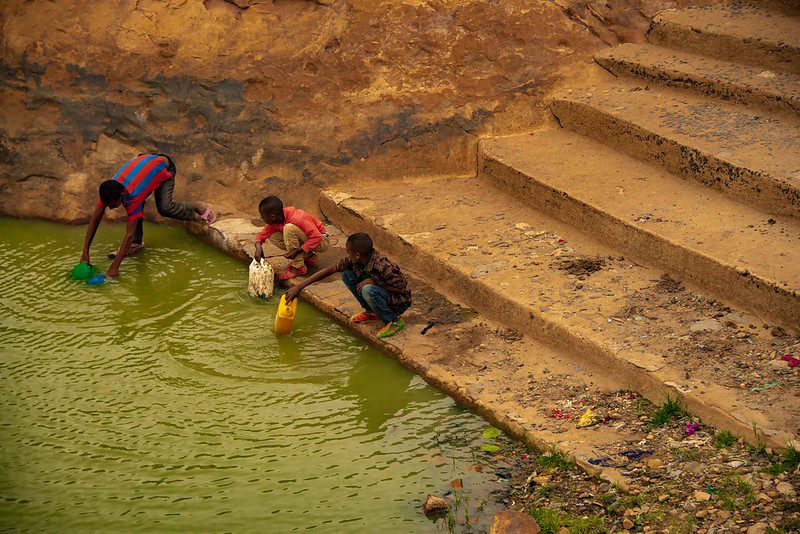
 Water scarcity and unequal water access are two pressing problems facing the global community. The political response to this crisis has created the field of water politics. In order to address this crisis, the global community must consider water as a human right and prioritize implementing sustainable solutions for the future.
The Problem
Water is one of humans’ basic needs. However, every continent has regions experiencing the effects of water scarcity. With experts predicting that one in five people will live in areas with unsatisfactory resources to meet water needs by 2025, this is an urgent issue.
Although water is a renewable resource, restored by snowmelt and rainfall, human practices are depleting the world’s water supply. Diverting water for agriculture, households and industry has become so taxing that some of the largest rivers run dry before reaching the ocean. Human activity can also pollute water sources to such an extent that they cannot support aquatic life or be used as drinking water.
Water Scarcity and Conflict
Water Politics Limited, a geopolitical risk advisory and consulting firm, found that water scarcity could lead to conflict or political instability in many countries. Sources including the Euphrates, Tigris, Jordan, Nile, Danube and Okavango rivers as well as the Tibetan watershed and resources will become insufficient to support the surrounding areas. These sources currently provide water to dozens of countries across Europe, the Middle East, Asia and Africa.
Water scarcity will therefore affect communities across the globe. Importantly, it may spark conflict over remaining water resources, within a nation or even between nations. Anya Groner at The Atlantic points to evidence of past conflicts that have revolved around water. These include the riots in Cape Town, South Africa, in 2012, which responded to inequality in the distribution of water resources.
The Pacific Institute put together a timeline of water conflicts from the earliest records until 2019. Causes of these conflicts include territorial disputes, drought, inequities and municipal water cuts. The severity of conflict may range from protests and theft to more violent killings and bombings. This makes it clear that decreases in water access may lead to political or violent conflict if the world does not take action to ensure sustainable, equitable water access for all.
Water Politics: Managing the Resource
Countries facing water scarcity have the difficult task of allocating a limited resource. To ensure that everyone can access water, these countries must take many different steps. Cape Town, South Africa, is an apt case study. In 2018, a combination of a dry climate, a three-year drought, and high water usage all put the city within 90 days of running out of water. The severity of this crisis required the whole region to pull together to decrease their water usage.
To avoid turning off the taps, the government restricted residents to 50 liters of water a day. Violators faced large fines for overusing water. Further, the government banned wasteful activities like refilling swimming pools and washing cars. Residents also took to social media to share tips about saving water. Specifically, the “if it’s yellow, let it mellow” campaign emerged to encourage everyone to resist flushing when applicable.
Social media, however, was not just useful as a tool to disseminate information and motivate residents to conserve water. Perhaps more importantly, it also drew the global community’s attention to the state of the world’s water resources and the consequences of water scarcity. The Environmental Protection Agency has also used social media to inform the public about the value of safe drinking water. The agency aims to get users to create their own water conservation campaigns to implement into their communities.
Technology and Water Politics
However, awareness about this issue cannot solve it on its own. Innovators around the globe have engineered new ways to collect freshwater and provide clean water to communities worldwide. These solutions may be as simple as rain barrels used during monsoon season in Vietnam, or as complex as a nylon net hoisted into low clouds to collect condensation in island nations. Technologies like desalinization and iodine tablets have also helped transform water sources into safe drinking water.
Additionally, Water Politics Limited is conducting research on how to maximize water access through political action. It is investigating water transport and pipeline initiatives, exporting water, worldwide water rights and public participation in water conservation.
Moving Forward
As nations move forward with water politics initiatives, we must pay attention to regions most at risk of experiencing severe water scarcity. Places like sub-Saharan Africa with dry climates have already been plunged into prolonged droughts, facing political conflict as a result. Thankfully, public awareness campaigns, technological innovations and governmental cooperation can ensure that everyone has a right to safe drinking water.
– Ellie Williams
Photo: Flickr

The State of Elderly Poverty in Australia
What is the happiest nation on Earth? Well, according to BBC News’ qualifications, Australia held the title for three straight years. Australia boasts a long life expectancy, a thriving economy and low rates of unemployment. Australia also consistently beats OECD (Organization for Economic Cooperation and Development) averages when it comes to economic standards. For example, Australia is above the OECD average employment rate for people 15 to 64 years old. More than 73% of this demographic has employment, establishing the country as a place of opportunity and economic success. This statistic may explain why many consider Australia “happy,” but it leaves out a significant portion of Australia’s population: the elderly. They often experience exclusion from employment statistics, being a largely retired group, leaving their story untold and unrecognized. Here is some information about elderly poverty in Australia.
Elderly Poverty in Australia
Poverty inevitably throws its hardest punch on vulnerable groups like women or children. These groups have since become the focus of government programs and charities that aim to protect these demographics. However, people too often forget the elderly, another vulnerable group.
Elderly poverty is a very real threat, even in developed nations like Australia. In fact, almost a third of Australians on pension live in poverty. The poverty rate for all of Australia’s elderly aged 65 and up is 19.5% and this number increases to 28.7% in groups over 75. With such shockingly high numbers, the question is, how is Australia neglecting its elderly?
In 2016, an OECD report found that Australia spends more than 50% less of its GDP on pensions than other OECD countries. In fact, only 3.5% of the country’s GDP goes toward providing people with a pension. That leaves elderly people on a pension that is less than the median household income for Australia. The annual payment for one person is around $22,000. Considering the relatively high cost of living in Australia, this amount leaves many in need. The Australian government has ignored calls to raise pensions so far with pensions rates dropping or remaining stagnant since 2002.
Elderly people in Australia are especially at risk to fall into poverty. With so many people past the age of retirement and unable to work, they must depend on Australia’s unreasonably low pension to live. Aging is already a stressful process that, combined with financial stress and housing insecurity, becomes overwhelming.
The Solution
Thankfully, elderly people in Australia are not without help. Australians and people from all over the world are fighting for them. Specifically, Mission Australia has made elderly poverty one of its focuses. It calls for age pension reform and passionately advocates for Commonwealth Rent Assistance Recipients (of which many are elderly) to receive benefits that preserve a dignified and comfortable standard of living.
Council on the Ageing’s Chief Executive, Ian Yates, has admitted that raising the pension will be difficult, but that it is a necessary step. He said that “Claims that the age pension is somehow too extravagant and unsustainable do not bear out.”
Elderly poverty in Australia presents a problem that too often slips under the radar. However, with more people agreeing with Ian Yates or joining Mission Australia’s cause, the solution to the problem could be on the near horizon. Unlike most poverty issues, the solution to this one is simple, improve pension and/or other government programs in place for the elderly.
Elderly populations deserve respect and dignity just like any other group. Additionally, only after the Australian government has addressed elderly people’s plight can one truly consider Australia the “happiest nation on Earth.”
– Abigail Gray
Photo: Flickr
Kamala Harris’ Foreign Policy: What Everyone Needs To Know
Global Problems, Smart Diplomacy
Kamala Harris’ foreign policy, first and foremost, centers around a single axiom: “Smart diplomacy”. Harris is committed to preventing global conflict and believes that the U.S. is most successful when it stands in support of its global allies. She is an advocate for the ending the conflict in the Middle East, the deconstruction of nuclear arsenals and humanitarian relief efforts in Syria. Furthermore, Harris holds a staunch position on international threats. Abstractly, Harris’ policy could perhaps be described as proactive, rather than strictly reactionary. Regarding the human and financial toll that war often brings, Harris has been vocal and understands the direct correlation between conflict and economic instability. She hopes to reduce both.
Women of the World
As a freshman senator, one of the keystones of Harris’ policy focused on enriching the lives of women across the globe. In this vein, a (paraphrased) statement, “when women do better, we all do better” reflects this aspect of her policy. Harris recently co-sponsored the bill “Keeping Women and Girls Safe from the Start Act of 2020” (s.4003). This legislation’s aim is at reducing gender-based violence and providing sustained, humanitarian support for at-risk women. It is no secret that when destitute women have access to resources, agency and support — their communities flourish.
COVID-19, the Future and Cooperation
Kamala Harris is vocal when it comes to domestic COVID-19 relief. However, that is not to say that she has neglected the global perspective. Harris’ collaboration of the resolution s.res.579 illuminates her stance on what the U.S. needs to accomplish on the global stage. I.e., continued international support, cooperation with scientists across the globe to combat the new coronavirus and relief packages aimed at poorer communities and countries. Kamala Harris also introduced the “Improving Pandemic Preparedness and Response Through Diplomacy Act” (s.4118). This is a comprehensive bill that looks to the future of pandemic response and what will be done to combat and recover from future global pandemics. Notably, Harris’ foreign policy could potentially incorporate such radical legislation.
Africa and Beyond
Kamala Harris’ foreign policy regarding Africa is one that recognizes the continent’s diversity, potential and struggles. Harris has made statements advocating for strengthening diplomatic relationships with all of Africa to “foster shared prosperity” and “ensure global security in the near future”. Harris has also opposed reduced, foreign assistance to Central and South America. Instead, she advocates for greater investments in tackling the root issues of destabilization in Southern America.
Kamala’s Co-Sponsorships
Here is a collated list that takes a deeper look into what Kamala Harris has co-sponsored in recent years:
The Outlook, TBD
Kamala Harris’ foreign policy, in principle, is burgeoning but spells positivity and action for tackling some of the world’s greatest issues. Carefully cultivated, diplomatic relationships, pandemic relief and response legislation and a fresh outlook on familiar problems may be a positive step forward.
– Henry Comes-Prichett
Photo: Wikimedia Commons
5 Facts About Unemployment in Nigeria
5 Facts About Unemployment in Nigeria
Unemployment in Nigeria is a growing concern that stems from the country’s many political and economic issues. Though very rich in natural resources like oil, this industry is actually causing more harm since the country has not diversified its economy. Therefore, if the country were to invest more in its real estate and tech companies. The unemployment rates could decrease and help solve the issue of unemployment in Nigeria.
– Will Sikich
Photo: Flickr
Agricultural Sustainability: Quinoa in Africa
Providing Protein to African Communities
Cedric Habiyaremye is one of many individuals making a difference in African agricultural practices. Growing up in a Tanzanian refugee camp, Habiyaremye is no stranger to hunger. He knew at a young age that he wanted to make sure that his family didn’t have to go to bed hungry every single night. This catalyzed his interest in studying agriculture and finding more sustainable ways to produce food. One of his main focuses is on the production of quinoa, a grain that is high in protein, which can be grown in hot and dry climates. In many African countries, such as Rwanda, the majority of families do not have access to protein, making quinoa a valuable crop to cultivate.
In addition to Habiyaremye’s work in Rwanda, Uganda and Kenya, groups like Danish Church Aid introduced quinoa to Ethiopia. Approximately 600 farmers received seeds from the EU Resilience Building and Creation of Economic Opportunities in Ethiopia (RESET II) project and farmers have been trained on how to grow and harvest it.
Moving Forward: Quinoa in Africa
Although there is no conclusive evidence or research on the success of quinoa crops in Africa, the prospect of a protein-rich crop is an important innovation. Since first being introduced in Kenya in the 1990s, quinoa and its many varieties have most recently been introduced in Malawi in 2012. Various programs in Malawi, such as the School of Agriculture for Family Independence (SAFI) in partnership with the NuSkin Force for Good Foundation, has seen great success. Families have come to learn about agricultural practices together at the school, and then bring those techniques home where they also teach other members of their community.
Educating and helping individuals grow and harvest quinoa by themselves are the most sustainable ways to provide communities with protein. The cultivation of crops such as quinoa is critical as population and hunger continue to increase in Africa.
Quinoa’s Potential to Endure Change
Many plant scientists have been concerned about crop failure and feeding the world’s growing population. Two plant and wildlife professors at Brigham Young University have studied and sequenced the quinoa genome, and have been part of projects in Africa to teach communities how to plant and harvest the crop. As the population is rising and changing weather patterns affect many places, quinoa is essential because of its high protein content and cultivation potential in many types of environments where other crops do not grow.
– Kalicia Bateman
Photo: Unsplash
Project Prakash: Healing Congenital Blindness in Rural India
Blindness and Poverty
In rural areas, a lack of knowledge about blindness means that blind children are often subject to lifelong stigma. Some people, for example, may believe that blind children possess demons. Parents often turn to someone who is not in the medical field to perform a ritual to rid them of their evil spirits.
Importantly, if children do not receive medical treatment early on, their condition can get worse with age. This deprives them of education and puts them at a higher risk of dying young. Furthermore, blind girls often face a high risk of sexual abuse. Blind children in rural India may also never have the opportunity to escape poverty, as they are unlikely to find future job opportunities if they reach adulthood.
Project Prakash: A Solution
Project Prakash provides free treatment to any child who needs it. It operates in many hospitals throughout India to provide non-surgical intervention for blind children. This type of treatment may include glasses or an eye patch. For children who do require surgical treatment, the organization works with the Charity Eye Hospital in Delhi to treat cataracts, congenital infections and misaligned eyes. Most importantly, the entire process of treatment, transportation, hospital stay, surgery and recovery costs nothing for the child or their family.
Project Prakash’s work also extends beyond treatment itself. Instead of letting children go after they receive medical intervention, the organization helps them throughout the recovery process. Sinha understands that blind children regaining vision do not immediately have perfect sight; much like a baby, it is a process. Children’s vision is often blurred at first, and it takes time to make out finer details.
Over 40 weeks, children learn how to use their new sense through a variety of tests. The full scale of the tests range from the sensitivity of vision, shape matching, identifying different colors, detection of facial features and recognizing objects. Once the child can process multiple pieces of visual information at once, their vision improves.
Research
The effects of Project Prakash’s work go beyond the children themselves. The hospital where children receive surgery also operates as a research facility to study neurology and vision. By providing such an intensive process for children to learn how to use their vision, the organization can learn a lot about the brain’s ability to learn and adapt.
The organization’s findings challenge the theory developed by David H. Hubel and Torsten N. Wiesel that the connection between brain stimulation and visual information forms during a particular developmental period. They theorized that if a child does not go through this stage, they will never be able to adapt later in life. However, Sinha proved that teenagers with various congenital conditions were able to recover their eyesight after never having seen before. He therefore determined that people learn to see through experience. This valuable information makes it more likely that other blind children can receive treatment, knowing that it will help them see no matter their age.
The Future of Project Prakash
Project Prakash’s mission may soon extend beyond blindness. Its research could provide insight into other developmental disorders caused by genetics or the harsh conditions of poverty. Overall, the organization’s findings open up the possibility that these factors’ negative effect on the brain may be reversible, like blindness.
So far, Project Prakash has treated 2,000 children in underserved communities in rural India. More than half have received surgical treatment to restore their vision. By doing so, the organization is helping children live longer, better lives with more opportunities for the future.
– Zoe Schlagel
Photo: Flickr
Qatar Charity: 29 Million People Reached
Alarmed by the convoluted context in the Middle East and the number of orphan children from wars and conflict, Qatar Charity is committed to being a leader in the global emergency response and sustainable development solutions. The organization currently has field offices in 30 countries and is developing partnerships in 20 more. Qatar Charity continues to aim for a wider reach and help in fields such as social welfare, sanitation, education, nutrition and economic empowerment that will ultimately help vulnerable communities prosper.
Qatar Charity’s Initiatives and Programs
Since 1979, Qatar Charity has been working exhaustively in its commitment to poverty reduction. Three examples are not enough to demonstrate the huge impact that this organization has made, but it is a hint of the capacities and effective programs and strategies that allow the organization to fulfill its goal.
WASH facilities provision in Pakistan
Mirpur Khas, Sindh, is a dry territory in Pakistan. The limited access to food and scarce water supplies have led to extreme poverty, unemployment and threats to the health and safety of the inhabitants. In 2019, Qatar Charity intervened in the locality. It worked to promote health, hygiene and awareness through educational programs and the provision of safe drinking water and proper sanitation facilities. The organization installed 440 BioSand filters in households and constructed 278 flush latrines.
Aid to Sudan
Qatar Charity has initiated a lot of projects to help Sudan overcome disasters and improve the poor living conditions. This year, Qatar Charity, in partnership with Qatar Airways, sent an aircraft to Sudan carrying 100 tons of food and medical supplies that were later distributed under the “Peace for Sudan” campaign.
Additionally, the Qatar Fund for Development and Qatar Charity signed an agreement to implement a project to strengthen the health system emergency preparedness in Sudan. It will equip isolated health centers, train health workers and issue the emergency preparedness plan in 16 localities. This project is expected to benefit around two million people.
COVID-19 Relief in Yemen
Qatar Charity is helping 150,000 Yemenis that were impacted by the pandemic. For this cause, the organization targeted areas with poor health services. It now provides equipment to treat those affected by the virus and sterilization devices to prevent more infections. Additionally, it granted sanitizers, cleaning materials, masks, medical ventilators, oxygen cylinders and other materials to help Yemen cope with the virus amid the country’s lack of financial resources, support and medical supplies.
The Impact
The organization is committed to helping communities in extreme poverty, crises and perplexing circumstances. It analyses the needs and areas of intervention and works closely with the governments to coordinate its efforts to the country’s development strategies. The organization considers the development and humanitarian indicators of the areas, the accessibility of humanitarian partnership and cooperation opportunities. Through this framework, and with the help of thousands of sponsors, it has successfully become an example of commitment and solidarity.
In countries with weak institutions and fragile societies, dynamics make it harder to cope with disasters. Many times, the casualties and costs in terms of infrastructure, human capital and economic resources are significant. When a disaster occurs, it is necessary to act rapidly and build a proper strategy to save lives, avoid traumas and ultimately help communities thrive. For this reason, Qatar Charity works to effectively address the causes in the countries in which it operates.
– Isabella León Graticola
Photo: Unsplash
The Rise of International Water Politics
The Problem
Water is one of humans’ basic needs. However, every continent has regions experiencing the effects of water scarcity. With experts predicting that one in five people will live in areas with unsatisfactory resources to meet water needs by 2025, this is an urgent issue.
Although water is a renewable resource, restored by snowmelt and rainfall, human practices are depleting the world’s water supply. Diverting water for agriculture, households and industry has become so taxing that some of the largest rivers run dry before reaching the ocean. Human activity can also pollute water sources to such an extent that they cannot support aquatic life or be used as drinking water.
Water Scarcity and Conflict
Water Politics Limited, a geopolitical risk advisory and consulting firm, found that water scarcity could lead to conflict or political instability in many countries. Sources including the Euphrates, Tigris, Jordan, Nile, Danube and Okavango rivers as well as the Tibetan watershed and resources will become insufficient to support the surrounding areas. These sources currently provide water to dozens of countries across Europe, the Middle East, Asia and Africa.
Water scarcity will therefore affect communities across the globe. Importantly, it may spark conflict over remaining water resources, within a nation or even between nations. Anya Groner at The Atlantic points to evidence of past conflicts that have revolved around water. These include the riots in Cape Town, South Africa, in 2012, which responded to inequality in the distribution of water resources.
The Pacific Institute put together a timeline of water conflicts from the earliest records until 2019. Causes of these conflicts include territorial disputes, drought, inequities and municipal water cuts. The severity of conflict may range from protests and theft to more violent killings and bombings. This makes it clear that decreases in water access may lead to political or violent conflict if the world does not take action to ensure sustainable, equitable water access for all.
Water Politics: Managing the Resource
Countries facing water scarcity have the difficult task of allocating a limited resource. To ensure that everyone can access water, these countries must take many different steps. Cape Town, South Africa, is an apt case study. In 2018, a combination of a dry climate, a three-year drought, and high water usage all put the city within 90 days of running out of water. The severity of this crisis required the whole region to pull together to decrease their water usage.
To avoid turning off the taps, the government restricted residents to 50 liters of water a day. Violators faced large fines for overusing water. Further, the government banned wasteful activities like refilling swimming pools and washing cars. Residents also took to social media to share tips about saving water. Specifically, the “if it’s yellow, let it mellow” campaign emerged to encourage everyone to resist flushing when applicable.
Social media, however, was not just useful as a tool to disseminate information and motivate residents to conserve water. Perhaps more importantly, it also drew the global community’s attention to the state of the world’s water resources and the consequences of water scarcity. The Environmental Protection Agency has also used social media to inform the public about the value of safe drinking water. The agency aims to get users to create their own water conservation campaigns to implement into their communities.
Technology and Water Politics
However, awareness about this issue cannot solve it on its own. Innovators around the globe have engineered new ways to collect freshwater and provide clean water to communities worldwide. These solutions may be as simple as rain barrels used during monsoon season in Vietnam, or as complex as a nylon net hoisted into low clouds to collect condensation in island nations. Technologies like desalinization and iodine tablets have also helped transform water sources into safe drinking water.
Additionally, Water Politics Limited is conducting research on how to maximize water access through political action. It is investigating water transport and pipeline initiatives, exporting water, worldwide water rights and public participation in water conservation.
Moving Forward
As nations move forward with water politics initiatives, we must pay attention to regions most at risk of experiencing severe water scarcity. Places like sub-Saharan Africa with dry climates have already been plunged into prolonged droughts, facing political conflict as a result. Thankfully, public awareness campaigns, technological innovations and governmental cooperation can ensure that everyone has a right to safe drinking water.
– Ellie Williams
Photo: Flickr
Mental Illness Issues in Ethiopia
A Troubled Past
Despite the fact that an estimated 15% of Ethiopians suffer from mental illness and substance abuse disorders, for decades almost nothing was done to address or treat these issues. In the 1980s, there was only one psychiatric hospital in the entire country and such an insignificant number of psychiatrists, that it was almost impossible to find treatment. Moreover, the psychiatrists who did practice at the time were often not interested in developing new research and treatment techniques. Because of this, most cases of mental illness went untreated, leaving mental health sufferers to face both isolation and discrimination.
A Passionate Doctor
When Dr. Atalay Alem started his medical work, there was only one psychiatric hospital in the country. After his decades of work, spanning from the 1980s until modern day, his efforts to improve the psychiatric treatment of Ethiopians have had a massive payoff. He started as a medical doctor before receiving his degree in psychiatry. After that, he became a psychiatric professor at Addis Ababa University, where his research and his passion for better mental health services were instrumental in the expansion of Ethiopia’s mental health care. Alem was also a key founder of the graduate psychiatry program at Addis Ababa University, giving more Ethiopians a chance to make a difference in the field. Today, there are almost 90 psychiatrists practicing in Ethiopia. Apart from these psychiatrists, there are hundreds of psychiatric nurses as well. These nurses are part of what has made such widespread psychiatric care possible and their presence has aided in the addition of mental health services at most Ethiopian hospitals. For his efforts, Alem was awarded the Harvard Award in Psychiatric Epidemiology and Biostatistics in 2019.
A Positive Future
Though Ethiopia has a total of under 100 psychiatrists, the current number is a great improvement from just a few decades ago. Moreover, with the help of Alem and other passionate psychiatrists, research efforts continue to grow. Alem is currently working on a study that looks at the way severe mental illness impacts rural Ethiopian communities in order to evaluate how to improve treatment and maximize impact. The Ethiopian government is also invested in improving the diagnosis and treatment of mental illness. The government, starting seven years ago, created a mental health strategy to aid the country’s mentally ill and allocated government funds to the overall improvement of mental healthcare. These funds have gone toward improving health services, such as more adequate healthcare training and increased access to psychiatric medications. Part of the reason Ethiopia’s mental health treatment has improved so much is due to the partnership between the Ethiopian government and the World Health Organization. WHO was absolutely key in providing guidelines for how to implement these new mental health care strategies.
Though progress always takes time, with the help of doctors like Alem and partnerships with organizations like WHO, Ethiopian mental health care has better days ahead.
– Lucia Kenig-Ziesler
Photo: Flickr
Update on SDG 4 in the Dominican Republic
The Dominican Republic has made progress in reaching SDG 4 in the Dominican Republic. To reach this goal, the country aims to achieve inclusive and equal lifelong learning for all in Quisqueya, a nickname for the small Caribbean nation.
The Situation
The Sustainable Development Goals’ site claims that the rate of net primary enrollment is going up with 92.7% of kids attending primary school. However, that rate has been falling since 2015 when it was 93.5%. The country’s education system includes three sections, much like the ones in the U.S.: Pre-school (Nivel inicial), Primary School (Nivel basico) and Secondary School (Nivel medio). For pre-school, only the final year is mandatory for children. Meanwhile, primary school is compulsory for all the kids. However, while the country legally mandates it, schools and authorities do not enforce attendance.
Baseball and Education in the Dominican Republic
In New York City, the Truancy division of the NYPD seeks kids who skip school. The Dominican Republic has no such system in place. Baseball is a big part of Dominican culture and many see it as the only way to get away from the island and onto a better life.
The MLB has a major recruitment presence in the country and many boys leave their schooling to train with MLB recruiters in hopes of reaching the major leagues. However, very few of those kids ever make it to the MLB and do not garner a proper education to carry them through life. Even those boys who are fortunate enough to make it to the MLB end up with limited education and have very little resources to establish a second career after retirement or injury.
In his paper “Children Left Behind: The Effect of Major League Baseball on Education in the Dominican Republic,” Adam Wasch proposes two solutions for this problem. The first is for the MLB to establish an international draft with the same education standard as the American draft so that the international recruits must have at least up to high school education. The other solution is for the MLB to create a Child Labor Corporate Code of Conduct. The Code of Conduct would denounce the use of child labor and rearrange the recruitment and training program so that it would not interfere with the children’s education.
Improvements in School Attendance and Literacy
Fortunately, the country’s lower secondary completion rate has been steadily increasing for the better part of the last decade, which bodes well for SDG 4 in the Dominican Republic. Since 2013, when the rate sat at 77.92%, it increased to 89.34% in 2018. This means that more kids are completing at least a Primary School education than ever before. Education has taken more of a focus in the Dominican Republic. In 2016, the literacy rate for youth (15-24 yrs old) was 98.8%, which is a 5.1% difference from the adult percentage where 93.7% of the adult population is literate. Both demographics have been steadily improving throughout the last decade, meaning that not only are kids receiving a better education, the adults are also seeking out improved education.
Poverty in the Dominican Republic
Poverty in the Dominican Republic is on a decline. In 2015, it was 21.70% and decreased three years later to 13.80%. The undernourished population of the country has also reduced. In the one-year span of 2017-2018, the poverty rate decreased by 0.9%. According to the Medina Administration, from 2012-2019, 1.5 million Dominicans left poverty and 650,000 Dominicans left extreme poverty. The middle class jumped from 22.6% to 30% in the same time span. The Administration also claimed that it created 823,389 jobs in those seven years.
The Dominican Ministry of Education receives up to 22.6% of the Dominican Republic’s budget spending, making it a priority of the Dominican Republic’s government in the last few years. In the budget that received approval for the year 2020, the government assigned the Education Ministry more than RD$194,523 million. The state must spend 4% of the GDP on pre-university education.
As the new ruling political party, the Modern Revolutionary Party, settles in, the international stage is looking to the new party to see how it will continue the upward trend of education in a country that has historically struggled with providing proper education to all its citizens. Hopefully, it will continue to help the country on its path to reaching SDG 4 in the Dominican Republic.
– Pedro Vega
Photo: Flickr
Baseball Players Helping to Fight Poverty
Baseball Players Helping to Fight Poverty
As an international sport that brings players together from all over the world and from all different backgrounds, baseball has the power to unite. Players like David Ortiz and Albert Pujols have given back to the communities that they grew up in, improving the lives of those who walk the same ground they walked before they were professional athletes. The Striking Out Poverty 2019 campaign has also helped individuals who are affected by poverty. The Professional baseball community and its fight against poverty shows the impact that can be made when individuals who have a platform help those in need.
– Zachary Laird
Photo: Flickr