Project Prakash: Healing Congenital Blindness in Rural India
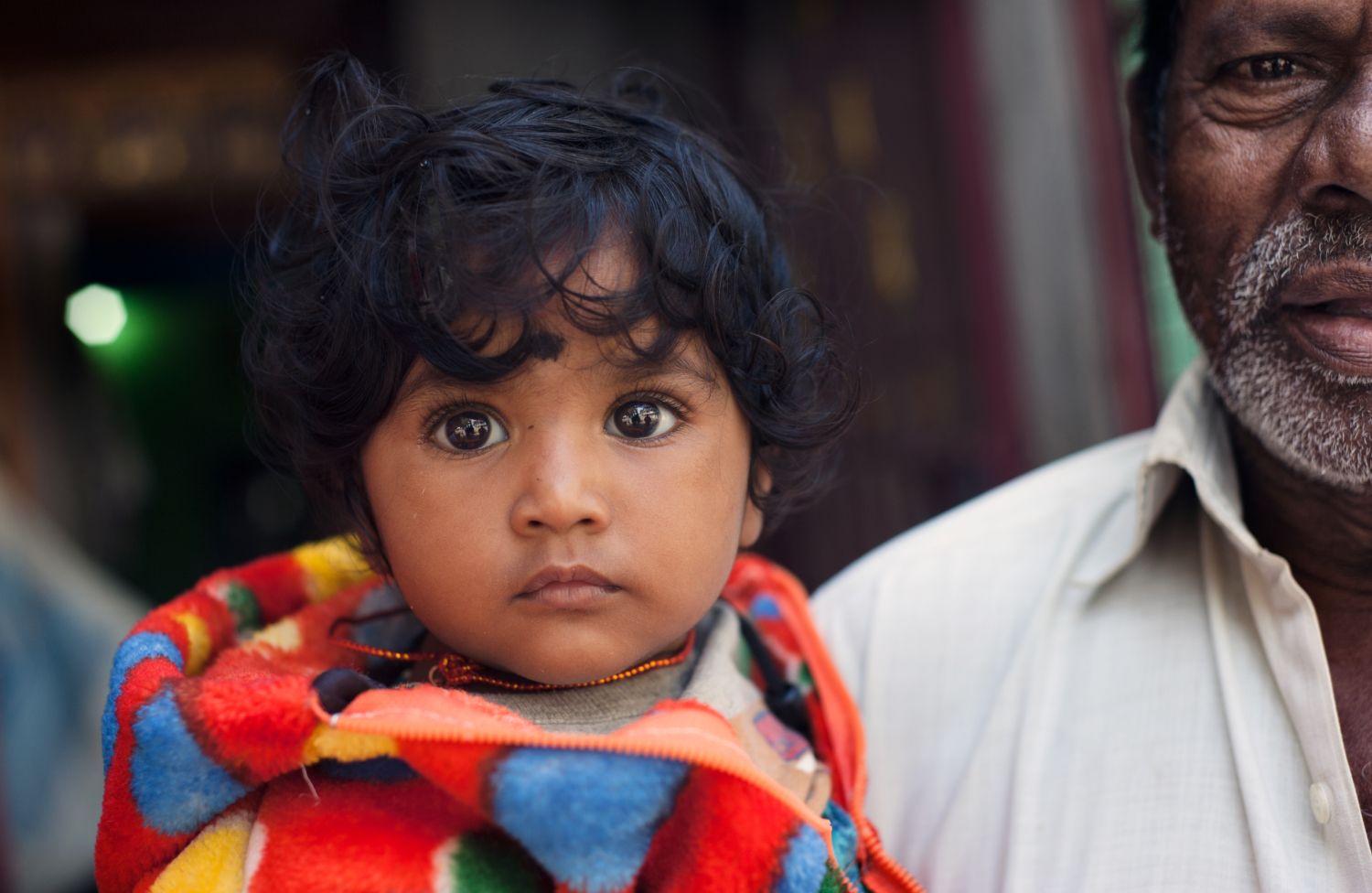 More than one million children in developing countries are blind. The majority of these children live in rural India, where more than six million people are blind. However, most hospitals in India do not possess specialty care for children who are blind. For children who do have access to special services, transportation acts as a significant obstacle to getting treatment. Many rural children also often do not know that their condition is reversible and cannot afford treatment. Pawan Sinha, a professor at M.I.T. and a father himself, hypothesized that most of the children suffering could have their vision restored. He founded Project Prakash to make his idea into a reality.
Blindness and Poverty
In rural areas, a lack of knowledge about blindness means that blind children are often subject to lifelong stigma. Some people, for example, may believe that blind children possess demons. Parents often turn to someone who is not in the medical field to perform a ritual to rid them of their evil spirits.
Importantly, if children do not receive medical treatment early on, their condition can get worse with age. This deprives them of education and puts them at a higher risk of dying young. Furthermore, blind girls often face a high risk of sexual abuse. Blind children in rural India may also never have the opportunity to escape poverty, as they are unlikely to find future job opportunities if they reach adulthood.
Project Prakash: A Solution
Project Prakash provides free treatment to any child who needs it. It operates in many hospitals throughout India to provide non-surgical intervention for blind children. This type of treatment may include glasses or an eye patch. For children who do require surgical treatment, the organization works with the Charity Eye Hospital in Delhi to treat cataracts, congenital infections and misaligned eyes. Most importantly, the entire process of treatment, transportation, hospital stay, surgery and recovery costs nothing for the child or their family.
Project Prakash’s work also extends beyond treatment itself. Instead of letting children go after they receive medical intervention, the organization helps them throughout the recovery process. Sinha understands that blind children regaining vision do not immediately have perfect sight; much like a baby, it is a process. Children’s vision is often blurred at first, and it takes time to make out finer details.
Over 40 weeks, children learn how to use their new sense through a variety of tests. The full scale of the tests range from the sensitivity of vision, shape matching, identifying different colors, detection of facial features and recognizing objects. Once the child can process multiple pieces of visual information at once, their vision improves.
Research
The effects of Project Prakash’s work go beyond the children themselves. The hospital where children receive surgery also operates as a research facility to study neurology and vision. By providing such an intensive process for children to learn how to use their vision, the organization can learn a lot about the brain’s ability to learn and adapt.
The organization’s findings challenge the theory developed by David H. Hubel and Torsten N. Wiesel that the connection between brain stimulation and visual information forms during a particular developmental period. They theorized that if a child does not go through this stage, they will never be able to adapt later in life. However, Sinha proved that teenagers with various congenital conditions were able to recover their eyesight after never having seen before. He therefore determined that people learn to see through experience. This valuable information makes it more likely that other blind children can receive treatment, knowing that it will help them see no matter their age.
The Future of Project Prakash
Project Prakash’s mission may soon extend beyond blindness. Its research could provide insight into other developmental disorders caused by genetics or the harsh conditions of poverty. Overall, the organization’s findings open up the possibility that these factors’ negative effect on the brain may be reversible, like blindness.
So far, Project Prakash has treated 2,000 children in underserved communities in rural India. More than half have received surgical treatment to restore their vision. By doing so, the organization is helping children live longer, better lives with more opportunities for the future.
– Zoe Schlagel
Photo: Flickr
