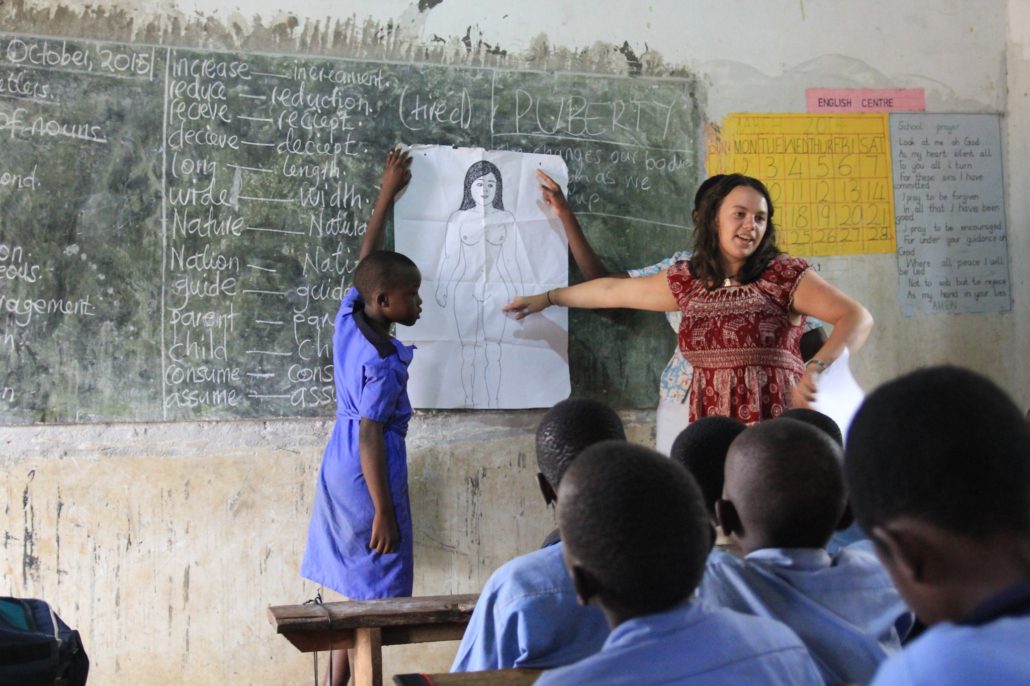
Uganda’s Ministry of Education reported that, as of 2019, nearly one in every four Ugandan girls between ages 12 to 18 will drop out of school once they begin menstruating. For those who do attend school, girls’ absence rates triple from 7% to 28% during their periods. Dropping out of school decreases their likelihood of escaping the cycle of poverty and increases their chances of early marriage and motherhood. Like many other international leaders, the Ugandan minister of higher education, John Chrysostom Muyingo, stresses the importance of girls’ school attendance, adding that this must include proper menstrual health practices. He articulates that period poverty in Uganda seriously jeopardizes Uganda’s likelihood of reaching many of the UN Sustainable Development Goals (SDGs), especially those which concern gender equality, education and health care.
Understanding Period Poverty in Uganda
The definition of period poverty is inadequate access to menstrual health care and sanitation, as well as the stigma and shame surrounding menstruation that prevents menstruating women from fully participating in society. Poverty, education and a lack of waste and sanitation management exacerbate the global problem of period poverty.
In 2015, the Ugandan government rolled out an initiative to work alongside NGOs and schools to improve access to menstrual care. However, reports indicate that Uganda’s school system has failed to improve these rates. Poor washing and hygiene facilities that make product removal and privacy difficult, as well as the embezzlement of funding for pads and sanitation infrastructure improvements, have hampered the initiative’s success. A profound stigma surrounding menstruation also exists as people often perceive it as dirty and a private matter. This makes educating girls and boys on the matter difficult without proper funding and insistence. Additionally, despite a 2017 tax removal on sanitation products, they still cost around $2 USD per package, unaffordable for those living in poverty.
Developing Sustainable Solutions
Fortunately, several organizations are working tirelessly to combat period poverty in Uganda. The Red Cross and AFRIpads, a local manufacturer, have partnered with the Ugandan government for the Keep a Girl in School Initiative to provide girls with sanitation products and educational services. AFRIpads’ reusable pads help tackle the problems of waste and affordability. The Binance Charity Foundation uses cryptocurrency donations to directly reach women in need to circumvent corruption within the school systems. To date, the organization has helped over 1,400 girls in Uganda pay for sanitation pads.
PLAN International has worked with schools in Torono, Uganda by adding doors to toilets for privacy and creating “menstrual hygiene management clubs.” Both girls and boys between the ages of 11 to 18 learn about periods and make reusable products for the girls to take home. The clubs use songs and other fun activities to create a positive culture surrounding menstruation, using roleplay to combat social norms. Educators have been highly supportive of this initiative and noticed a change in boys’ attitudes and support and girls’ attendance.
Men Making an Impact
This is not the only initiative that has stressed the role of men in creating supportive environments for girls’ health. One church in Mulatsi, Uganda, realized that period poverty was the biggest problem the community reported. One father, Milton, became motivated to improve the situation for his daughters but noted the high cost of pads. With a church organization, he and his community work to educate and make reusable pads, which cost only $1.50 USD and last an entire year. Other men judged Milton for his involvement in this but Milton has insisted that fathers must involve themselves in reducing period poverty in Uganda for their daughters’ sake. The project’s success inspired more churches to join the movement, which has educated 4,800 boys and girls about periods and proper feminine care.
The Ganda Boys are another male group supporting the cause. This group, made up of male musicians, has helped over 2,000 girls gain access to menstrual products using donations they received from their performances. After moving to the U.K., the men give back by working in refugee camps to improve menstrual hygiene education.
Period poverty in Uganda is far from being solved, and it presents a threat to Uganda’s SDGs. Yet, it has presented several opportunities for innovative solutions that can be learned from. While funding for supplies and sanitation improvements may come from all over the world, local communities are working to untangle deep-rooted stigmas. The inclusion of men and boys in educating about women’s and sexual health has contributed to the success of these projects. With continued government and INGO support, period poverty in Uganda can reduce, and more girls can continue their education.
– Elizabeth Stankovits
Photo: Flickr

Life in Bosnia After the War
Bosnia and Herzegovina, more commonly known as Bosnia, used to be a part of former Yugoslavia and went through one of the most horrific genocides in 1992. Since the war, Bosnia has had one of the highest poverty rates in the world and an unemployment rate of 15%.
This article examines the perspectives of three Bosnian women from different generations and how difficult it is or was for them to get a good education, proper healthcare or make a comfortable living after the war. Naska is a 64-year-old retired house cleaner who has lived in Bosnia all her life. Elma is 40-year-old working as a dialysis nurse in the Nakas General Hospital in Sarajevo. And finally, Adna is a 20-year-old currently attending The Academy of Fine Arts in Sarajevo.
Living in Bosnia Now
Naska was only 38 when the war started. She was born and raised in Sarajevo and still lives in her old childhood home in the middle of the city. She says living on a pension fund in Bosnia is very difficult. She receives only 300 marks, which is equal to $182 a month. “If I didn’t receive help from my sister back in the United States I would not have enough to pay for all my groceries. I’m really lucky because my friends do not have family away to help and it gets really hard, especially in the winter.” The retirement age in Bosnia is 60 years, but due to health issues Naska was forced to retire early. In our interview, Naska explained that there was a train she used to take on her way to school when she was young. The station she used was bombed during the war and has not been repaired or rebuilt since 1995. She says that times felt happier before the war; her and her neighbors are tired of seeing constant reminders of the worst time of their lives.
Elma was in elementary school during the Bosnian War. She attended class in a basement with her friends. In Bosnia, after secondary school students are required to pick a specialty in high school that they carry on through university. Elma has been studying medicine since she was 16 and works in one of only two state hospitals in Sarajevo. A registered nurse for close to 10 years now, Elma believes that the healthcare system is not the same as it was before. Bosnia has a shortage of good healthcare professionals, and the private sector for medical supplies has taken over hospitals causing treatment to become more expensive for residents. Not only has the healthcare system gotten worse after the war, the possibility of finding a decent job has also worsened. “I have been applying for a job at hospitals for five years now. I could not even get an interview. [My mom] called me a year ago to tell me that her friend has an open position in his hospital. I honestly believe that if it was not for him I would not have a job right now.” Elma thanks her mother for a lot of the good things in her life. She says before finding a long-term job, she worked part-time night shifts at a nursing home and her husband’s job wasn’t stable either. They both live in the apartment her parents had bought previously so they have the luxury of not worrying about paying rent, only utility and groceries. Elma feels her life right now is good, but she worries this could change at any moment.
Adna was born in Sarajevo in 2000. She doesn’t know much about life before the war, only what her parents have told her. She told me in the interview that students in Bosnia don’t learn about the war in schools and everything they know about it comes from stories that get passed down. Her parents tell her it’s because the country is still in mourning and it’s hard for people to talk about what happened. The education system is very different in Bosnia compared to the United States. Primary school lasts for nine years while high school lasts for four. University education can take up to three to five years depending on the college. When I called her to talk one of the first questions I asked was if going to college was worth it. She said, “It depends. It is hard to find a job here with a degree, but it is also hard to find one without. Everybody knows that you need connections to find long lasting jobs. I have plenty of friends who have graduated college and work waitressing job for three years now. My cousin graduated with a sports medicine degree and had a friend who worked at this clinic in the city, but after six months she was let go because it was too expensive to keep her.” Her cousin now works at a boutique in the city’s mall.
COVID-19 in Bosnia
Working in a hospital during COVID-19 hasn’t been the easiest for Elma, but she does applaud her hospital for taking the necessary precautions. At her job, it is mandatory for workers to enter a tent before they enter the building to have their temperatures checked and get sterilized. Then workers must put on a suit complete with additional masks and gloves before being allowed to begin their shift. The only time workers can take the suit off is while they’re eating and after their shift when they are required to take a mandatory shower, change clothes and exit the hospital from the opposite side. Every night she comes home she is exhausted and says that there is too much work to do, but just not enough people to help. However, Elma, Naska and Adna all agree on one thing: the government is too corrupt to do anything that will help the people. And there is evidence that backs them up.
A scandal hit the news about Bosnia’s Prime Minister Fadil Novalic and his involvement with fake ventilators. The government had given $5 million to the Civil Protection firm of Bosnia to buy a hundred ventilators from China. When the ventilators arrived, officials were quick to learn that they were useless and not equipped to handle the virus. The Prime Minister and Head of the Civil Protection firm were arrested on charges of fraud and money laundering on top of an embezzlement charge.
Life in Bosnia has not been easy after the war. The government is ranked 101 out of 180 countries on the Corruption Perception Index and citizens of Bosnia hold out hope that times will change, especially those who remember life before the war. It is very clear however, that life in Bosnia is a long way away from where it used to be.
– Hena Pejdah
Photo: Flickr
How Serbia’s Youth is Making a Difference
Serbia is a European country that was formerly a part of Yugoslavia. Located in the West-Central Balkans, it is surrounded by Romania, Hungary, Bulgaria and Croatia. The majority of the population is of South Slavic origin and they speak Serbo-Croatian, which is nearly the same language that the Croats, Bosniaks, and Montenegrins speak.
Over time, a majority of Serbia’s population migrated to the capital city Belgrade from more rural areas. As recently as 2018 however, 43.9% of the people in Serbia still lived in the countryside. In 1945, when the country was still part of the former Yugoslavia, Serbians were under a socialist economic system. Although some free-market characteristics were later adopted in 1948, there was still a large emphasis on socialist self-management.
Youth Unemployment
Today, the youth in Serbia have been consistently making efforts to promote and provide a platform for entrepreneurship among young citizens. Near Belgrade—which has been a center for innovation and entrepreneurship over recent years—is the Impact Hub Belgrade.
One problem affecting the economy in Serbia is related to job availability among young citizens. The unemployment rate among youth is 40%, so providing employment opportunities to these citizens would impact a large portion of the population that is struggling to enter the job market or start businesses.
As a result of poor job opportunities, large numbers of young Serbians leave Serbia in search of work elsewhere. If the youth had more accessible jobs and economic opportunities, it may be more compelling for them to stay and stimulate their own economy, as opposed to the economies of other countries.
Impact Hub
Impact Hub focuses on supporting young entrepreneurs by strengthening their networks with investors in order to attract their investments. This provides an economic foundation for businesses to operate and produce goods and services.
One of the programs initiated by Impact Hub was called the Launch Pad, which provided these young entrepreneurs not only with tools needed to create new products, but with training to broaden their business skills. In addition, the program helped the youth in Serbia develop business models and connect with investors at home and abroad. This program received grants from USAID to help with funding.
Even though the program has ended, it raised a total of $230,000 from the domestic public sector, as well as from the private sector both at the national and international levels. Investments continued, including a $100,000 fund from the Innovation Impact Grant Program in Dubai.
Continued Efforts and Progress
Serbia’s economic freedom score by 2020 has increased by 2.1 points, bumping it to 66.0, and it saw GDP growth as recently as 2018. Even though Serbia has faced numerous economic difficulties since its independence, there are efforts being taken by its citizens to drive and stimulate the economy. The youth in Serbia have especially taken notable actions and the country continues to be supported by the USAID and many other programs and countries domestically and internationally.
– Fahad Saad
Photo: Pixabay
What LAPAS Is Doing to Fight Poverty in Latvia
The Latvian Platform for Development Cooperation (LAPAS) is fighting poverty in Latvia by helping the country develop and provide education to the people. This organization is unique in that it works with several different types of organizations in order to help the people of Latvia in several different ways.
Poverty in Latvia tends to affect the elderly the most. In 2016, Latvia was neck-and-neck with Estonia for people above 65 being at risk of falling into poverty among a handful of other nations. An NGO like LAPAS is vital to helping these elderly people by changing their surroundings; but, LAPAS is also vital for paving the way for the next generation. Additionally, helping the elderly who are at risk of falling into poverty in Latvia also helps the next generation by taking the burden of taking care of these elderly off of them. Most people may not think about Latvia as being a poor country, but, in 2018, 22.9% of Latvians were in danger of falling into poverty.
4 Facts About Poverty in Latvia
The Global Call to Action Against Poverty (GCAP)
The Latvian Platform for Development Cooperation is a part of the Global Call to Action Against Poverty (GCAP). More than 11,000 Civil Society organizations work with GCAP. GCAP officially emerged in 2005. GCAP partly helped draft the Sustainable Development Goals (SDGs) of the U.N. as well as Agenda 2030. In addition, GCAP has stepped up to the challenge of COVID-19 by bringing together more than 400 NGOs, human rights organizations and others to advocate for people on every continent of the world.
To fight poverty in Latvia, it takes more than providing food for a few weeks on and off when funds are available. For long-term betterment, there needs to be a focus on improving specific aspects of society. LAPAS has that focus. It works from multiple angles to build a better future for the citizens of Latvia. Here are some areas of Latvian society that LAPAS works in:
In conclusion, Latvia may not be one of the countries that one’s mind immediately goes to when thinking of poverty. But Latvia’s poverty numbers have held steady for too many years to ignore. The Latvian Platform for Development Cooperation is a shining example of an organization that understands the multifaceted approaches that Latvia needs to take in order to fight poverty. Hopefully, its efforts against poverty in Latvia will continue for years to come.
– Moriah Thomas
Photo: Pixabay
Innovative Solutions for Period Poverty in Uganda
Uganda’s Ministry of Education reported that, as of 2019, nearly one in every four Ugandan girls between ages 12 to 18 will drop out of school once they begin menstruating. For those who do attend school, girls’ absence rates triple from 7% to 28% during their periods. Dropping out of school decreases their likelihood of escaping the cycle of poverty and increases their chances of early marriage and motherhood. Like many other international leaders, the Ugandan minister of higher education, John Chrysostom Muyingo, stresses the importance of girls’ school attendance, adding that this must include proper menstrual health practices. He articulates that period poverty in Uganda seriously jeopardizes Uganda’s likelihood of reaching many of the UN Sustainable Development Goals (SDGs), especially those which concern gender equality, education and health care.
Understanding Period Poverty in Uganda
The definition of period poverty is inadequate access to menstrual health care and sanitation, as well as the stigma and shame surrounding menstruation that prevents menstruating women from fully participating in society. Poverty, education and a lack of waste and sanitation management exacerbate the global problem of period poverty.
In 2015, the Ugandan government rolled out an initiative to work alongside NGOs and schools to improve access to menstrual care. However, reports indicate that Uganda’s school system has failed to improve these rates. Poor washing and hygiene facilities that make product removal and privacy difficult, as well as the embezzlement of funding for pads and sanitation infrastructure improvements, have hampered the initiative’s success. A profound stigma surrounding menstruation also exists as people often perceive it as dirty and a private matter. This makes educating girls and boys on the matter difficult without proper funding and insistence. Additionally, despite a 2017 tax removal on sanitation products, they still cost around $2 USD per package, unaffordable for those living in poverty.
Developing Sustainable Solutions
Fortunately, several organizations are working tirelessly to combat period poverty in Uganda. The Red Cross and AFRIpads, a local manufacturer, have partnered with the Ugandan government for the Keep a Girl in School Initiative to provide girls with sanitation products and educational services. AFRIpads’ reusable pads help tackle the problems of waste and affordability. The Binance Charity Foundation uses cryptocurrency donations to directly reach women in need to circumvent corruption within the school systems. To date, the organization has helped over 1,400 girls in Uganda pay for sanitation pads.
PLAN International has worked with schools in Torono, Uganda by adding doors to toilets for privacy and creating “menstrual hygiene management clubs.” Both girls and boys between the ages of 11 to 18 learn about periods and make reusable products for the girls to take home. The clubs use songs and other fun activities to create a positive culture surrounding menstruation, using roleplay to combat social norms. Educators have been highly supportive of this initiative and noticed a change in boys’ attitudes and support and girls’ attendance.
Men Making an Impact
This is not the only initiative that has stressed the role of men in creating supportive environments for girls’ health. One church in Mulatsi, Uganda, realized that period poverty was the biggest problem the community reported. One father, Milton, became motivated to improve the situation for his daughters but noted the high cost of pads. With a church organization, he and his community work to educate and make reusable pads, which cost only $1.50 USD and last an entire year. Other men judged Milton for his involvement in this but Milton has insisted that fathers must involve themselves in reducing period poverty in Uganda for their daughters’ sake. The project’s success inspired more churches to join the movement, which has educated 4,800 boys and girls about periods and proper feminine care.
The Ganda Boys are another male group supporting the cause. This group, made up of male musicians, has helped over 2,000 girls gain access to menstrual products using donations they received from their performances. After moving to the U.K., the men give back by working in refugee camps to improve menstrual hygiene education.
Period poverty in Uganda is far from being solved, and it presents a threat to Uganda’s SDGs. Yet, it has presented several opportunities for innovative solutions that can be learned from. While funding for supplies and sanitation improvements may come from all over the world, local communities are working to untangle deep-rooted stigmas. The inclusion of men and boys in educating about women’s and sexual health has contributed to the success of these projects. With continued government and INGO support, period poverty in Uganda can reduce, and more girls can continue their education.
– Elizabeth Stankovits
Photo: Flickr
Education for Syrian Refugee Children in Jordan, Turkey and Lebanon
The governments of these three nations and other organizations such as the United Nations High Commissioner for Refugees (UNHCR) and the Human Rights Watch are working to ensure that each of these 1.5 million children receives the education they deserve. Here are some of the steps providing education for Syrian refugee children in Turkey, Jordan and Lebanon.
Educating Syrian Children in Turkey
The 2016-2017 academic year was the first year in Turkey in which more Syrian children were in school than out of it. Roughly 490,000 children or 60% of the population received some form of formal education. Upon arrival in Turkey, these children attend a UNICEF-supported program called the TEC (formally Temporary Education Center, now the Transitional Education Center). These centers exist both inside and outside the refugee camps. In addition, it educates 64% of Syrian children in school in Turkey and offers courses in their native language. Sometimes the courses are at low or no cost to the families.
The Turkish Ministry on National Education (MoNE) is slowly integrating children who attend TECs into Turkish state schools. The issue of language barriers continues to be addressed and MoNE plans to fully assimilate Syrian children into Turkish schools by the end of 2020. This is a goal that was established prior to the COVID-19 pandemic.
Educating Syrian Children in Jordan
Jordan has made great strides in recent years, with only 10% of Syrian children not receiving primary school education. The government and other organizations such as Program Aid, Islamic Relief and Human Rights Watch have worked together to ensure that each child receives formal education in some form.
However, this support ends when the children grow older. The enrollment rate for Syrian students drops significantly, from 90% in primary schools to less than 30% in secondary schools. In June 2020, a 61-page report entitled “I Want to Continue to Study: Barriers to Secondary Education for Syrian Refugee Children in Jordan” came out. It details the struggles of refugee children once they transition out of primary school. Additionally, Human Rights Watch encourages Jordan and other countries to take action to ensure that every Syrian children’s education continues after primary school.
Educating Syrian Children in Lebanon
Roughly 57% of the 448,000 school-aged Syrian refugee children in Lebanon are enrolled in public school. This number is growing each academic year. The Lebanese Ministry of Education and Higher Education (MEHE) has received financial support from UNHCR, the United Nations Children’s Fund (UNICEF) and other organizations. As a result, this enables MEHE to provide free education for Syrian refugee children (as well as Lebanese children) through the twelfth grade. This program, entitled Reaching All Children With Education (RACE), initiated a sharp increase in enrollment. In addition, MEHE opened 376 new schools between the 2015-2016 and 2016-2017 school years. UNHCR also provides resources for children not yet enrolled in school, both in the community and in the schools themselves. This is to ensure that children receive the education they need.
Many Syrian refugees still remain out of school. However, Turkey, Jordan and Lebanon have all made great strides in making education more accessible for Syrian children. Ensuring education for Syrian refugee children has not been an easy task. Yet, these countries have worked hard to make it possible for these children to receive the education they deserve.
– Daryn Lenahan
Photo: Flickr
COVID-19’s Impact on Nepal’s Rural Communities
COVID-19 Related Challenges in Nepal’s Rural Communities
While quarantine and lockdown have been a vital part of curbing the spread of COVID-19, it created challenges for rural Nepalis. A joint research team of the Yale Research Initiative on Innovation and Scale (Y-RISE) and the Centre for the Study of Labour and Mobility in Kathmandu tracked 2,600 households in rural Nepal before and after the COVID-19 lockdown. The main problem that this study identified is as lean seasons arrive and grain stocks from the last harvest are exhausted. In addition, extended lockdowns could lead to more hunger and push families below the poverty line. Krishna Rana, a rural citizen in Nepal shares, “Forget about nutritious food, it has been hard to manage daily food for us.”
In a normal year, during the lean season, workers are able to travel into the cities for temporary work. However, this isn’t possible during the lockdown. This study found that the total hours in income-generating work for men have decreased by 75% since January. These statistics indicate that the COVID-19 lockdown will have profound economic impacts. Additionally, it could exacerbate cycles of poverty. As Rana’s husband Rajendra Rana says, “There’s no work I can do. It’s been tough to feed nine members in the family and I am the sole breadwinner.”
Relief Measures to Face Nepal’s Agricultural Challenges
The country’s local governments take on the responsibility of supporting Nepal’s rural communities through the pandemic. Local governments have been allocating resources like food to its most vulnerable citizens. However, these local governments express the need for additional support. As Dhan Bahadur Thapa, Chairman of Beldandi Rural Municipality says, “We lack proper resources, and the support from the non-government agencies have been very essential; through the help of them we are trying our best to feed our people.”
NGOs That Help Assist The Governmental Response to COVID-19 Pandemic
With the support of NGOs, it is the hope that Nepal’s rural communities will be able to sustain themselves through the COVID-19 pandemic. Consistent food and resource support will ensure that these communities do not face food insecurity and further poverty. It is essential that these rural communities are aided so they can continue to sustain themselves through farming and livestock rearing in the future.
– Antoinette Fang
Photo: Flickr
Pharmaceutical Companies Invest in Indigenous Communities
Berkeley and Samoa
In 2004, the University of California at Berkeley struck a deal with the government of Samoa, a small Pacific Ocean island nation. The university will share royalties from the highly revolutionary and precious compound prostratin, native to the Samoan mamala trees. It was discovered the drug was effective in treating HIV/AIDS by flushing the virus out of reservoirs in the body. The university pledged to equally split all revenues generated from the drug. It was used commonly on the island to treat hepatitis. After isolating the genes responsible for producing the drug in the tree, the researchers were able to carry out microbial production.
National Cancer Institute and Samoa
Three years prior, the National Cancer Institute (NCI) issued a license to the AIDS Research Alliance (ARA) to conduct research on the drug prostratin. The NCI exclusively patented this. The methodology behind the research is significantly different from Berkeley’s, as it does not rely on gene sequencing. The percentage of total royalties returned to the island is 20%. This is much lower than the charitable cut Berkeley would offer in the future.
However, this partnership was highly influential in staging the blueprint for American companies to share their copious wealth with the lands they took from. Much of the revenue returning to Samoa continues to be funneled into villages. In addition, it provides healers on the island with more sophisticated equipment and labs. In congruence with the deal, there will be over $500,000 of combined value to the construct water tanks, a medical clinic, three schools, a trail system and a tourist walkway from which the village would keep all revenue.
Merck & Co. and Costa Rica
In 1991, Merck & Co. is one of the pharmaceutical companies that sought to turn obscure compounds into gainful products in the agriculture and pharmaceutical markets. It extended a two-year deal to the nonprofit biodiversity institute in Costa Rica INBio. This entailed the exchange of plant and insect samples for $1 million. This was a mutually beneficial investment. Costa Rica was looking for donors in the private sector to help preserve its tropical and sub-tropical forests. There are ethical concerns surrounding the usage of said investment in building more commercially viable tourist attractions instead of natural preserves. However, regardless of Costa Rica’s money management, the company’s investment was nothing short of magnanimous.
ICBG and Coiba
The island of Coiba, 12 miles off the coast of Panama, was designated as a national park in 1991. It drew much interest in its coral reefs in 2005 when scientific research suggested that they contained an abundance of new species with medicinal and commercial potential. By far, the most promising discovery was octocoral, from which anti-malarial properties can be extracted. Following these exciting developments, the International Co-Operative Biodiversity Groups (ICBG) invested millions in building scientific infrastructure on the mainland of Panama. For instance, testing and processing sites for potential medicinal compounds.
The collaboration pledged to distill at least half of all profits into trust funds. The trust funds design to protect Coiba from internal and external environmental hazards. The profit will also go to the institutions that aided the project. A biological research station was built on the island. The security systems programmed will eradicate colonists and fisherman that could disrupt the ecosystem. ICBG has been successful in identifying and analyzing medicinal compounds in many other countries including Suriname, Vietnam and Madagascar.
These examples of corporations reconciling past exploitation of resources are certainly worth celebrating. However, there is work left to do. Pharmaceutical companies fund indigenous communities and spurring growth of their medicinal industries is still the minority. There is damage that has been left unrectified. These communities rely heavily on the resources insular to their area and supported by a well-funded and functioning infrastructure. In the fight to end global poverty, one of the first places to start is in the coniferous islands and peninsulas. It was once abundant in medicinal compounds but has since been plundered. It is important that the people in these areas can live healthy lives and benefit from the rich resources native to their land.
– Camden Gilreath
Photo: Flickr
MLB’s Grand Slam Against Poverty
Major League Baseball (MLB) player Adam Wainwright is a two-time World Series champion. Additionally, Wainwright is a three-time All-Star, two-time Gold Glover, and Silver Slugger Award winner. In 2013, the Saint Louis Cardinals’ star found another use for his work ethic, leadership and passion by founding the Big League Impact (BLI) to fight poverty in the global community. He believes, “As an athlete, you only get a few years to have a platform like this. You might as well stand on it.” This article discusses some of the organization’s successes, highlighting why founding the organization was a grand slam against poverty.
The BLI began as a family fantasy football fundraiser. Today, this organization hosts campaigns and collaborates with fellow non-profits, athletes, musicians and other public figures. For example, the organization has taken Kyle Gibson into the ranks; the pitcher for the Texas Rangers who now serves as Vice President.
Teamwork Helps Puerto Rico Recover After Earthquake
Following two devastating earthquakes in 2019 and 2020, the BLI raised $30,000 for communities in Puerto Rico. This money went to two foundations: The Happy Givers and Yadier Molina’s Fundación 4. The Happy Givers has endeavored to improve lives in Peru, Tijuana and Puerto Rico. It used donation proceeds to provide power, clean water, emergency supplies and shelter to earthquake survivors. It gave further support by supplying backpacks packed with essentials for survival: whistles, hand sanitizer, toilet paper, flashlights, towels, water bottles, first aid kits and cereal bars.
Fundación 4, meanwhile, has focused exclusively on helping Puerto Ricans. BLI’s contributions went to children suffering from abuse, neglect, as well as diseases such as cancer. Fundación 4 also distributed necessities including food and water to Puerto Rican communities.
Fundraiser Drives Away Poverty and Hunger
Gateway Bronco (GB) is a company based in St. Louis, MO, that designs and restores Ford Broncos. This organization worked with the BLI and Omaze, an online fundraising platform, to fight against poverty. GB offered a classic Ford Bronco and $20,000 cash to bring in donations. This campaign raised $431,378.09 to benefit four charities:
El Mogote is No Longer Parched for Safe Water
In 2019, Nick Ahmed, a shortstop for the MLB Arizona Diamondbacks, partnered with BLI. He traveled to El Mogote, Dominican Republic to open a water treatment center. With the help of Striking Out Poverty and Food 4 the Hungry, Mr. Ahmed was successful in providing 1,200 people with clean water. While there, Ahmed also played baseball with the children, saying, “their passion and joy for the game was so incredible!” Ahmed donated 31 pairs of New Balance cleats to the kids, allowing them to safely continue playing the game.
Healthy Competition for Global Health
Baseball and Football fans alike are encouraged to join the BLI fantasy football league. Entry requires a donation to the organization, ranging from $250 to $1500. Higher donations unlock additional prizes.
In 2020, Ahmed and starting pitcher Luke Weaver of the Arizona Diamondbacks will compete for the cause. Weaver is looking forward to the competition, “I’m excited to defend my title as the best fantasy footballer ever, but I’m welcome to all challengers in that and I hope somebody tries to take me down.” Ultimately, the winners are those in need around the world.
Looking to the Future
To date, BLI has raised over $5.2 million for charitable causes and foundations. Now, Wainwright is mobilizing and advising his fellow athletes on starting their own charities and nonprofits. He says, “What we want to do at Big League Impact, one of our biggest missions now is empowering other players to go out into their communities and into the world and do what they feel like means something to them. Something that hits home.”
– Heather Babka
Photo: Commons Wikimedia
The Education System in China
How The Education System in China Works
It is mandatory in China that every child has to have at least up to nine years of the required education. In addition, education is state-run. This means it has a very small association with private providers. Education is divided into three main groups: basic education, higher education and adult education. The basic education for children in China includes primary school which starts from age six to around age 11 or 12 for the average Chinese resident. Thanks to the “Law on Nine-Year Compulsory Education,” all basic education is tuition-free. After the nine required years, there is a modest fee for tuition during middle and high school.
Moreover, junior secondary school which starts from age 12 to 15. After junior middle school students have finished their mandatory education requirement, they have the option to continue with senior secondary education which is usually a three-year program. These can be followed by other adult educations such as a university for a bachelor’s degree or master’s/Ph.D. program.
Development of The Education System in China
The Chinese education system is not only rigorous but extremely competitive. It has developed at an alarming speed over the last two decades. In addition, the education system in China offers their children many opportunities to thrive in the future. However, it did not always start this way. In the 1950s, the enrollment rate in Chinese elementary schools was below 20% and only 6% for junior secondary school. The country’s main form of education was similar to the Soviet education system. However, as the Soviet paradigm declined China started to change its education style.
By 1978, there were almost 1.3 million primary and secondary schools, a vast improvement just a mere few decades ago. But the steps toward modernization were not yet completed, there were still only about 600 higher learning organizations with only around 117,000 students. Thus, the education system in China was reorganized yet again to the system the country has today. By 1986, the “Compulsory Education Law of the People’s Republic of China” was born. It began executing laws for mandatory education for nine years of a child’s life.
In 2007, the state passed a law that students who were in rural areas were given free tuition for their mandatory nine-year education life. The following year this law was extended to urban living children as well. As of 2018, China has more than 29 million students enrolled in higher education alone, drastically boosting their economy.
COVID-19 Response
COVID-19 being an extremely widespread pandemic has posed some serious challenges for education everywhere. Being one of the first countries to get hit, China took immediate steps to try and solve the education issue during this pandemic. When China got hit, China immediately released an “epidemic prevention, control and containment” response plan. The goal was to handle the pandemic in the smartest and safest way possible, including how education would be affected.
China shut down schools in late January and started advancing their online virtual classes. Along with the new innovation, China did to its online platforms, the country also delays college entrance exams. It banned teaching a new curriculum until the next semester. The country hopes students who had difficulty in accessing online courses would not be hurt by this dramatic change.
Schools currently are open in China, but that may change depending on the state of COVID-19. Until then, China is taking extra precautions with temperatures taken before children go to school. Once they get to school, masks are required and the desks are all three feet apart.
– Katelyn Mendez
Photo: Flickr
ShopUp Helps with Poverty Eradication in Bangladesh
Bangladesh’s economy has grown exponentially in the past 20 years. This raises its GDP per capita by 344% in total since the year 2000. In the last five years alone, this same figure surged 48%. Despite this progress, a significant portion of the country still lives below the poverty line — roughly 20% of a population of 164 million. Recent innovations in poverty eradication in Bangladesh are working to boost economic prospects and facilitate financial security for all of its citizens.
One of these innovations in poverty eradication in Bangladesh is the digital platform ShopUp. ShopUp is co-founded by Afeef Zaman, Siffat Sarwar and Ataur Chowdhury. It began with the goal to empower owners of Facebook businesses with the technical means to grow. More than 50% of Bangladeshis are self-employed. Many of them are operating e-commerce and social commerce shops through Facebook as their source of income. Also, it quickly became evident that clients’ lack of access to capital was hindering their businesses’ growth. After partnering with BRAC in 2018, a Bangladesh-based international development organization, ShopUp now aims to help small business owners acquire credit and other financials when they cannot afford the high cost of formal services.
How ShopUp Benefits Small Business Owners
Transaction records through sites like Facebook can be difficult to track and formalize for loan purposes. ShopUp automatically collects the relevant data from sales on Facebook Messenger. As a result, the merchant can more easily apply to loans from microfinance institutions. Furthermore, the process is quick. When a seller is ready to apply for a loan through ShopUp, the algorithm analyzes 25 different data points from the business’s profile. Additionally, it estimates an appropriate loan ceiling. It only takes 24 hours after approval for the financier to distribute the funds that the borrower requested.
Moreover, it increases access to capital. The service benefits microfinance enterprises by conducting a thorough and efficient online appraisal of the small business applying for the loan. Also, this allows for a significantly lower appraisal fee. This means a higher number of loans can be approved. Growth in the microfinance sector advances the market economy and creates more employment opportunities. In addition to financial assistance, ShopUp provides promotional assistance. Merchants can purchase advertisements for their shops via the service without needing to connect a bank account or credit card. Curated ad placement grants increased visibility. This results in a larger potential customer pool for emerging businesses.
Gender discrimination in Bangladesh means that women tend to face more barriers than men when it comes to employment. With ShopUp’s low cost and ease of access, it is an effective tool for female entrepreneurs to start their small businesses. Women’s participation in the labor force in Bangladesh rose to 36.2% in 2019, in part, due to the expanding market of e-commerce. Furthermore, that same year, 80% of ShopUp’s users were female.
Continued Growth of ShopUp
Investors recognize the potential for ShopUp to increase innovations in poverty eradication in Bangladesh. The founder of eBay, Pierre Omidyar, led a seed round in 2018 encouraging other major companies to assist in funding ShopUp’s endeavors. Google and Amazon were among the contributors for this round which resulted in a $1.62 million investment in the digital service. Data collected in January 2019 show that the platform served 380 individuals after launching the partner project with BRAC. This means it lends out a total of more than 3.1 million (BDT).
ShopUp is just one example of the innovations in poverty eradication in Bangladesh that are putting the country on track to continue its recent economic growth. Widespread Internet usage facilitates a digital market economy that has already provided new opportunities for financial gain. Having accessible services within the market for lower-income individuals is a crucial step in the process.
– Jennifer Paul
Photo: Flickr